Uploaded Tactic
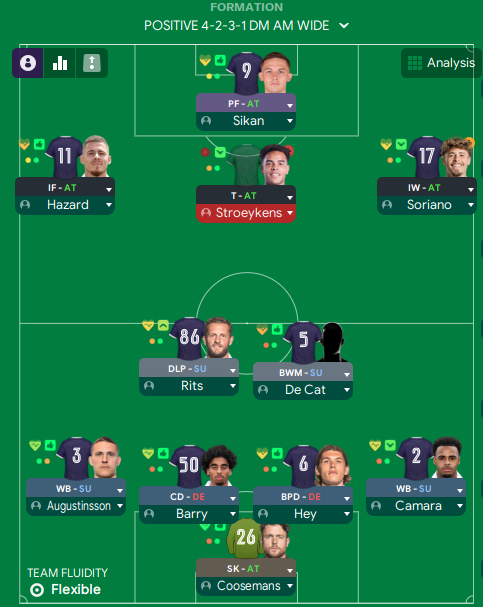
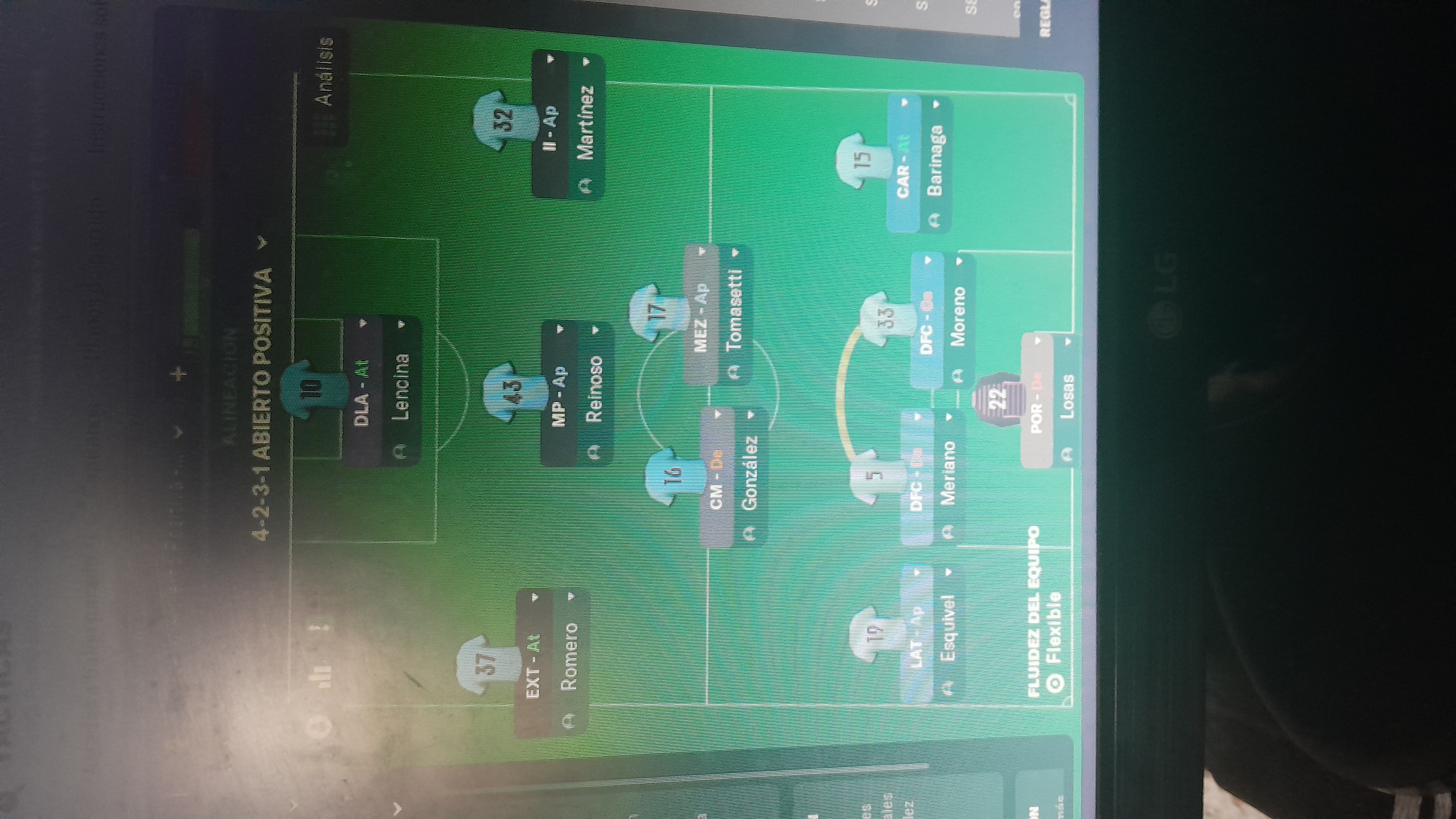
Formation & Style
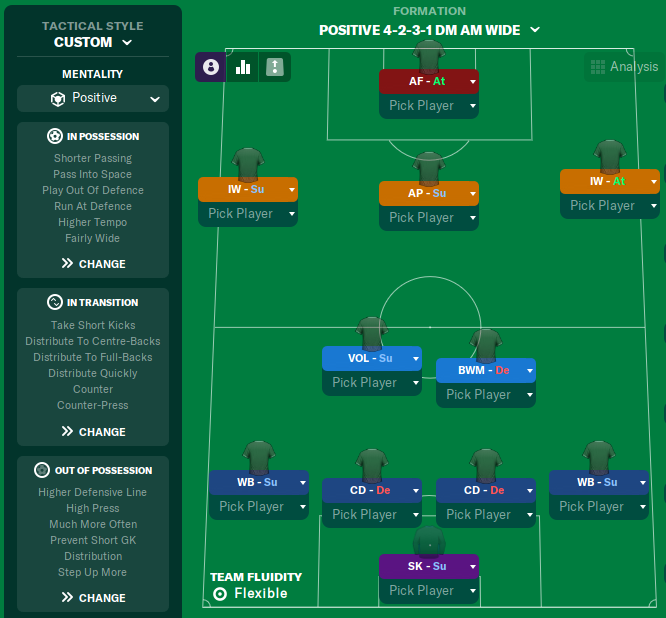
Tactical Style:Positive
Mentality:Attacking
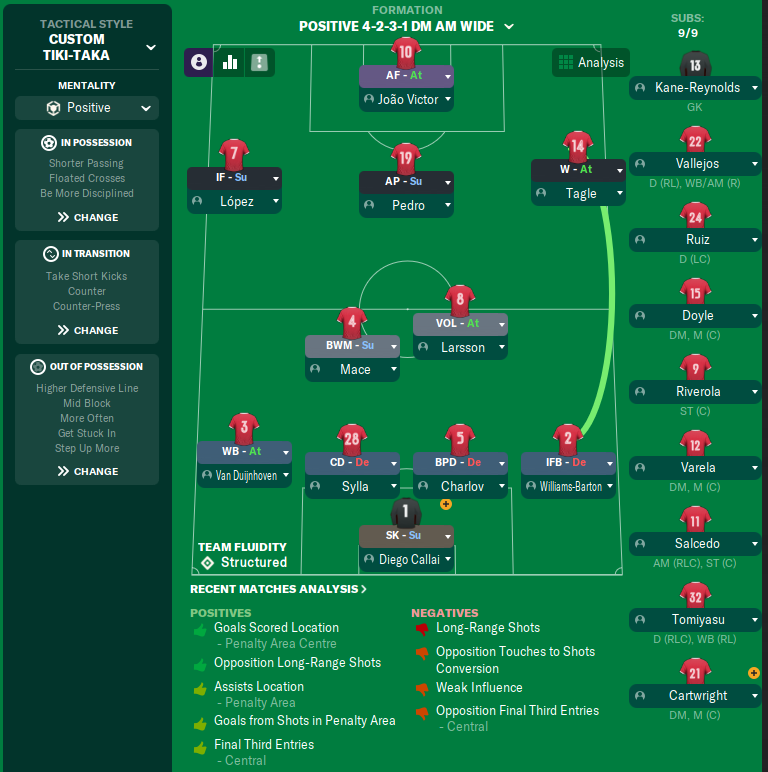
Formation:4-2-3-1 DM Wide
Team Fluidity:Flexible
In Possession
Play out of defence
Focus down the wings
Overlap on the flanks
In Transition
Counter-press
Counter
Out of Possession
Higher defensive line
More urgent pressing
Team Shape Without Ball
Shape:4-2
Description:Compact shape with a focus on blocking central channels and forcing opposition wide.
Evidence:DM roles at [3,2] (DLP-S) and [3,3] (BWM-S) help maintain central solidity.
Team Shape With Ball
Shape:4-3
Description:Fluid attacking shape with inside forwards creating overloads in wide areas and trequartista linking play.
Evidence:Inside Forward (IF-A) at [6,1], Inverted Winger (IW-A) at [6,3], and Trequartista (T-A) at [5,2] create diverse attacking threats.
Phase Description
Attacking Play
Utilizes width effectively, with wing-backs providing depth and inside forwards cutting into the box.
Defensive Transition
Emphasis on quick recovery and counter-pressing to regain possession swiftly.
Main Focus
Create goal-scoring opportunities through combinations and wing play.
Key Strengths
Dynamic Wing Play
The use of Wing-Backs (WB-S) at [2,1] and [2,5] combined with Inside Forwards enhances width.
Strong Midfield Balance
A mix of playmaking and defensive roles in midfield ensures control over the game.
Effective Pressing
Utilization of a Pressing Forward (PF-A) to initiate high pressing suits the positive mentality.
Conflicting Directions
High Press vs. Switched Play
The team may struggle to reset to a compact shape after losing possession while pressing.
Pace vs. Control in Midfield
The balance between speed and control may sometimes lead to disorganization, especially during transitions.
Over-Reliance on Wing-Backs
Excessive use of the wing-backs for overlap could lead to defensive vulnerabilities.
Tactical Suggestions
Adjust Width
Consider adjusting team width to create more space in midfield for progression.
Counter-press Intensity
Reduce intensity of counter-pressing to avoid leaving central areas exposed.
Utilize Combinations
Encourage players to use one-twos and combinations, particularly between forwards and trequartista.
Ask Questions About Your Lineup
Related Tactics
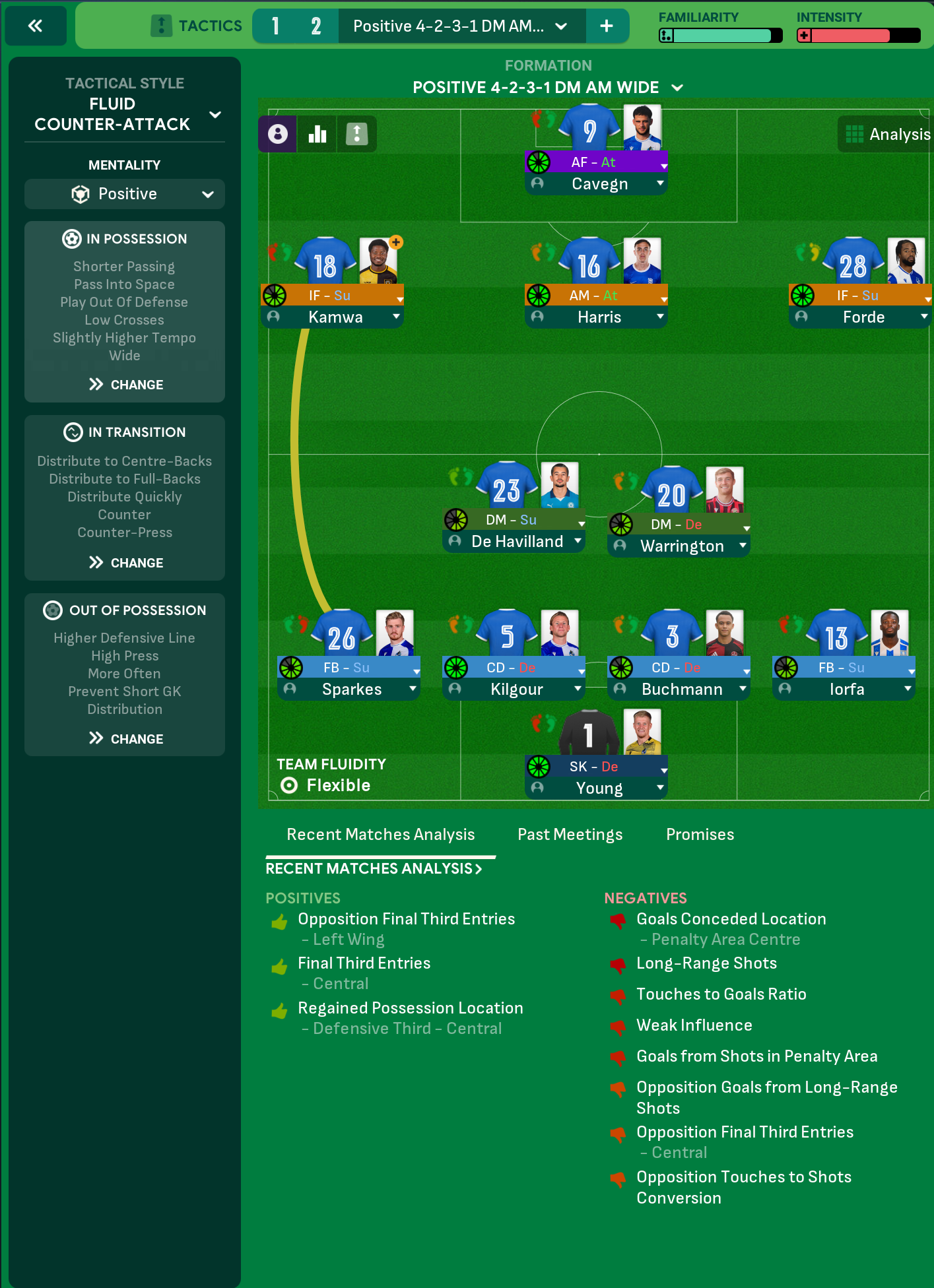
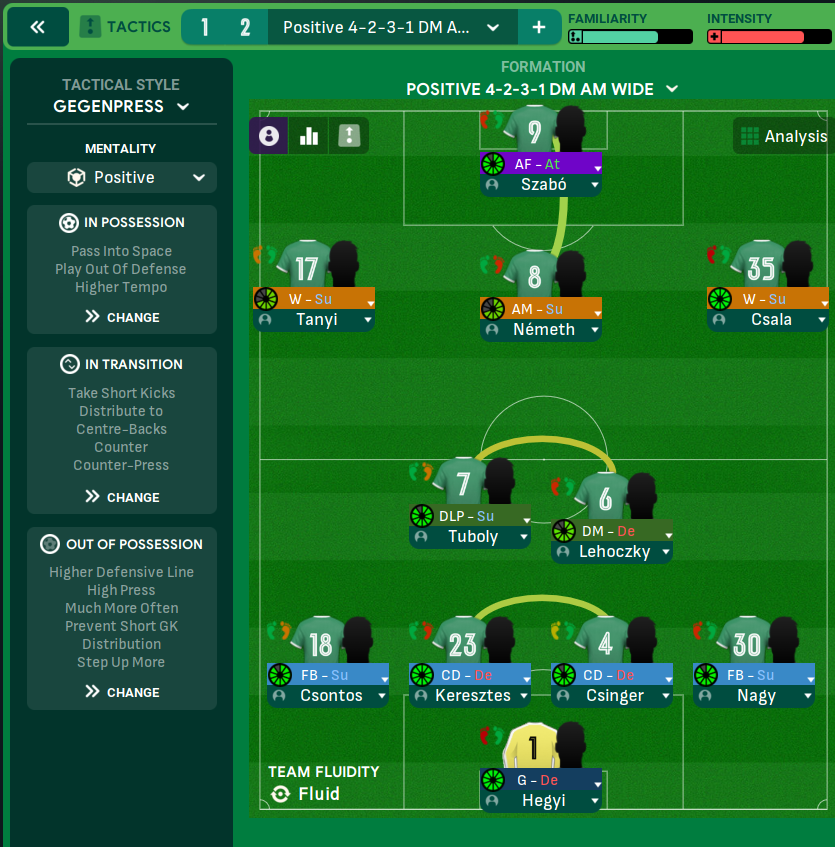
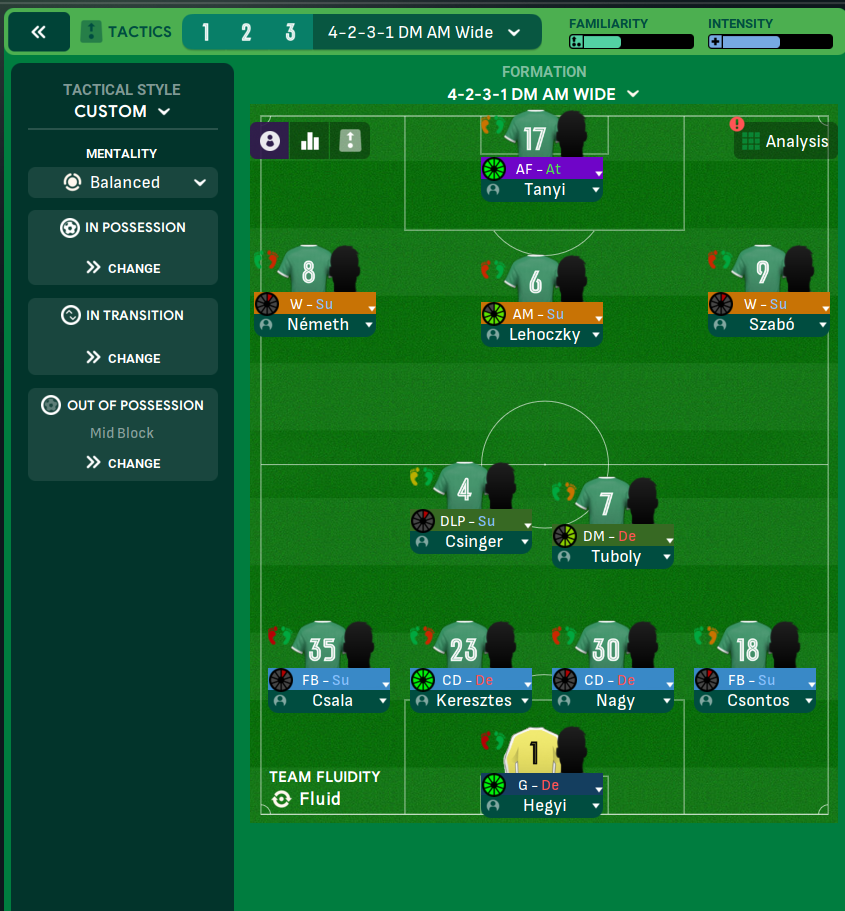
More Positive tactics
Guides for this formation
The tactical theory behind the 4-2-3-1 DM Wide: roles, instructions, and the trade-offs that decide whether the system holds up.
Player pairings
Midfield Pairs in 4-2-3-1 and 4-4-2
Double pivots and flat pairs in 4-2-3-1 and 4-4-2: when each pairing works, when it collapses, and the AMC unicorn that rescues both.
Read guide
Playing styles
Gegenpressing: A Full Guide
Klopp-style gegenpressing in FM, including squad profile, line-and-press pairing, sustainable workload, and the antipatterns to avoid.
Read guide