Uploaded Tactic
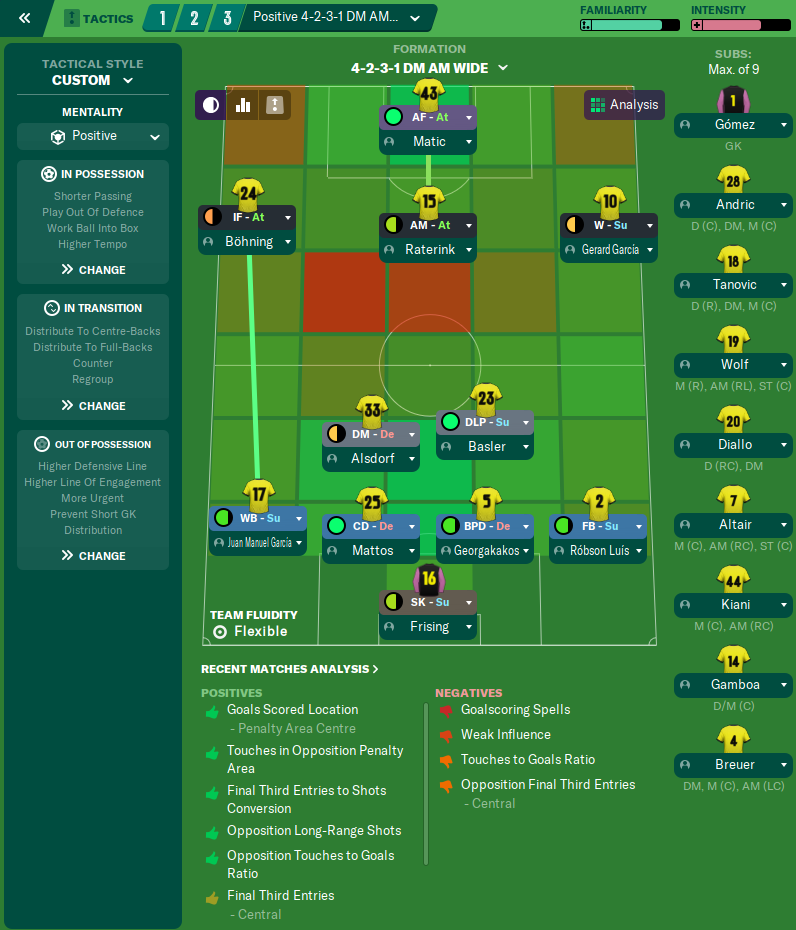
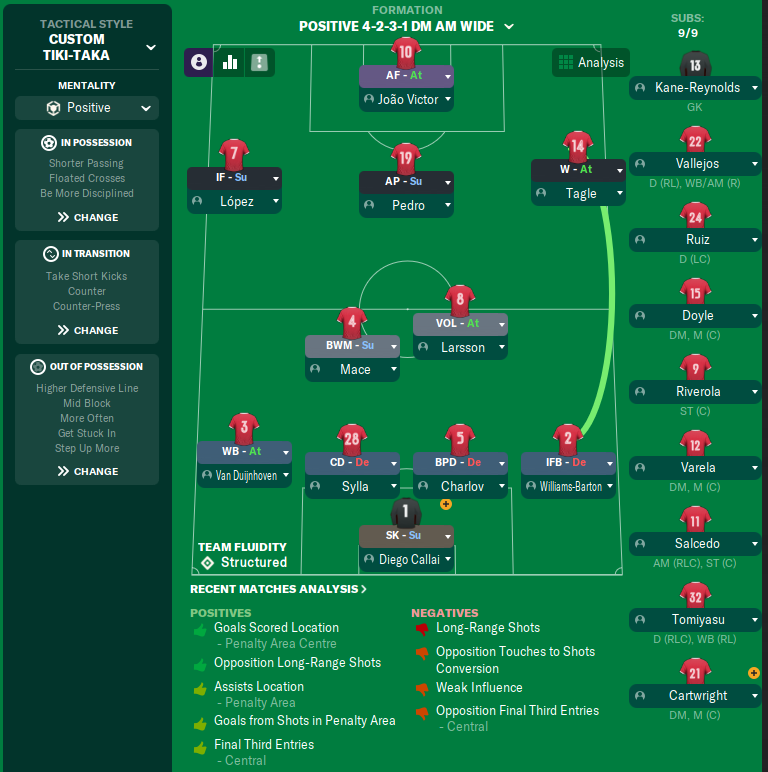
Formation & Style
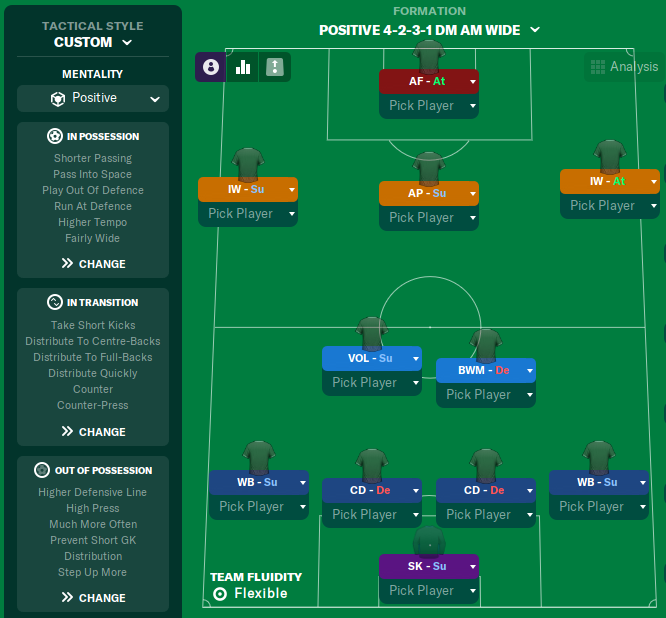
Tactical Style:Custom
Mentality:Positive
Formation:4-2-3-1 DM Wide
Team Fluidity:Flexible
In Possession
Shorter Passing
Play Out of Defence
Work Ball Into Box
Higher Tempo
In Transition
Distribute To Centre-Backs
Distribute To Full-Backs
Counter
Regroup
Out of Possession
Higher Defensive Line
Higher Line Of Engagement
More Urgent
Prevent Short GK Distribution
Team Shape Without Ball
Shape:3-1-4-2
Description:Triangular defensive shape providing cover and support against wide attacks.
Evidence:BPD at [2,3], CB at [2,4], and WB at [2,1] create a balanced backline.
Team Shape With Ball
Shape:4-2-3-1
Description:Wingers stretch the play while the AM and AF look to penetrate the defensive line.
Evidence:Inside Forward (IF) and Winger (W) at [5,1] and [5,3] facilitate wide play.
Phase Description
Attacking Play
Utilizes shorter passing and patient buildup, focusing on creating quality chances.
Defensive Transition
Quick regroup following possession loss, with focus on closing down and reclaiming ball.
Main Focus
Build play through the deep-lying playmaker and exploit wide areas with pace.
Key Strengths
Effective Central Play
Strong midfield presence allows for control in central areas and quick transitions.
Attacking Width
Wingers provide necessary width, allowing inside forwards to exploit central spaces.
Positional Rotation
Fluidity between AM and wingers allows for unpredictable movements.
Conflicting Directions
Vulnerability to Counter-Attacks
High defensive line and engagement could be exploited by quick counter-attacking teams.
Dependence on Full-Backs
Relying on WB for width may expose flanks if they are caught high up the pitch.
Overreliance on Midfield Creativity
If the DLP and AM are neutralized, it could limit creativity in midfield.
Tactical Suggestions
Adjust Defensive Line
Consider lowering the defensive line to reduce risk of counter-attacks.
Enhance Width in Midfield
Integrate a central midfielder with wide support or adjust wingers' roles to be more dynamic.
Increase Defensive Support
Consider introducing an additional midfielder or shift one to a more defensive role.
Ask Questions About Your Lineup
Related Tactics
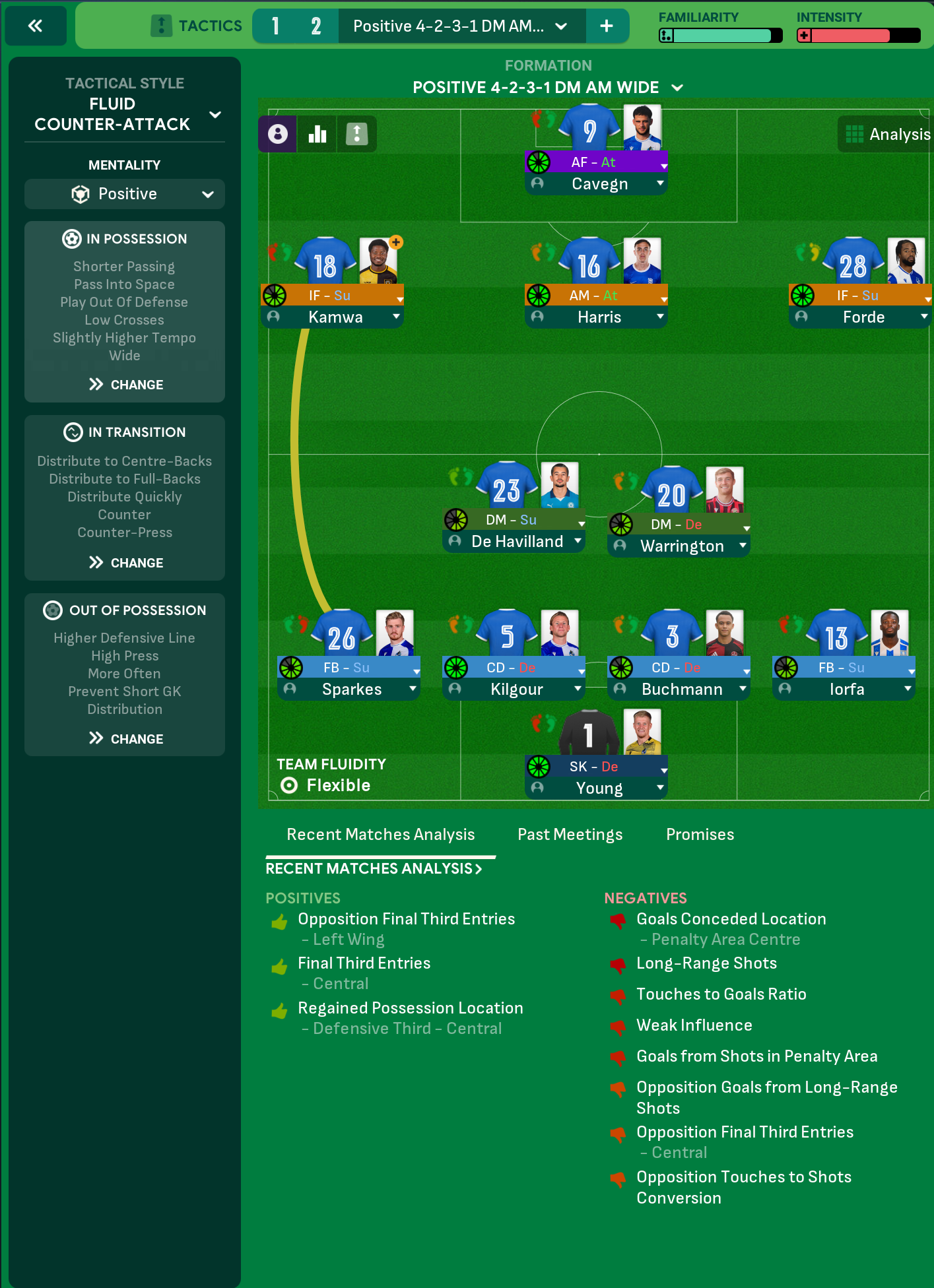
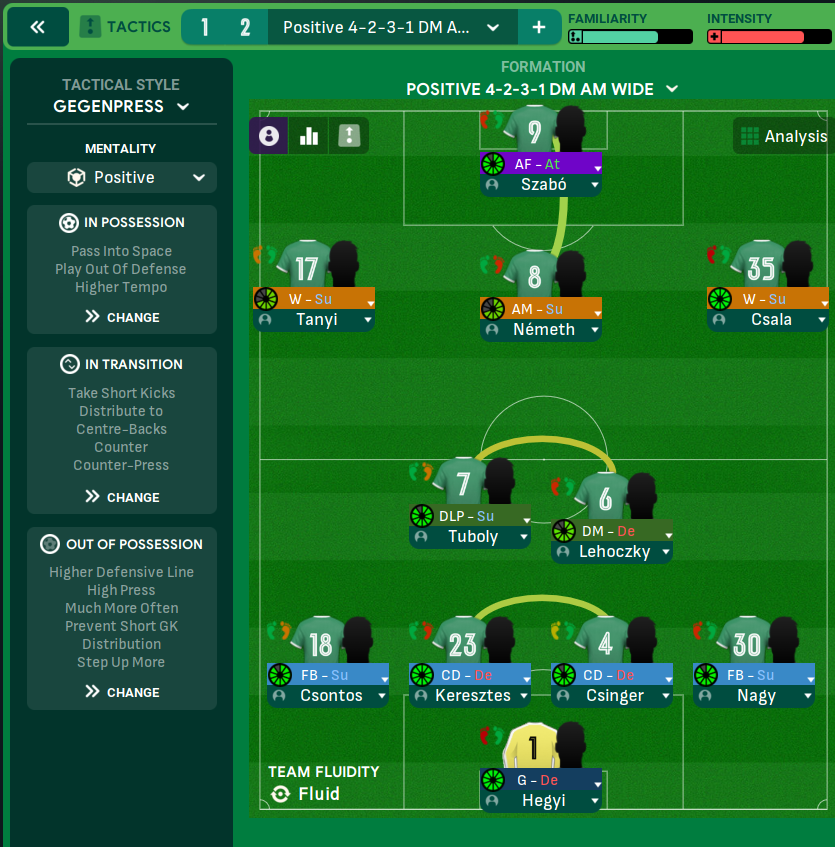
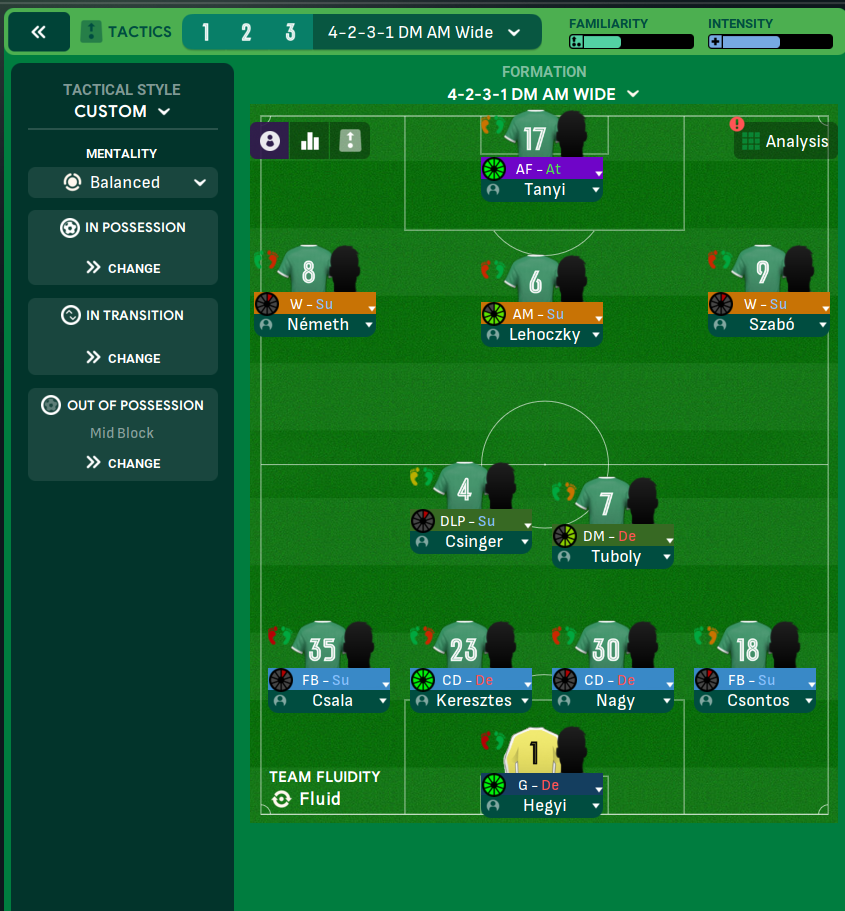
Guides for this formation
The tactical theory behind the 4-2-3-1 DM Wide: roles, instructions, and the trade-offs that decide whether the system holds up.
Player pairings
Midfield Pairs in 4-2-3-1 and 4-4-2
Double pivots and flat pairs in 4-2-3-1 and 4-4-2: when each pairing works, when it collapses, and the AMC unicorn that rescues both.
Read guide
Playing styles
Gegenpressing: A Full Guide
Klopp-style gegenpressing in FM, including squad profile, line-and-press pairing, sustainable workload, and the antipatterns to avoid.
Read guide