
4-2-3-1 DM Wide
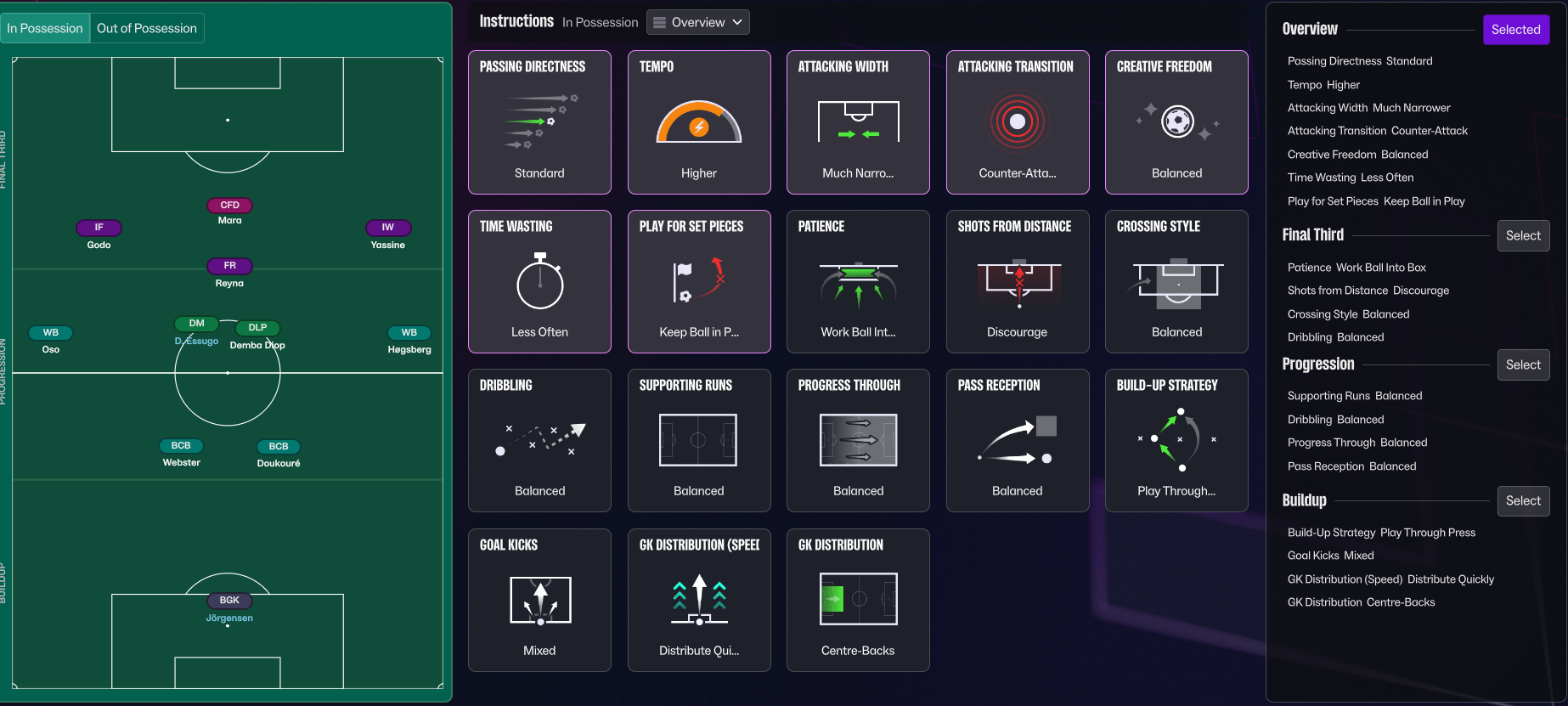
Creating opportunities through wide play and quick transitions. The use of Wingers allows varying attack patterns and stretching the opposition.
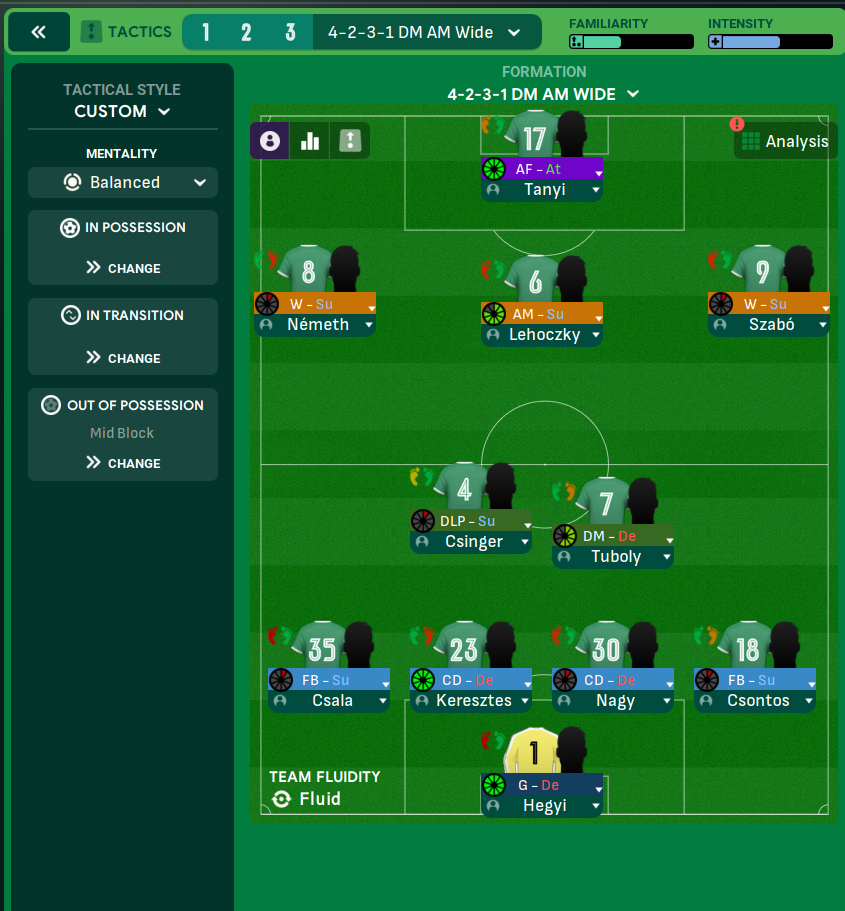
Loading tactical analysis...
Custom
Balanced
4-2-3-1 DM Wide
Fluid
Pass Into Space
Play Out of Defence
Run At Defence
Counter-Press
Counter
Mid Block
Tighter Marking
GK
Goalkeeper
Defend
FB
Full-Back
Support
CB
Centre-Back
Defend
CB
Centre-Back
Defend
FB
Full-Back
Support
DM
Defensive Midfielder
Defend
DLP
Deep-Lying Playmaker
Support
W
Winger
Support
AM
Attacking Midfielder
Support
W
Winger
Support
AF
Advanced Forward
Attack
Focuses on utilizing the width provided by the Wingers while using the DLP to dictate play from deep.
Quickly regaining possession through Counter-Press when losing the ball.
Creating opportunities through wide play and quick transitions.
4-2
Mid-block structure with two DM/CM roles protecting the backline and limiting opponent's space.
DM-De at [3,3] and DLP-Su at [4,3] provide solid coverage in midfield.
4-3
Fluid formation with Wingers stretching the defence and an AF making runs into the box.
W-Su at [5,2] and [5,4] plus AF at [6,3] emphasize positional interchange.
The use of Wingers allows varying attack patterns and stretching the opposition.
W-Su roles at [5,2] and [5,4] creating space for the AF at [6,3].
The combination of a DM with a DLP provides both defensive stability and creative options.
DM-De at [3,3] and DLP-Su at [4,3] effectively balance roles in midfield.
Overreliance on Wingers can lead to predictable patterns if the opposition sits deep.
Winging play at [5,2] and [5,4] can become ineffective if not supported by the central player.
Having a solely defensive DM may limit creation from deep.
DM-De at [3,3] restricts attacking play without sufficient support from the DLP-Su.
Flanks
Wingers may be isolated against more defensive opponents, failing to stretch play.
Dependence on W-Su at [5,2] and [5,4] when opposing teams position well.
Defensive Midfield
The DM-D's lack of forward movement may result in a slower transition against quick counters.
DM-De at [3,3] risks becoming redundant when needing swift attacks.
DLP-Su and W-Su
The DLP can provide key passes to the Wingers, creating goal-scoring chances.
DLP-Su at [4,3] feeds W-Su at [5,2] and [5,4] effectively.
AF and AM-Su
The partnership allows for fluid movement and shared attacking responsibilities.
AF at [6,3] supported by AM-Su at [5,3] to interchange positions.
How does the team adapt to more aggressive pressing opponents?
What adjustments are made to maintain defensive stability during transitions?
How effectively are substitutions employed for enhancing tactical flexibility?
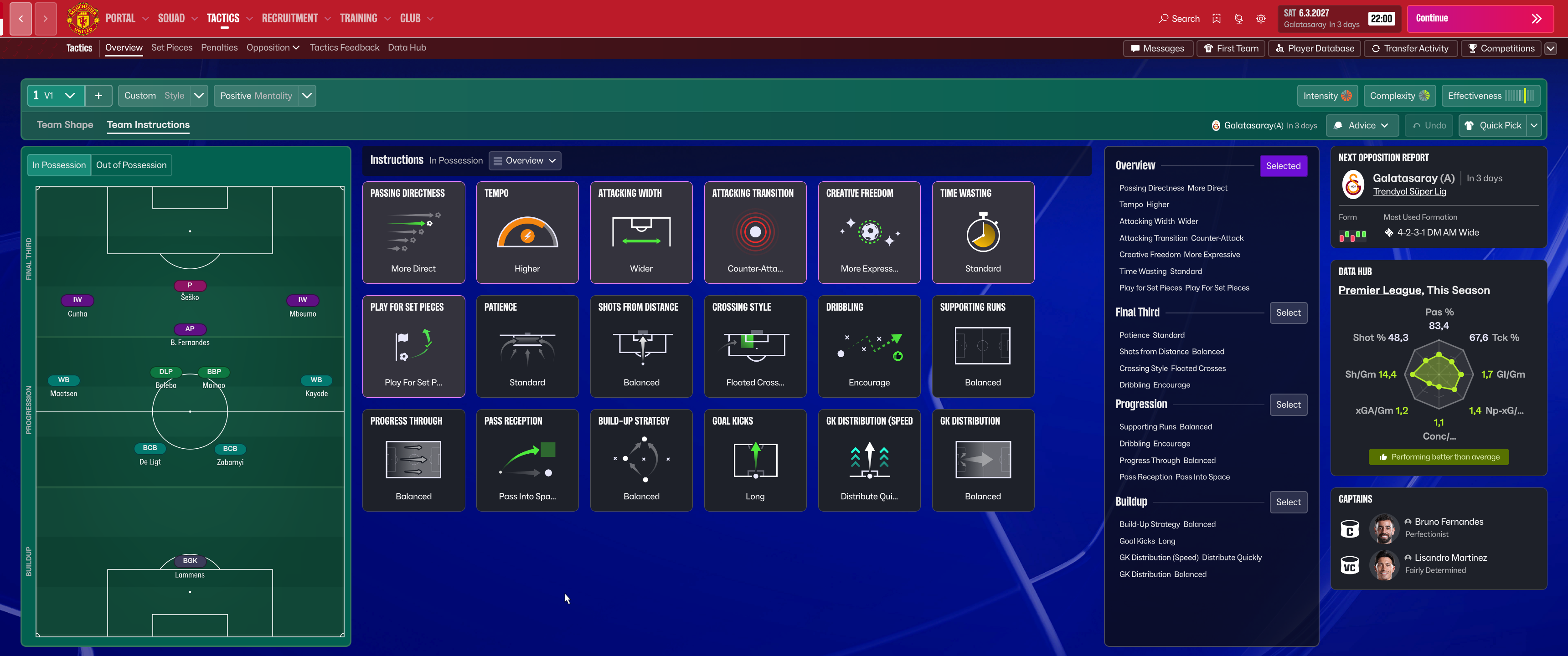
clean slate
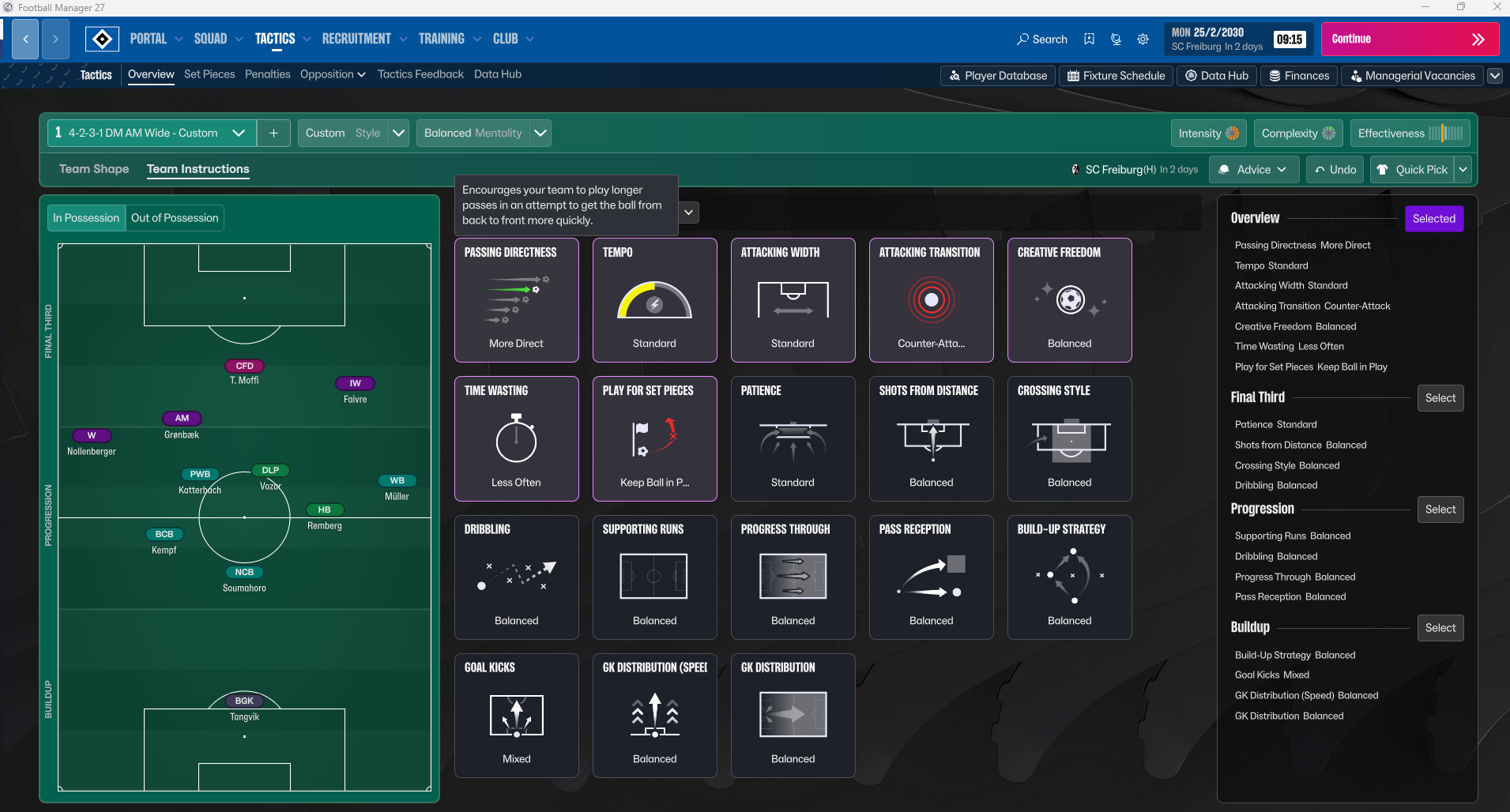
clean slate
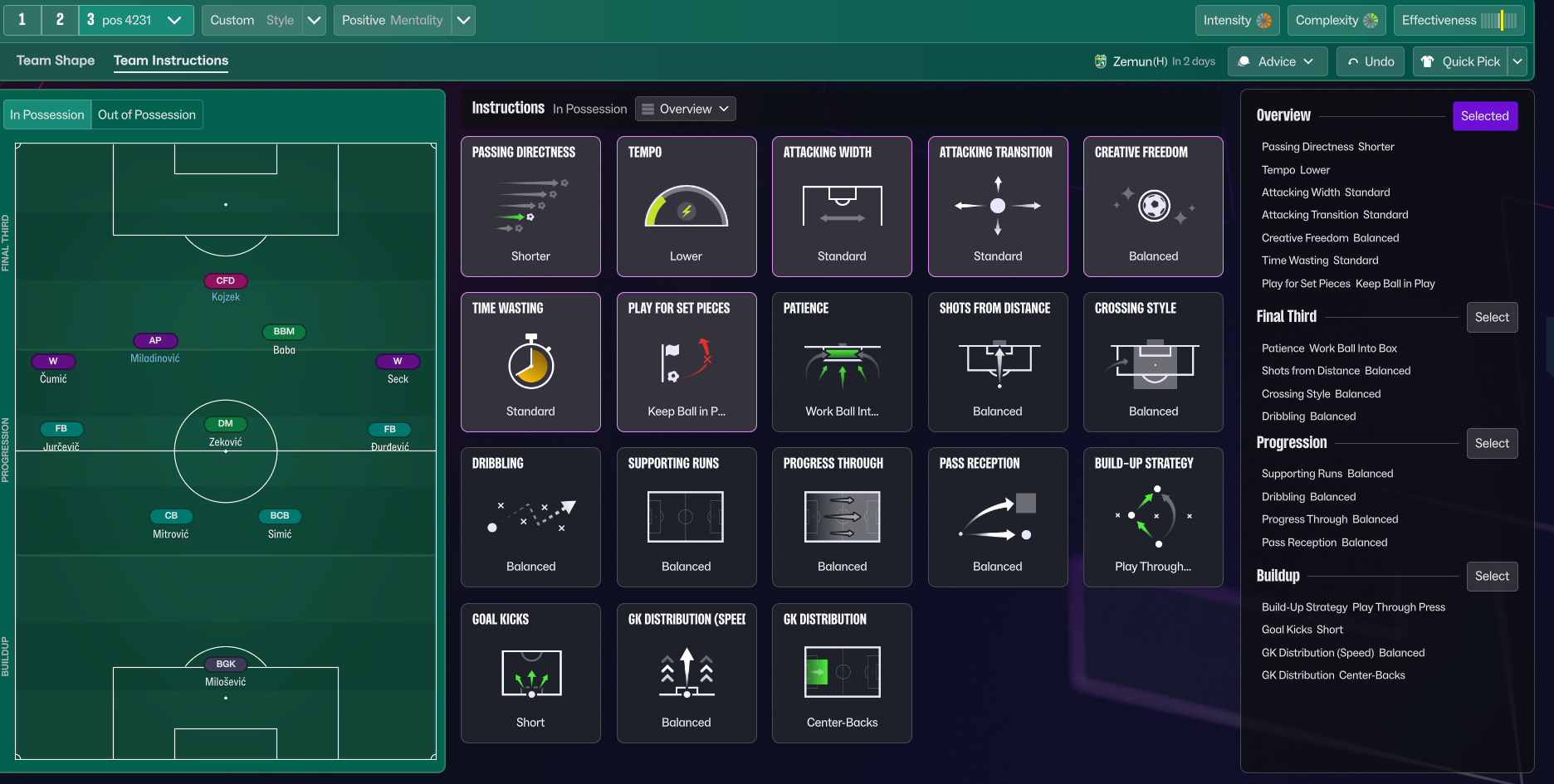
control possession
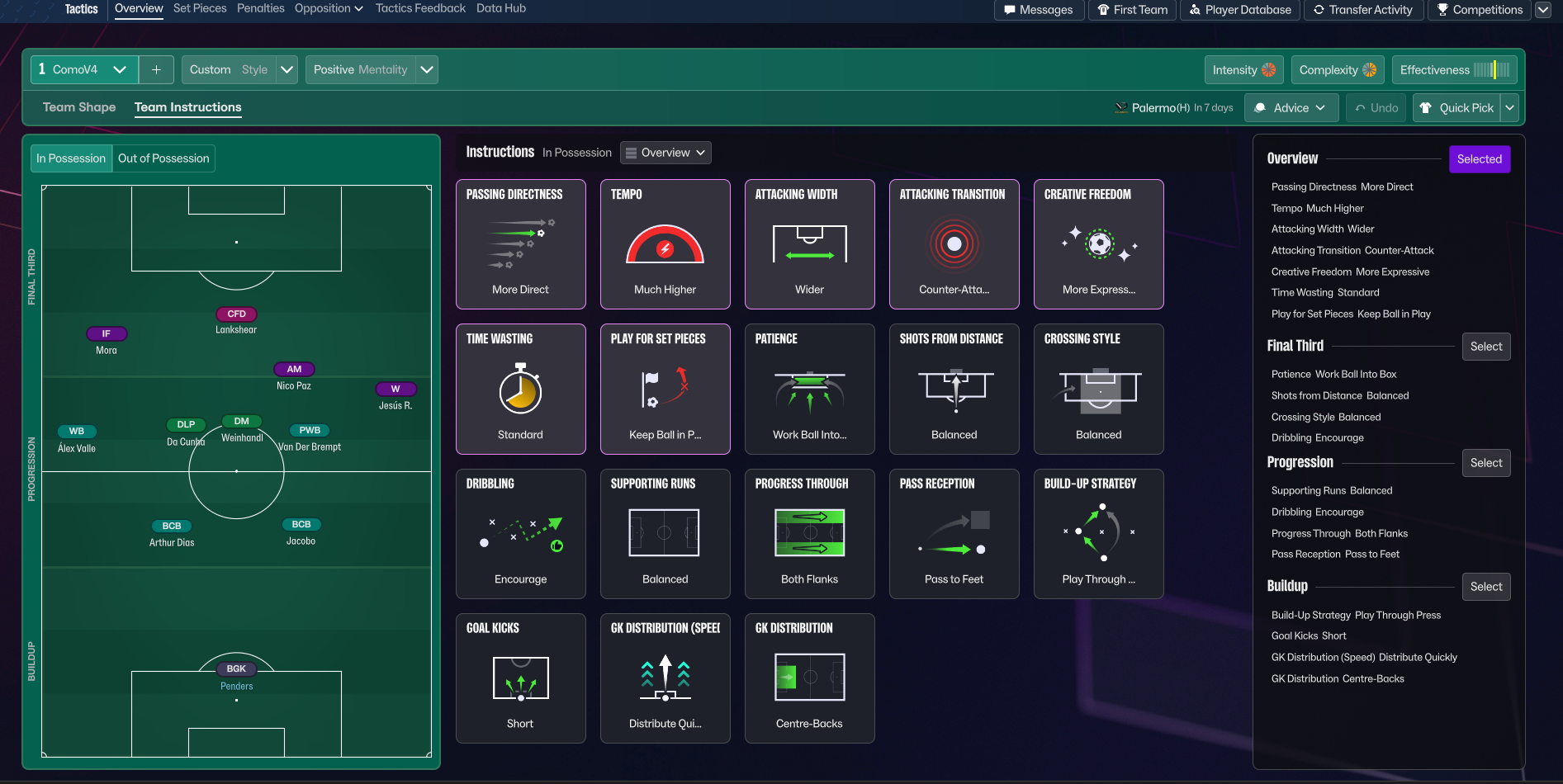
clean slate
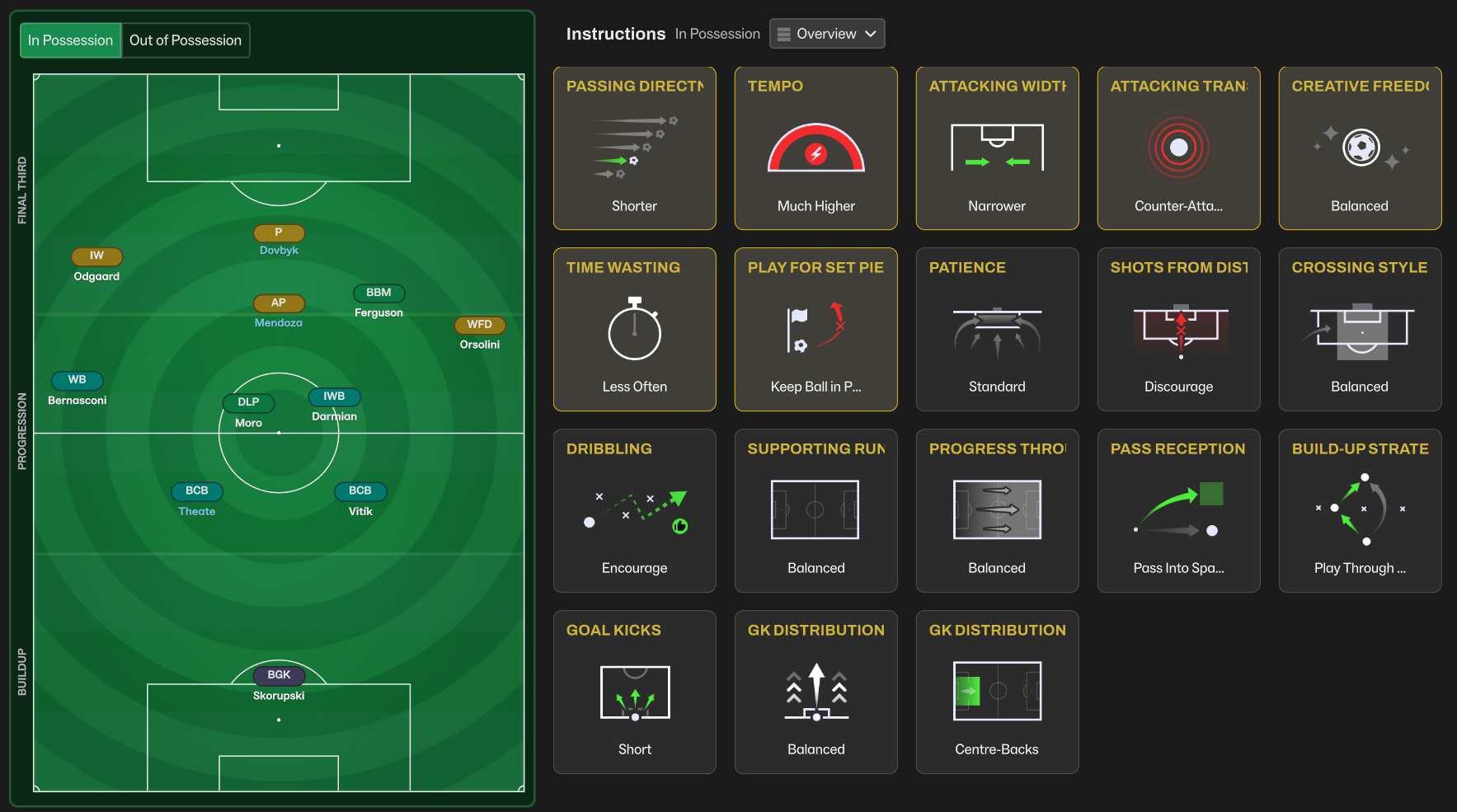
gegenpress
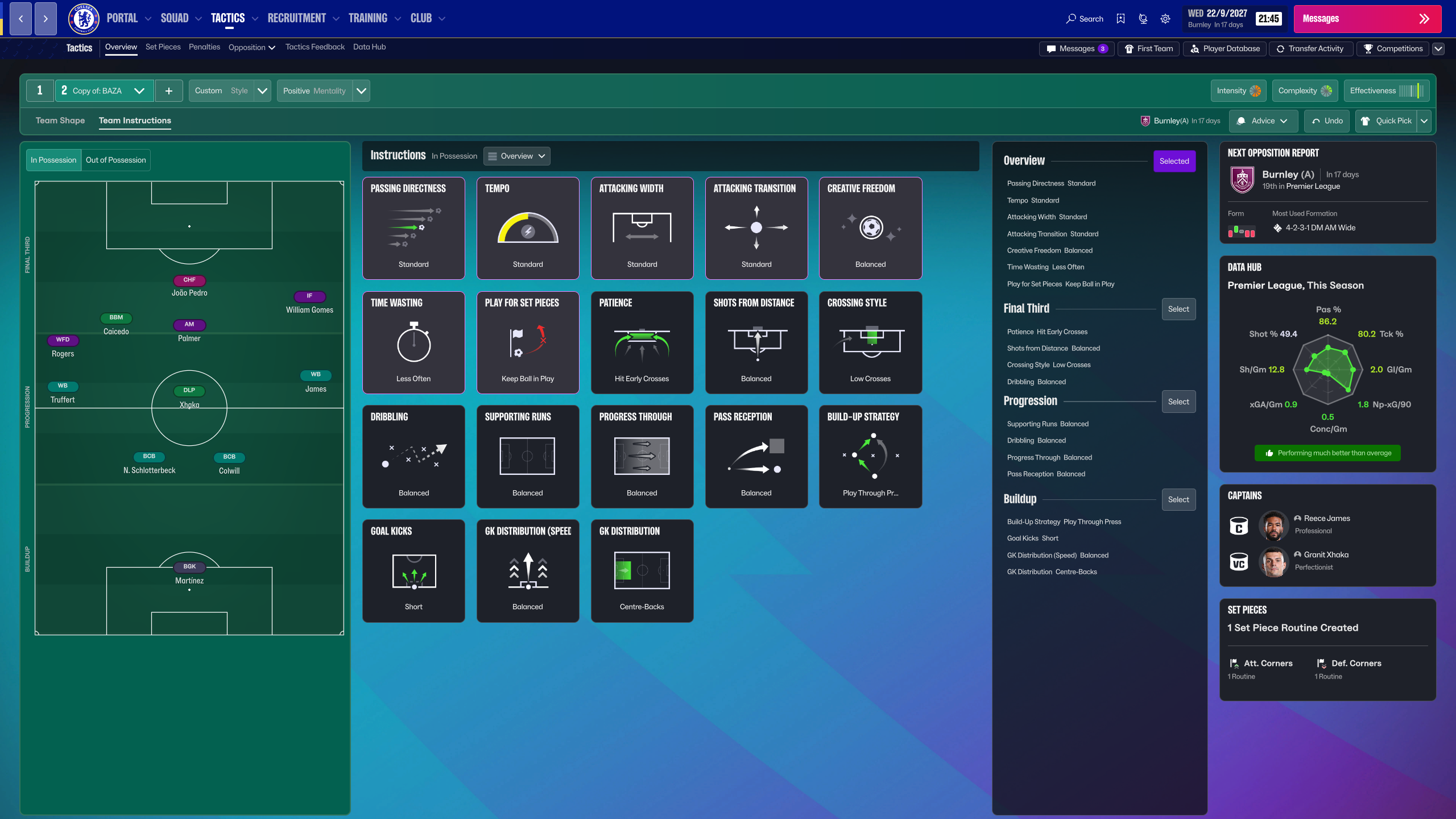
clean slate
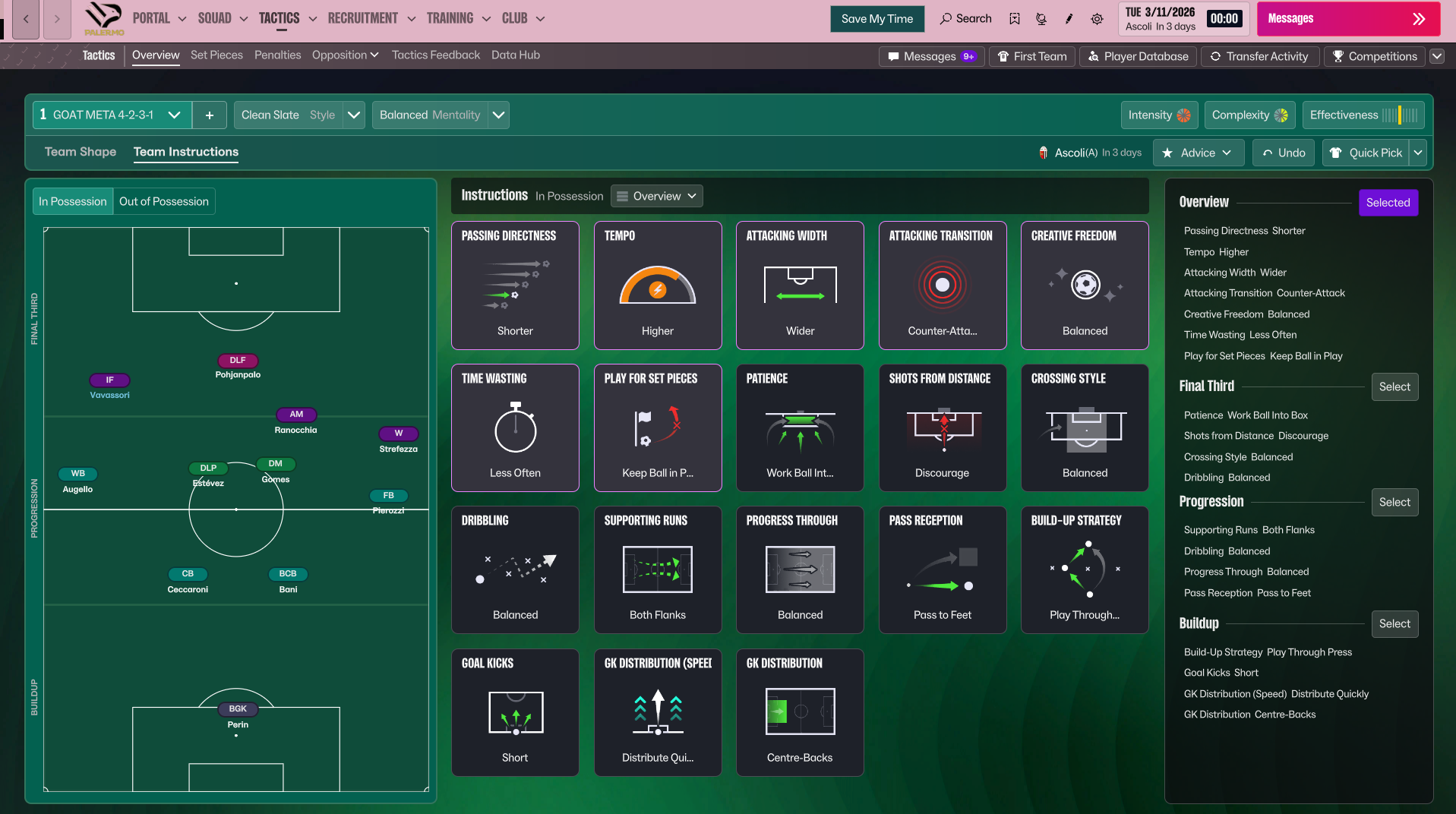
clean slate
clean slate
The tactical theory behind the 4-2-3-1 DM Wide: roles, instructions, and the trade-offs that decide whether the system holds up.
Klopp-style gegenpressing in FM, including squad profile, line-and-press pairing, sustainable workload, and the antipatterns to avoid.
Double pivots and flat pairs in 4-2-3-1 and 4-4-2: when each pairing works, when it collapses, and the AMC unicorn that rescues both.
Pass map, average position, xG, possession by zone: what each tablet panel tells you in FM and the tactical change it should trigger.