4-2-3-1 DM Wide
Control possession and create chances through central combinations, with wide players and underlapping movement supporting the attack. Shorter passing,…
Loading tactical analysis...
4-2-3-1 DM Wide
4-4-1-1 2 DM
pos 4231
Positive
Control Possession
6
3
Center Forward
Central Outlet Centre Forward
5
1
Winger
Tracking Wide Midfielder
4
2
Advanced Playmaker
Attacking Midfielder
4
4
Box-To-Box Midfielder
Pressing Defensive Midfielder
5
5
Winger
Tracking Wide Midfielder
3
3
Defensive Midfielder
Defensive Midfielder
2
1
Full Back
Full Back
2
5
Full Back
Full Back
2
2
Centre-Back
Centre-Back
2
4
Ball-Playing Center-Back
Centre-Back
1
3
Ball-Playing Goalkeeper
Sweeper Keeper
Shorter
Lower
Standard
Standard
Balanced
Standard
Keep Ball in Play
Work Ball Into Box
Balanced
Balanced
Balanced
Overlap Balanced
Balanced
Balanced
Balanced
Play Through Press
Short
Balanced
Center-Backs
Underlap Both Flanks
Mid Block
Standard
Balanced
More Often
Counter-Press
Standard
Yes
Balanced
Balanced
Balanced
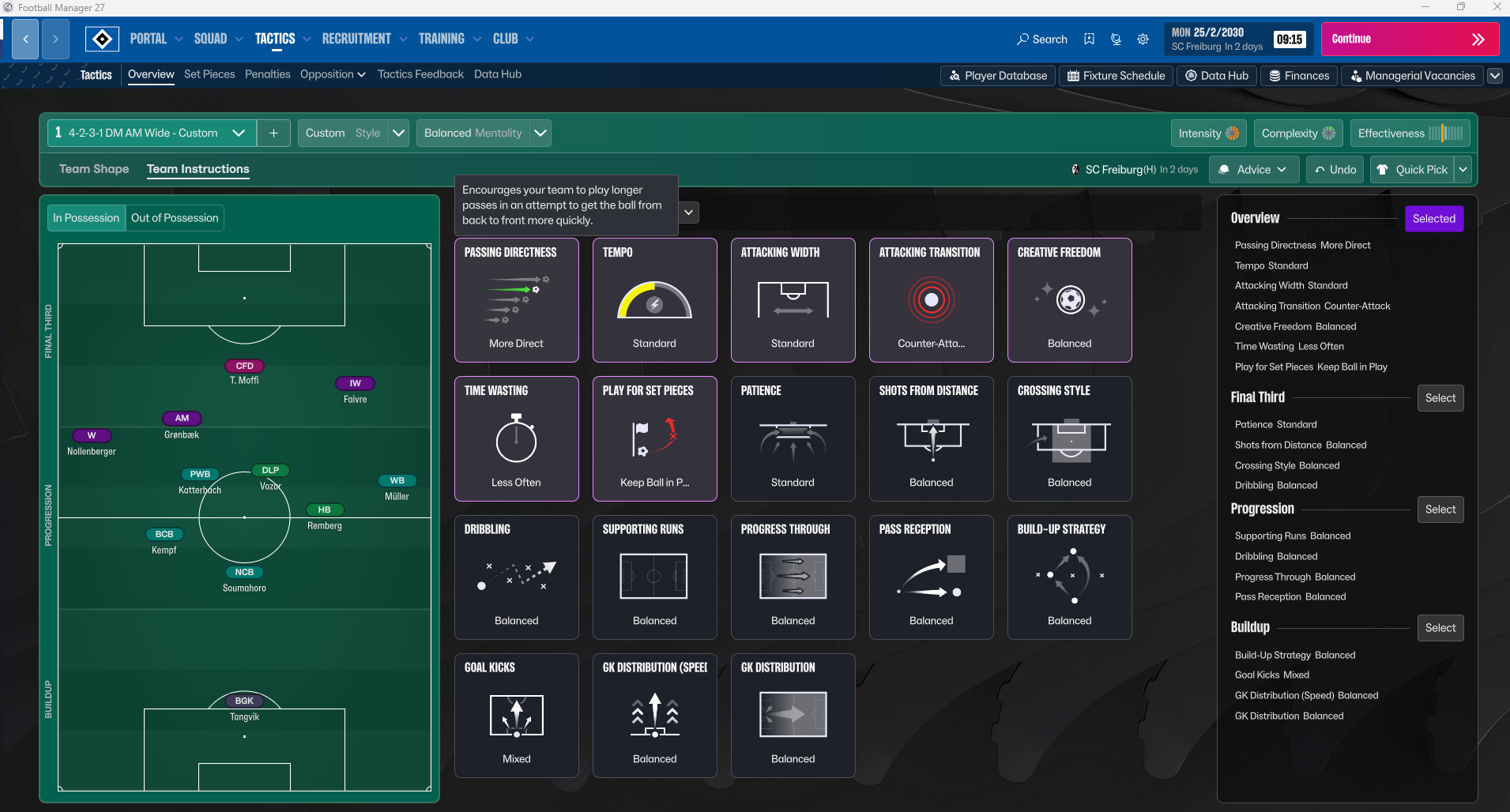
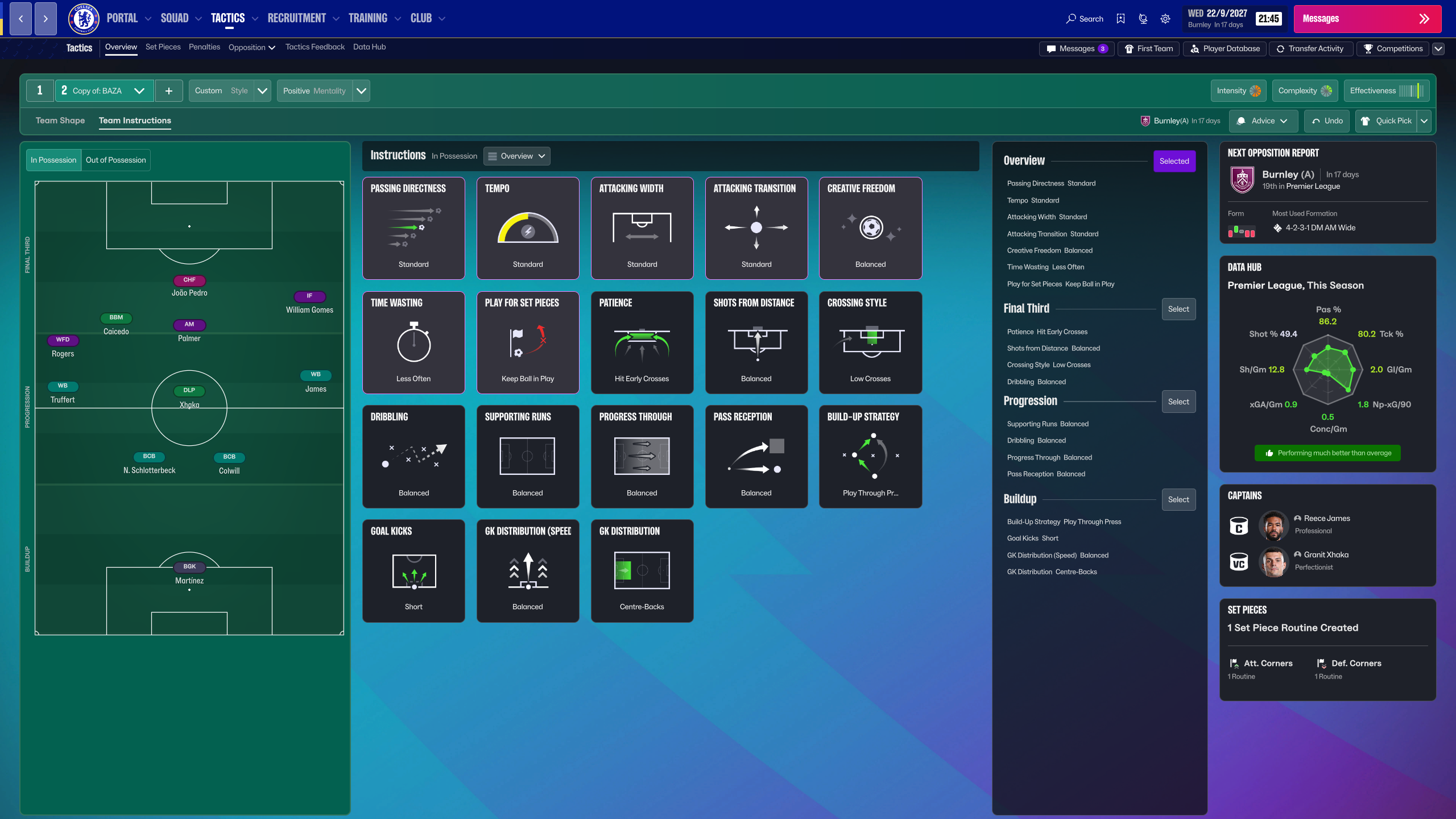
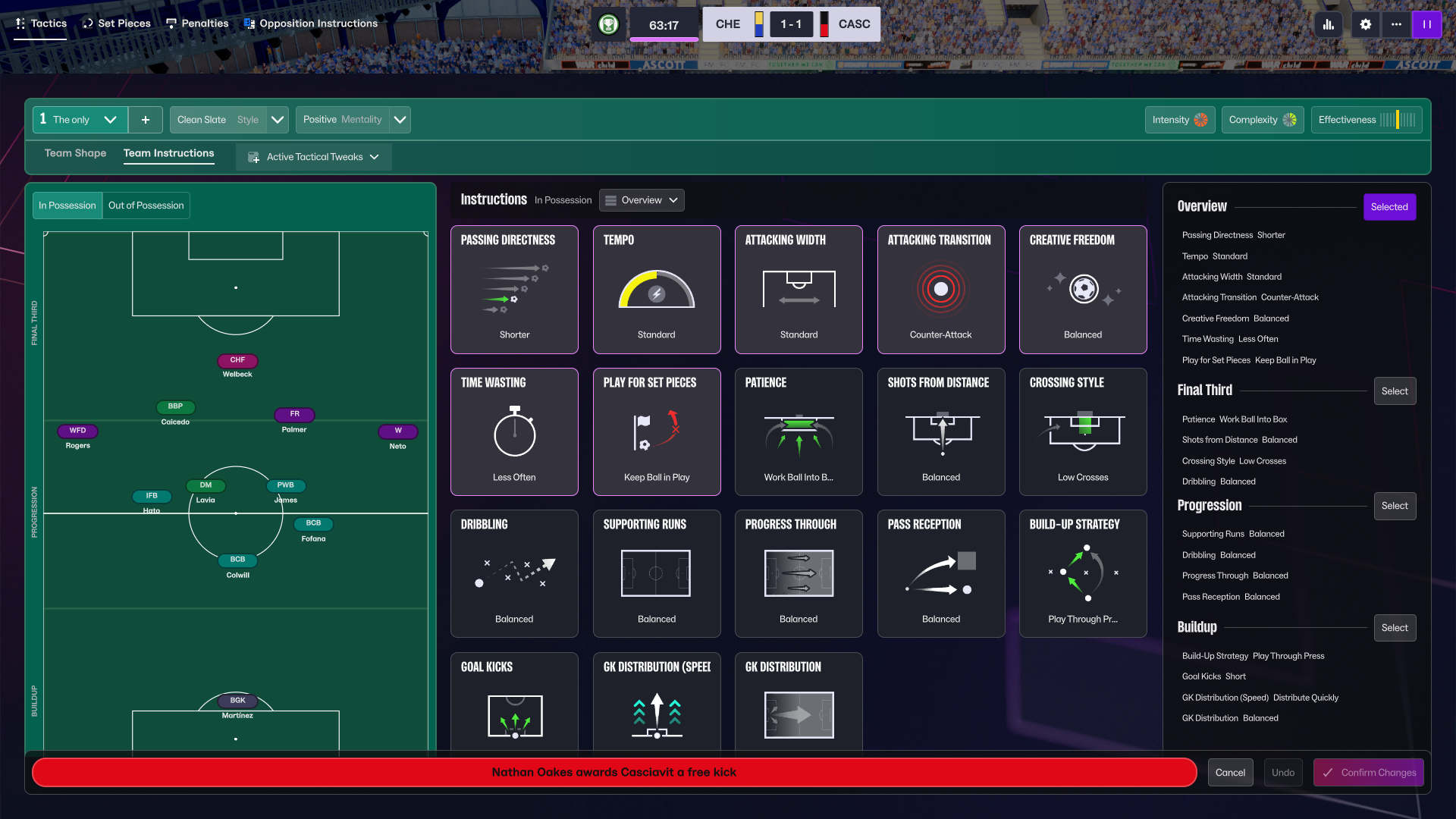
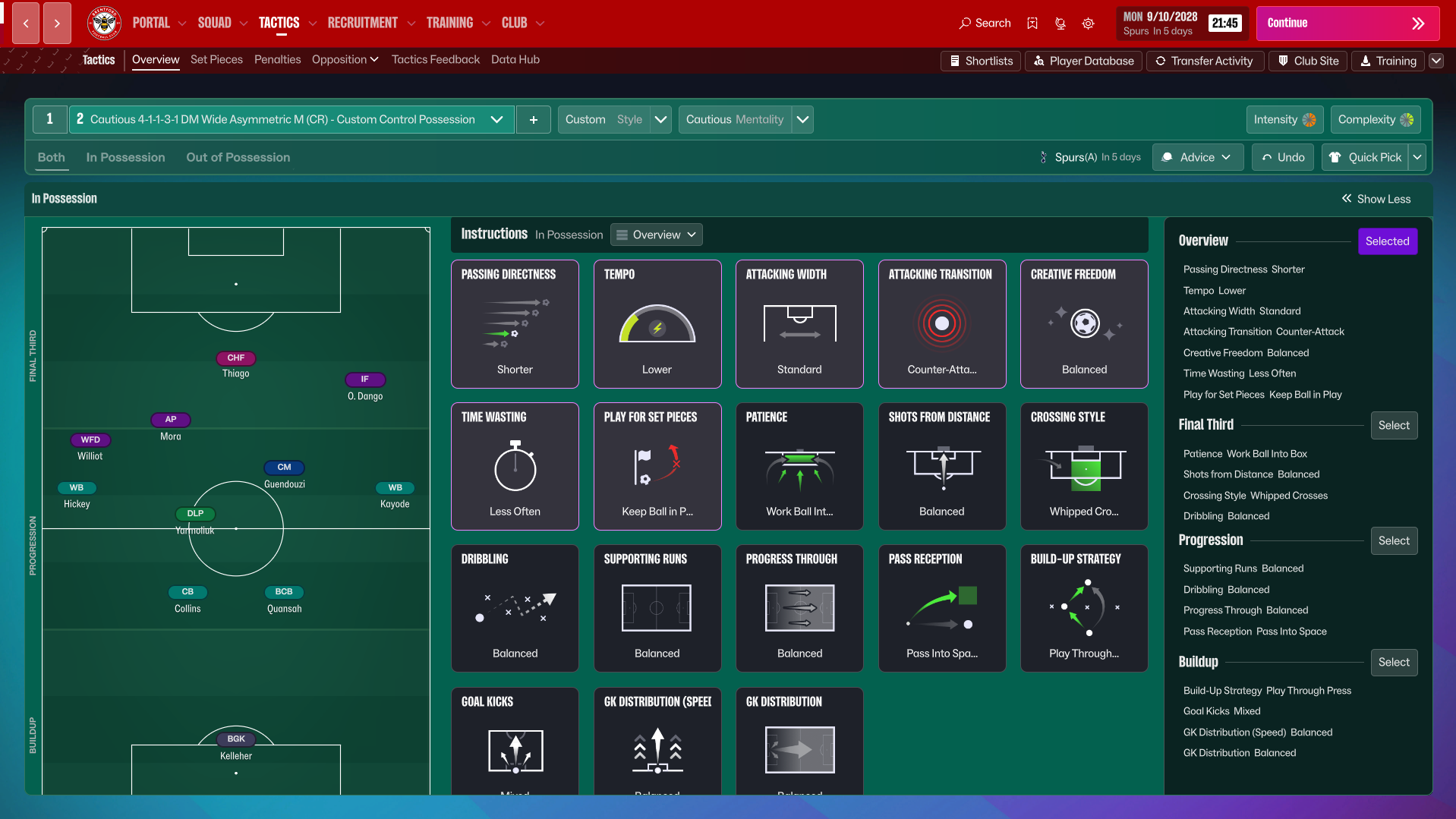
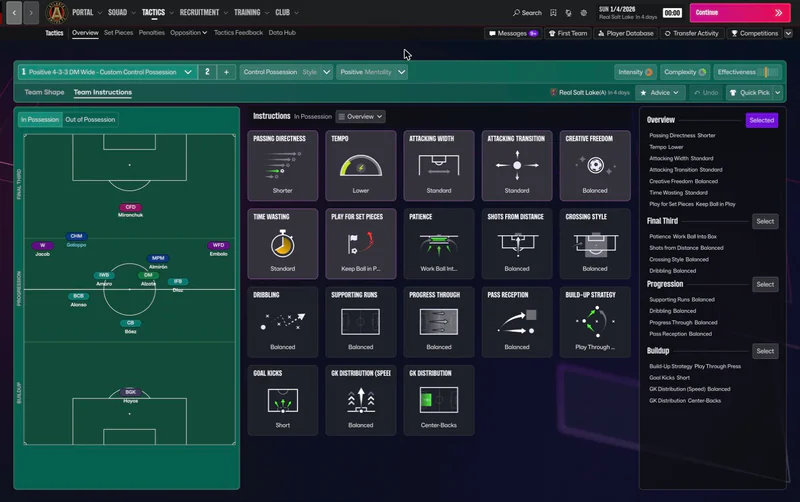
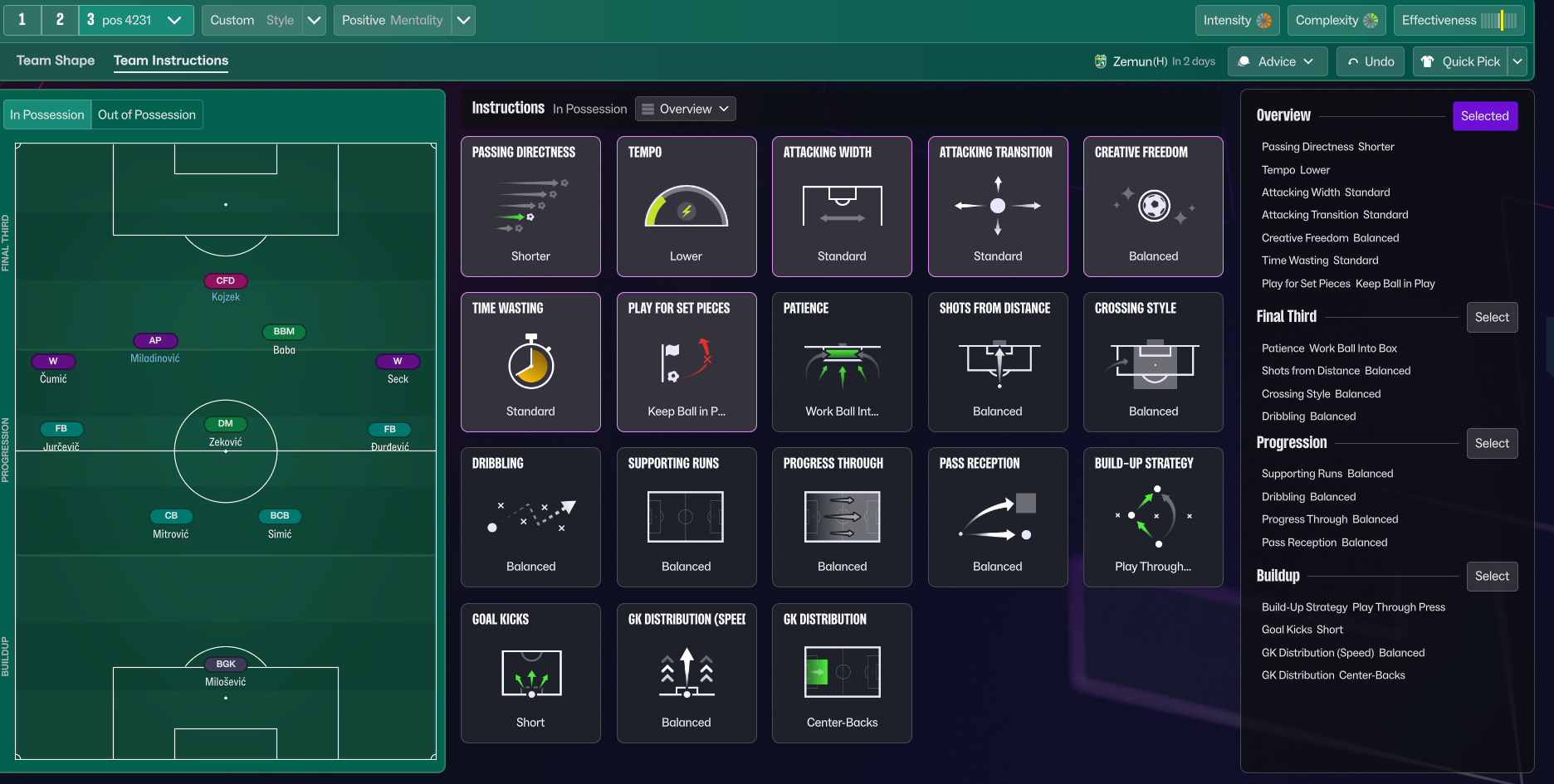
Shorter passing, lower tempo, Work Ball Into Box and Play Through Press all support a controlled possession approach, with short goal kicks and Center-Back distribution providing a clear route from the back.
The Ball-Playing Goalkeeper at [1,3] distributes to the Centre-Back at [2,2] and Ball-Playing Center-Back at [2,4], supporting short goal kicks and Play Through Press.
The Advanced Playmaker can connect the midfield to the Centre Forward, while the two Wingers offer width and the Underlap Both Flanks instruction provides an alternative route inside.
The Advanced Playmaker at [4,2] links with the Center Forward at [6,3], while Winger roles at [5,1] and [5,5] flank the UNDERLAP BOTH FLANKS instruction.
Lower tempo and shorter passing favour deliberate possession, but Counter-Press and more frequent pressing demand quick, energetic reactions after turnovers. This can expose the team if the press is bypassed before the shape recovers.
The lower tempo and shorter passing are paired with the Box-To-Box Midfielder at [4,4] and Tracking Wide Midfielder roles at [5,1] and [5,5] in a COUNTER_PRESS setup.
Underlap Both Flanks encourages runs inside, but the full-backs are Full-Backs and overlap support remains balanced. The intended inside runs may not be consistently complemented by outside runs to stretch the defense.
The Full Back roles at [2,1] and [2,5] accompany Underlap Both Flanks, while the Centre Forward at [6,3] is the central target.
Turnovers during build-up
Playing through the press with short goal kicks invites pressure close to goal. If opponents press effectively, losing the ball in the first phase can create immediate high-quality chances against.
The Ball-Playing Goalkeeper at [1,3] uses short goal kicks and distributes to the Centre-Back at [2,2] and Ball-Playing Center-Back at [2,4] under Play Through Press.
medium
Space after the counter-press is beaten
More frequent pressing and Counter-Press can pull players out of their positions. With a standard defensive line, opponents may find space to progress once they evade the first pressure.
The Box-To-Box Midfielder at [4,4] and Tracking Wide Midfielder roles at [5,1] and [5,5] operate with More Often pressing and Counter-Press.
medium
Deep distribution into a possession structure
The Ball-Playing Goalkeeper and Ball-Playing Centre-Back provide passing options for the short, press-resistant build-up, while the other Centre-Back offers a simpler central outlet.
The Ball-Playing Goalkeeper at [1,3] distributes to the Centre-Back at [2,2] and Ball-Playing Center-Back at [2,4].
Playmaker-to-striker connection
The Advanced Playmaker can progress possession toward the Centre Forward, with the Box-to-Box Midfielder able to support from deeper midfield.
The Advanced Playmaker at [4,2] and Box-To-Box Midfielder at [4,4] support the Center Forward at [6,3].
How can I reduce the danger of playing through the press with short goal kicks?
What should I look for in my Wingers and full-backs to make Underlap Both Flanks work well?
How do I protect the space when my Counter-Press is beaten?
This is a coherent possession-oriented 4-2-3-1 that aims to build patiently through the Ball-Playing Goalkeeper and centre-backs, connect through the Advanced Playmaker, and use Wingers plus underlapping runs to reach the box. The mid-block provides a reasonable defensive base, but frequent pressing and Counter-Press can leave space if opponents escape the first wave. I would first protect the structure after regaining possession, then add clearer outside support to complement the underlaps.
A patient, short-passing possession approach: build through the goalkeeper and centre-backs, connect through the Advanced Playmaker, and work the ball into the box with Wingers and underlapping support.
Counter-Press immediately after losing the ball, aiming to regain possession quickly before the team settles into its mid-block shape.
Control possession and create chances through central combinations, with wide players and underlapping movement supporting the attack.
The tactical theory behind the 4-2-3-1 DM Wide: roles, instructions, and the trade-offs that decide whether the system holds up.
Double pivots and flat pairs in 4-2-3-1 and 4-4-2: when each pairing works, when it collapses, and the AMC unicorn that rescues both.
Klopp-style gegenpressing in FM, including squad profile, line-and-press pairing, sustainable workload, and the antipatterns to avoid.
What Higher Tempo, Wider, and Narrower actually do in FM, plus the dial contradictions and antipatterns players run into most often.