4-3-3 DM Wide Tactic
4-3-3 DM Wide
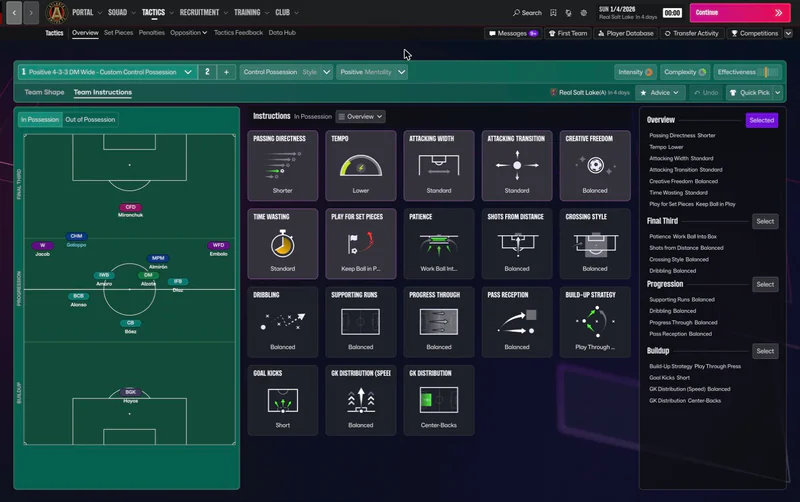
Controlling possession and winning the ball back high up the pitch. Shorter passing, lower tempo, Work Ball Into Box and Play Through Press all point to…
Loading tactical analysis...
4_3_3_dm_wide
4_1_4_1_dm
positive
control_possession
Players
1
3
BALL_PLAYING_GOALKEEPER
SWEEPER_KEEPER
2
2
BALL_PLAYING_CENTRE_BACK
CENTRE_BACK
2
4
INSIDE_FULL_BACK
PRESSING_FULL_BACK
4
4
MIDFIELD_PLAYMAKER
CENTRAL_MIDFIELDER
5
1
WINGER
TRACKING_WINGER
5
5
WIDE_FORWARD
WINGER
6
3
CENTRE_FORWARD
CENTRE_FORWARD
2
3
CENTRE_BACK
CENTRE_BACK
3
2
INSIDE_WING_BACK
FULL_BACK
3
3
DEFENSIVE_MIDFIELDER
DEFENSIVE_MIDFIELDER
4
2
CHANNEL_MIDFIELDER
PRESSING_CENTRAL_MIDFIELDER
In possession
shorter
lower
standard
standard
balanced
standard
keep_ball_in_play
work_ball_into_box
balanced
balanced
balanced
balanced
balanced
balanced
play_through_press
short
balanced
centre_backs
Out of possession
high_press
higher
more_often
counter_press
standard
yes
balanced
balanced
balanced
Key strengths
Coherent possession identity
Shorter passing, lower tempo, Work Ball Into Box and Play Through Press all point to controlled build-up, backed by short goal kicks and distribution to the centre-backs.
[1,3] Ball-Playing Goalkeeper and [2,2] Ball-Playing Center-Back start the build-up, with [3,3] Defensive Midfielder as the pivot.
Inverted full-backs add central overloads
The inside full-back and inside wing-back tuck into midfield, giving more short passing options and a better counter-press structure.
[2,4] Inside Full-Back and [3,2] Inside Wing-Back
Conflicting tactics
Higher line with only two pure centre-backs and a sweeper-keeper reliance
A Higher defensive line combined with an aggressive press leaves space behind if the press is beaten. Counter-Press plus full-backs pushed into midfield thins the cover.
[2,2] Centre-Back and [2,3] Centre-Back stand behind [3,2] Full Back and [2,4] Pressing Full-Back.
Slow tempo against a high-energy press
Lower tempo and Work Ball Into Box are patient, while the out-of-possession side demands heavy running. That is a high fitness load for a team that keeps the ball slowly.
[5,5] Wide Forward and [6,3] Center Forward
Risk exposures
Space behind the high line
If the press is bypassed, through balls can reach the channels behind the inverted full-backs.
[3,2] Full Back and [2,4] Pressing Full-Back
high
Wide areas
Inside full-backs and a tracking winger on only one flank leave the right side exposed to switches.
[5,5] Winger out of possession and [2,4] Inside Full-Back
medium
Role synergies
Midfield playmaker plus channel midfielder
The two combine in the half-space to progress play and provide short options.
[4,4] Midfield Playmaker and [4,2] Channel Midfielder
Defensive midfielder behind inverted full-backs
The pivot covers the space the inverted full-backs leave and helps recycle possession.
[3,3] Defensive Midfielder with [3,2] Inside Wing-Back
Suggested questions
Are your centre-backs quick enough to defend a higher line?
Do your full-backs have the technique and stamina to invert and press?
Is the right-sided winger or the left-sided one stronger?
This is a coherent possession-and-press setup with inverted full-backs, a ball-playing spine and a patient final third. Its main weakness is the high defensive line combined with Counter-Press, which exposes the channels behind the inside full-backs when the press is beaten. Lowering the line to Standard and softening the defensive transition should keep the structure while reducing the goals conceded.
Phase description
Patient, short build-up from the keeper and centre-backs, with inverted full-backs overloading midfield before working the ball into the box.
Immediate counter-press to win the ball back high, with the defence stepping up behind it.
Controlling possession and winning the ball back high up the pitch.
Related Tactics
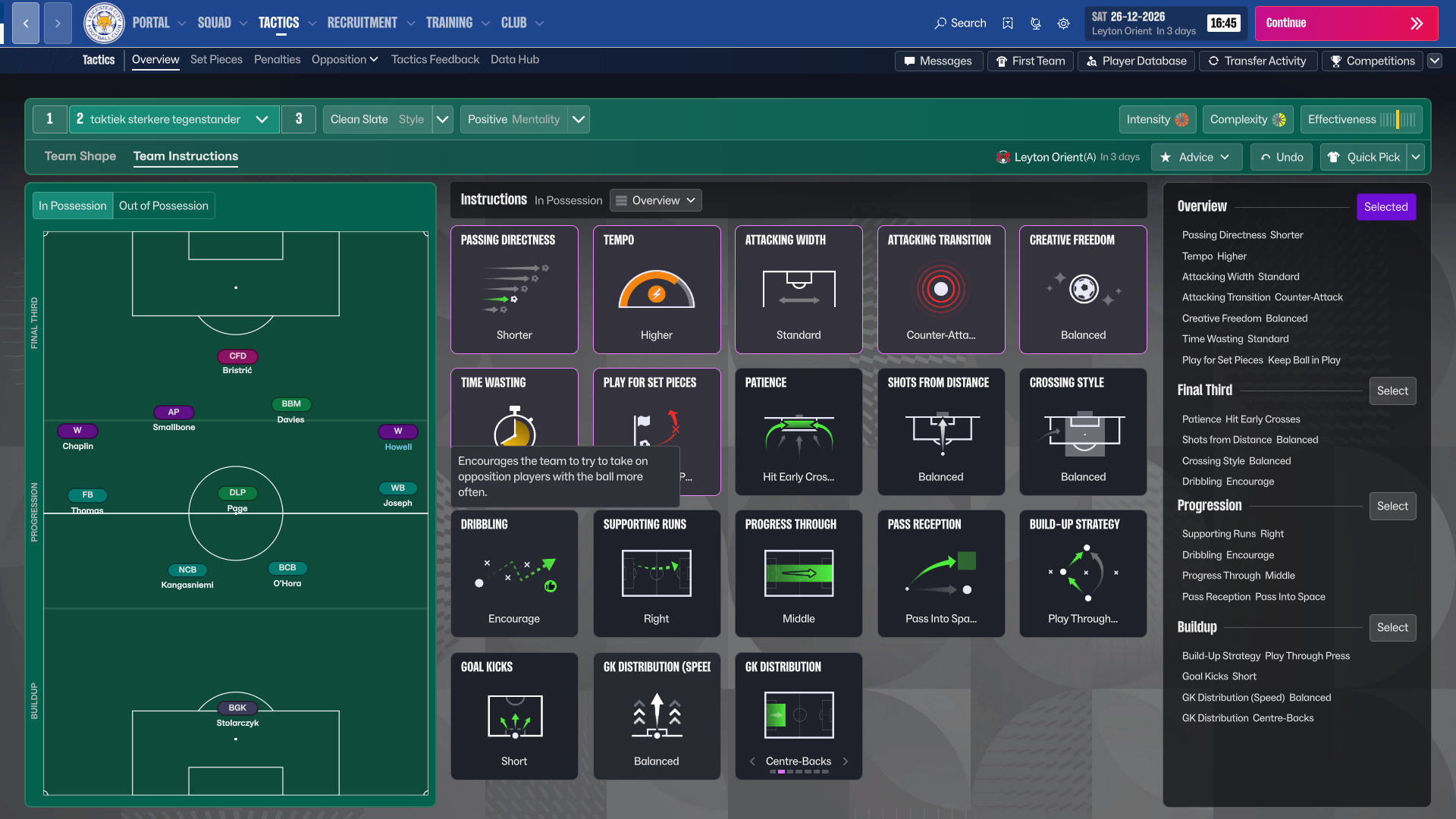
4-3-3 DM Wide Formation
clean slate
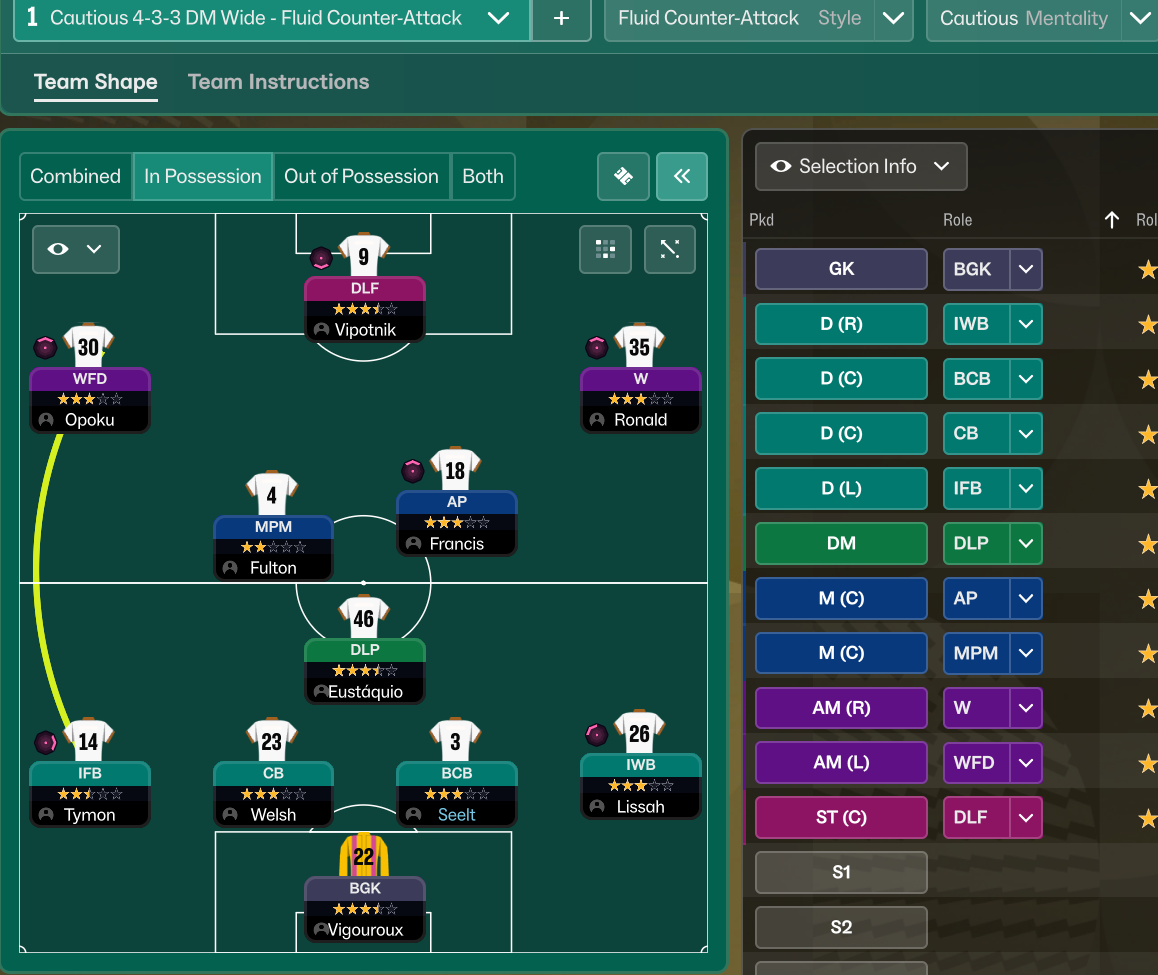
Fluid Counter-Attack 4-3-3 DM Wide
Fluid Counter-Attack
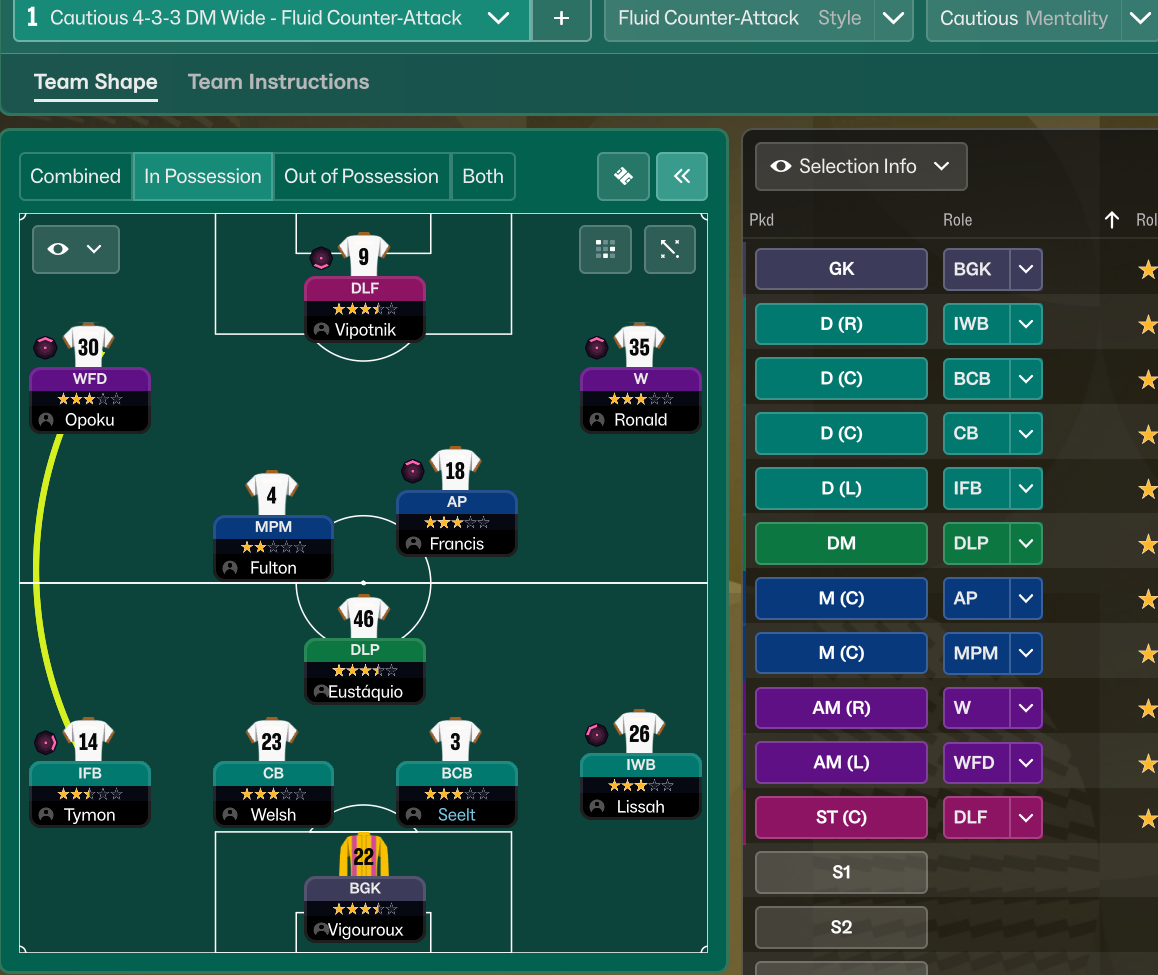
Fluid Counter-Attack 4-3-3 DM Wide
Fluid Counter-Attack
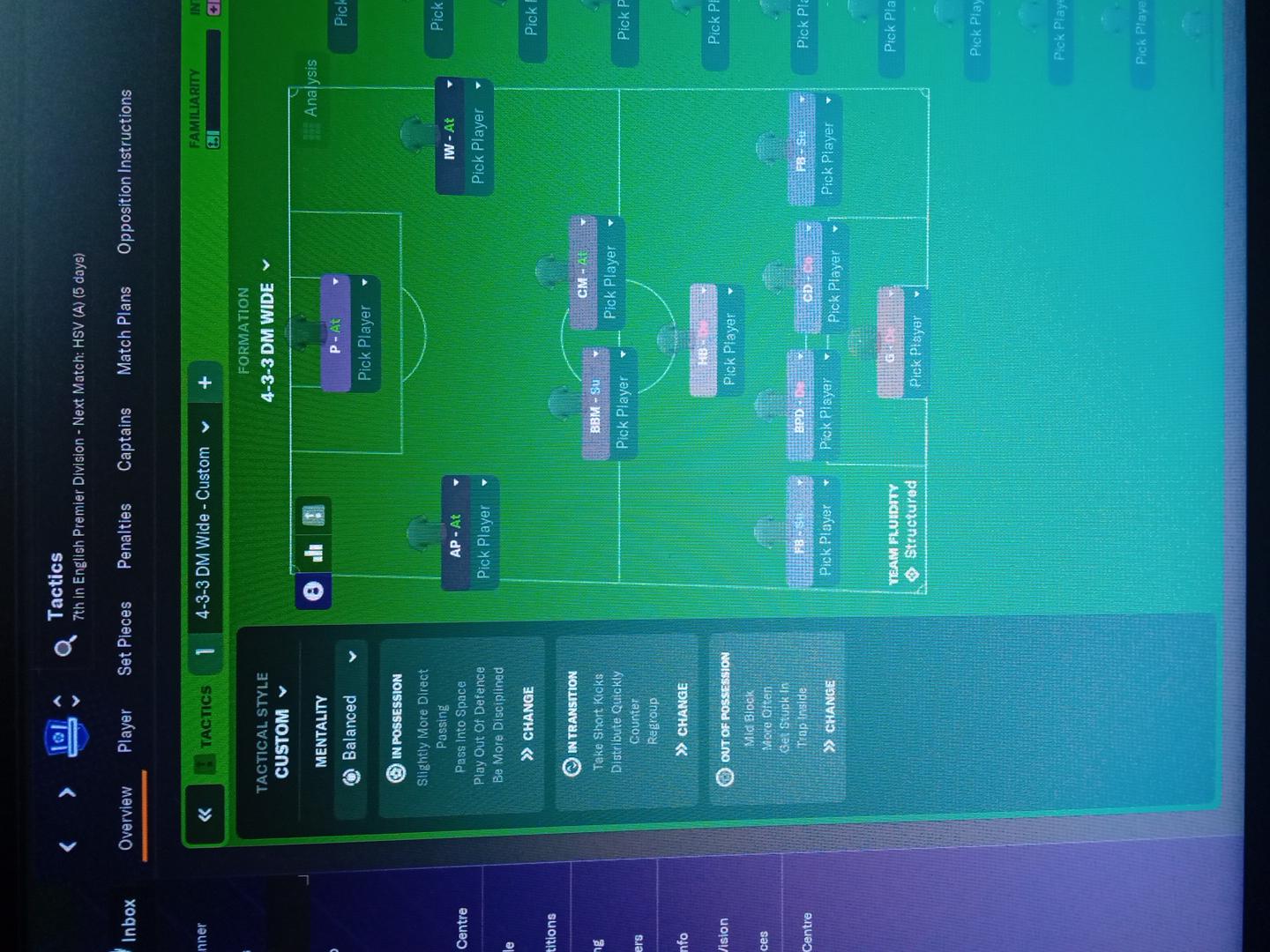
4-3-3 DM Wide Formation
Custom
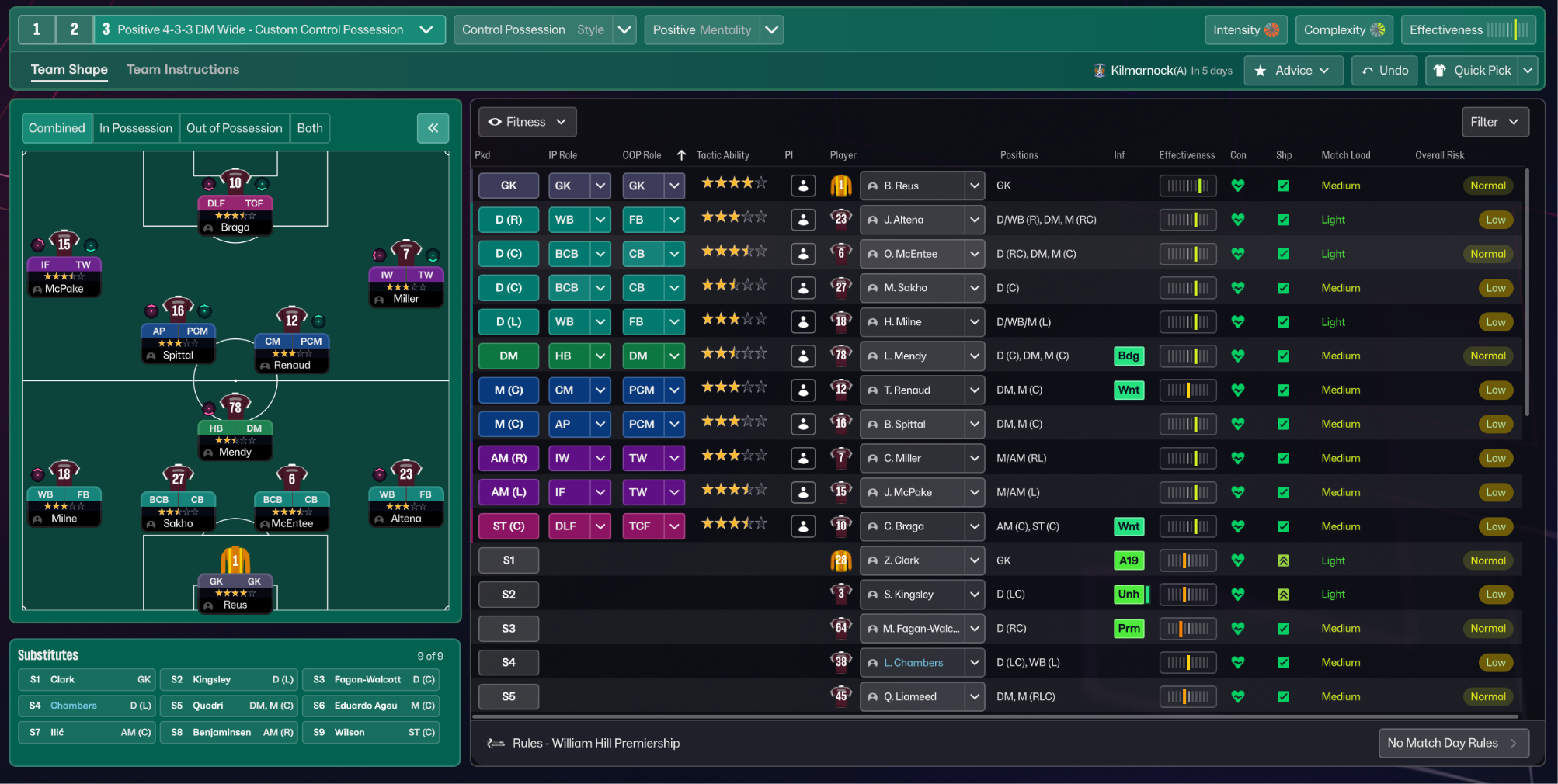
Control Possession 4-3-3 DM Wide
Control Possession
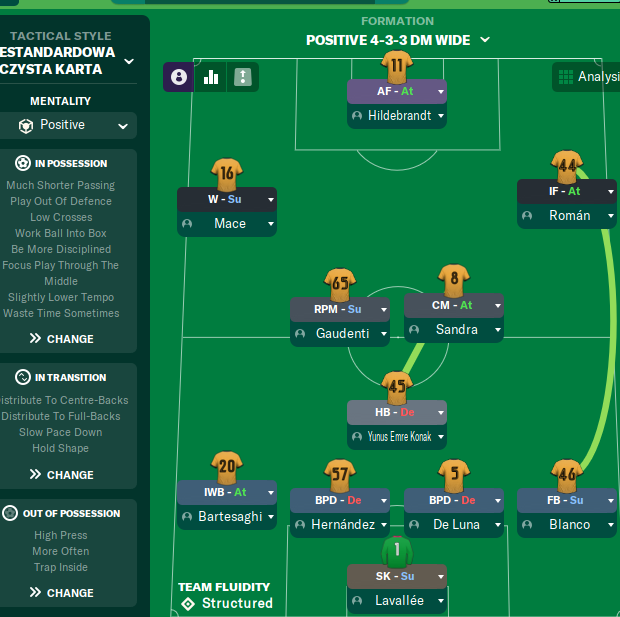
Positive 4-3-3 DM Wide
Positive
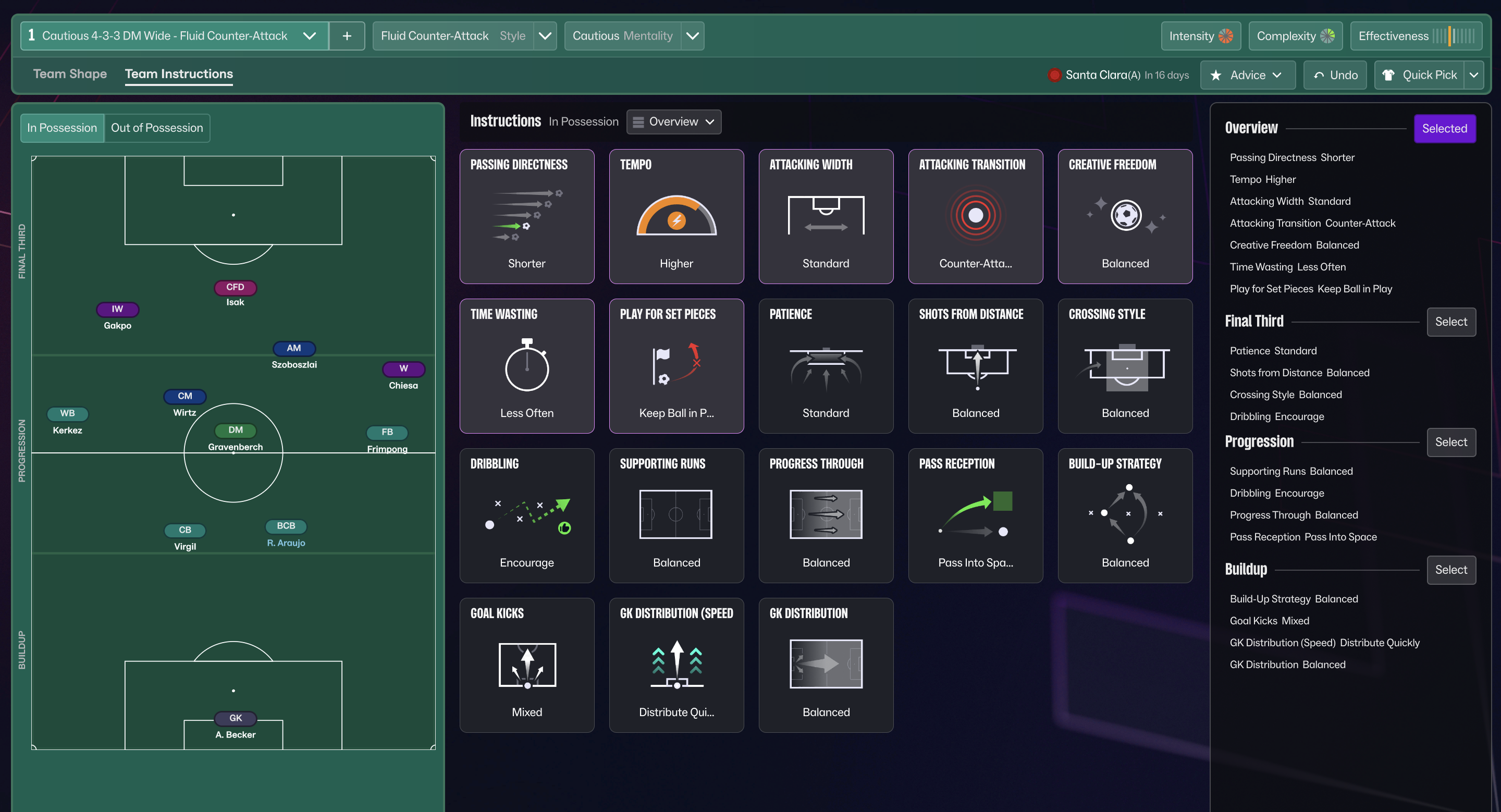
Fluid Counter-Attack 4-3-3 DM Wide
Fluid Counter-Attack
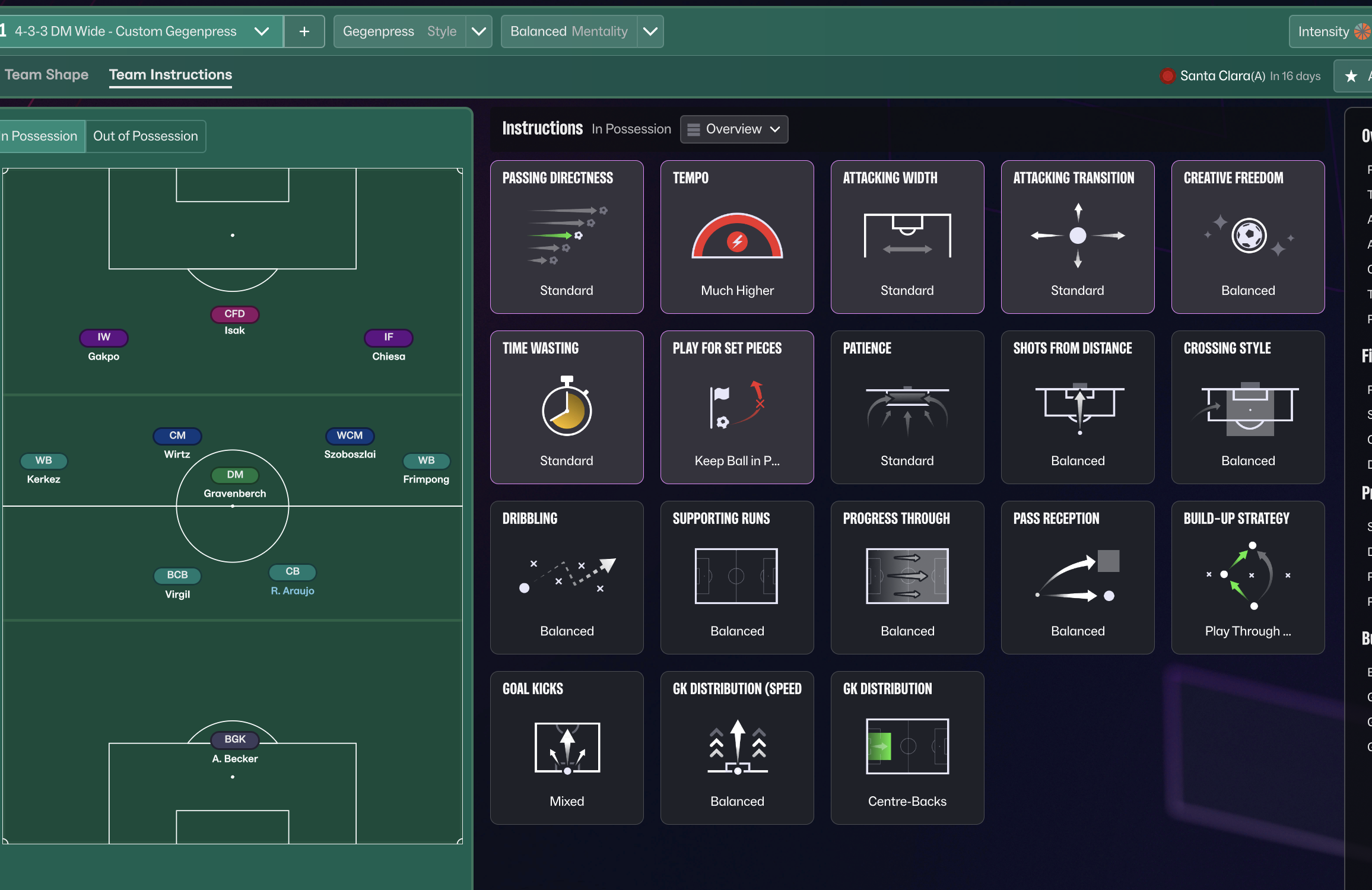
Gegenpress 4-3-3 DM Wide
Gegenpress
More control possession tactics
Guides for this tactic
The tactical theory behind the 4-3-3 DM Wide: roles, instructions, and the trade-offs that decide whether the system holds up.
Playing styles
Possession-Based Tactics in Football Manager
Build the patient, control-the-tempo style without watching your opponents counter through the gaps you leave behind.
Read guide
Foundations
Understanding the 4-3-3 Formation
Master the classic 4-3-3: player roles, tactical variations, and the trade-offs that decide whether it sings or stalls.
Read guide
Foundations
Mentality, Duty & Roles
How Mentality, Duty, and Role interact in FM, why duty trumps mentality every time, and the role-on-top-of-duty composition rules.
Read guide