Positive 4-3-3 DM Wide (Positive) Tactic
4-3-3 DM Wide
Quick build-up and exploiting spaces through the width using Wing-Backs. The combination of a Roaming Playmaker and Central Midfielder enables dynamic…
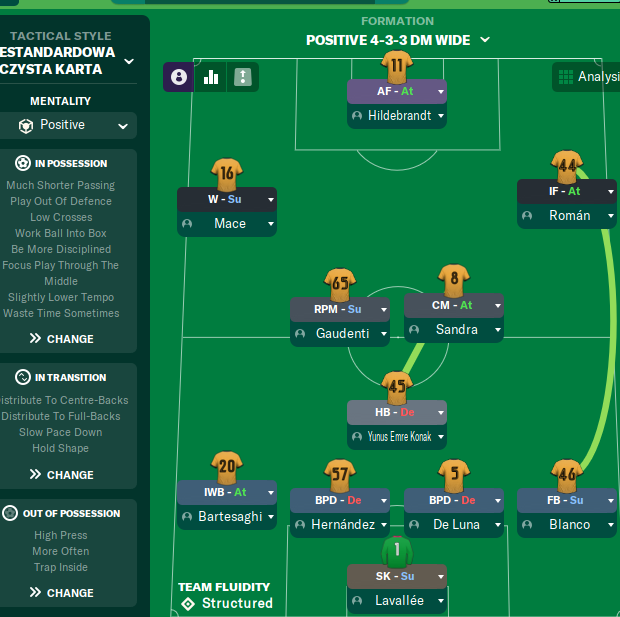
Loading tactical analysis...
Formation and style
Positive
Positive
4-3-3 DM Wide
Structured
In possession
Much Shorter Passing
Play Out Of Defence
Low Crosses
Work Ball Into Box
Be More Disciplined
Focus Play Through The Middle
Slightly Lower Tempo
Waste Time Sometimes
In transition
Distribute To Centre-Backs
Distribute To Full-Backs
Slow Pace Down
Hold Shape
Out of possession
Trigger Press More Often
Trap Inside
Player roles
GK
Sweeper Keeper
Support
CB
Ball-Playing Defender
Defend
CB
Ball-Playing Defender
Defend
RB
Wing-Back
Attack
LB
Inverted Wing-Back
Attack
DM
Half Back
Defend
CM
Roaming Playmaker
Support
CM
Central Midfielder
Attack
RW
Winger
Support
CF
Advanced Forward
Attack
LW
Inside Forward
Attack
Phase description
Focuses on building through the middle with quick, short passes, utilizing the Roaming Playmaker to create chances.
Aims to regain possession quickly while maintaining a strong shape, with a focus on slowing the game down.
Quick build-up and exploiting spaces through the width using Wing-Backs.
Team shape defence
4-1-4-1
The team adopts a compact shape with the Half Back dropping to form a block when out of possession.
Half Back at [3,3] allows for additional cover in defence, supporting the back four.
Team shape attack
4-3-3
The attackers spread out in the front line, providing width and options for the midfielders.
Inside Forward and Winger at [6,2] and [6,4] ensure space is used effectively.
Key strengths
Fluid Midfield Communication
The combination of a Roaming Playmaker and Central Midfielder enables dynamic midfield movement, creating varying options.
RPM-Su at [4,3] combined with CM-At at [4,4] facilitates quick transitions.
Width from Wing-Backs
With both Wing-Backs tasked to attack, they provide width and support for the forwards, stretching the opposition.
IWB-A at [2,1] and FB-A at [2,5] offer attacking outlets on the flanks.
Conflicting tactics
Midfield Overload
Potential clashes in player movement could leave gaps in defensive cover if players venture too far forward.
CCM-At at [4,4] and RPM-Su at [4,3] could stretch the midfield during transitions.
Lack of Defensive Width
Wing-Backs pushing too far up may leave space behind them, risking counter-attacks.
FB-A at [2,5] and IWB-A at [2,1] could create vulnerabilities in defensive transitions.
Risk exposures
Risk Exposures
Items
Defensive Transitions
Players pushing too high may expose the backline to counters.
RB with FB-A at [2,5] can create vulnerabilities if opposition breaks quickly.
Central Midfield Gaps
If the RPM-Su gets caught out of position, the midfield can be bypassed easily.
RPM-Su at [4,3] should remain disciplined to cover spaces.
Role synergies
Role Synergies
Items
Half Back and Ball-Playing Defenders
Joint effort between the HB and BPDs enhances ball distribution and maintains defensive solidity.
HB-De at [3,3] and BPD-De at [2,2] facilitates better building from the back.
Roaming Playmaker and Central Midfielder
Combination provides fluidity in midfield, allowing for varied attacking maneuvers.
RPM-Su at [4,3] with CM-At at [4,4] creates space for progressive passes.
Suggested questions
How can we ensure more defensive stability with our pressing style?
What adjustments can be made to limit the risk of counter-attacks?
Should we modify our midfield roles to provide better coverage during transitions?
Related Tactics
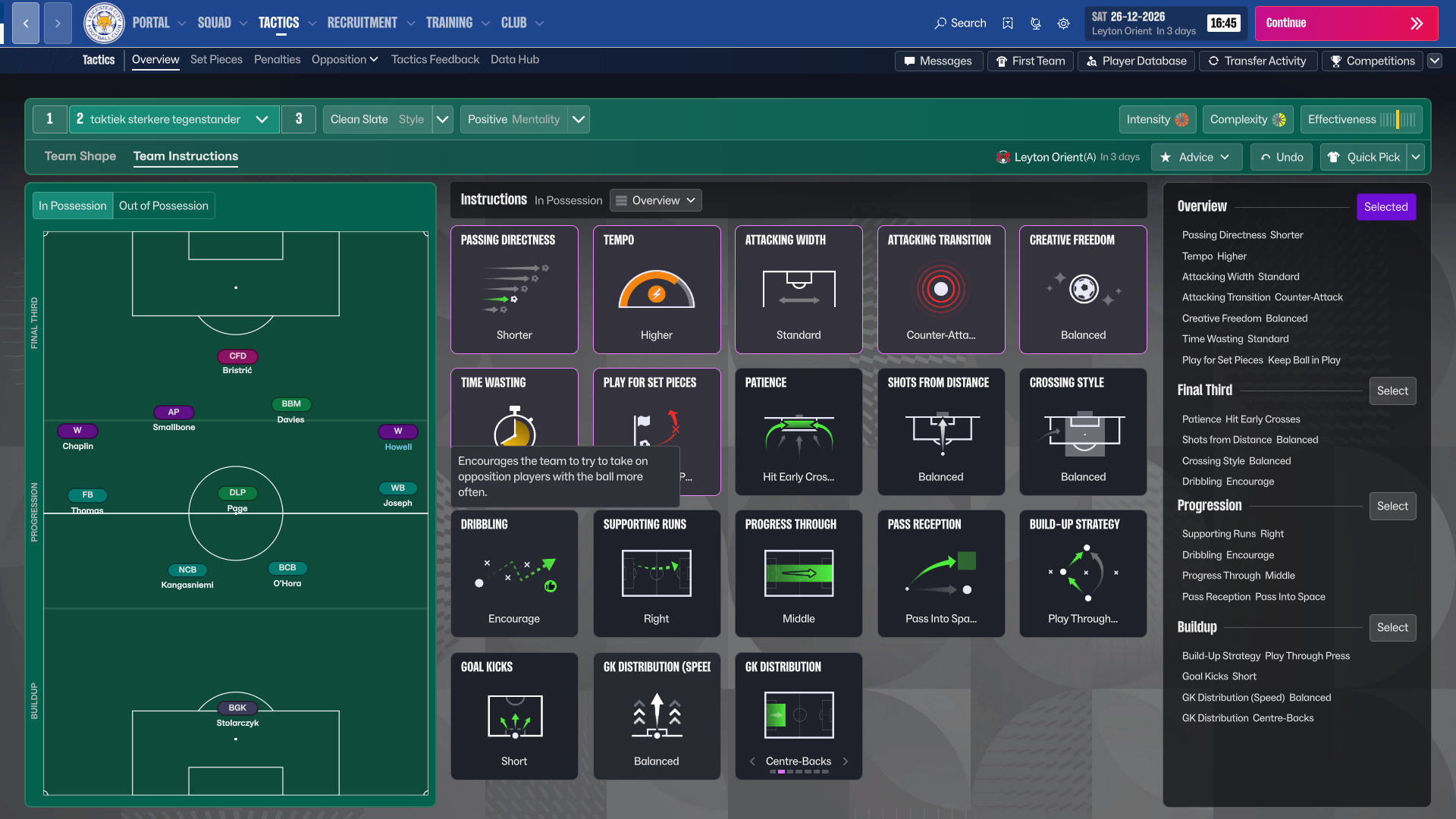
4-3-3 DM Wide Formation
clean slate
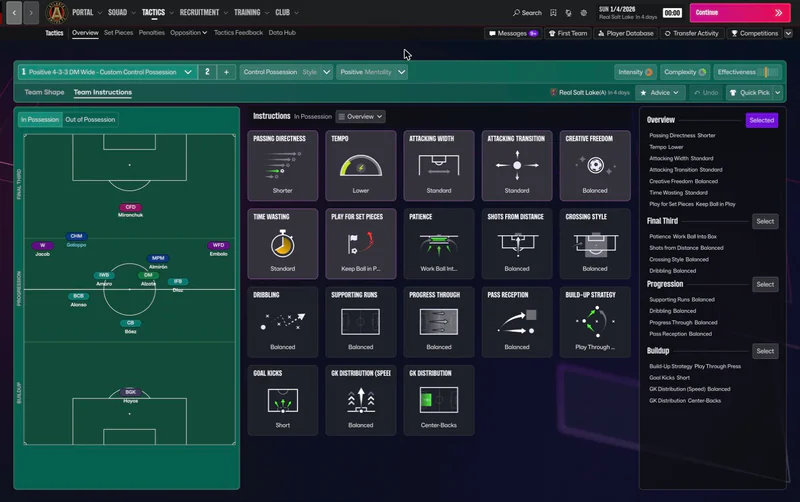
Control Possession 4-3-3 DM Wide
control possession
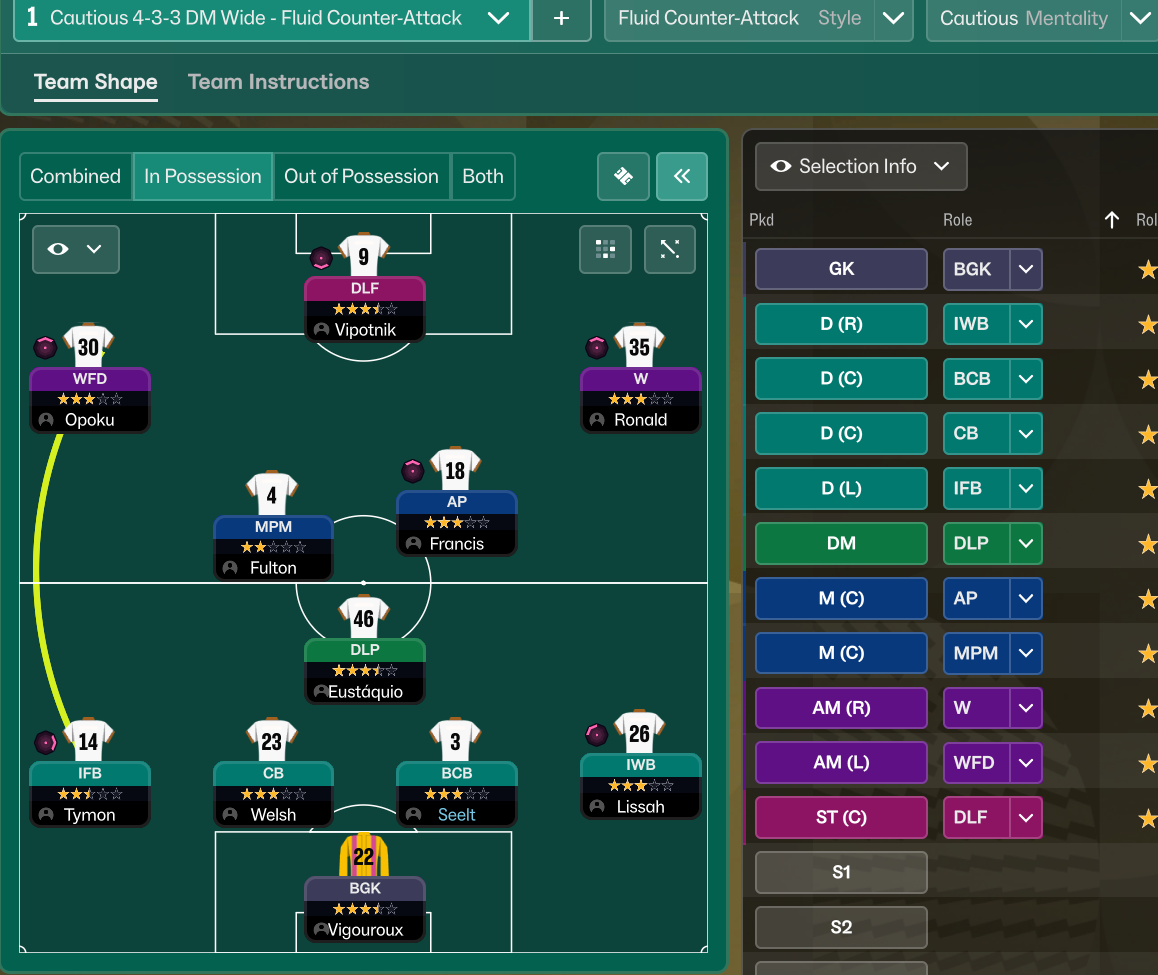
Fluid Counter-Attack 4-3-3 DM Wide
Fluid Counter-Attack
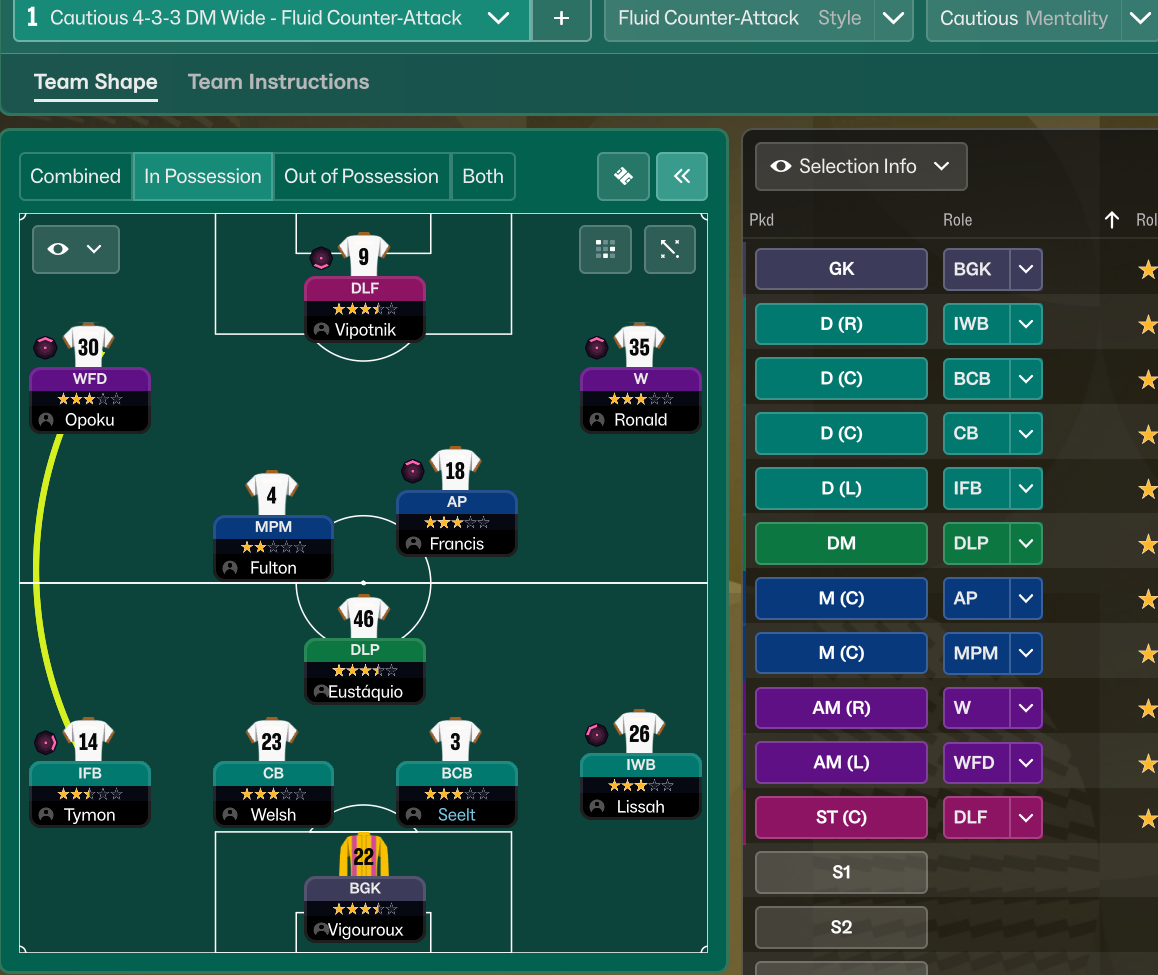
Fluid Counter-Attack 4-3-3 DM Wide
Fluid Counter-Attack
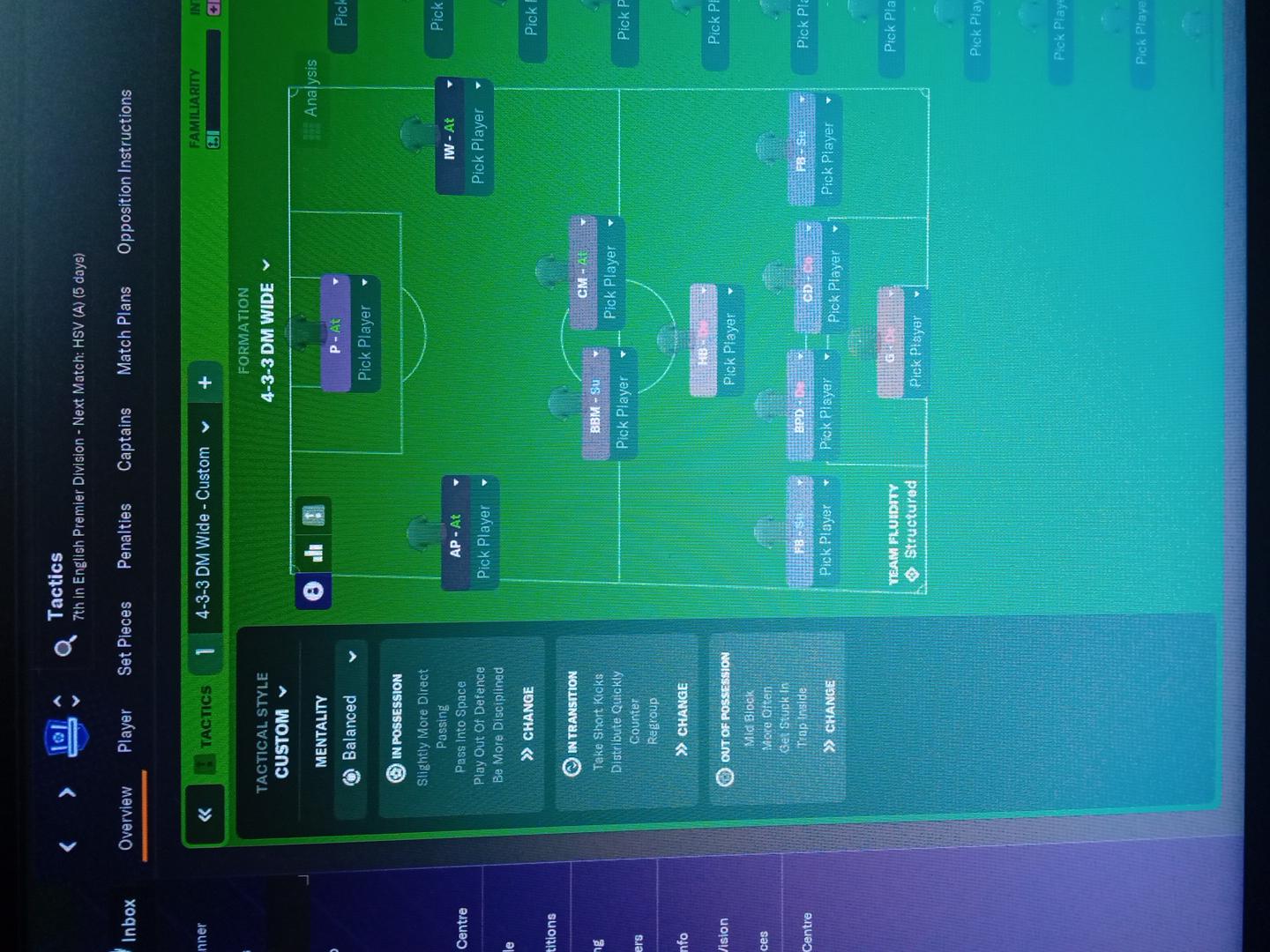
4-3-3 DM Wide Formation
Custom
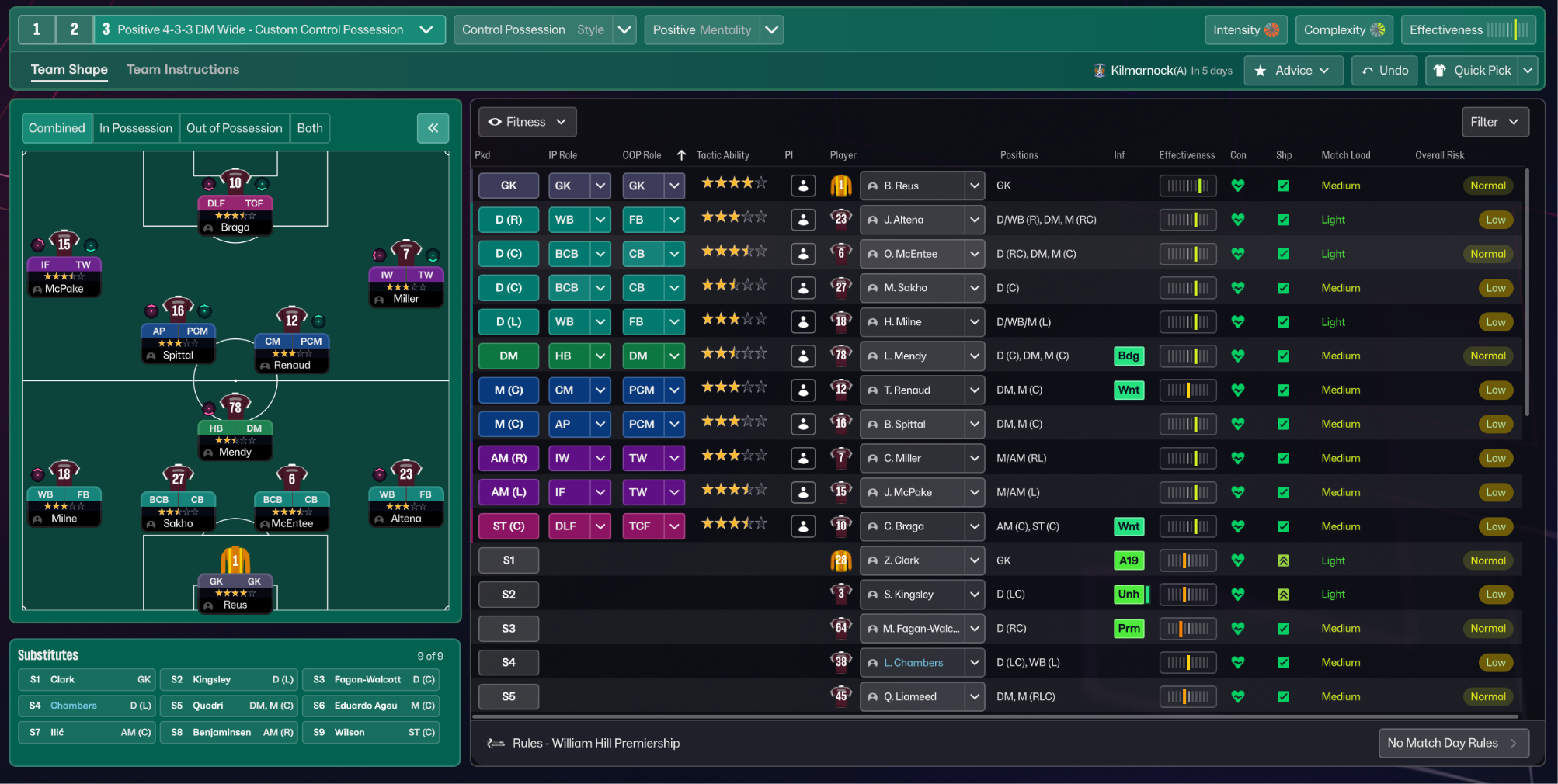
Control Possession 4-3-3 DM Wide
Control Possession
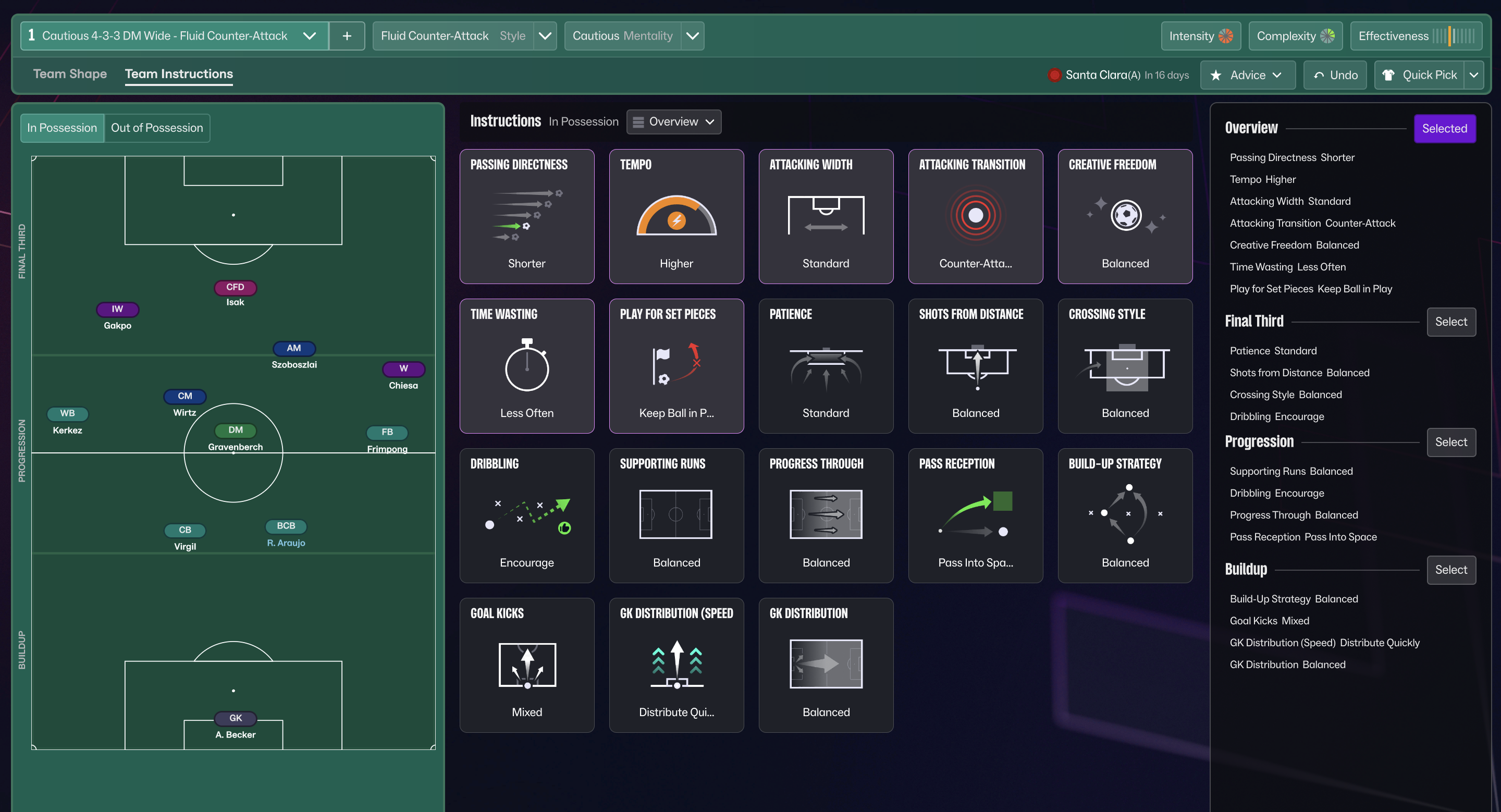
Fluid Counter-Attack 4-3-3 DM Wide
Fluid Counter-Attack
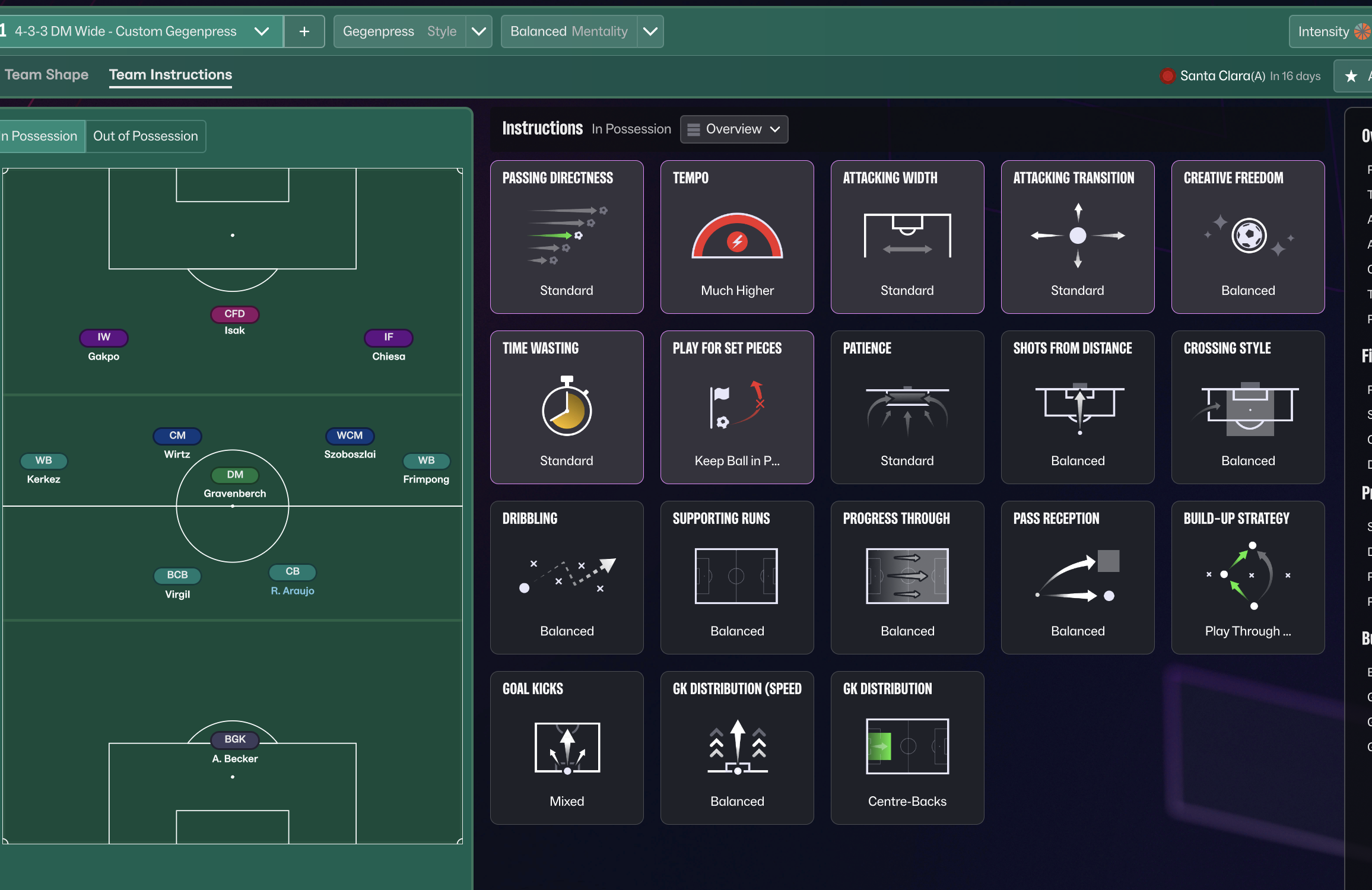
Gegenpress 4-3-3 DM Wide
Gegenpress
More Positive tactics
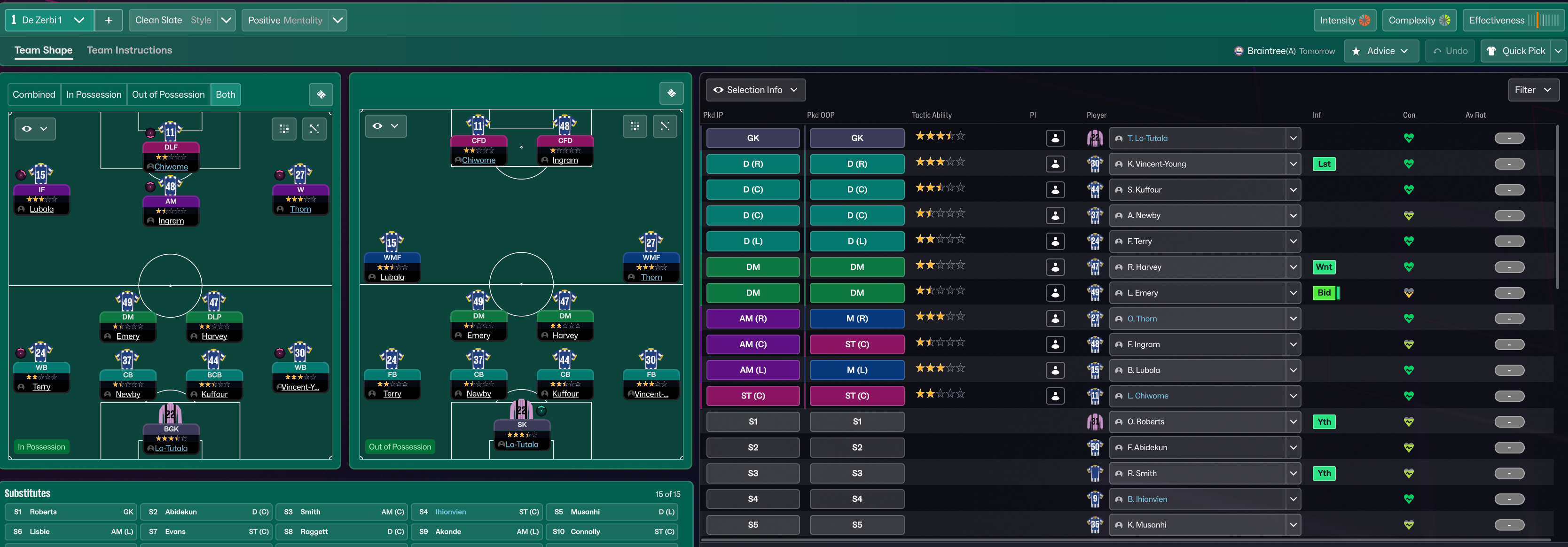
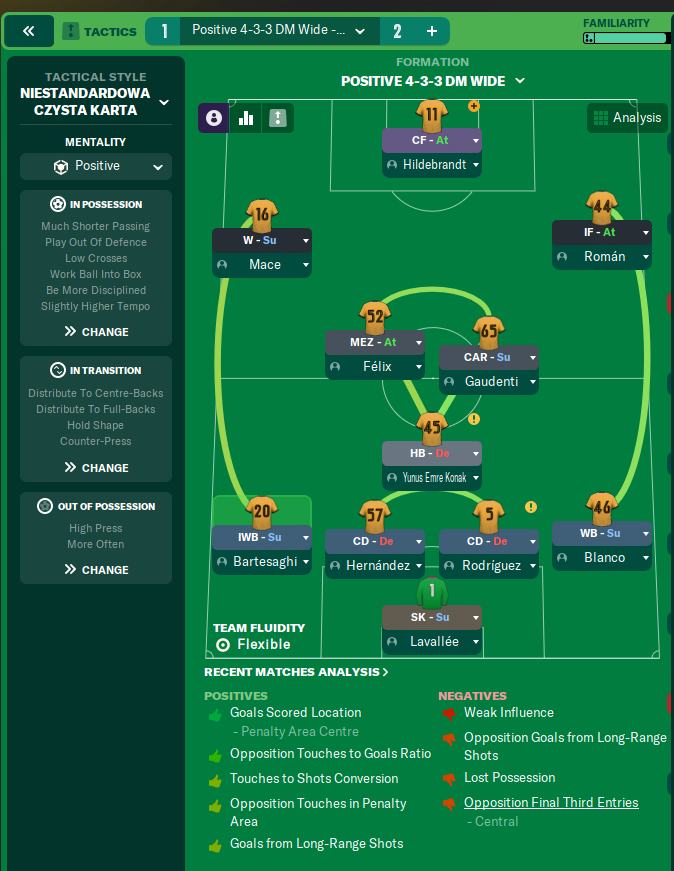
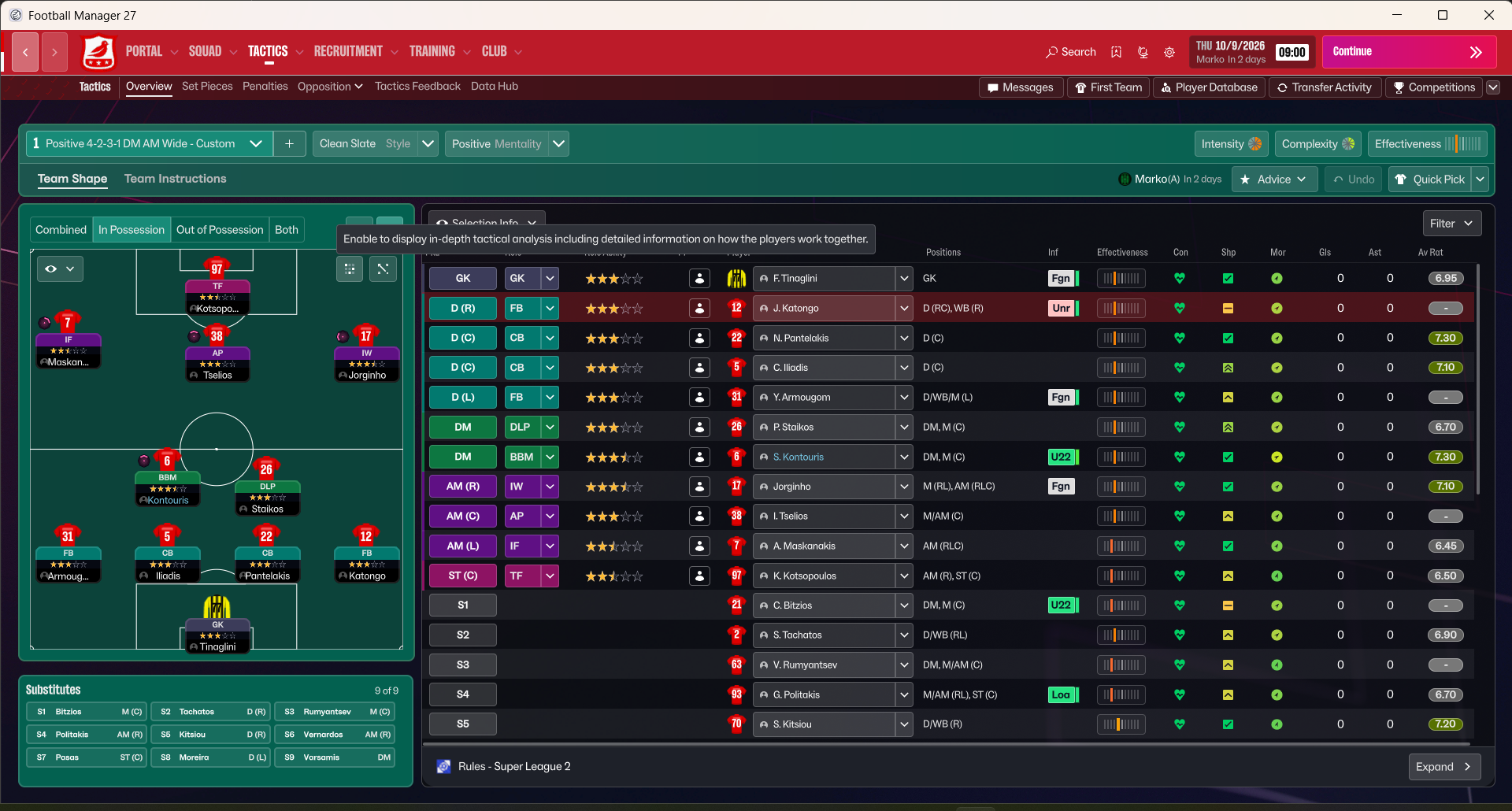
Guides for this tactic
The tactical theory behind the 4-3-3 DM Wide: roles, instructions, and the trade-offs that decide whether the system holds up.
Foundations
Understanding the 4-3-3 Formation
Master the classic 4-3-3: player roles, tactical variations, and the trade-offs that decide whether it sings or stalls.
Read guide
Player pairings
Midfield Trios
Holder, runner, creator: the role distribution rule for three-man midfields, the AMC variants, and the antipatterns that break them.
Read guide
Foundations
Pressing Triggers and Intensity
Counter-Press, Regroup, Stand Off, Trigger Press: what each pressing instruction does in FM and how to pair them without contradicting.
Read guide