Gegenpress 4-3-3 DM Wide (Balanced) Tactic
4-3-3 DM Wide
Exploiting space through width provided by the wing-backs and inside forwards. The combination of Inside Forwards and a Complete Forward allows for…
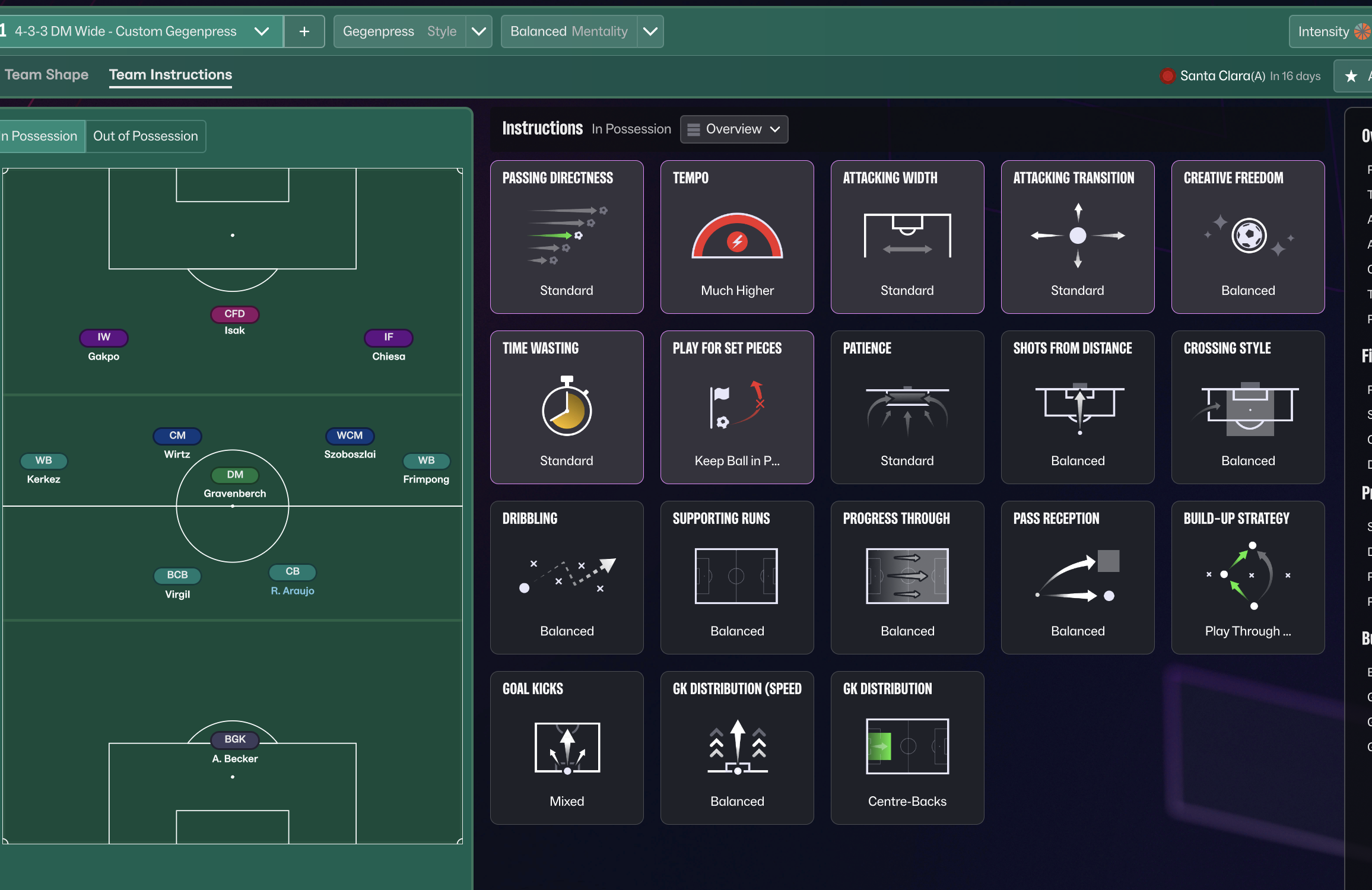
Loading tactical analysis...
Formation and style
Gegenpress
Balanced
4-3-3 DM Wide
Custom
In possession
Much Higher Tempo
Standard Passing Directness
Standard Attacking Width
Balanced Creative Freedom
Standard Time Wasting
Keep Ball in Play for Set Pieces
Standard Patience
Balanced Dribbling
Balanced Supporting Runs
Balanced Progress Through
Balanced Pass Reception
Play Through the Middle
In transition
Counter Press
Counter
Out of possession
Higher Line of Engagement
Higher Defensive Line
Standard Prevent Short GK Distribution
Player roles
GK
Goalkeeper
Defend
CB
Ball-Playing Defender
Defend
CB
Centre-Back
Defend
WB
Wing-Back
Support
WB
Wing-Back
Support
DM
Deep-Lying Playmaker
Support
CM
Central Midfielder
Support
WCM
Wide Centre-Midfielder
Support
IW
Inside Forward
Attack
CF
Complete Forward
Attack
IF
Inside Forward
Attack
Phase description
Utilizes quick transitions and fluid movement in the final third.
Aggressive counter-pressing upon losing possession to regain control quickly.
Exploiting space through width provided by the wing-backs and inside forwards.
Team shape defence
4-2-3-1
Solid four-man defensive line supported by a deep-lying playmaker offering cover.
Two CBs and two WBs maintaining compactness around the DM at [2,2], [2,3], [2,4] and [2,5] respectively.
Team shape attack
4-3-3
Three forwards pressing high with inside forwards cutting in.
Dynamic front three comprising a CF and two IWs at [6,2], [6,3], and [6,4], creating goal-scoring opportunities.
Key strengths
Fluid Attacking Movement
The combination of Inside Forwards and a Complete Forward allows for dynamic attacking play.
CF at [6,3] with IWs at [6,2] and [6,4], utilizing space effectively.
Defensive Stability
The dual pivot formed by the DM and CM provides resilience against counter-attacks.
DM at [3,3] with CM at [4,3], ensuring coverage in midfield.
Conflicting tactics
Vulnerability to Counter Attacks
High pressing can leave gaps in defense if the press is bypassed.
Higher line of engagement may expose CBs at [2,2] and [2,3] to fast wingers or strikers.
Over-Reliance on Wing Play
Insufficient central penetration may become predictable against compact defenses.
Inconsistent central midfield support from the CM and WCM roles.
Risk exposures
Risk Exposures
Items
Counter Attacks
The high defensive line can be exploited by quick transitions.
Opponents could target space left by WBs at [2,1] and [2,5].
Central Attacking Pace
Insufficient cover in central areas can be targeted by opponents.
Pairs of CB and DM potentially overloaded by opposing attacks.
Role synergies
Role Synergies
Items
DM and CM Partnership
Allows for smooth transitions between defense and midfield play.
DM at [3,3] and CM at [4,3] maintain connection in central areas.
Wing-Backs and Inside Forwards
Provides width and creates overloads against defenses.
WBs at [2,1] and [2,5] stretch defenses, aiding IWs at [6,2] and [6,4].
Suggested questions
How do I improve my midfield control against teams with a diamond formation?
What adjustments can I make to strengthen my counter-pressing?
Which players would best complement this tactical setup?
Related Tactics
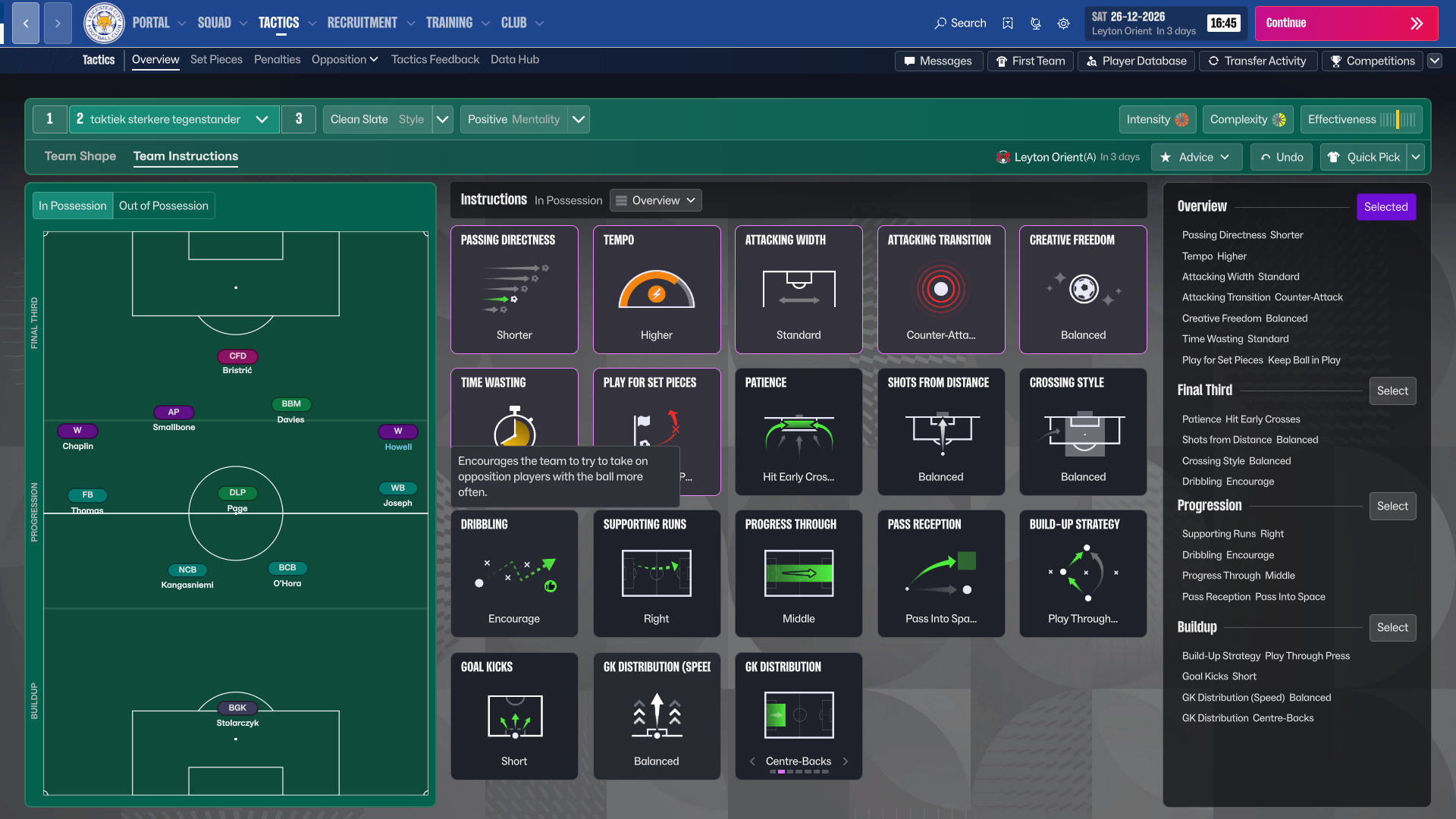
4-3-3 DM Wide Formation
clean slate
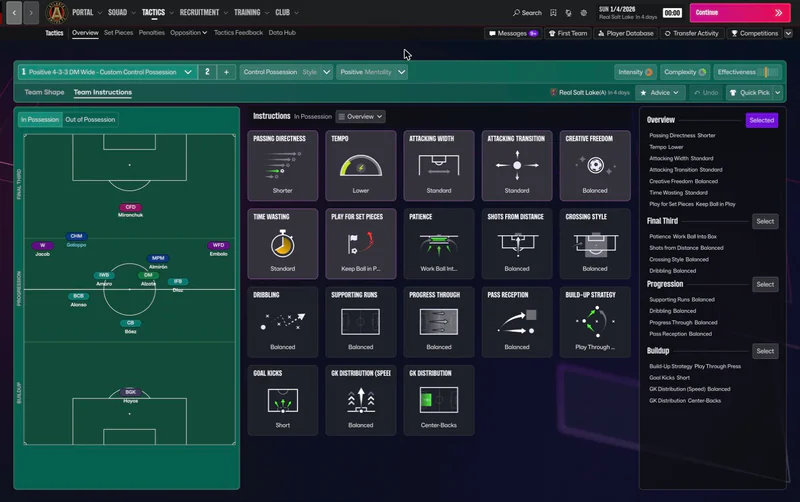
Control Possession 4-3-3 DM Wide
control possession
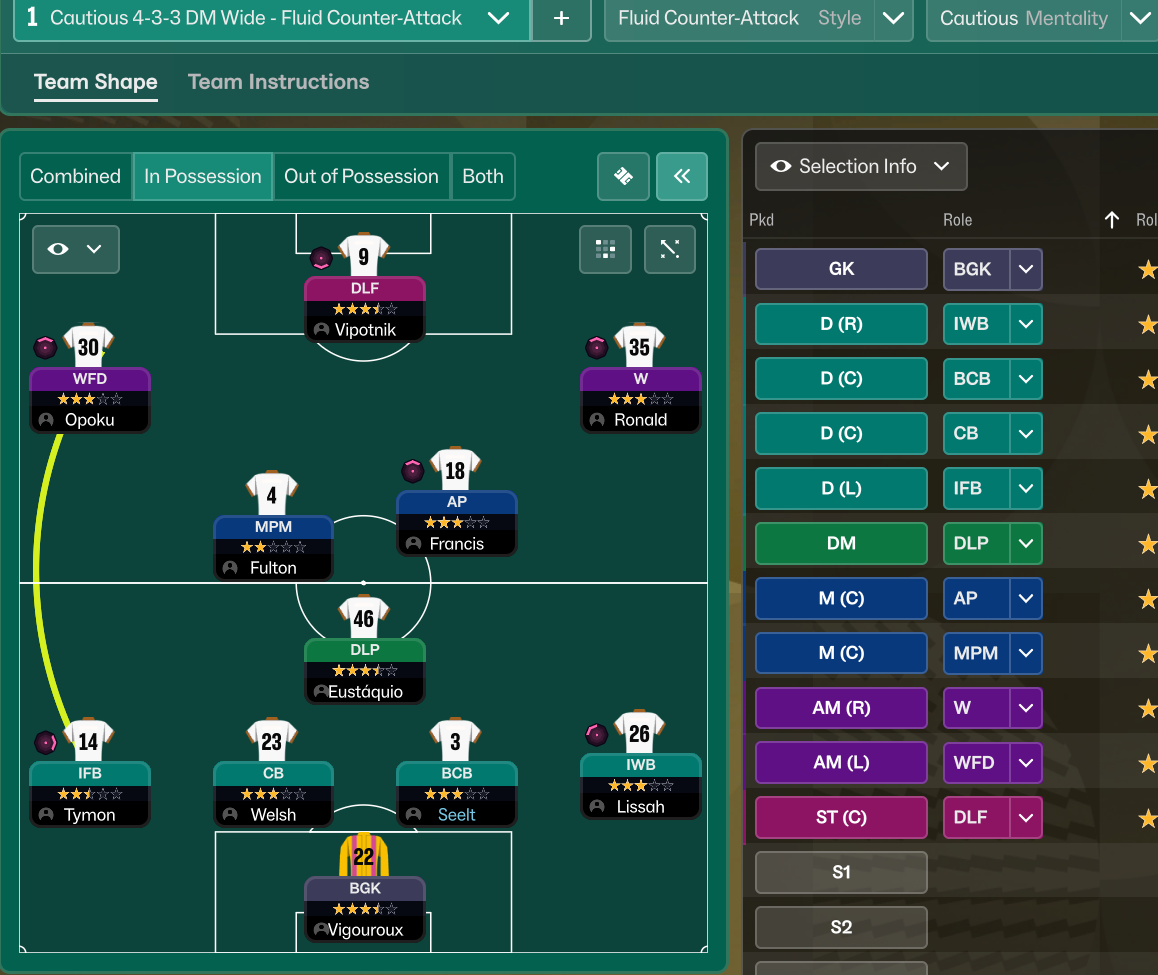
Fluid Counter-Attack 4-3-3 DM Wide
Fluid Counter-Attack
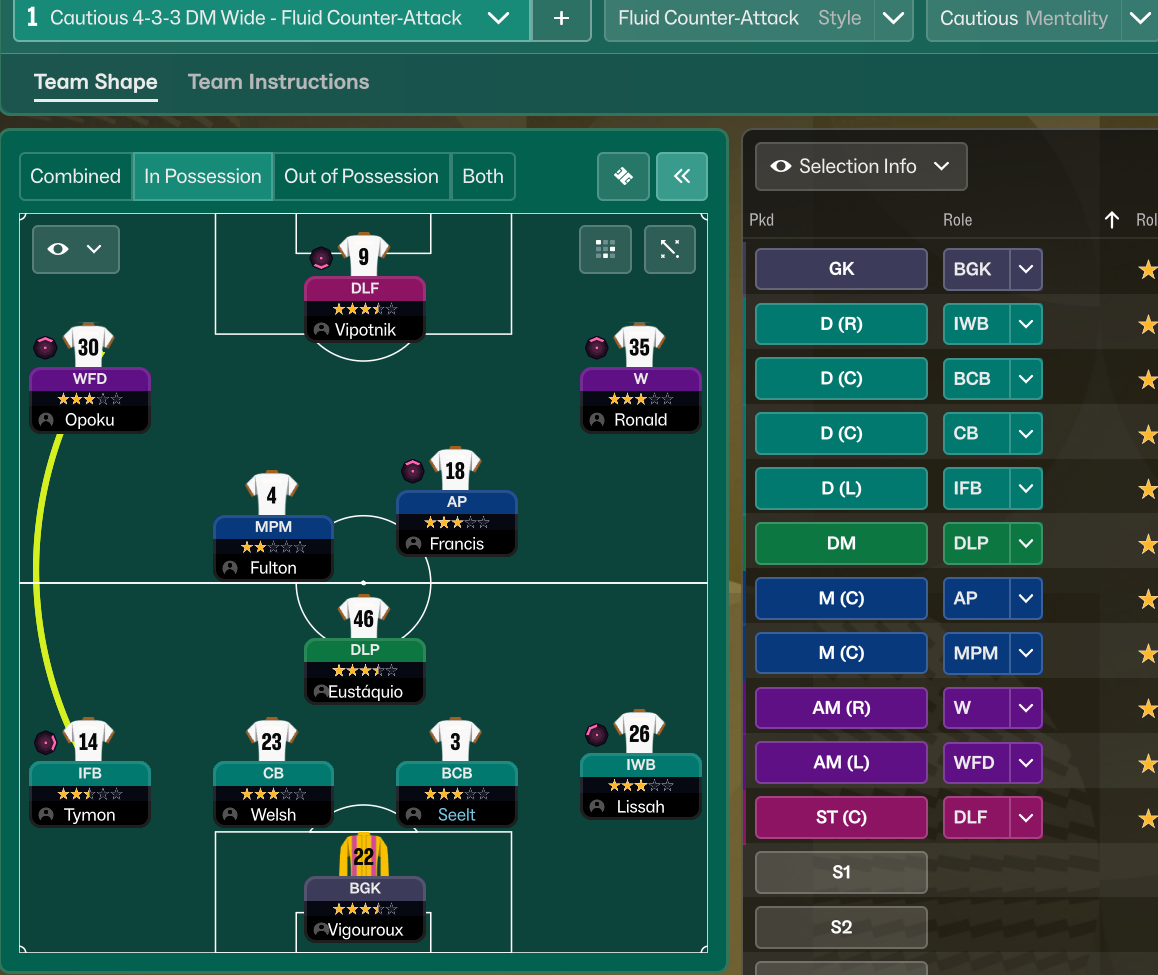
Fluid Counter-Attack 4-3-3 DM Wide
Fluid Counter-Attack
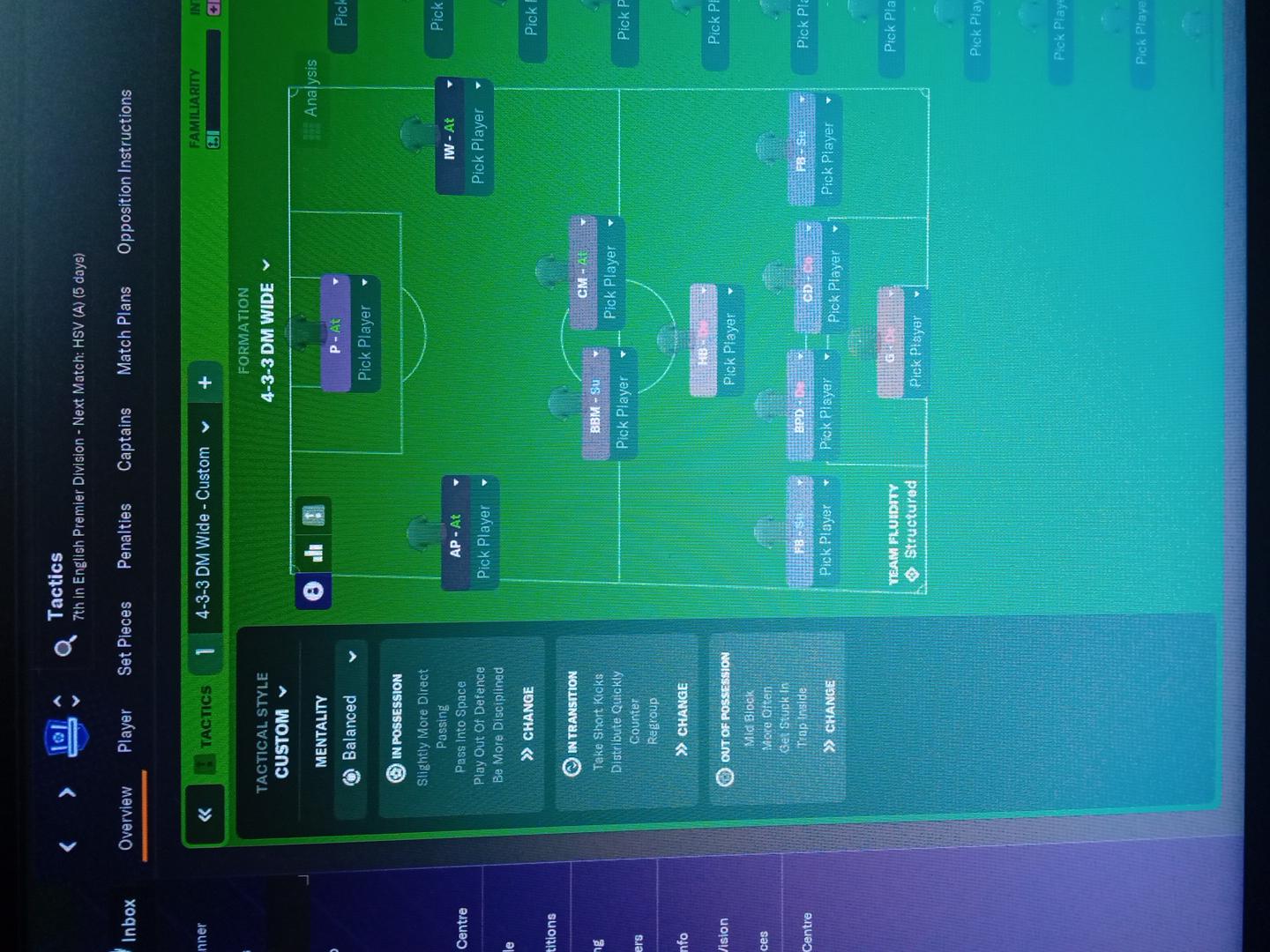
4-3-3 DM Wide Formation
Custom
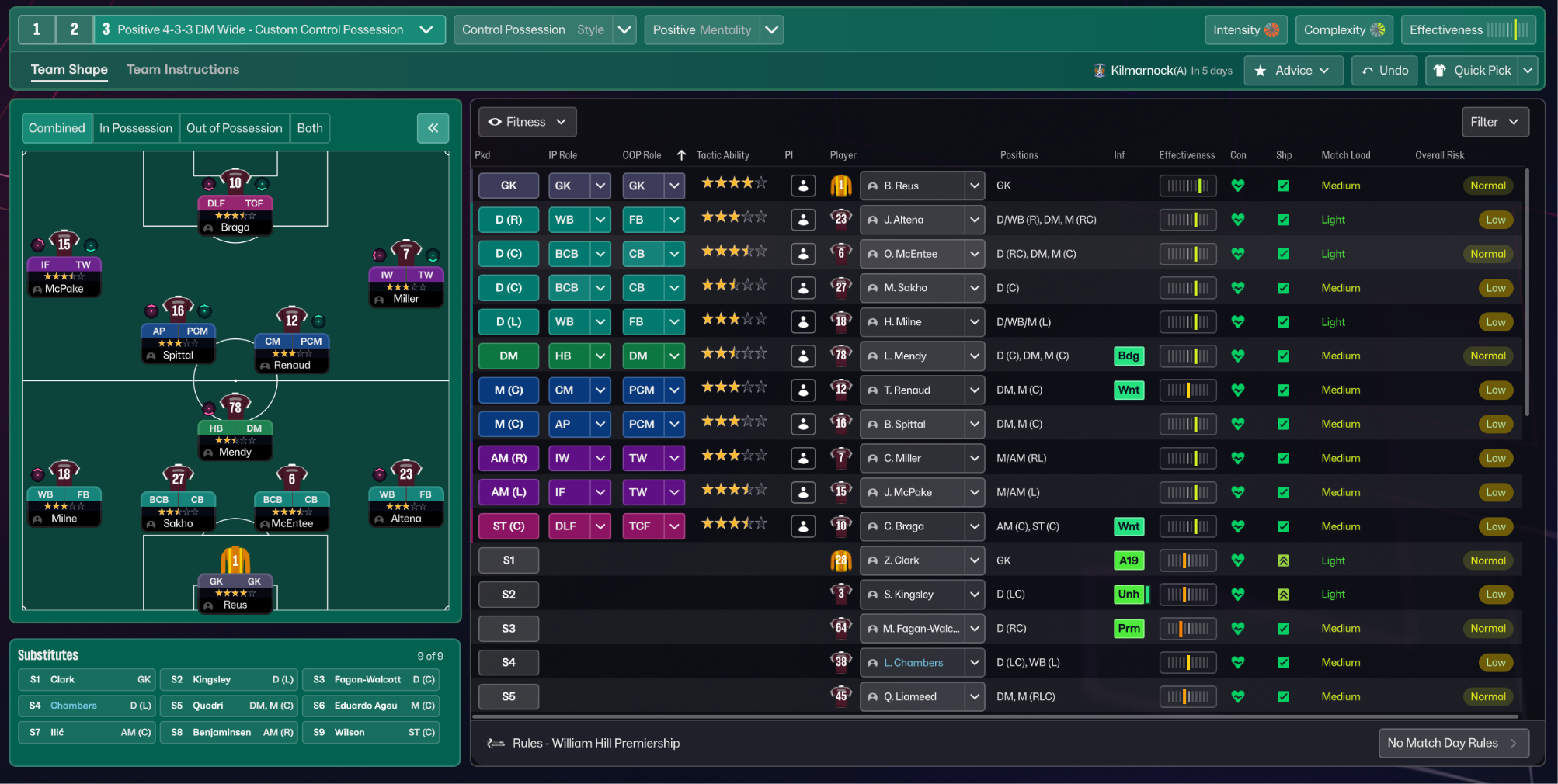
Control Possession 4-3-3 DM Wide
Control Possession
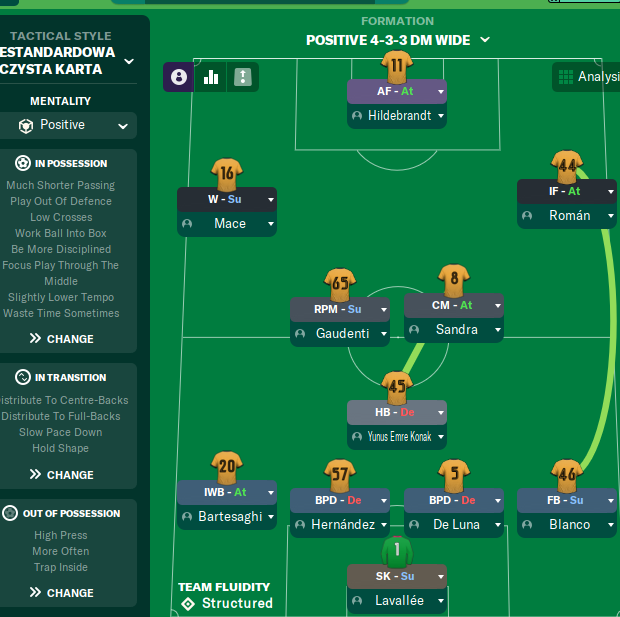
Positive 4-3-3 DM Wide
Positive
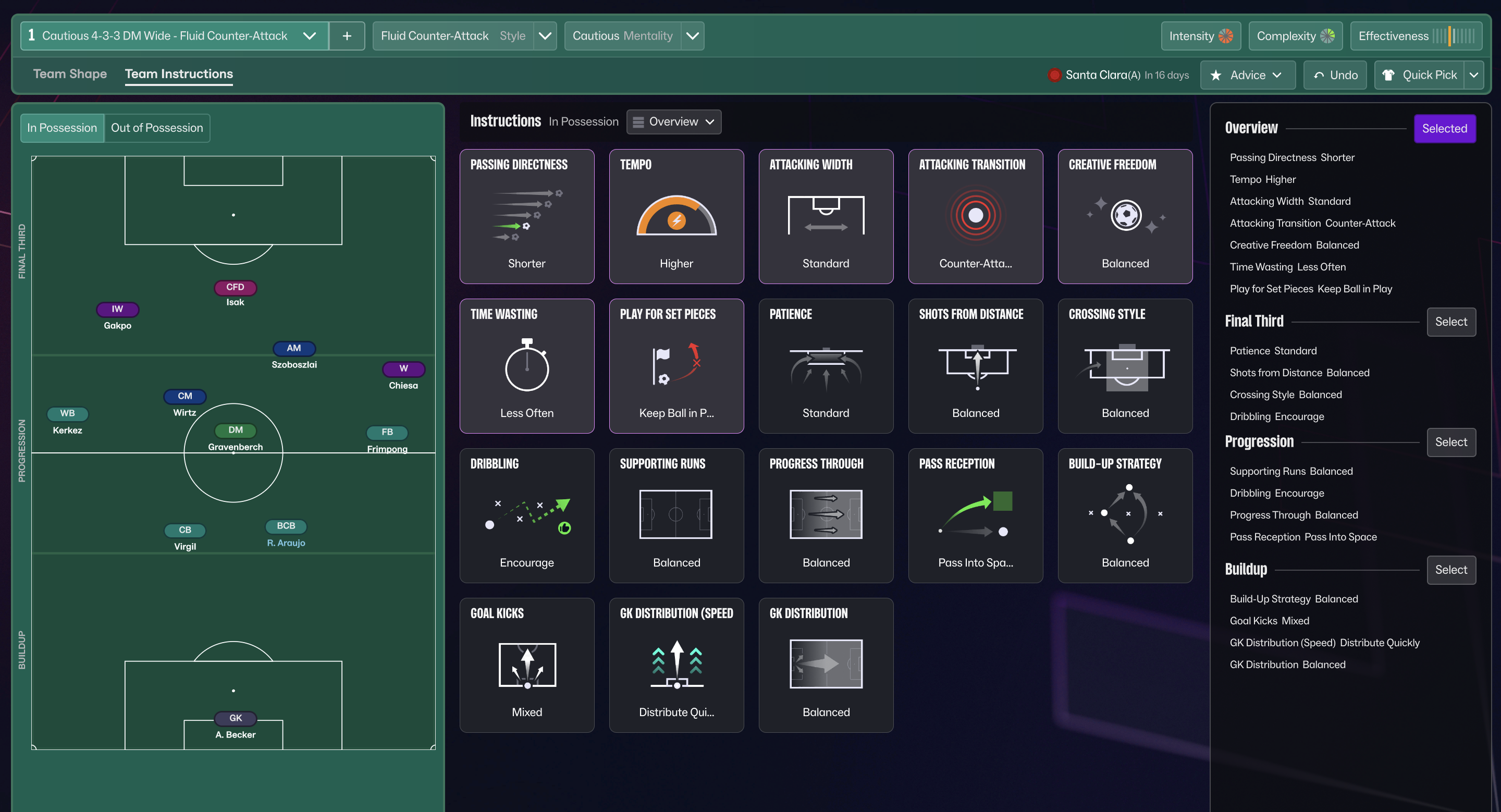
Fluid Counter-Attack 4-3-3 DM Wide
Fluid Counter-Attack
More Gegenpress tactics
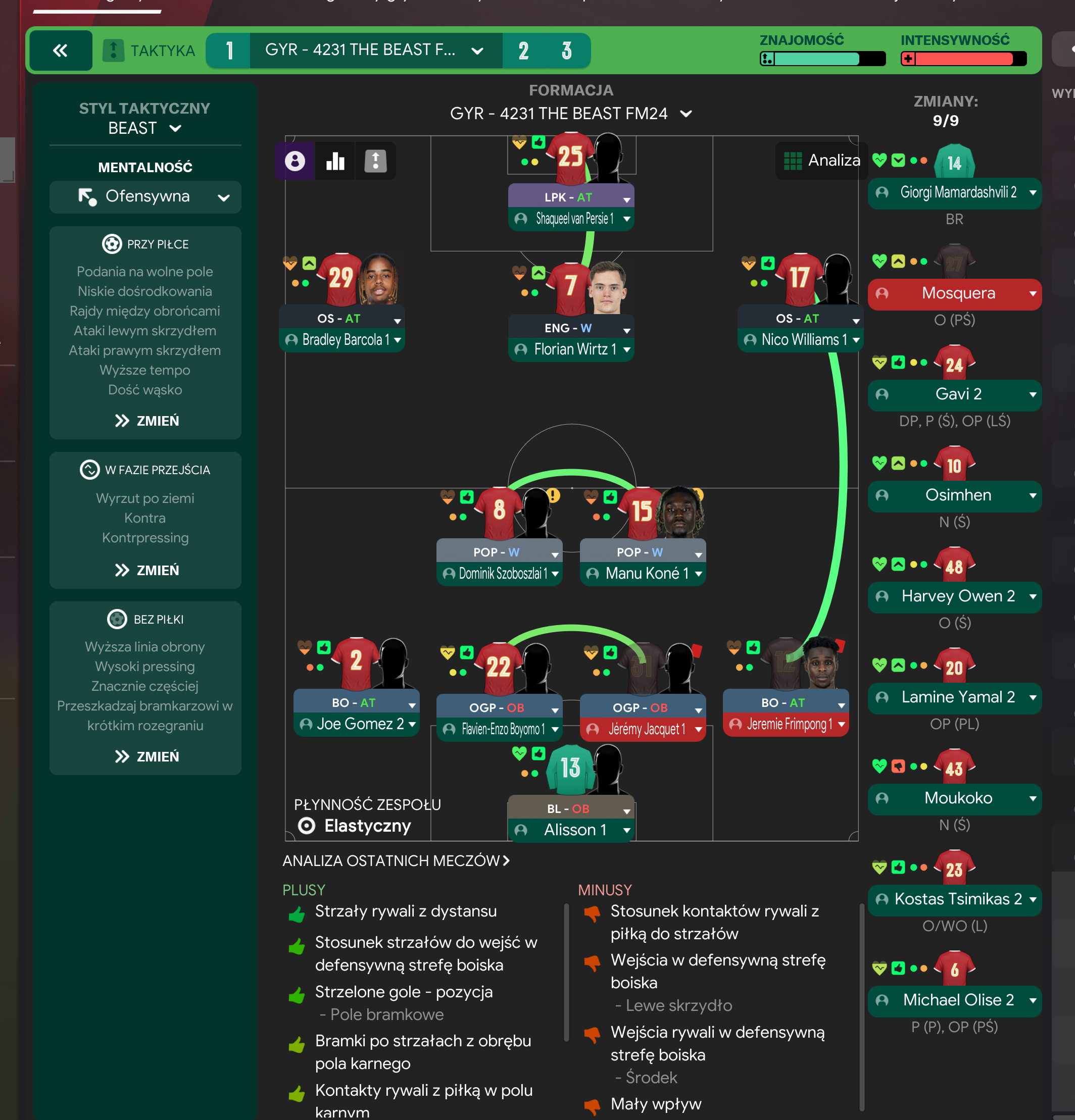
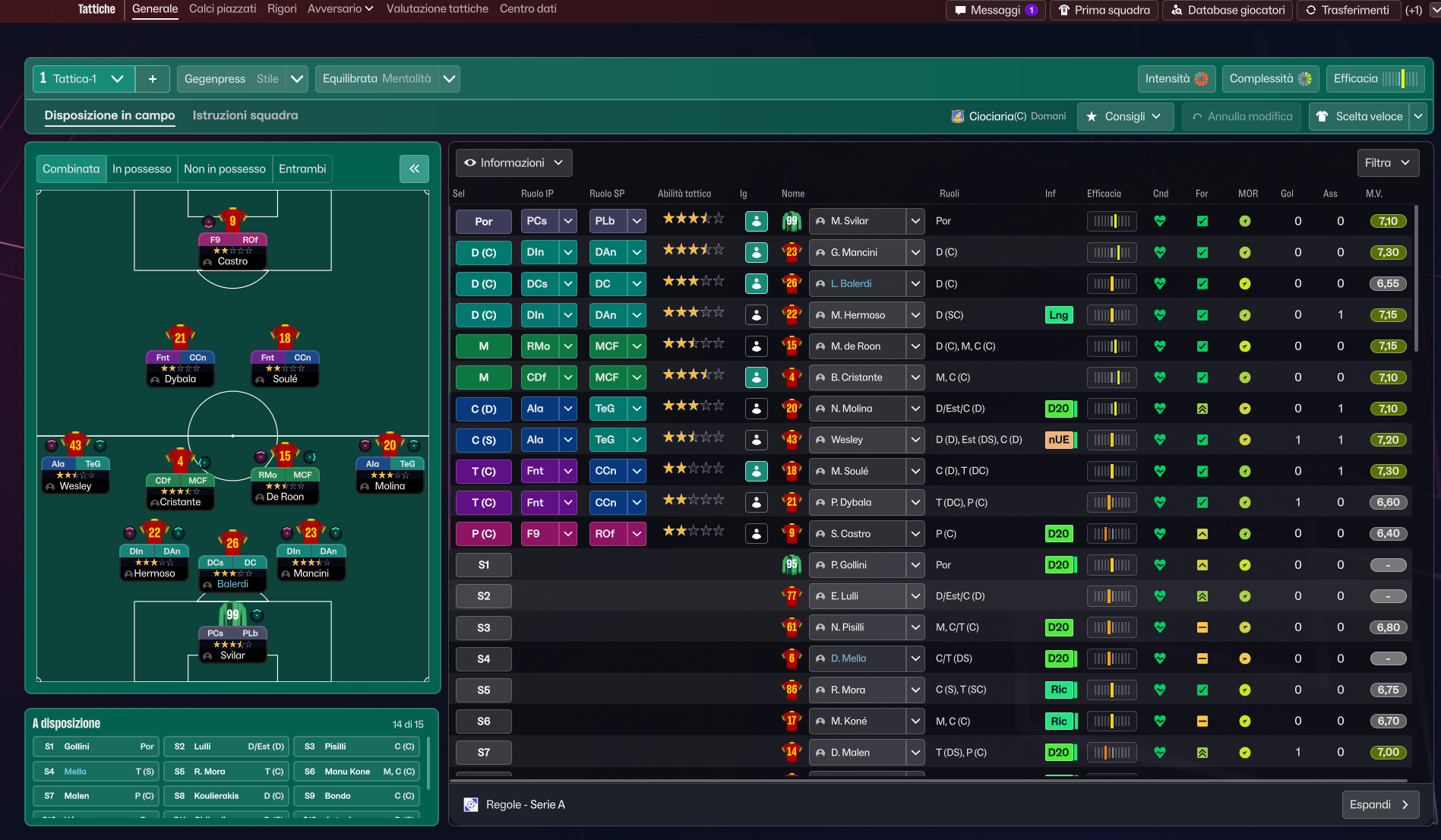
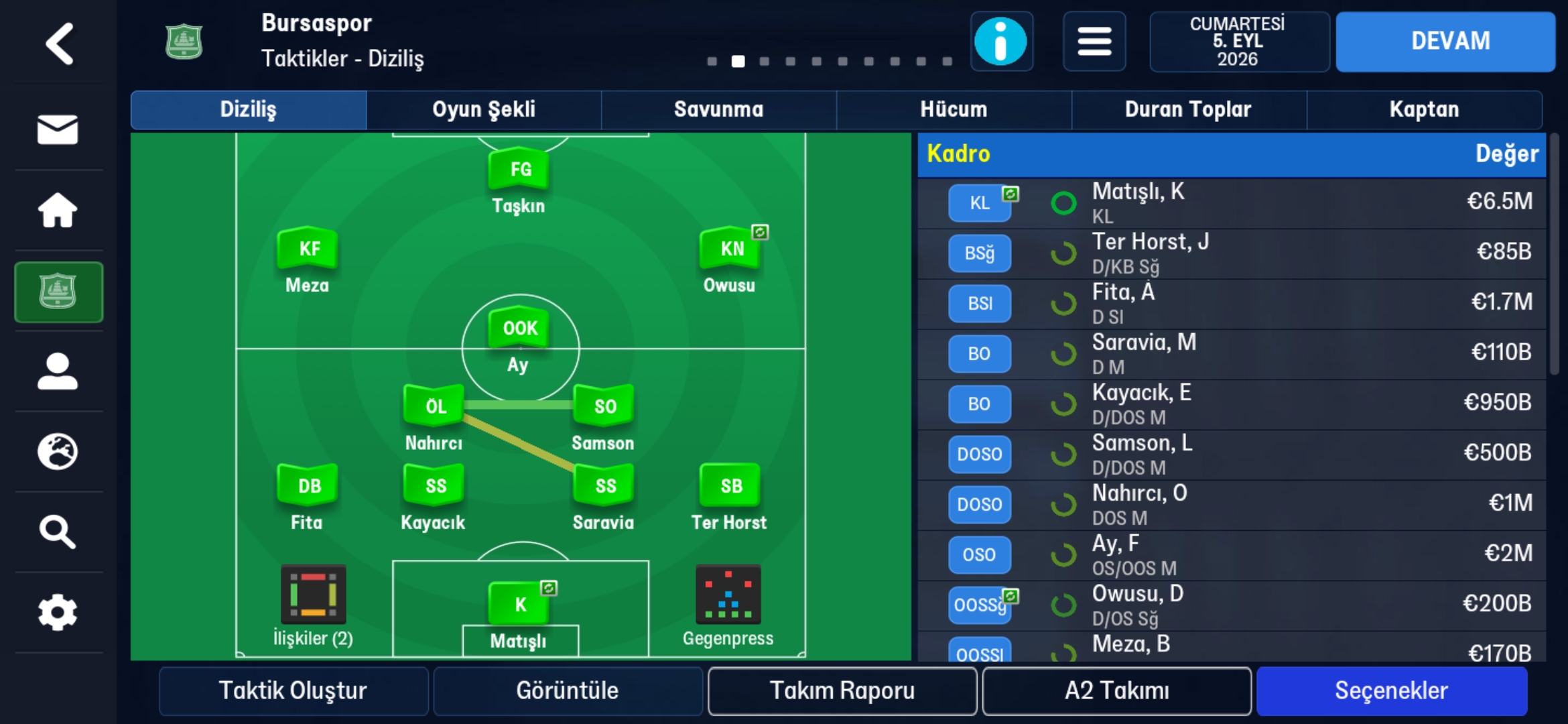
Guides for this tactic
The tactical theory behind the 4-3-3 DM Wide: roles, instructions, and the trade-offs that decide whether the system holds up.
Playing styles
Tiki-Taka vs Positional Play
Why circulation density and zonal occupation aren't the same thing in FM, and the half-space occupation rule that decides build-up.
Read guide
Playing styles
Possession-Based Tactics in Football Manager
Build the patient, control-the-tempo style without watching your opponents counter through the gaps you leave behind.
Read guide
Match preparation
Game-State Tactics
Protect a 1-0, chase a 1-0, hold a draw away. How to manage game state in FM through duties and roles, not by lurching to Defensive.
Read guide