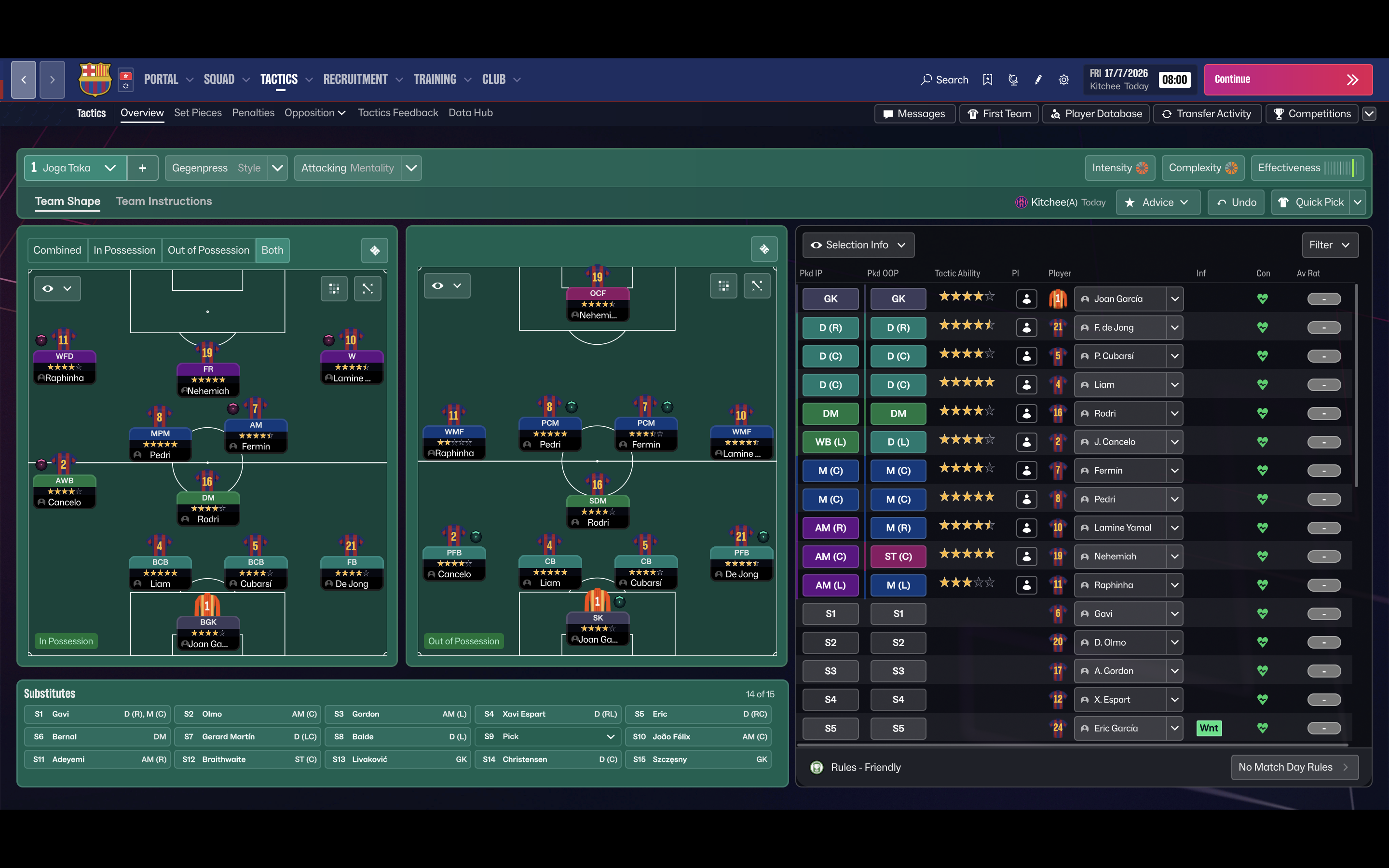
Gegenpress 4-2-3-1 Wide (Positive) Tactic
4-2-3-1 Wide
Utilizing width and quick ball movement to create scoring opportunities. The combination of wingers and a Shadow Striker creates multiple goal-scoring…
Loading tactical analysis...
Formation and style
Gegenpress
Positive
4-2-3-1 Wide
Structured
In possession
Play Out of Defence
Overlap Left
Overlap Right
Be More Expressive
In transition
Counter-Press
Counter
Distribute Quickly
Out of possession
Higher Line of Engagement
Higher Defensive Line
Prevent Short GK Distribution
Player roles
GK
Goalkeeper
Defend
RB
Wing-Back
Attack
CB
Centre-Back
Defend
CB
Centre-Back
Defend
LB
Wing-Back
Attack
CM
Deep-Lying Playmaker
Support
CM
Ball-Winning Midfielder
Support
RW
Winger
Support
AMC
Shadow Striker
Attack
LW
Winger
Support
ST
Advanced Forward
Attack
Phase description
Quick transitions with wingers providing depth and the Shadow Striker exploiting spaces.
Immediate counter-pressing to regain possession and prevent opposition attacks.
Utilizing width and quick ball movement to create scoring opportunities.
Team shape defence
4-2-3-1 Wide
Defensive setup is well-structured, maintaining a solid four-man defense with two pivot midfielders.
CBs at [2,2] and [2,3], with Wing-Backs occupying wide positions at [2,1] and [2,5].
Team shape attack
Fluid Front Four
Attacking line has fluidity, with wingers supporting the striker and creating overloads.
Wingers at [6,1] and [6,5], Shadow Striker at [6,3], and Advanced Forward at [6,4].
Key strengths
Dynamic Attack
The combination of wingers and a Shadow Striker creates multiple goal-scoring threats.
Shadow Striker (SS) at [6,3] supported by wingers (W) at [6,1] and [6,5].
Solid Defensive Structure
The flat four defense provides stability and minimizes space for opposition attackers.
Defenders (CB) at [2,2] and [2,3] alongside Wing-Backs (WB) at [2,1] and [2,5].
Conflicting tactics
Possession Play vs. Gegenpress
Possession-based play can conflict with the quick transitions emphasized in gegenpress.
Inconsistency between slower buildup play and counter-pressing instructions.
Wing Play vs. Central Density
Too much focus on wide play can lead to a lack of options in central areas.
Wingers in advanced positions may isolate central players.
Risk exposures
Risk Exposures
Items
Defensive Vulnerability
High defensive line may lead to vulnerabilities against quick attackers.
Opposition may exploit space behind defenders.
Midfield Overload
If opponents match midfield numbers, control may be lost.
Double pivot might struggle against trios in midfield.
Role synergies
Role Synergies
Items
Wing-Back and Winger
Synergy creates depth on flanks and stretches opposition defenses.
Wing-Back at [2,1] and Winger at [6,1] collaborate to create wide overloads.
Shadow Striker and Advanced Forward
Complementary movement allows for fluid attacking transitions.
Shadow Striker at [6,3] supports the Advanced Forward at [6,4].
Suggested questions
How can I improve ball retention in midfield?
Should I adjust my attacking mentality based on opponent strength?
What tweaks can enhance my defensive stability during counterattacks?
Related Tactics
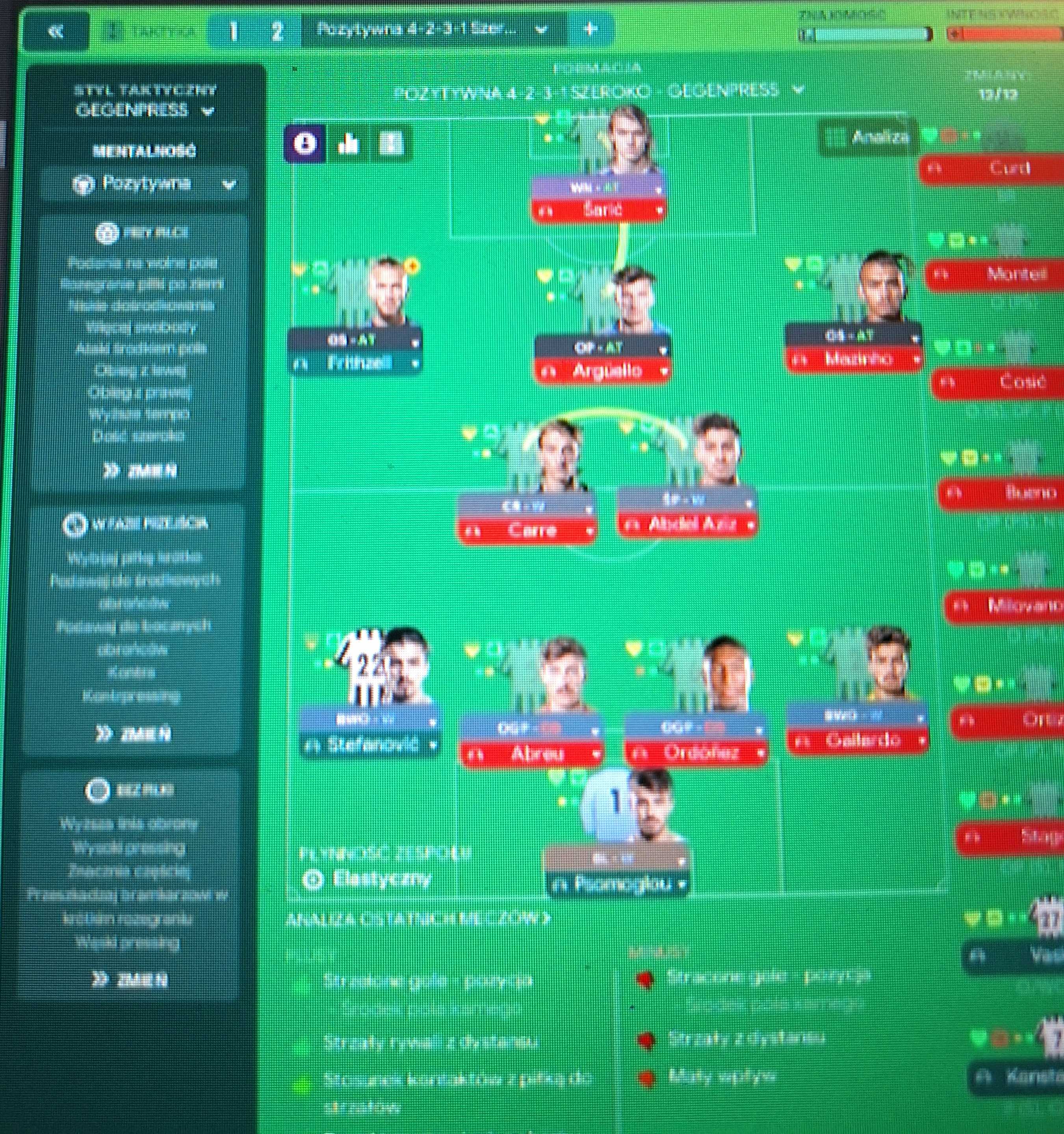
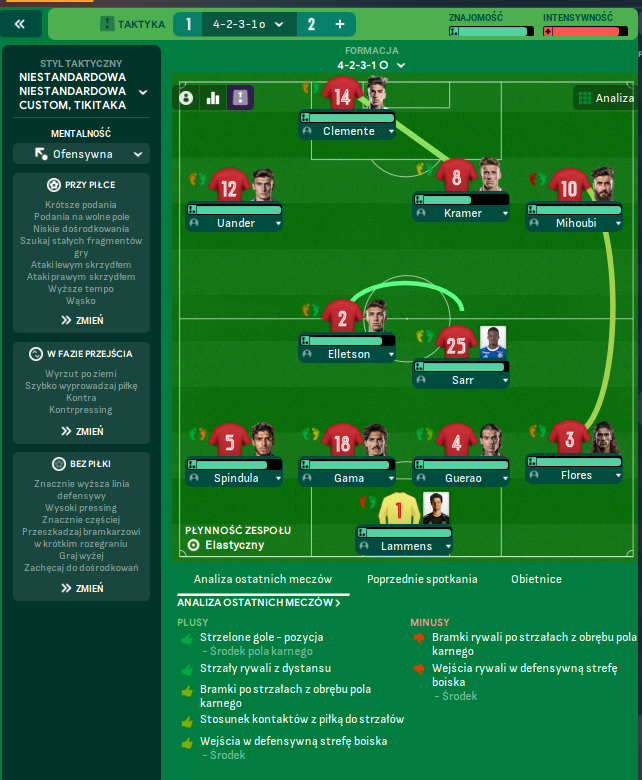
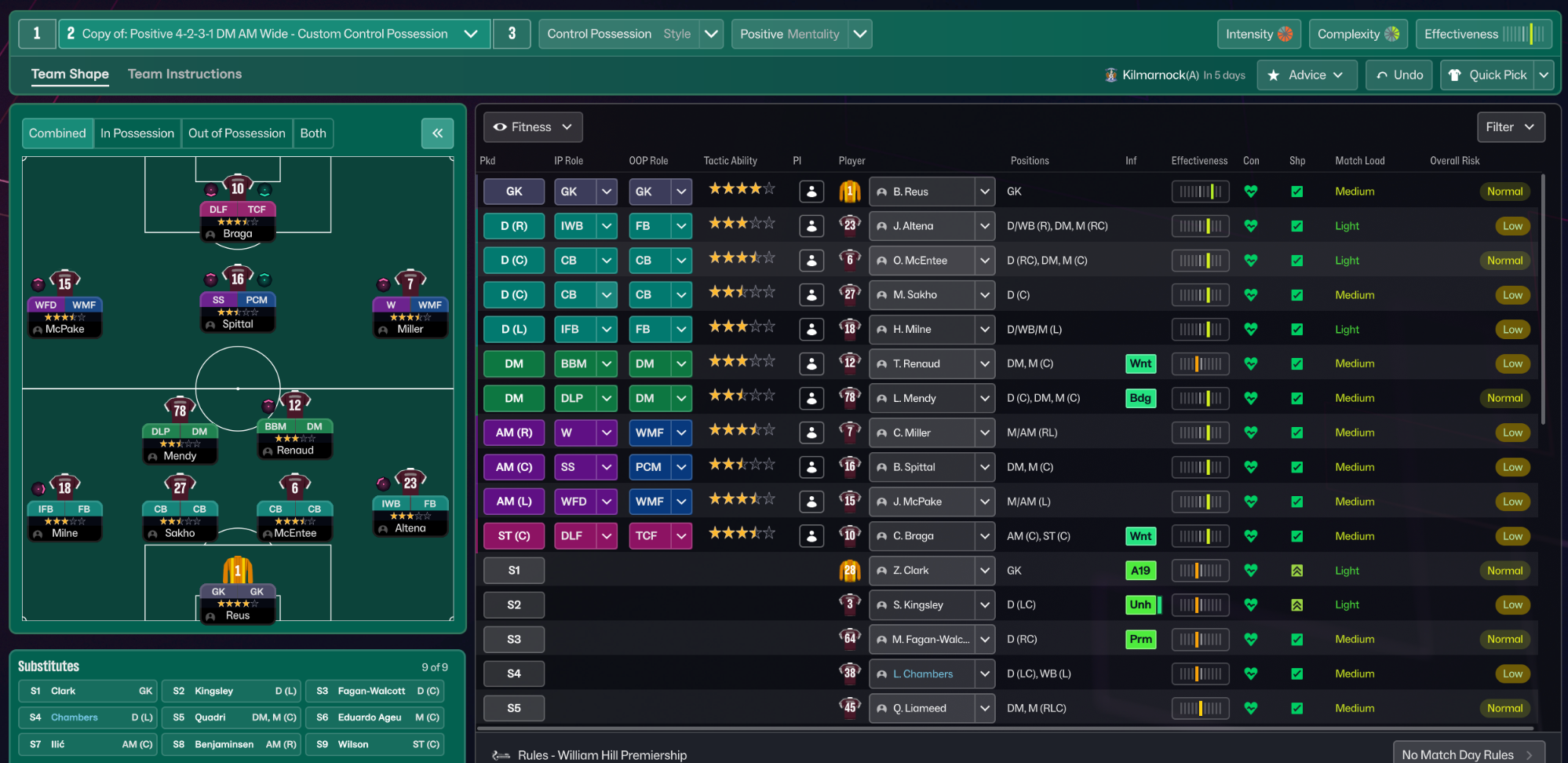
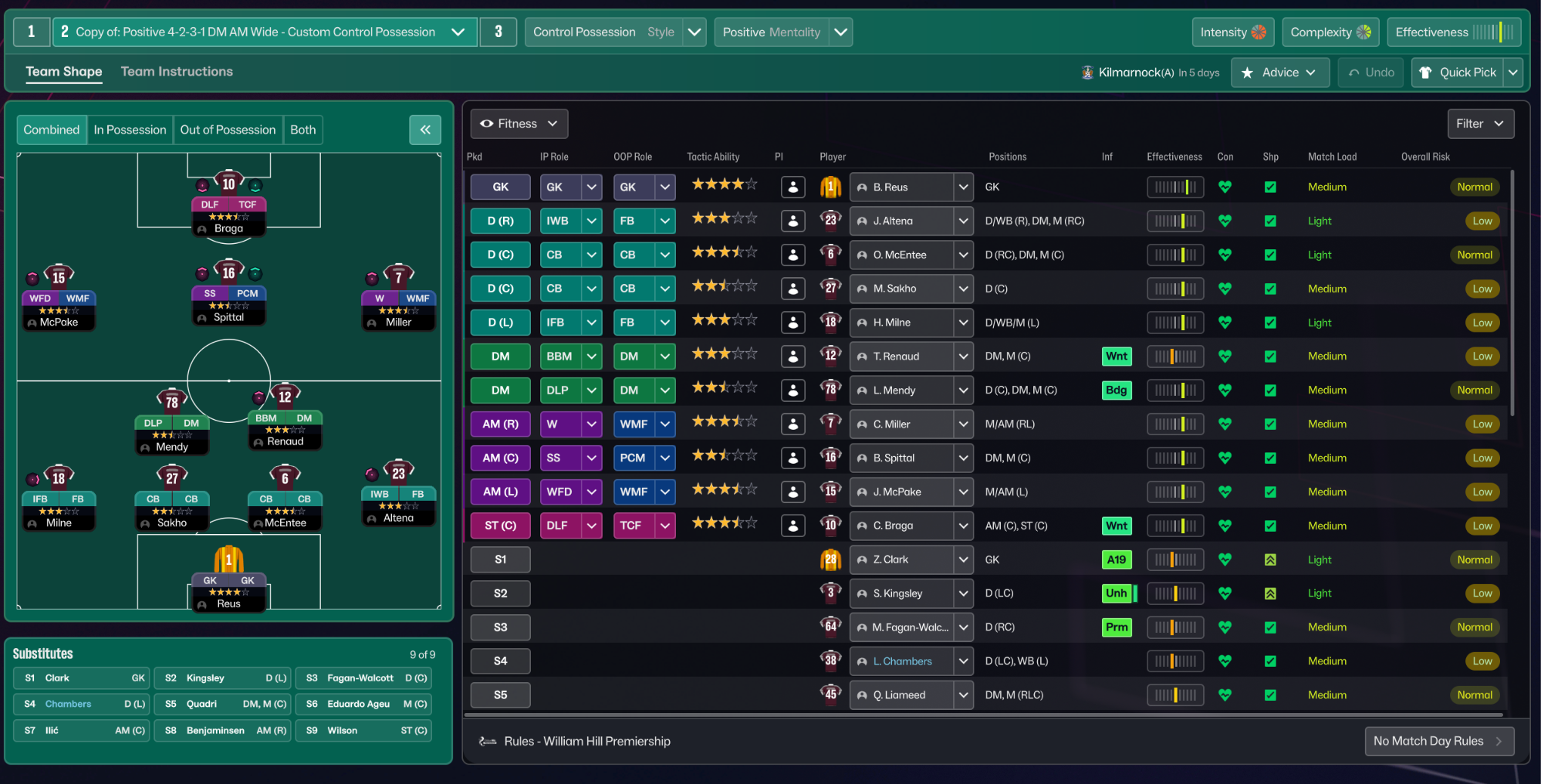
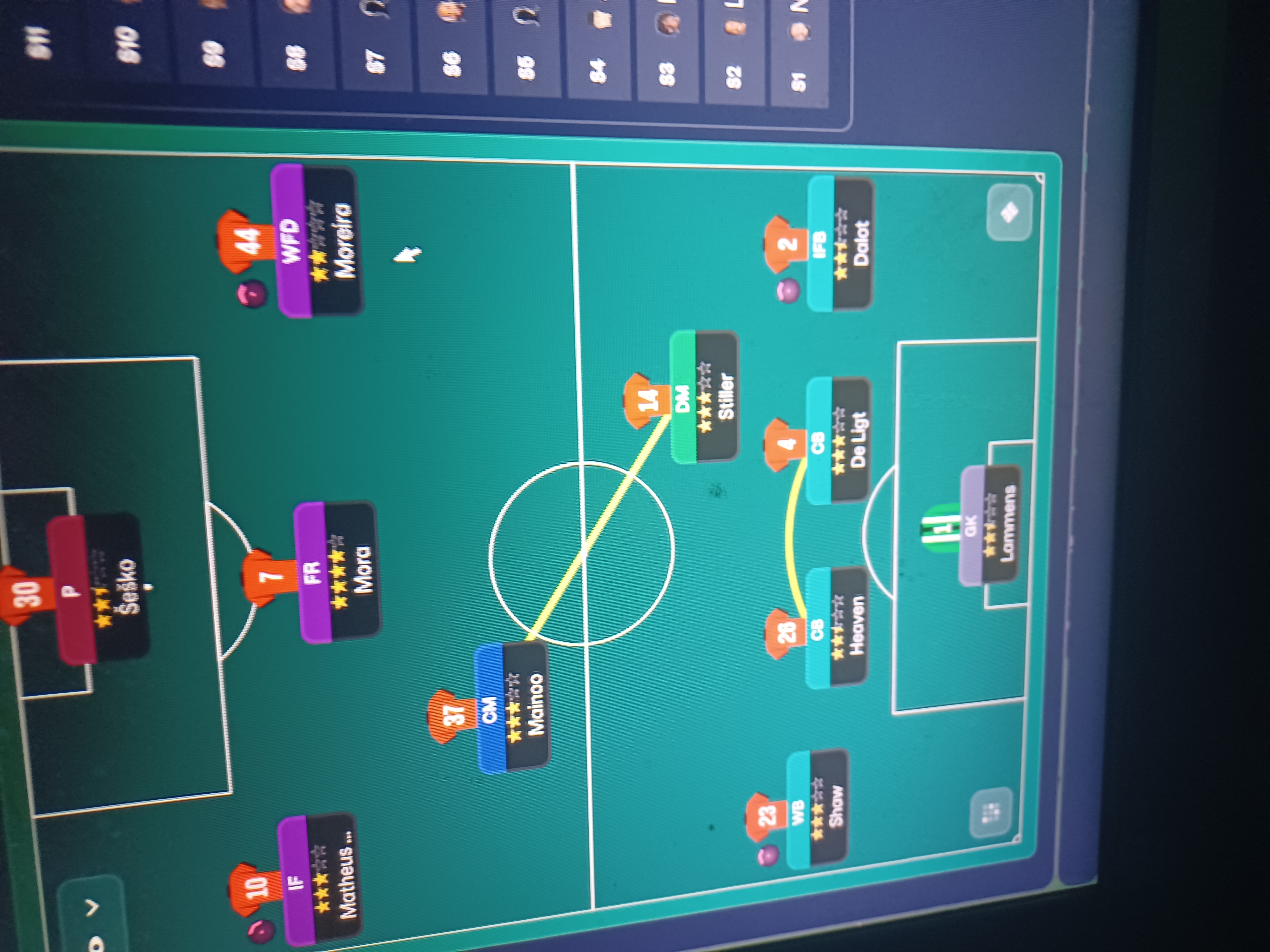
More Gegenpress tactics
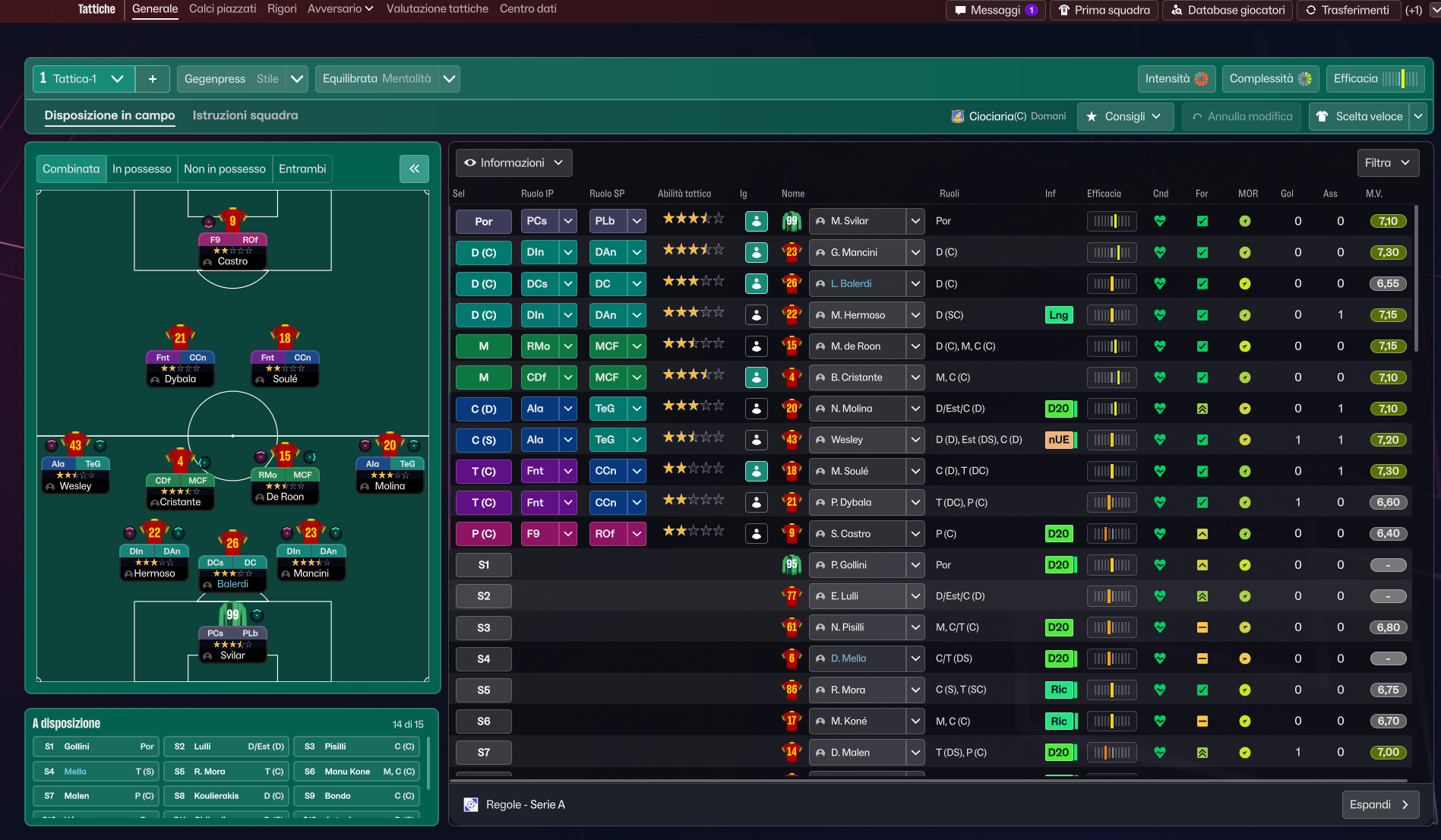
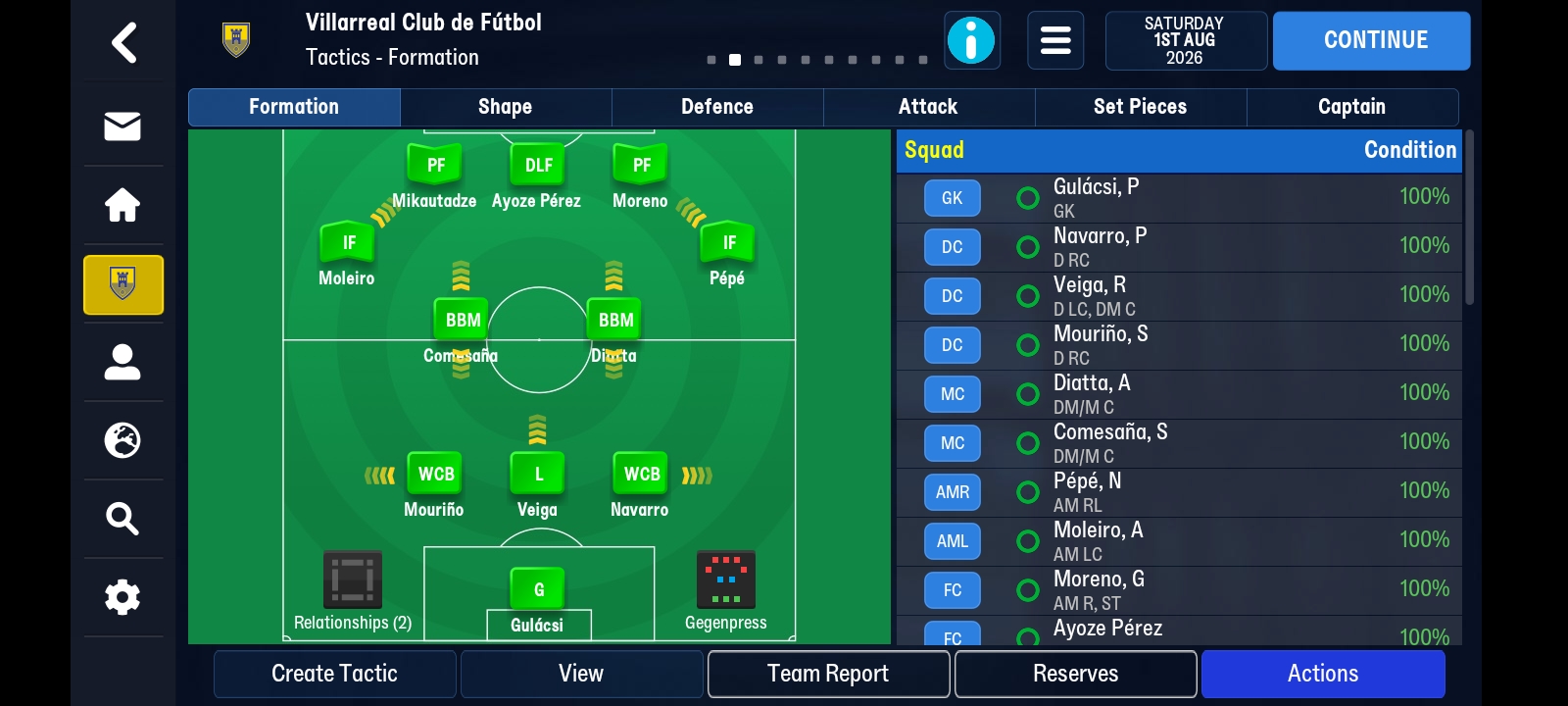
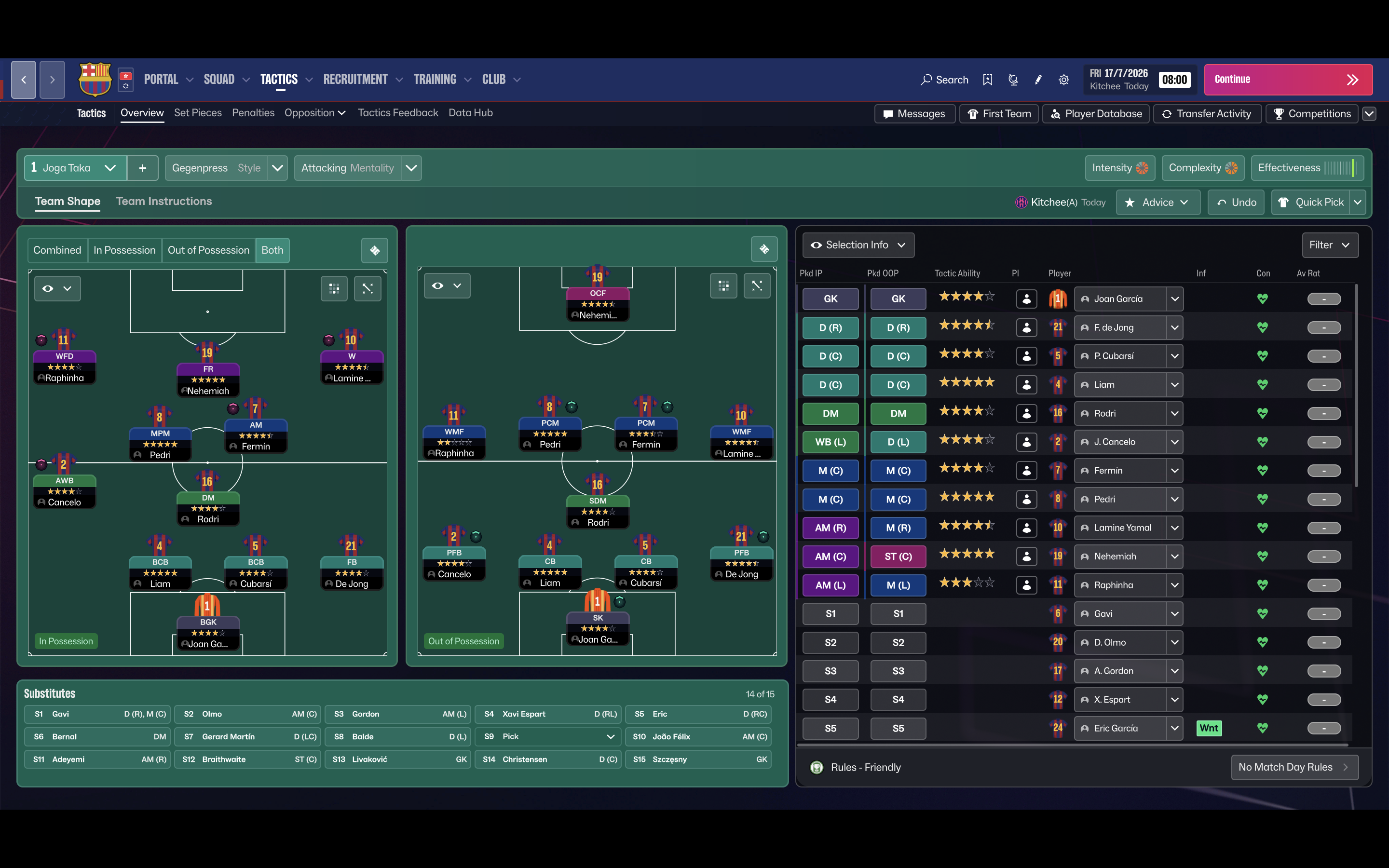
Guides for this tactic
The tactical theory behind the 4-2-3-1 Wide: roles, instructions, and the trade-offs that decide whether the system holds up.
Playing styles
Gegenpressing: A Full Guide
Klopp-style gegenpressing in FM, including squad profile, line-and-press pairing, sustainable workload, and the antipatterns to avoid.
Read guide
Player pairings
Midfield Pairs in 4-2-3-1 and 4-4-2
Double pivots and flat pairs in 4-2-3-1 and 4-4-2: when each pairing works, when it collapses, and the AMC unicorn that rescues both.
Read guide
Foundations
Wing Play vs Central Play
Build through the wide areas or through the middle? A working framework for picking the right one for your squad.
Read guide