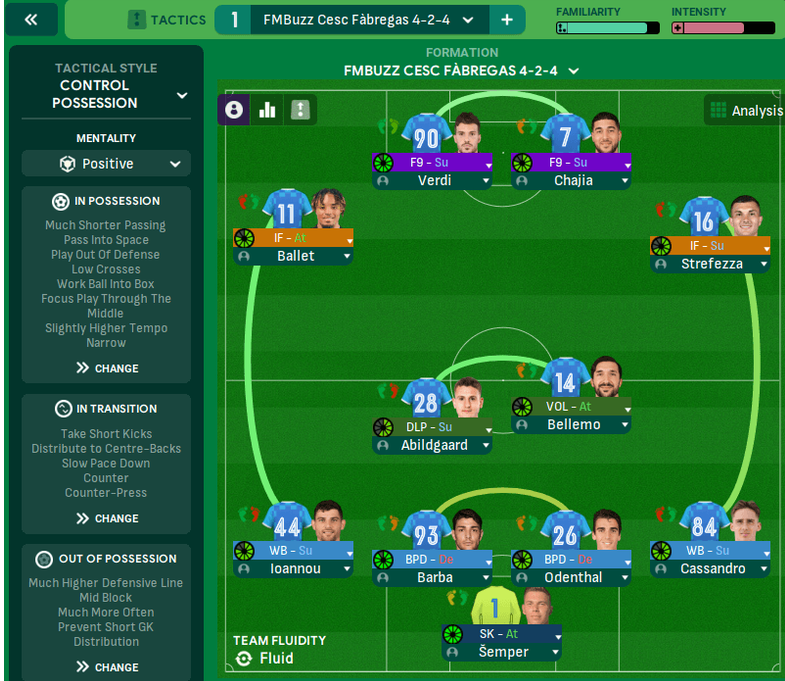
Control Possession 4-2-3-1 Wide (Positive) Tactic
4-2-3-1 Wide
Control of the game through possession and patient build-up. Utilization of Wing Midfielders (WM) provides width and stretches the opposition.
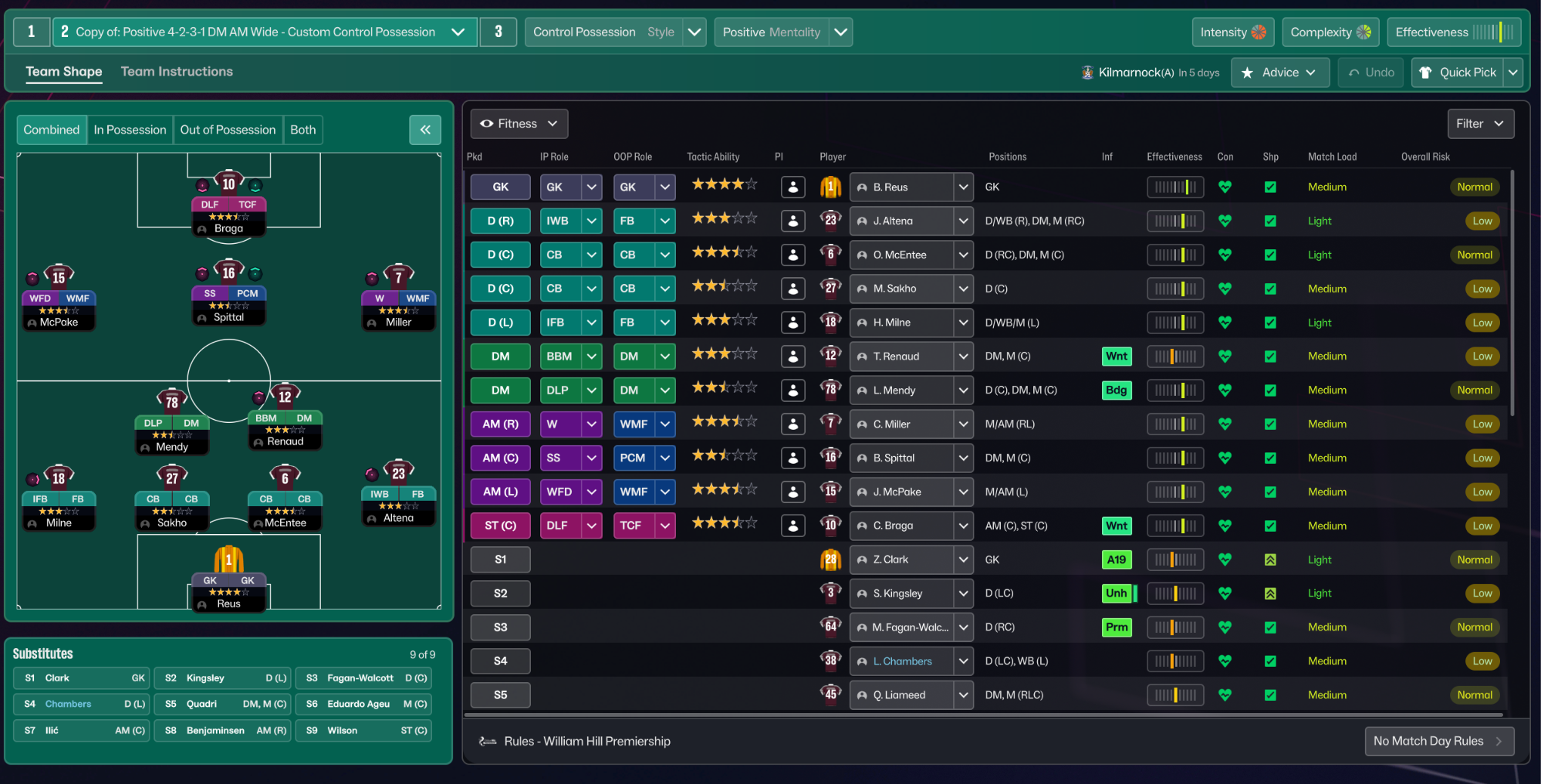
Loading tactical analysis...
Formation and style
Control Possession
Positive
4-2-3-1 Wide
Medium
In possession
Play Out of Defence
Work Ball Into Box
Shorter Passing
Focus Play Down Left
In transition
Counter-Press
Counter
Out of possession
Higher Line of Engagement
Higher Defensive Line
Prevent Short GK Distribution
Player roles
GK
G
D (L)
IWB
Su
D (C)
CB
De
D (C)
CB
De
D (R)
FB
Su
DM (C)
DLP
Su
DM (C)
DM
De
AM (C)
SS
Su
W (L)
WM
At
W (R)
WM
At
ST (C)
DLF
Su
ST (C)
TCF
At
Phase description
Focus on maintaining possession and building from the back, utilizing wing play to stretch the opponent.
Immediate counter-pressing to regain possession quickly.
Control of the game through possession and patient build-up.
Team shape defence
4-2
Defensive structure with two deeper midfielders providing support to the back four.
DM-D at [3,2] and DM at [3,3] protecting the defensive line.
Team shape attack
4-3
Attacking setup with two wide players stretching the opposition and a central threat from the forwards.
Three attackers (2 WMs and 1 SS) providing width and depth in the final third.
Key strengths
Width in Attack
Utilization of Wing Midfielders (WM) provides width and stretches the opposition.
WMs at [5,1] and [5,5] allow the team to exploit space on the flanks.
Solid Midfield Balance
Double pivot allows for good ball retention and defensive cover.
DLP-S at [3,2] and DM at [3,3] offers both creativity and defensive stability.
Conflicting tactics
High Defensive Line with Counter Attacks
While the setup pushes for a high defensive line, the counter-pressing may lead to vulnerabilities against quick transitions.
Higher Defensive Line and Counter-Press may expose the back line with faster opponents.
Reliance on Wing Play
Over-reliance on wide players might be negated if the opponent successfully congests the flanks.
Focus Play Down Left could be nullified by a strong defensive effort from the opponent.
Risk exposures
Risk Exposures
Items
Defensive Transition
High risk of being caught on the counter if possession is lost quickly.
Counter-Press strategy while having a high defensive line may expose back four.
Attacking Midfield
Potential isolation of forwards if not supported adequately by midfielders.
Attacking emphasis on FB-WB may leave central forwards isolated.
Role synergies
Role Synergies
Items
DLP-S with DM-D
Provides balance between creativity and defensive cover.
DLP at [3,2] supports transitions while DM at [3,3] protects the defense.
IWB and WM
Creates overlapping opportunities for attacks down the left.
IWB at [2,1] can support WM at [5,1] effectively.
Suggested questions
How can we strengthen central midfield against overloads?
Are the wing-backs providing enough defensive cover when advanced?
What adjustments can mitigate pacey counter-attacks effectively?
Related Tactics
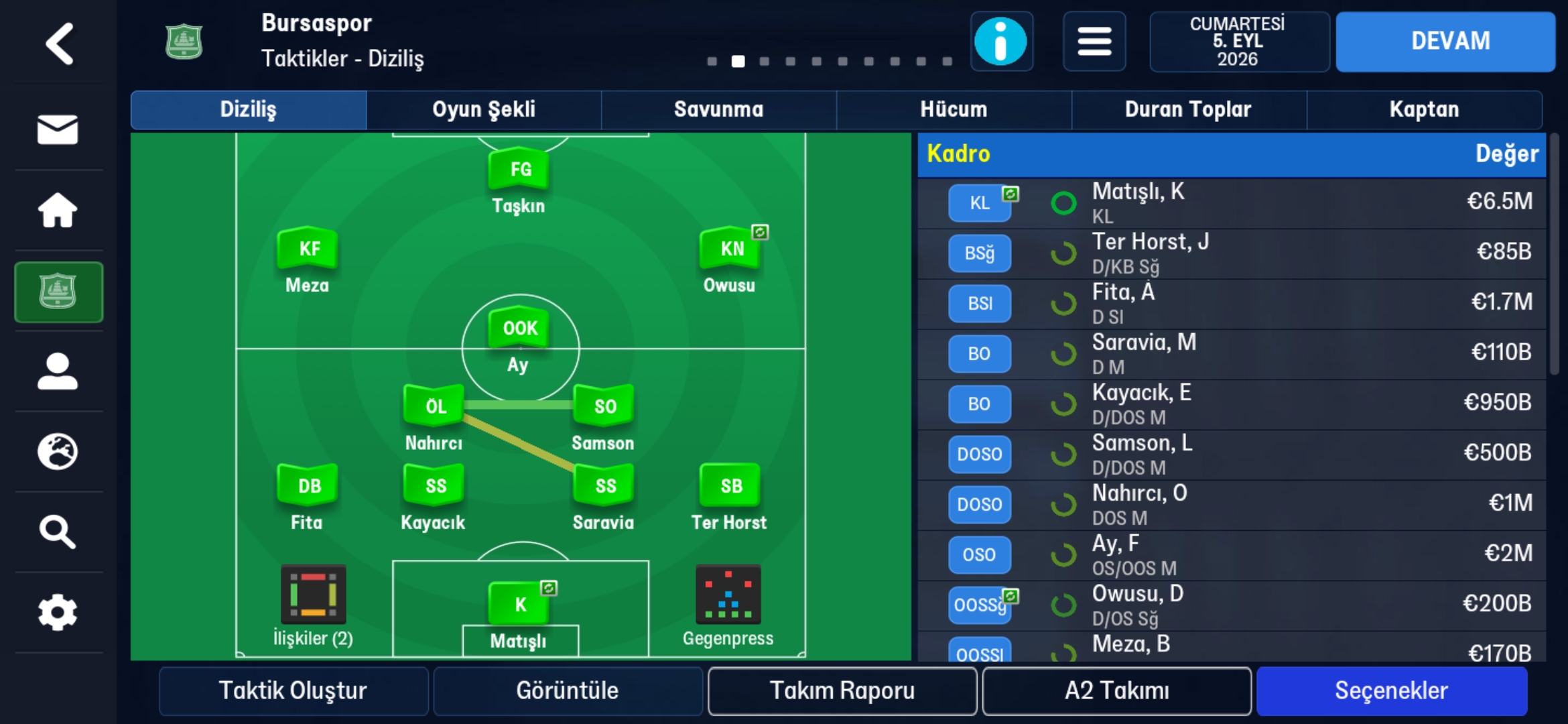
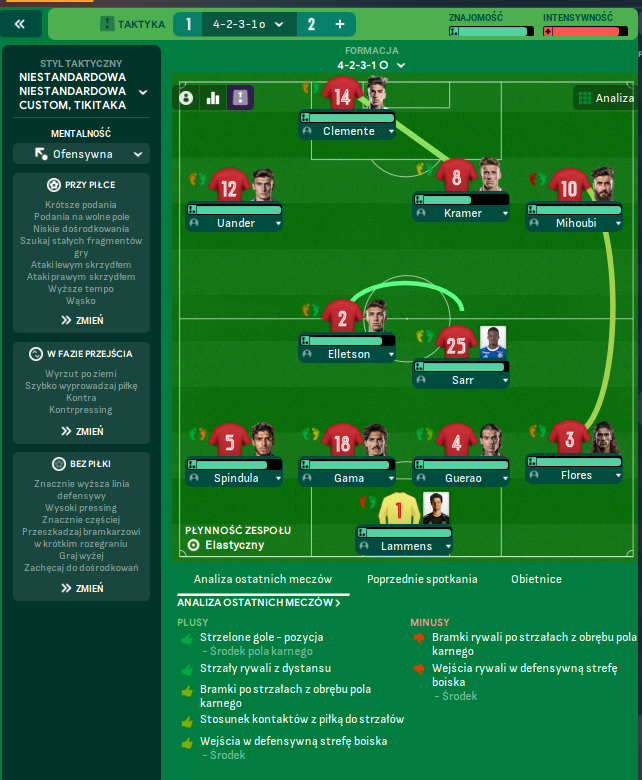
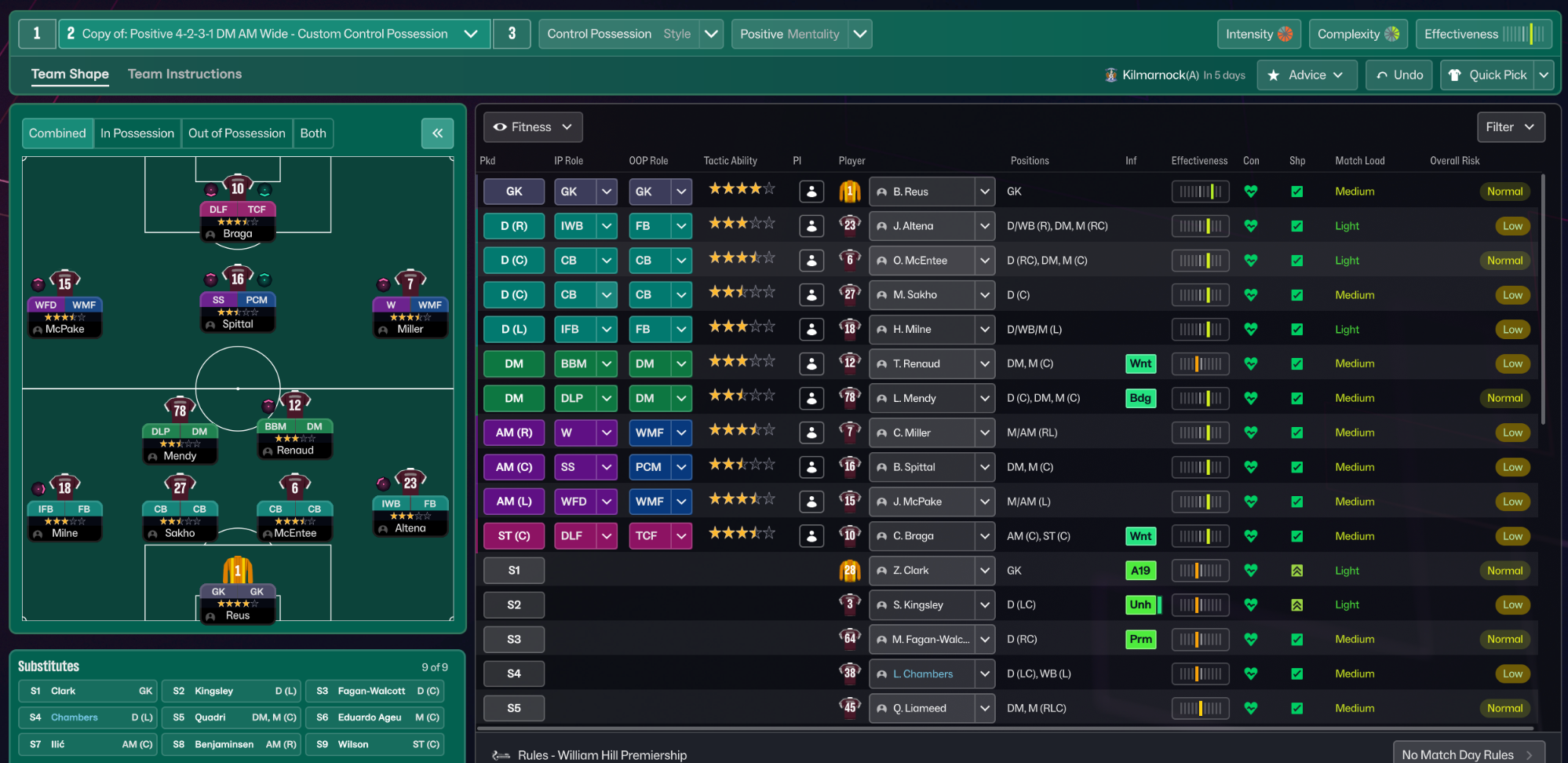
More Control Possession tactics
Guides for this tactic
The tactical theory behind the 4-2-3-1 Wide: roles, instructions, and the trade-offs that decide whether the system holds up.
Player pairings
Midfield Pairs in 4-2-3-1 and 4-4-2
Double pivots and flat pairs in 4-2-3-1 and 4-4-2: when each pairing works, when it collapses, and the AMC unicorn that rescues both.
Read guide
Playing styles
Gegenpressing: A Full Guide
Klopp-style gegenpressing in FM, including squad profile, line-and-press pairing, sustainable workload, and the antipatterns to avoid.
Read guide
Foundations
Mentality, Duty & Roles
How Mentality, Duty, and Role interact in FM, why duty trumps mentality every time, and the role-on-top-of-duty composition rules.
Read guide