Tiki-Taka 4-2-3-1 Wide (Offensive) Tactic
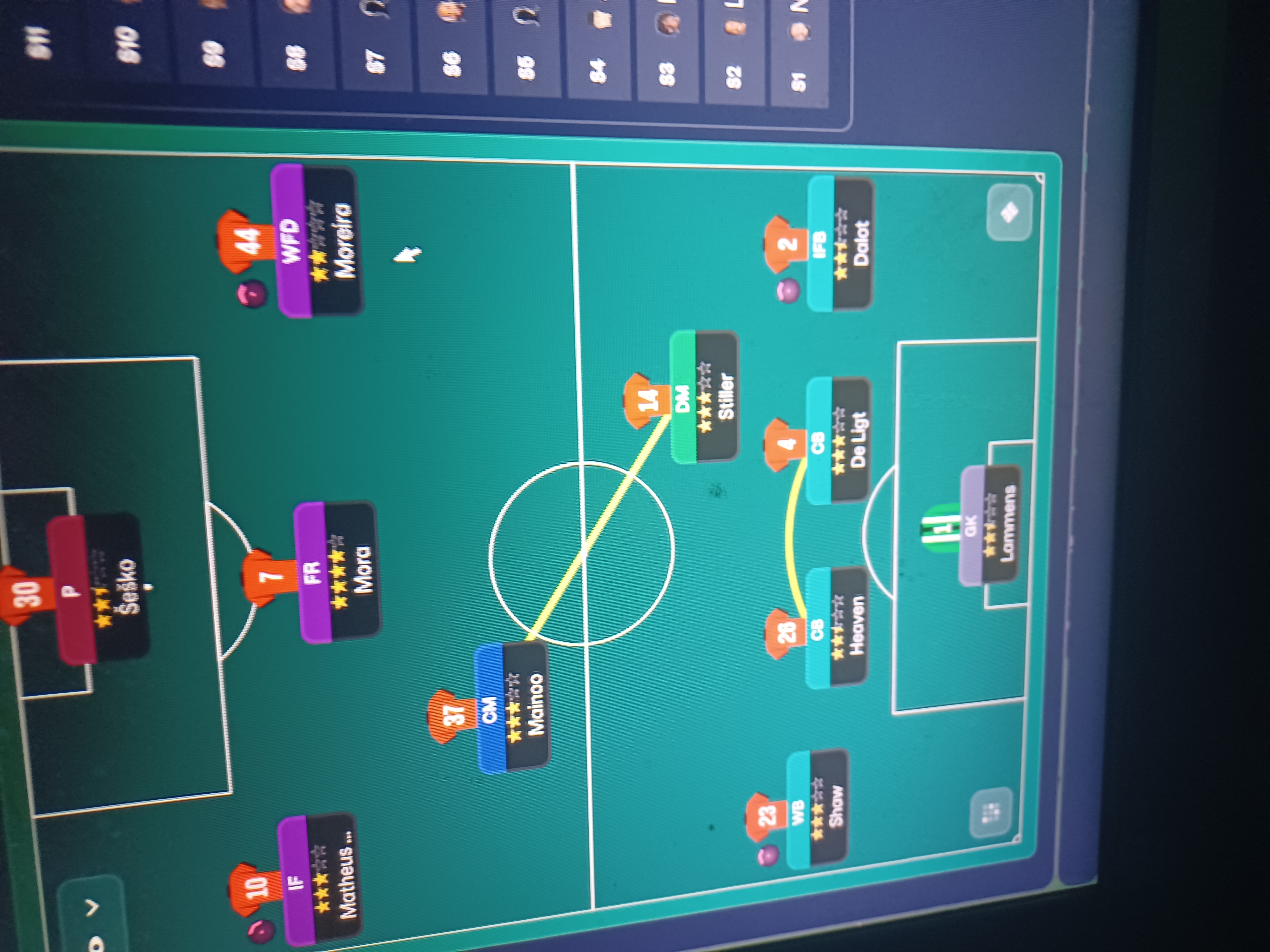
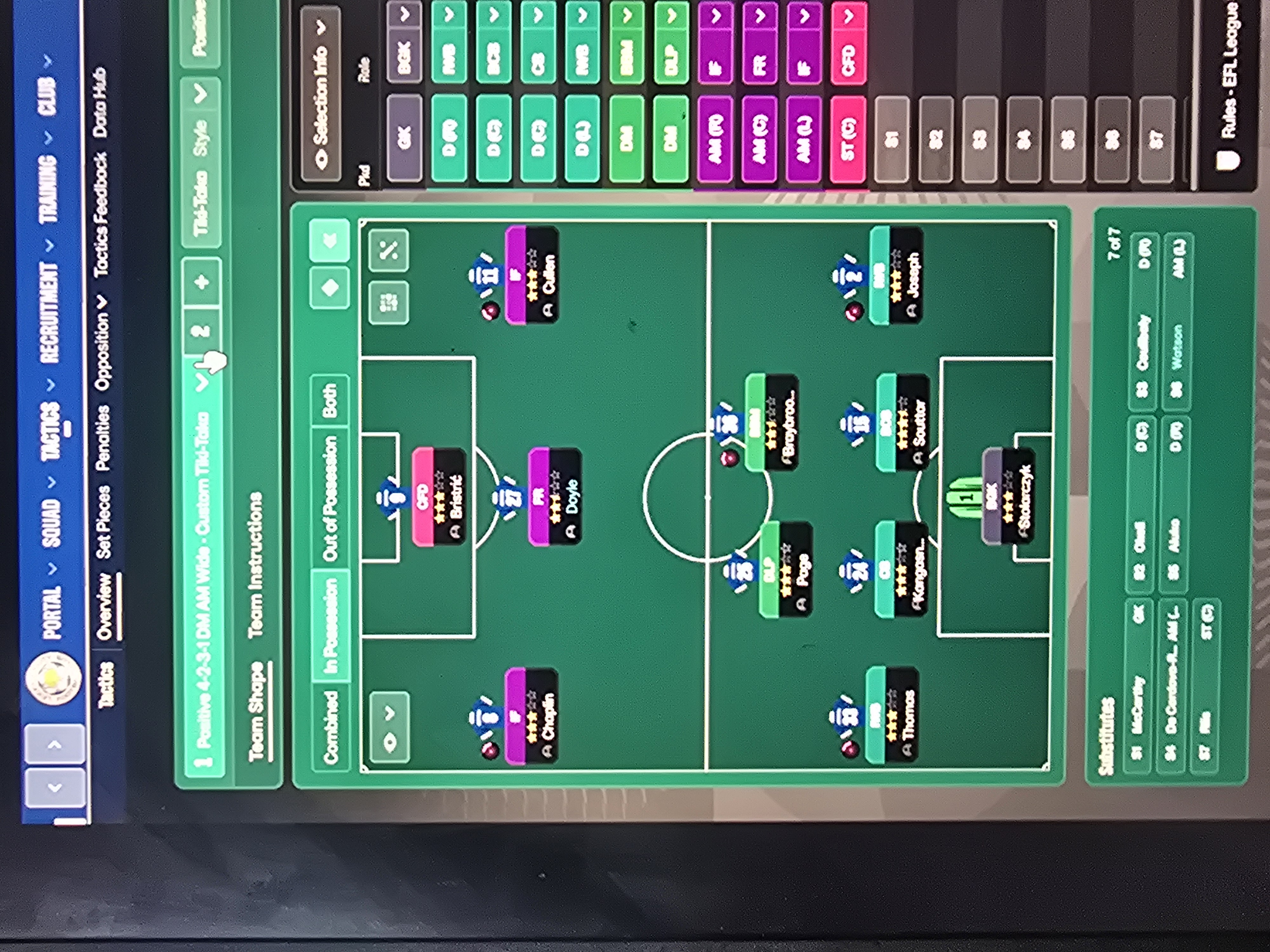
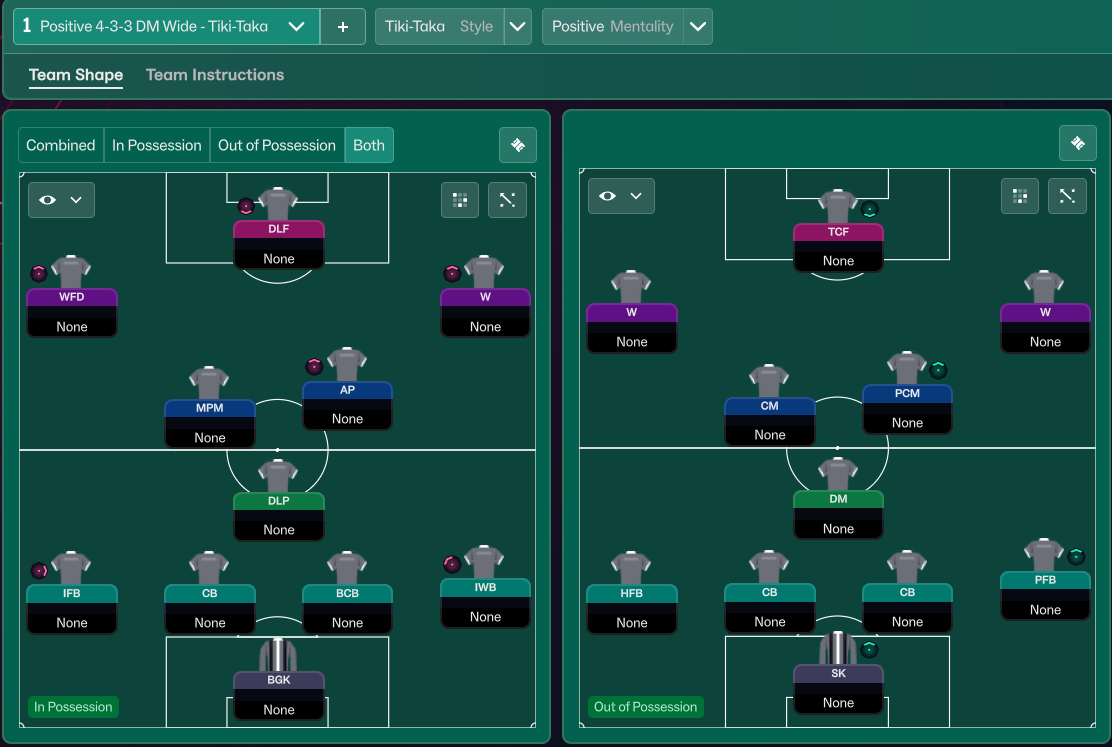
4-2-3-1 Wide
Control of midfield and utilizing width via inside forwards to stretch the opposition. Shorter passing style allows for high ball retention which can…
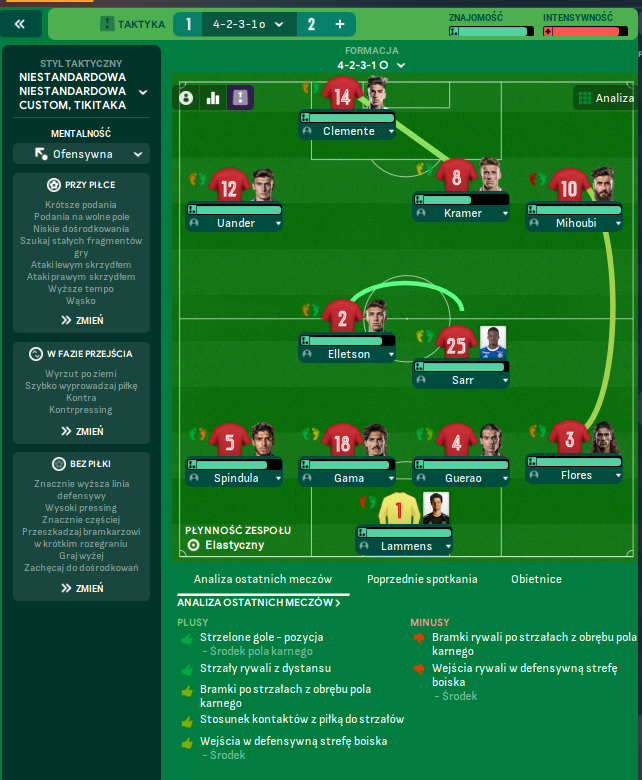
Loading tactical analysis...
Formation and style
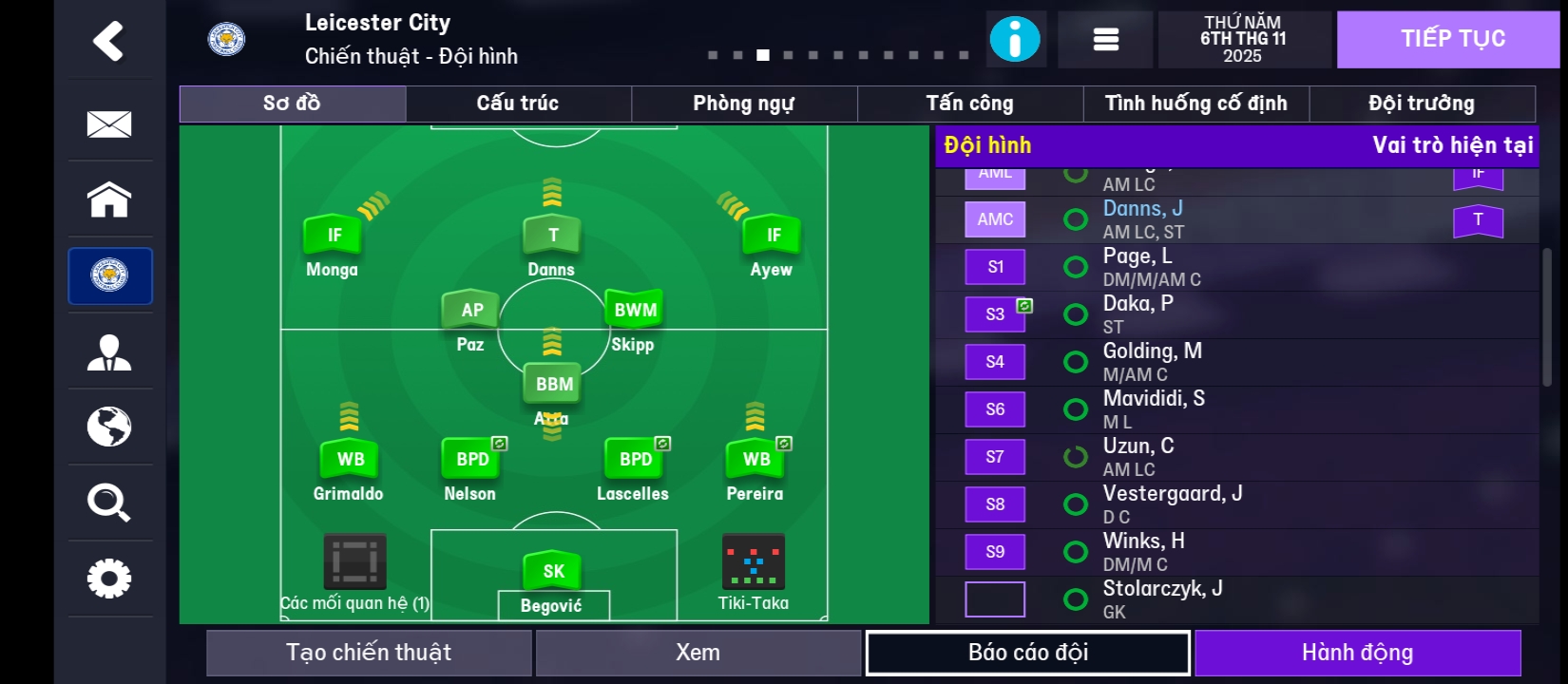
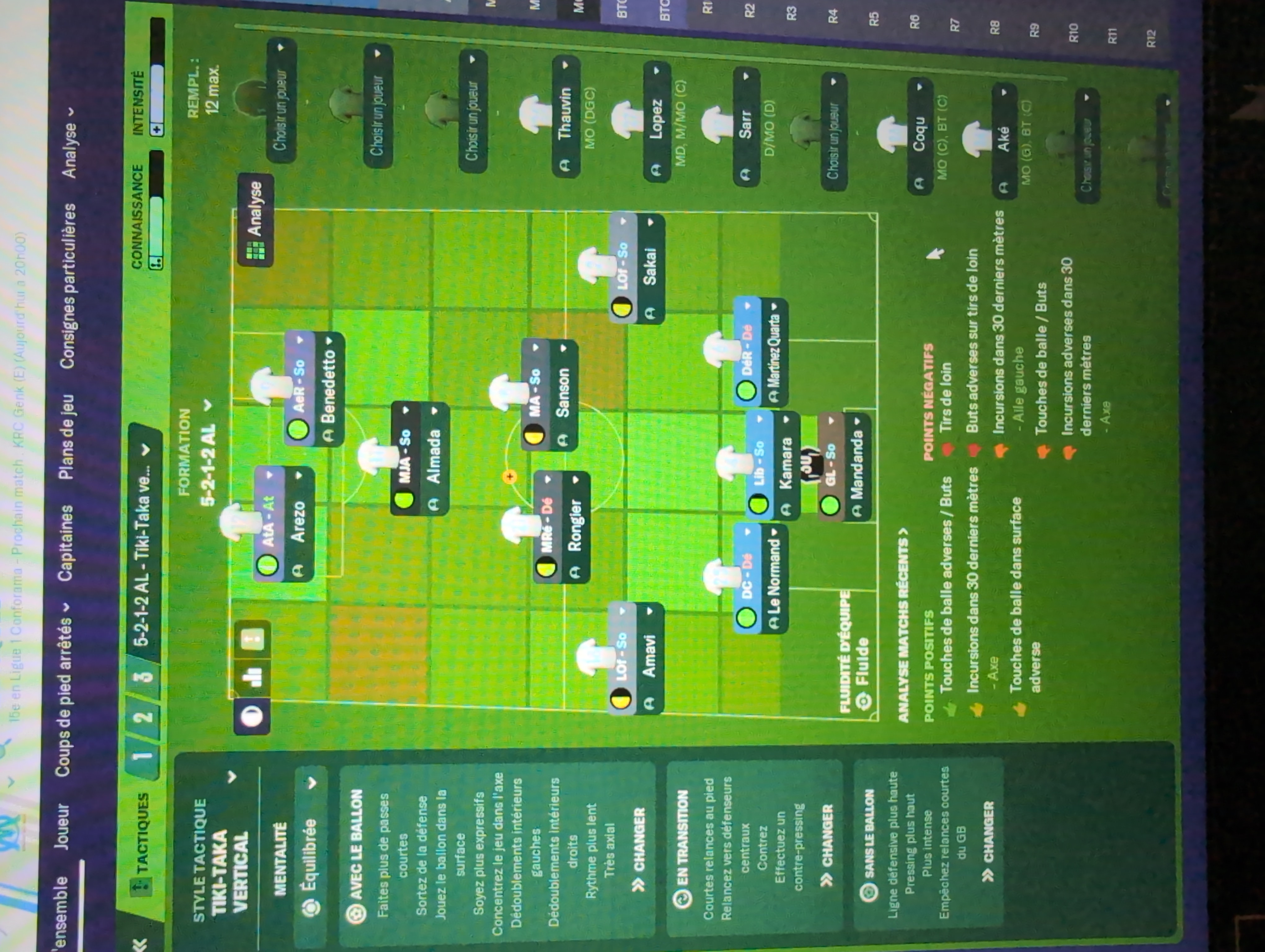
Tiki-Taka
Offensive
4-2-3-1 Wide
Elastic
In possession
Shorter Passing
Work Ball Into Box
Low Crosses
In transition
Counter
Against Pressing
Out of possession
Higher Press
Tighter Marking
Player roles
GK
Goalkeeper
Defend
CB
Ball-Playing Defender
Support
CB
Ball-Playing Defender
Support
LB
Full-Back
Attack
RB
Full-Back
Attack
CM
Deep-Lying Playmaker
Support
CM
Central Midfielder
Support
AM
Advanced Playmaker
Attack
RW
Inside Forward
Attack
LW
Inside Forward
Attack
ST
Complete Forward
Support
Phase description
The team focuses on short, precise passes with an emphasis on ball retention and creating opportunities through patient buildup.
Team transitions swiftly into a compact shape to recover possession after losing the ball.
Control of midfield and utilizing width via inside forwards to stretch the opposition.
Team shape defence
Compact
The team maintains a narrow, cohesive formation to minimize spaces for the opponents.
Higher Press and Tighter Marking are set to support this compact defensive shape.
Team shape attack
Wide
Utilizing width with overlapping full-backs and inside forwards to create crossing opportunities.
Short Passing and Work Ball Into Box maximize attacking potential in wide areas.
Key strengths
Ball Control and Retention
Shorter passing style allows for high ball retention which can frustrate opponents.
Tiki-Taka style combined with Deep-Lying Playmaker (DLP-S at [3,3]) for distribution.
Fluidity in Attack
Inside forwards and advanced playmaker create dynamic attacking options.
Inside Forward (RW-At at [5,5]) and Advanced Playmaker (AM-A at [5,3]) interchanging.
Conflicting tactics
Over-Reliance on Wingers
If wingers are marked tightly, the attack may become predictable and lack variety.
Inside Forwards at [5,5] and [5,1] are crucial but can be countered.
Vulnerability to Quick Counters
Offensive mentality may leave gaps in defense during transitions.
Central Midfielders (DLP-S at [3,3] and CM-S at [4,3]) must balance duties.
Risk exposures
Risk Exposures
Items
Transition
Quick turnovers could lead to exposed defense due to high offensive positioning.
Offensive mentality and high pressing increase risks in defensive transitions.
Winger Dependence
Over-reliance on inside forwards could render the attack predictable.
Inside Forwards at [5,5] and [5,1] emphasize wing play.
Role synergies
Role Synergies
Items
DLP and Advanced Playmaker
Strong link between DLP-S and AM-A to create chances and control midfield.
DLP-S at [3,3] provides deep support while AM-A at [5,3] pushes forward.
Full-Backs and Inside Forwards
Full-backs providing width support inside forwards cutting inside.
FB-A at [2,4] and IF-A at [5,5] create overloads in wide positions.
Suggested questions
How can the team mitigate risks in transitions?
What strategies can be implemented to enhance attacking variety?
Should adjustments be made to the mental approach for more defensive stability?
Related Tactics
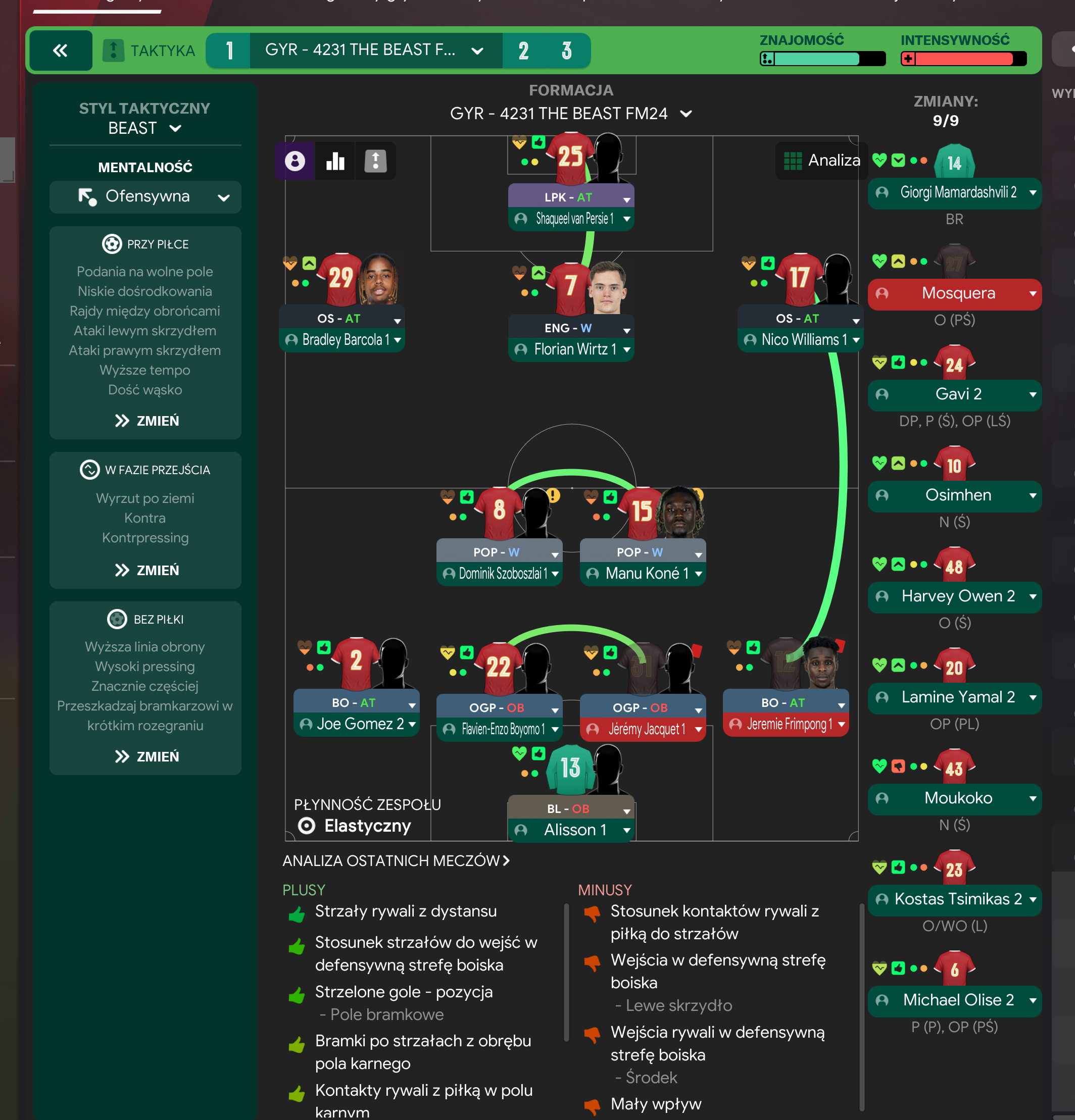
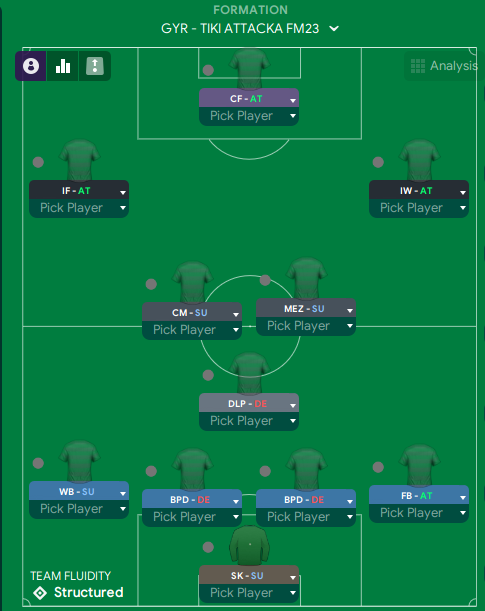
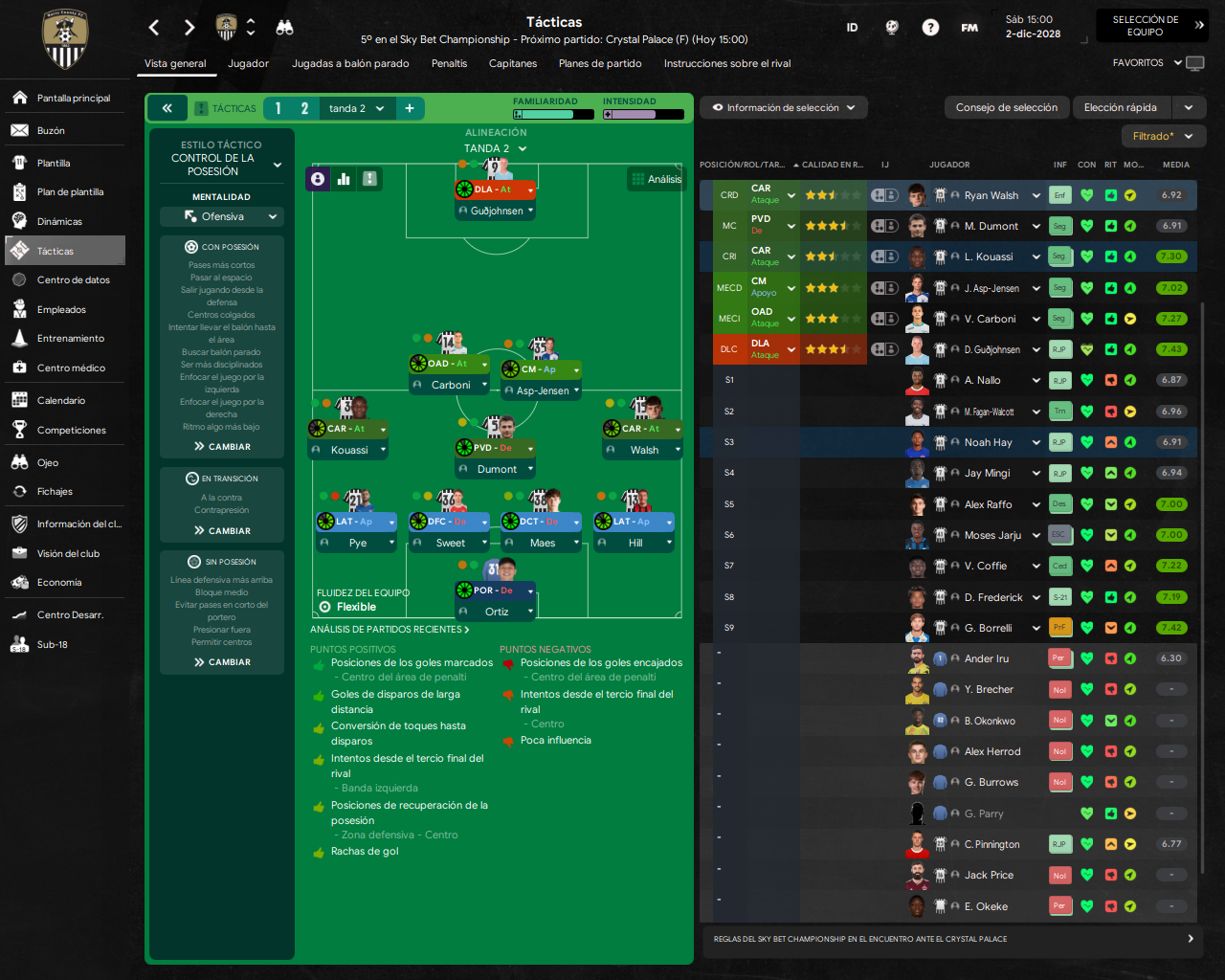
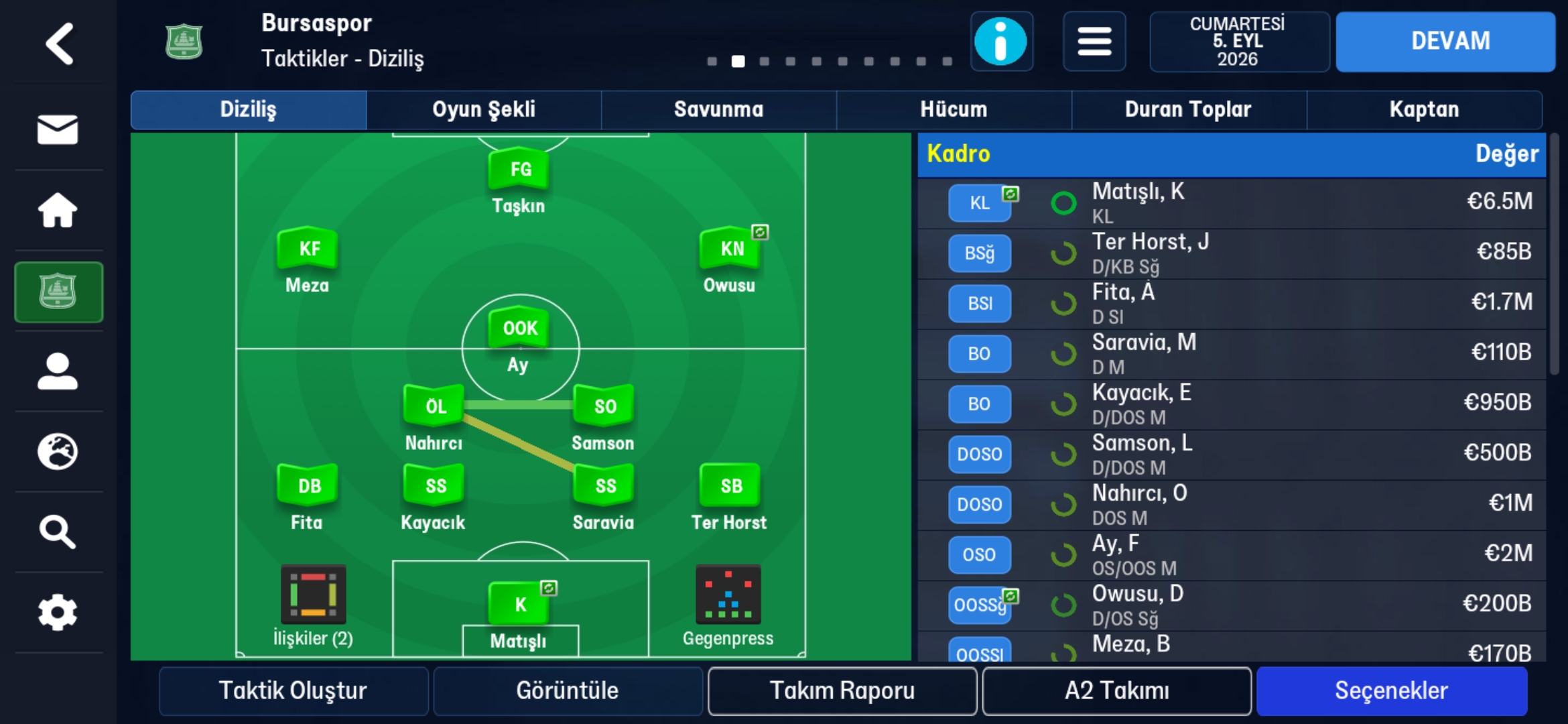
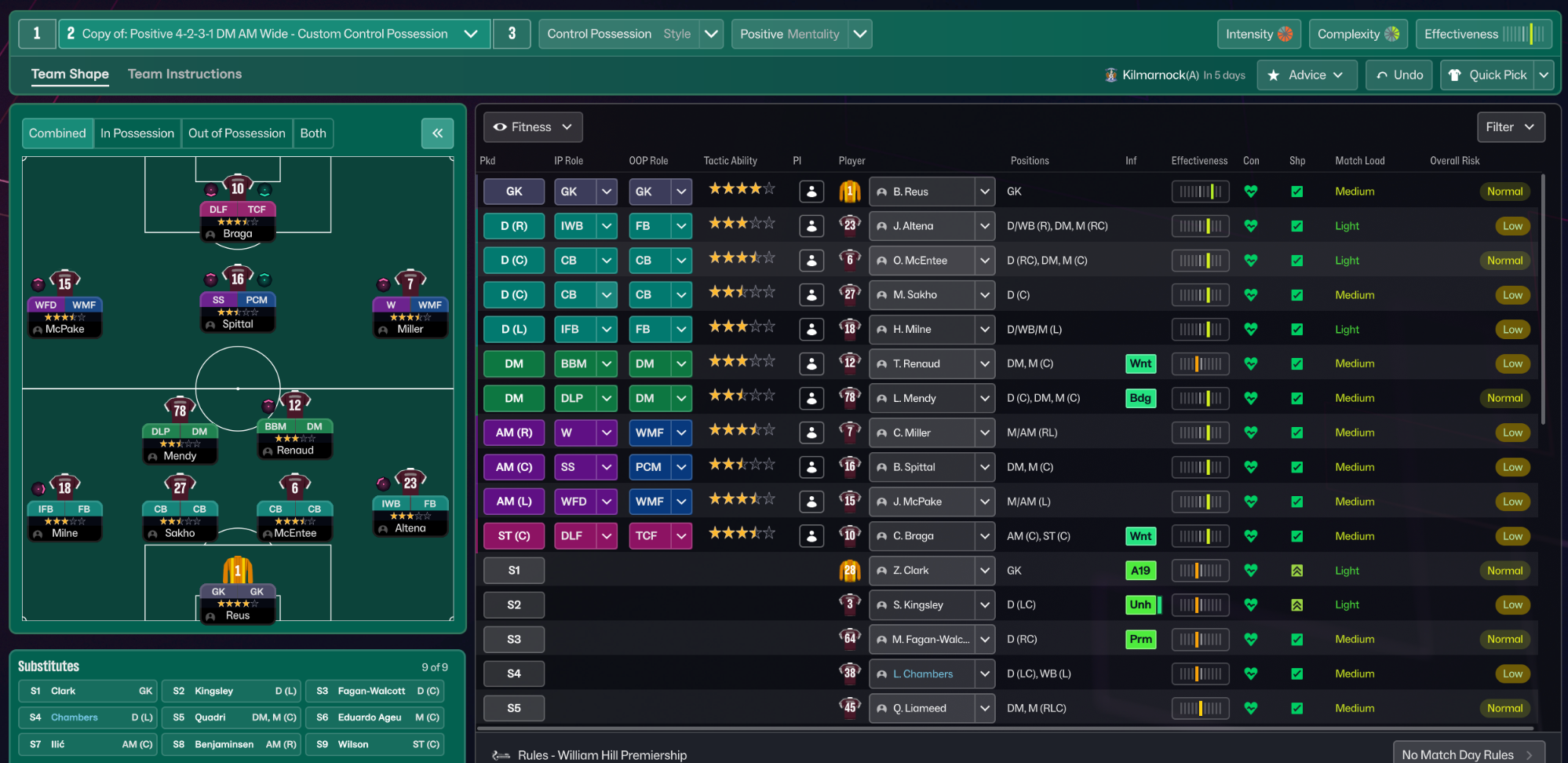
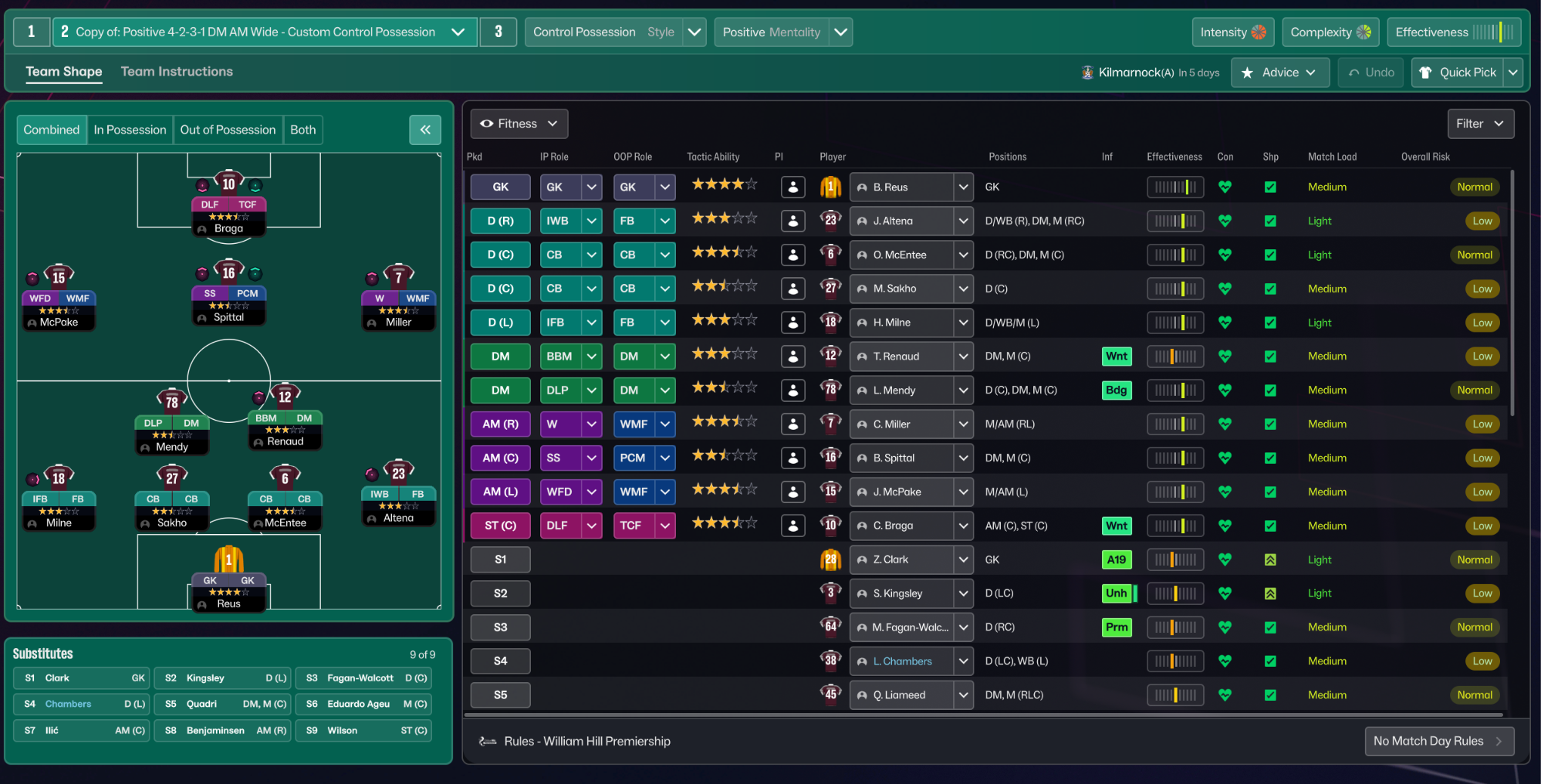
More Tiki-Taka tactics
Guides for this tactic
The tactical theory behind the 4-2-3-1 Wide: roles, instructions, and the trade-offs that decide whether the system holds up.
Playing styles
Gegenpressing: A Full Guide
Klopp-style gegenpressing in FM, including squad profile, line-and-press pairing, sustainable workload, and the antipatterns to avoid.
Read guide
Player pairings
Midfield Pairs in 4-2-3-1 and 4-4-2
Double pivots and flat pairs in 4-2-3-1 and 4-4-2: when each pairing works, when it collapses, and the AMC unicorn that rescues both.
Read guide
Foundations
FM27 Tactics: What Changed from FM26
FM27 keeps FM26's tactic system. Here is what stays the same, the small changes that can catch you out, and what the new Tactical Effectiveness system asks of you.
Read guide