4-2-3-1 Wide Tactic
4-2-3-1 Wide
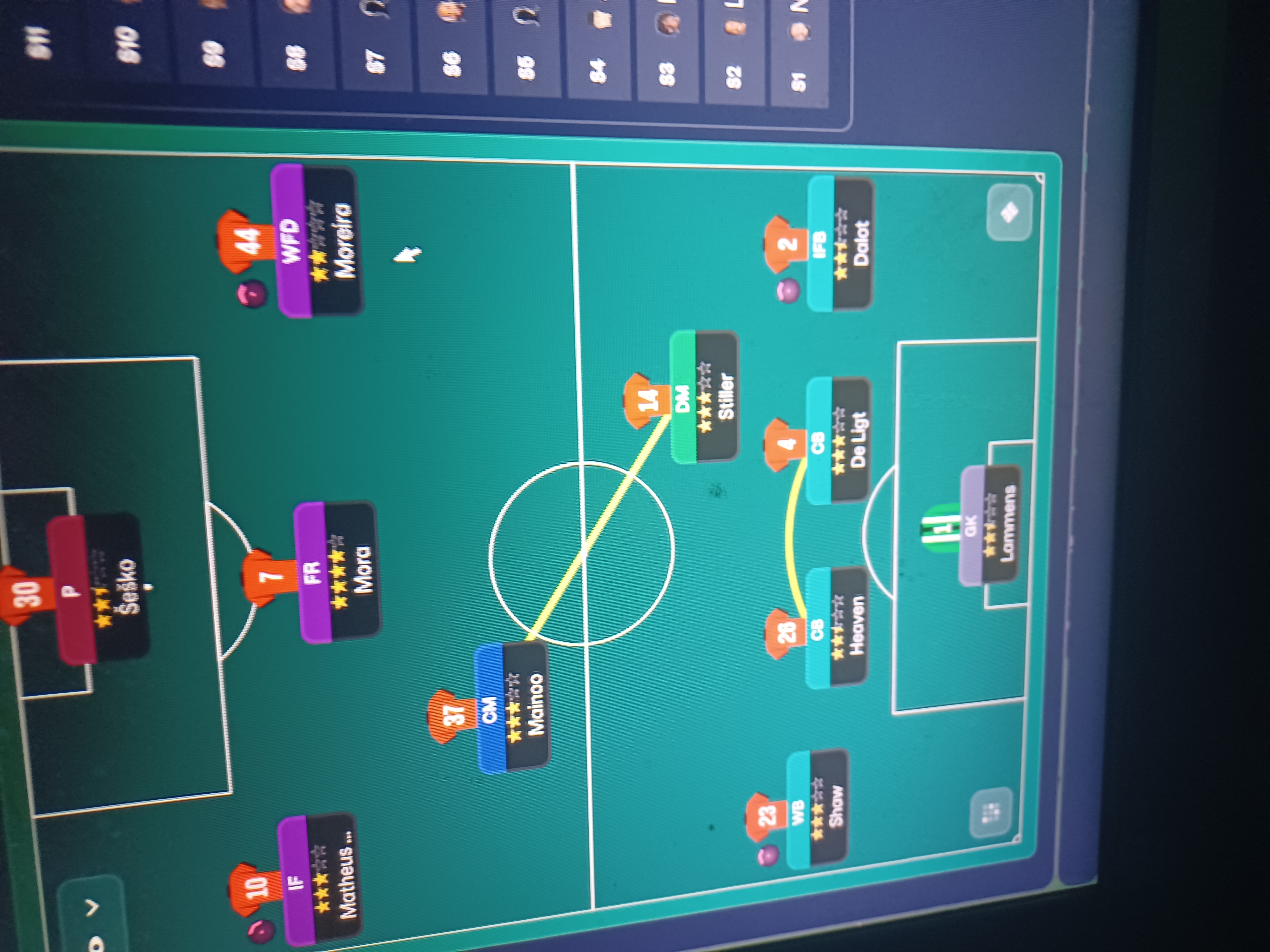
The focus is on exploiting wide areas and utilizing the pace of the forwards to create goal-scoring opportunities. Utilizing the wing-backs and wide…
Loading tactical analysis...
Formation and style
4-2-3-1 Wide
In possession
Work Ball Into Box
Play Out of Defence
Overlapping Full-Backs
In transition
Counter
Counter-Press
Out of possession
Higher Line of Engagement
Higher Defensive Line
Player roles
GK
Goalkeeper
Defend
CB
Centre-Back
Defend
CB
Centre-Back
Defend
WB
Wing-Back
Attack
FB
Full-Back
Support
DM
Defensive Midfielder
Defend
CM
Central Midfielder
Support
IF
Inside Forward
Attack
FR
Forward
Attack
P
Pressing Forward
Attack
Phase description
The team looks to build from the back, utilizing wing-backs to stretch play and create opportunities in wide areas while also attempting to work the ball into the box.
Upon losing possession, the team will look to quickly engage the opposition and regain control through counter-pressing efforts.
The focus is on exploiting wide areas and utilizing the pace of the forwards to create goal-scoring opportunities.
Team shape defence
Compact
The team defends in a compact shape to limit space between lines, making it difficult for opponents to penetrate.
DM at [3,3] and CBs at [2,2] and [2,3] provide defensive cover.
Team shape attack
Spread
The attacking shape spreads across the pitch, with wingers providing width and central players looking to exploit gaps.
IF at [6,1], FR at [6,2], and P at [6,3] create varied threats.
Key strengths
Width and Space Creation
Utilizing the wing-backs and wide forwards effectively stretches the opposition's shape.
WB at [2,1] and WFD at [5,5] can create overloads.
Defensive Solidity
The double pivot in midfield provides a strong shield to the backline, and the compact formation reduces space.
DM at [3,3] and two CBs at [2,2] and [2,3] reinforce defensive structure.
Conflicting tactics
High Defensive Line Risks
While the higher line can compress the pitch, it risks being exploited by quick counter-attacks.
Higher Defensive Line can be vulnerable with CBs at [2,2] and [2,3].
Overreliance on Wing Play
The emphasis on wide play can lead to predictability, making it easier for defenses to organize.
Heavy reliance on WB at [2,1] and WFD at [5,5].
Risk exposures
Risk Exposures
Items
Defensive Line
The higher line could be prone to through balls and pacey attackers.
Heightened risk by positioning of CBs at [2,2] and [2,3].
Central Midfield
Should the DM be bypassed, the midfield may lack cover for quick transitions.
DM at [3,3] must have positional discipline.
Role synergies
Role Synergies
Items
DM and CBs
The DM works well with the CBs to provide defensive stability.
DM at [3,3] supports CBs at [2,2] and [2,3].
WB and CM
The WB can overlap with the CM for additional support in attack.
WB at [2,1] and CM at [4,3] can create space.
Suggested questions
How can we further develop synergy between the midfield and forwards?
What adjustments can address the defensive vulnerabilities?
Should we explore alternative attacking formations?
Related Tactics
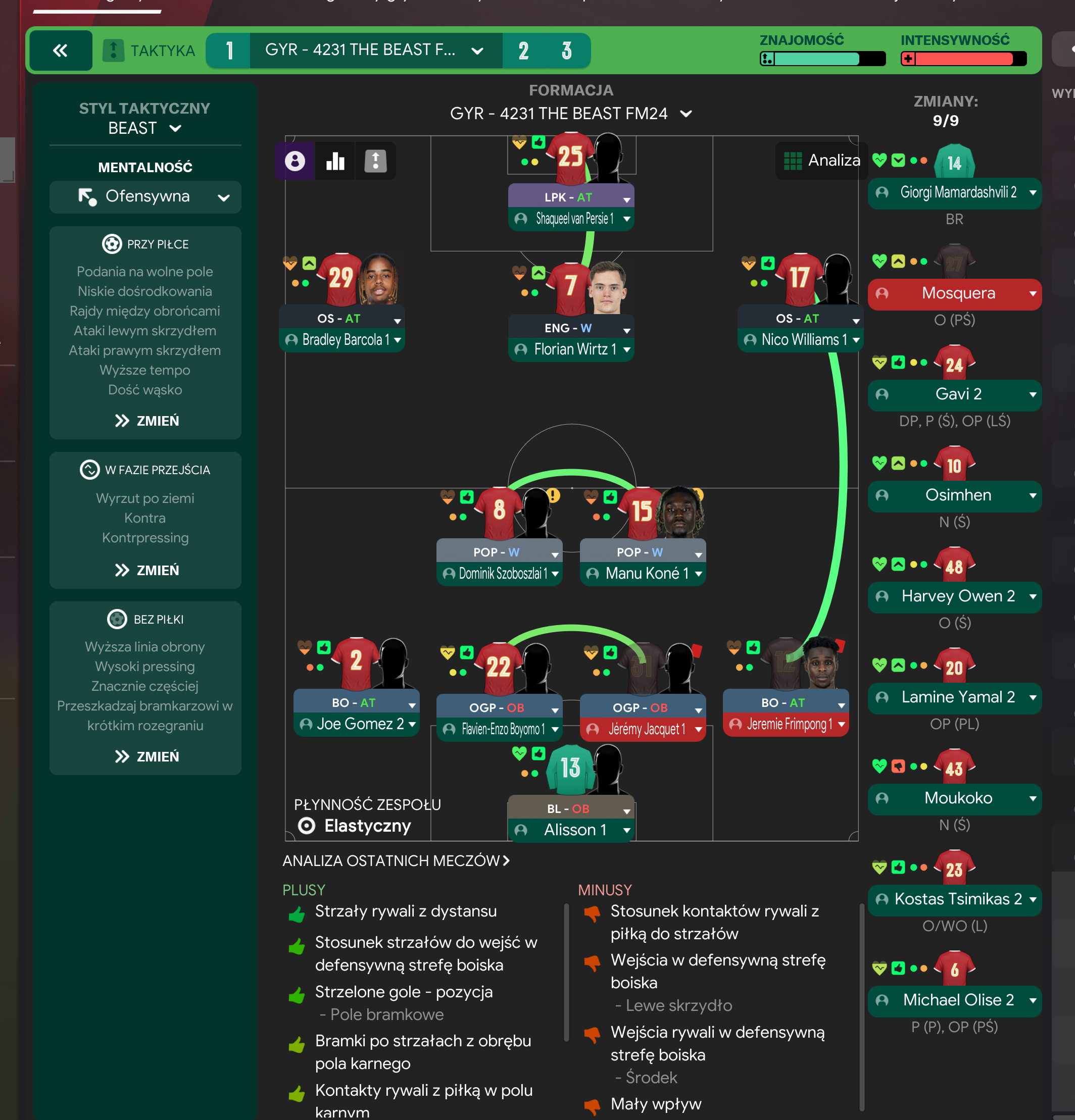
Gegenpress 4-2-3-1 Wide
Gegenpress
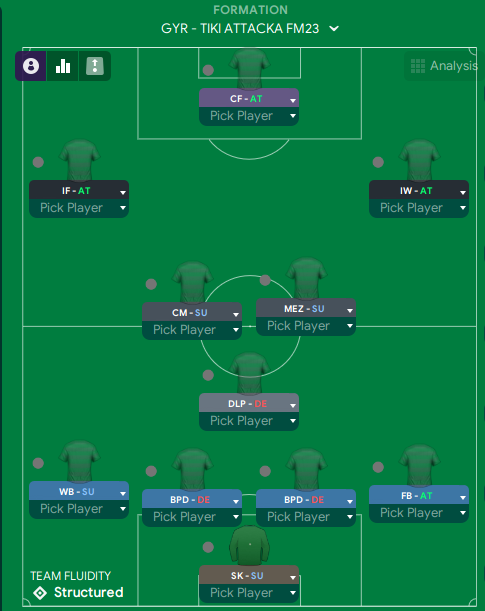
Tiki-Taka 4-2-3-1 Wide
Tiki Taka
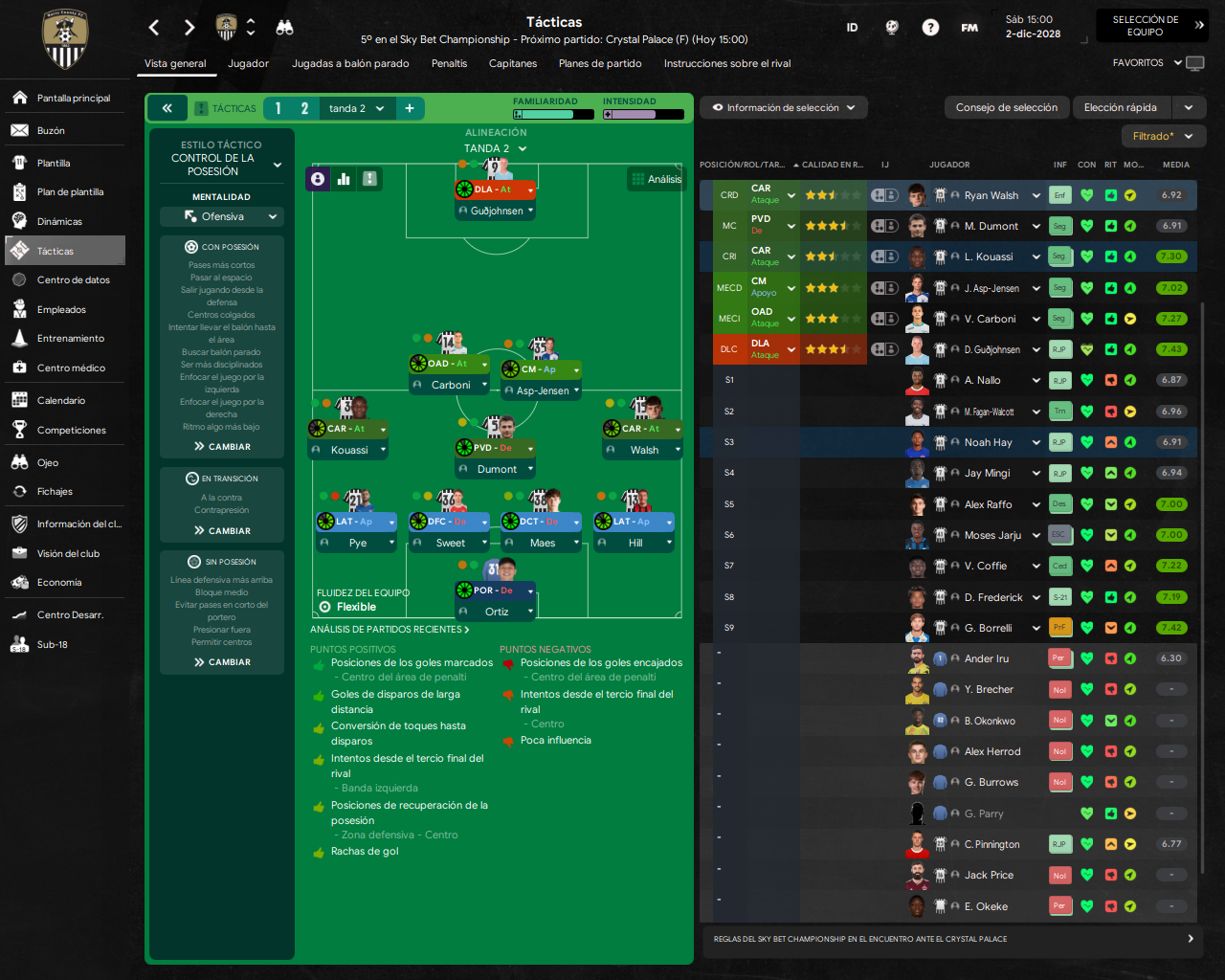
4-2-3-1 Wide Formation
Control de la posesión
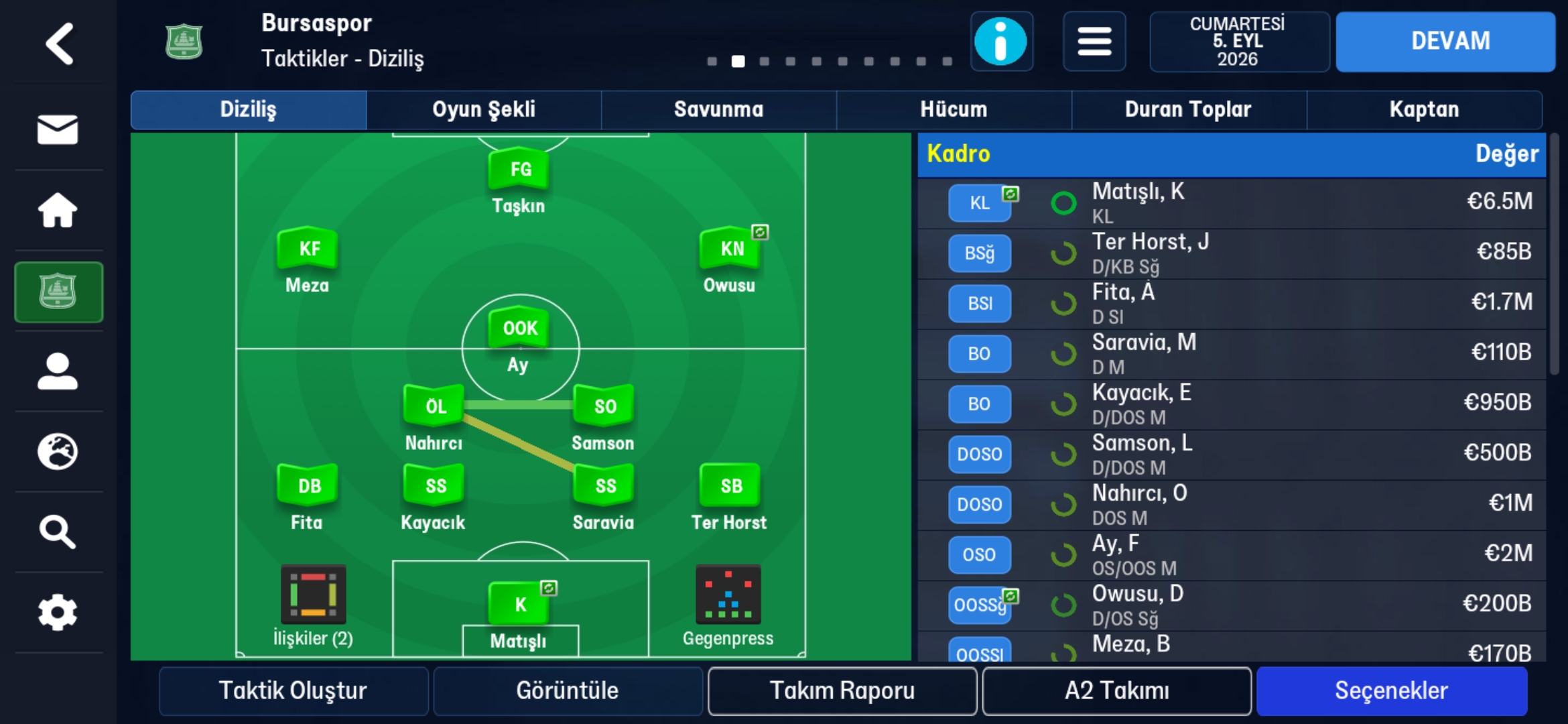
Gegenpress 4-2-3-1 Wide
Gegenpress
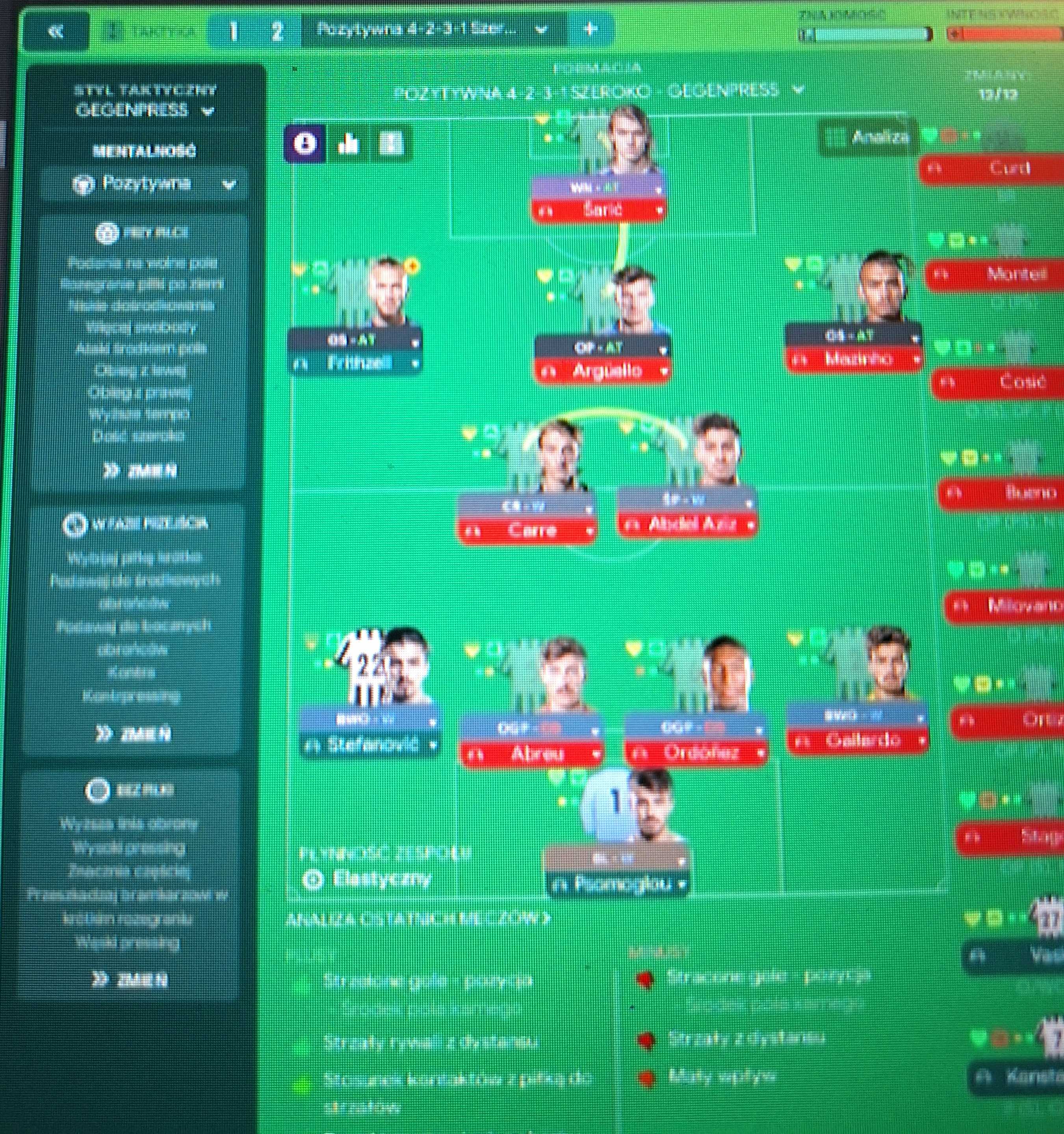
Gegenpress 4-2-3-1 Wide
Gegenpress
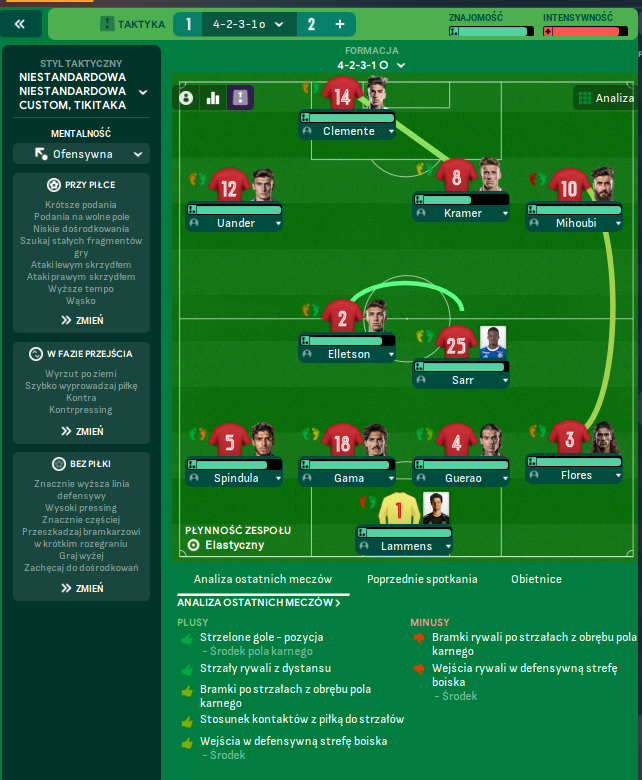
Tiki-Taka 4-2-3-1 Wide
Tiki-Taka
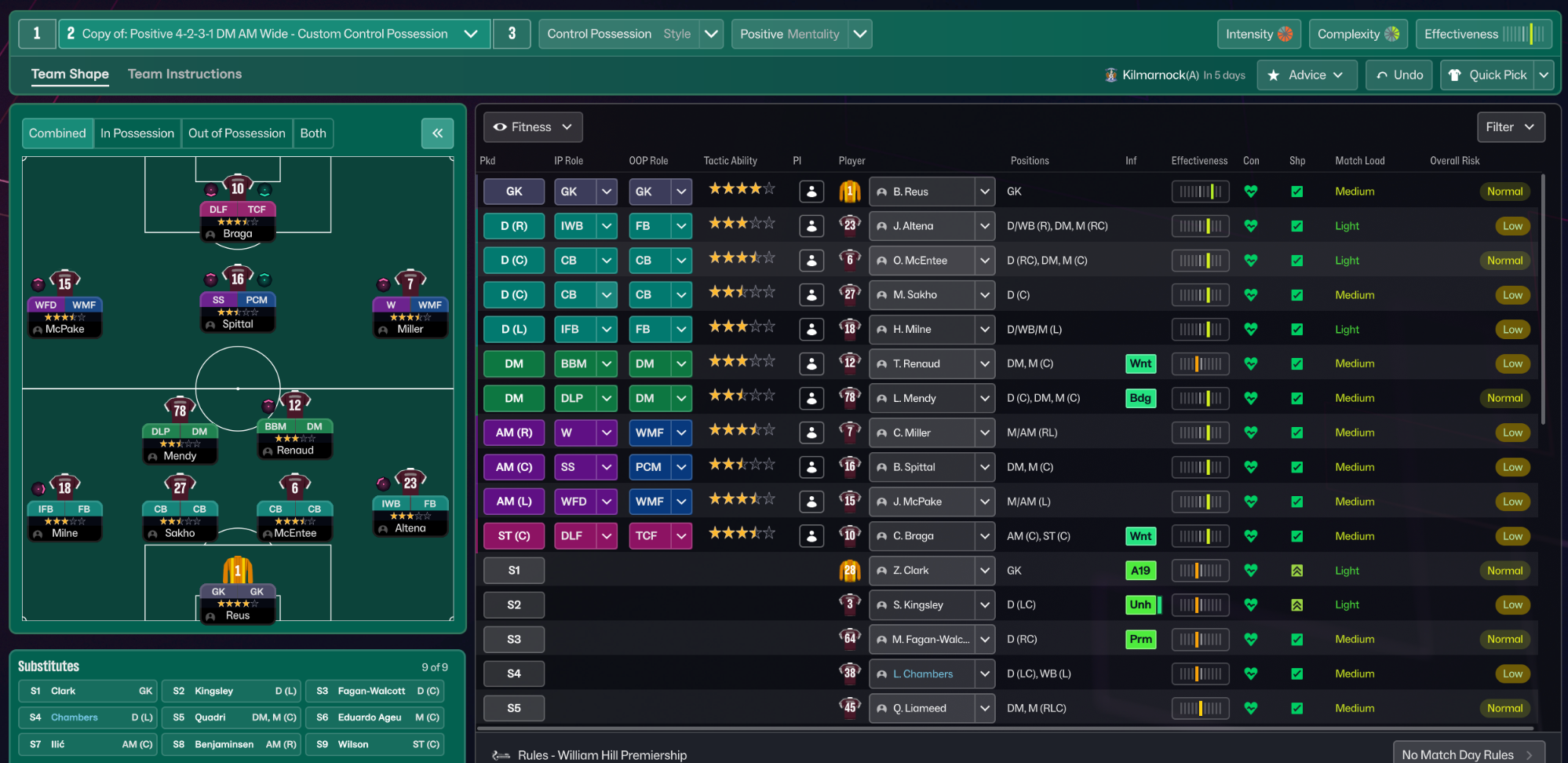
Control Possession 4-2-3-1 Wide
Control Possession
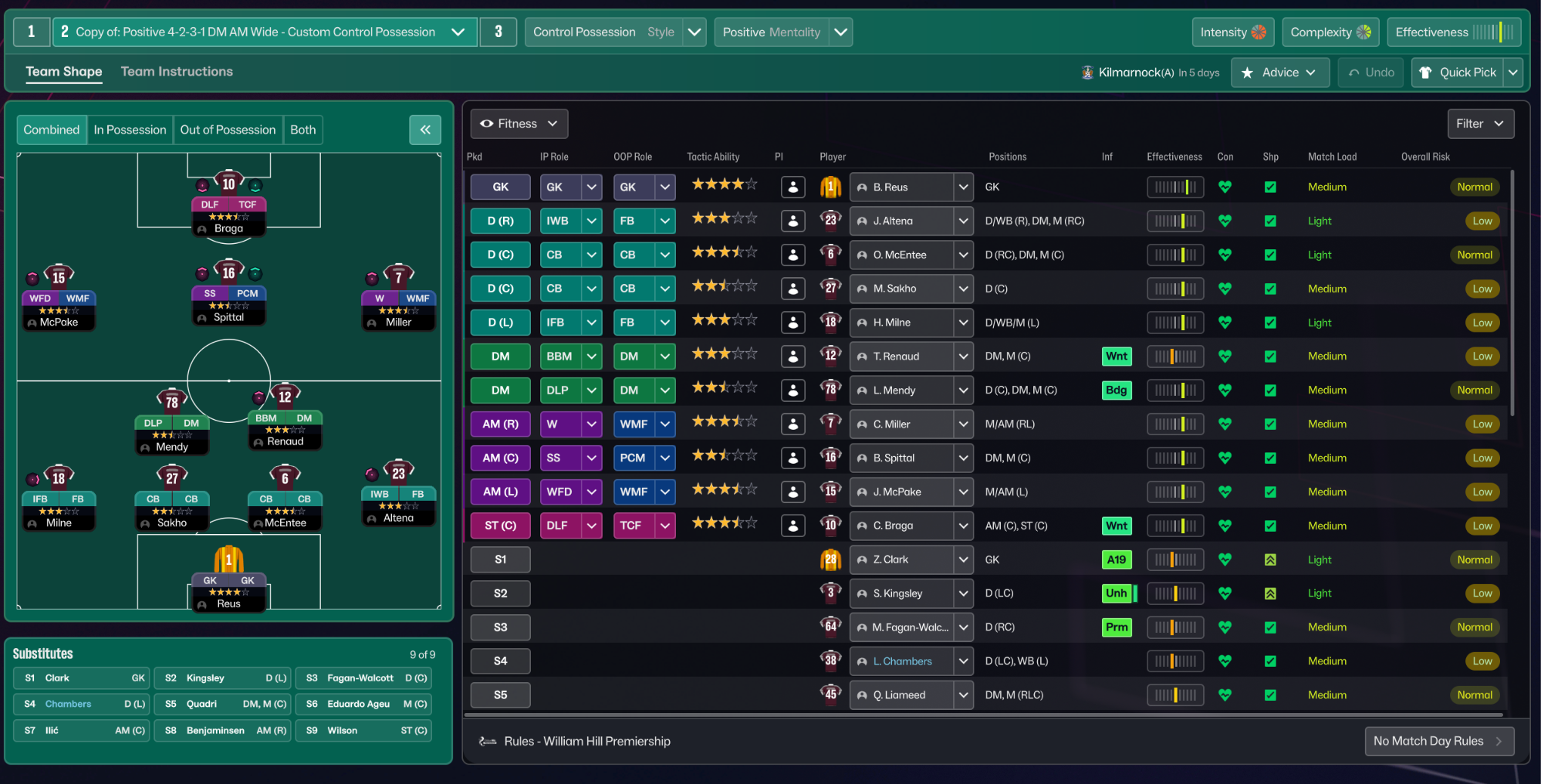
Control Possession 4-2-3-1 Wide
Control Possession
Guides for this tactic
The tactical theory behind the 4-2-3-1 Wide: roles, instructions, and the trade-offs that decide whether the system holds up.
Playing styles
Gegenpressing: A Full Guide
Klopp-style gegenpressing in FM, including squad profile, line-and-press pairing, sustainable workload, and the antipatterns to avoid.
Read guide
Player pairings
Midfield Pairs in 4-2-3-1 and 4-4-2
Double pivots and flat pairs in 4-2-3-1 and 4-4-2: when each pairing works, when it collapses, and the AMC unicorn that rescues both.
Read guide
Foundations
Mentality, Duty & Roles
How Mentality, Duty, and Role interact in FM, why duty trumps mentality every time, and the role-on-top-of-duty composition rules.
Read guide