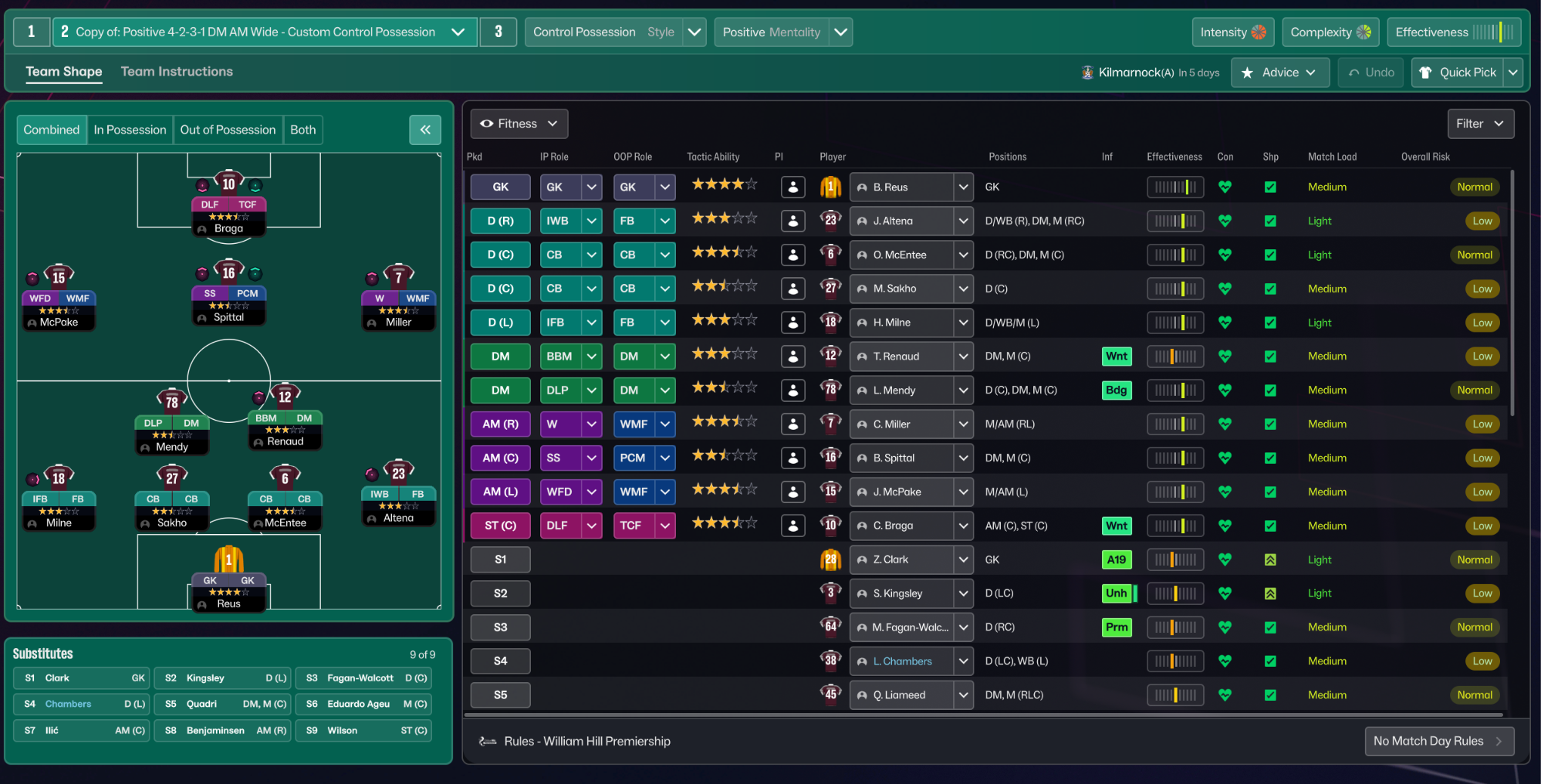
Control Possession 4-2-4 (Positive) Tactic
4-2-4
Dominate possession and create scoring opportunities through structured attacking plays. The use of Wing-Backs allows the team to stretch the opposition…
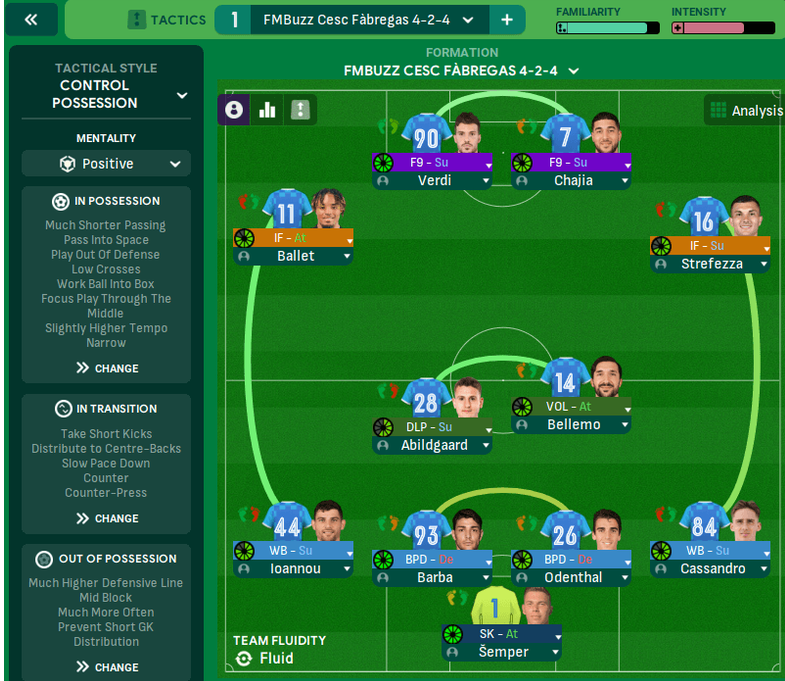
Loading tactical analysis...
Formation and style
Control Possession
Positive
4-2-4
Fluid
In possession
Much Shorter Passing
Pass Into Space
Play Out of Defense
Low Crosses
Work Ball Into Box
Focus Play Through The Middle
Slightly Higher Tempo
Narrow
In transition
Take Short Kicks
Distribute to Centre-Backs
Slow Pace Down
Counter
Counter-Press
Out of possession
Much Higher Defensive Line
Mid Block
Much More Often
Prevent Short GK Distribution
Player roles
GK
Sweeper Keeper
Attack
DL
Wing-Back
Support
DC
Ball-Playing Defender
Defend
DC
Ball-Playing Defender
Defend
DR
Wing-Back
Support
DM
Deep-Lying Playmaker
Support
CM
Volante
Attack
AML
Inside Forward
Attack
AMC
False Nine
Support
AMR
Inside Forward
Support
ST
False Nine
Support
Phase description
The team builds possession from the back, using short passes and width from wing-backs while focusing on space and creating chances in the box.
The team aims to regain possession quickly through counter-pressing while transitioning defensively into a mid-block shape.
Dominate possession and create scoring opportunities through structured attacking plays.
Team shape defence
4-4-2
The team forms a compact shape with players working together to limit space and prevent access to central areas.
Higher Defensive Line and Mid Block strategy.
Team shape attack
4-2-4
The attacking setup utilizes width and depth to break defenses with multiple penetrating options.
Presence of two inside forwards and a false nine in attacking roles.
Key strengths
Effective Width
The use of Wing-Backs allows the team to stretch the opposition and create space centrally.
Wing-Backs at [2,1] and [2,5] provide width and support for attacks.
Attacking Fluidity
Having multiple forward options allows for dynamic attacking movements and unpredictability.
False Nine at [5,3] with two Inside Forwards at [6,2] and [6,4].
Conflicting tactics
Defensive Vulnerability
A higher defensive line may create space behind for fast opposition attackers.
Much Higher Defensive Line in Out of Possession strategy.
Transition Speed
Slowing down the pace in transition may hinder quick counter-attacks.
Slow Pace Down configuration in In Transition strategy.
Risk exposures
Risk Exposures
Items
Counter-Attacks
With a high defensive line and commitment to attack, the team is exposed to quick transitions by swift opposition players.
Much Higher Defensive Line with lack of cover in attacks.
Wide Play Vulnerability
The absence of a solid wide-midfield presence may lead to gaps in defense when opponents switch play.
Wing-backs are tasked with both defensive and offensive duties.
Role synergies
Role Synergies
Items
DLP-S with Volante
The DLP provides the deeper playmaking role, while the Volante supports in transitional phases, offering a fluid midfield.
DLP-S at [3,3] combined with Volante at [4,3] enhances fluidity.
Wing-Backs and Inside Forwards
The synergy between wing-backs providing outlets and inside forwards creating central space fosters attacking opportunities.
WB-S at [2,1] and [2,5] support and create space for IF-A at [6,2] and [6,4].
Suggested questions
How can we balance defensive solidity while maintaining an attacking threat?
What adjustments can be made to our counter-pressing strategy?
Should we explore alternative roles for wing-backs to enhance our attack?
Related Tactics
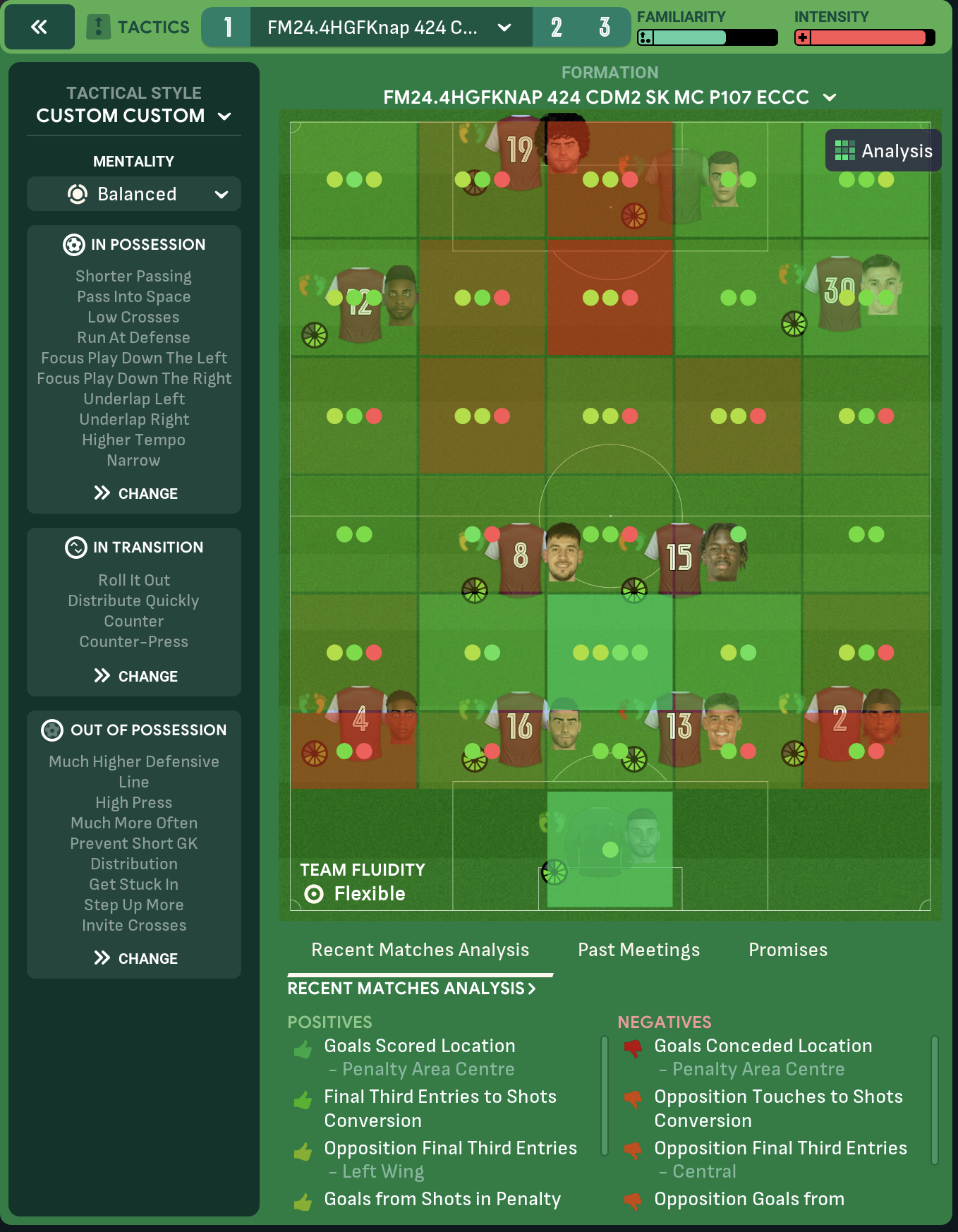
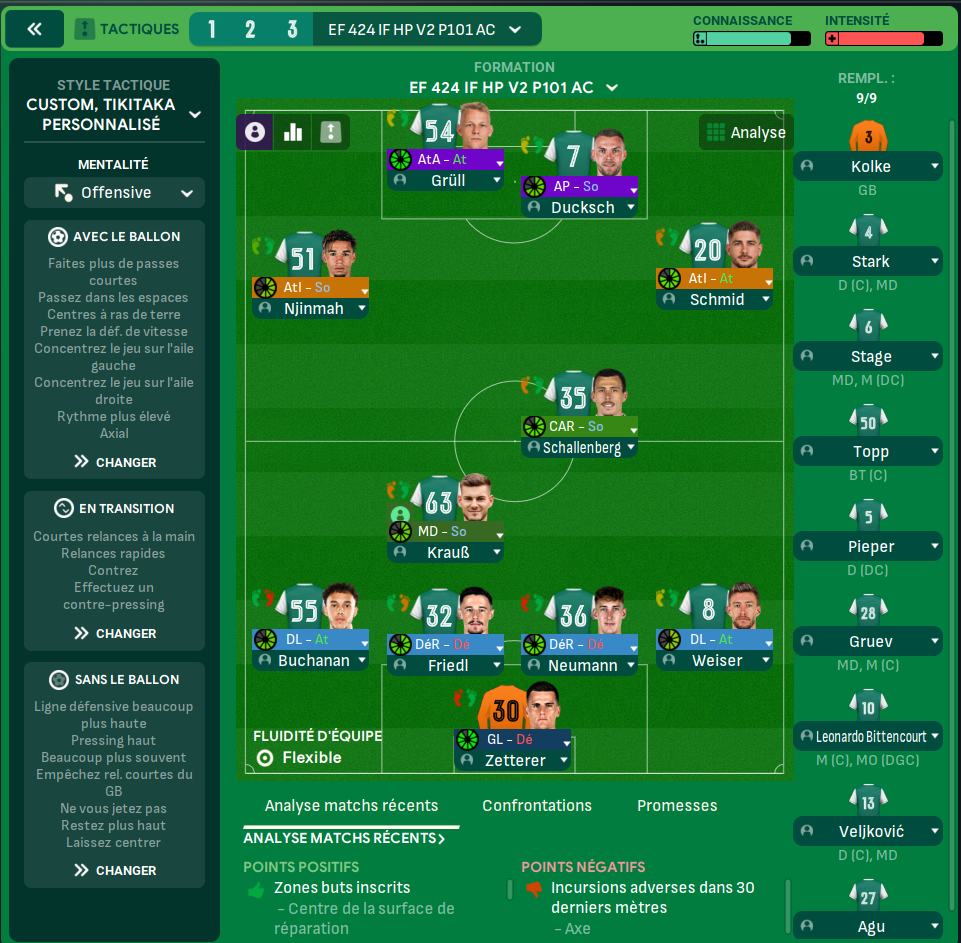
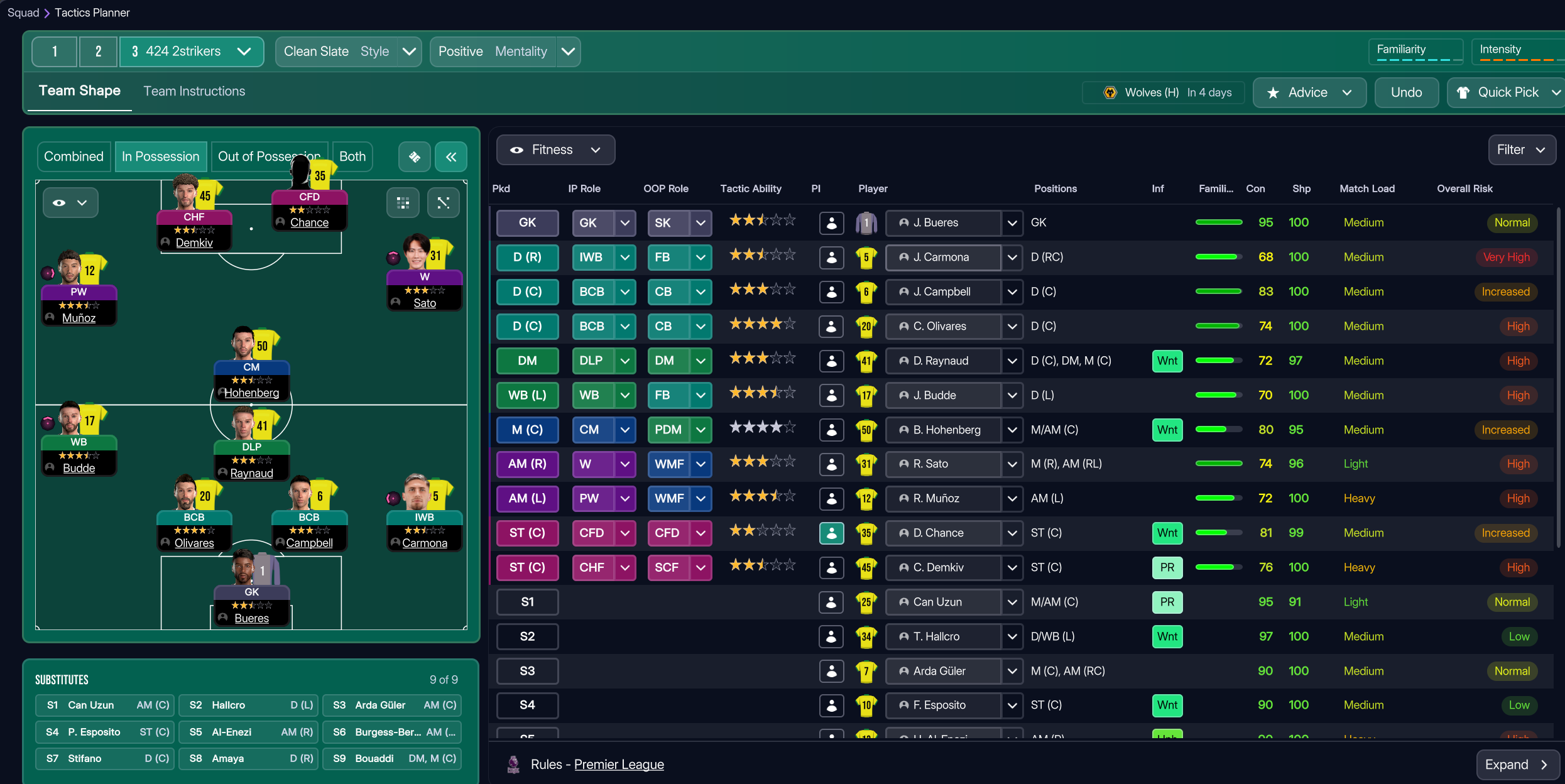
More Control Possession tactics
Guides for this tactic
The tactical theory behind the 4-2-4: roles, instructions, and the trade-offs that decide whether the system holds up.
Playing styles
Direct, Vertical Football
Long-ball football done well in FM. When direct, vertical play is the right choice, and what the Direct Passing TI actually changes.
Read guide
Foundations
Mentality, Duty & Roles
How Mentality, Duty, and Role interact in FM, why duty trumps mentality every time, and the role-on-top-of-duty composition rules.
Read guide
Foundations
Pressing Triggers and Intensity
Counter-Press, Regroup, Stand Off, Trigger Press: what each pressing instruction does in FM and how to pair them without contradicting.
Read guide