4-3-3 DM Wide (Balanced) Tactic
4-3-3 DM Wide
To maintain a balanced approach, transitioning effectively between offensive and defensive phases. The full-backs can provide additional width while the…
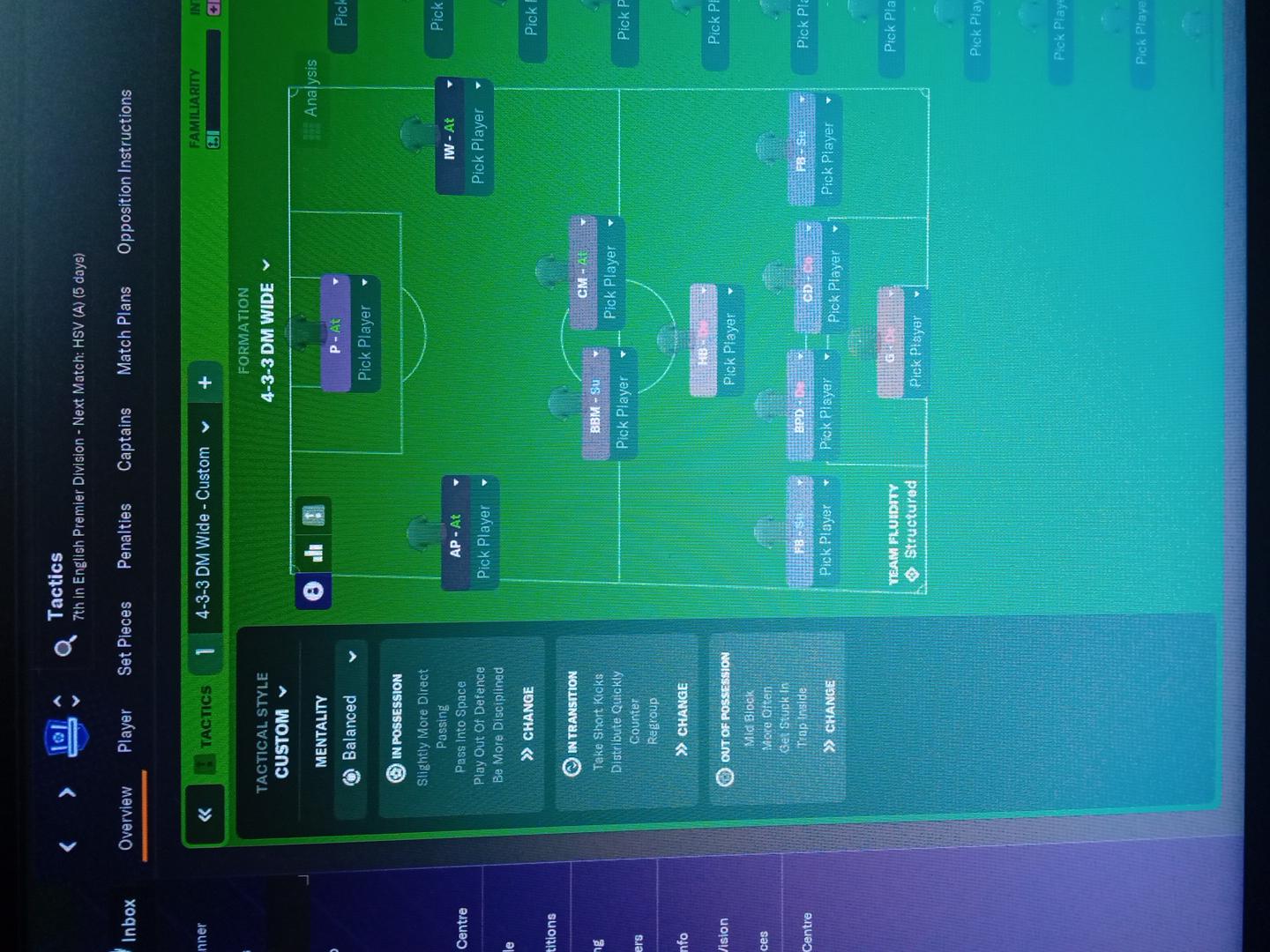
Loading tactical analysis...
Formation and style
Custom
Balanced
4-3-3 DM Wide
Structured
In possession
Slightly More Direct Passing
Pass Into Space
Play Out of Defence
Be More Disciplined
In transition
Distribute Quickly
Regroup
Out of possession
Mid Block
Move Often
Get Stuck In
Trap Inside
Player roles
Goalkeeper
Goalkeeper
De
Defender (Left)
Full-Back
Su
Defender (Centre 1)
Ball-Playing Defender
De
Defender (Centre 2)
Centre-Back
De
Defender (Right)
Full-Back
Su
Defensive Midfielder
Half Back
Su
Central Midfielder
Box-to-Box Midfielder
Su
Attacking Midfielder (Left)
Advanced Playmaker
At
Attacking Midfielder (Right)
Inverted Winger
At
Striker
Pressing Forward
At
Phase description
Utilizes width and direct passing to stretch the opposition and create goal-scoring opportunities.
Focuses on regrouping quickly after losing possession, ensuring a solid defensive shape.
To maintain a balanced approach, transitioning effectively between offensive and defensive phases.
Team shape defence
Mid Block
The team maintains a compact shape, pressing the opposition slightly before retreating to form solid defensive lines.
Configured with 'Mid Block' and players instructed to 'Get Stuck In'.
Team shape attack
Wide
Wide attacking play with overlapping full-backs supporting wide forwards and an aggressive striker.
Use of 'Slightly More Direct Passing' and 'Pass Into Space' to exploit width.
Key strengths
Utilization of Width
The full-backs can provide additional width while the wingers cut inside, creating space for central players.
Roles of Full-Backs (FB-Su) at [2,1] and [2,5] with wingers providing width.
Midfield Balance
The midfield trio contains players that are capable of both defending and supporting attacks effectively.
Half Back (HB-Su) at [3,3] and Box-to-Box Midfielder (BBM-Su) at [4,3].
Conflicting tactics
Counter-Pressing vs. Possession Retention
The preference for direct passing and quick transitions may conflict with a potential counter-press setup.
Configured for 'Regroup' rather than immediate pressure on the ball.
Inverted Winger vs. Full-Back Role
Inverted wingers cutting inside could potentially lessen the effectiveness of overlapping full-backs.
Use of Full-Backs (FB-Su) at [2,1] and [2,5] with Inverted Wingers (IW-At) in wide positions.
Risk exposures
Risk Exposures
Items
Defensive Transition
Teams may exploit gaps during transition if the pressing is ineffective.
Configured to 'Regroup' which may leave players exposed as they retreat.
Wide Areas
Full-backs could be outnumbered or isolated if wingers do not track back.
Dependence on Full-Backs (FB-Su) to support attacks while maintaining defensive responsibilities.
Role synergies
Role Synergies
Items
Half Back and Box-to-Box Midfielder
The Half Back can provide defensive cover while the Box-to-Box Midfielder supports both attack and defense.
Half Back (HB-Su) at [3,3] and Box-to-Box Midfielder (BBM-Su) at [4,3] create synergetic functions.
Advanced Playmaker and Pressing Forward
The combination allows for creativity in attack while maintaining pressing intensity.
Advanced Playmaker (AP-At) at [5,2] working with Pressing Forward (PF-At) at [6,3] to create scoring opportunities.
Suggested questions
How do I improve the team's transition play?
What adjustments can be made to better utilize my wide players?
How can we strengthen our defensive shape?
Related Tactics
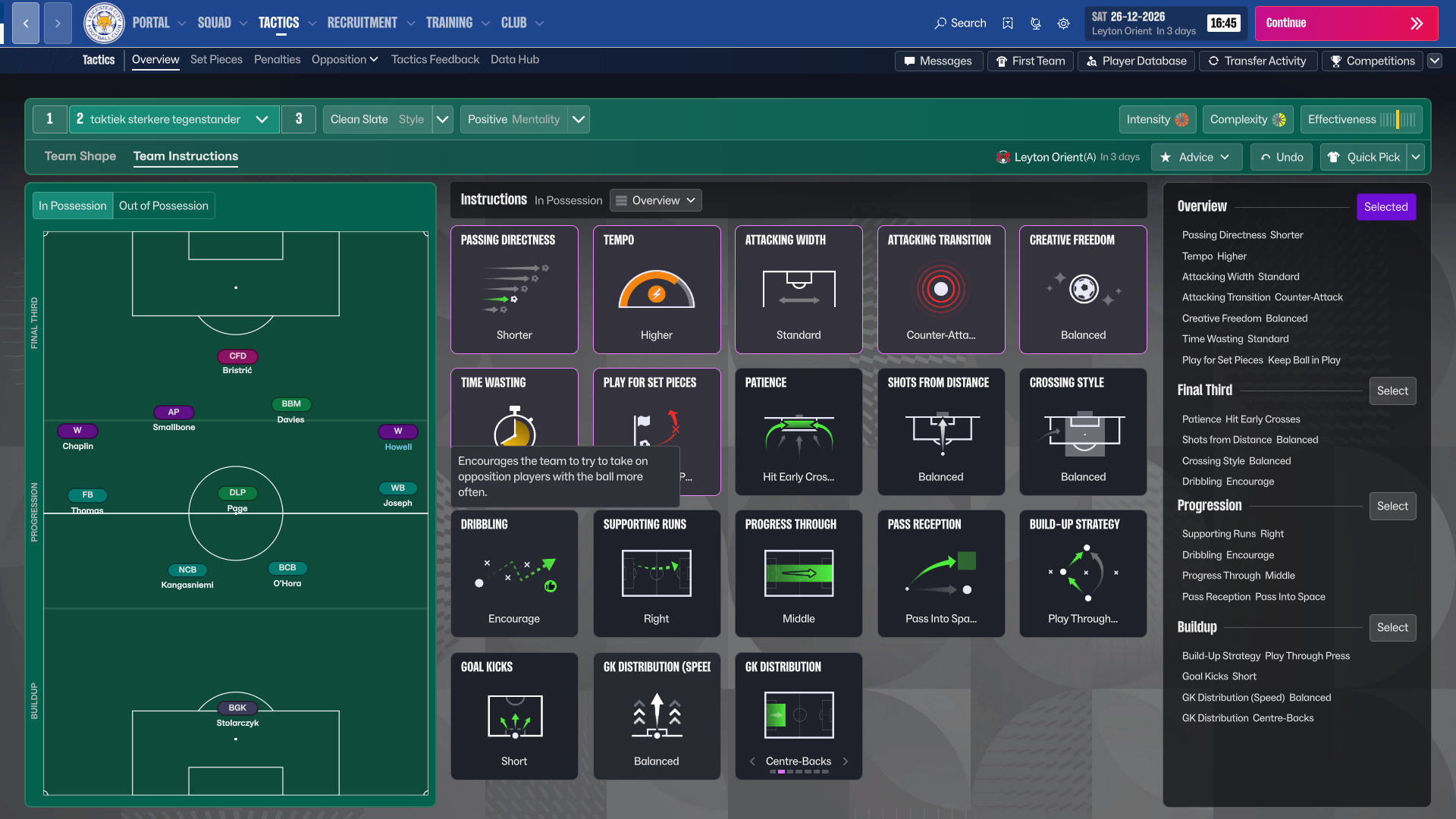
4-3-3 DM Wide Formation
clean slate
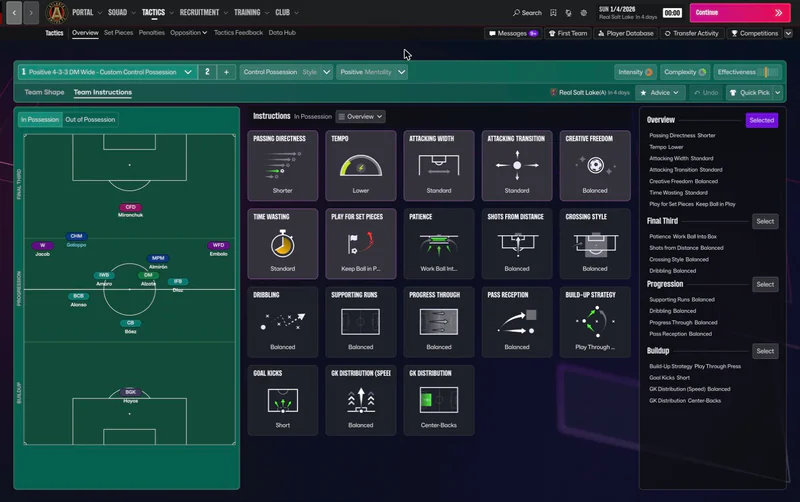
Control Possession 4-3-3 DM Wide
control possession
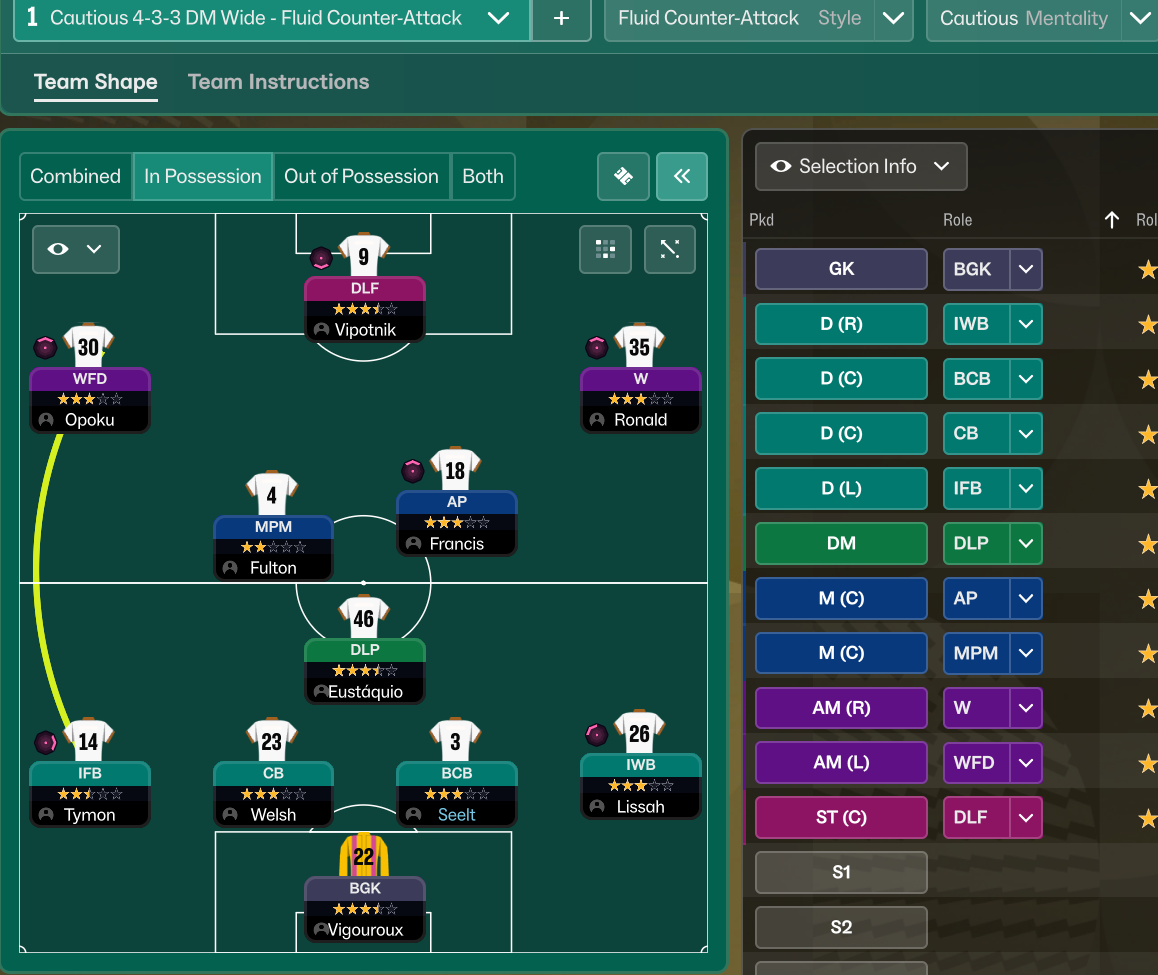
Fluid Counter-Attack 4-3-3 DM Wide
Fluid Counter-Attack
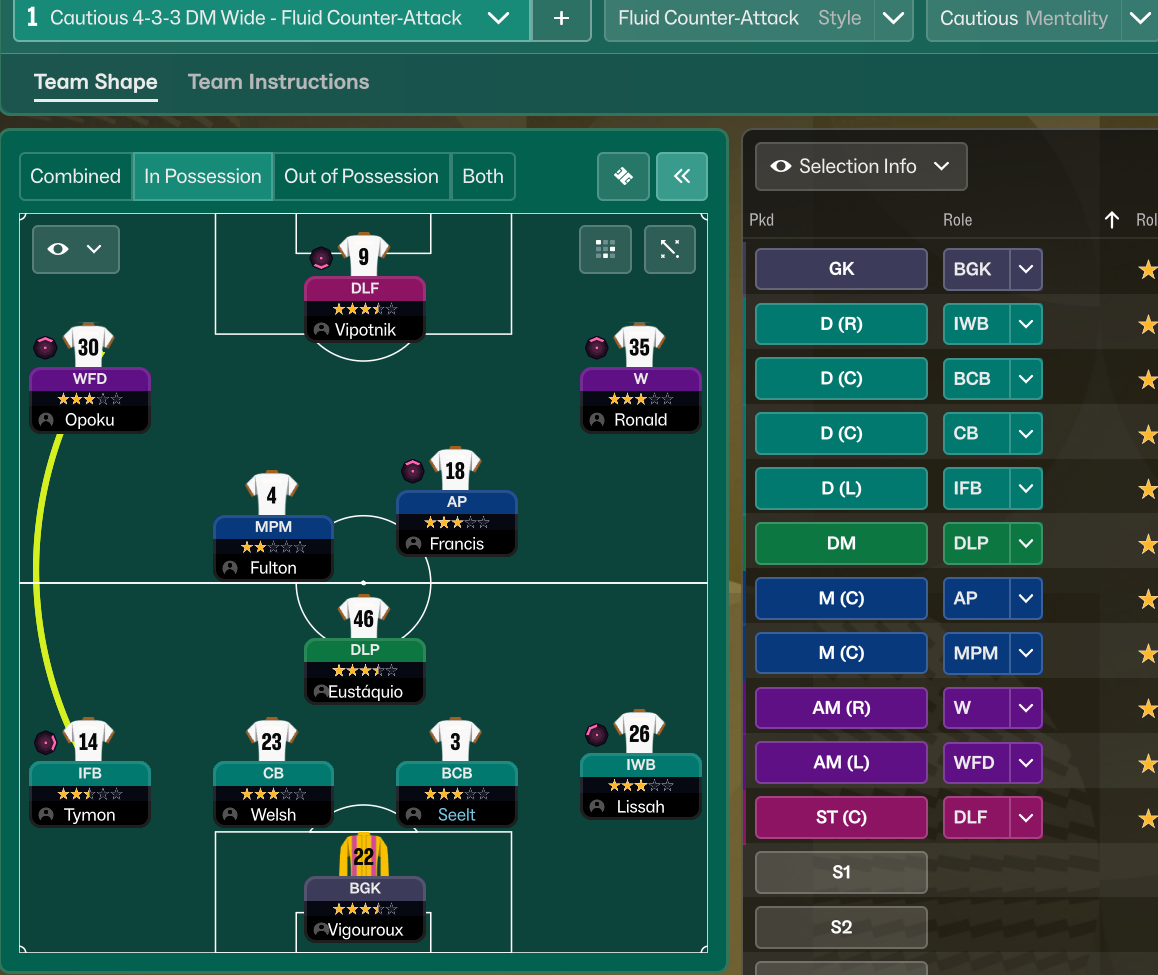
Fluid Counter-Attack 4-3-3 DM Wide
Fluid Counter-Attack
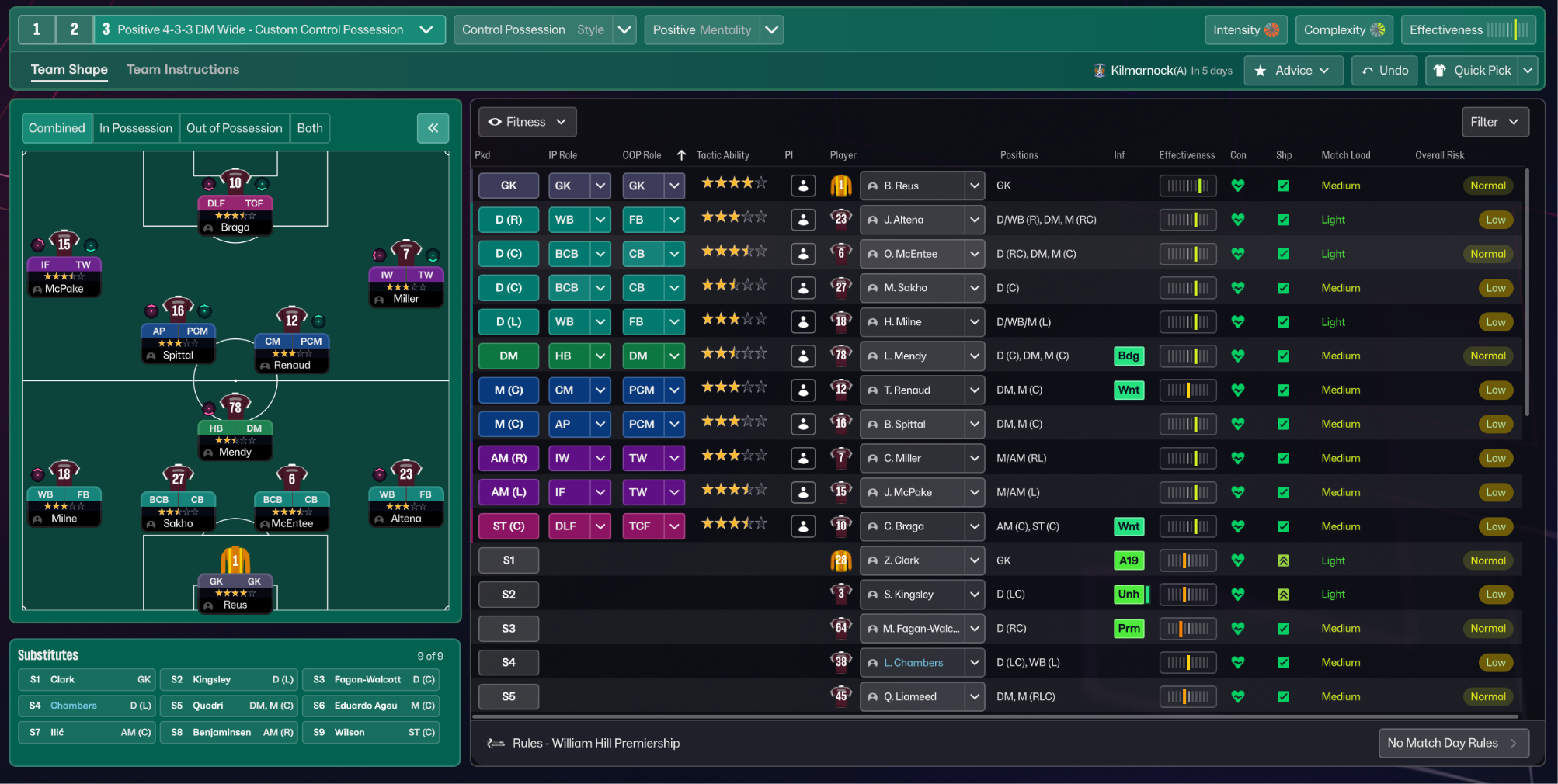
Control Possession 4-3-3 DM Wide
Control Possession
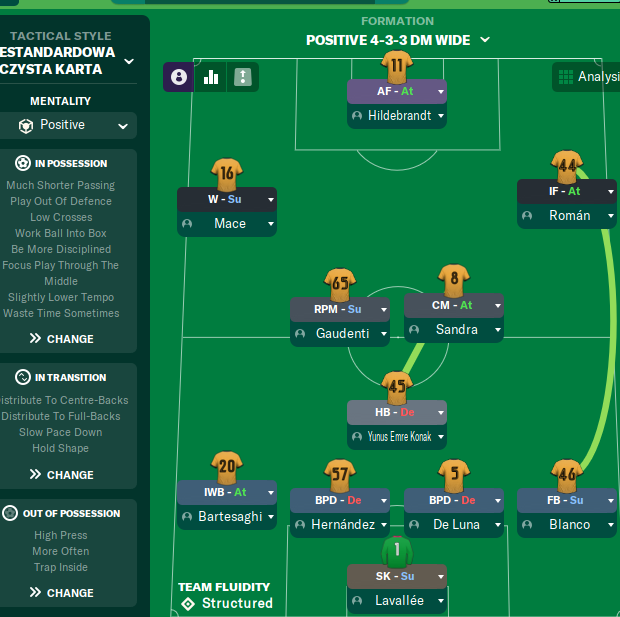
Positive 4-3-3 DM Wide
Positive
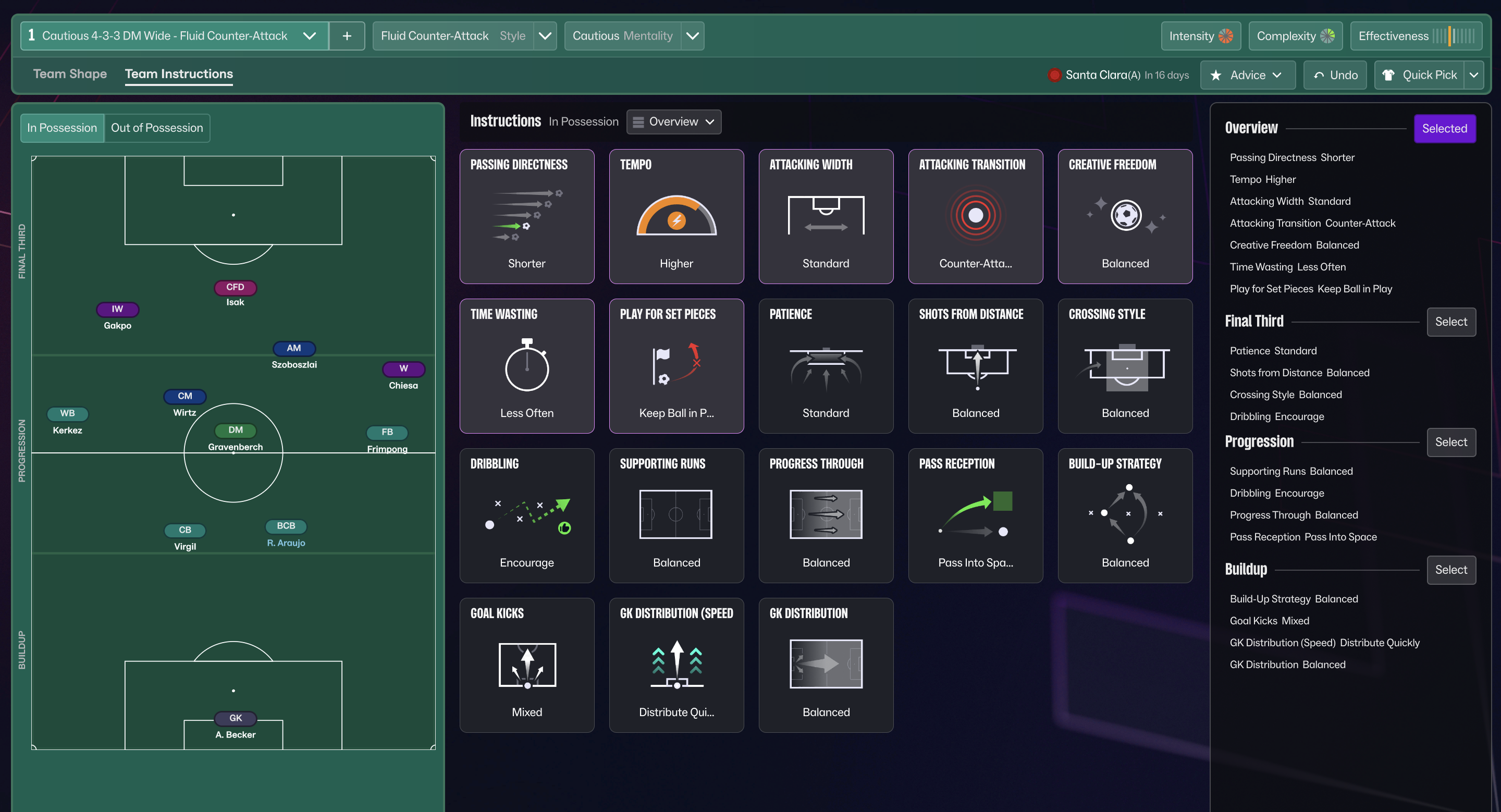
Fluid Counter-Attack 4-3-3 DM Wide
Fluid Counter-Attack
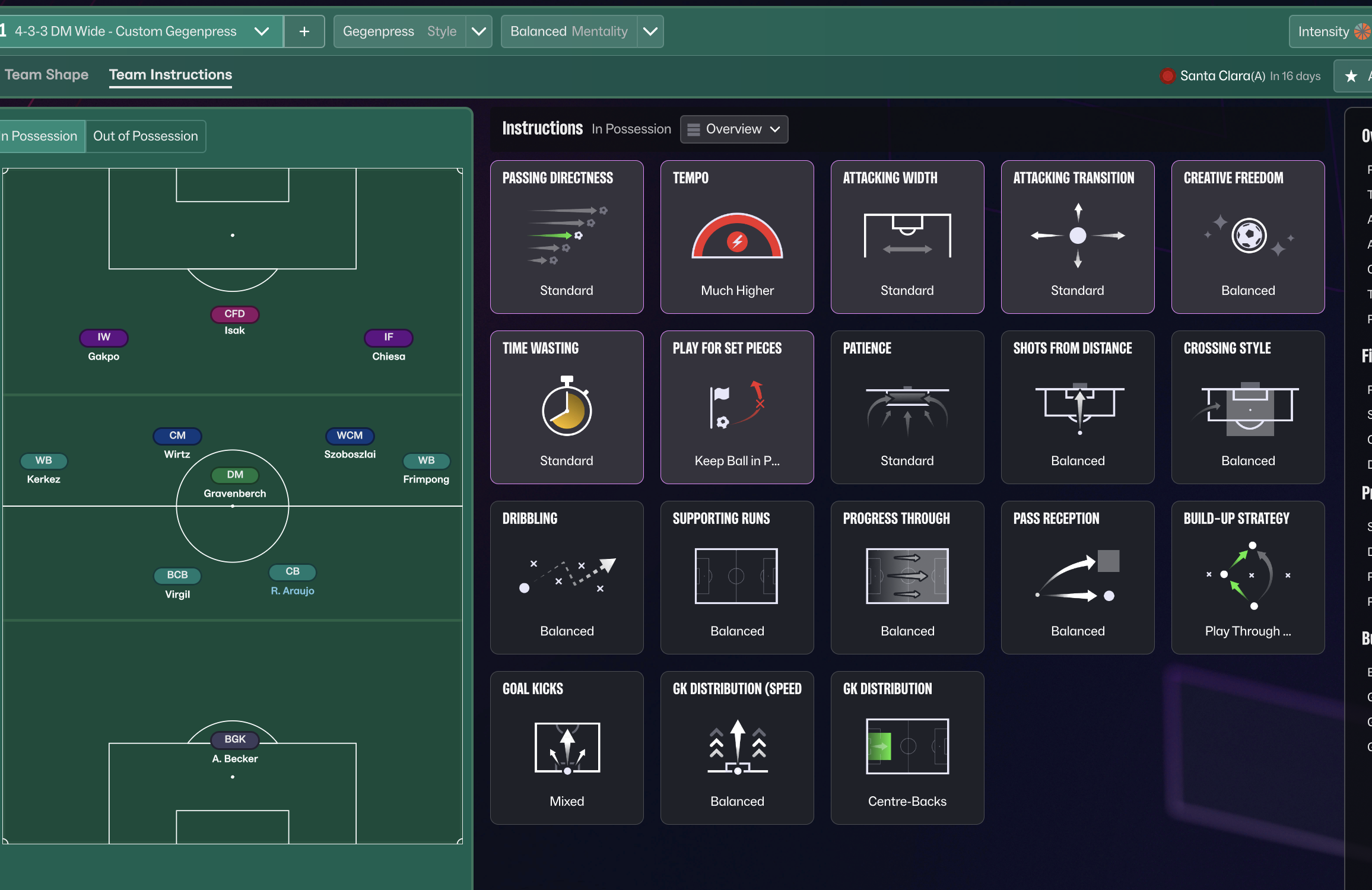
Gegenpress 4-3-3 DM Wide
Gegenpress
Guides for this tactic
The tactical theory behind the 4-3-3 DM Wide: roles, instructions, and the trade-offs that decide whether the system holds up.
Foundations
Understanding the 4-3-3 Formation
Master the classic 4-3-3: player roles, tactical variations, and the trade-offs that decide whether it sings or stalls.
Read guide
Player pairings
Midfield Trios
Holder, runner, creator: the role distribution rule for three-man midfields, the AMC variants, and the antipatterns that break them.
Read guide
Match preparation
In-Match Tactical Changes
Mentality, duty, role, instruction, sub. The change hierarchy from lightest to heaviest intervention, and 60th-minute patterns by game state.
Read guide