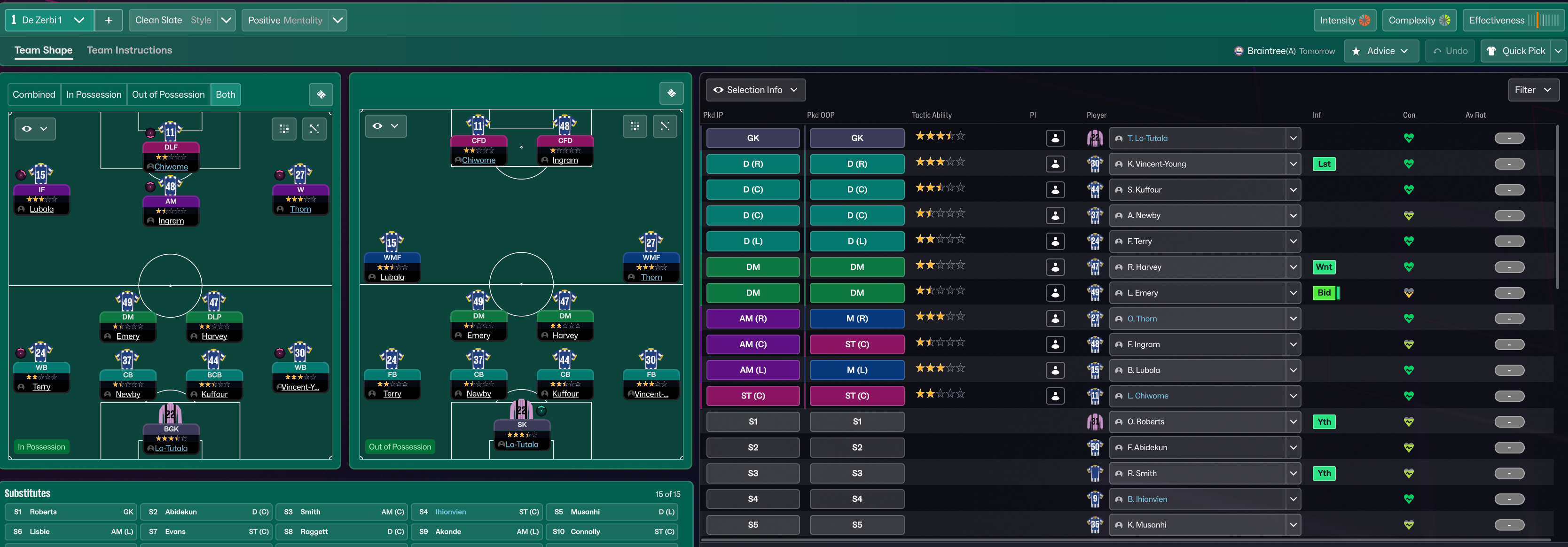
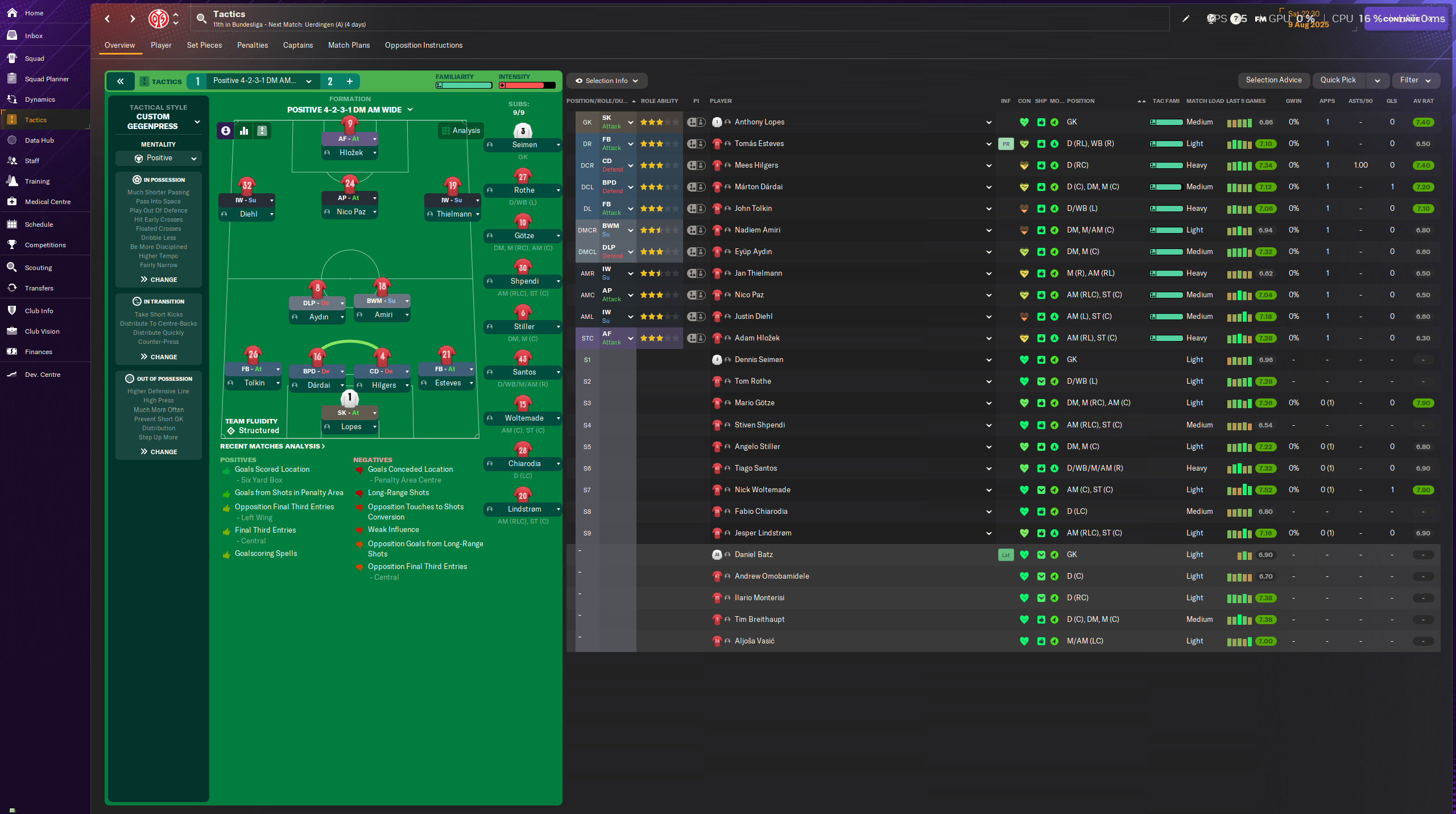
Positive 4-2-3-1 (Positive) Tactic
4-2-3-1
Create overloads in wide areas and exploit defensive gaps. Ability to maintain possession and dictate the pace of the game.
Loading tactical analysis...
Formation and style
Positive
Positive
4-2-3-1
In possession
Play Out of Defence
Shorter Passing
Work Ball Into Box
In transition
Counter-Press
Counter
Out of possession
Higher Defensive Line
Higher Line of Engagement
Prevent Short GK Distribution
Player roles
GK
Sweeper Keeper
Support
CB
Ball-Playing Defender
Defend
CB
No-Nonsense Centre-Back
Defend
FB
Wing-Back
Support
FB
Full-Back
Support
DM
Deep-Lying Playmaker
Support
DM
Ball-Winning Midfielder
Support
AM
Inside Forward
Attack
WM
Wide Midfielder
Support
CF
Deep-Lying Forward
Support
IF
Inside Forward
Attack
Phase description
The team looks to maintain possession and create chances through patient build-up play, as guided by the short passing and working the ball into the box instructions.
The team will aggressively press to regain possession through counter-pressing.
Create overloads in wide areas and exploit defensive gaps.
Team shape defence
Compact
Team adopts a compact shape with a high line to press and compress the space, limiting opposition plays.
Higher Defensive Line and Higher Line of Engagement instructions
Team shape attack
Fluid
Attacking plays can shift from wide to central rapidly, engaging forwards in creating goal-scoring opportunities.
Involvement of Inside Forwards and Wide Midfielder roles
Key strengths
Ball Control
Ability to maintain possession and dictate the pace of the game.
DLP-S at [3,2] with 'Play Out of Defence'
Defensive Solidity
Combination of defensive roles allows for good coverage and tackling ability.
BWM-S at [3,3] and NCB at [2,2] ensure defensive stability.
Conflicting tactics
High Press vs. Deep Defense
The intensity of pressing might be undermined if players are not technically adept at maintaining pressure.
Counter-Pressing instruction can leave defenders exposed without sufficient support.
Over-reliance on Wing Play
May become predictable as the attack focuses heavily on wide areas.
Wide Midfielder and Inside Forward roles might lead to a lack of central penetration.
Risk exposures
Risk Exposures
Items
Counter-Attacks
Teams may exploit gaps left by advancing full-backs.
FB-S and WB-S roles may leave defensive vulnerabilities.
Central Overload
The formation may allow opponents to overload central areas.
DLP-S at [3,2] may be isolated against more aggressive midfield setups.
Role synergies
Role Synergies
Items
DLP-S and BWM-S
Allows for a balance between creativity and defensive stability.
DLP-S at [3,2] provides passing options while BWM-S at [3,3] can reclaim possession.
IF-A and CF-S
Creates diagonal runs that can destabilize opposition defenses.
IF-A at [6,1] and CF-S at [6,2] promote overlapping movements.
Suggested questions
How can we improve our counter-pressing effectiveness?
What adjustments are needed to exploit space in central areas?
How can player fitness be optimized for a faster tempo?
Related Tactics
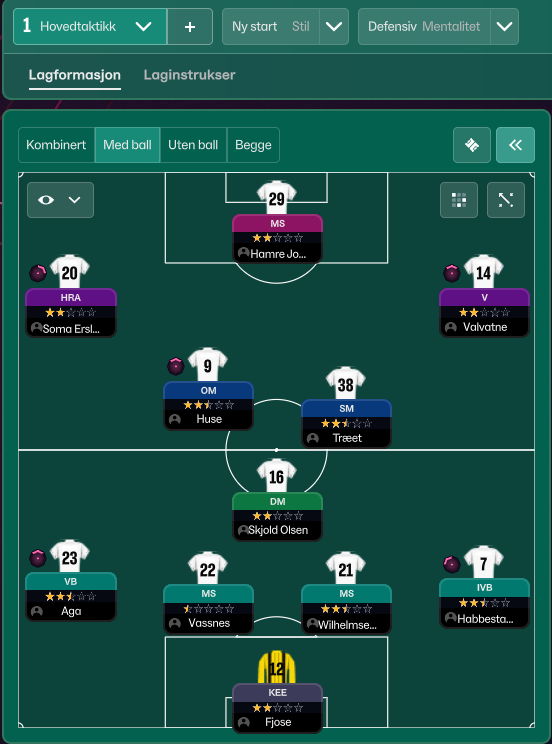
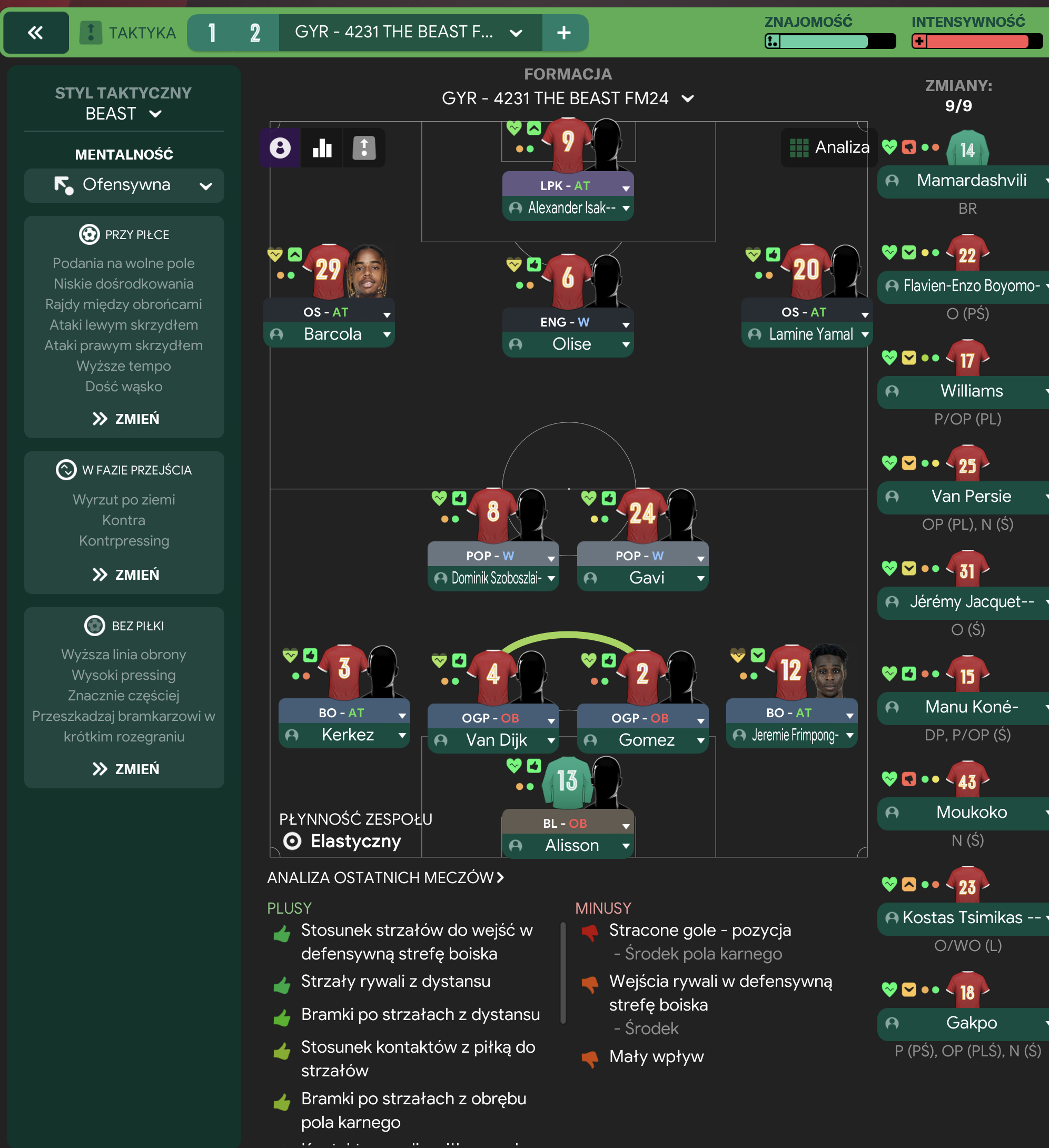
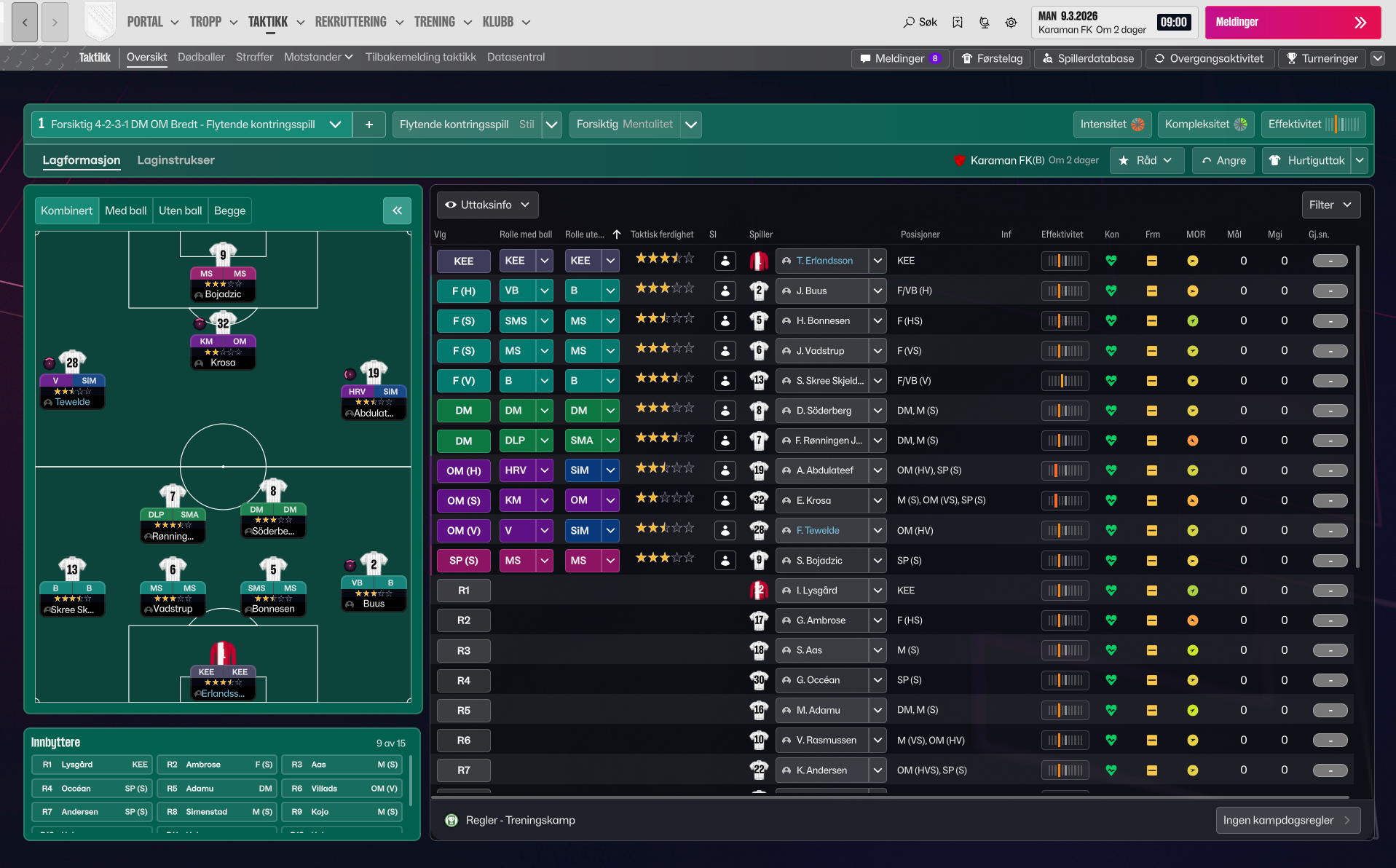
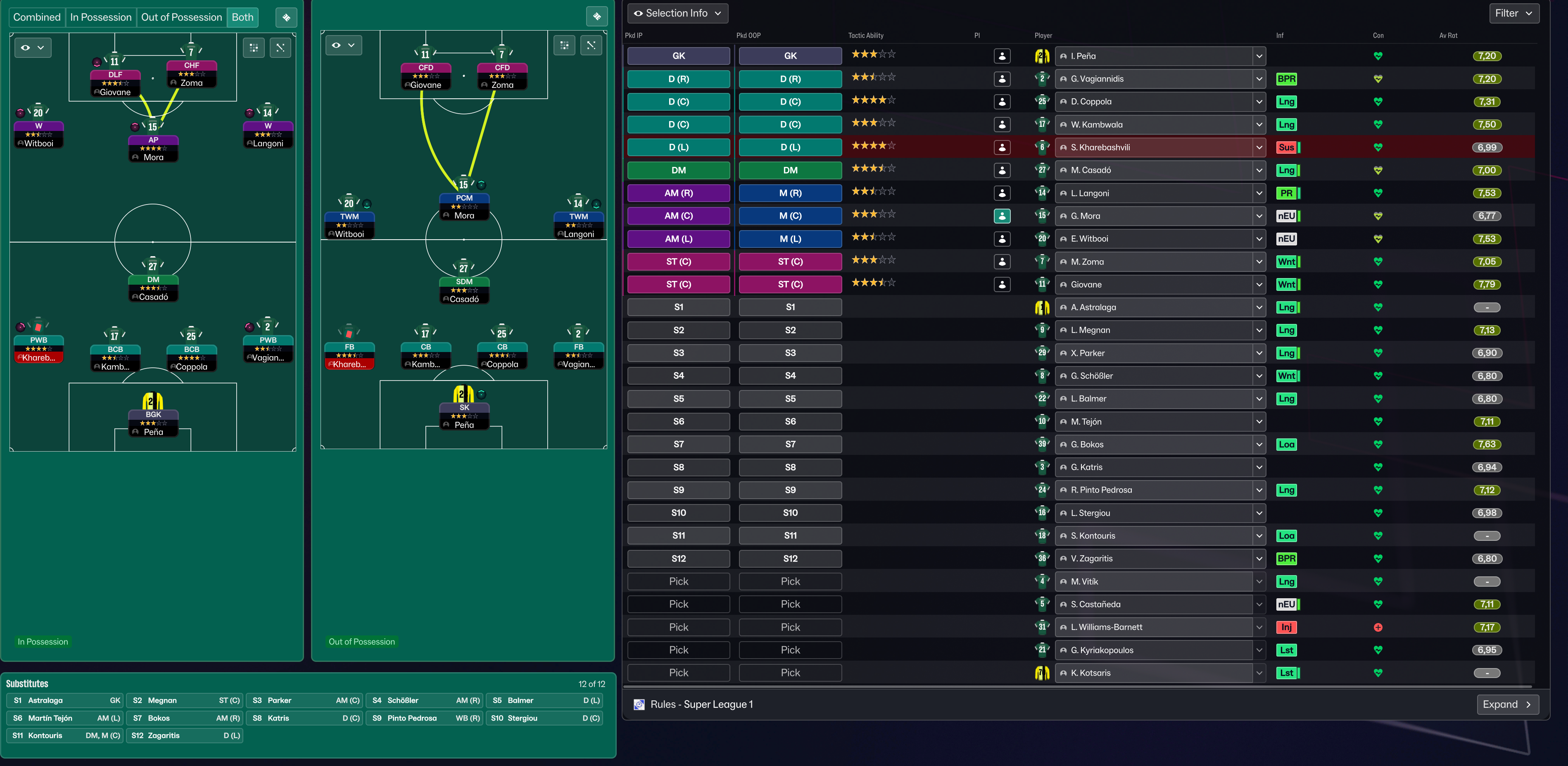
More Positive tactics
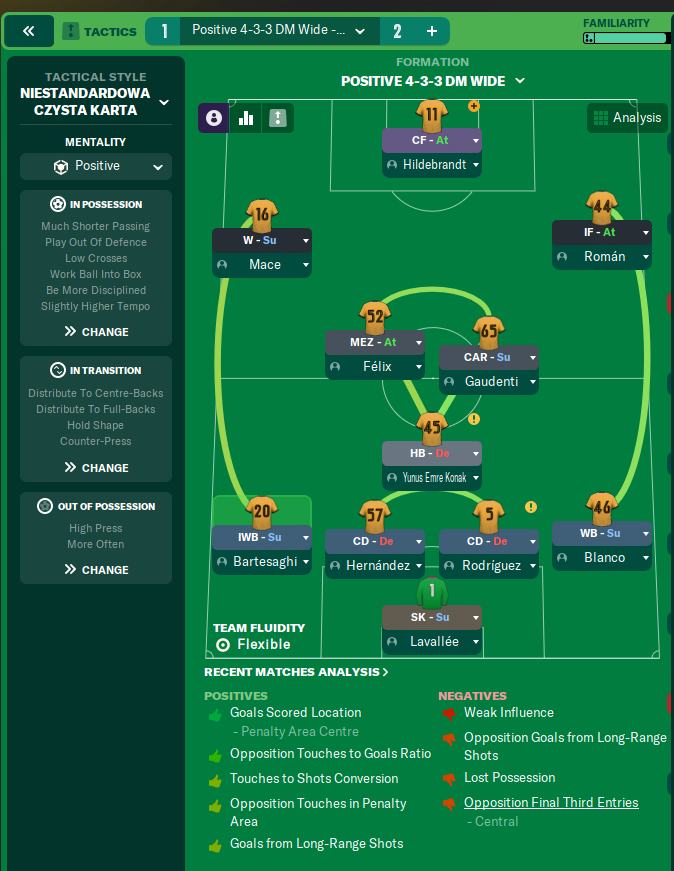
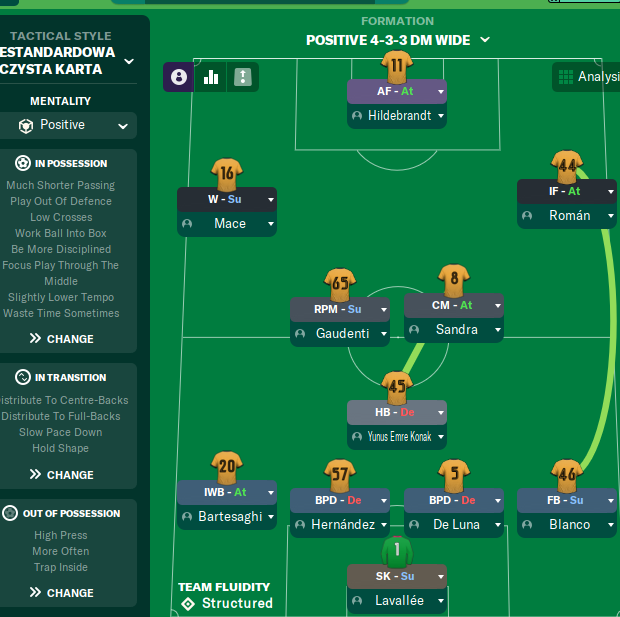
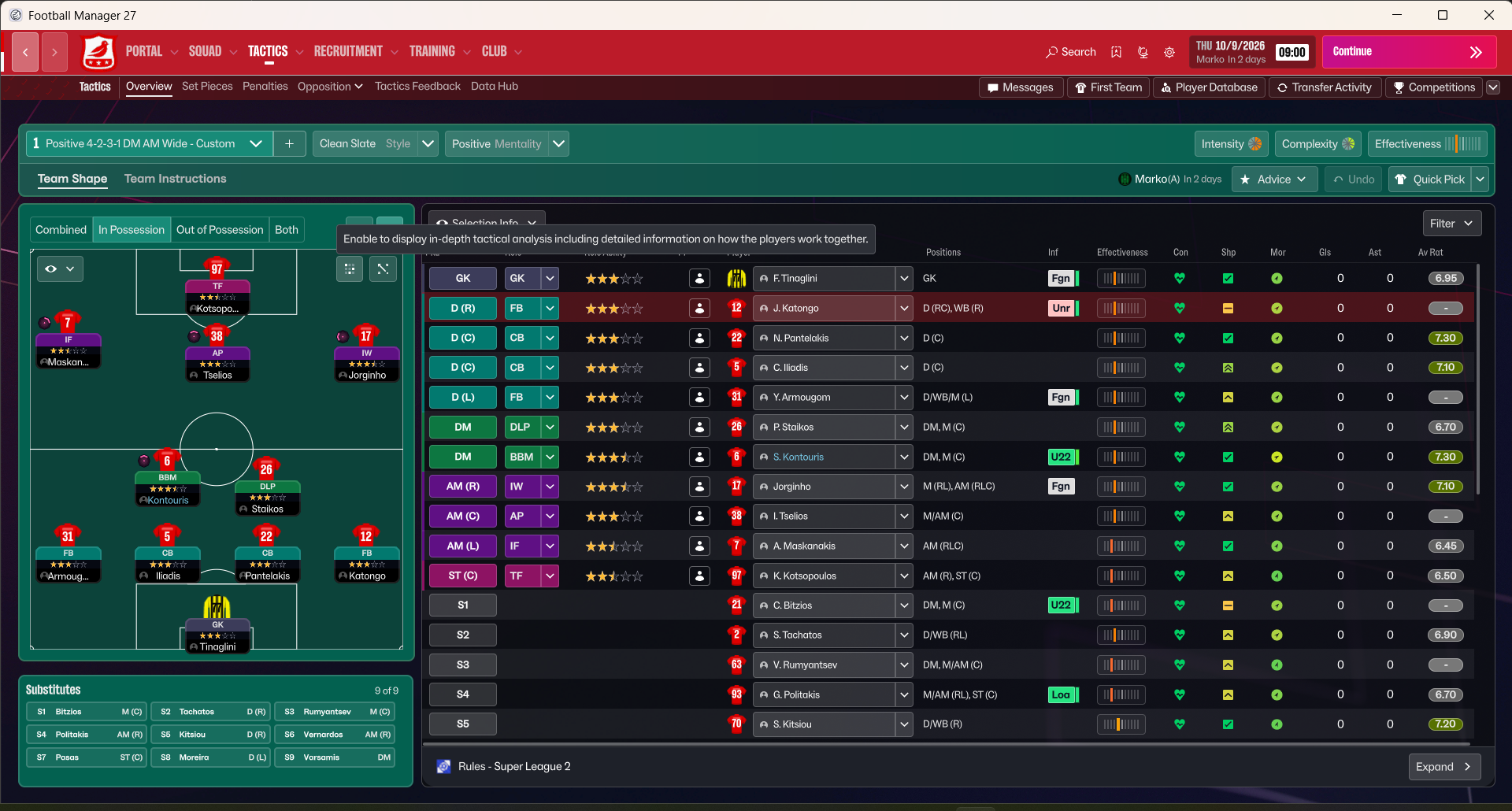
Guides for this tactic
The tactical theory behind the 4-2-3-1: roles, instructions, and the trade-offs that decide whether the system holds up.
Playing styles
Gegenpressing: A Full Guide
Klopp-style gegenpressing in FM, including squad profile, line-and-press pairing, sustainable workload, and the antipatterns to avoid.
Read guide
Player pairings
Midfield Pairs in 4-2-3-1 and 4-4-2
Double pivots and flat pairs in 4-2-3-1 and 4-4-2: when each pairing works, when it collapses, and the AMC unicorn that rescues both.
Read guide
Match preparation
Reading the Match Tablet
Pass map, average position, xG, possession by zone: what each tablet panel tells you in FM and the tactical change it should trigger.
Read guide