Gegen 4-2-3-1 (Attacking) Tactic
4-2-3-1
Creating goal-scoring opportunities through a high intensity and fluid style. The counter-pressing strategy helps win the ball back quickly in dangerous…
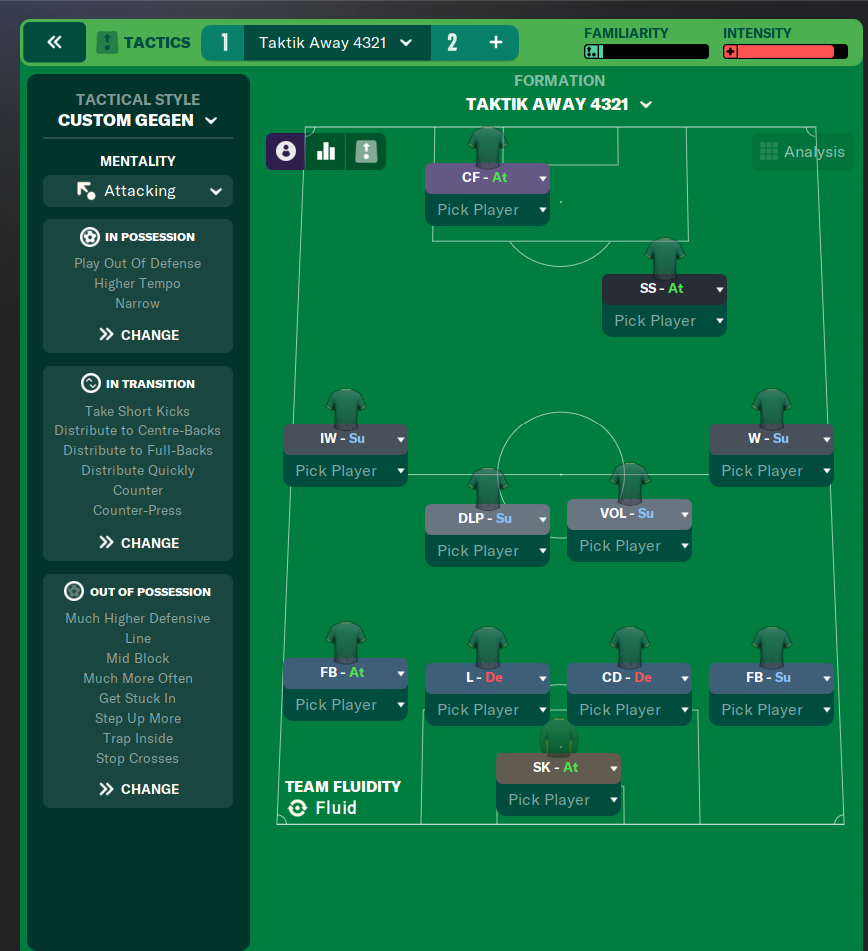
Loading tactical analysis...
Formation and style
Custom Gegen
Attacking
4-2-3-1
Fluid
In possession
Play Out Of Defence
Higher Tempo
Narrow
In transition
Take Short Kicks
Distribute to Centre-Backs
Counter
Counter-Press
Out of possession
Much Higher Defensive Line
Mid Block
Much More Often
Get Stuck In
Step Up More
Trap Inside
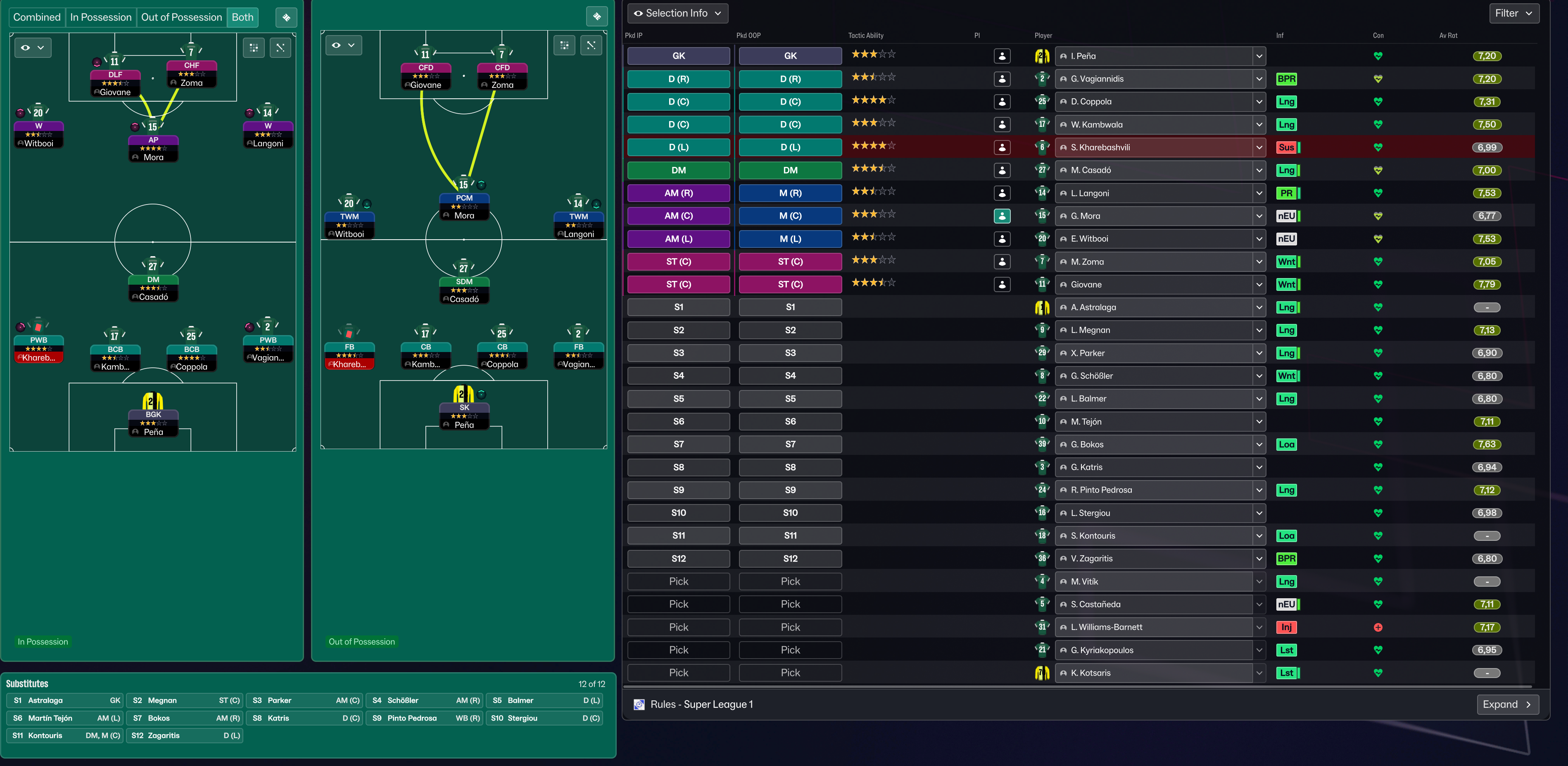
Player roles
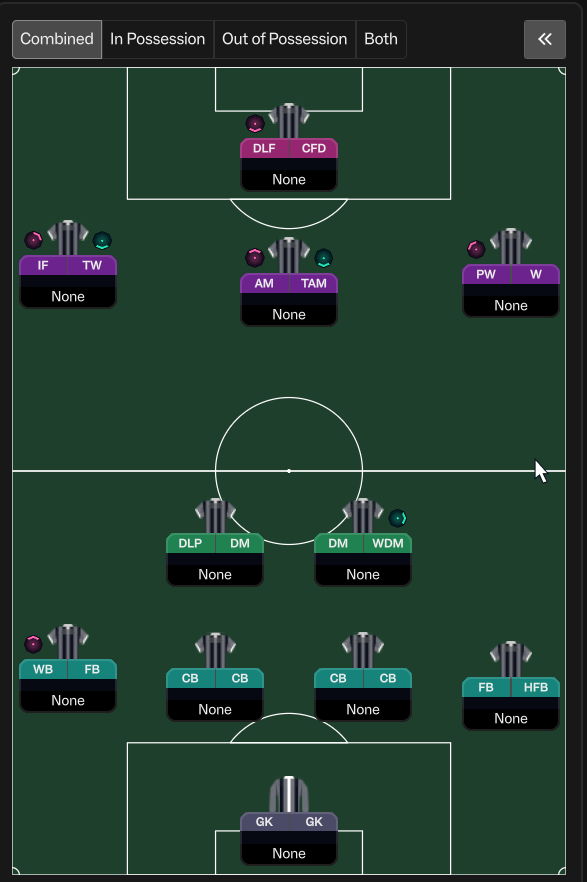
GK
Sweeper Keeper
Attack
RB
Full-Back
Attack
CB
Centre-Back
Defend
LB
Full-Back
Defend
CM
Deep-Lying Playmaker
Support
CM
Volante
Support
RW
Inside Winger
Support
AMC
Shadow Striker
Attack
LW
Winger
Support
ST
Complete Forward
Attack
Phase description
Quick transitions and narrow attacking shape with a focus on through balls and quick combinations in the midfield.
Emphasizes pressing and quick recovery of the ball, utilizing counter-pressing tactics.
Creating goal-scoring opportunities through a high intensity and fluid style.
Team shape defence
4-2-3-1
Solid defensive structure with a balanced approach between defence and midfield to stifle opposition attacks.
FB at [2,1] and [2,5], CD at [2,3] with a supportive full-back.
Team shape attack
4-2-3-1
Attacking structure that utilizes width provided by wingers and inside wingers to support the central forward.
IW-S at [6,1], SS at [5,3], and CF-A at [5,2].
Key strengths
High Pressing
The counter-pressing strategy helps win the ball back quickly in dangerous positions.
Counter-Press and Step Up More instructions support this strategy.
Fluid Midfield Transition
The combination of a Deep-Lying Playmaker and Volante allows for smooth transitions between defence and attack.
DLP-S at [3,3] and VOL-S at [3,4] provide versatility and support.
Conflicting tactics
Defensive Responsibilities
The attacking duties of full-backs may leave gaps in wide areas, which can be exploited by fast wingers.
FB-A at [2,1] and [2,5] while adopting a much higher defensive line.
Mid Block vs High Defensive Line
Conflicting instructions of a mid block and much higher defensive line can lead to confusion in defensive setups.
Much Higher Defensive Line with Mid Block creates inconsistency in defensive engagements.
Risk exposures
Risk Exposures
Items
Defensive Gaps
Higher defensive line and attacking full-backs can expose central defenders to quick counters.
CD at [2,3] may face threats from opposition's quick forwards.
Midfield Overload
Against teams with three-central players, the midfield may become outnumbered.
2 CMs at [3,3] and [3,4] may struggle against opposing 3-man midfielders.
Role synergies
Role Synergies
Items
DLP-S and VOL-S
These two roles complement each other well, with the DLP providing stability and the VOL supporting transitions.
DLP-S at [3,3] with VOL-S at [3,4] allows fluidity in midfield.
IW-S and W-S
The inside winger (IW) and winger (W) create a dynamic relationship, exploiting space on the flanks.
IW-S at [6,2] and W-S at [6,4] help stretch the play effectively.
Suggested questions
How to ensure defensive stability while maintaining an attacking mentality?
Can the midfield be adjusted to better control possession against stronger teams?
What are the best strategies to exploit weaknesses in opposing full-backs?
Related Tactics
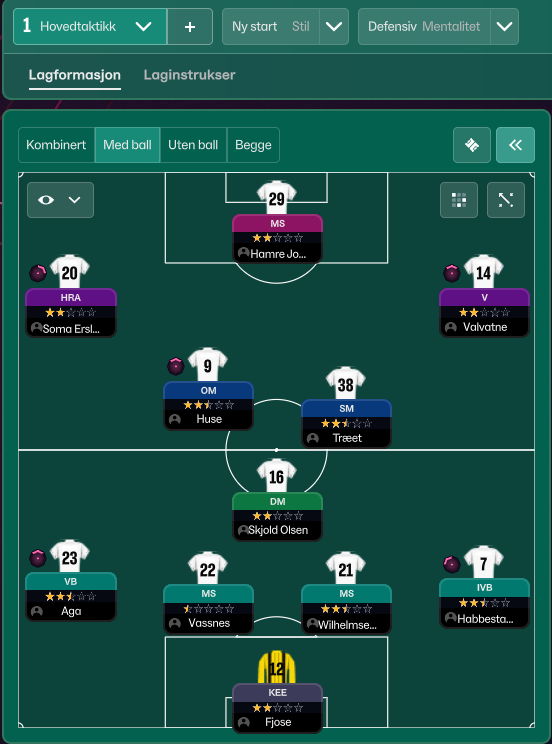
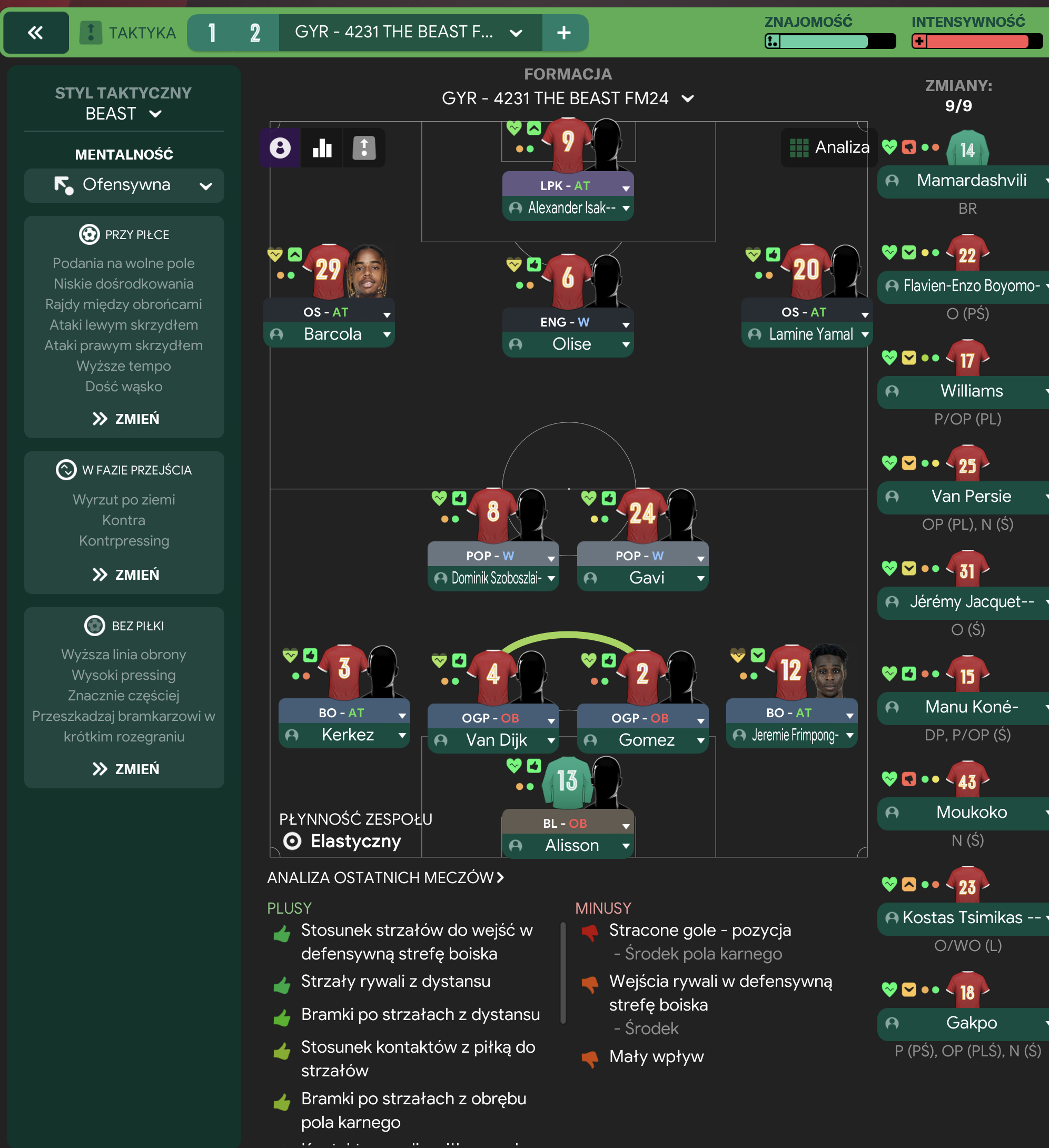
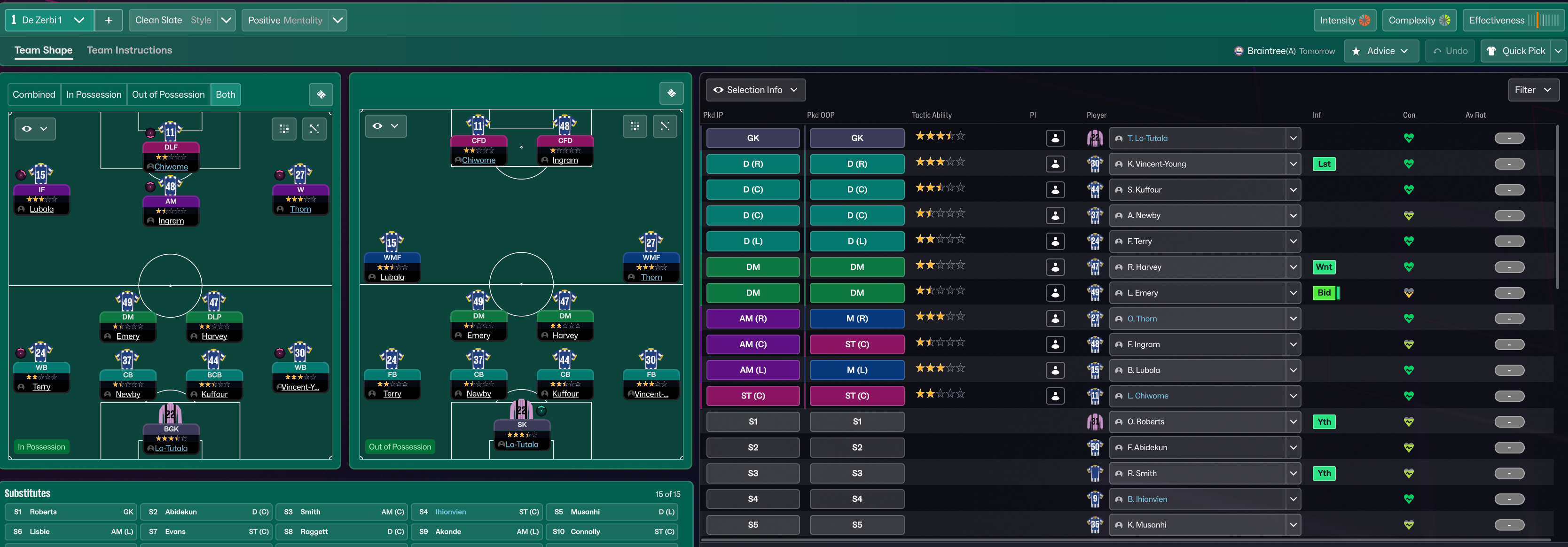
Guides for this tactic
The tactical theory behind the 4-2-3-1: roles, instructions, and the trade-offs that decide whether the system holds up.
Player pairings
Midfield Pairs in 4-2-3-1 and 4-4-2
Double pivots and flat pairs in 4-2-3-1 and 4-4-2: when each pairing works, when it collapses, and the AMC unicorn that rescues both.
Read guide
Playing styles
Gegenpressing: A Full Guide
Klopp-style gegenpressing in FM, including squad profile, line-and-press pairing, sustainable workload, and the antipatterns to avoid.
Read guide
Match preparation
Set Piece Mastery
Routines, takers, and target picks. How to turn corners and free-kicks into a reliable third of your goal output.
Read guide