Positive 4-3-3 Wide (Positive) Tactic
4-3-3 Wide
To dominate possession while creating goal-scoring opportunities through detailed movements. Utilizes wingers and a complete forward to create dynamic…
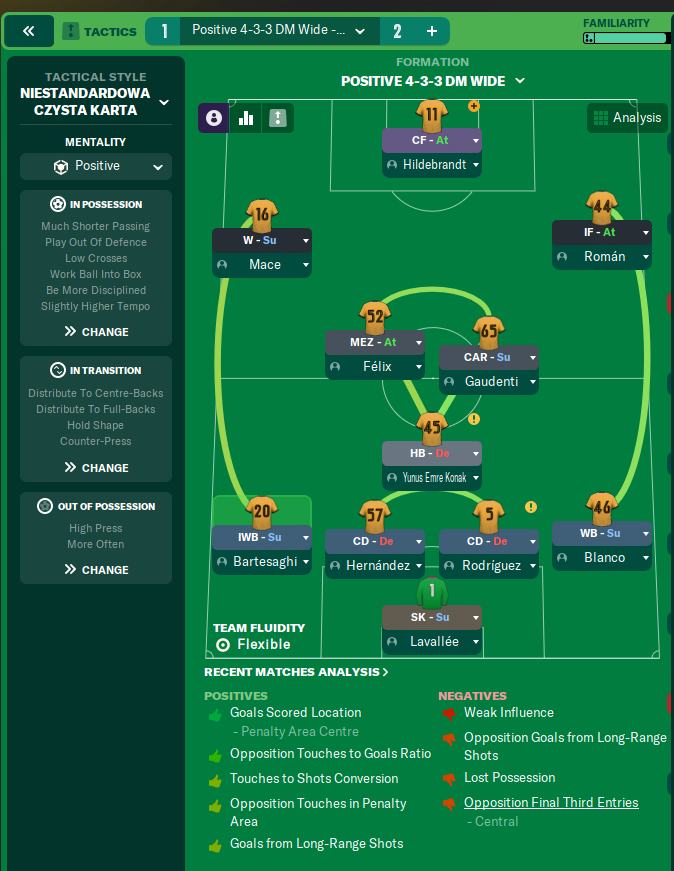
Loading tactical analysis...
Formation and style
Positive
Positive
4-3-3 Wide
Flexible
In possession
Much Shorter Passing
Play Out of Defence
Low Crosses
Work Ball Into Box
Be More Disciplined
Slightly Higher Tempo
In transition
Distribute To Centre-Backs
Distribute To Full-Backs
Hold Shape
Counter-Press
Out of possession
High Press
More Often
Player roles
GK
Sweeper Keeper
Defend
CD
Centre-Back
Defend
CD
Centre-Back
Defend
HB
Half Back
Defend
IWB
Inverted Wing-Back
Support
WB
Wing-Back
Support
CAR
Carrilero
Support
MEZ
Mezzala
Attack
W
Winger
Support
IF
Inside Forward
Attack
CF
Complete Forward
Attack
Phase description
Utilizes width through wingers and full-backs while focusing on quick interplay in central areas.
Emphasizes retaining shape and counter-pressing to regain possession quickly.
To dominate possession while creating goal-scoring opportunities through detailed movements.
Team shape defence
Balanced
The defensive shape consists of a solid back four, with the half-back dropping to provide additional cover.
The placement of 'HB-D' at [3,3] combined with two 'CD-D' ensures defensive solidity.
Team shape attack
Fluid
In attack, the team looks to stretch opposition defenses using the width provided by the wingers and overlapping runs from the wing-backs.
Combination of 'W-S' at [5,1], 'WB-S' at [2,5], and 'IF-A' at [6,2] promoting wide play.
Key strengths
Dynamic Attack
Utilizes wingers and a complete forward to create dynamic attacking movements.
'W-S' at [5,1] and 'CF-A' at [6,3] are key to generating attacking depth.
Midfield Versatility
The midfield trio offers both defensive cover and the ability to transition quickly into attack.
'HB-D' at [3,3] and 'CAR-S' at [4,3] balance defensive responsibilities with progressive play.
Conflicting tactics
Vulnerability to Counter-Attacks
With high defensive line and pressing, the team may leave space behind for quick counter-attacks.
'High Press' and absence of a dedicated defensive shield beyond CBs can expose gaps.
Weakness Against High Press
Possession-based play can struggle against opponents who effectively press high.
Requirement for short passing ('Much Shorter Passing') can lead to turnovers.
Risk exposures
Risk Exposures
Items
Defensive Transitions
Transition periods can leave the team exposed if possession is lost in advanced areas.
The faster tempo and need to play out can lead to quick turnovers.
Wide Play Vulnerability
While wide play is emphasized, it may leave the team vulnerable to quick switches.
Dependence on wingers to create width can be exploited on turnovers.
Role synergies
Role Synergies
Items
IWB and WB
Creates overlapping runs that can confuse the defensive assignments of the opposition.
'IWB-S' at [2,1] and 'WB-S' at [2,5] allow for interchanging positions on the left side.
Mezzala and Carrilero
Provides a dynamic central attacking threat while maintaining midfield structure.
'MEZ-A' at [4,2] and 'CAR-S' at [4,3] balance creativity with positional discipline.
Suggested questions
How does the tactic adjust when facing a high-pressing opponent?
What changes might be made to better counter teams with strong counter-attacking capabilities?
How can the team improve adaptability in different match situations?
Related Tactics
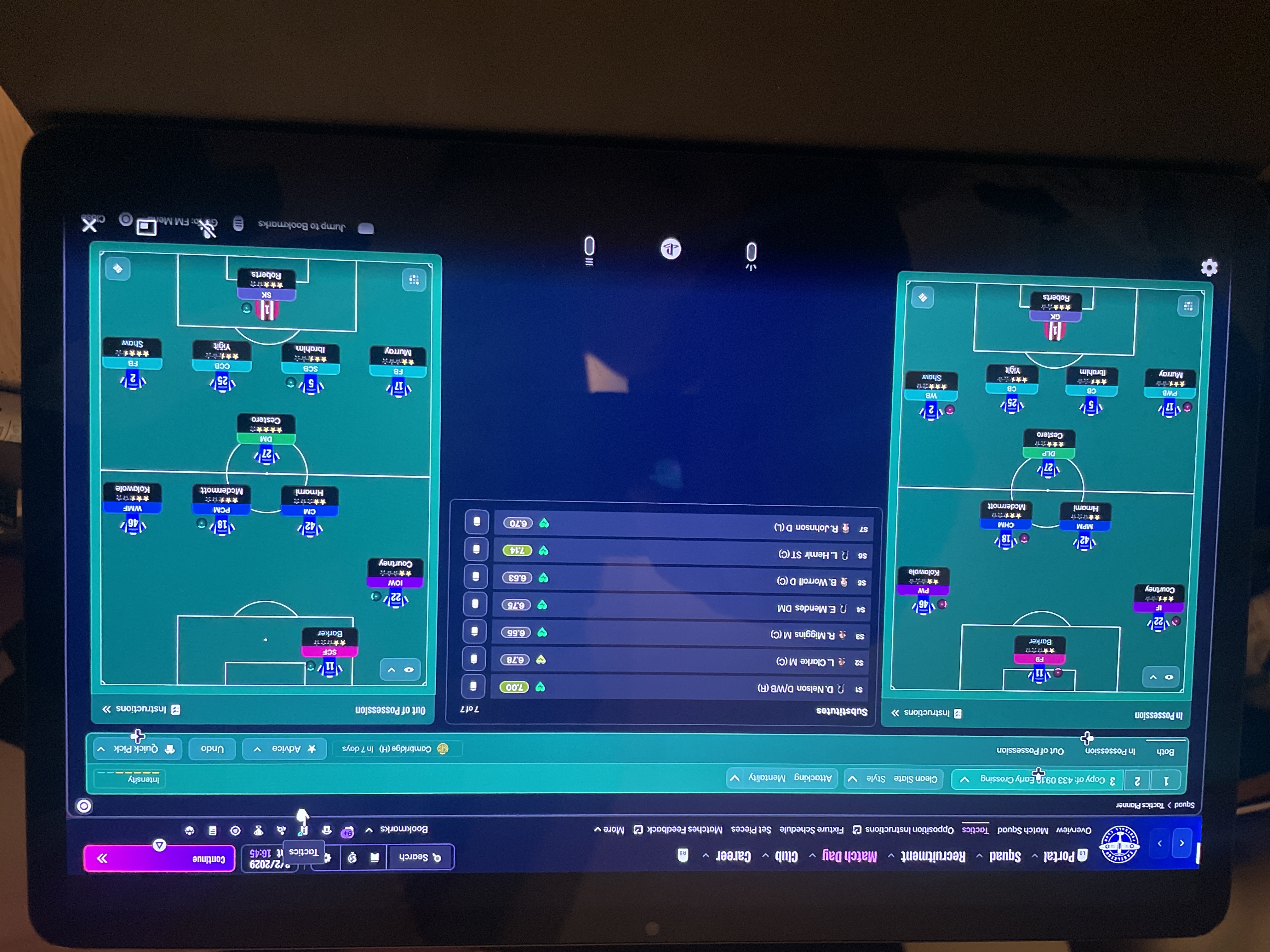
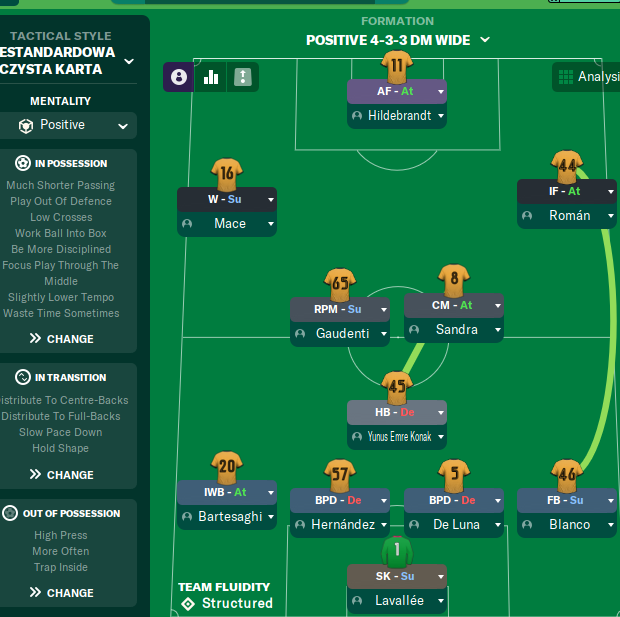
More Positive tactics
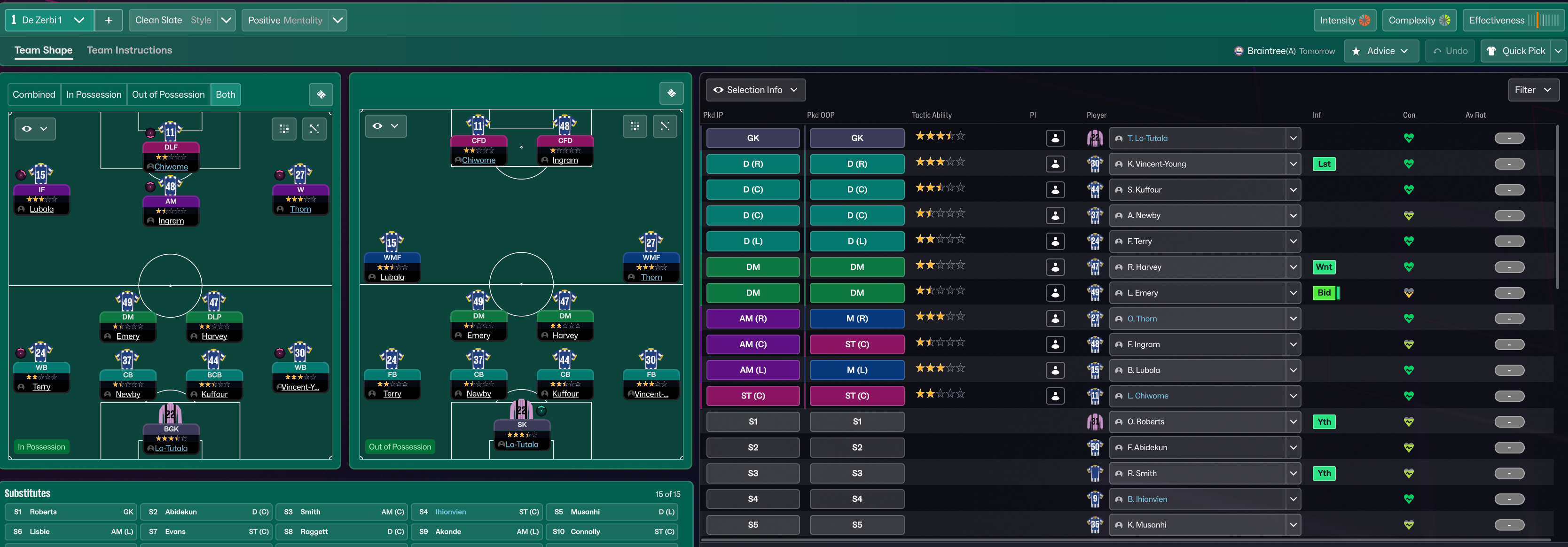
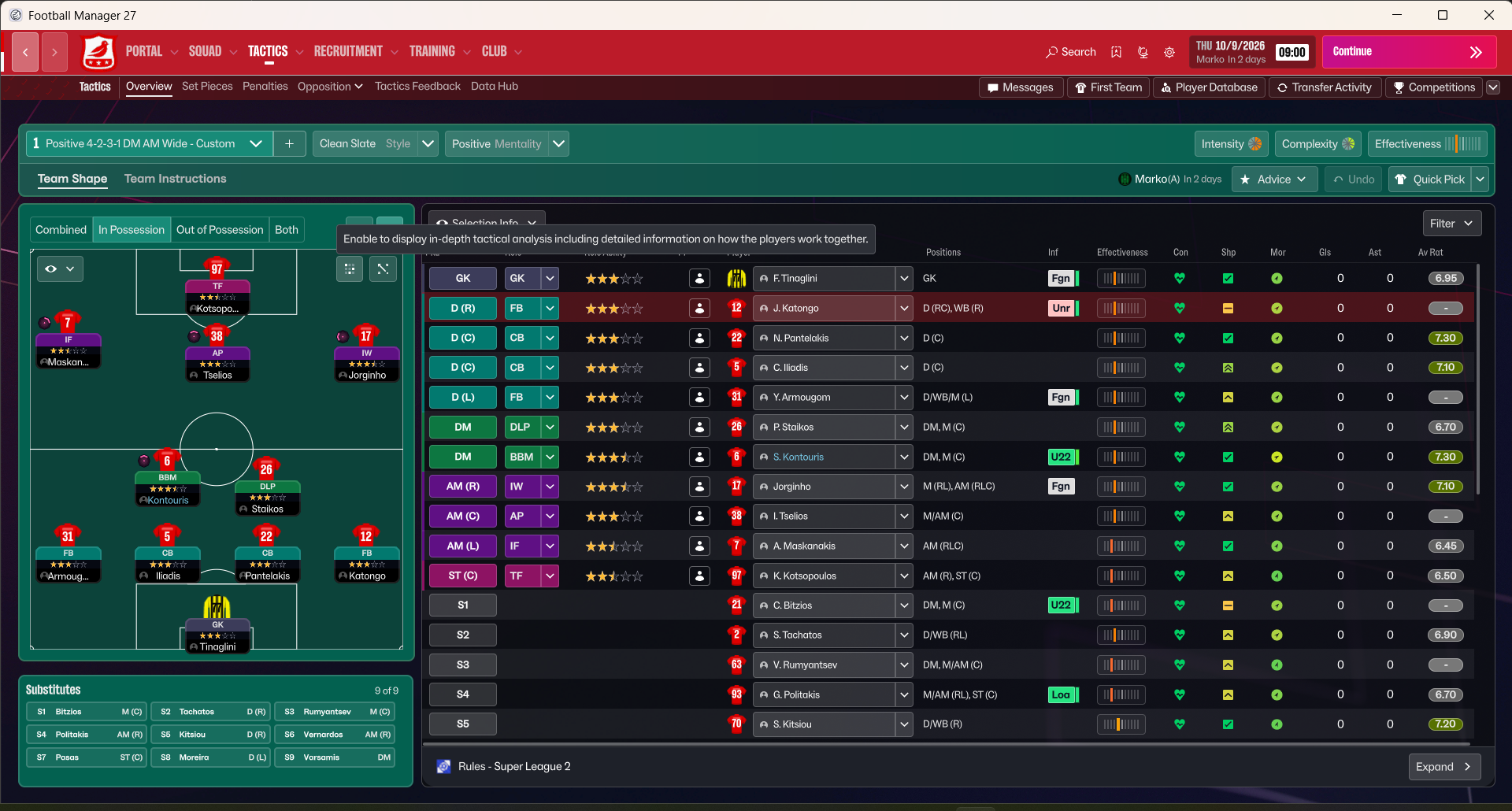
Guides for this tactic
The tactical theory behind the 4-3-3 Wide: roles, instructions, and the trade-offs that decide whether the system holds up.
Playing styles
Gegenpressing: A Full Guide
Klopp-style gegenpressing in FM, including squad profile, line-and-press pairing, sustainable workload, and the antipatterns to avoid.
Read guide
Playing styles
Tiki-Taka vs Positional Play
Why circulation density and zonal occupation aren't the same thing in FM, and the half-space occupation rule that decides build-up.
Read guide
Foundations
Mentality, Duty & Roles
How Mentality, Duty, and Role interact in FM, why duty trumps mentality every time, and the role-on-top-of-duty composition rules.
Read guide