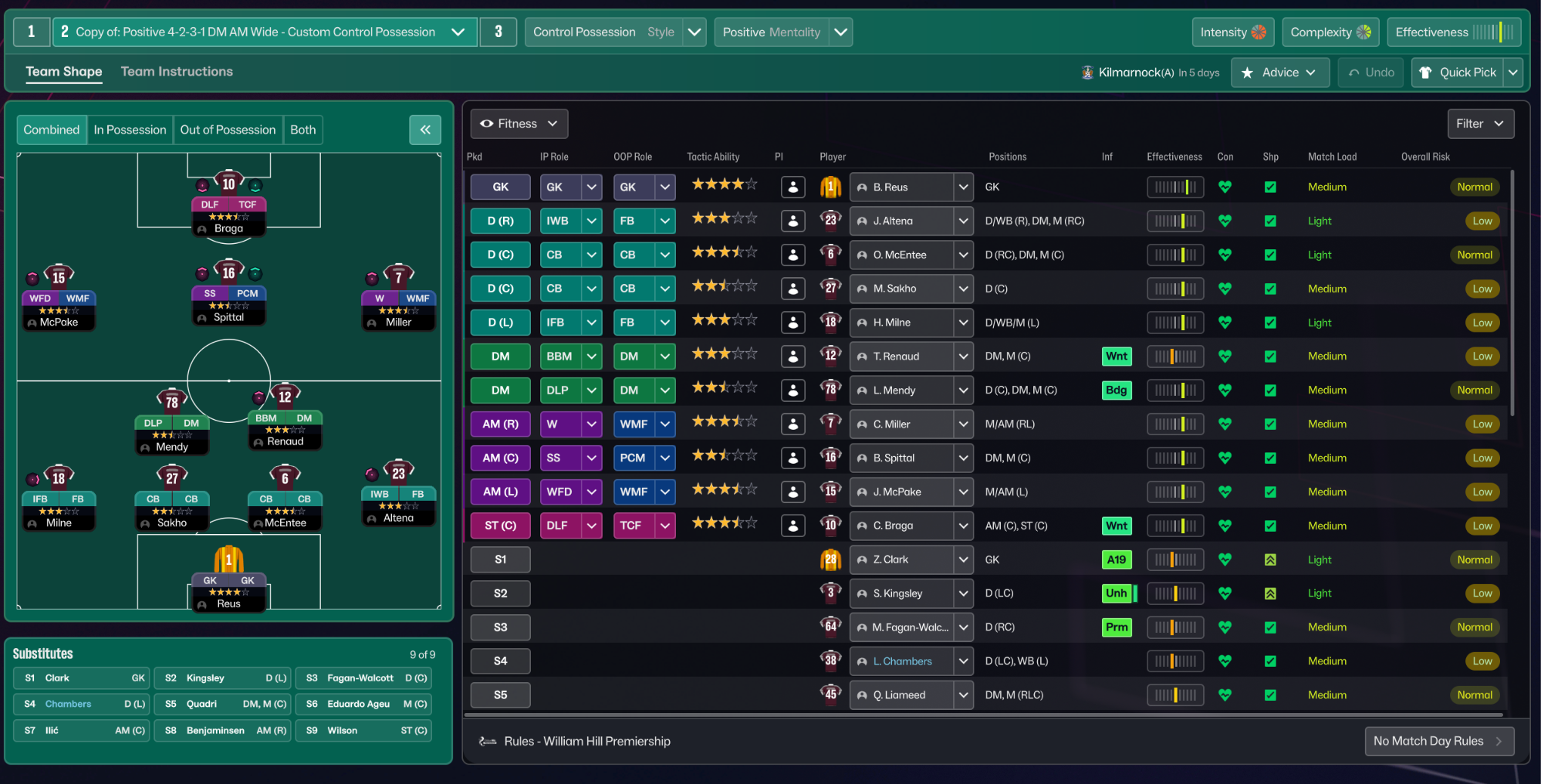
Control Possession 4-3-3 Wide (Positive) Tactic
4-3-3 Wide
Control of the midfield and exploiting the width of the pitch. The presence of an Advanced Playmaker and other central midfielders ensures control and…
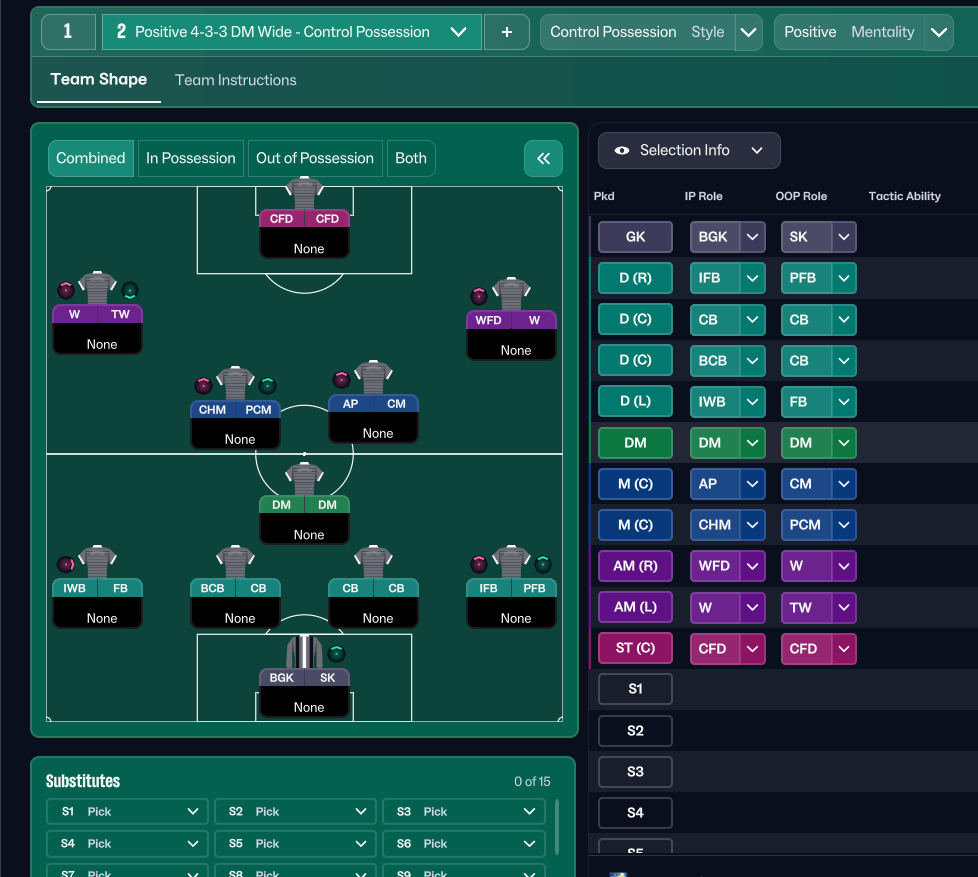
Loading tactical analysis...
Formation and style
Control Possession
Positive
4-3-3 Wide
In possession
Work Ball Into Box
Focus Play Through Middle
Exploit The Flanks
In transition
Counter-Press
Counter
Out of possession
Higher Line of Engagement
Higher Defensive Line
Prevent Short GK Distribution
Player roles
GK
Goalkeeper
Defend
DF (C)
Ball-Playing Defender
Defend
DF (C)
Centre-Back
Defend
DF (C)
Centre-Back
Defend
DF (R)
Inverted Full-Back
Support
DF (L)
Full-Back
Support
DM
Defensive Midfielder
Defend
CM
Advanced Playmaker
Support
CM
Central Midfielder
Support
AM (C)
Attacking Midfielder
Attack
AM (L)
Winger
Support
AM (R)
Winger
Attack
ST (C)
Complete Forward
Defend
ST (C)
Complete Forward
Defend
Phase description
Focus on maintaining possession with an emphasis on build-up play through the midfield, utilizing wingers to stretch the defense.
Quickly regroup defensively with a counter-press approach to regain possession.
Control of the midfield and exploiting the width of the pitch.
Team shape defence
4-3-3
A compact defensive shape that seeks to limit opposition space.
Flat Back 4 with two defensive midfielders to shield the backline.
Team shape attack
4-3-3 with width
Utilizes wingers to stretch the defense, allowing midfielders to create overloads.
Wingers and an attacking midfielder operating together in advanced positions.
Key strengths
Midfield Control
The presence of an Advanced Playmaker and other central midfielders ensures control and creativity in midfield.
AP-S at [4,3] and CM-S at [4,4] provide significant passing options.
Attacking Flexibility
The wing-backs and wingers can interchange and exploit spaces, leading to multiple attacking options.
W-S at [5,2] and TW-S at [5,3] with support from IFB-S at [2,4].
Conflicting tactics
Overreliance on Wingers
Tactics may become predictable when relying heavily on wingers for width, leaving central options underutilized.
Winger roles at [5,2] and [5,4] may limit offensive dynamics if not balanced.
Defensive Vulnerability Against Press
The backline can be susceptible to pressing, especially if players are not comfortable on the ball.
BPD-D at [2,3] and CB-D at [2,4] may struggle under high pressure.
Risk exposures
Risk Exposures
Items
Transitional Defense
Loss of possession could lead to quick counter-attacks.
DM-D at [3,2] may need to drop deeper if the ball is lost.
Wide Flanks
Overcommitment of wing-backs may leave flanks exposed to quick counter-attacks.
IFB-S and FB-S may create space in behind if caught out of position.
Role synergies
Role Synergies
Items
Advanced Playmaker with Central Midfielder
Creates overloads in the central area allowing for more fluid transitions and opportunities.
AP-S at [4,3] and CM-S at [4,4] can move in tandem to displace opposition.
Wing-Backs and Wingers
Combining their roles creates width and options in the final third.
IFB-S at [2,5] and W-S at [5,4] can create space and crossing opportunities.
Suggested questions
How do you adapt your tactics against teams with a high pressing game?
What adjustments can be made to improve defensive solidity during transitions?
How effectively do your attacking movements utilize the strengths of wingers and wing-backs?
Related Tactics
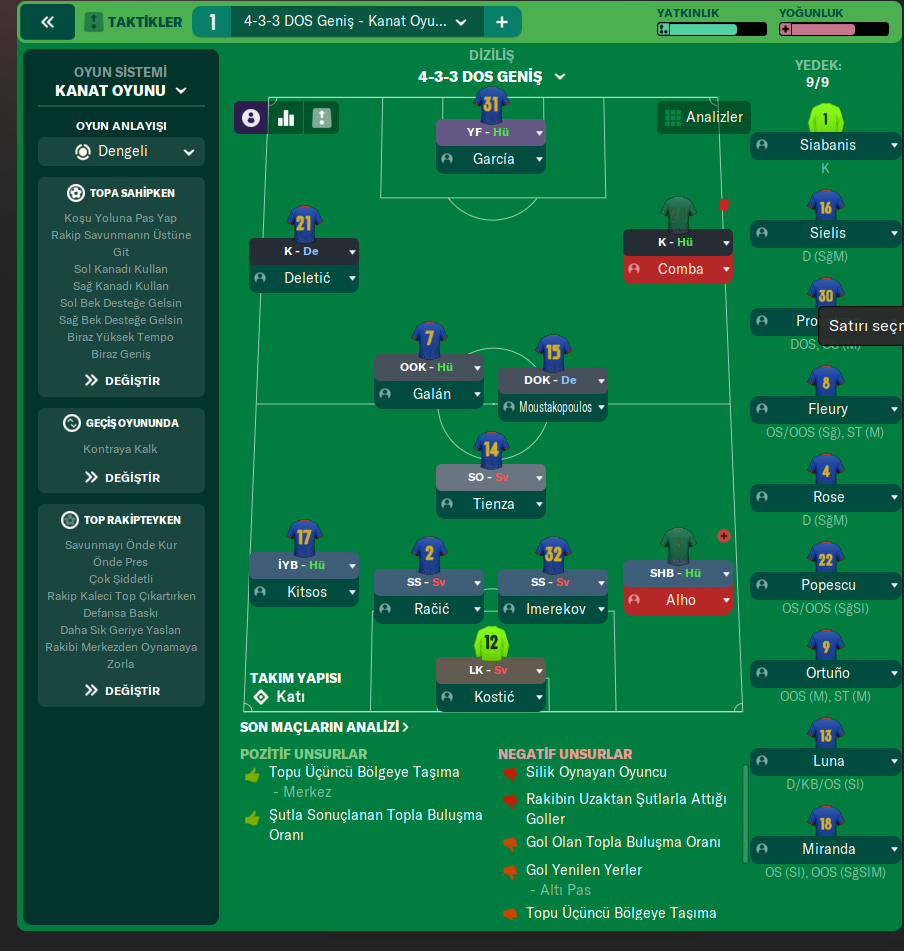
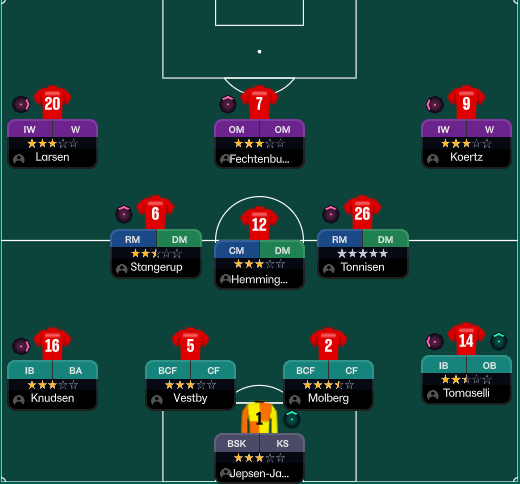
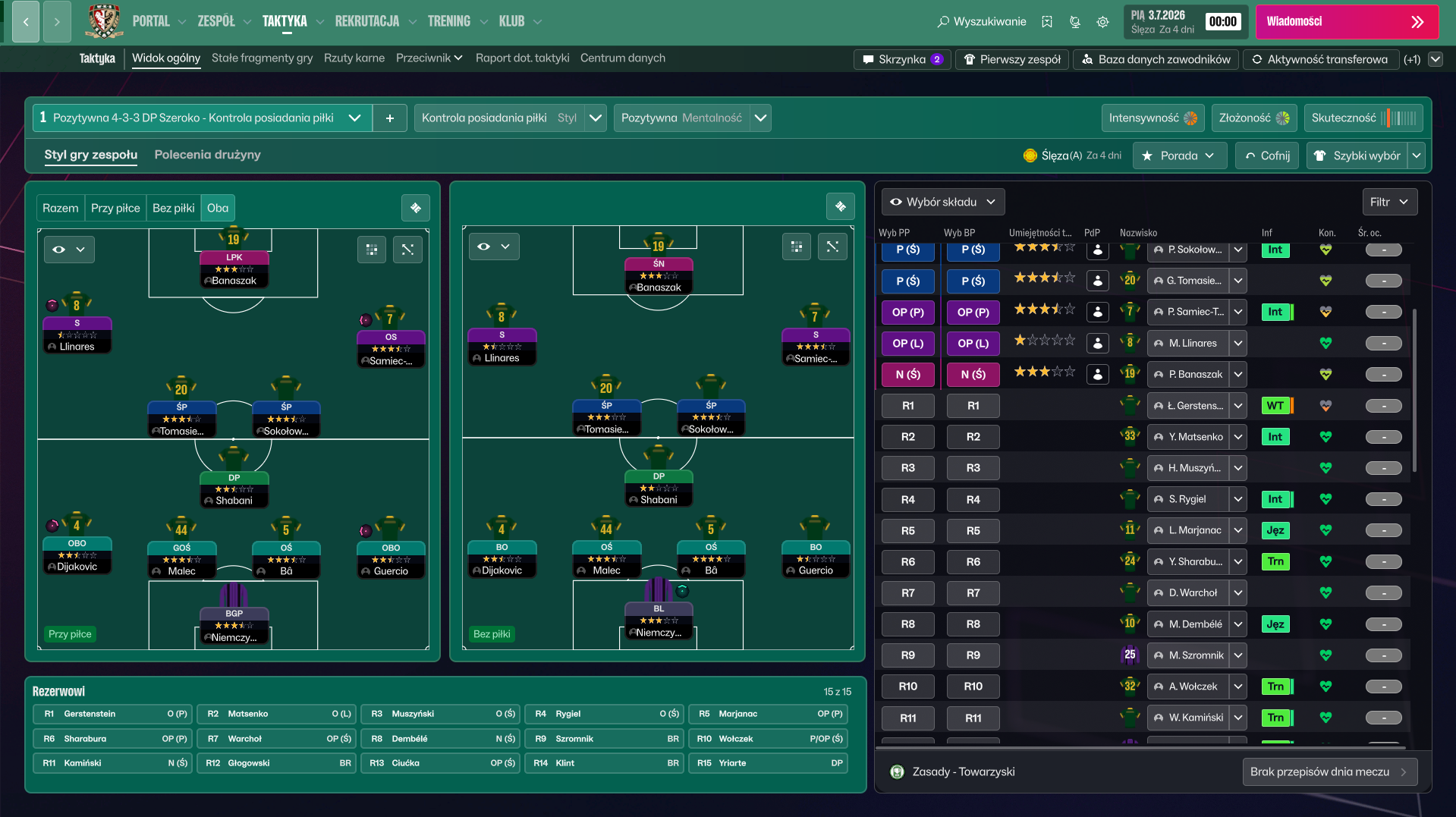
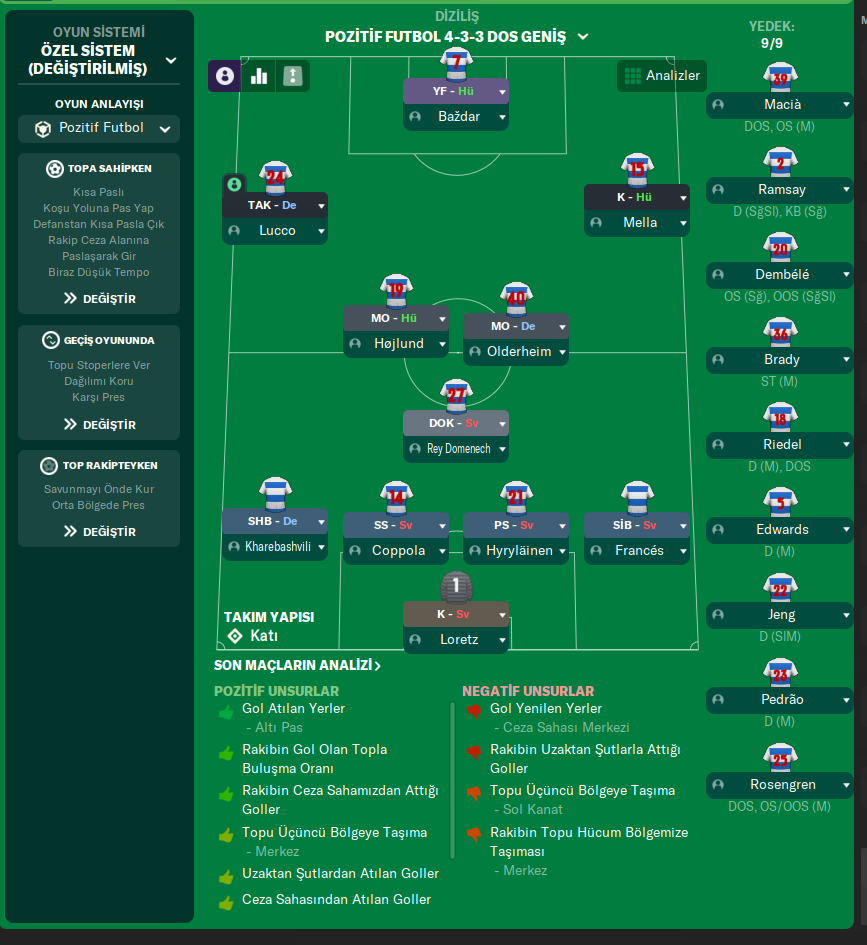
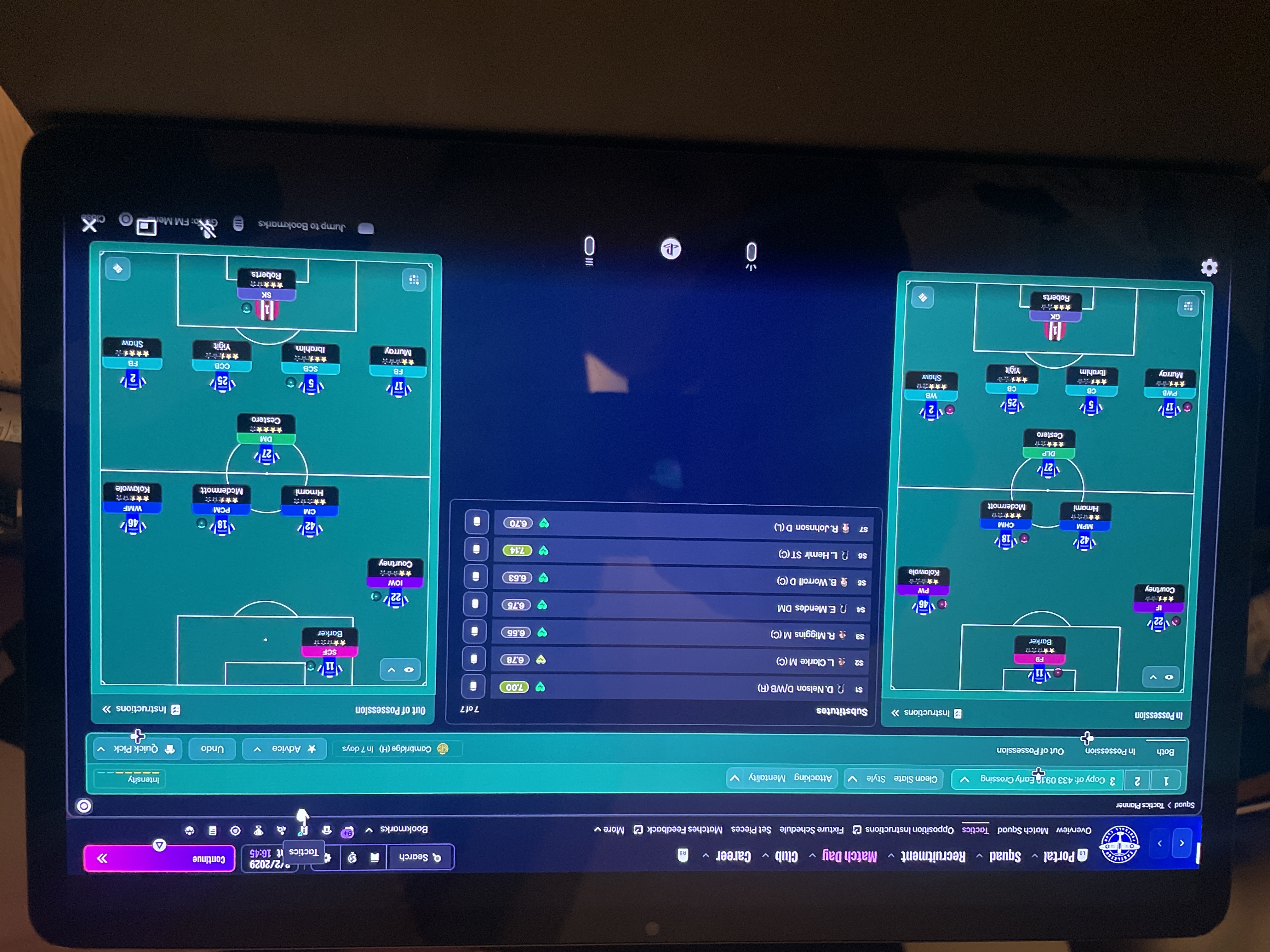
More Control Possession tactics
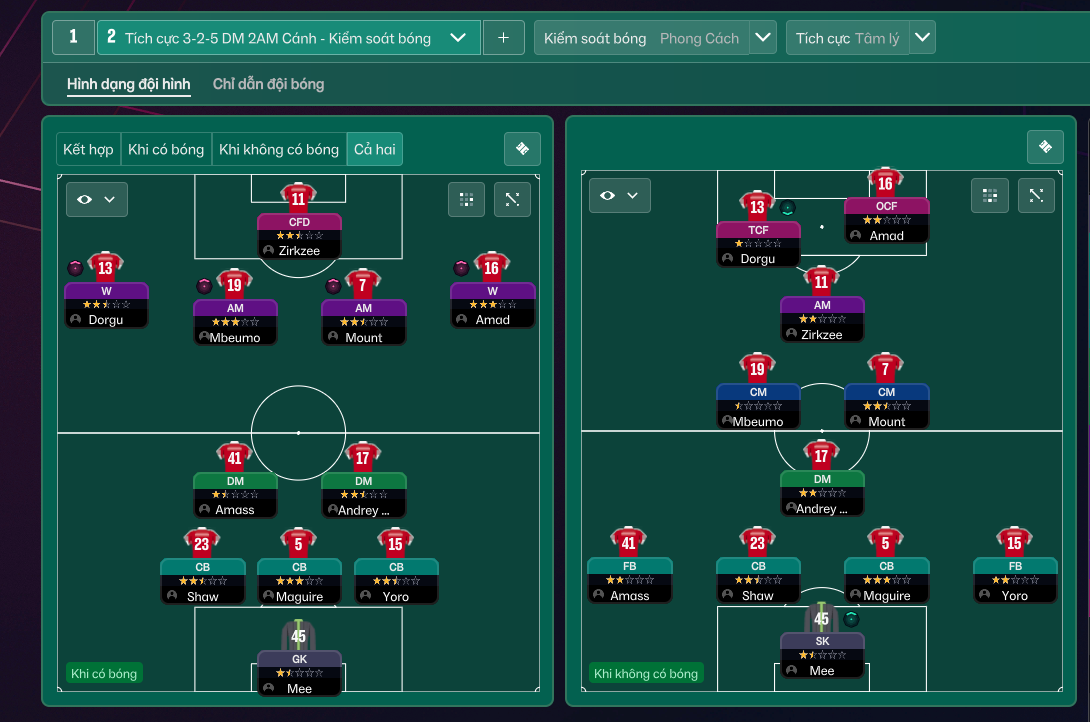
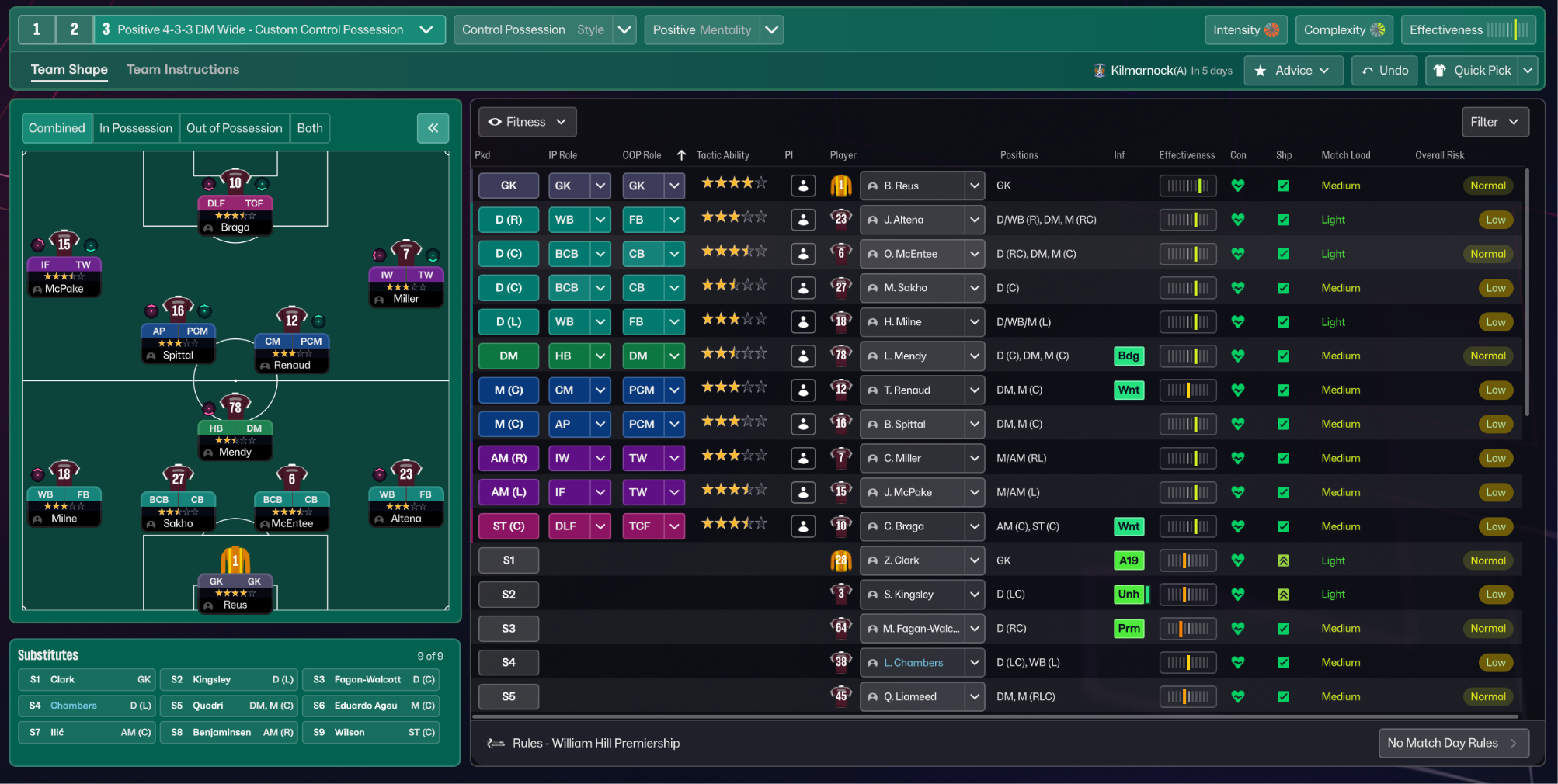
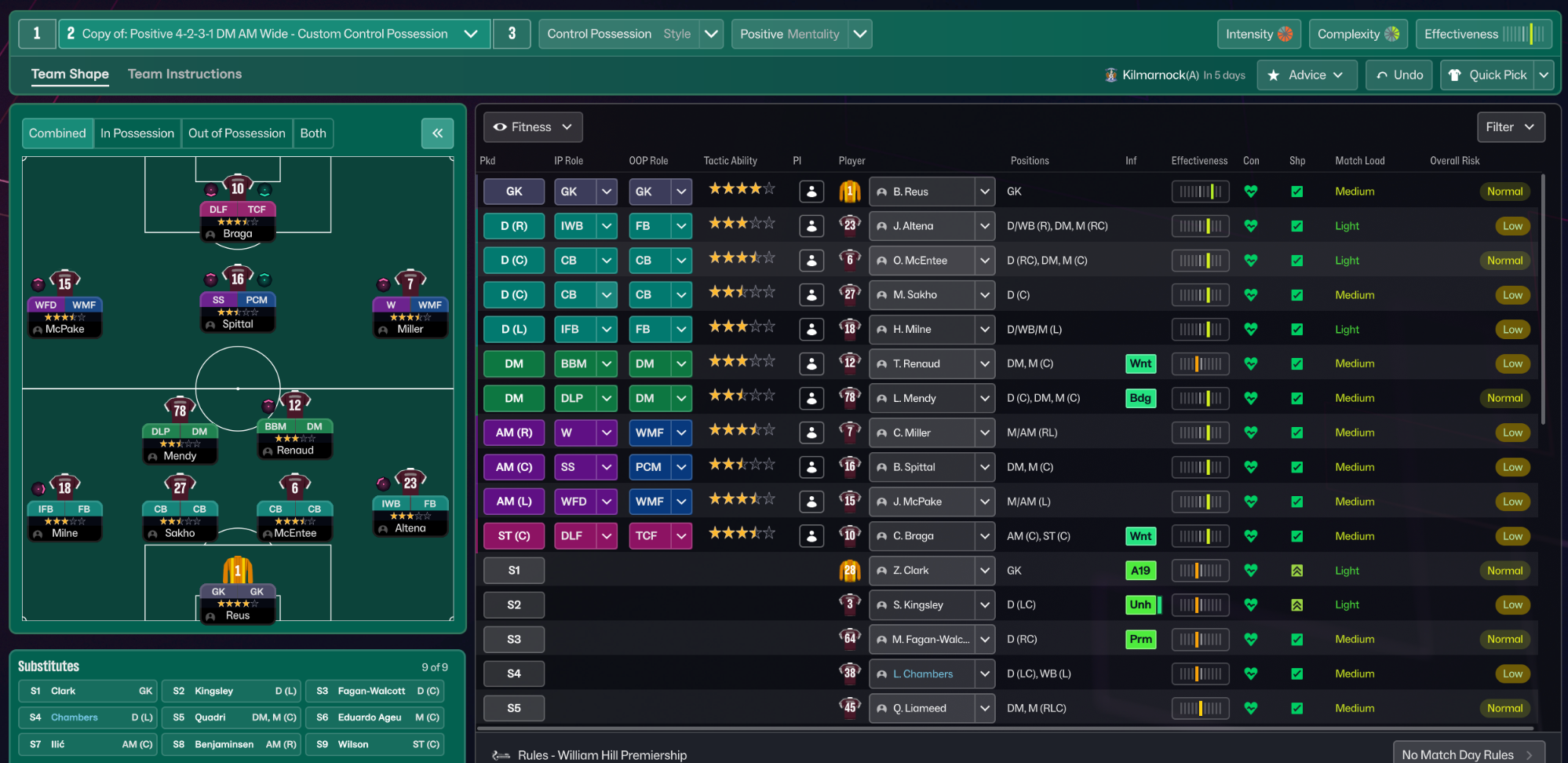
Guides for this tactic
The tactical theory behind the 4-3-3 Wide: roles, instructions, and the trade-offs that decide whether the system holds up.
Foundations
Understanding the 4-3-3 Formation
Master the classic 4-3-3: player roles, tactical variations, and the trade-offs that decide whether it sings or stalls.
Read guide
Player pairings
Midfield Trios
Holder, runner, creator: the role distribution rule for three-man midfields, the AMC variants, and the antipatterns that break them.
Read guide
Foundations
FM27 Tactics: What Changed from FM26
FM27 keeps FM26's tactic system. Here is what stays the same, the small changes that can catch you out, and what the new Tactical Effectiveness system asks of you.
Read guide