Vertical Tiki-Taka 4-3-3 Wide (Attacking) Tactic
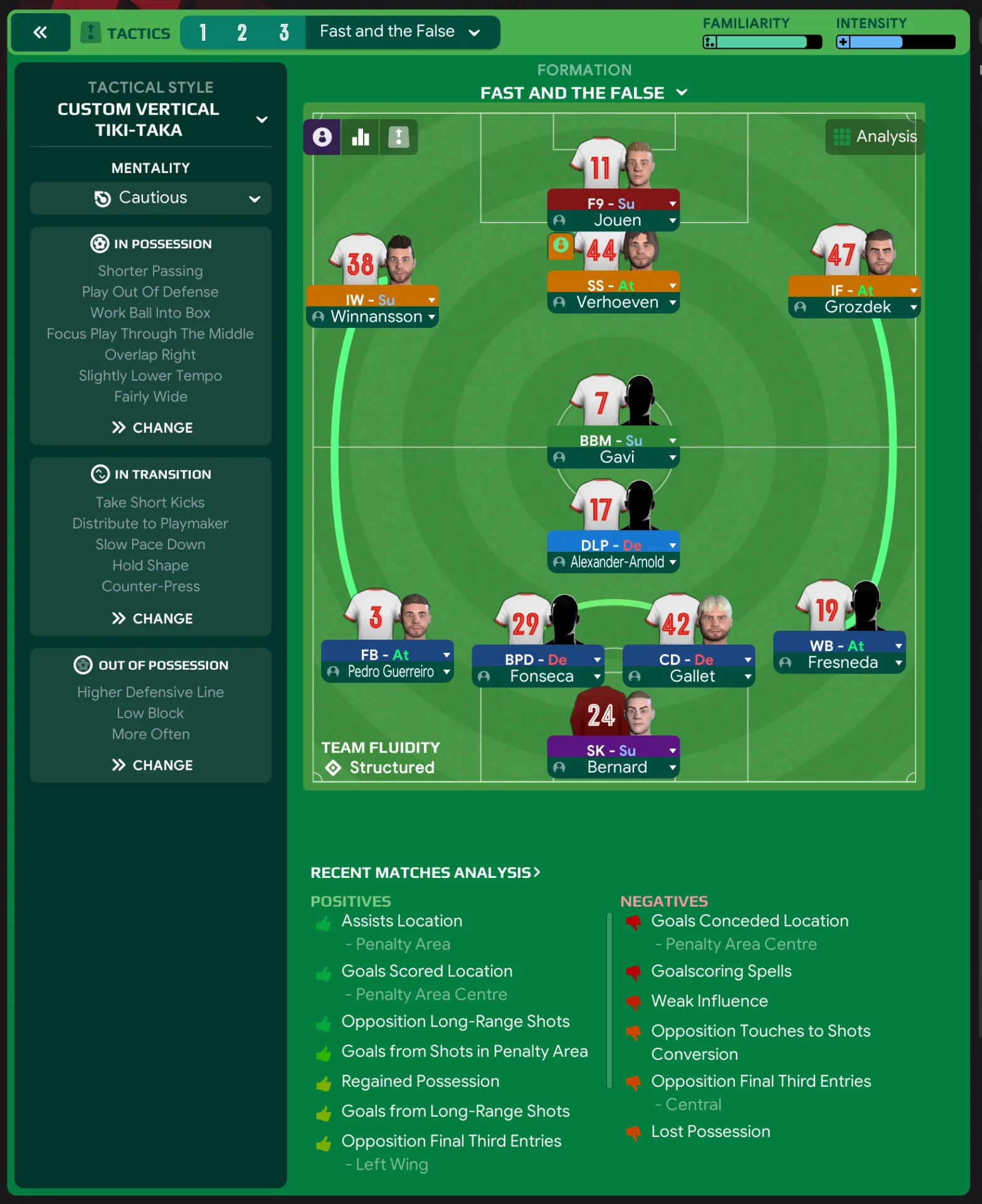
4-3-3 Wide
Dominating possession and breaking through defensive lines. The combination of inside forwards and an advanced forward creates versatile attacking…
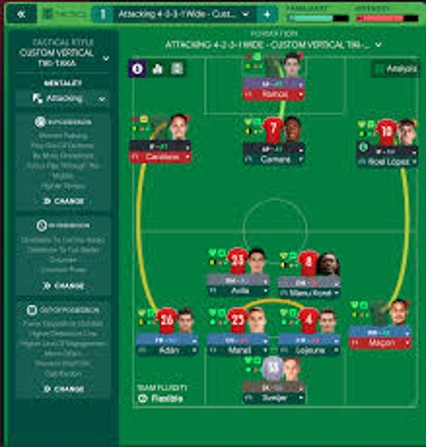
Loading tactical analysis...
Formation and style
Custom Vertical Tiki-Taka
Attacking
4-3-3 Wide
Flexible
In possession
Play Out of Defence
Work Ball Into Box
Run At Defence
In transition
Counter-Press
Counter
Out of possession
Higher Line of Engagement
Higher Defensive Line
Use Offside Trap
Player roles
GK
Goalkeeper
Default
DC
Ball-Playing Defender
Support
DC
No-Nonsense Centre-Back
Defend
DL
Full-Back
Support
DR
Full-Back
Support
CM
Deep-Lying Playmaker
Support
CM
Box-to-Box Midfielder
Support
CM
Advanced Playmaker
Attack
LW
Inside Forward
Attack
RW
Inside Forward
Attack
ST
Advanced Forward
Attack
Phase description
Focus on quick passing and through balls to exploit space.
Quickly press to regain possession and counter immediately.
Dominating possession and breaking through defensive lines.
Team shape defence
4-3-3
Well-structured defense, discipline in maintaining shape while pushing up.
No-Nonsense Centre-Back at [2,3] and Ball-Playing Defender at [2,2].
Team shape attack
4-3-3
Utilizes width to stretch opposition while maintaining central threats.
Inside Forwards at [5,1] and [5,5] creating space for Advanced Forward at [6,3].
Key strengths
Fluid Attacking Play
The combination of inside forwards and an advanced forward creates versatile attacking movements.
Inside Forward at [6,1] and [6,5] with Advanced Forward at [6,3] allowing dynamic attacks.
Solid Midfield Presence
The variety of roles in midfield provides both defensive cover and offensive support.
Deep-Lying Playmaker at [3,3] and Box-to-Box Midfielder at [3,2] maintaining balance.
Conflicting tactics
Over-reliance on Width
While width is critical, it may expose central areas if not supported.
Inside Forwards at [5,1] and [5,5] may leave gaps centrally.
Higher Defensive Line Risks
A higher line can lead to vulnerabilities against quick, direct opposition.
Higher Defensive Line and Use Offside Trap instructions.
Risk exposures
Risk Exposures
Items
Central Defense
Potential for being overrun if midfield fails to track opponents.
No designated defensive midfielder role; relies on midfielders to support defense.
Wide Areas
Overloading on one side may leave the opposite flank exposed.
Full-Back roles providing width could be caught out of position.
Role synergies
Role Synergies
Items
DLP-S and BBM-S
DLP-S can provide deep support while BBM-S advances for support in attack.
DLP-S at [3,3] with supporting duty complements BBM-S at [3,2].
IF-A and AF-A
Inside Forwards can pull defenders away, allowing the striker to exploit space.
Inside Forwards at [6,1] and [6,5] creating opportunities for Advanced Forward at [6,3].
Suggested questions
How will the tactic adapt against strong counter-attacking teams?
What adjustments can be made during games if initial setups are ineffective?
How can player rotations be utilized effectively over a long season?
Related Tactics
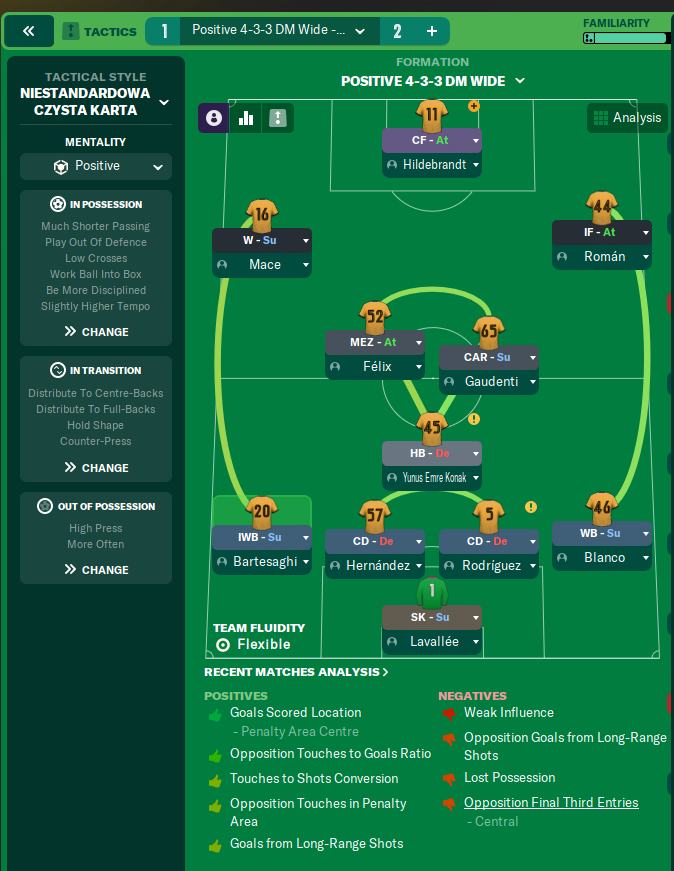
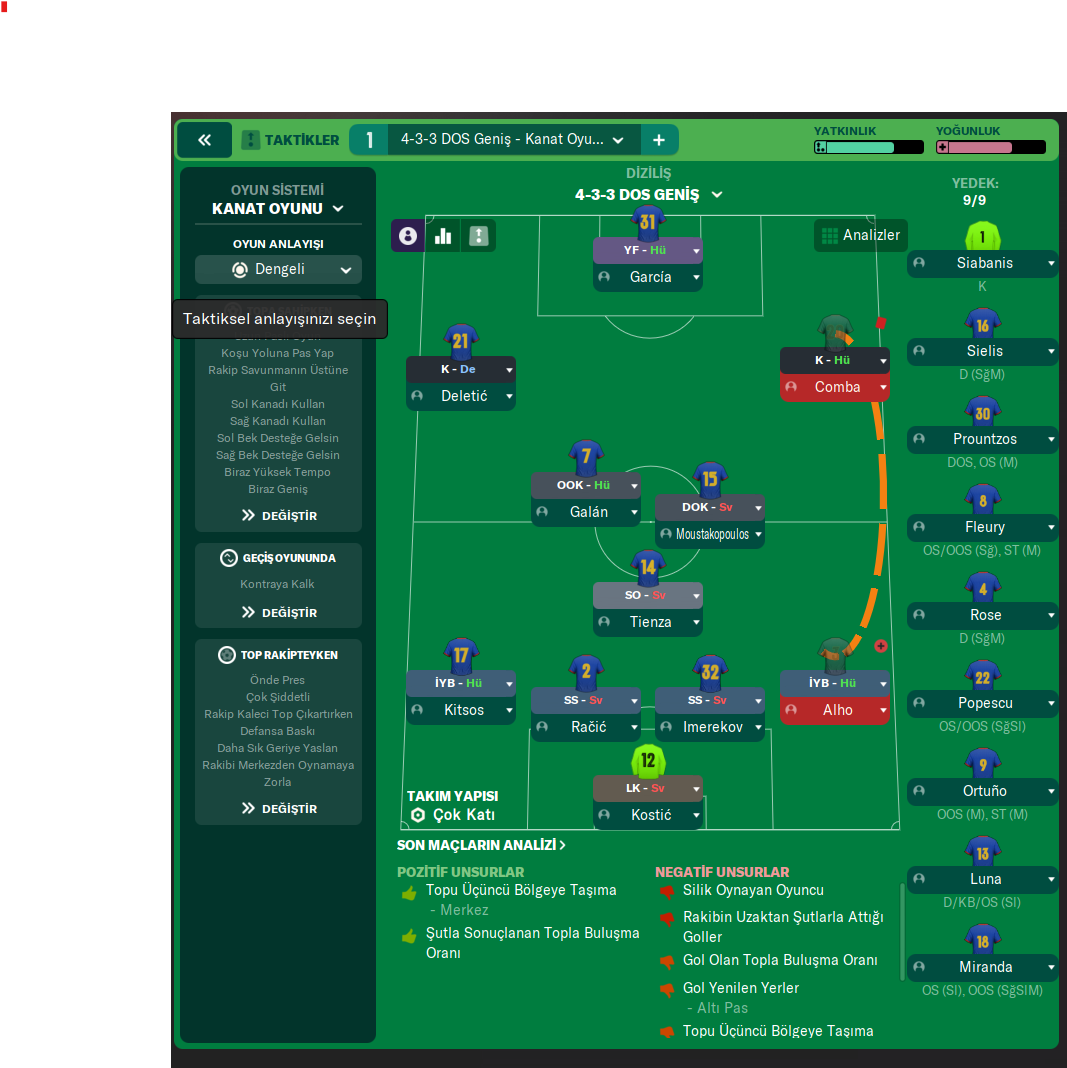
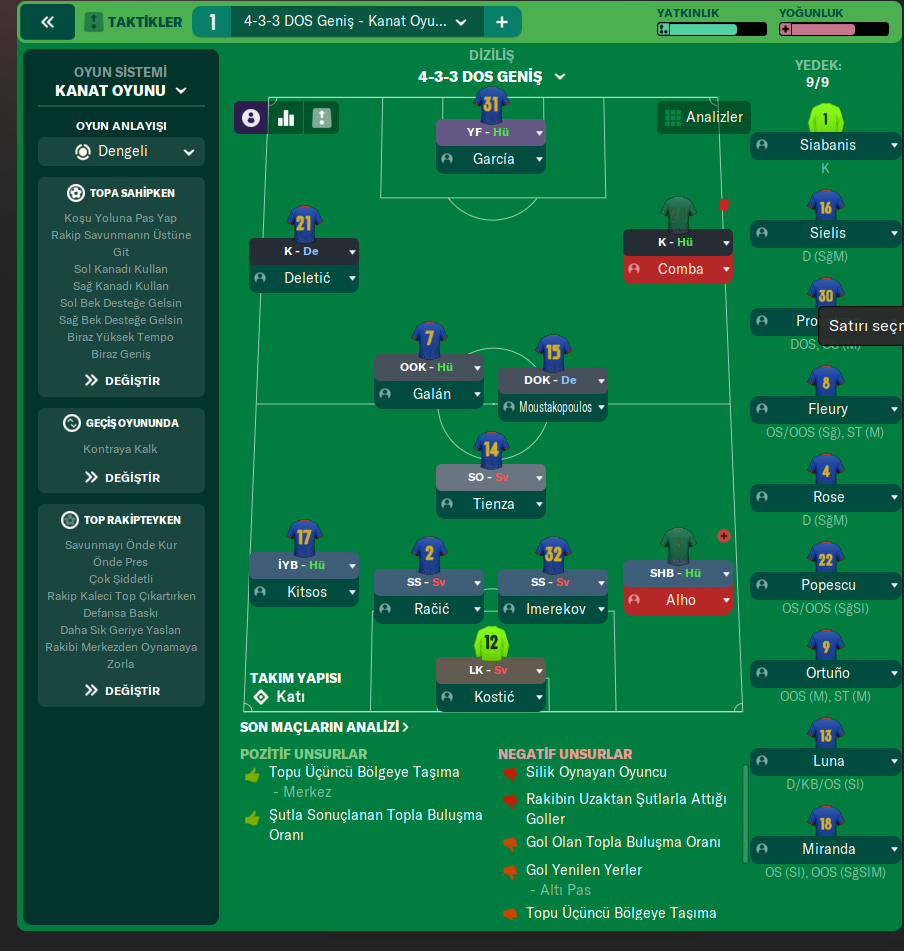
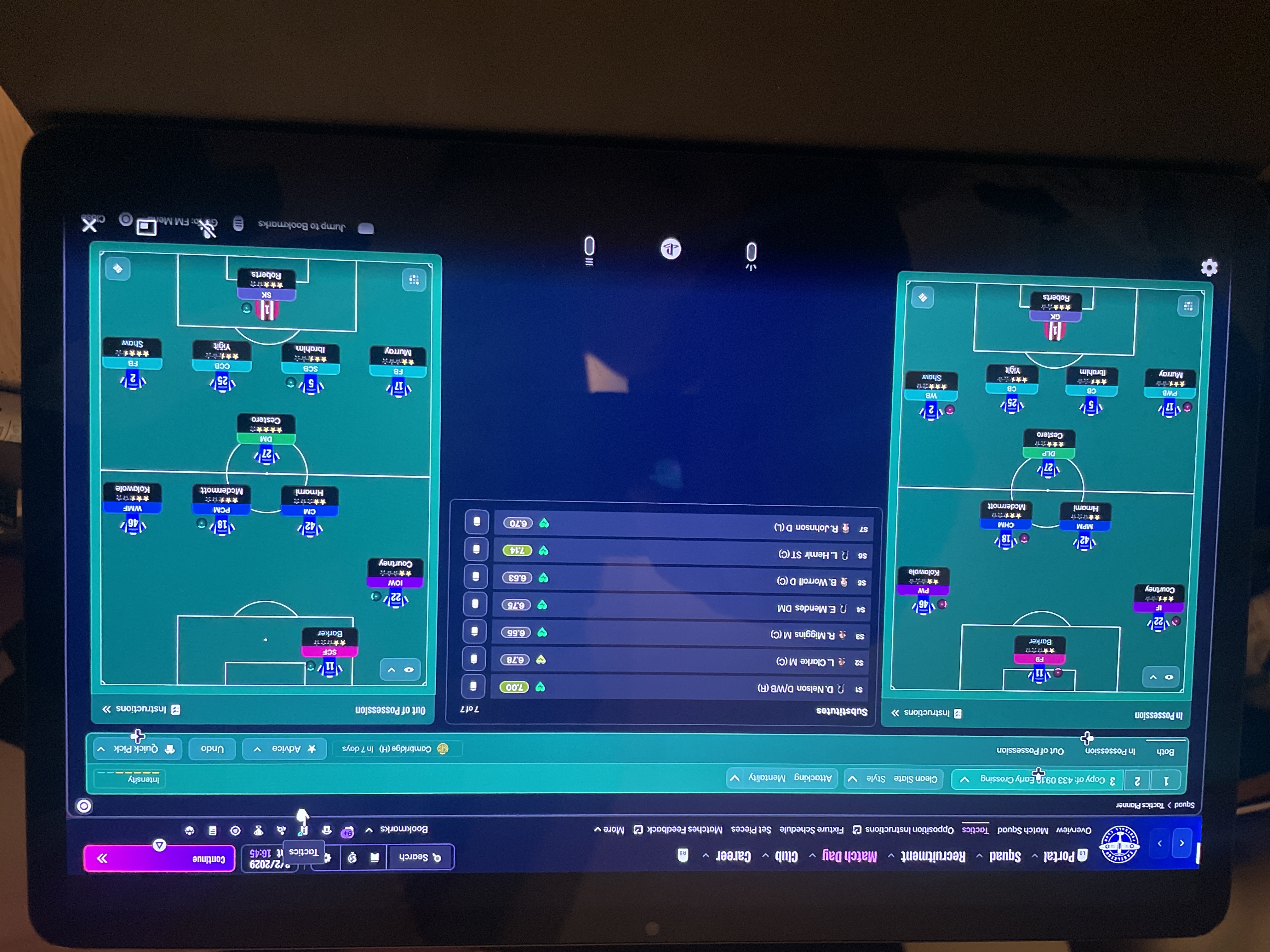
More Custom Vertical Tiki-Taka tactics
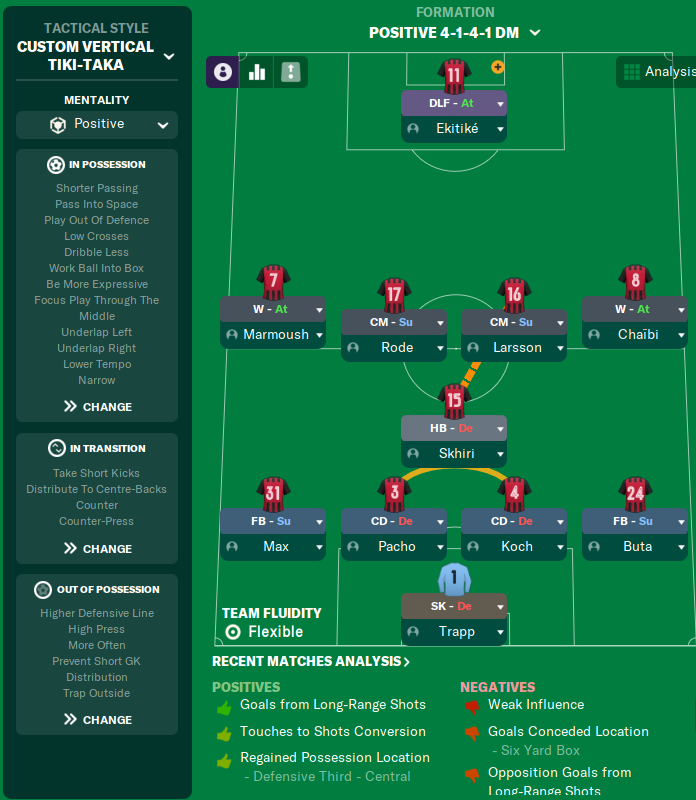
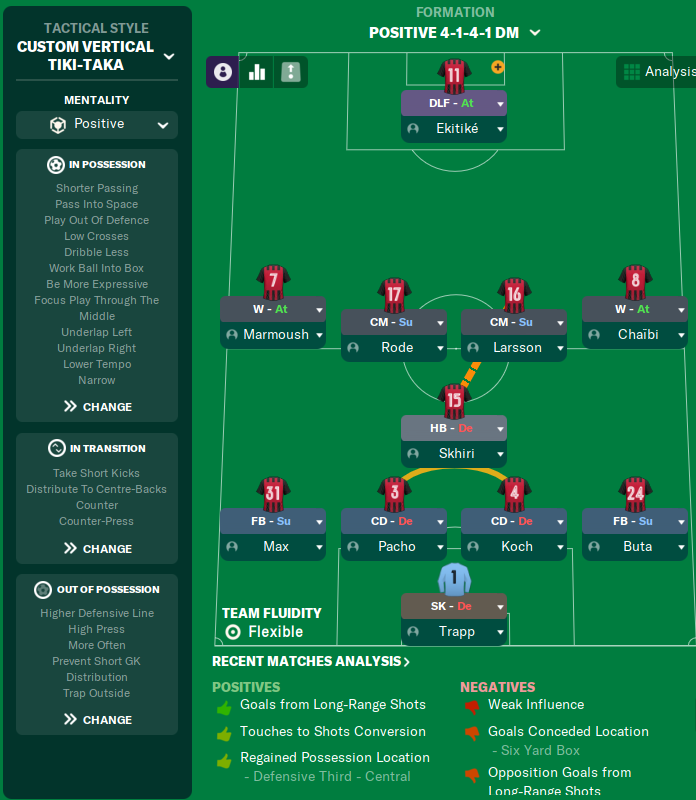
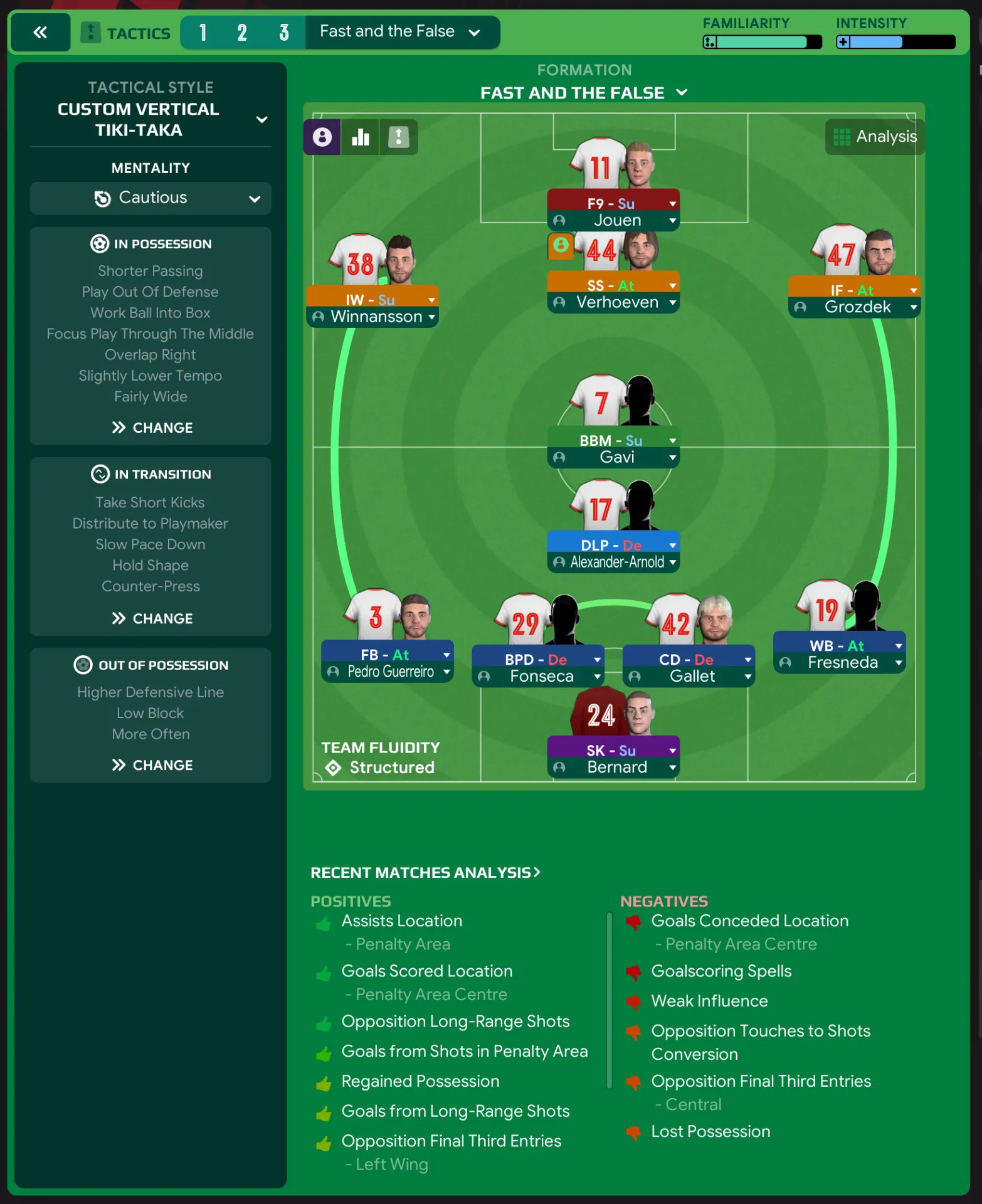
Guides for this tactic
The tactical theory behind the 4-3-3 Wide: roles, instructions, and the trade-offs that decide whether the system holds up.
Playing styles
Gegenpressing: A Full Guide
Klopp-style gegenpressing in FM, including squad profile, line-and-press pairing, sustainable workload, and the antipatterns to avoid.
Read guide
Playing styles
Tiki-Taka vs Positional Play
Why circulation density and zonal occupation aren't the same thing in FM, and the half-space occupation rule that decides build-up.
Read guide
Match preparation
In-Match Tactical Changes
Mentality, duty, role, instruction, sub. The change hierarchy from lightest to heaviest intervention, and 60th-minute patterns by game state.
Read guide