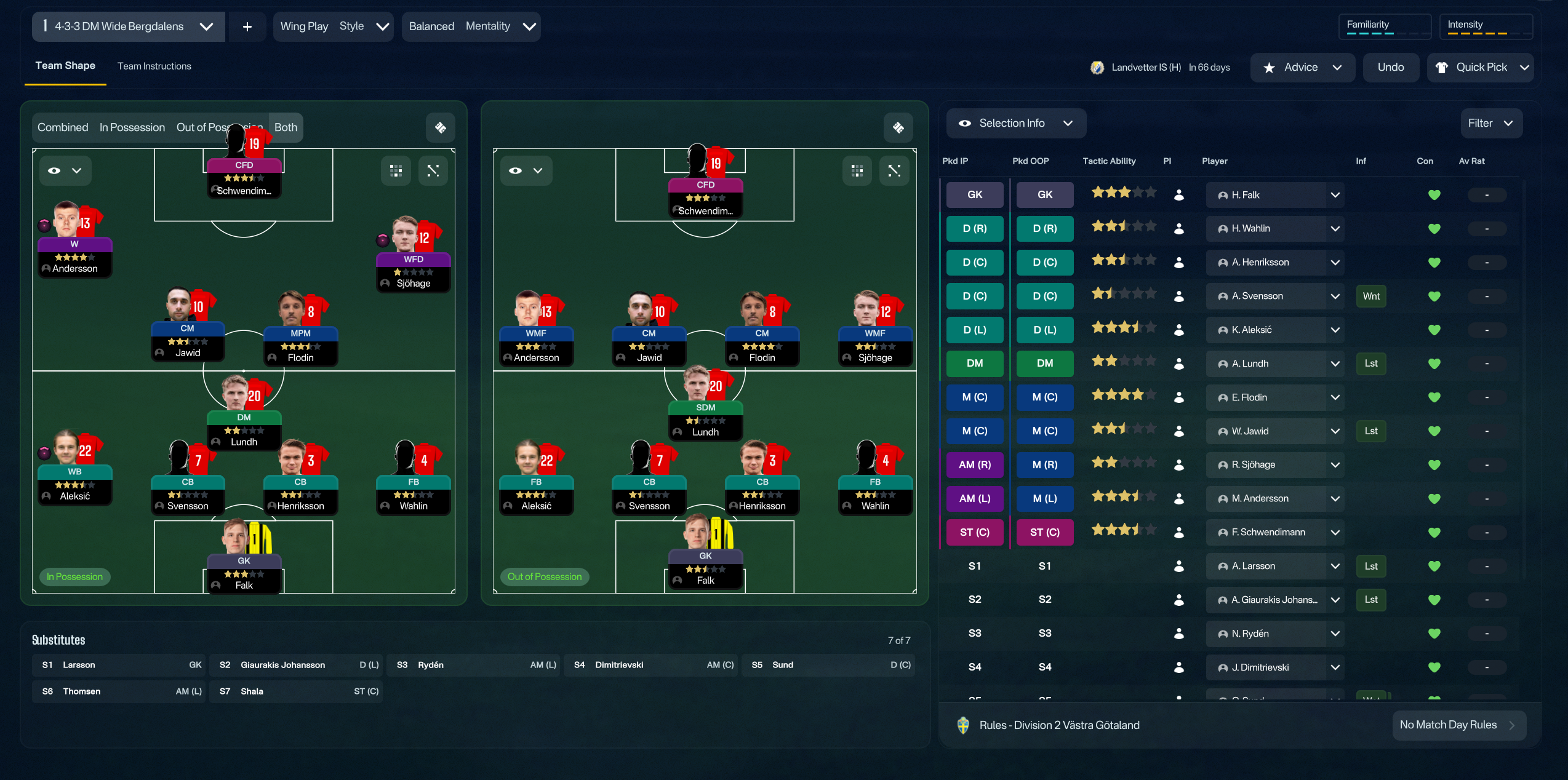
Wing Play 4-3-3 Wide (Balanced) Tactic
4-3-3 Wide
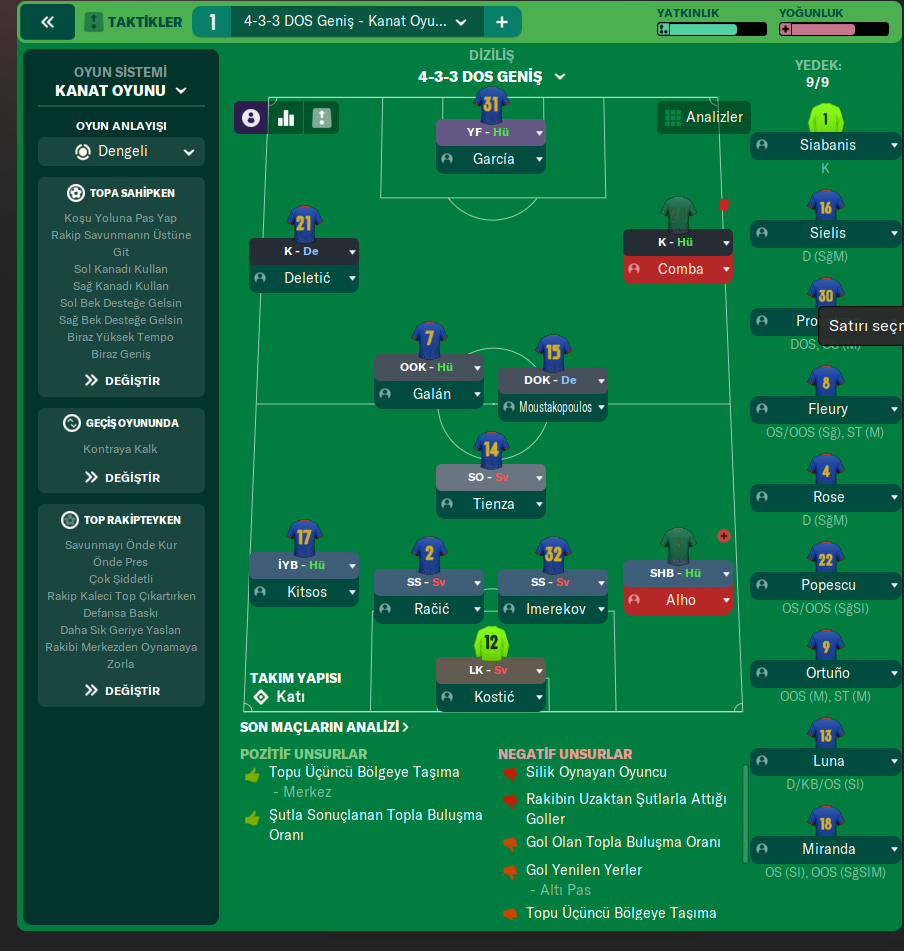
Dominating wing play to leverage pace and crossing ability. Utilizing wide players effectively creates spaces for crossing.
Loading tactical analysis...
Formation and style
Wing Play
Balanced
4-3-3 Wide
Structured
In possession
Work Ball Into Box
Focus Play Down Both Flanks
Higher Tempo
In transition
Counter-Press
Counter
Out of possession
Higher Defensive Line
Higher Line of Engagement
Prevent Short GK Distribution
Player roles
GK
Goalkeeper
Support
DF
Ball-Playing Defender
Defend
DF
No-Nonsense Centre-Back
Defend
DF
Full-Back
Attack
DF
Wing-Back
Support
CM
Central Midfielder
Support
CM
Deep-Lying Playmaker
Support
CM
Box-to-Box Midfielder
Support
FW
Inside Forward
Attack
FW
Inside Forward
Attack
FW
Advanced Forward
Attack
Phase description
Utilize the flanks to create crossing opportunities for the strikers and exploit defensive weaknesses.
Quickly transition to a high press, targeting opponent's ball players to regain possession.
Dominating wing play to leverage pace and crossing ability.
Team shape defence
Compact Midblock
Defensive line sits high, compressing space but can be vulnerable to quick counters.
Higher Defensive Line and Higher Line of Engagement.
Team shape attack
Wide Play
Wingers and full-backs stretch the pitch, creating space for central movement.
Focus Play Down Both Flanks and Work Ball Into Box.
Key strengths
Wing Play Exploitation
Utilizing wide players effectively creates spaces for crossing.
Inside Forwards at [6,2] and [6,4], Full-Back at [2,3].
Midfield Control
Three midfielders provide control and transition options.
DLP-S at [3,2], BBM-S at [4,3].
Conflicting tactics
Risk of Over-Commitment
With attacking full-backs, the team can become exposed on counters.
FB-A at [2,5] and WB-S at [2,4] leave spaces behind.
Dependence on Wing Play
Overreliance on wide attacks can be neutralized by compact defenses.
Focus Play Down Both Flanks without alternative options.
Risk exposures
Risk Exposures
Items
Defensive Vulnerability
High line can be exploited by pacey attackers.
Higher Defensive Line positioning.
Central Midfield Overload
Opponents may exploit central areas if midfielders are drawn wide.
Three midfielders spread can lead to gaps.
Role synergies
Role Synergies
Items
FB-A & IF-A
Full-backs provide width while inside forwards cut inside to create scoring opportunities.
FB-A at [2,5] and IF-A at [6,2/6,4].
DLP-S & CM-S
Deep-Lying Playmaker controls the game and connects midfield to attack.
DLP-S at [3,3] complements CM-S at [4,3].
Suggested questions
How can the team improve defensive stability?
What adjustments are needed for a more effective counter-attacking strategy?
How can player substitutions impact the tactical plan more effectively?
Related Tactics
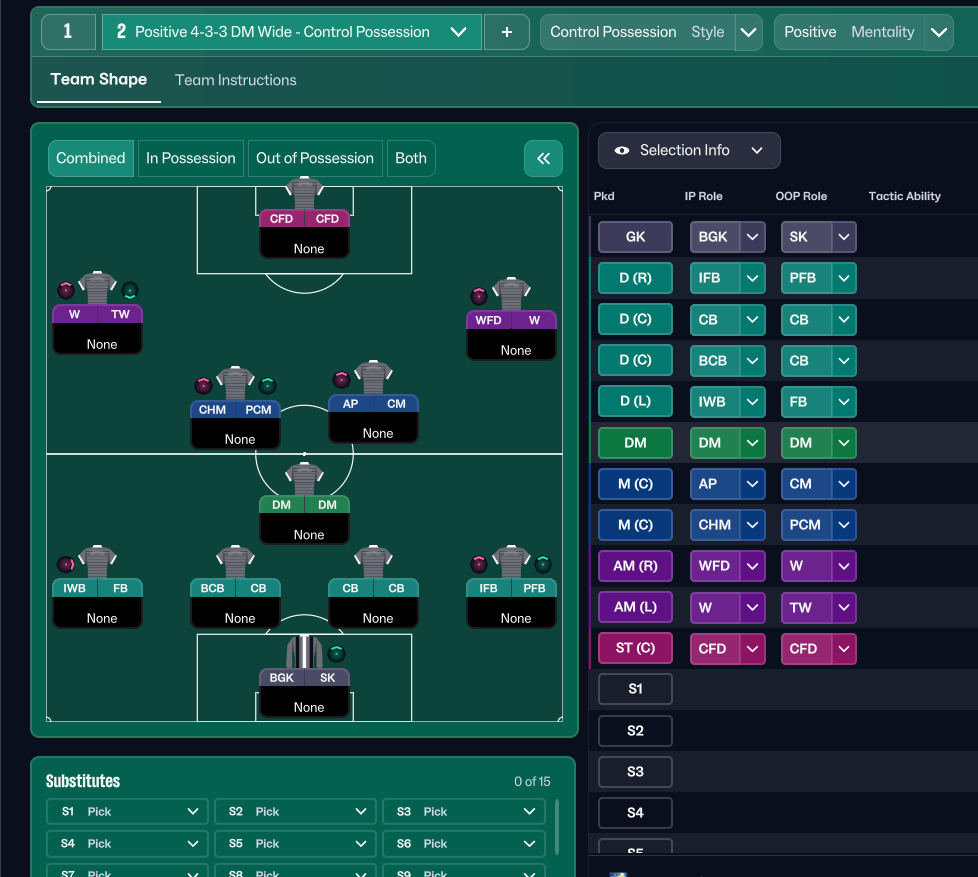
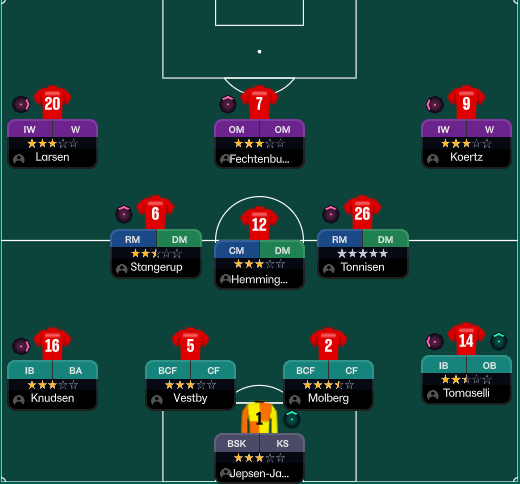
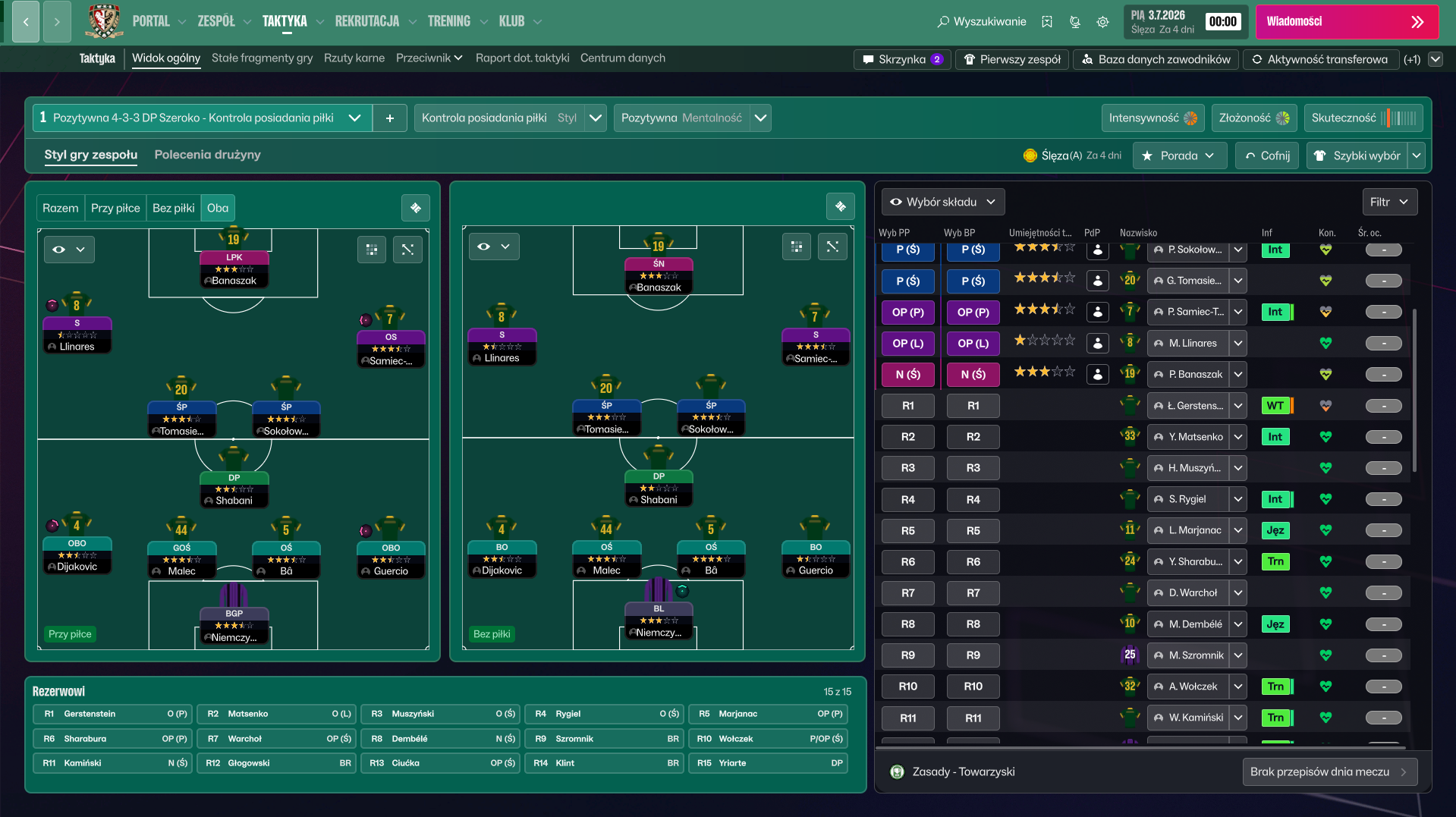
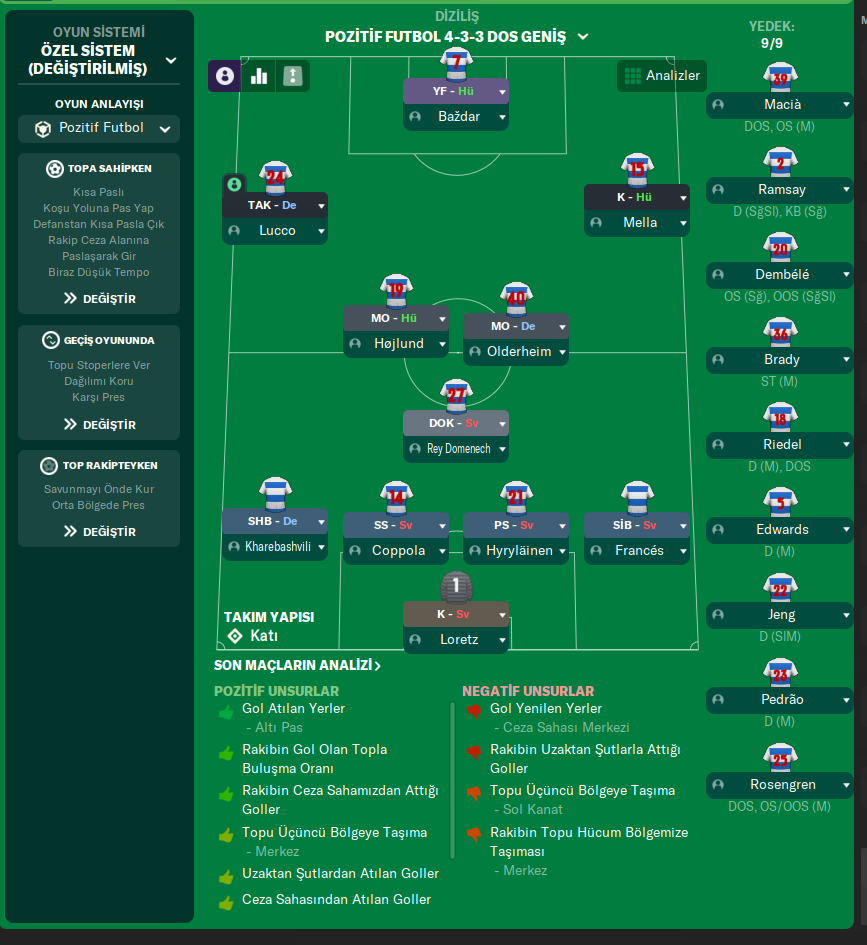
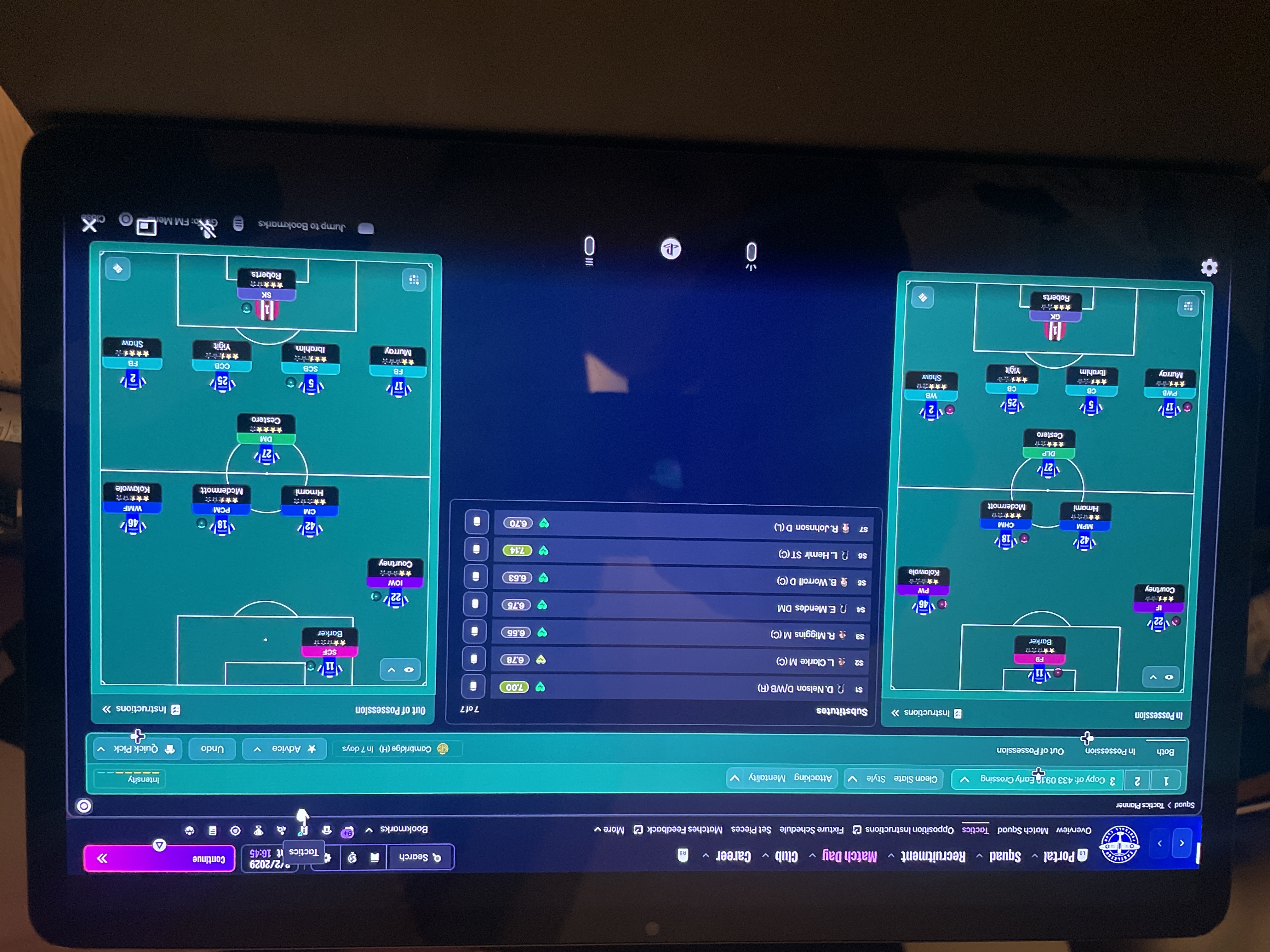
More Wing Play tactics
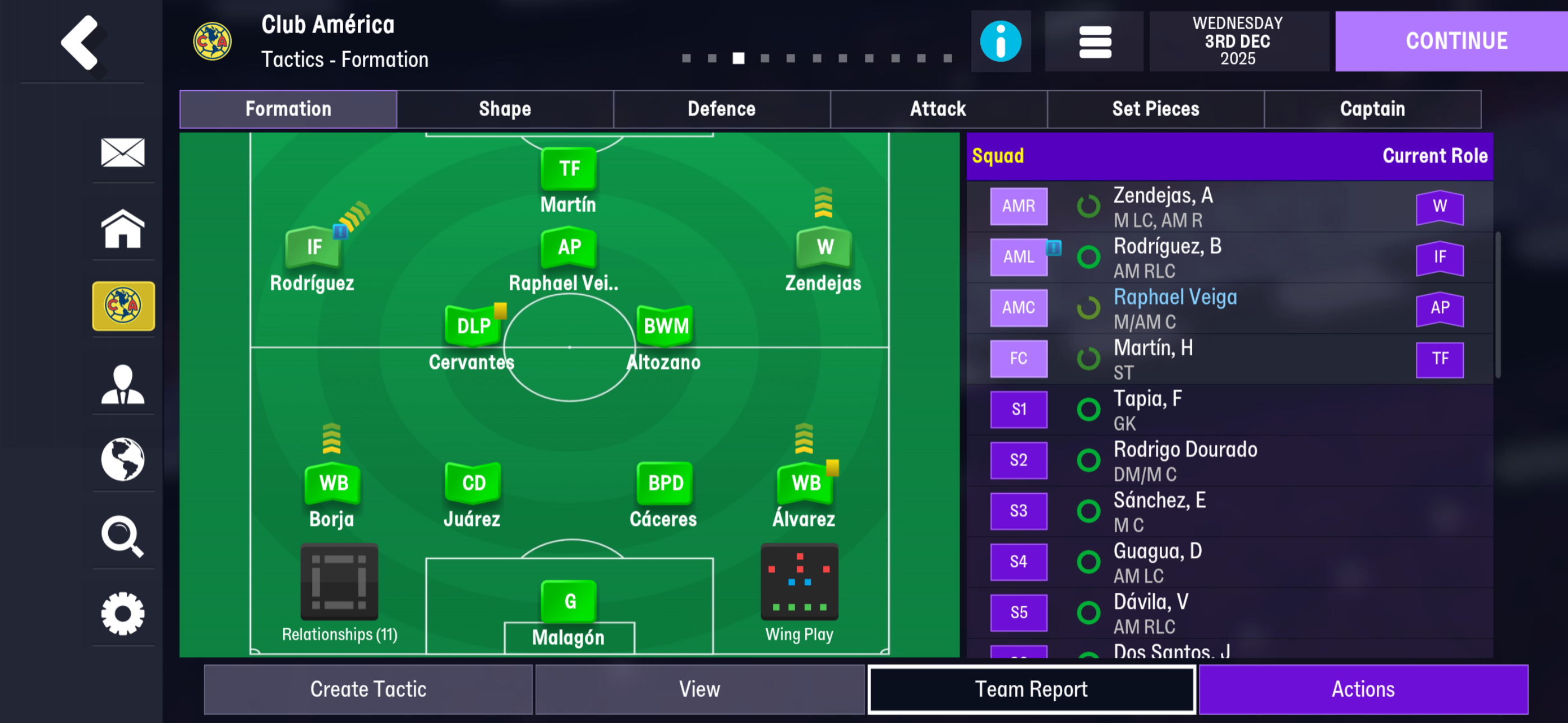
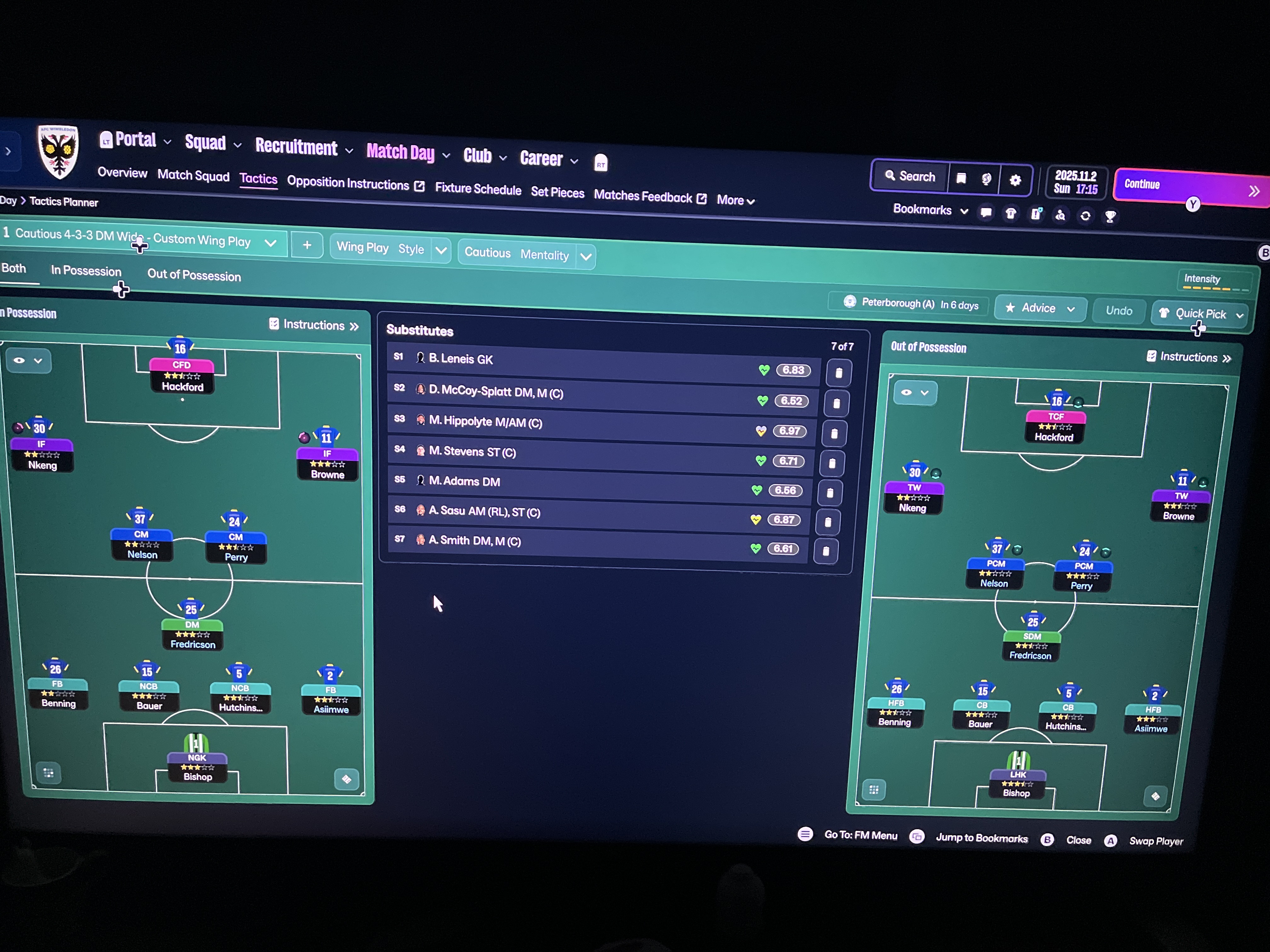
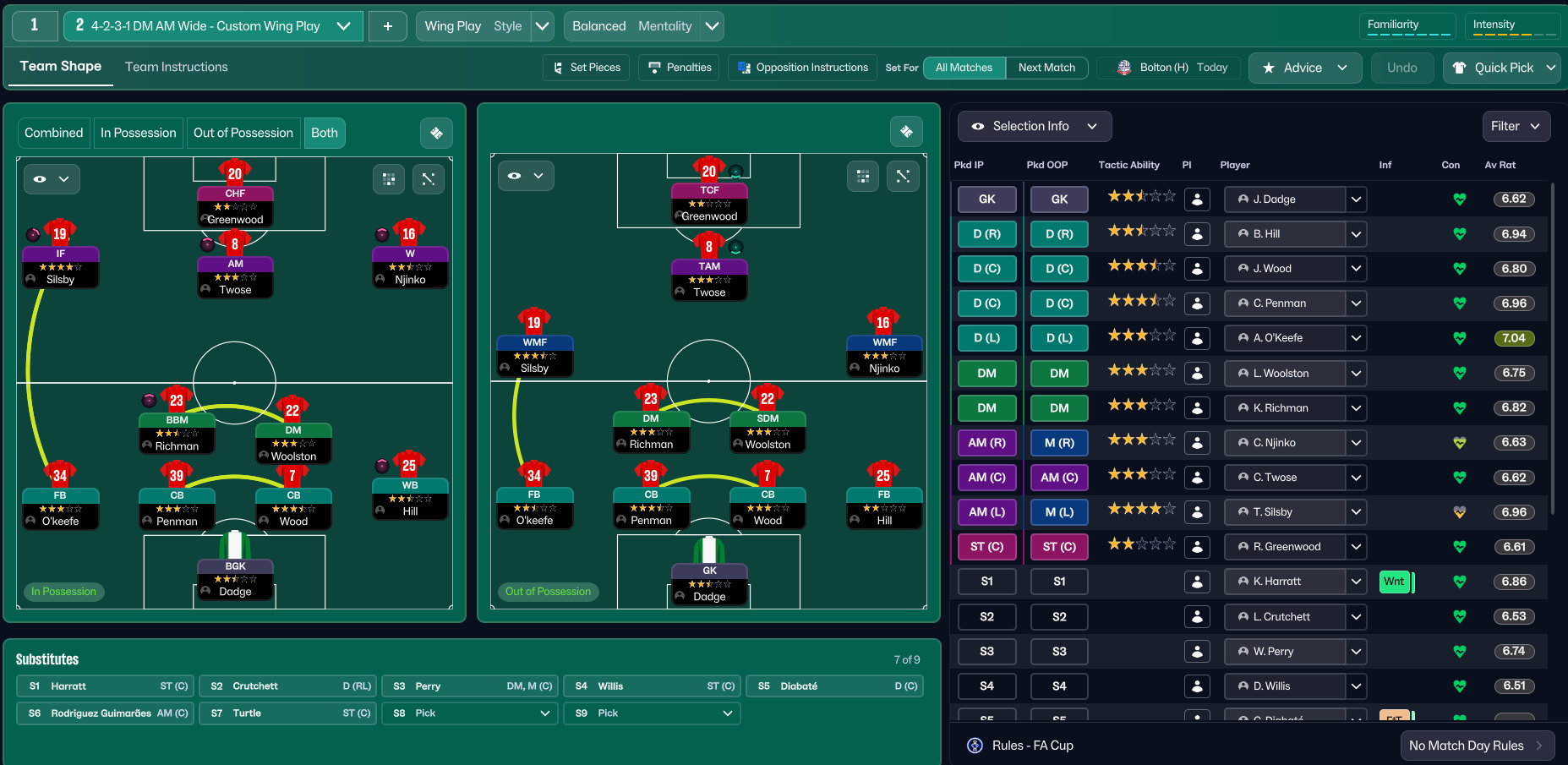
Guides for this tactic
The tactical theory behind the 4-3-3 Wide: roles, instructions, and the trade-offs that decide whether the system holds up.
Playing styles
Possession-Based Tactics in Football Manager
Build the patient, control-the-tempo style without watching your opponents counter through the gaps you leave behind.
Read guide
Foundations
Understanding the 4-3-3 Formation
Master the classic 4-3-3: player roles, tactical variations, and the trade-offs that decide whether it sings or stalls.
Read guide
Foundations
FM27 Tactics: What Changed from FM26
FM27 keeps FM26's tactic system. Here is what stays the same, the small changes that can catch you out, and what the new Tactical Effectiveness system asks of you.
Read guide