Uploaded Tactic
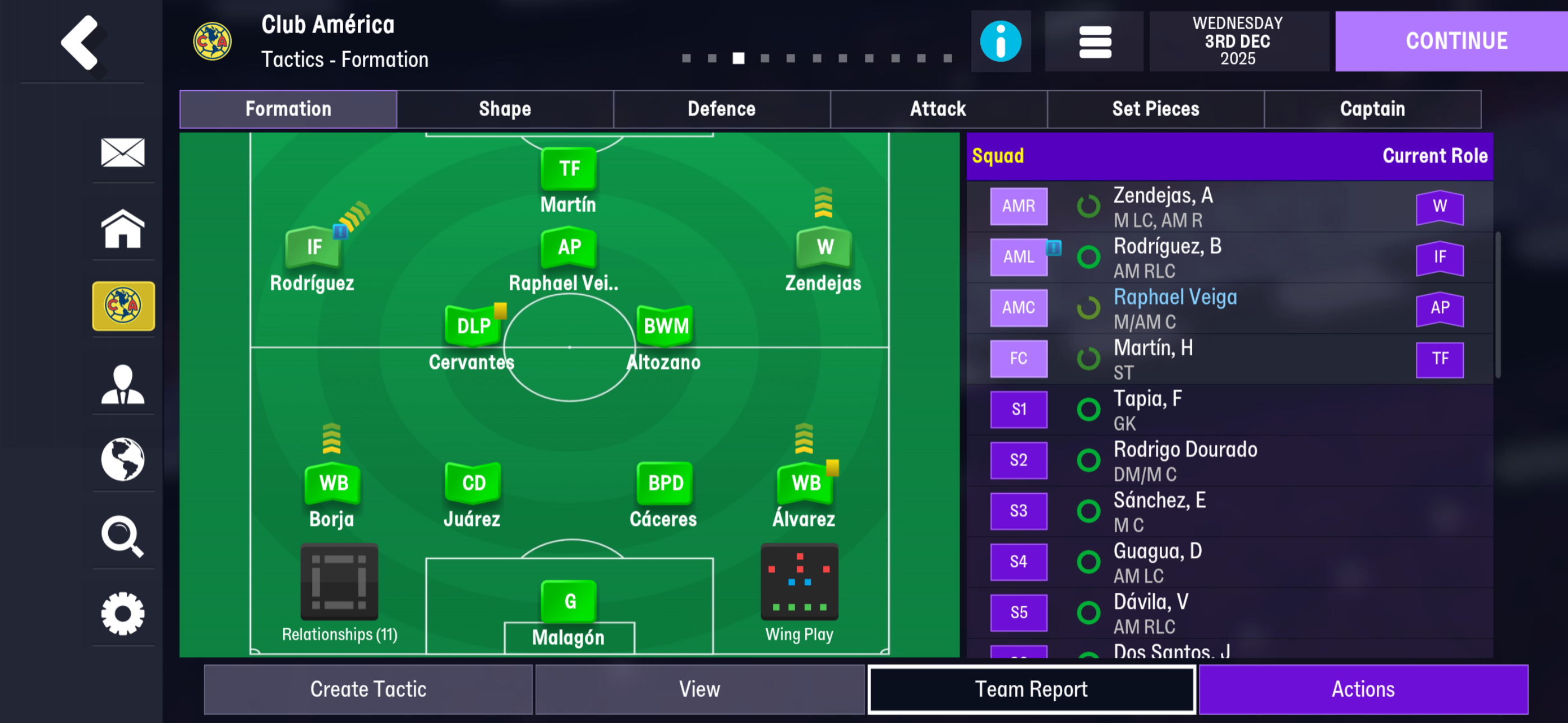
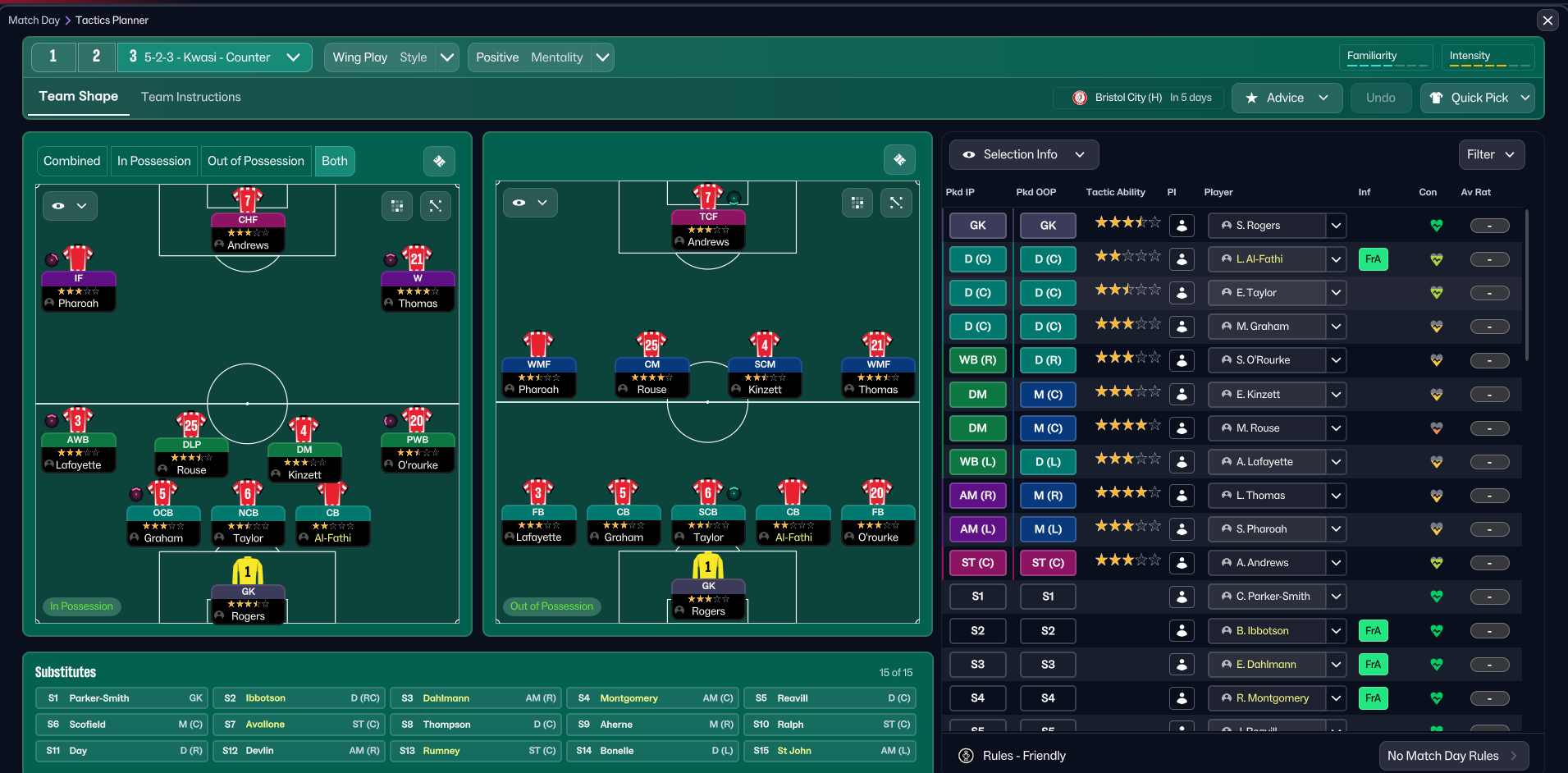
Formation & Style
Tactical Style:Wing Play
Mentality:Attacking
Formation:4-3-3
Team Fluidity:Fluid
In Possession
Play Out of Defence
Work Ball Into Box
Focus Play Down Both Flanks
Shorter Passing
In Transition
Counter-Press
Counter
Out of Possession
Higher Defensive Line
Higher Line of Engagement
Use Offside Trap
Team Shape Without Ball
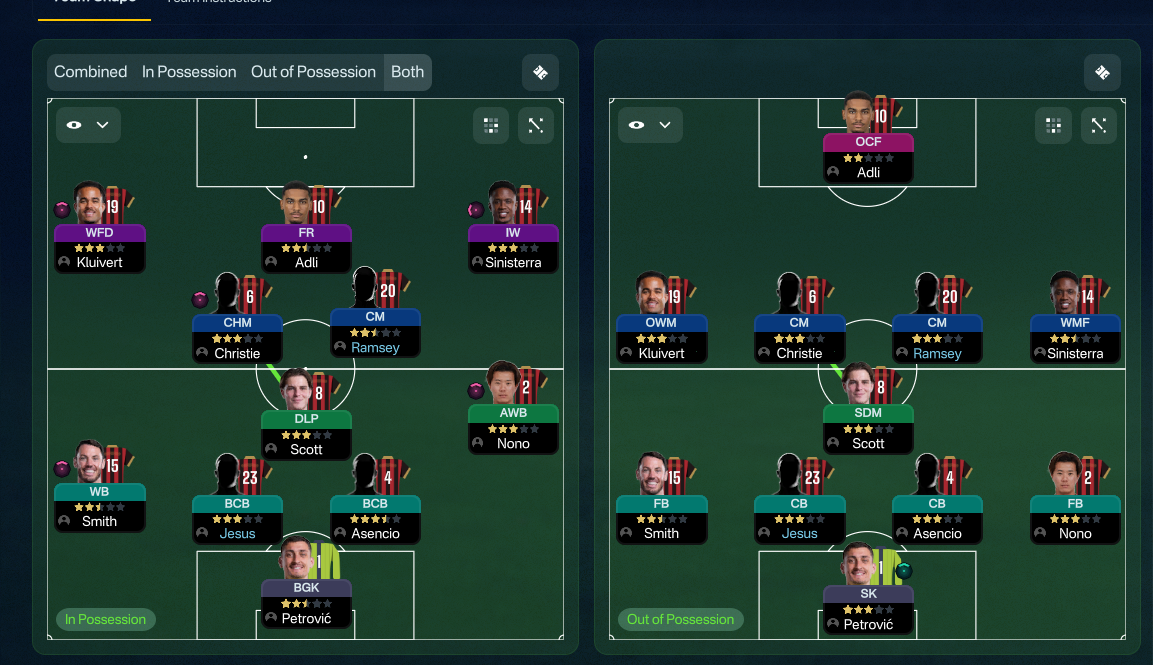
Shape:4-4-2
Description:Defending in a compact manner with midfielders tracking back.
Evidence:The use of higher line engagement and offside trap allows for aggressive defending.
Team Shape With Ball
Shape:4-3-3
Description:Wide attacking presence with forwards cutting in and overlapping wing-backs.
Evidence:Focus play down both flanks with wing-backs providing width.
Phase Description
Attacking Play
Employs wing play to stretch the opposition, exploiting spaces for even more dynamic attacking movements.
Defensive Transition
Quickly revert to a high press to regain possession.
Main Focus
Creating overloads on the flanks and effective use of space for the forwards.
Key Strengths
Dynamic Wing Play
Utilizing both wing-backs effectively enhances width and crosses into the box.
Midfield Control
A DLP (Su) at [3,3] provides creative passing options and links defense to attack.
Adaptive Attack
Employing inverted wingers allows for a flexible attacking formation.
Conflicting Directions
Vulnerable to Central Attacks
Heavy reliance on wing play may leave central areas exposed.
Exposed Wing-Backs
Pushing both wing-backs forward may leave gaps on the flanks.
Offside Trap Risks
Inconsistent line of engagement height can lead to vulnerable scenarios.
Tactical Suggestions
Consider a More Defensive Midfielder
Adding another DM to maintain structure against counter-attacks may improve resilience.
Adjust Wing Back Duties
Consider setting a more defensive duty on one WB to balance attacks.
Utilize Substitutions Strategically
Fresh legs in midfield and attack can bring new dynamism and work rate in pressing.
Ask Questions About Your Lineup
Related Tactics
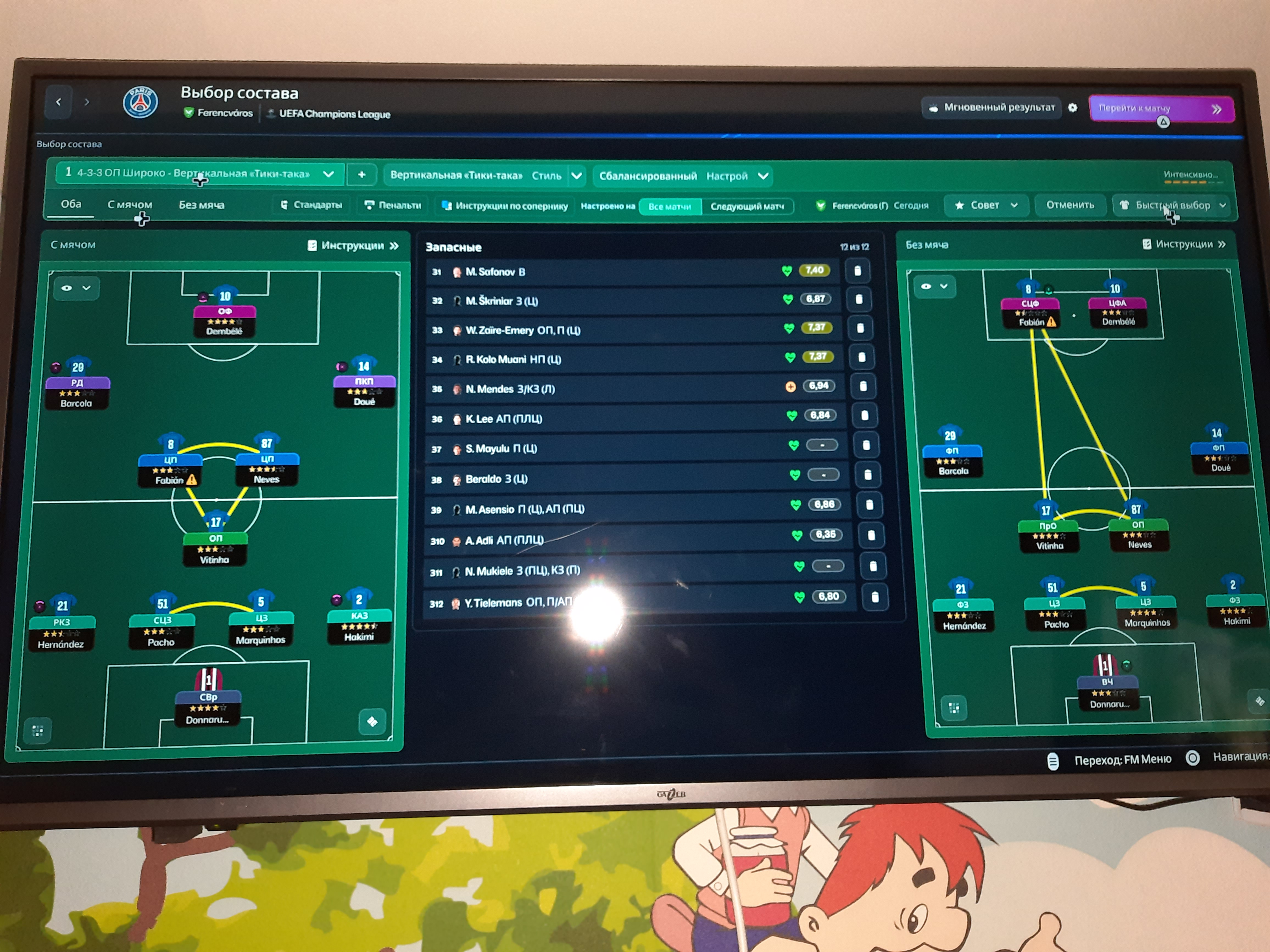
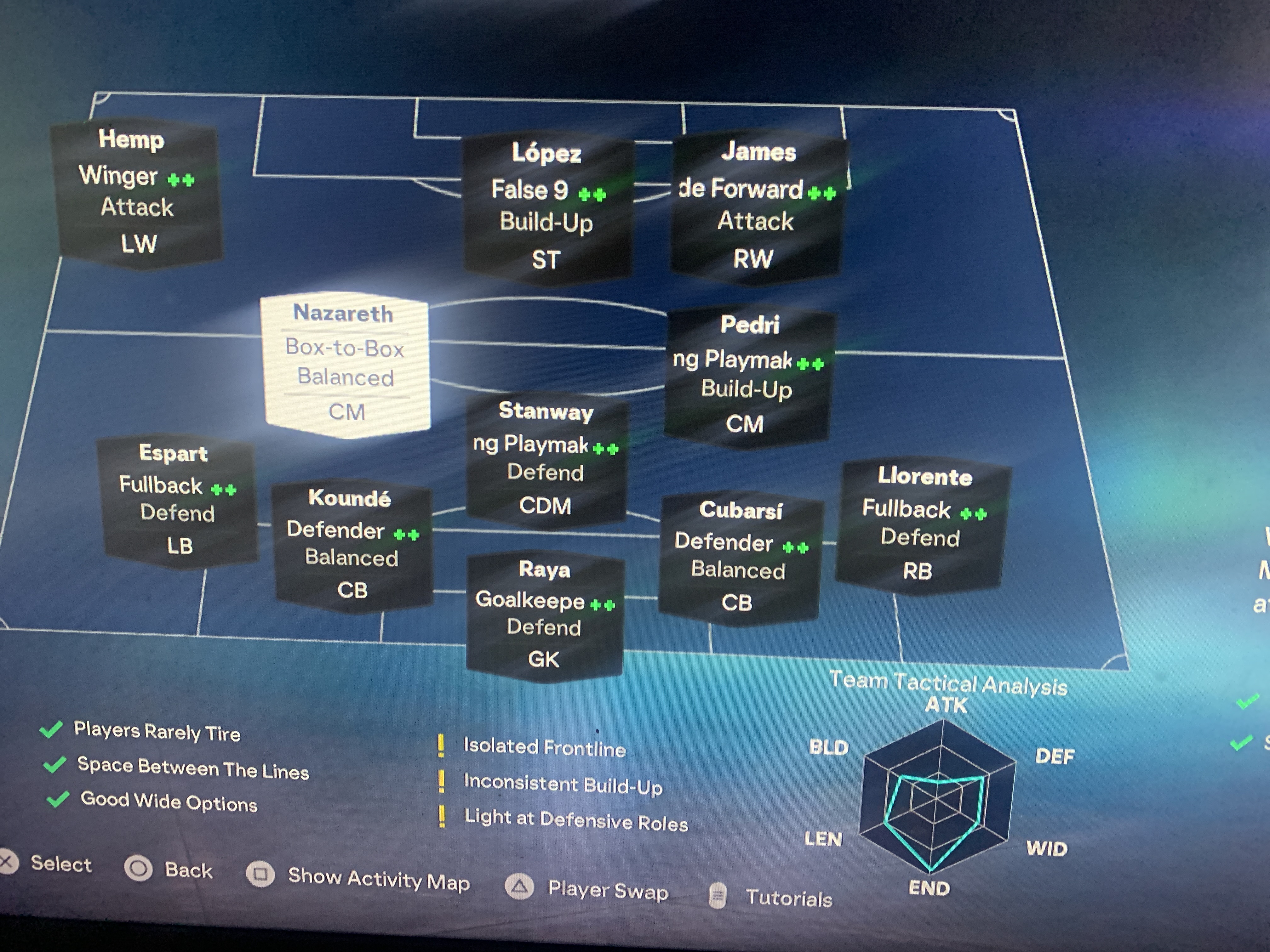
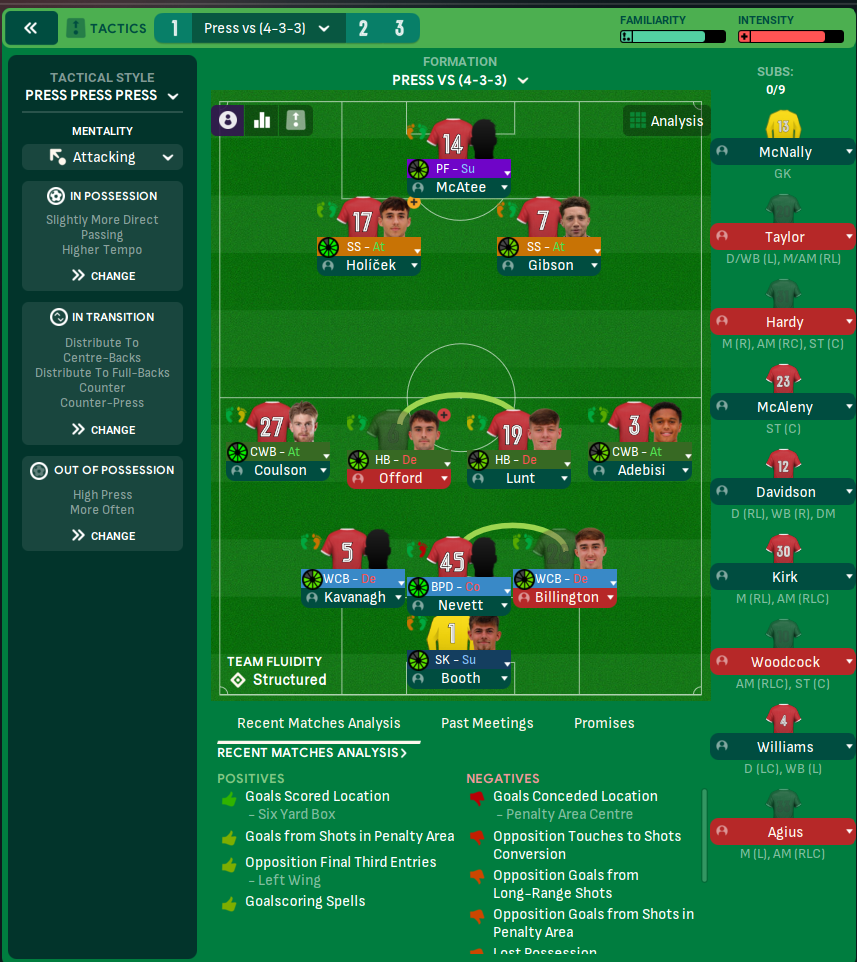
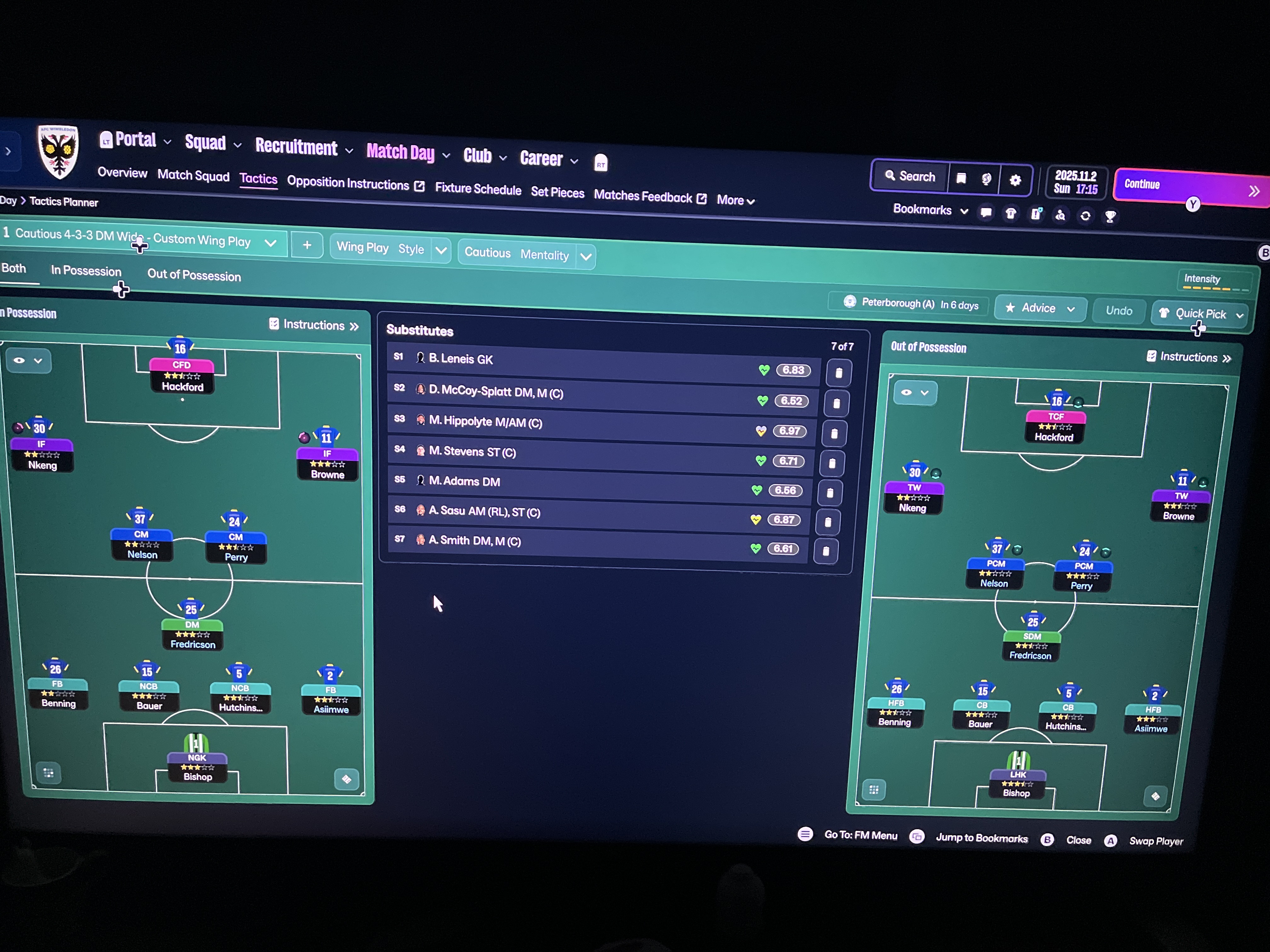
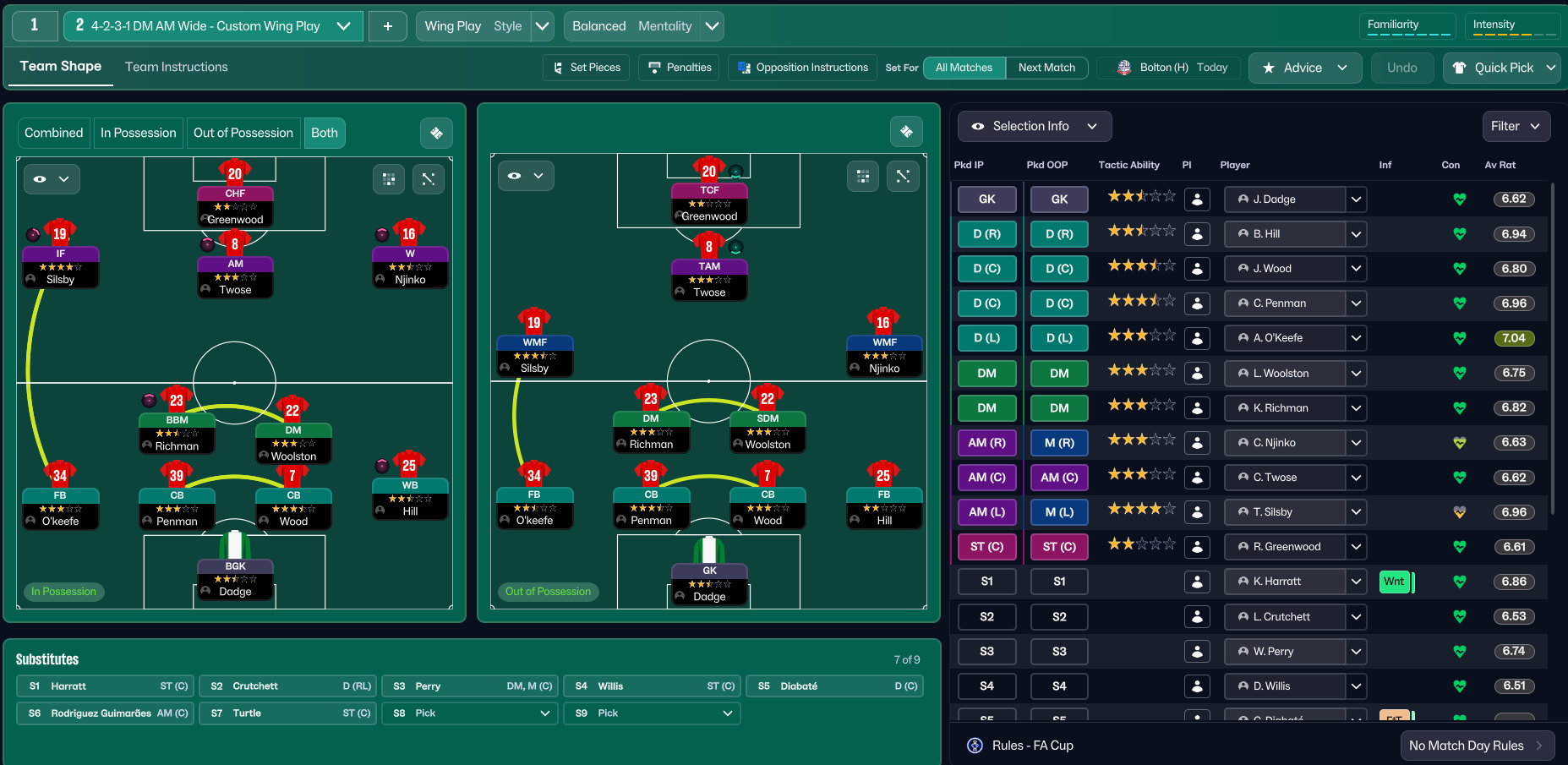
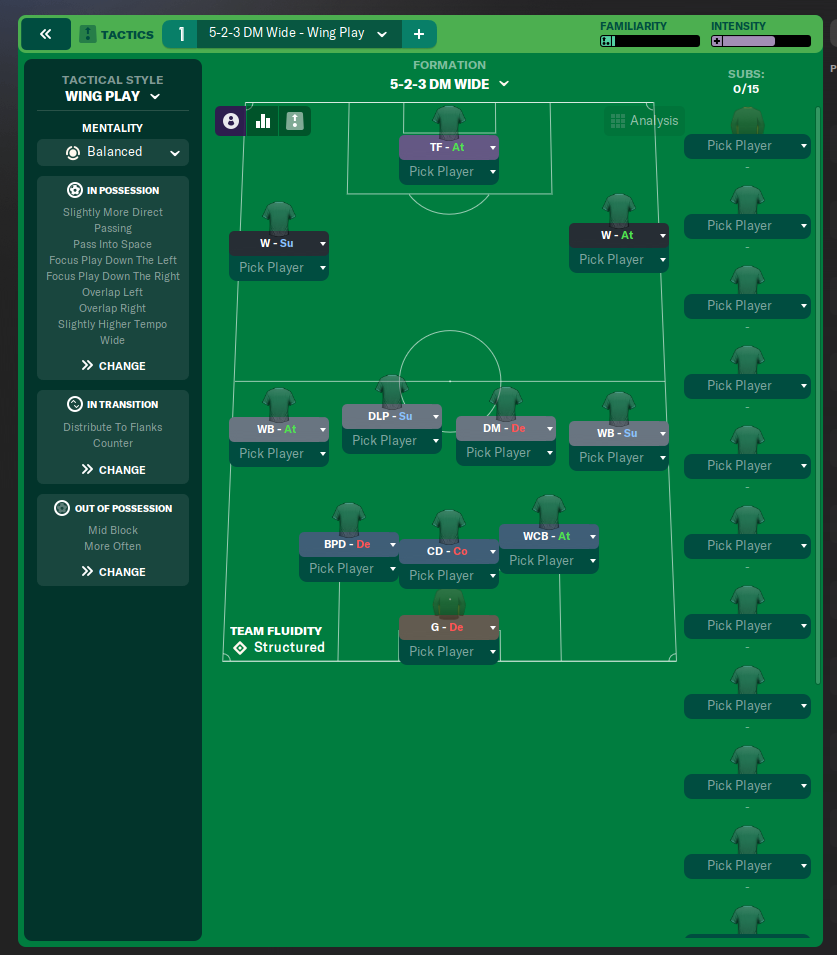
More Wing Play tactics
Guides for this formation
The tactical theory behind the 4-3-3: roles, instructions, and the trade-offs that decide whether the system holds up.
Foundations
Understanding the 4-3-3 Formation
Master the classic 4-3-3: player roles, tactical variations, and the trade-offs that decide whether it sings or stalls.
Read guide
Player pairings
Midfield Trios
Holder, runner, creator: the role distribution rule for three-man midfields, the AMC variants, and the antipatterns that break them.
Read guide
Playing styles
Gegenpressing: A Full Guide
Klopp-style gegenpressing in FM, including squad profile, line-and-press pairing, sustainable workload, and the antipatterns to avoid.
Read guide