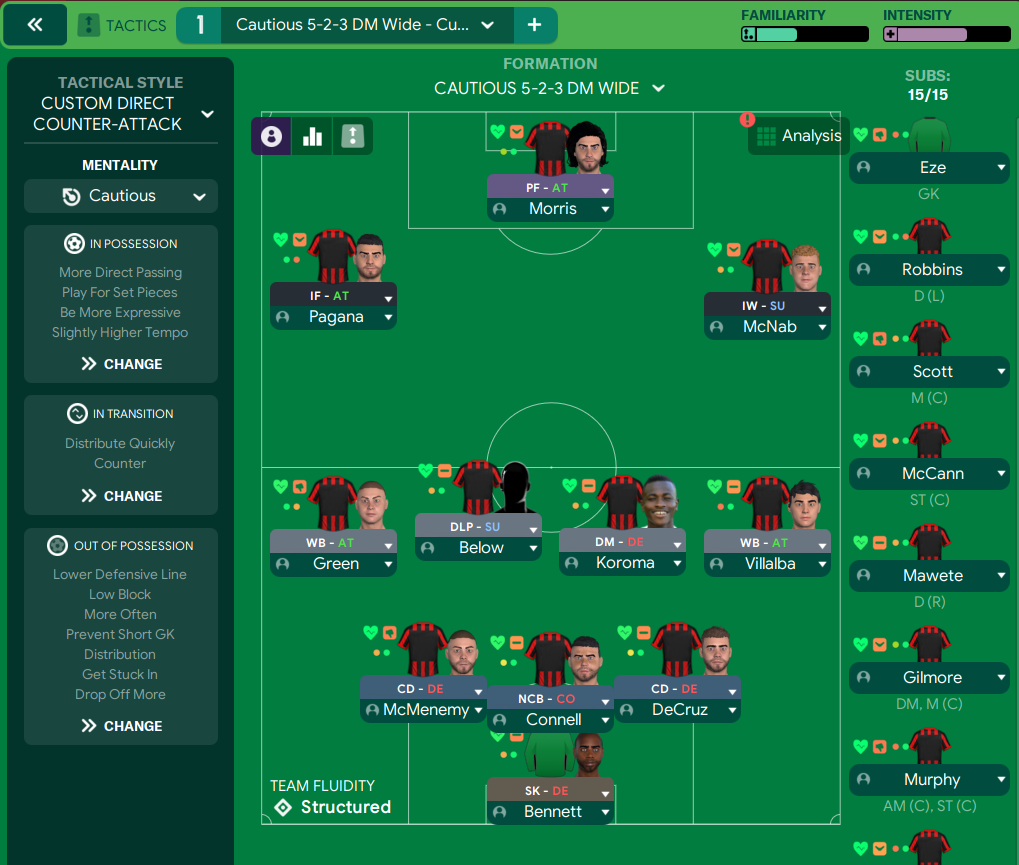
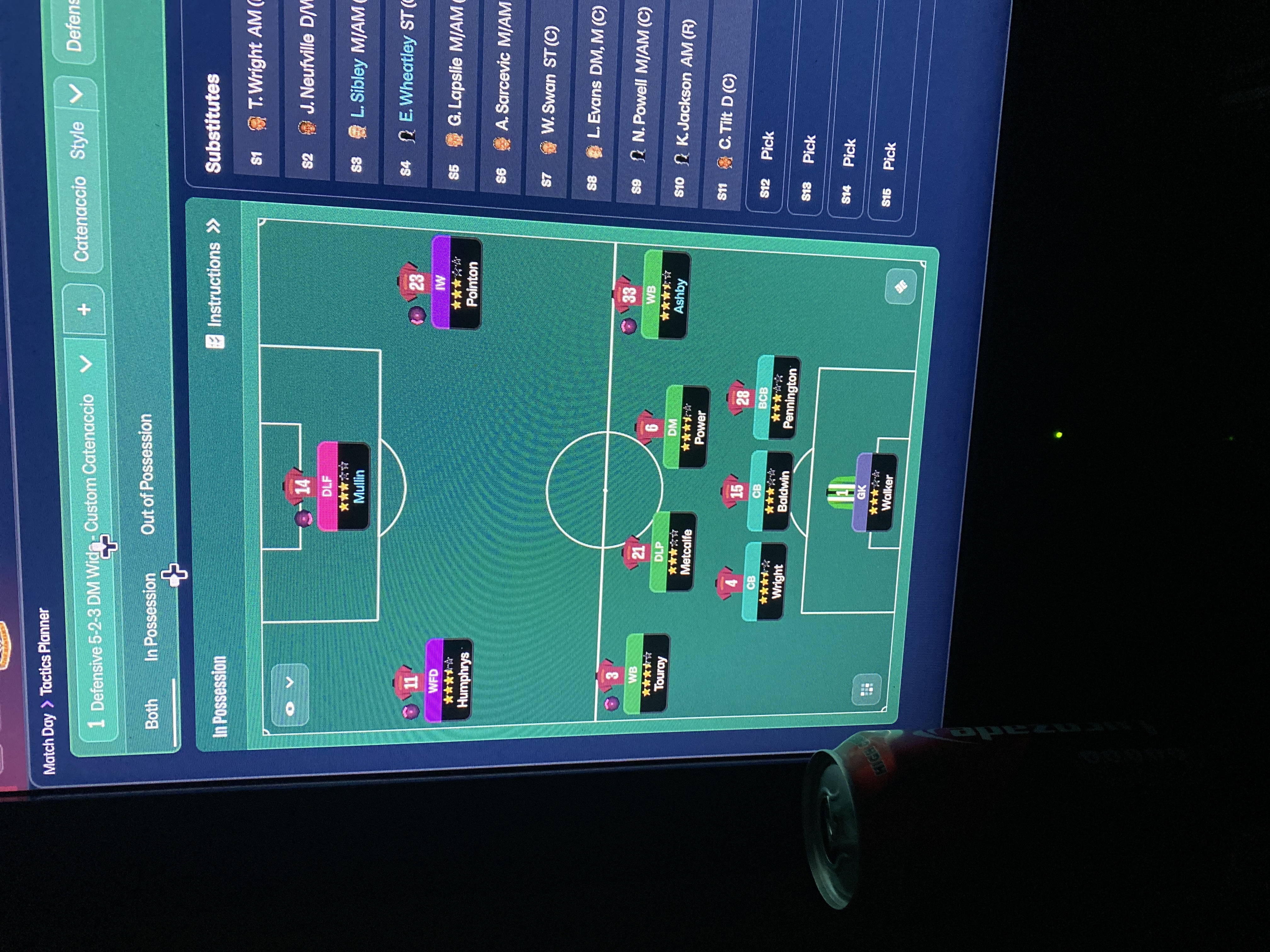
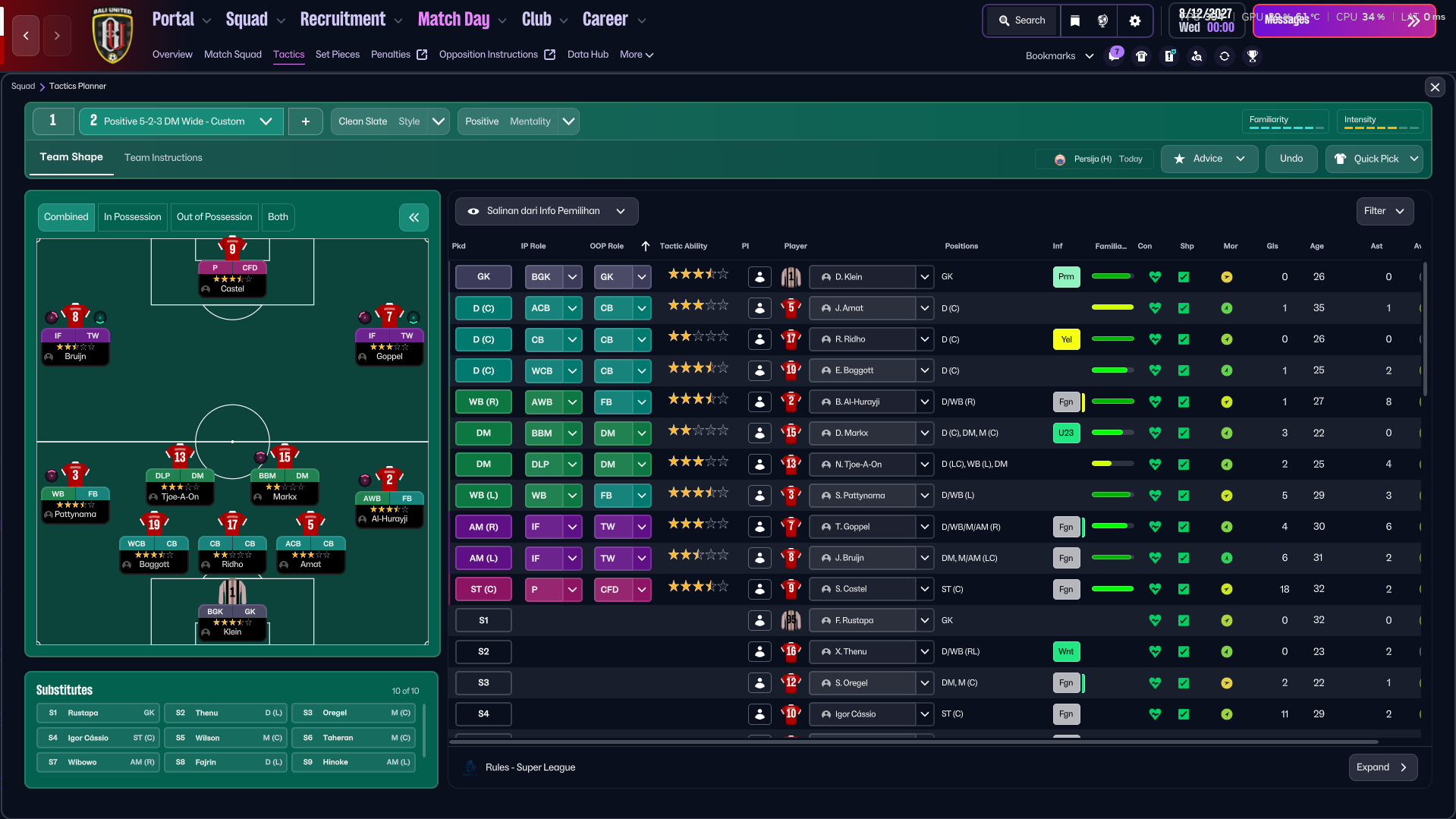
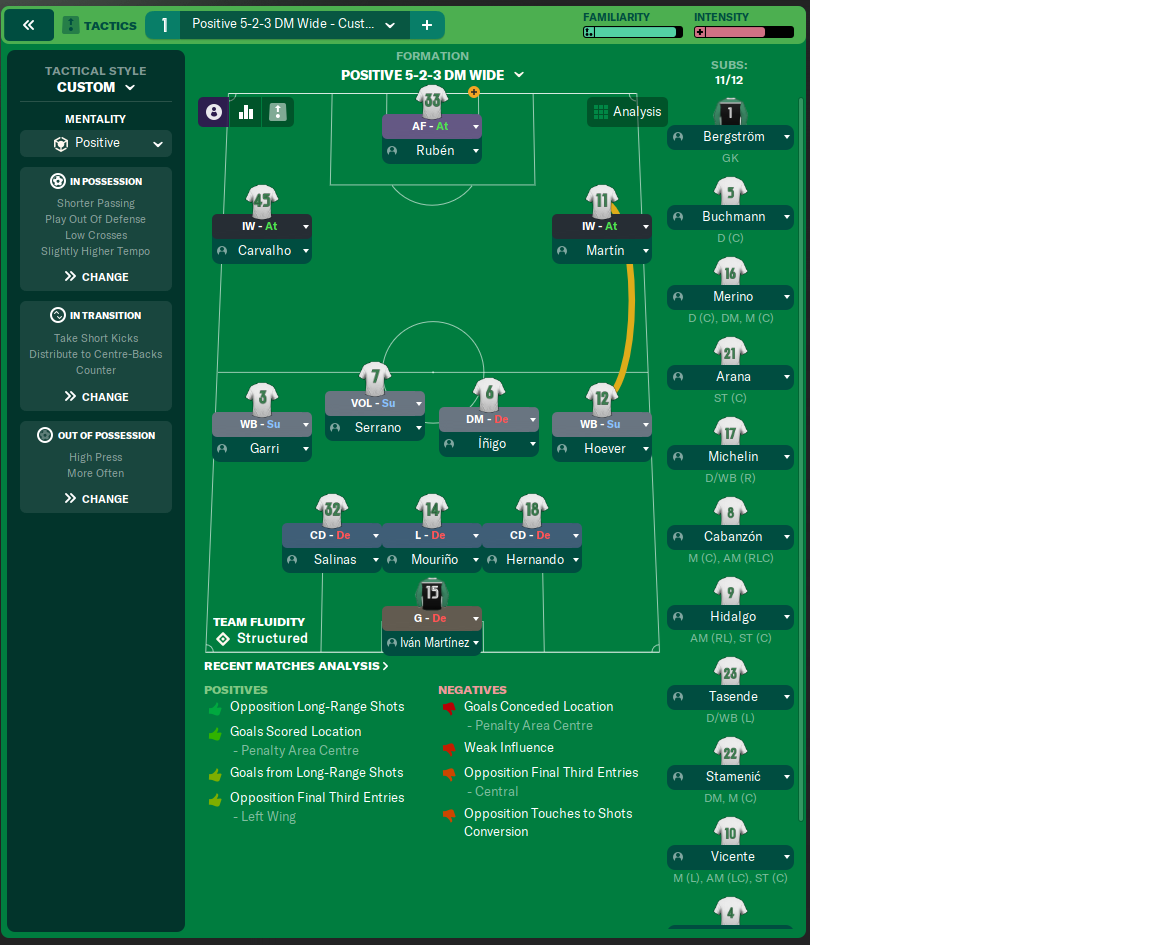
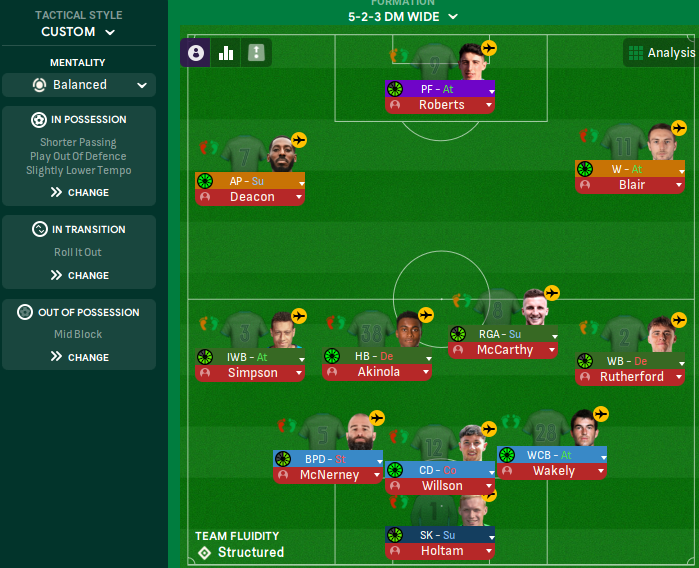
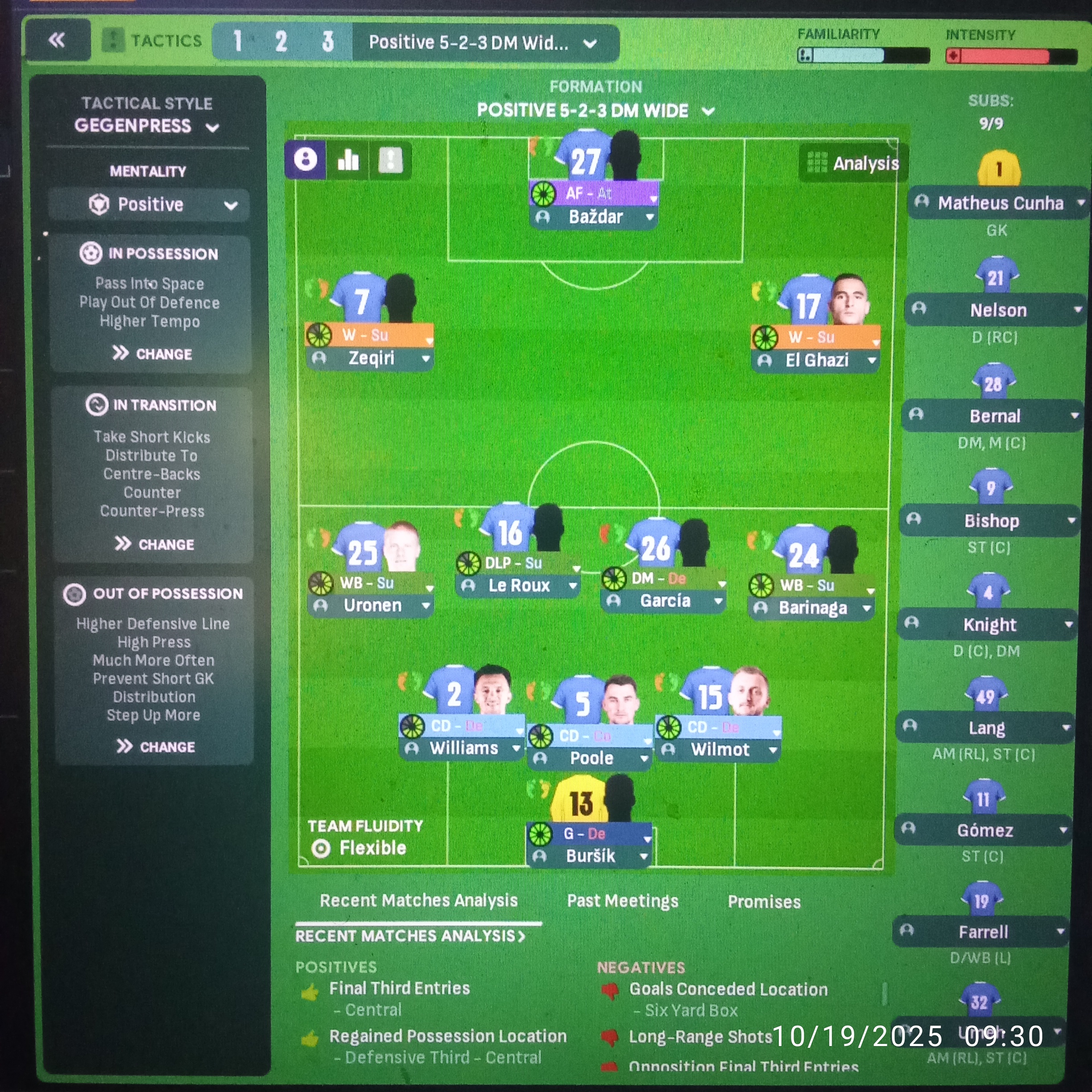
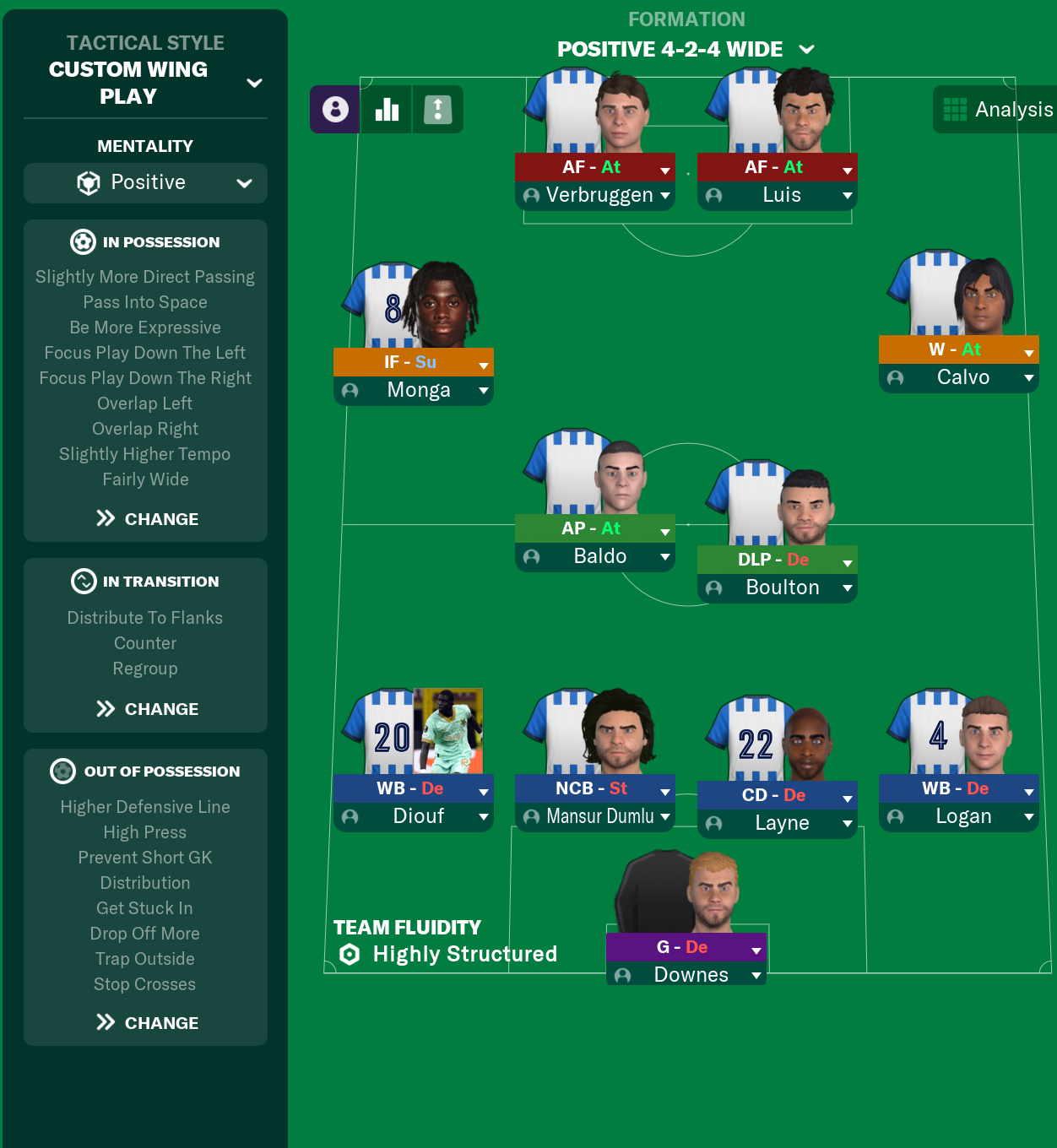
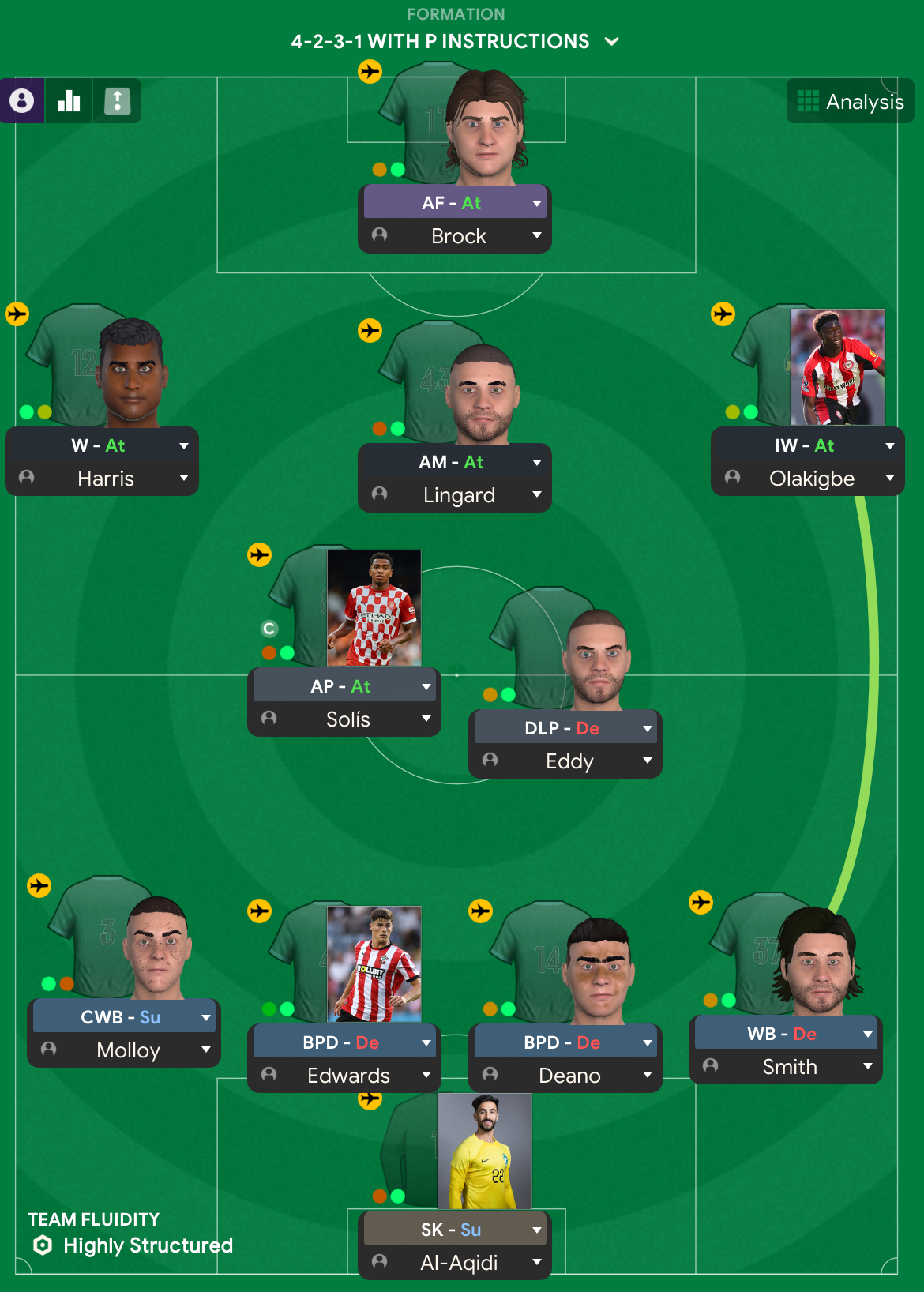
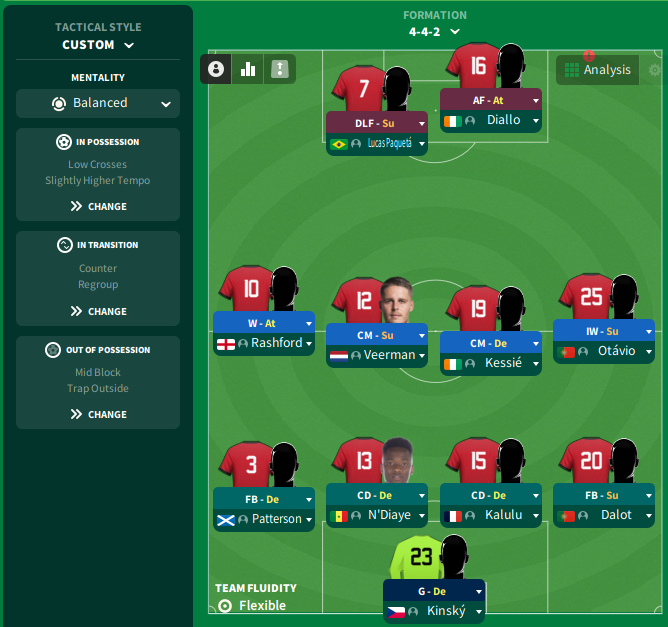
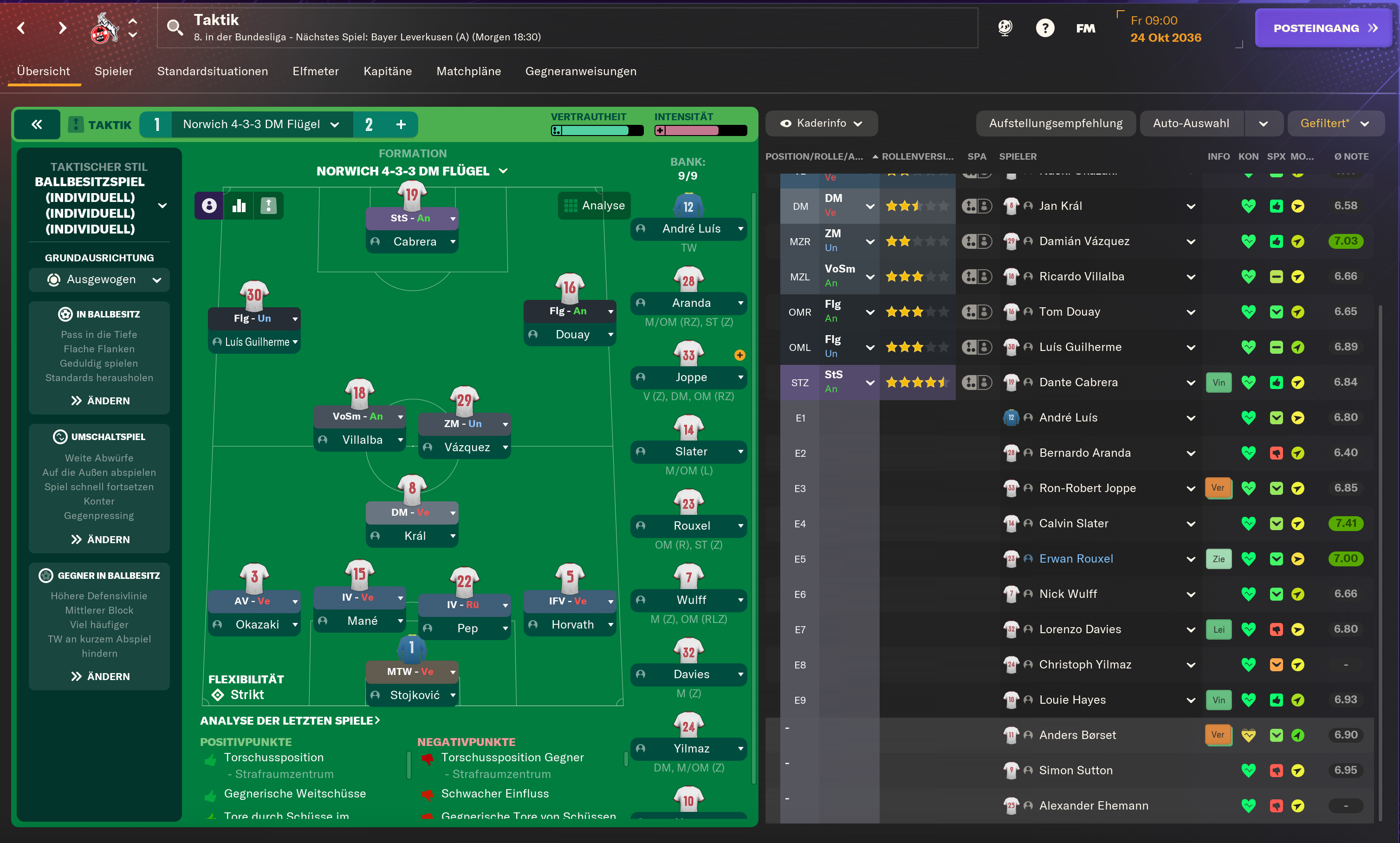
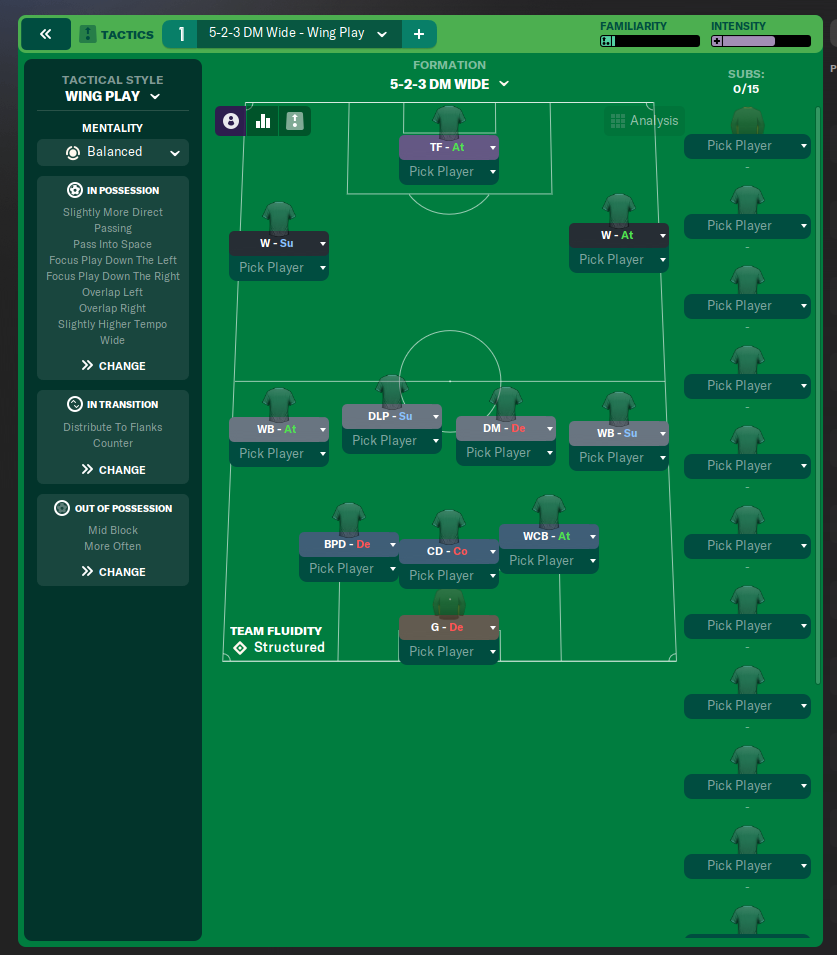
5-2-3 DM Wide
Create scoring opportunities through wide play and exploiting spaces left by the opponent. The tactical setup focuses on exploiting wide areas through…
Loading tactical analysis...
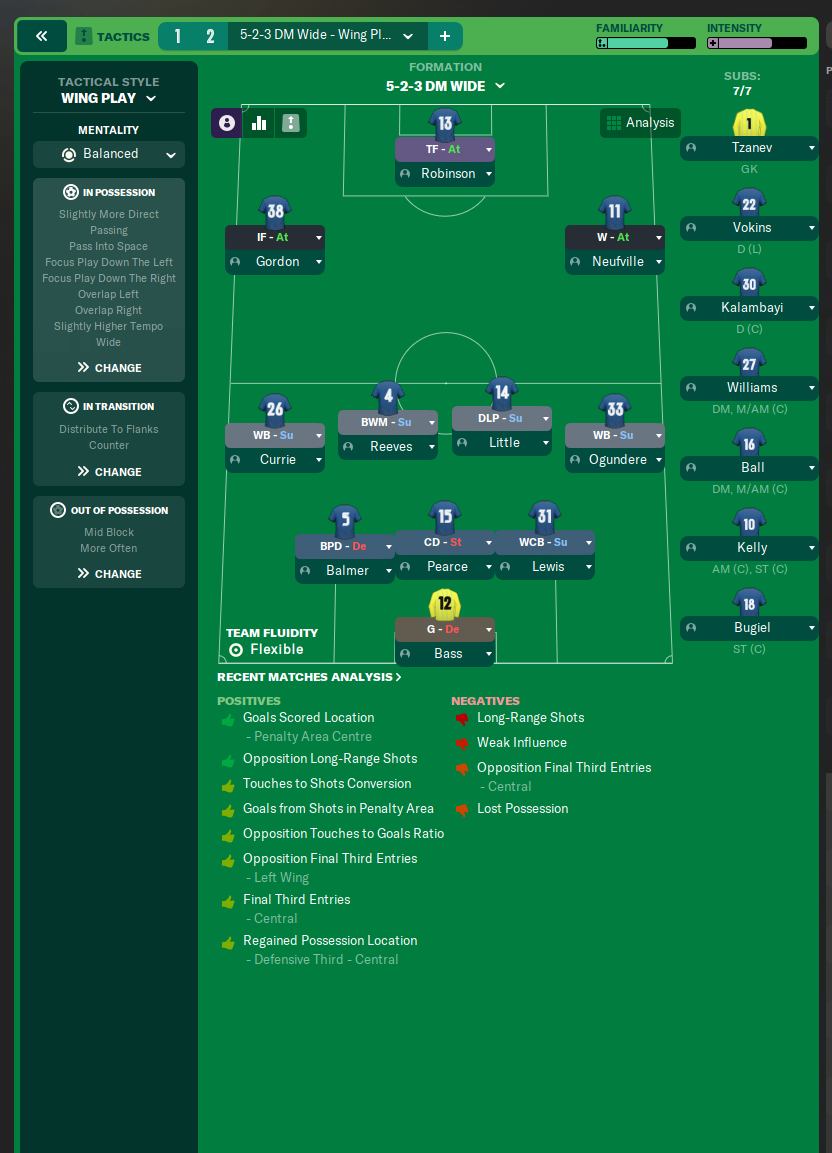
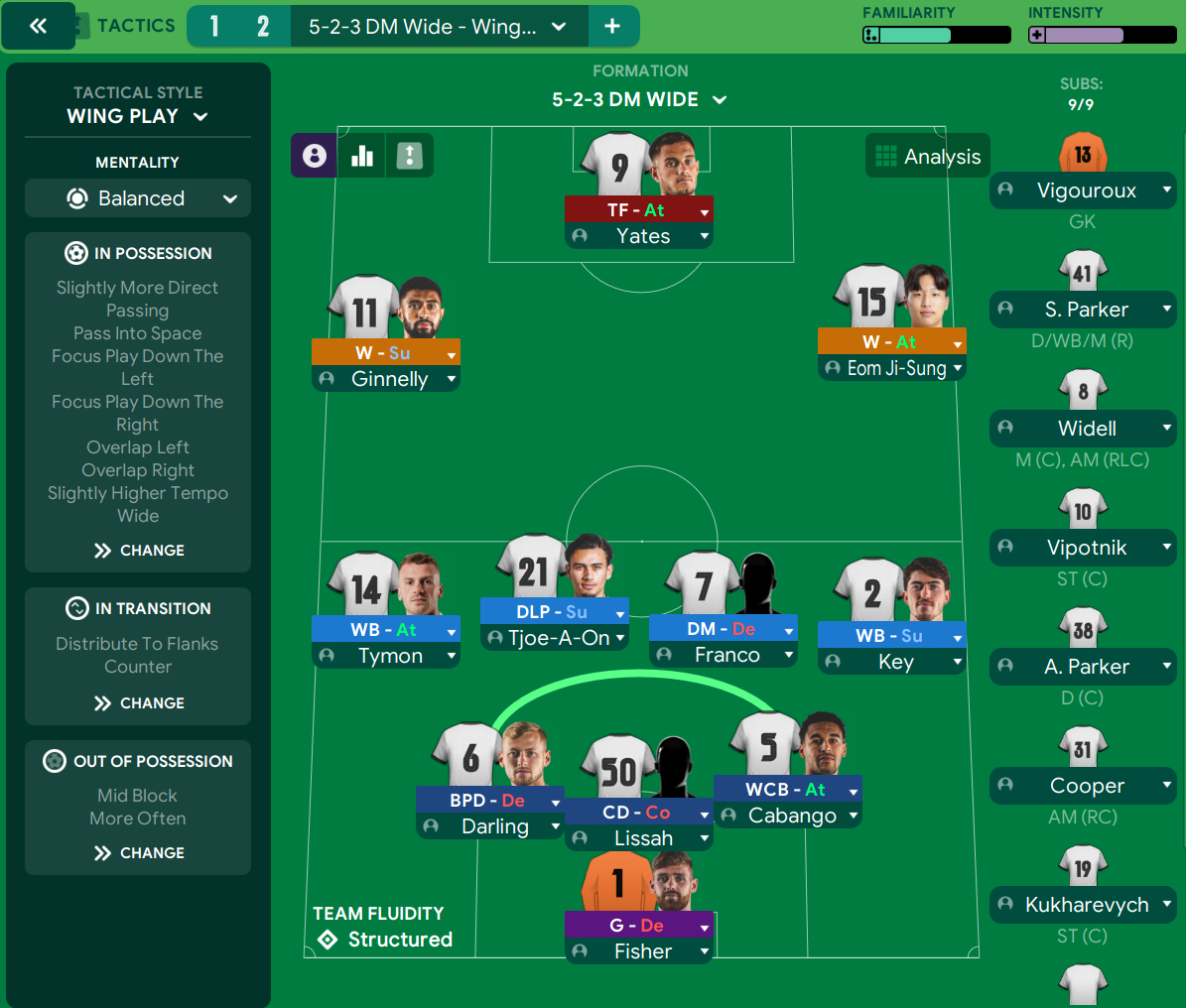
Wing Play
Balanced
5-2-3 DM Wide
Structured
Slightly More Direct Passing
Pass Into Space
Focus Play Down The Left
Focus Play Down The Right
Overlap Left
Overlap Right
Slightly Higher Tempo
Wide
Distribute To Flanks
Counter
Mid Block
More Often
GK
G
De
CB
BPD
De
CB
CD
Co
CB
WCB
At
DM
DLP
Su
DM
DM
De
WB
WB
Su
WB
WB
At
W
W
Su
W
W
At
TF
TF
At
Utilizes wings heavily with overlapping full-backs to stretch the opposition. The target forward can occupy defenders while wingers provide width and cut inside.
Focus on regrouping quickly into a mid-block, using the DMs to shield the defense.
Create scoring opportunities through wide play and exploiting spaces left by the opponent.
Mid Block
Three central defenders maintaining compactness with wing-backs holding wider positions.
DMs at [3,3] and [3,4] support defensive solidity and push forward for transitions.
Wide Build-up
Both wing-backs and wingers stretch the pitch to create spaces for the attacking players.
Wingers at [5,1] and [5,5] along with overlapping full-backs allow for width in attacks.
The tactical setup focuses on exploiting wide areas through wingers and wing-backs, creating ample space for play.
W at [5,1] and W at [5,5] combined with 'Overlap Left' and 'Overlap Right'.
With three center-backs and a midfield duo, the side maintains a strong defensive foundation.
BPD at [2,2], CD at [2,3], WCB at [2,4] providing depth.
With emphasis on wide play, the central areas might become vulnerable to strong midfield opponents.
Two DMs (DLP & DM) at [3,3] and [3,4] may struggle against a strong three or four central midfielders.
Over-reliance on wingers may lead to predictability in attacks without varied play.
'Focus Play Down The Left' and 'Focus Play Down The Right' limits other areas of attack.
Wide Areas
The use of wing-backs and wingers can lead to vulnerabilities if the ball is lost high up the pitch.
WB at [2,1] or [2,5] pushed forward may leave spaces exposed on the counter.
Central Midfield
A lack of a dedicated central midfielder can be exploited by opponents controlling the midfield.
DM at [3,4] will need to track back quickly if overrun in central zones.
W at [5,1] and WB at [2,1]
The synergy allows for overlapping runs and cross options, stretching defenses.
Instruction to 'Overlap Left' enables effective wing play.
DLP-Su at [3,3] and TF at [6,3]
DLP can provide key passes to the TF, creating goal-scoring chances.
'Pass Into Space' can greatly benefit this connection.
How often do your wingers switch sides during the game?
What is your response strategy when necessarily defending against quicker opponents?
Do you have set pieces aimed at maximizing the entry of wing-backs into the box?
The tactical theory behind the 5-2-3 DM Wide: roles, instructions, and the trade-offs that decide whether the system holds up.
The deliberate underdog tactic in FM: formation choices, duty distribution, and why Counter-Press is exactly wrong inside a low block.
Pass map, average position, xG, possession by zone: what each tablet panel tells you in FM and the tactical change it should trigger.
FM27 keeps FM26's tactic system. Here is what stays the same, the small changes that can catch you out, and what the new Tactical Effectiveness system asks of you.