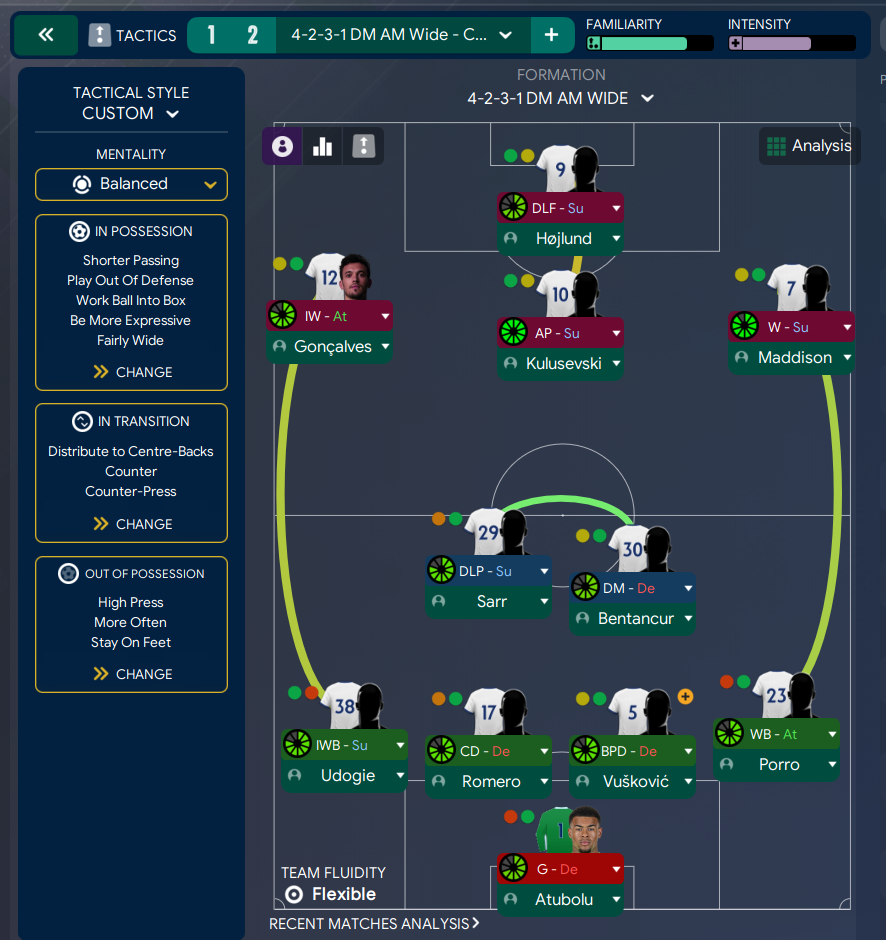
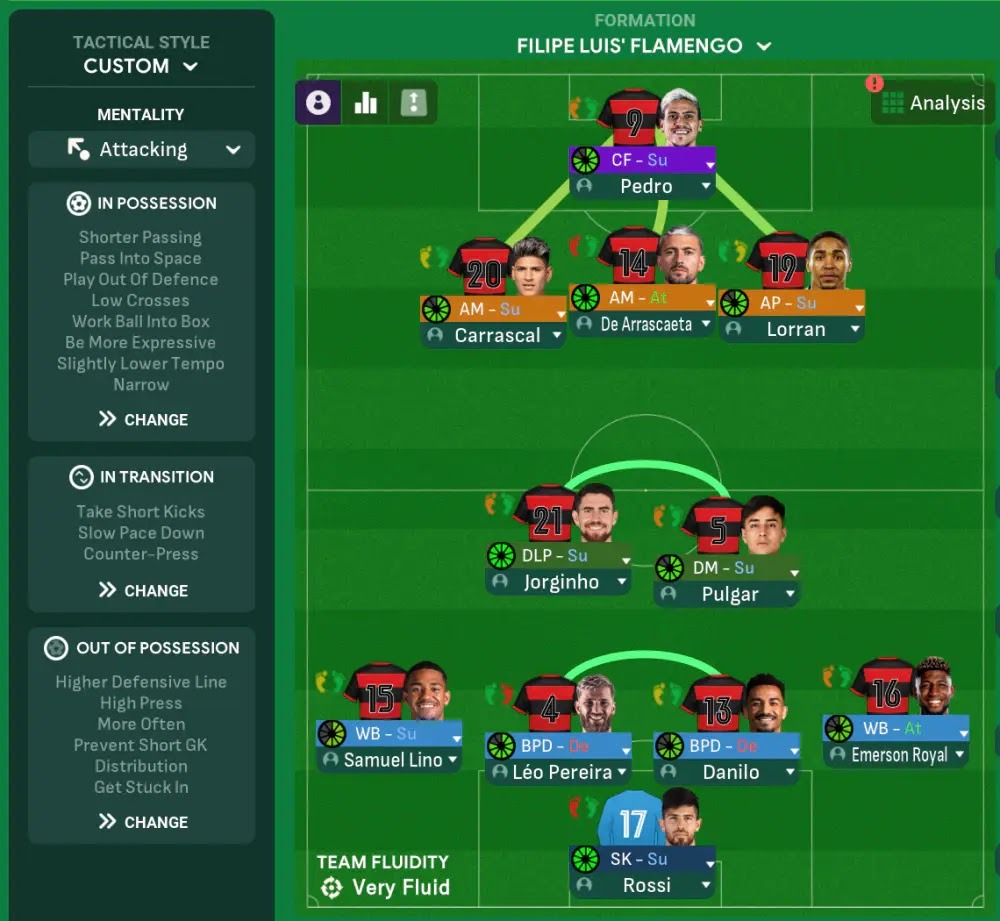
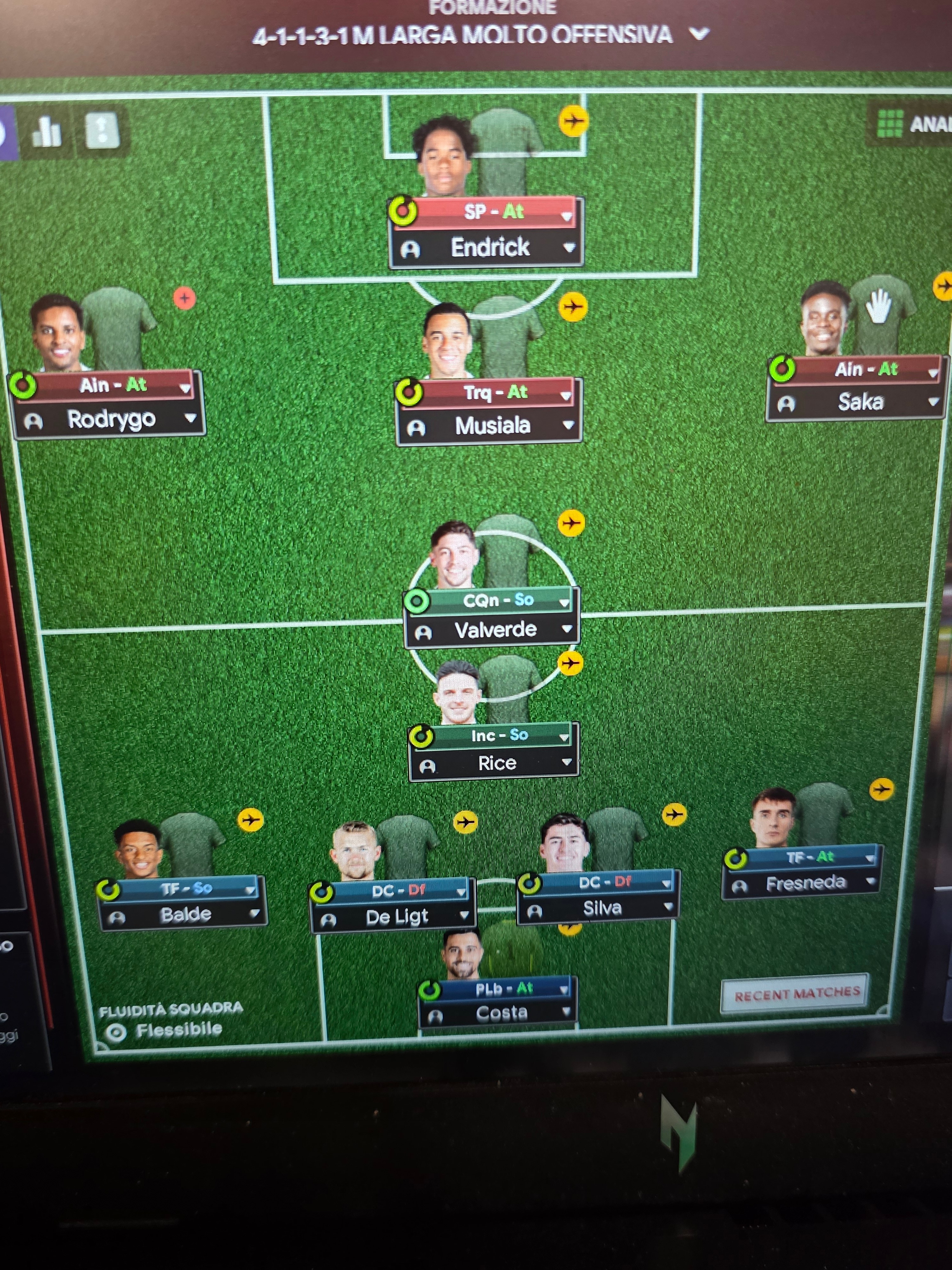
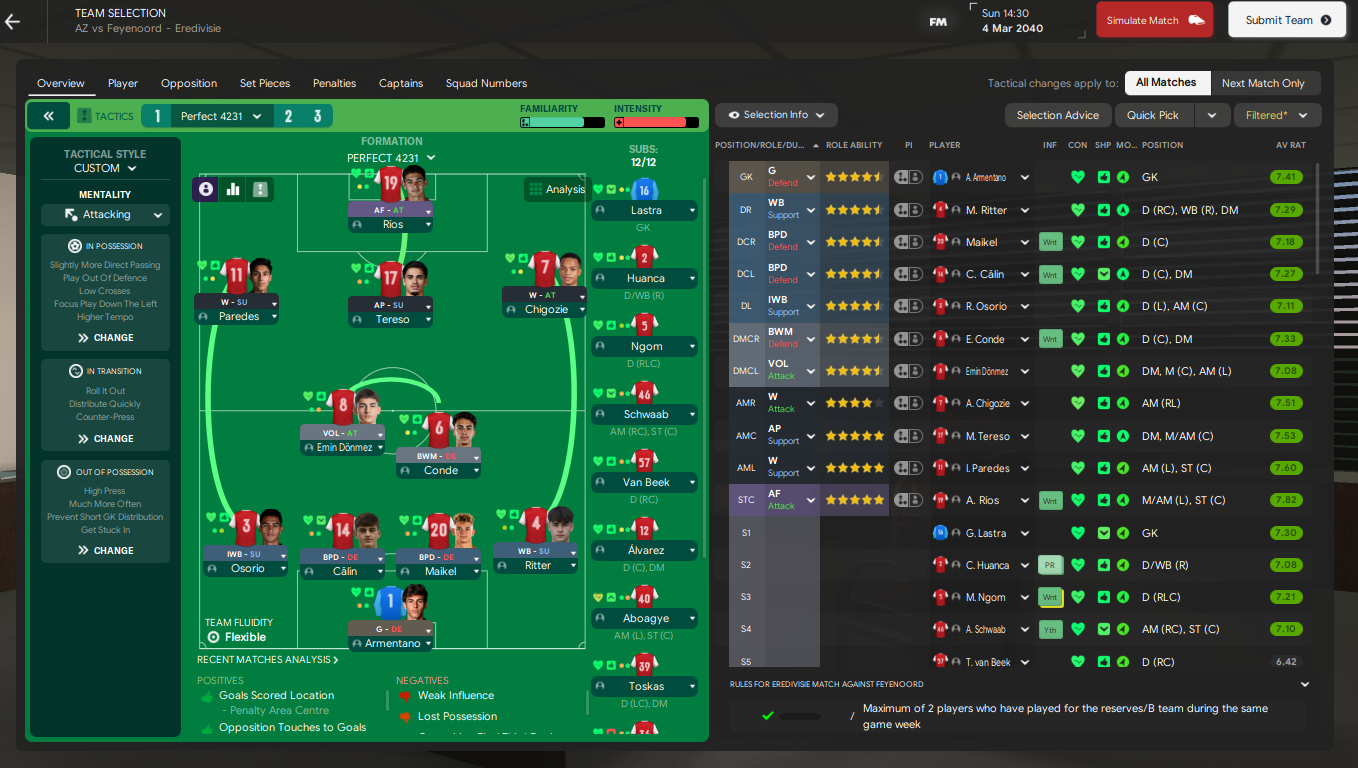
4-2-3-1
Stretching the opposition with wide play and quick wing counters. Wing play, wide width and overlaps on both sides give a clear plan of stretching the…
Loading tactical analysis...
Wing Play
Positive
4-2-3-1
Very Structured
GK
Sweeper Keeper
Support
DL
Complete Wing-Back
Support
DC
Ball-Playing Defender
Defend
DC
Ball-Playing Defender
Defend
DR
Wing-Back
Defend
DM
Advanced Playmaker
Attack
DM
Deep-Lying Playmaker
Defend
AML
Winger
Attack
AMC
Attacking Midfielder
Attack
AMR
Inverted Winger
Attack
ST
Advanced Forward
Attack
Wide Attacking Width
Pass Into Space
Overlap Left
Overlap Right
Slightly More Direct Passing
Slightly Higher Tempo
Mixed Crosses
Counter
Distribute to Flanks
Standard Defensive Line
Higher Line of Engagement
Trigger Press More Often
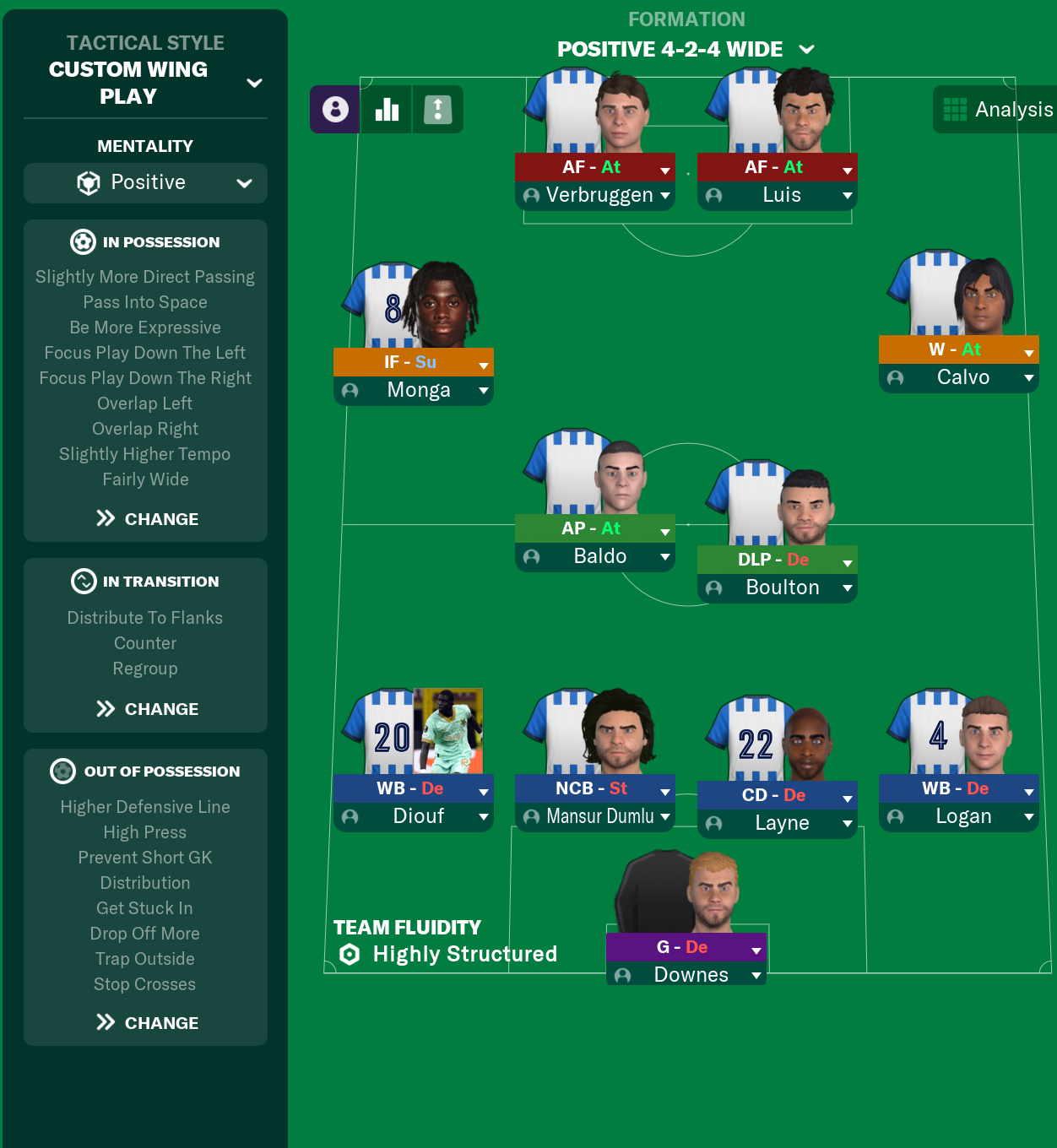
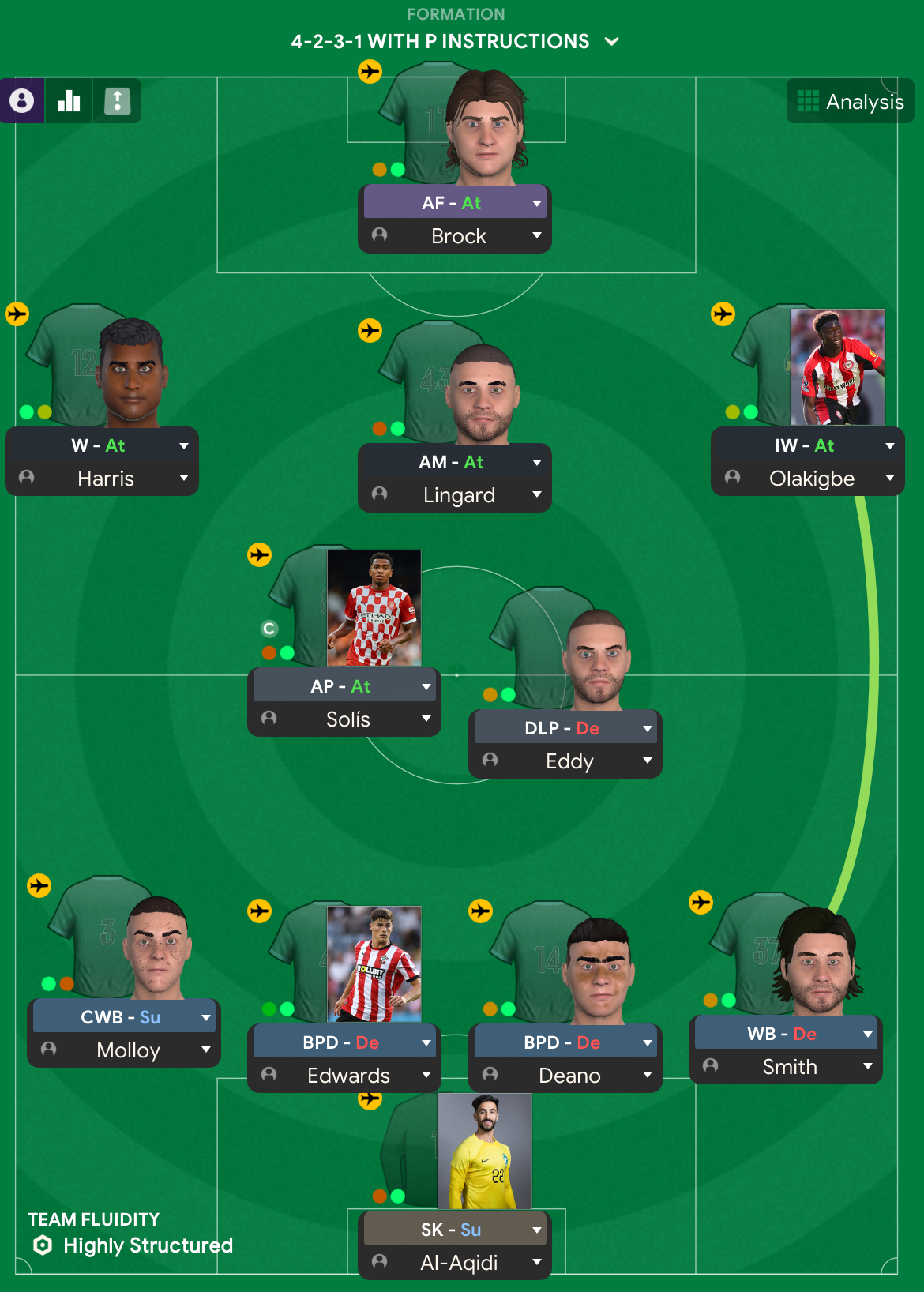
Wing play, wide width and overlaps on both sides give a clear plan of stretching the opponent, supported by a winger, an inside winger and a complete wing-back.
W at [5,1], IW at [5,5], CWB at [2,1] with Wide Attacking Width and Overlap Left/Overlap Right.
An Advanced Playmaker and an Attacking Midfielder feed a single Advanced Forward, giving several routes to goal.
AP at [3,2], AM at [5,3], AF at [6,3].
Very structured fluidity restricts the movement that the AP, AM, IW and CWB roles rely on.
team_fluidity Very Structured with AP at [3,2] and AM at [5,3].
BPDs are suited to patient build-up, but the instructions push passes into space, which wastes their passing.
BPD at [2,2] and [2,4] with Pass Into Space and Slightly More Direct Passing.
Pivot cover
Only one defensive midfielder (DLP De) holds the base, while the AP at [3,2] pushes forward, leaving the centre open to counters.
DLP at [3,4] and AP at [3,2].
high
Left flank balance
The CWB is advanced and supports, while the right WB is defensive; the left is exposed when the CWB is caught high.
CWB at [2,1] Su and WB at [2,5] De.
medium
IW + WB on the right
The inside winger moves inside and leaves the lane for the wing-back to overlap.
IW at [5,5], WB at [2,5], Overlap Right.
IW + WB on the right
AM + AF
The AM supplies passes for the AF running in behind.
AM at [5,3], AF at [6,3], Pass Into Space.
AM + AF
Do you want a patient build-up or a fast counter-attacking game?
Is your striker good in the air for crosses?
Do your wing-backs have enough stamina to sustain the overlaps?
Wide, overlapping play with passes into space towards the wingers, finished by an advanced forward with support from an AM.
Counter on winning the ball with distribution to the flanks; the press is triggered often with a higher line of engagement.
Stretching the opposition with wide play and quick wing counters.
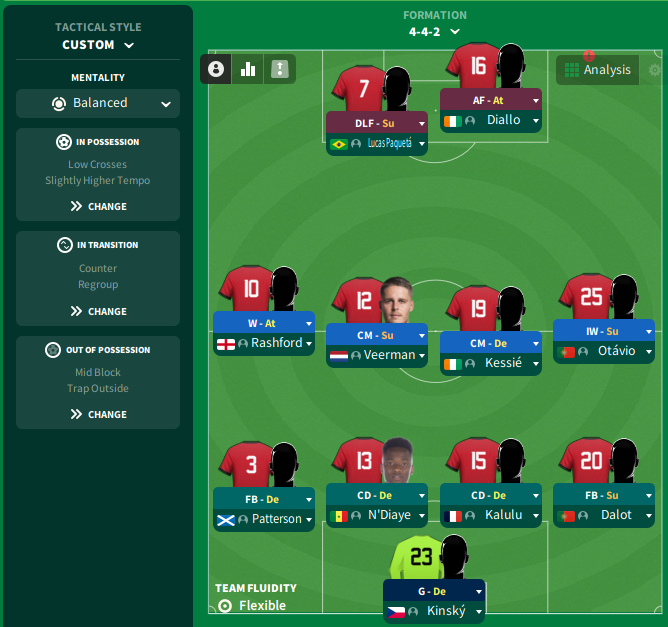
4-4-1-1
The wingers drop back, the AM sits behind the AF, and two midfielders sit in front of the back four.
W at [5,1], IW at [5,5], AM at [5,3], AF at [6,3], DLP at [3,4].
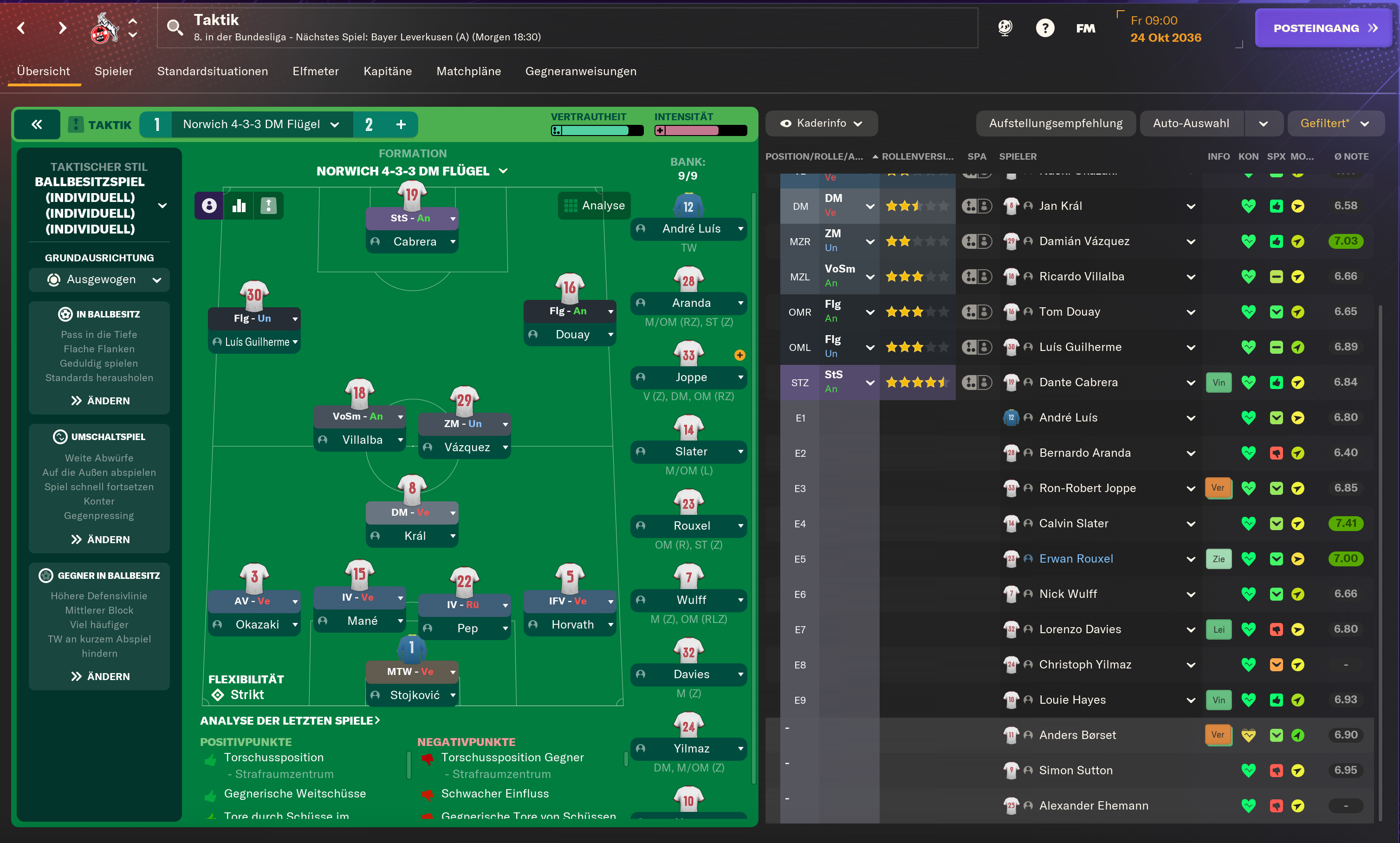
2-1-4-3
The full-backs push high, the DLP sits as a single pivot, and the AP, W, IW and AM support the AF in a wide, front-heavy shape.
CWB at [2,1], DLP at [3,4], AP at [3,2], AF at [6,3].
A coherent wing-based 4-2-3-1 with good creativity and a quick flank counter, but the very structured fluidity limits its playmakers, the BPDs are underused by the direct passing, and the pivot is thin behind an aggressive press. Loosen fluidity and align the defensive line with the press to make it more cohesive and safer.
The tactical theory behind the 4-2-3-1: roles, instructions, and the trade-offs that decide whether the system holds up.
Klopp-style gegenpressing in FM, including squad profile, line-and-press pairing, sustainable workload, and the antipatterns to avoid.
Double pivots and flat pairs in 4-2-3-1 and 4-4-2: when each pairing works, when it collapses, and the AMC unicorn that rescues both.
Routines, takers, and target picks. How to turn corners and free-kicks into a reliable third of your goal output.