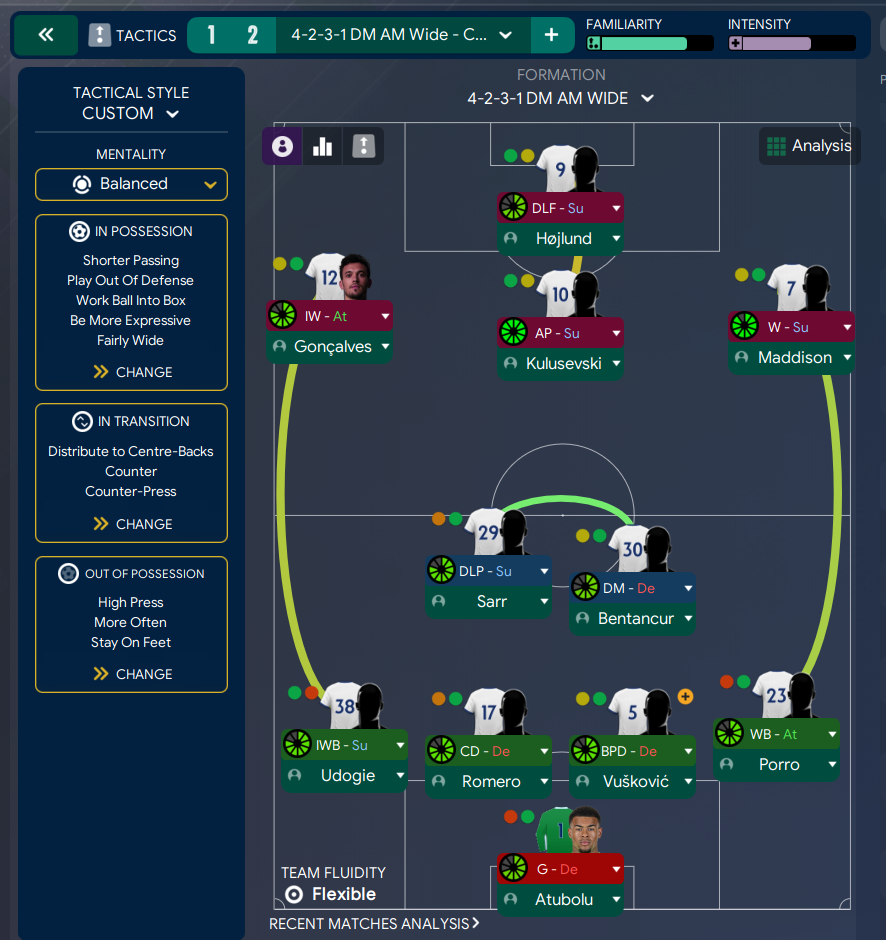
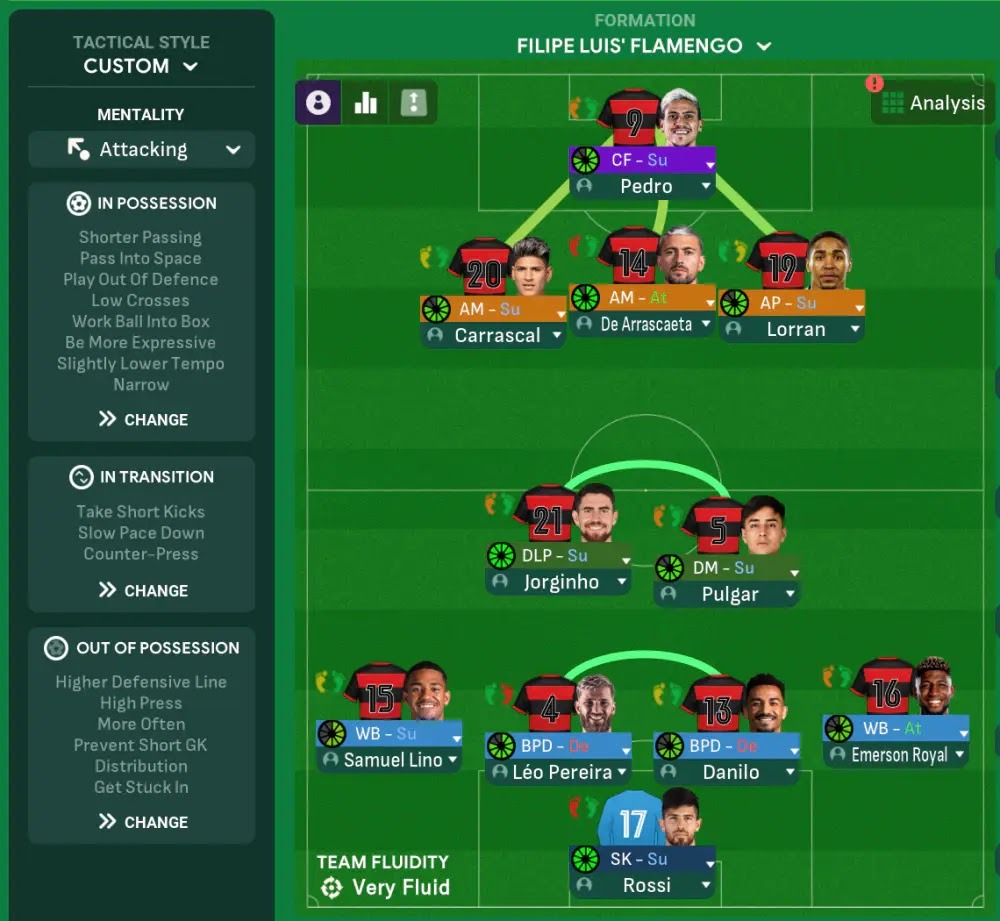
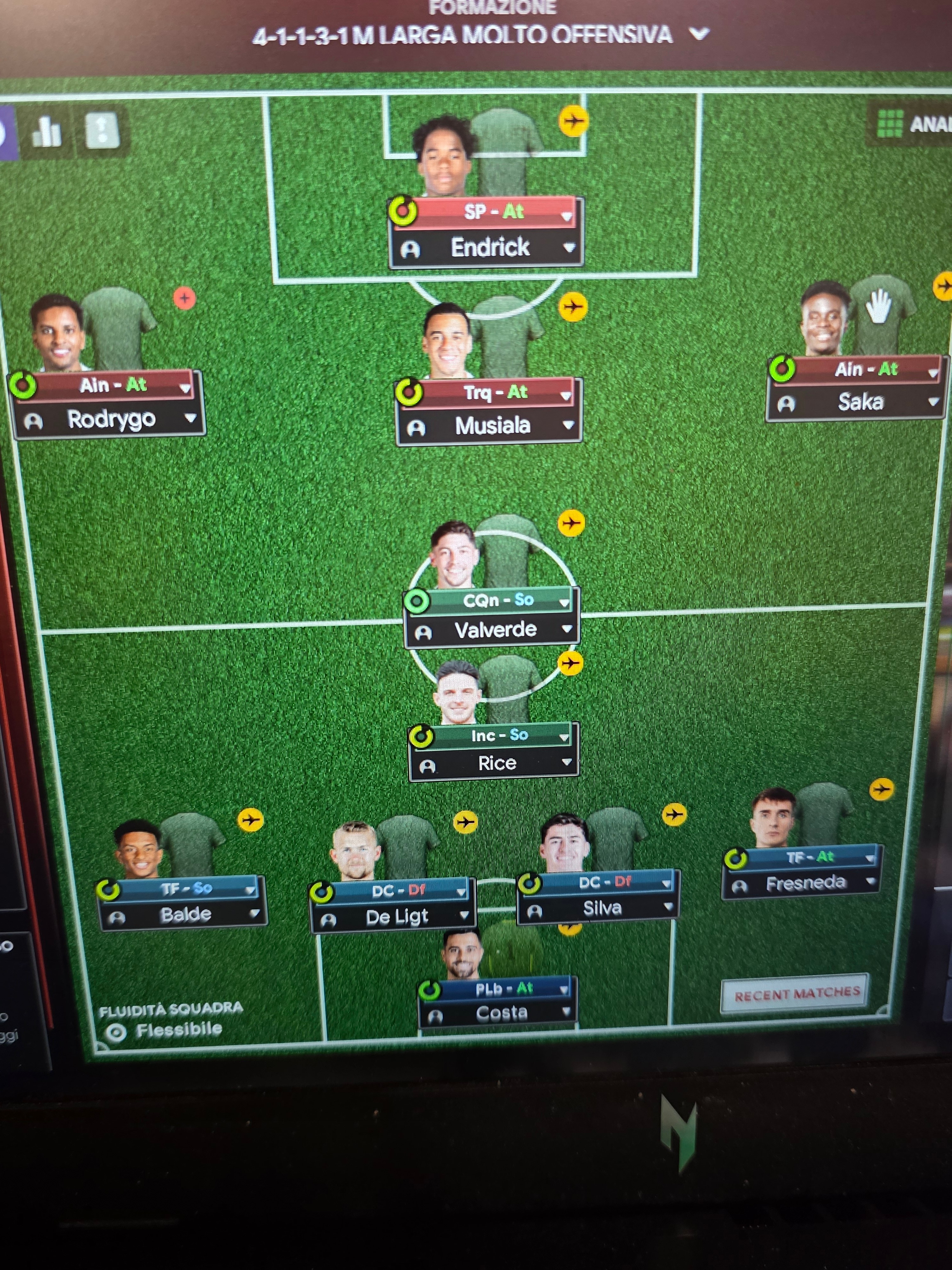
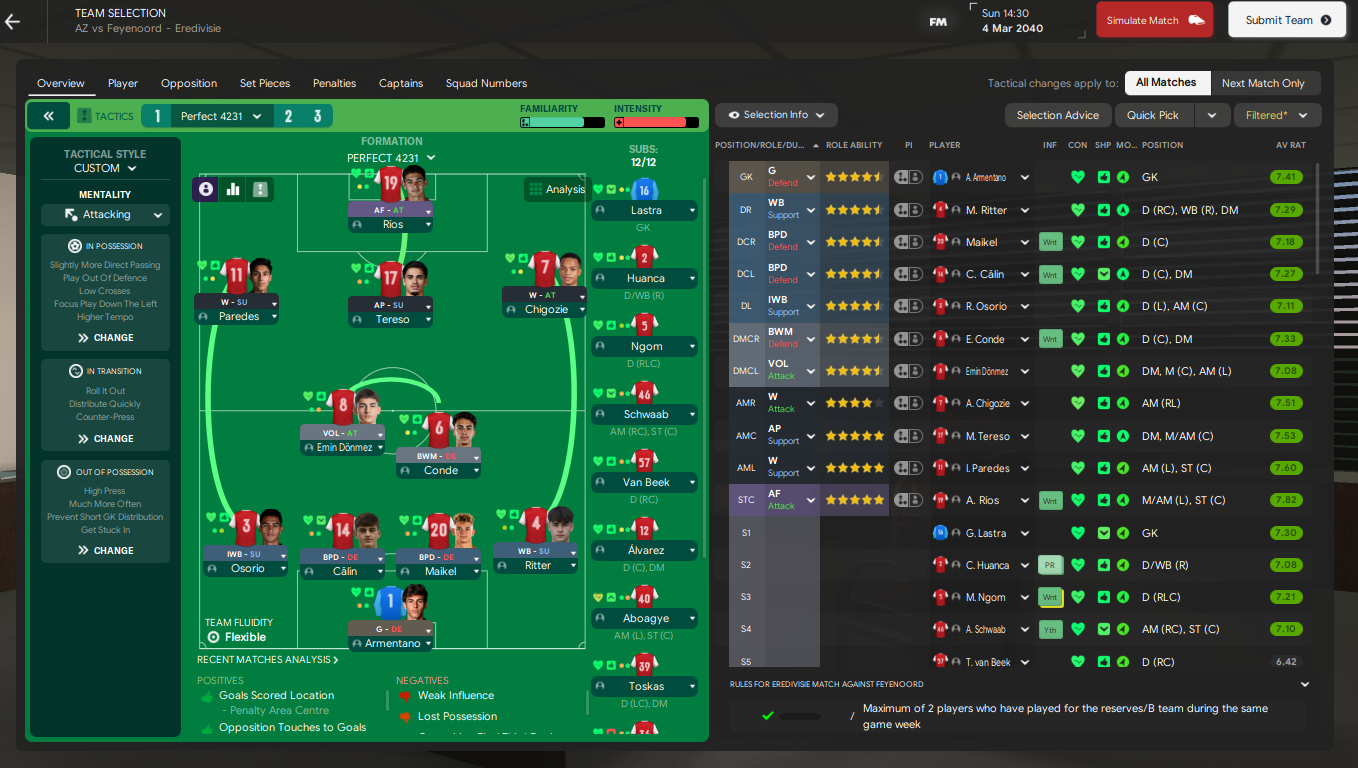
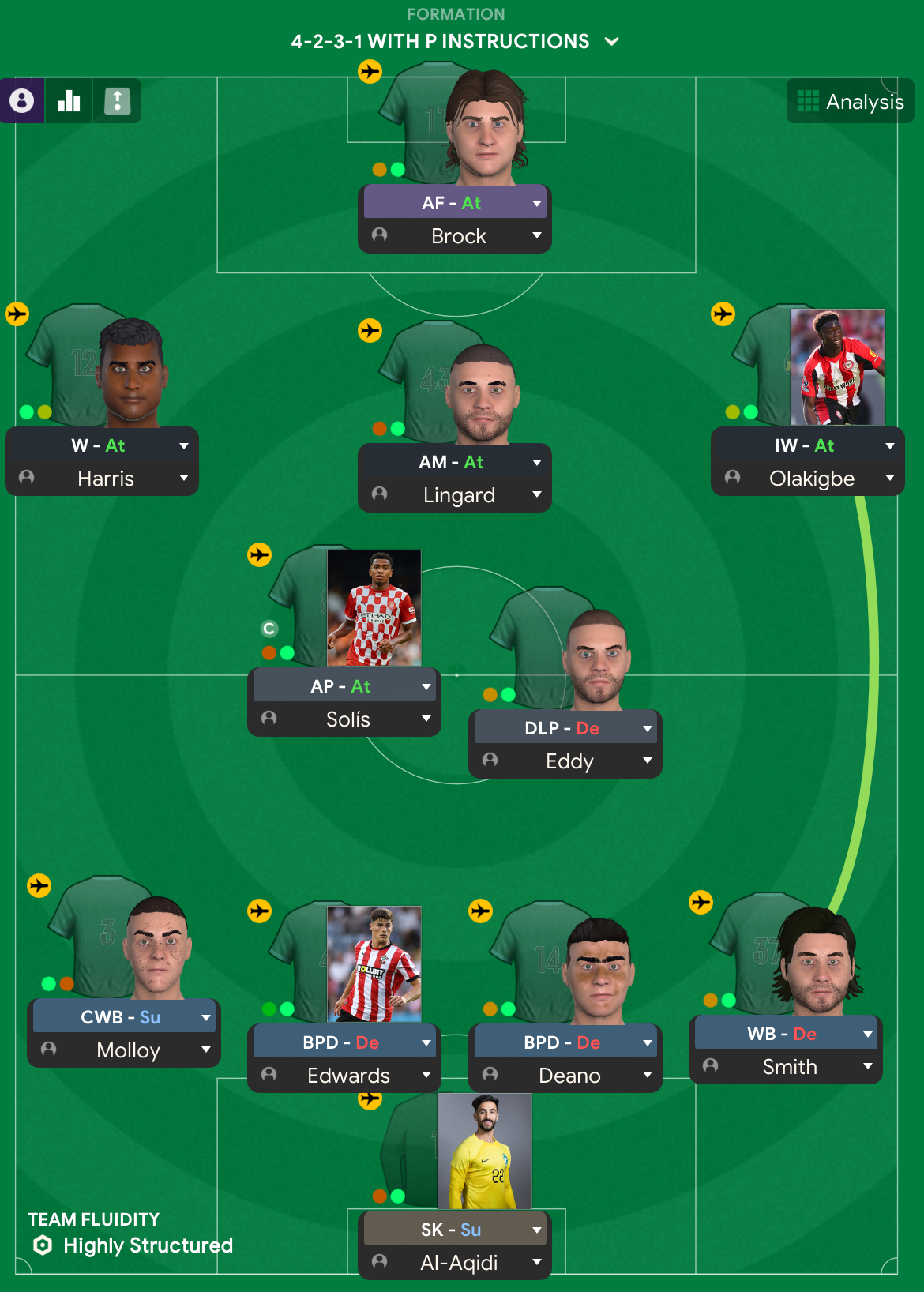
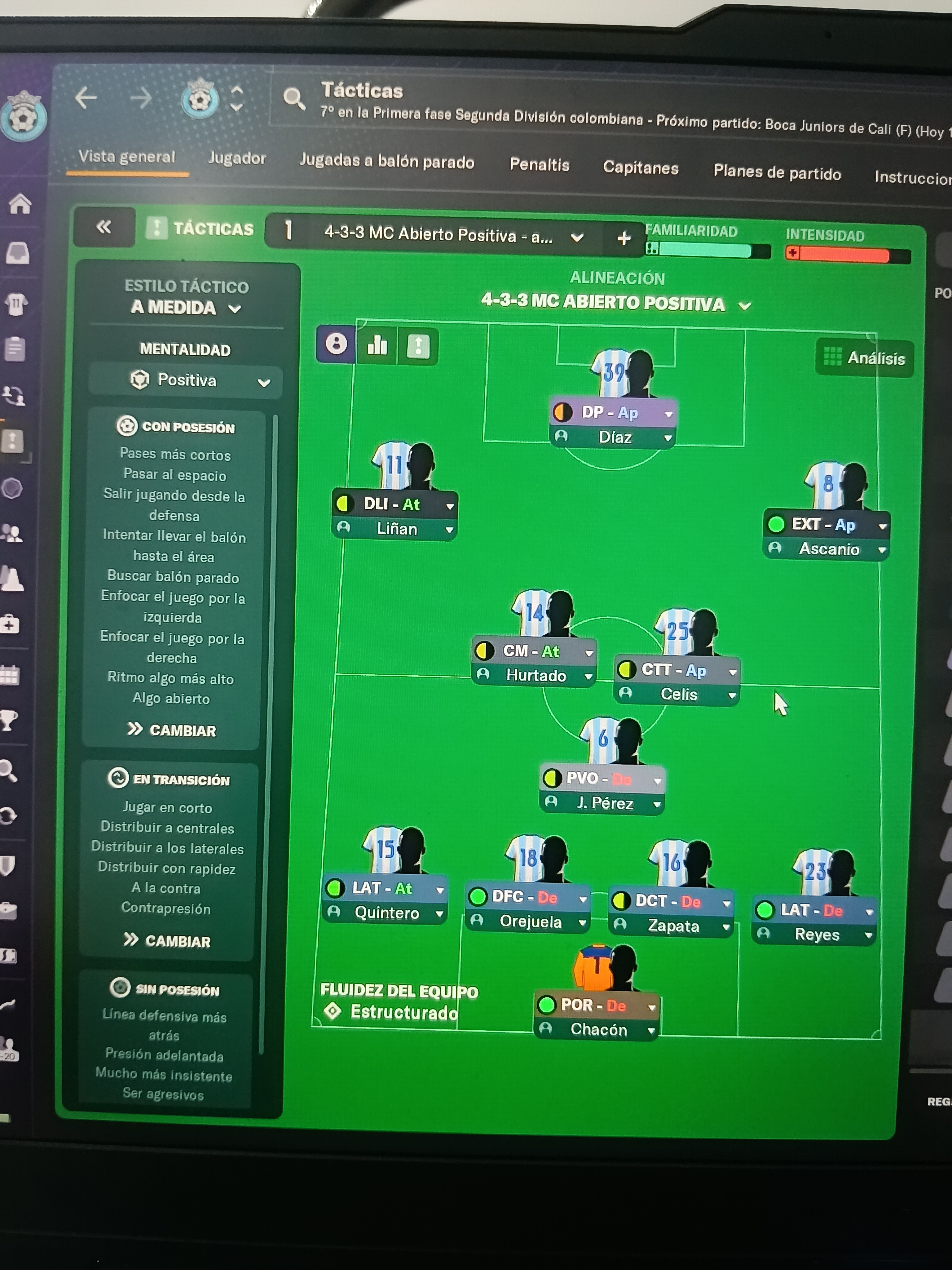
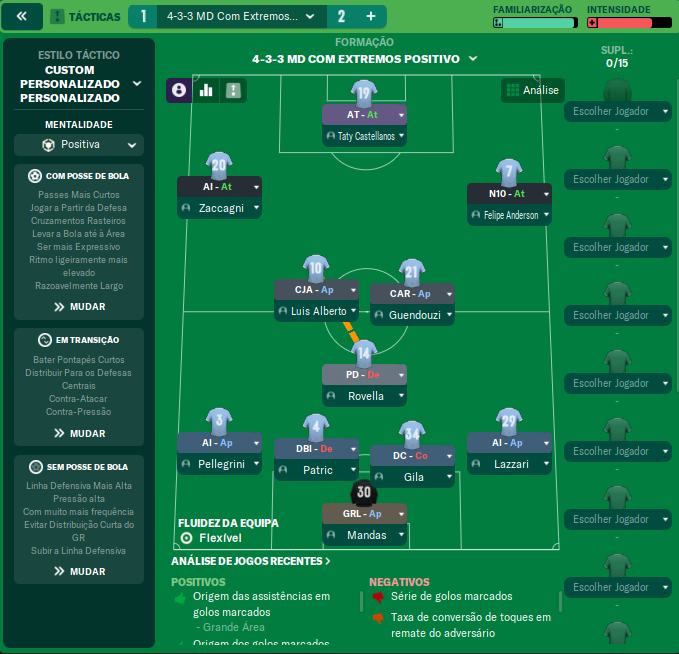
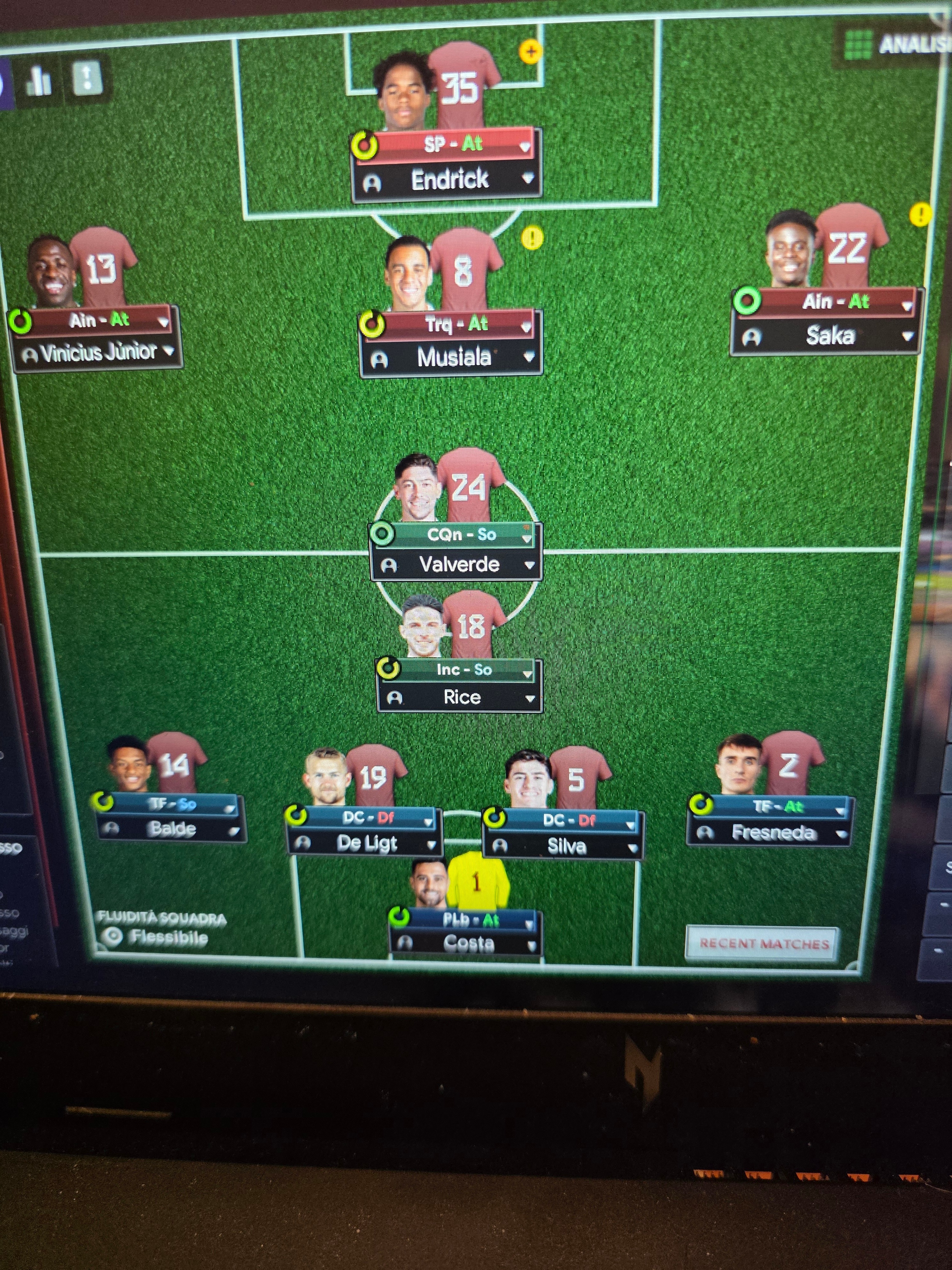
4-2-3-1
Recover possession quickly, then progress through the left and right sides while retaining a controlled build-up. Gegenpressing, counter-pressing and…

Loading tactical analysis...
Gegenpress
Positive
4-2-3-1
Very Fluid
GK
Sweeper Keeper
Support
DL
Inverted Wing-Back
Support
DC
Ball-Playing Defender
Defend
DC
Centre-Back
Defend
DR
Wing-Back
Support
DM
Deep-Lying Playmaker
Support
MC
Central Midfielder
Support
AML
Inside Forward
Support
AMC
Advanced Playmaker
Support
AMR
Inverted Winger
Support
ST
Complete Forward
Attack
Shorter Passing
Pass Into Space
Play Out of Defence
Work Ball Into Box
Be More Expressive
Focus Play Down the Left
Focus Play Down the Right
Slightly Higher Tempo
Roll It Out
Counter-Press
Lower Defensive Line
Trigger Press More Often
Prevent Short GK Distribution
Stop Crosses
Gegenpressing, counter-pressing and frequent pressing can help the side win the ball back quickly and attack before opponents reset.
The tactic uses the gegenpress style, Counter-Press, and Trigger Press More Often, with the DLP and CM both set to Su.
Playing out from defence with shorter passing and a slightly higher tempo supports controlled progression, while pass into space can still release forward runs.
Play Out of Defence and Shorter Passing are paired with Pass Into Space; the BPD (De) and CF (At) provide a build-up outlet and an advanced target.
Gegenpressing and frequent pressing suggest an aggressive attempt to engage opponents, but a lower defensive line can leave a large gap between the press and the back line, making it easier to play through the team.
The gegenpress style and Trigger Press More Often are paired with Lower Defensive Line; the front press is led by the CF (At) and AP (Su).
Space between midfield and defence
The frequent press can draw players forward while the lower defensive line remains deep, opening space for opponents to receive and turn between the lines.
Trigger Press More Often and Lower Defensive Line sit alongside the DLP (Su) and CM (Su).
high
Defensive transition and central cover
Counter-pressing is demanding, and both full-back areas can be exposed if the press is bypassed: the IWB (Su) moves inside while the WB (Su) advances on the opposite side.
Counter-Press is used with the IWB (Su), WB (Su), and two centre-backs, BPD (De) and CB (De).
medium
BPD with DLP and AP
The BPD can help progress possession from the back, with the DLP offering a deeper central outlet and the AP linking midfield to the attack.
The BPD (De), DLP (Su), and AP (Su) are all present.
BPD with DLP and AP
Inside attackers with an advancing wing-back
The IF and IW can move into attacking positions from wide areas while the WB provides an outside route on the right.
The IF (Su) and IW (Su) are supported by the WB (Su).
Inside attackers with an advancing wing-back
How can I adjust my press and defensive line so opponents have less space between the lines?
What should I look for in my wide players and wing-back to make this left-and-right-focused attack more effective?
How can I protect my full-back areas if my counter-press is bypassed?
Build from the back with shorter passing, work the ball into the box and use pass into space; focus play down both flanks at a slightly higher tempo.
Counter-press immediately after losing possession; the goalkeeper is instructed to roll the ball out when distributing.
Recover possession quickly, then progress through the left and right sides while retaining a controlled build-up.
4-2-3-1
A 4-2-3-1 with a lower defensive line and frequent pressing; the two central midfield roles provide the central screen in front of the back four.
The formation is 4-2-3-1; Lower Defensive Line is selected, with the DLP (Su) and CM (Su) in central midfield.
4-2-3-1 with asymmetric full-back movement
The IWB moves into central areas while the WB provides a wide attacking outlet on the opposite side, with the IF and IW offering wide starting points that can attack inside.
The IWB (Su), WB (Su), IF (Su), and IW (Su) occupy the relevant defensive and wide attacking positions.
This is an ambitious 4-2-3-1 built around gegenpressing, controlled build-up and attacks through both flanks. The combination of shorter passing, play out of defence and a supporting central playmaker offers a coherent route into attack, while the wide roles provide useful variety. The main concern is the mismatch between frequent pressing and a lower defensive line: opponents may exploit the space between the press and defence. Raising the line to standard is the most useful first adjustment; monitor the full-back spaces when the counter-press is bypassed.
The tactical theory behind the 4-2-3-1: roles, instructions, and the trade-offs that decide whether the system holds up.
Klopp-style gegenpressing in FM, including squad profile, line-and-press pairing, sustainable workload, and the antipatterns to avoid.
Double pivots and flat pairs in 4-2-3-1 and 4-4-2: when each pairing works, when it collapses, and the AMC unicorn that rescues both.
Mentality, duty, role, instruction, sub. The change hierarchy from lightest to heaviest intervention, and 60th-minute patterns by game state.