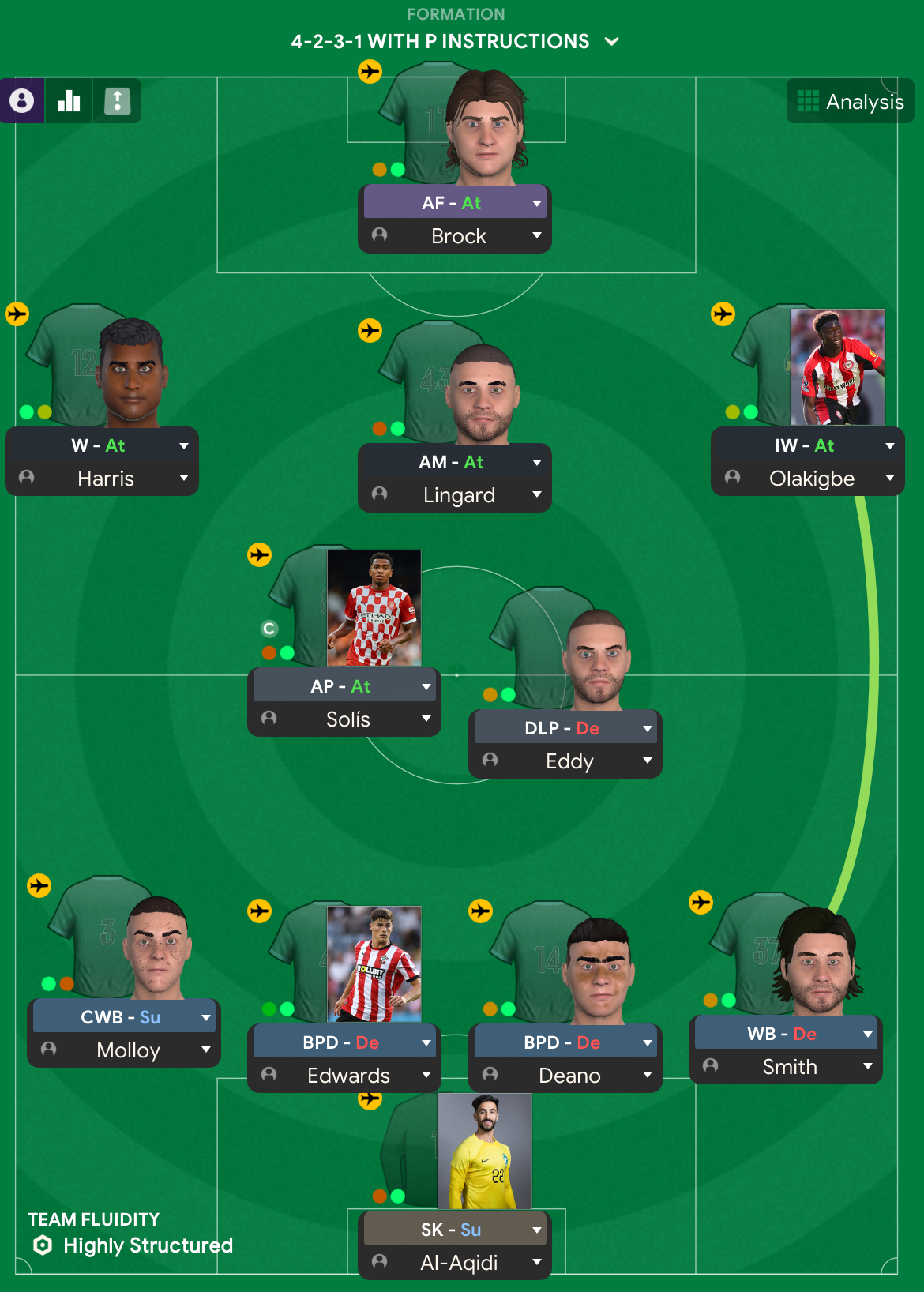
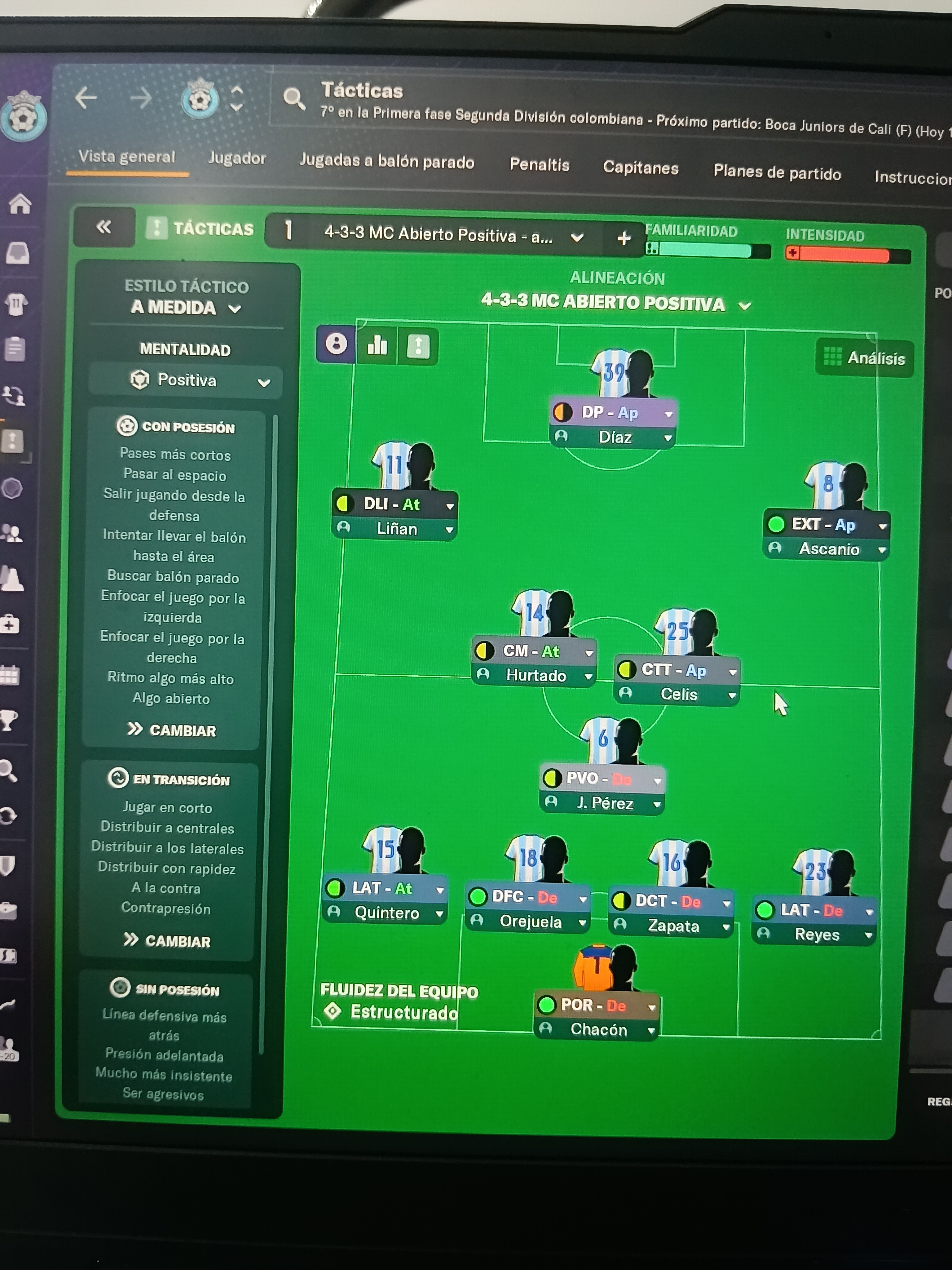
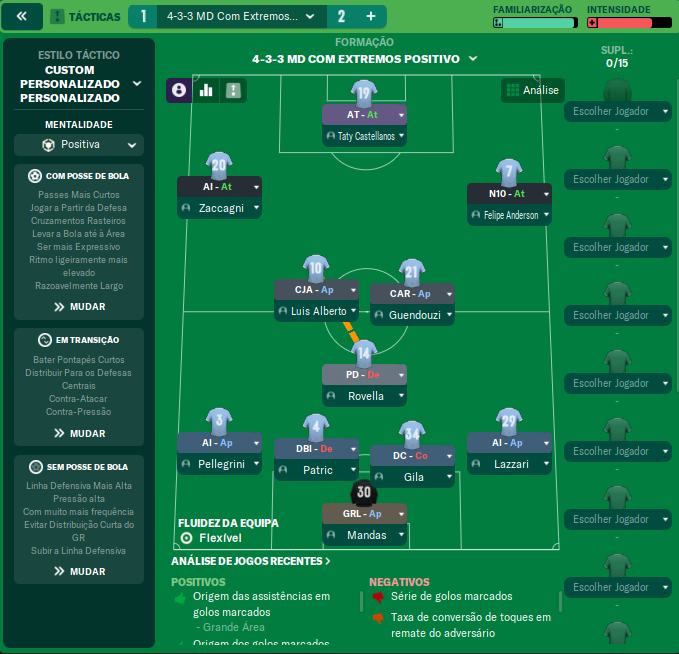
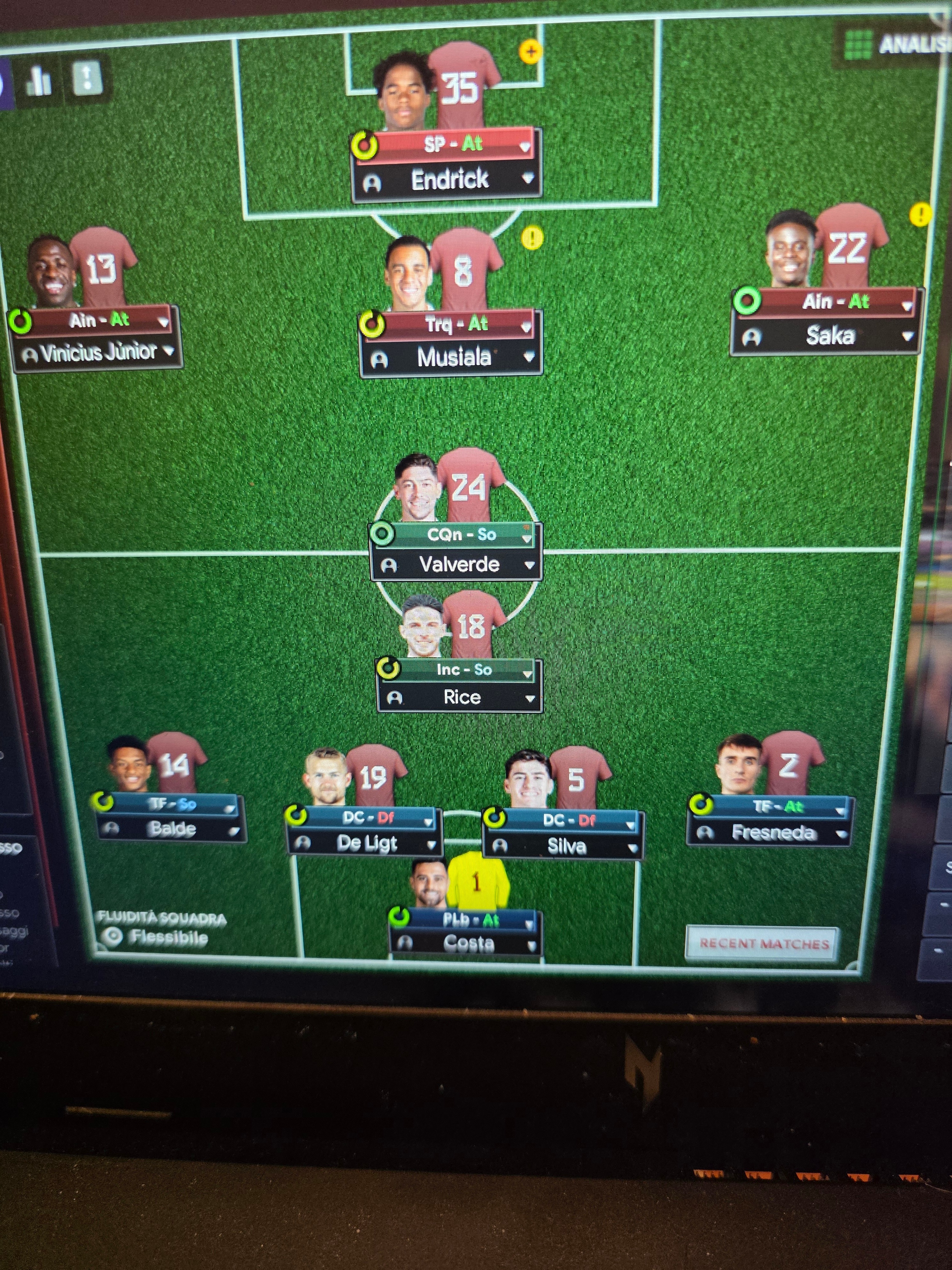
4-2-3-1
Build from a central double pivot, support the inside forwards with advancing full-backs, and use the advanced forward as the primary outlet. The paired…

Loading tactical analysis...
Gegenpress
Attacking
4-2-3-1
Balanced
GK
Sweeper Keeper
Support
DL
Full-Back
Attack
DC
Ball-Playing Defender
Defend
DC
Ball-Playing Defender
Defend
DR
Full-Back
Attack
DM
Defensive Midfielder
Support
DM
Defensive Midfielder
Support
AML
Inside Forward
Support
AMC
Attacking Midfielder
Attack
AMR
Inside Forward
Support
ST
Advanced Forward
Attack
Shorter Passing
Counter
Counter-Press
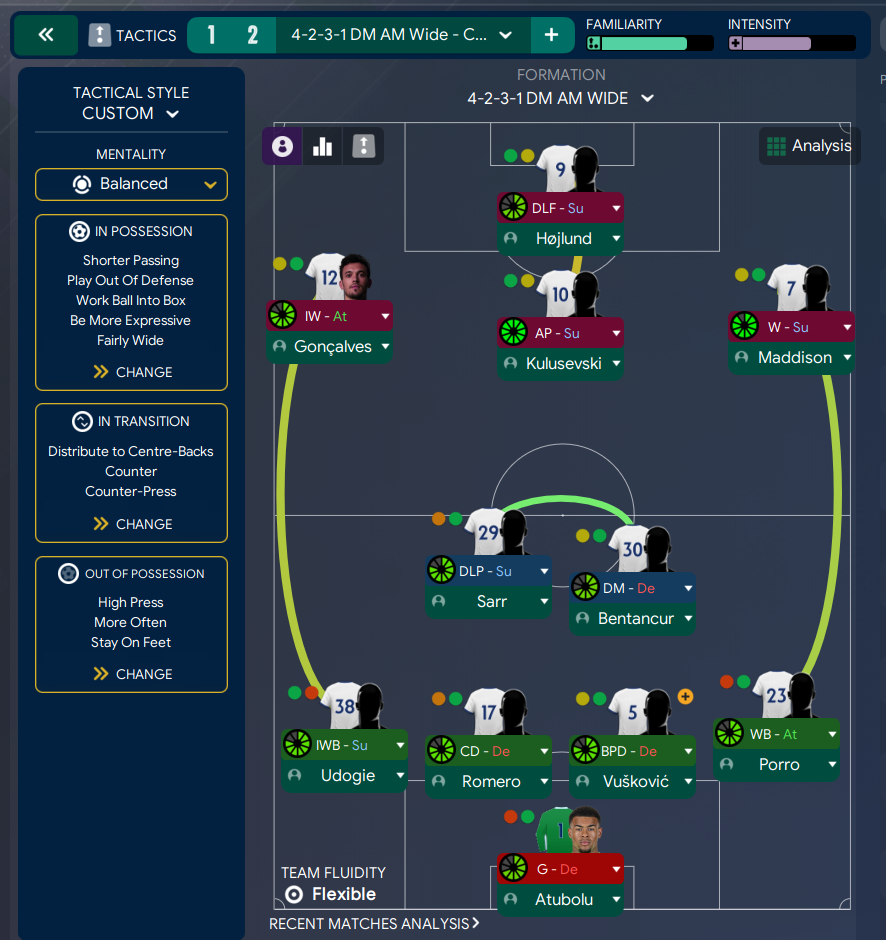
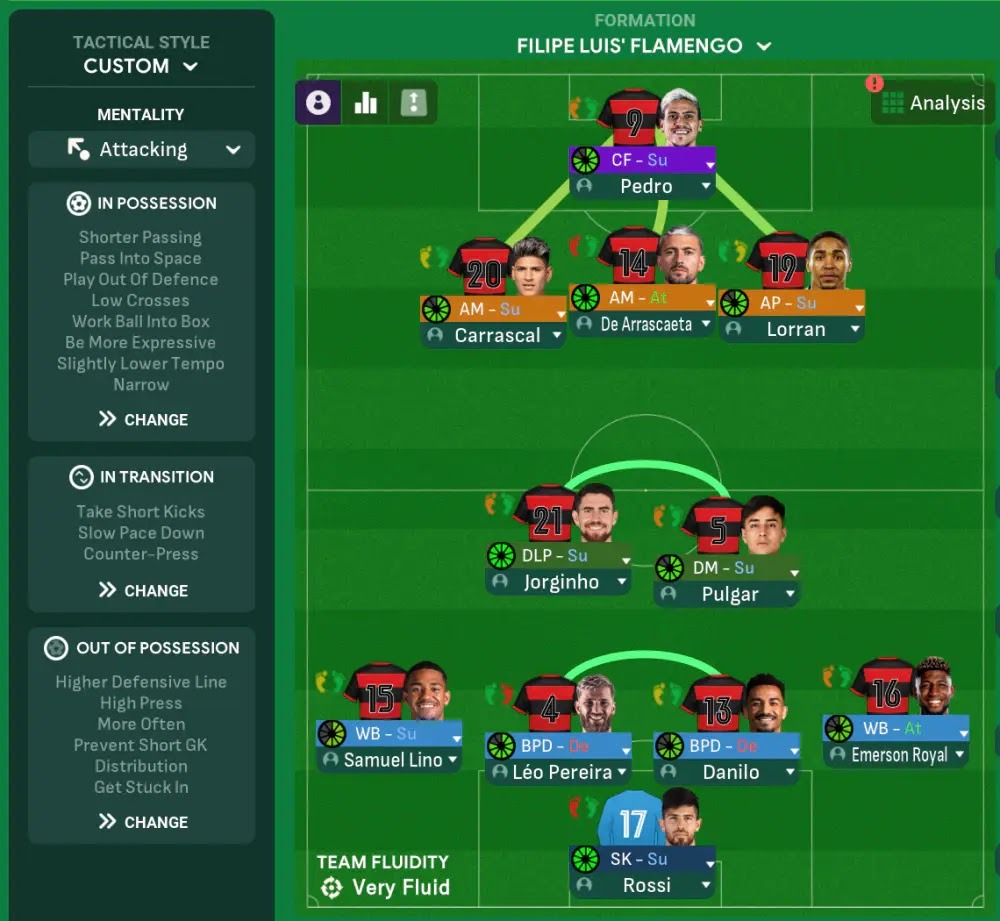
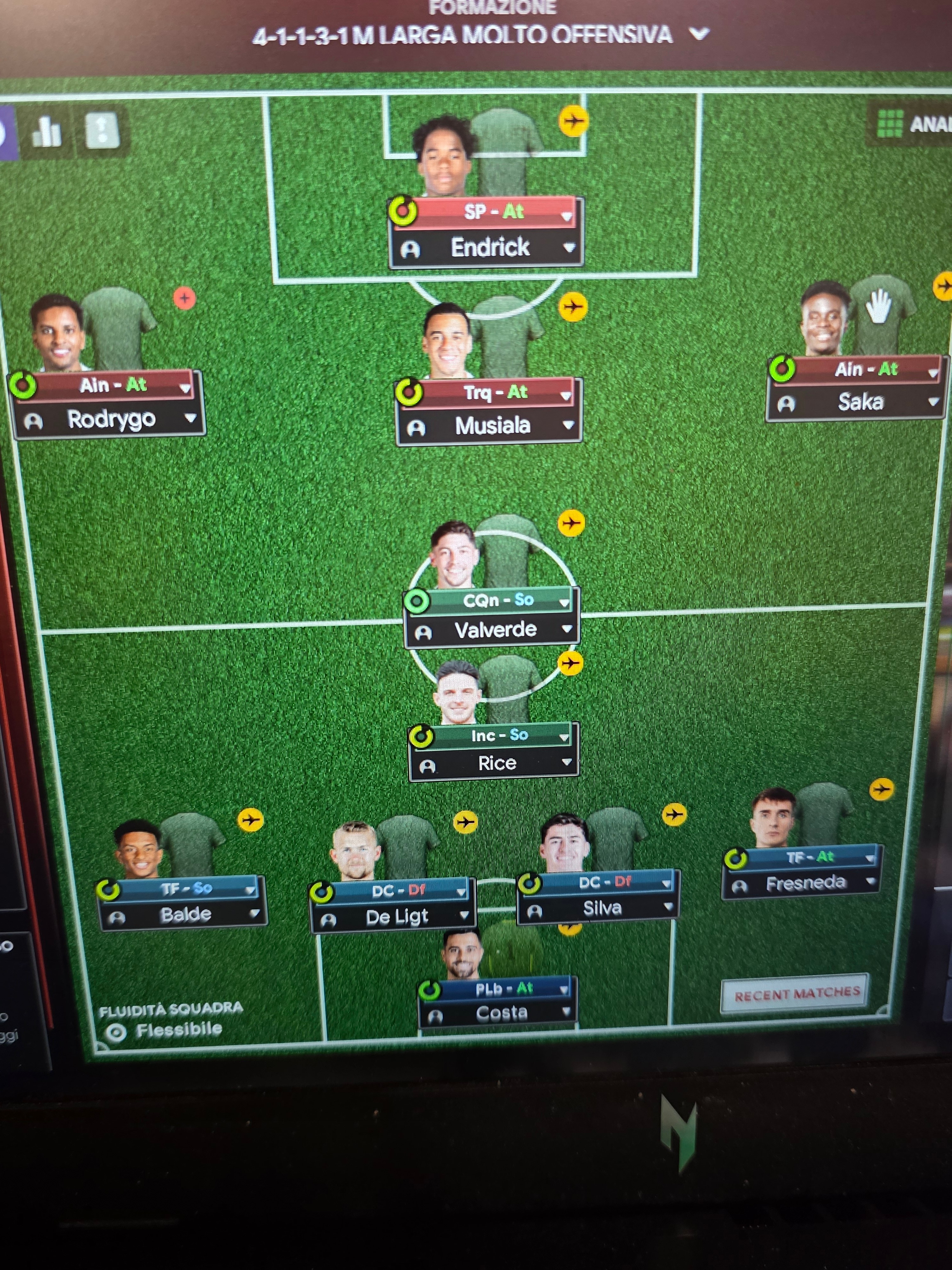
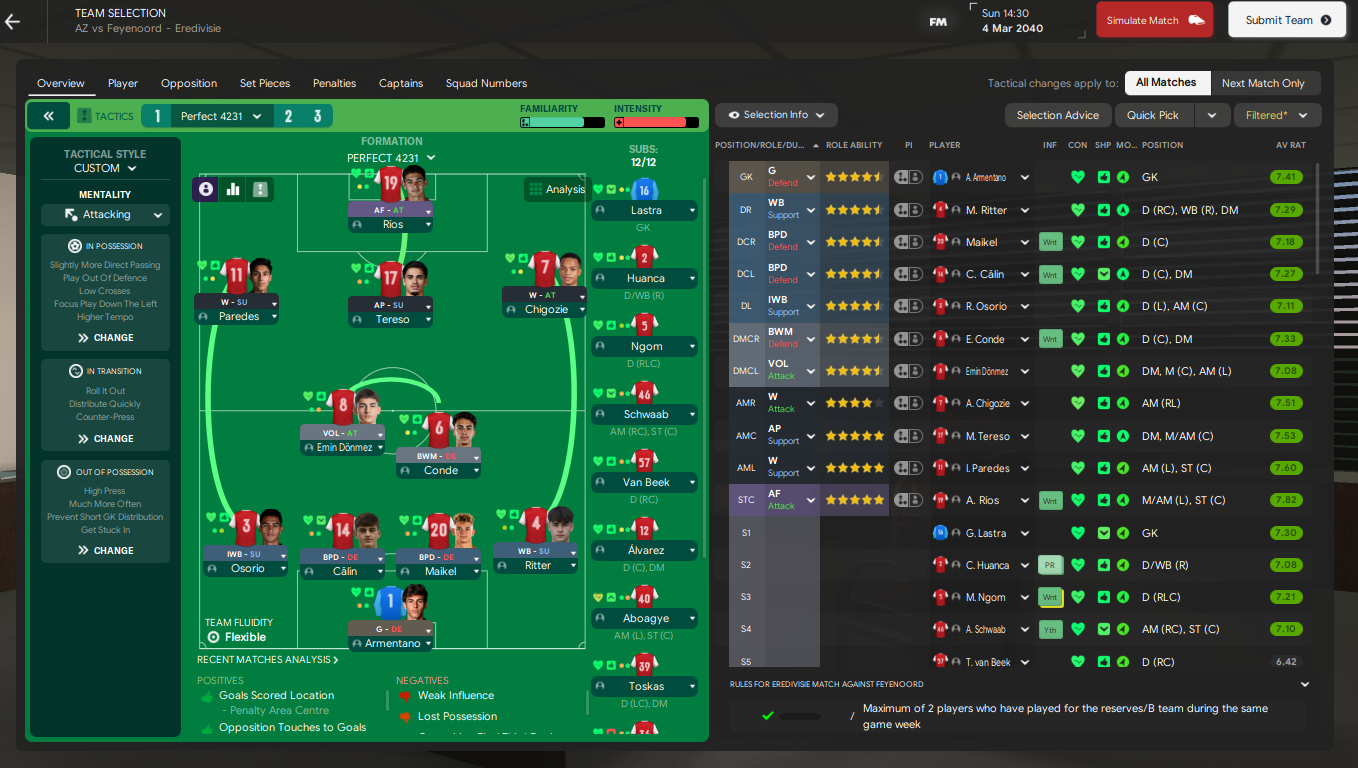
The paired defensive midfielders provide a base behind the attacking midfield line, while the two ball-playing centre-backs can support progression from deep.
The two DM Su roles sit ahead of the BPD De roles.
Both attacking full-backs can advance on the outside while the inside forwards move into dangerous areas and the advanced forward leads the line.
The FB At roles flank the IF Su roles, with an AF At ahead.
Shorter passing can make it harder to exploit the immediate space available after a regain, especially with an attacking forward line set up to break quickly.
The in_possession key Shorter Passing sits alongside in_transition counter and the AF At role.
Both full-backs are set to attack, so losing possession high up the pitch can leave the wide defensive channels exposed, particularly while the team counter-presses.
Both FB At roles combine with the in_transition key Counter-Press.
Wide defensive channels
The two attacking full-backs can be caught ahead of the ball; counter-pressing may not prevent opponents from playing into the spaces they leave.
The FB At roles on both sides combine with Counter-Press.
high
High-risk game state
Attacking mentality and a gegenpress approach encourage an aggressive overall approach, but the extraction has no out-of-possession instructions to clarify or temper the defensive line and pressing settings.
The tactic uses attacking mentality and gegenpress, with BPD De roles behind the DM Su roles.
medium
Attacking full-backs with inside forwards
The full-backs can provide width and forward support while the inside forwards occupy inside channels, creating overlapping attacking routes.
The FB At roles are positioned behind the IF Su roles on both flanks.
Attacking full-backs with inside forwards
Double pivot behind the attacking midfield trio
The two supporting defensive midfielders give the advanced midfielders room to attack while offering a central layer in front of the defence.
The two DM Su roles are behind the AM At role and the IF Su roles.
Double pivot behind the attacking midfield trio
How can I protect the space behind my attacking full-backs when I counter-press?
What should I look for in my defensive midfielders to support this double pivot?
How can I make my short-passing approach work better with counter-attacks?
Shorter passing supports combinations through the double pivot and attacking midfield line, while attacking full-backs provide width around the inside forwards.
Counter-press after losing possession and counter after regaining it; the attacking full-backs can leave space wide if the press is bypassed.
Build from a central double pivot, support the inside forwards with advancing full-backs, and use the advanced forward as the primary outlet.
4-2-3-1
The nominal structure has a back four with two defensive midfielders screening ahead of them and an attacking midfield line further forward. Out-of-possession instructions are unspecified.
The FB At, BPD De, and DM Su roles form the defensive base.
4-2-3-1 with attacking width from full-backs
The full-backs are set to attack while the inside forwards move into the attacking channels, with an attacking midfielder supporting the advanced forward.
The FB At roles flank the IF Su roles, with an AM At behind an AF At.
This is an aggressive 4-2-3-1 with a useful double pivot, attacking width from both full-backs, and a front four suited to quick transitions. The main concern is the space behind the attacking full-backs when possession is lost, amplified by counter-pressing; the shorter passing instruction may also slow the first counter. Keeping the attacking intent but easing the mentality and using a less restrictive passing range would make the setup more balanced.
The tactical theory behind the 4-2-3-1: roles, instructions, and the trade-offs that decide whether the system holds up.
Double pivots and flat pairs in 4-2-3-1 and 4-4-2: when each pairing works, when it collapses, and the AMC unicorn that rescues both.
Klopp-style gegenpressing in FM, including squad profile, line-and-press pairing, sustainable workload, and the antipatterns to avoid.
The pairing rule for Defensive Line and Line of Engagement, all 9 combinations, and the gap that costs goals.