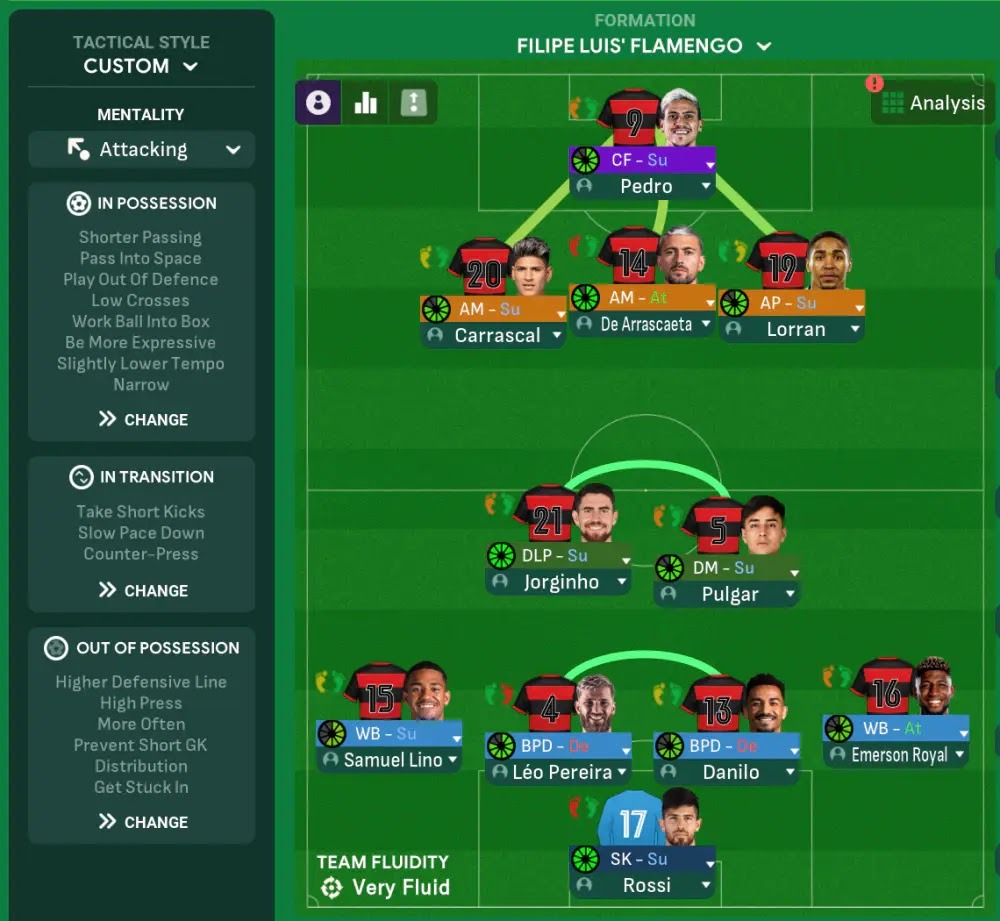
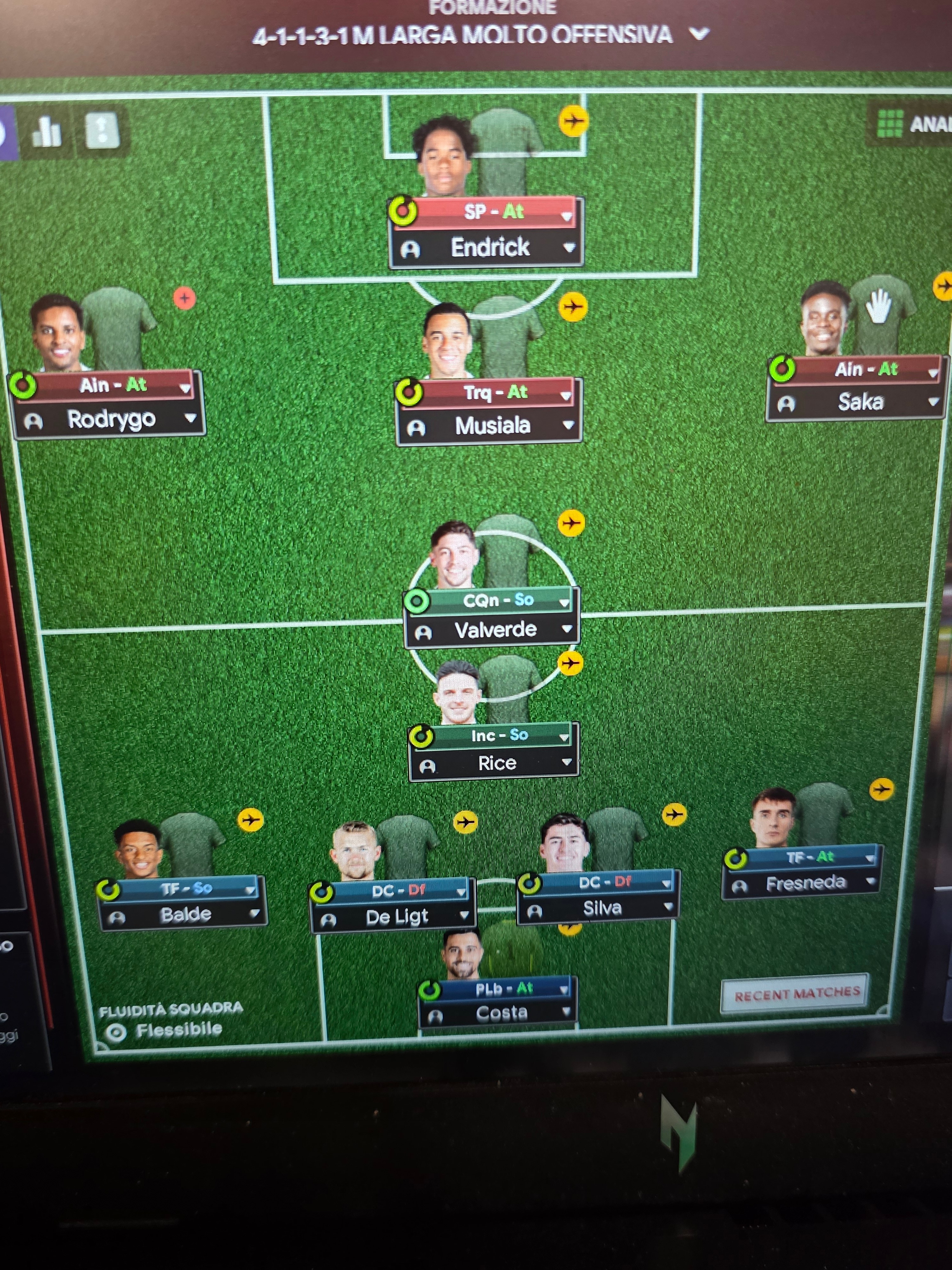
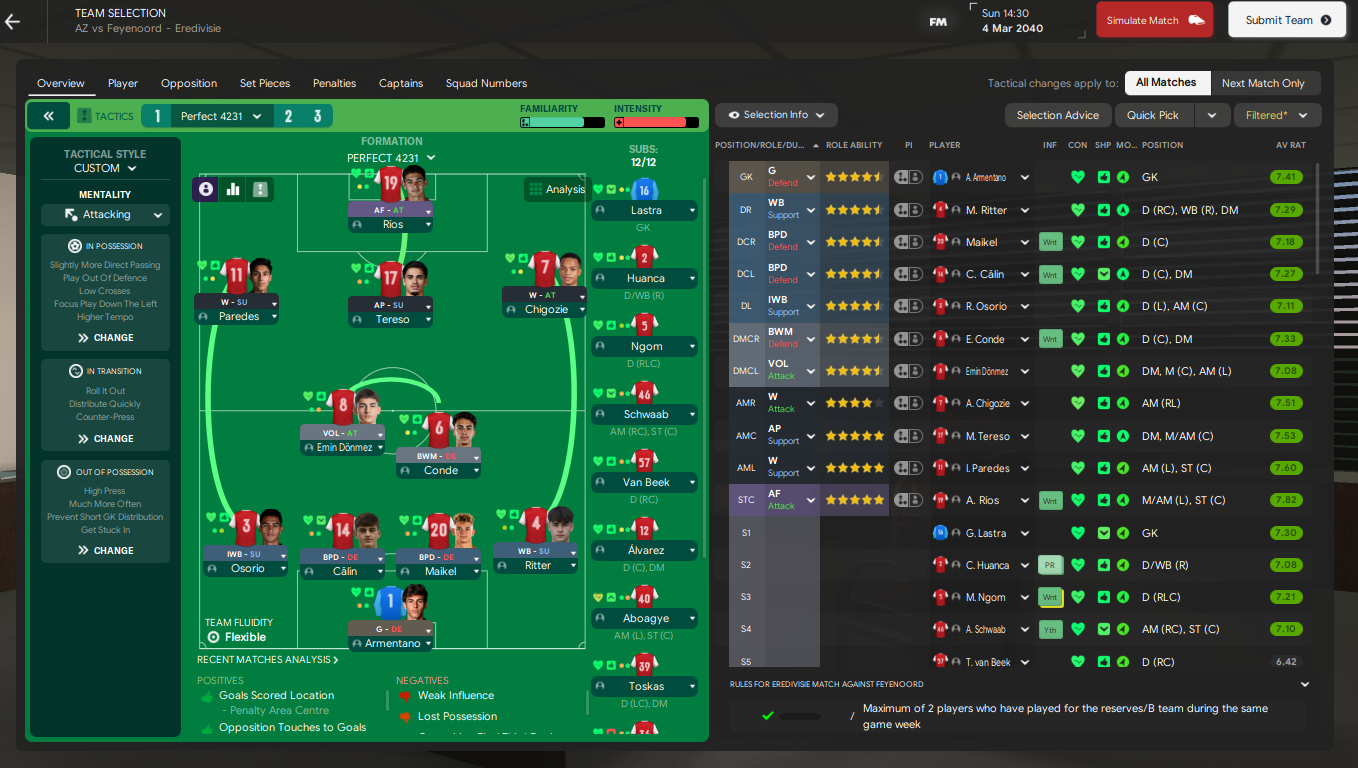
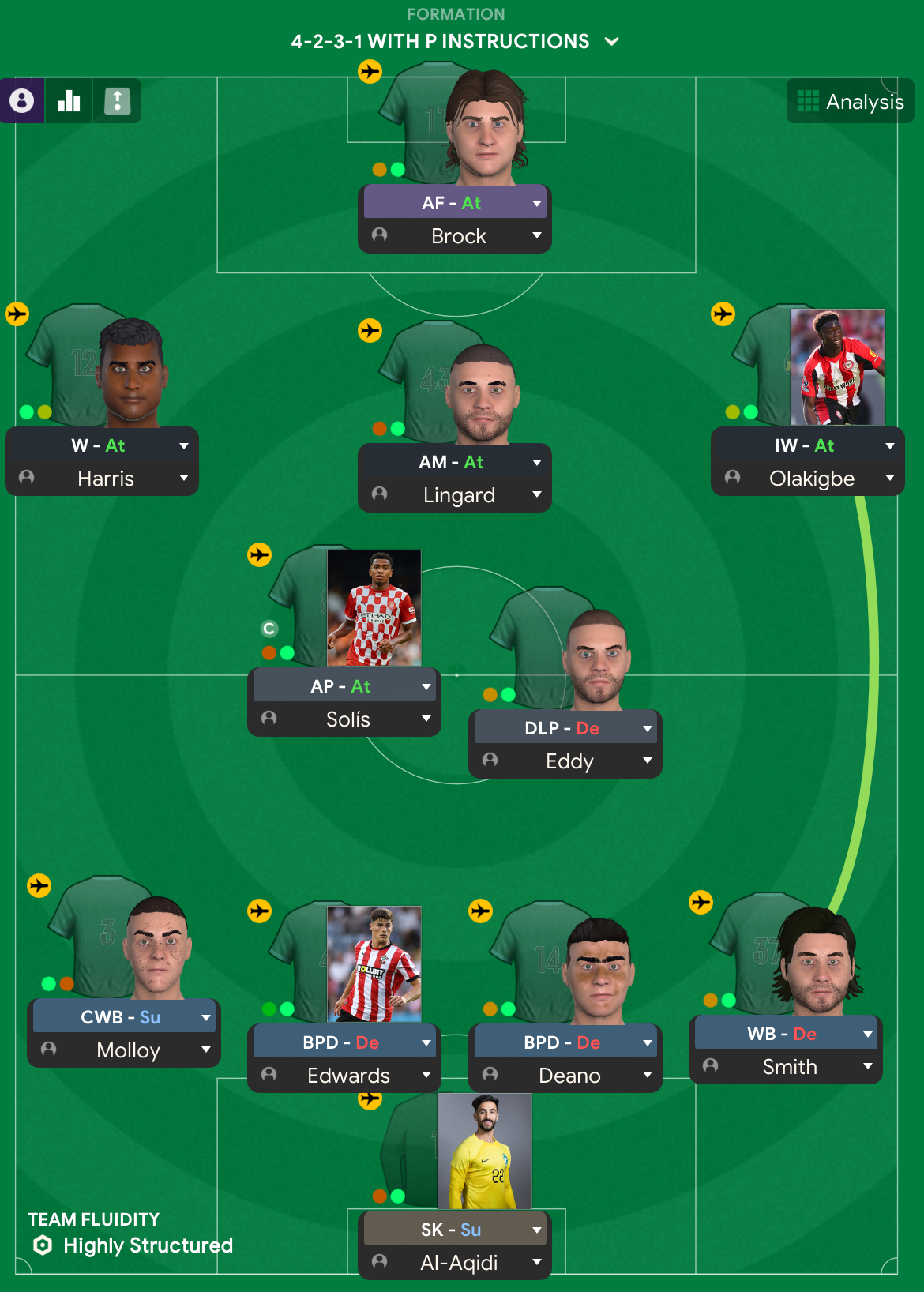
4-2-3-1
Controlled vertical combinations through the DLP, AP and DLF, supported by wide outlets and an active press. The DLP, AP and DLF provide several close…
Loading tactical analysis...
Vertical Tiki-Taka
Balanced
4-2-3-1
Fluid
GK
Goalkeeper
Defend
DL
Inverted Wing-Back
Support
DC
Centre-Back
Defend
DC
Ball-Playing Defender
Defend
DR
Wing-Back
Attack
MC
Deep-Lying Playmaker
Support
MC
Defensive Midfielder
Defend
AML
Inverted Winger
Attack
AMC
Advanced Playmaker
Support
AMR
Winger
Support
ST
Deep-Lying Forward
Support
Shorter Passing
Play Out of Defence
Work Ball Into Box
Be More Expressive
Fairly Wide Attacking Width
Counter
Counter-Press
Higher Line of Engagement
Trigger Press More Often
Stay on Feet
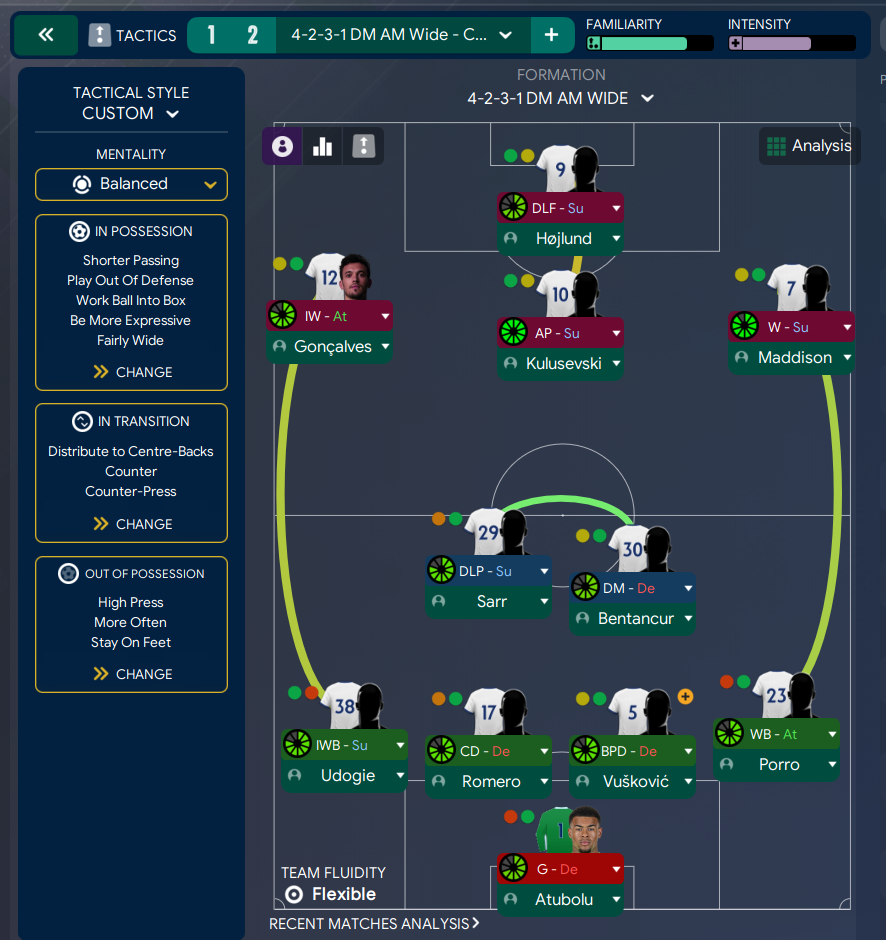
The DLP, AP and DLF provide several close central options for short combinations, while Play Out of Defence and Work Ball Into Box support patient progression rather than speculative shots.
DLP (Su), AP (Su), DLF (Su); Shorter Passing, Play Out of Defence, Work Ball Into Box
Fairly wide attacking width is backed by an IW on the left and a W plus an attacking WB on the right, giving the team routes to stretch opponents and create crossing positions.
IW (At), W (Su), WB (At); Fairly Wide Attacking Width
Shorter passing and Play Out of Defence favour controlled construction, while Counter asks the team to break forward quickly after winning possession. This can be effective, but may produce rushed attacks if the first forward option is not available.
Shorter Passing, Play Out of Defence, counter; DLP (Su), AP (Su)
The WB on Attack is paired with a W on Support, so both can advance in the same lane. This offers width but risks congestion and can leave space behind the WB when possession turns over.
WB (At), W (Su)
Space behind the attacking right flank
The right WB's attacking duty can leave the flank open on turnovers, particularly when the nearby W also advances. Counter-Press may help recover the ball, but does not guarantee cover if opponents bypass the first pressure.
WB (At), W (Su), Counter-Press
medium
Space behind the pressing line
A higher line of engagement commits the team to pressing higher, but the extraction does not specify the defensive-line setting. If that line is deep, opponents may find space between the lines; if it is also high, balls in behind may be a concern.
Higher Line of Engagement; DLP (Su), DM (De)
medium
DLP and AP as central distributors
The DLP can help link the defensive build-up to the AP, who is positioned to receive and connect with the forward line.
DLP (Su), AP (Su)
DLP and AP as central distributors
DLF with the supporting AP
A supporting DLF can offer a link near the front, while the AP provides a nearby creative outlet for combinations into the wide attackers.
DLF (Su), AP (Su), IW (At), W (Su)
DLF with the supporting AP
How can I keep my right flank protected when my WB is on Attack?
What should I look for in players to make my shorter-passing build-up work well?
How can I balance my Counter instruction with playing out of defence?
Build from the back with shorter passes, use central combinations and work the ball into the box, while fairly wide positioning and the wide roles stretch the opposition.
Counter-Press after losing possession and counter after winning it, combining an aggressive recovery attempt with quick attacks when the ball is regained.
Controlled vertical combinations through the DLP, AP and DLF, supported by wide outlets and an active press.
4-2-3-1
The extraction shows a four-player defensive line with a DLP and DM ahead, then an attacking midfield line and a lone DLF. A higher line of engagement indicates an intention to engage opponents higher up.
IWB (Su), CB (De), BPD (De), WB (At); DLP (Su), DM (De); Higher Line of Engagement
4-2-3-1 with wide outlets and central support
The IWB can move into central areas in possession while the attacking WB and wide attackers provide width. The DLP, AP and DLF offer central passing connections.
IWB (Su), WB (At), IW (At), W (Su); DLP (Su), AP (Su), DLF (Su)
This is a coherent possession-based 4-2-3-1: shorter passing, Play Out of Defence and the DLP–AP–DLF links should support controlled combinations, while the wide roles provide outlets. Counter and Counter-Press add a more aggressive transition game. The main concern is the exposed space behind the attacking right WB, especially alongside the W; consider coordinating their movement and monitor whether the higher press leaves space opponents can exploit.
The tactical theory behind the 4-2-3-1: roles, instructions, and the trade-offs that decide whether the system holds up.
Klopp-style gegenpressing in FM, including squad profile, line-and-press pairing, sustainable workload, and the antipatterns to avoid.
Double pivots and flat pairs in 4-2-3-1 and 4-4-2: when each pairing works, when it collapses, and the AMC unicorn that rescues both.
Build through the wide areas or through the middle? A working framework for picking the right one for your squad.