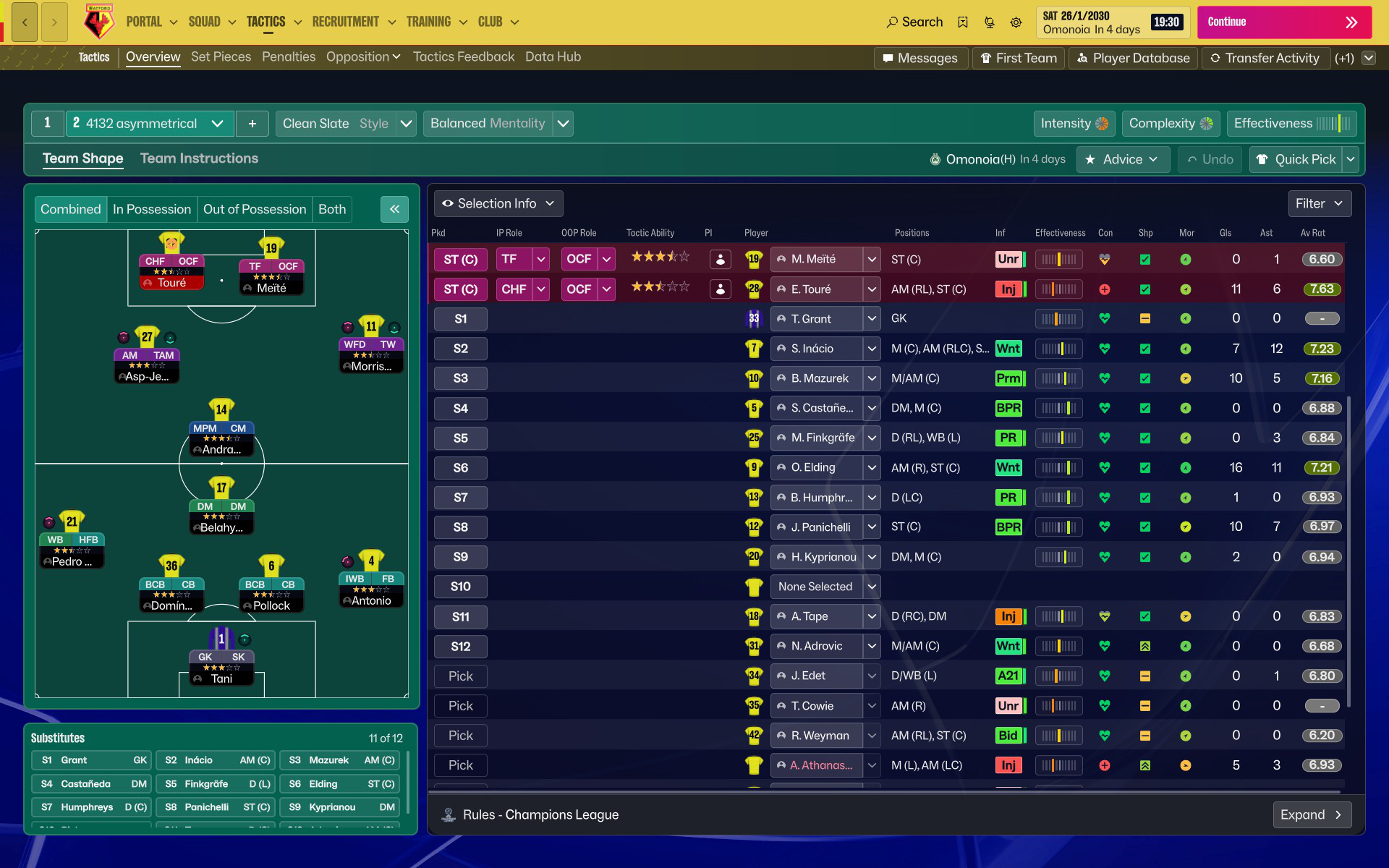
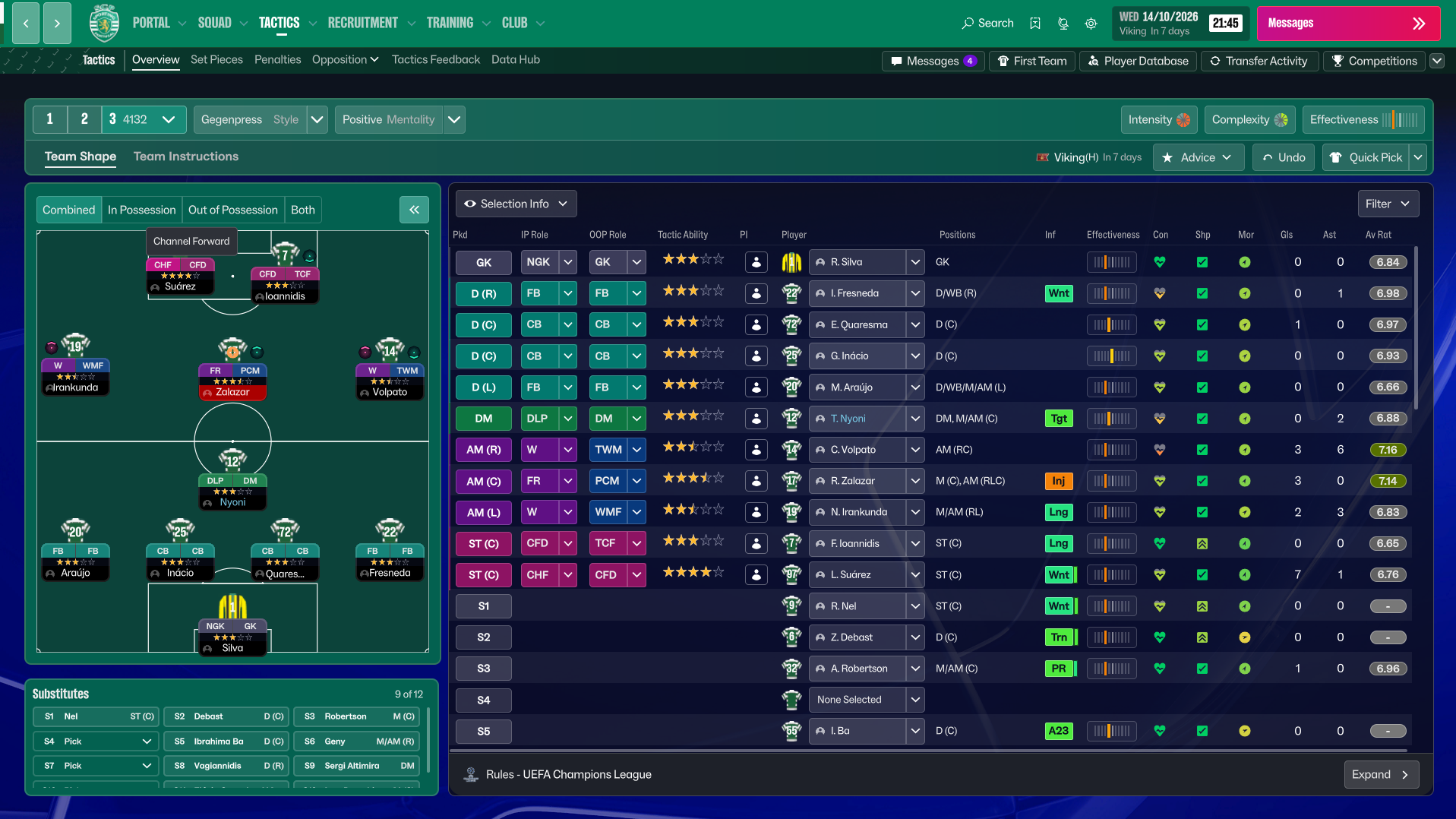
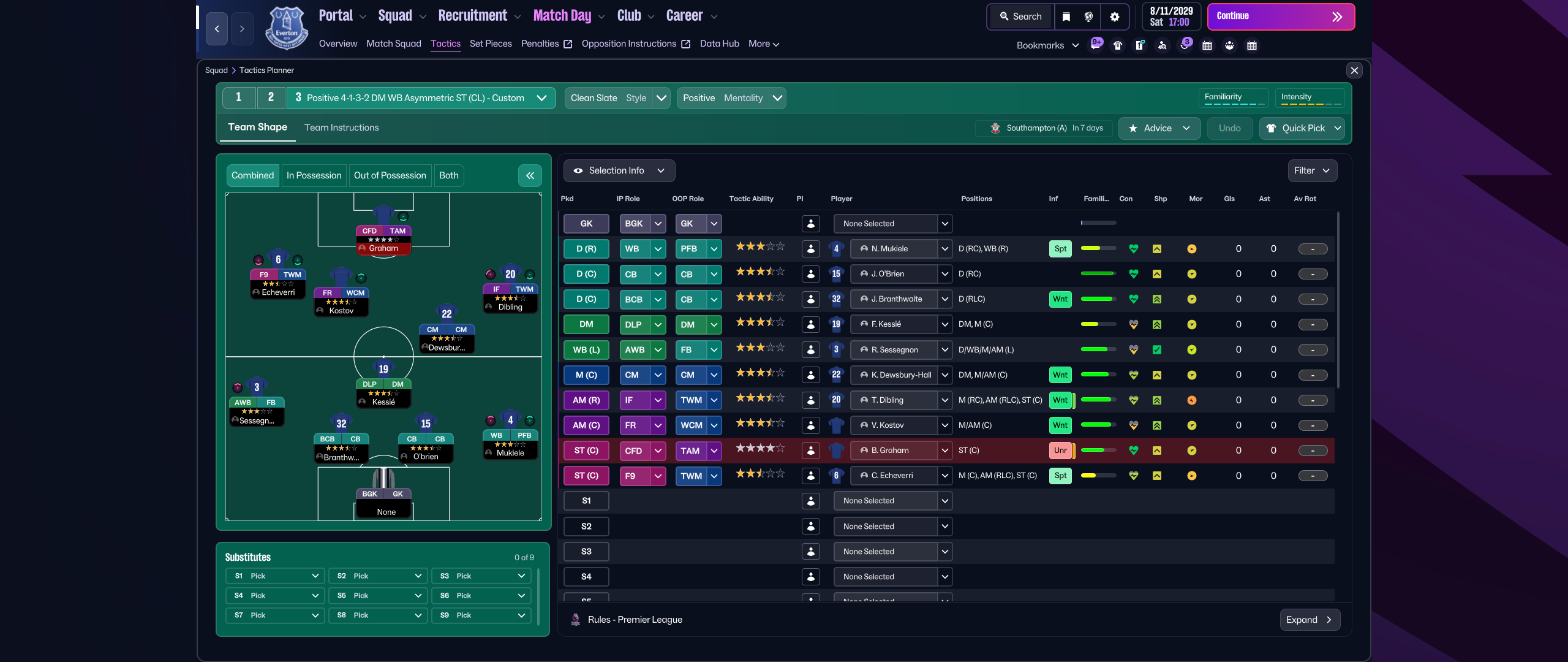
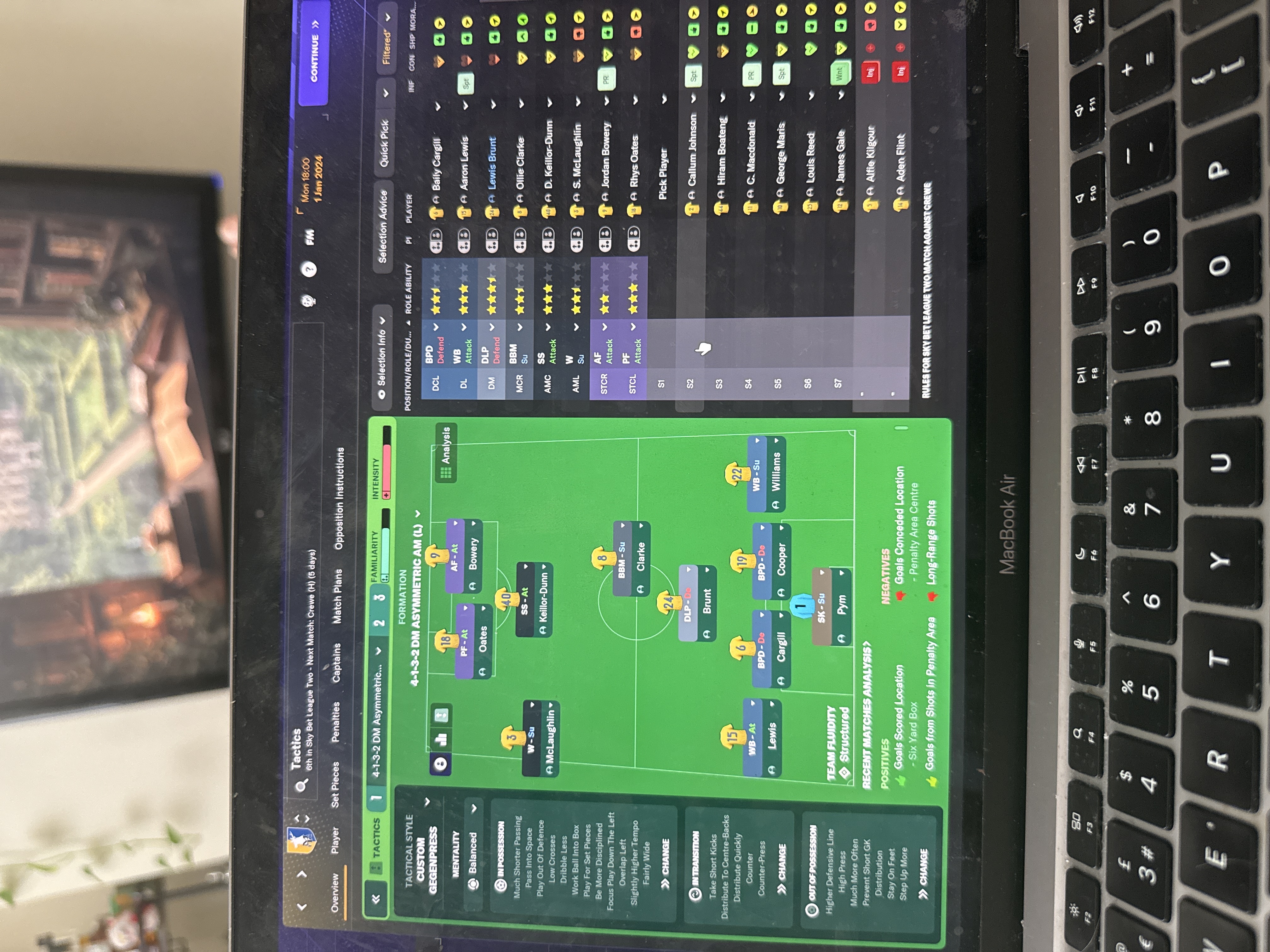
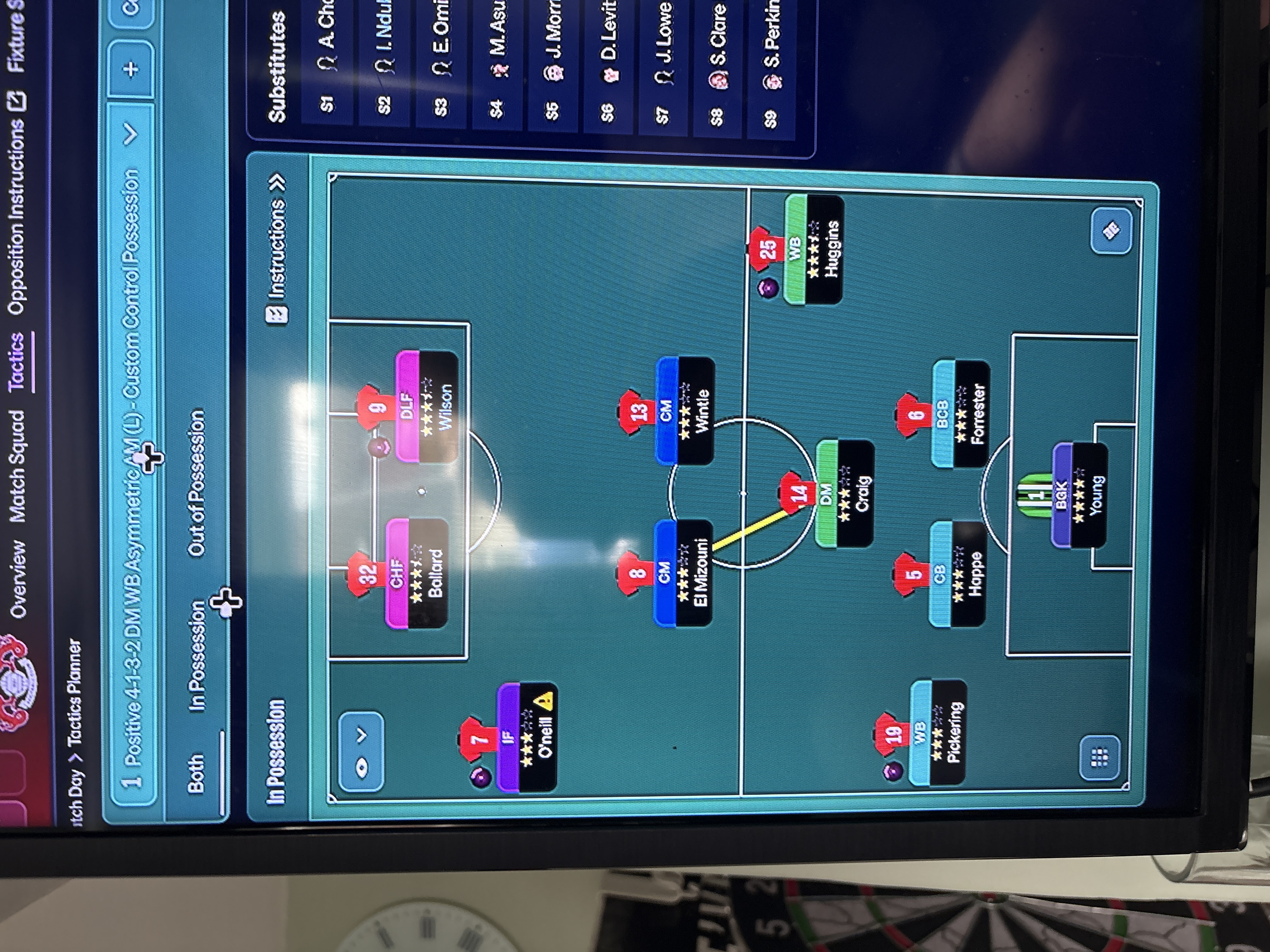
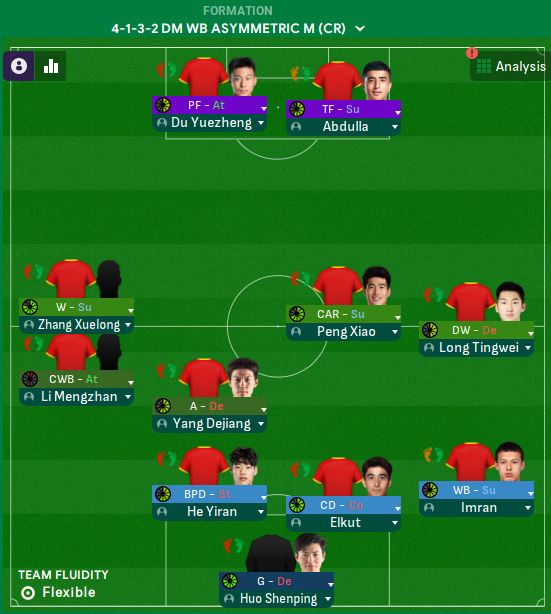
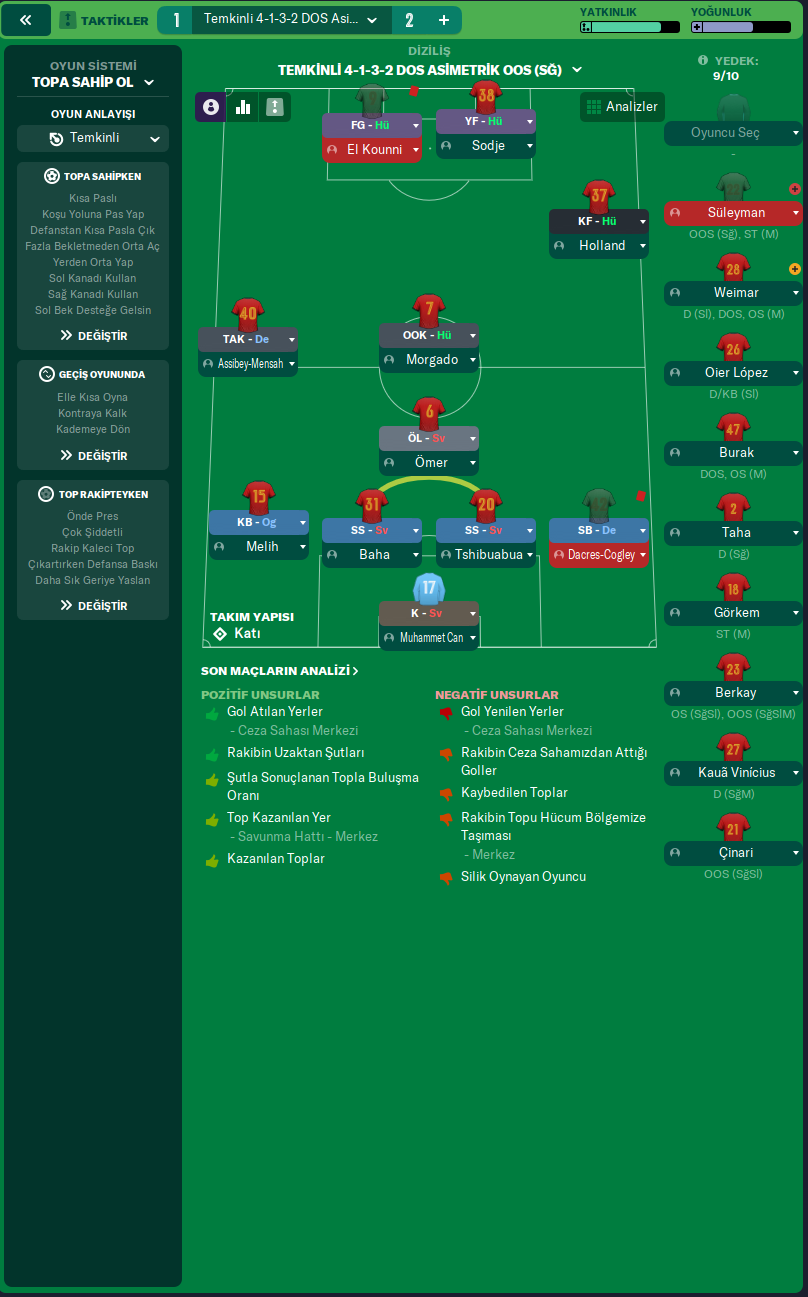
4-1-3-2
Create through central combinations and attacking midfield support, with the right wing-back providing an attacking wide outlet. Shorter passing, Play Out…
Loading tactical analysis...
Vertical Tiki-Taka
Attacking
4-1-3-2
Very Fluid
GK
Sweeper Keeper
Support
DL
Wing-Back
Support
DC
Ball-Playing Defender
Defend
DC
Ball-Playing Defender
Defend
DR
Wing-Back
Attack
DM
Defensive Midfielder
Support
MC
Deep-Lying Playmaker
Support
AML
Attacking Midfielder
Support
AMC
Attacking Midfielder
Attack
AMR
Advanced Playmaker
Support
ST
Complete Forward
Support
Shorter Passing
Pass Into Space
Play Out of Defence
Low Crosses
Work Ball Into Box
Be More Expressive
Slightly Lower Tempo
Narrow Attacking Width
Take Short Kicks
Counter-Press
Higher Defensive Line
Trigger Press More Often
Stay on Feet
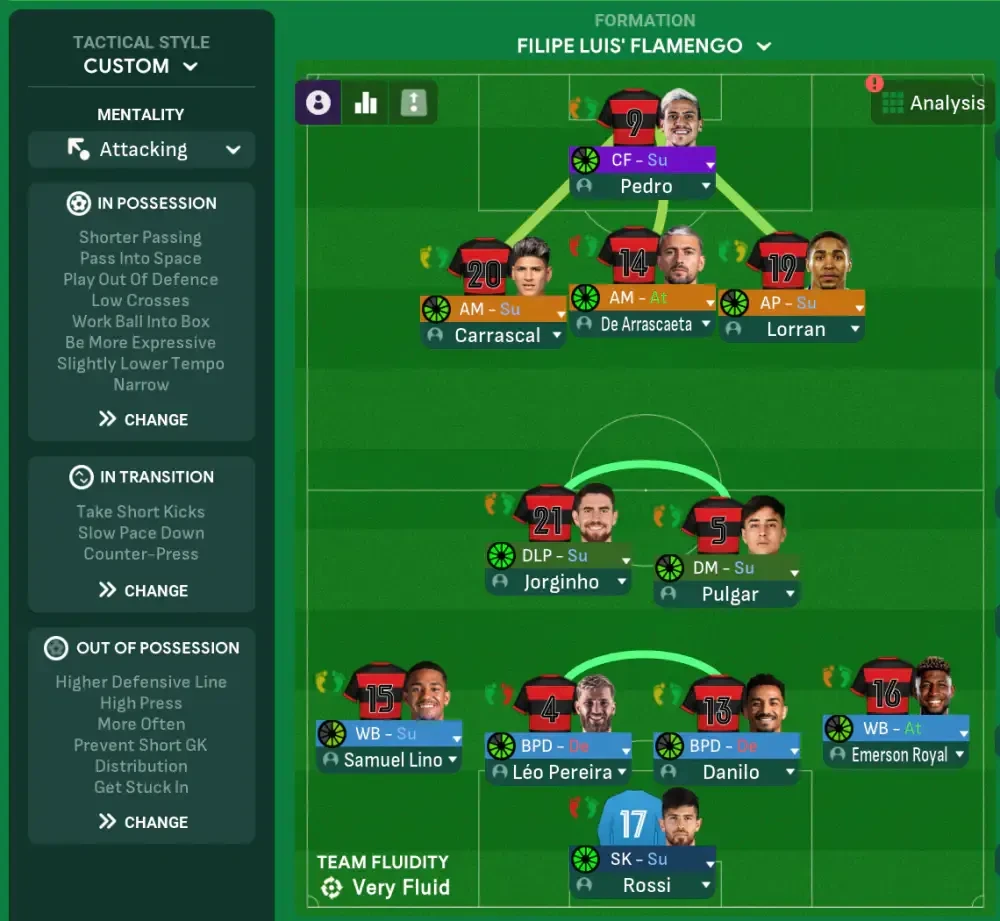
Shorter passing, Play Out of Defence and Pass Into Space support building through the team before releasing runners into gaps.
The BPD (De) defenders can start play, while the DLP (Su) and AP (Su) provide central outlets.
Three attacking midfield roles sit behind a striker, creating several close passing options to work the ball into the box.
The AM (Su), AM (At) and AP (Su) are positioned behind the CF (Su), with Work Ball Into Box selected.
Pass Into Space encourages forward balls into running lanes, while shorter passing, a slightly lower tempo and narrow attacking width favour patient, compact combinations. The intent may be unclear when opponents leave little space centrally.
Pass Into Space is selected alongside Shorter Passing, Slightly Lower Tempo and Narrow Attacking Width; the AM (At) is the main advanced midfield runner.
Space behind the defence
A higher defensive line can be exposed by direct balls over the top, especially if the counter-press is bypassed and the back line is left defending large spaces.
The higher defensive line is selected; both BPD (De) defenders hold the central defensive line.
medium
Wide defensive cover
The attacking right wing-back may leave space outside the right centre-back when possession is lost, while the opposite wing-back is only on Support.
The WB (At) is at row 2, col 5, beside the BPD (De) at row 2, col 4; the other WB is on Support.
medium
Deep build-up into central combinations
The defenders can progress possession to the deep playmaker, who can then connect with the attacking midfield line.
The BPD (De) pair sit behind the DLP (Su), with the AP (Su) and AM (Su) available ahead.
Deep build-up into central combinations
Right-side width and inside threat
The attacking wing-back can provide width as the right attacking midfielder makes a more aggressive movement inside or beyond the striker.
The WB (At) at row 2, col 5 can advance outside the AM (At) at row 5, col 3; the CF (Su) can link play.
Right-side width and inside threat
How can I reduce the space behind my higher defensive line without losing the ability to press high?
What should I change if my narrow attacking shape struggles to create chances against a compact defence?
How can I balance Pass Into Space with my shorter passing and slower tempo?
Build from the back with shorter passes, then combine centrally and look for passes into space; low crosses and Work Ball Into Box favour composed entries rather than frequent high deliveries.
Counter-Press immediately after losing possession; slow down goalkeeper distribution when restarting.
Create through central combinations and attacking midfield support, with the right wing-back providing an attacking wide outlet.
4-1-4-1-like
The extraction places a goalkeeper, four defenders, a holding midfielder and a compact midfield line ahead of the striker; the advanced midfield roles are likely to drop back, though exact in-match defensive shape depends on role behaviour.
The BPD (De) pair and two WB roles form the back four, with the DM (Su) ahead.
4-1-3-2
A back four and deep midfielder support three attacking midfielders behind a single extracted striker, with the right wing-back offering additional width.
The DLP (Su) and DM (Su) are behind the AM (Su), AM (At) and AP (Su), while the WB (At) advances on the right.
This is an ambitious, central-combination tactic: patient build-up, three attacking midfielders and a supporting striker should help create close-range opportunities, while the counter-press aims to recover the ball quickly. The main concern is the tension between slow, short, narrow possession and Pass Into Space, alongside the space left by the higher line and attacking wing-back. I would first make the defensive line more conservative and consider widening the attack if opponents shut down the middle.
The tactical theory behind the 4-1-3-2: roles, instructions, and the trade-offs that decide whether the system holds up.
How Mentality, Duty, and Role interact in FM, why duty trumps mentality every time, and the role-on-top-of-duty composition rules.
Counter-Press, Regroup, Stand Off, Trigger Press: what each pressing instruction does in FM and how to pair them without contradicting.
The pairing rule for Defensive Line and Line of Engagement, all 9 combinations, and the gap that costs goals.