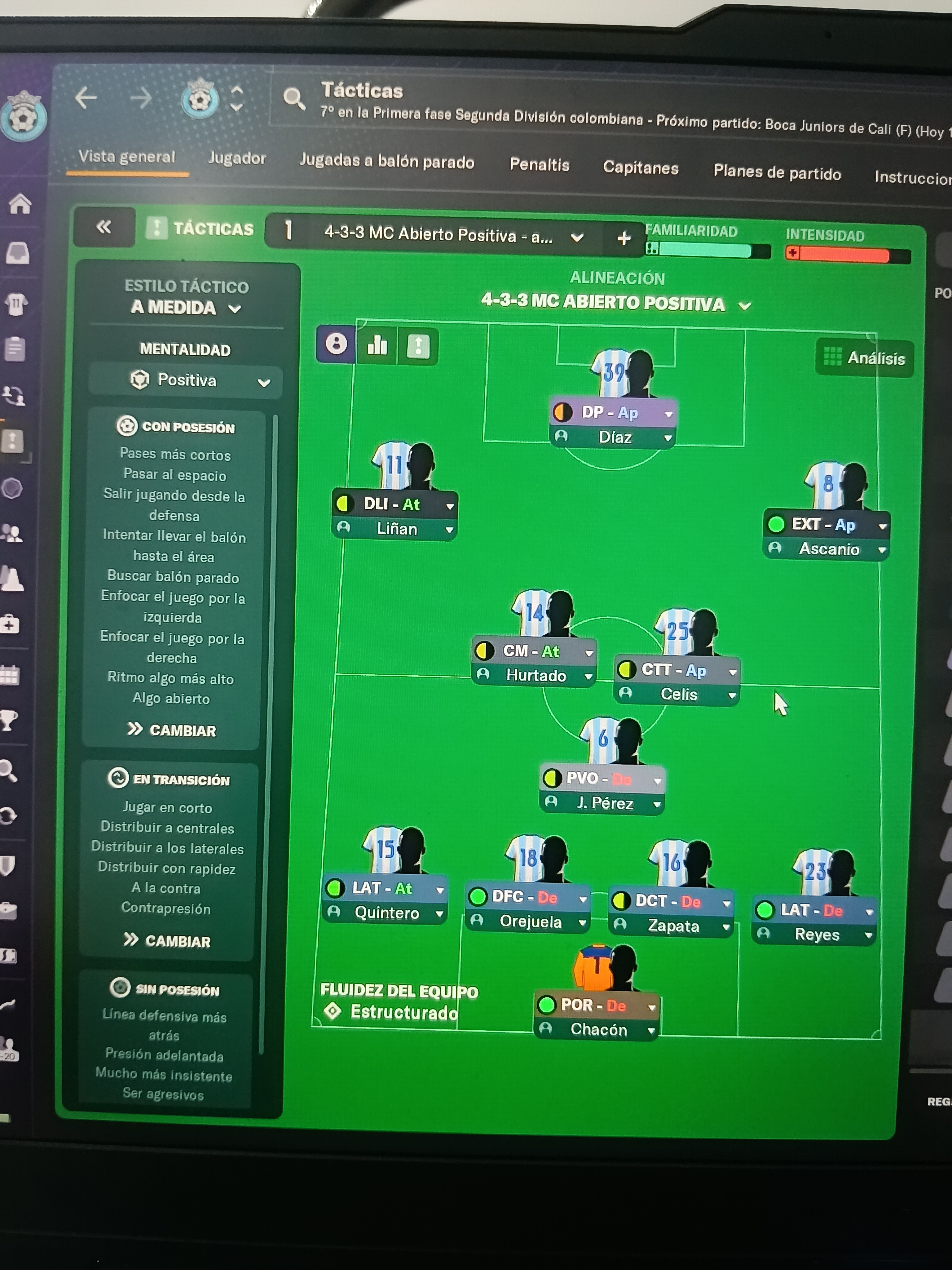
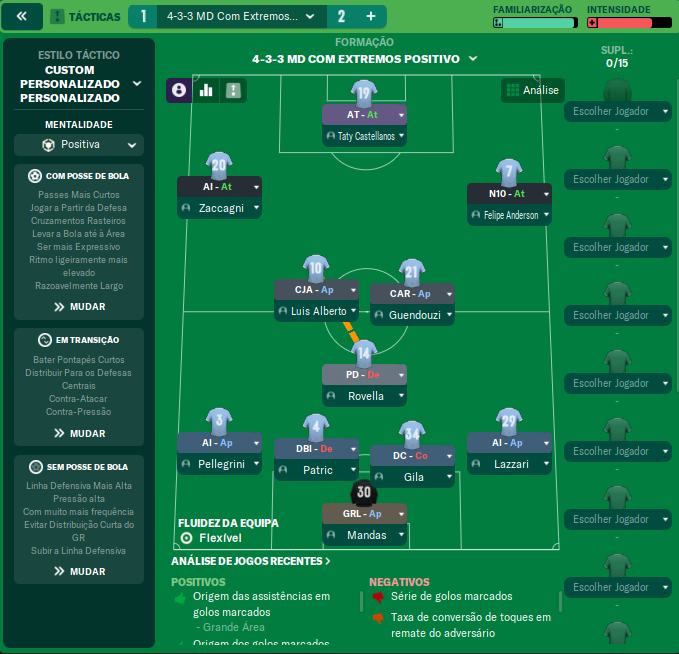
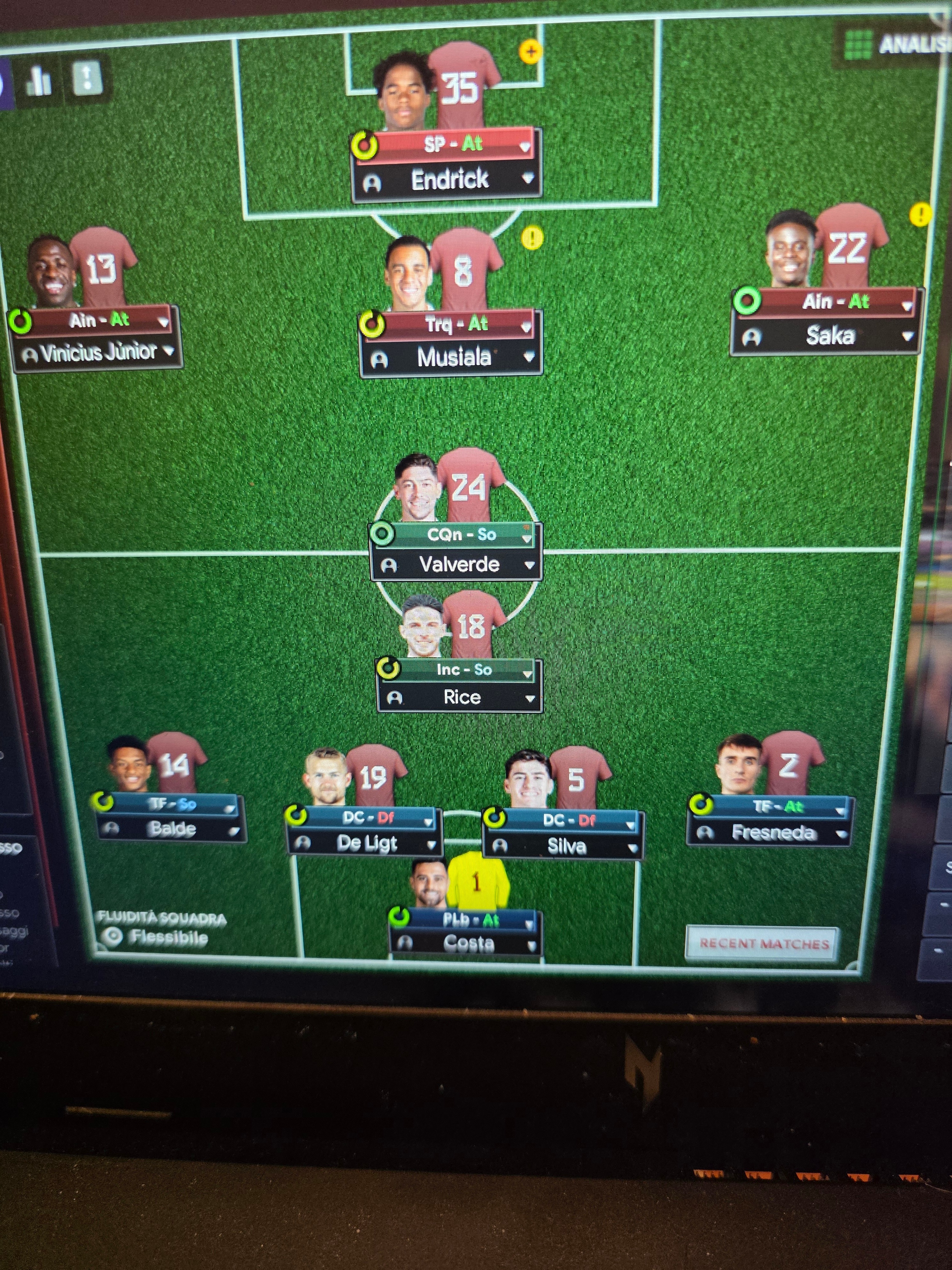
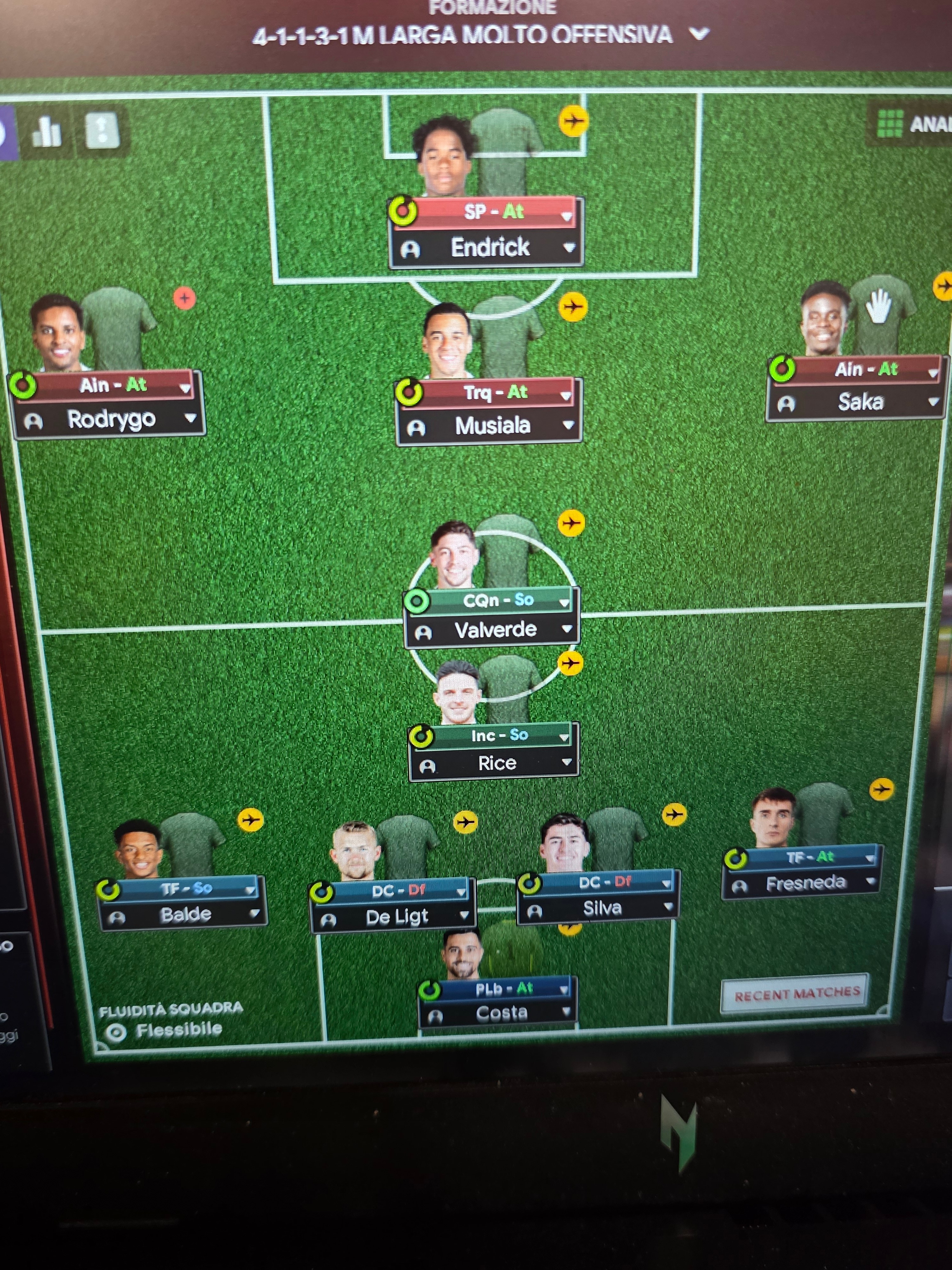
4-2-3-1
High-intensity pressing and central attacking overloads. The TREQ, SS and two inside forwards give several attacking players who can drift between the…
Loading tactical analysis...
Gegenpress
Very Attacking
4-2-3-1
Fluid
GK
Sweeper Keeper
Attack
DL
Wing-Back
Support
DC
Centre-Back
Defend
DC
Centre-Back
Defend
DR
Wing-Back
Attack
DM
Central Midfielder
Support
MC
Box-to-Box Midfielder
Support
AML
Inside Forward
Attack
AMC
Trequartista
Attack
AMR
Inside Forward
Attack
ST
Shadow Striker
Attack
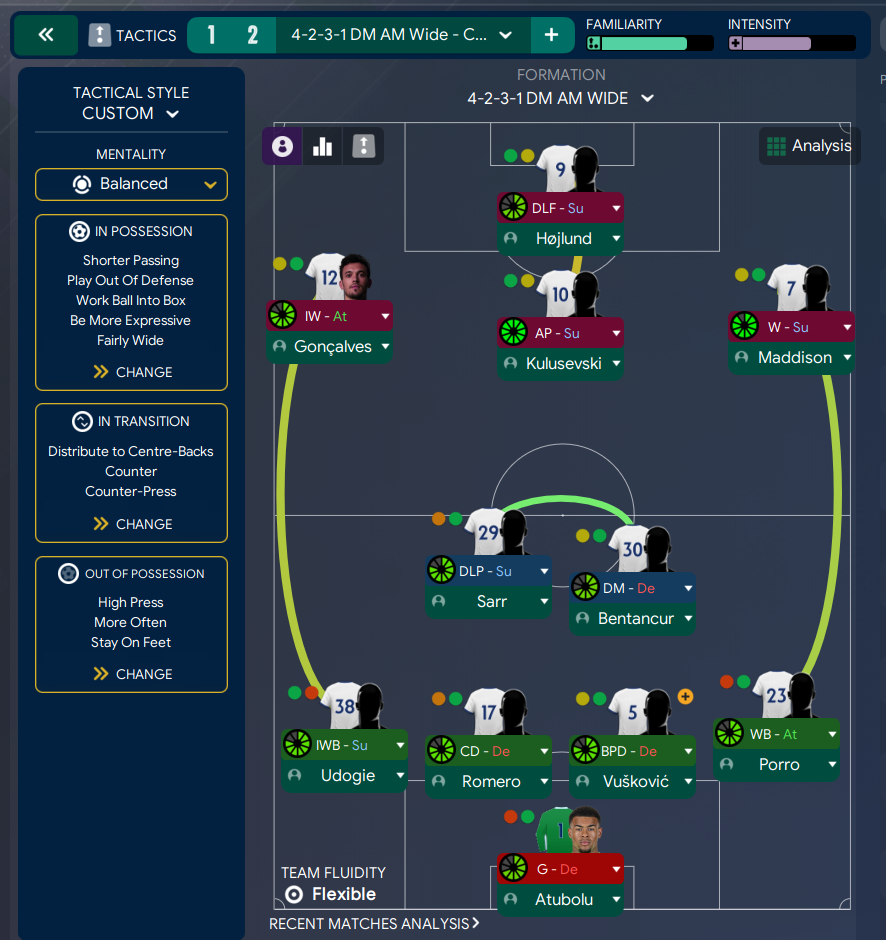
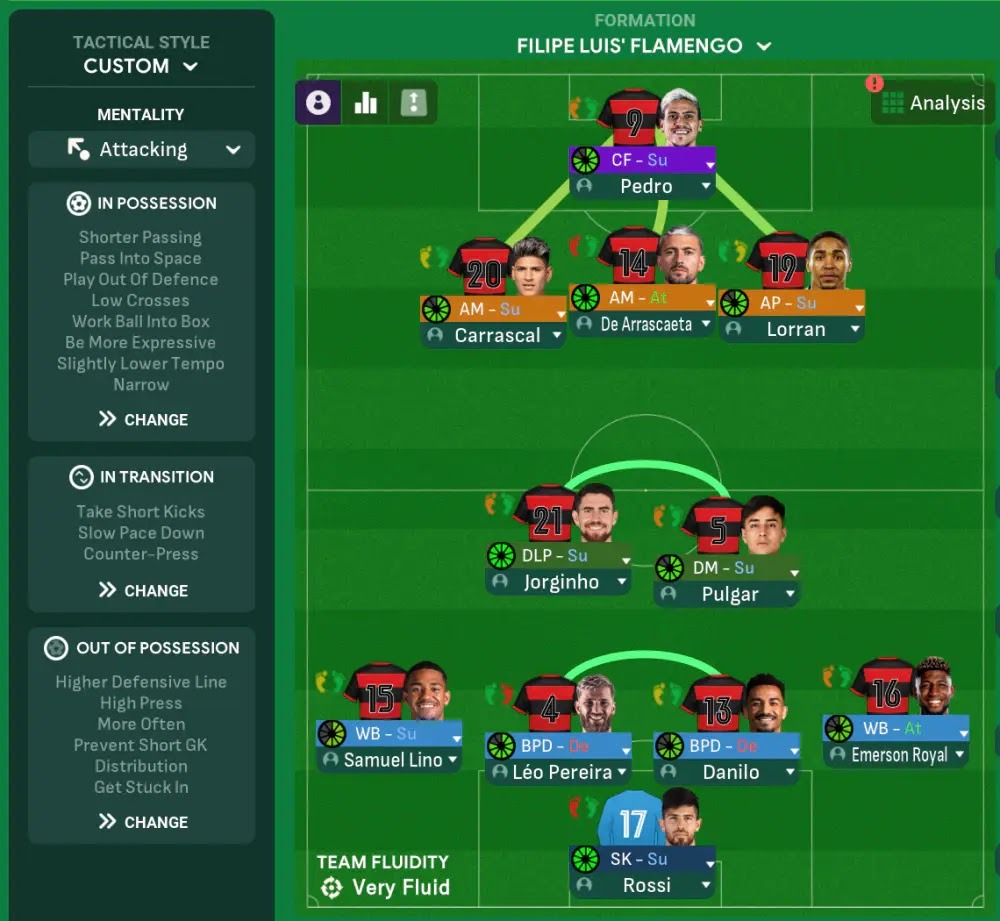
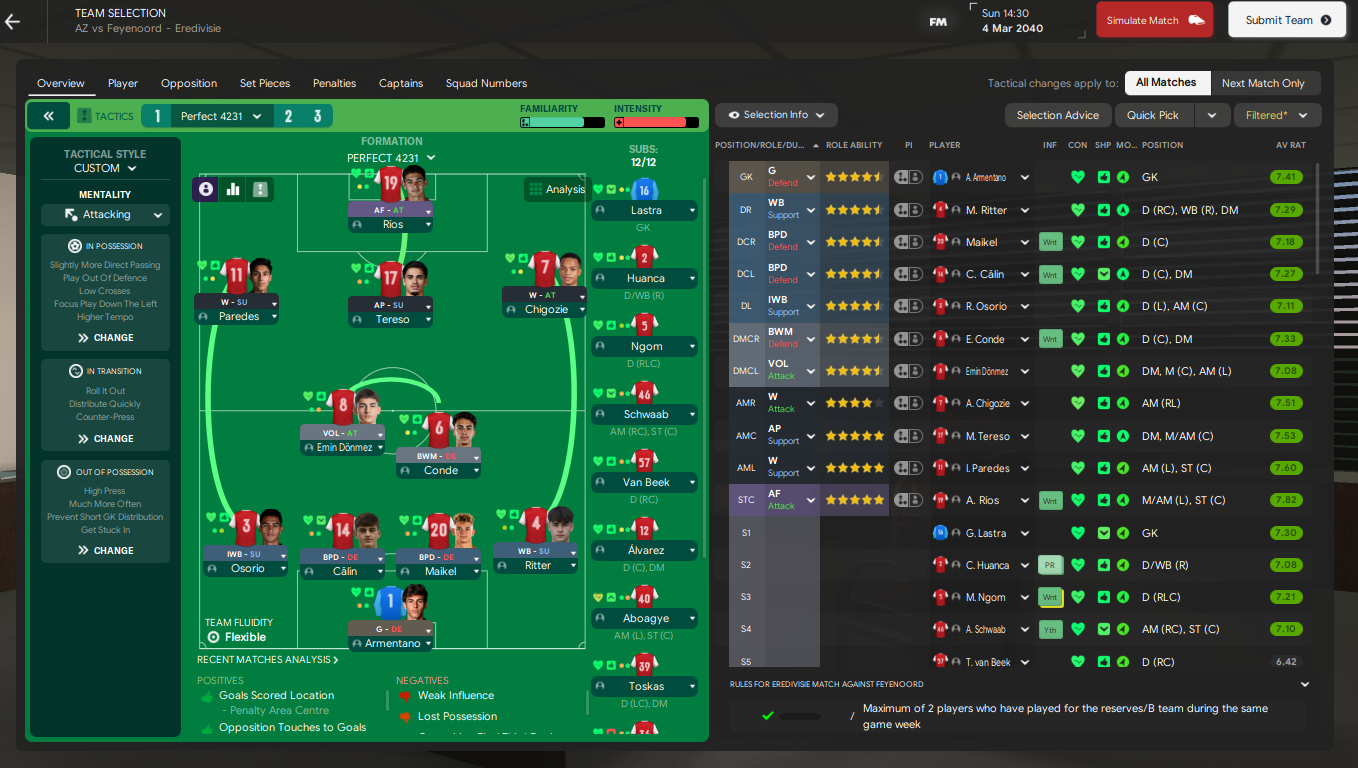
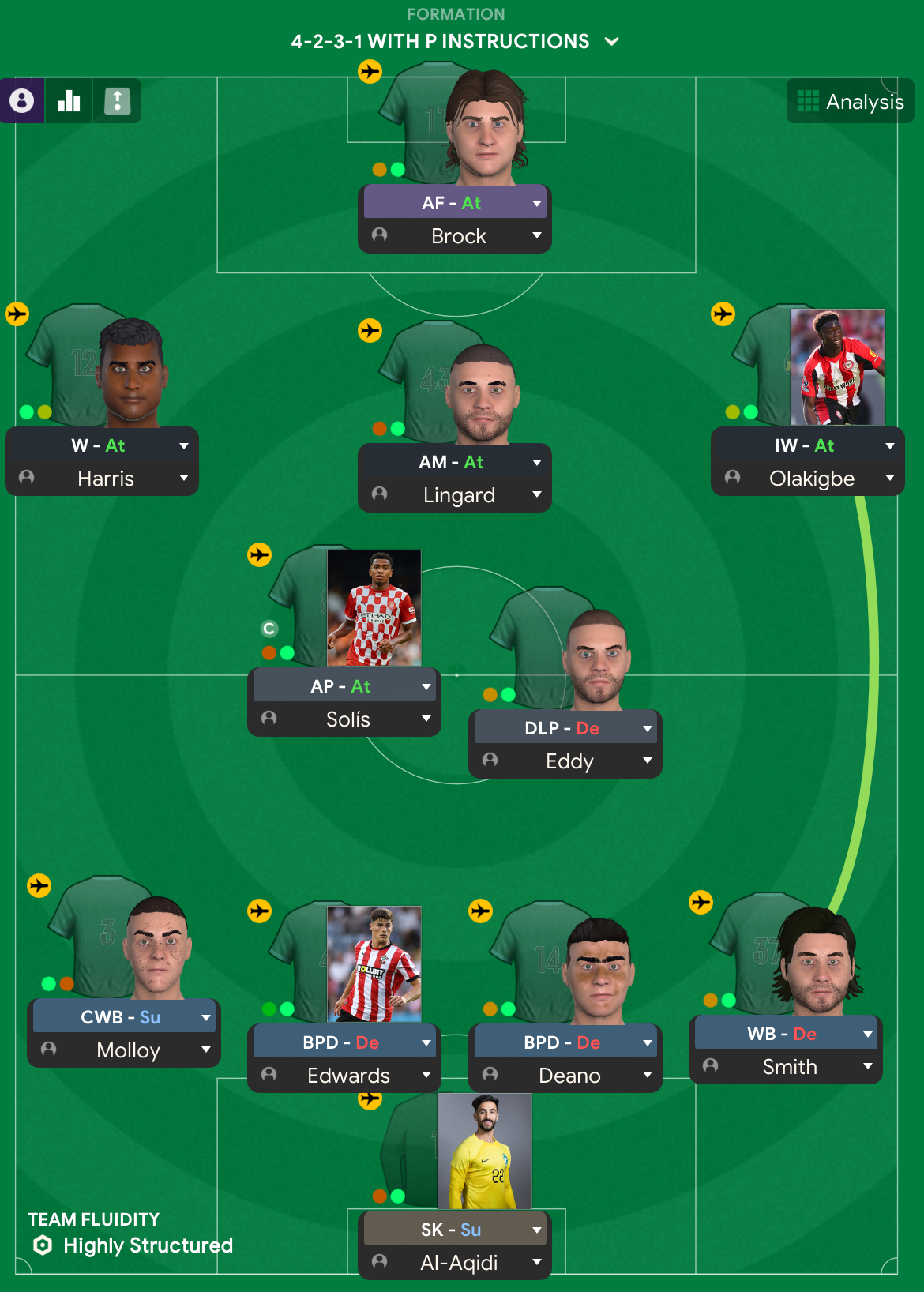
The TREQ, SS and two inside forwards give several attacking players who can drift between the lines and create overloads in the final third.
TREQ at [5,3], SS at [6,3], IF at [5,1] and IF at [5,5]
Gegenpress with a very attacking mentality suits a front four that is active in winning the ball back high up the pitch.
SS at [6,3] and TREQ at [5,3] lead the press from the front
Only a CM and a BBM sit in front of the back line, yet the mentality pushes the whole team high. This leaves large gaps behind the press.
CM at [3,3] and BBM at [4,3] cover the space behind five attackers
The SK on Attack and an attacking WB at [2,5] leave the team open when possession is lost, and the inside forwards add little width to cover for them.
SK at [1,3], WB at [2,5], IF at [5,1] and IF at [5,5]
Counter-attacks down the right
The attacking WB leaves the flank open, and only a defensive CB pair plus a lone CM cover it.
WB (At) at [2,5] with CB at [2,4]
high
Midfield being bypassed
A very high line of engagement and a two-man midfield make it easy to play through the press.
CM at [3,3] and BBM at [4,3]
high
TREQ + SS
The TREQ drops into the pockets while the SS attacks the space, creating movement that the defence struggles to track.
TREQ at [5,3] and SS at [6,3]
TREQ + SS
IF + WB (Su) on the left
The inside forward cuts inside and leaves the lane free for the supporting wing-back to overlap.
IF at [5,1] and WB (Su) at [2,1]
IF + WB (Su) on the left
Do you want to keep the all-out pressing, or would you prefer a more controlled style?
Do you have a ball-winning midfielder available for the CM slot?
Play is funnelled through the central creators, with inside forwards cutting in and wing-backs providing the width.
The team presses immediately after losing the ball, but the sparse midfield makes recovery runs vulnerable.
High-intensity pressing and central attacking overloads.
4-1-1-3-1 pressing shape
The team presses high with the SS leading the line, the CM holding behind the BBM, and two CBs behind them.
SS at [6,3], BBM at [4,3], CM at [3,3], CB at [2,2] and CB at [2,4]
2-1-1-3-3 style
The wing-backs push up, the inside forwards move inside and the TREQ and SS occupy the half-spaces and the penalty area.
WB at [2,1], WB at [2,5], IF at [5,1], IF at [5,5], TREQ at [5,3]
The attack is creative and central, built around the TREQ, SS and inside forwards, and the gegenpress gives it a clear identity. However, a very attacking mentality with a two-man midfield and an attacking right wing-back leaves too much space behind the press, and the attacking sweeper keeper adds to the risk. Dropping to a positive mentality and adding explicit counter-press and pressing instructions would give the team balance without losing its intensity.
The tactical theory behind the 4-2-3-1: roles, instructions, and the trade-offs that decide whether the system holds up.
Double pivots and flat pairs in 4-2-3-1 and 4-4-2: when each pairing works, when it collapses, and the AMC unicorn that rescues both.
Klopp-style gegenpressing in FM, including squad profile, line-and-press pairing, sustainable workload, and the antipatterns to avoid.
Protect a 1-0, chase a 1-0, hold a draw away. How to manage game state in FM through duties and roles, not by lurching to Defensive.