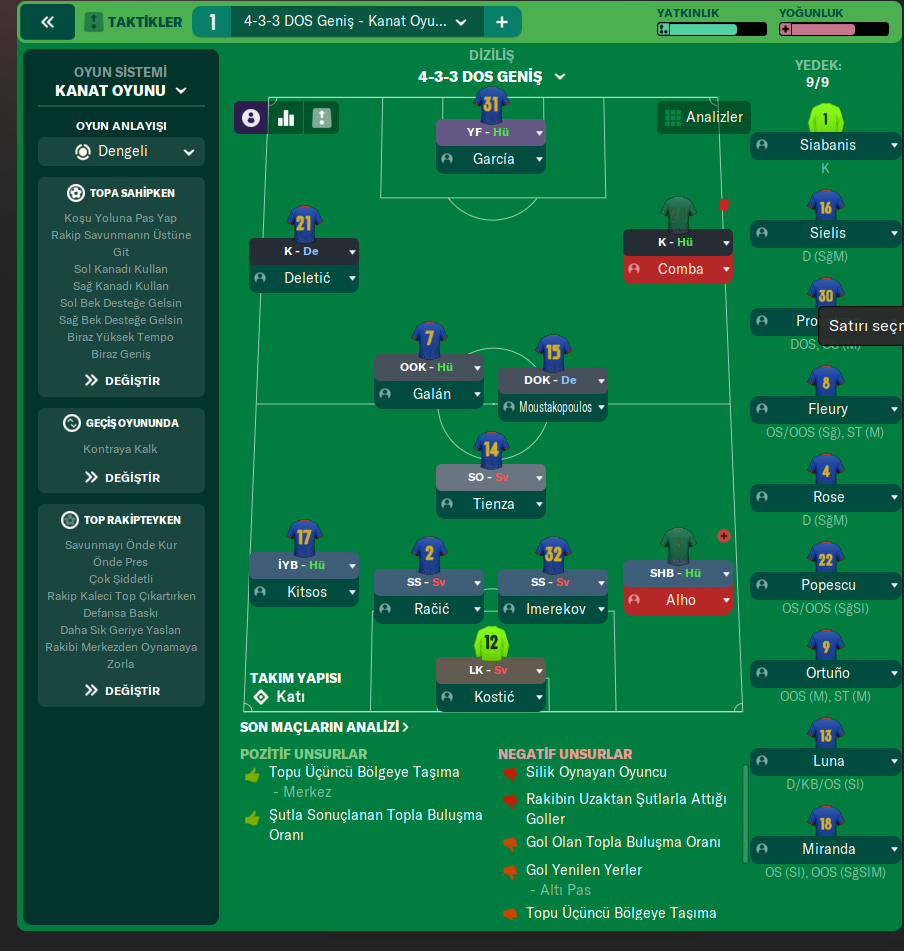
4-3-3 DM Wide
Using the wide forwards to deliver into the AF while the DM and CMs hold the middle. Wing Play style with two wingers gives clear width and a route to…
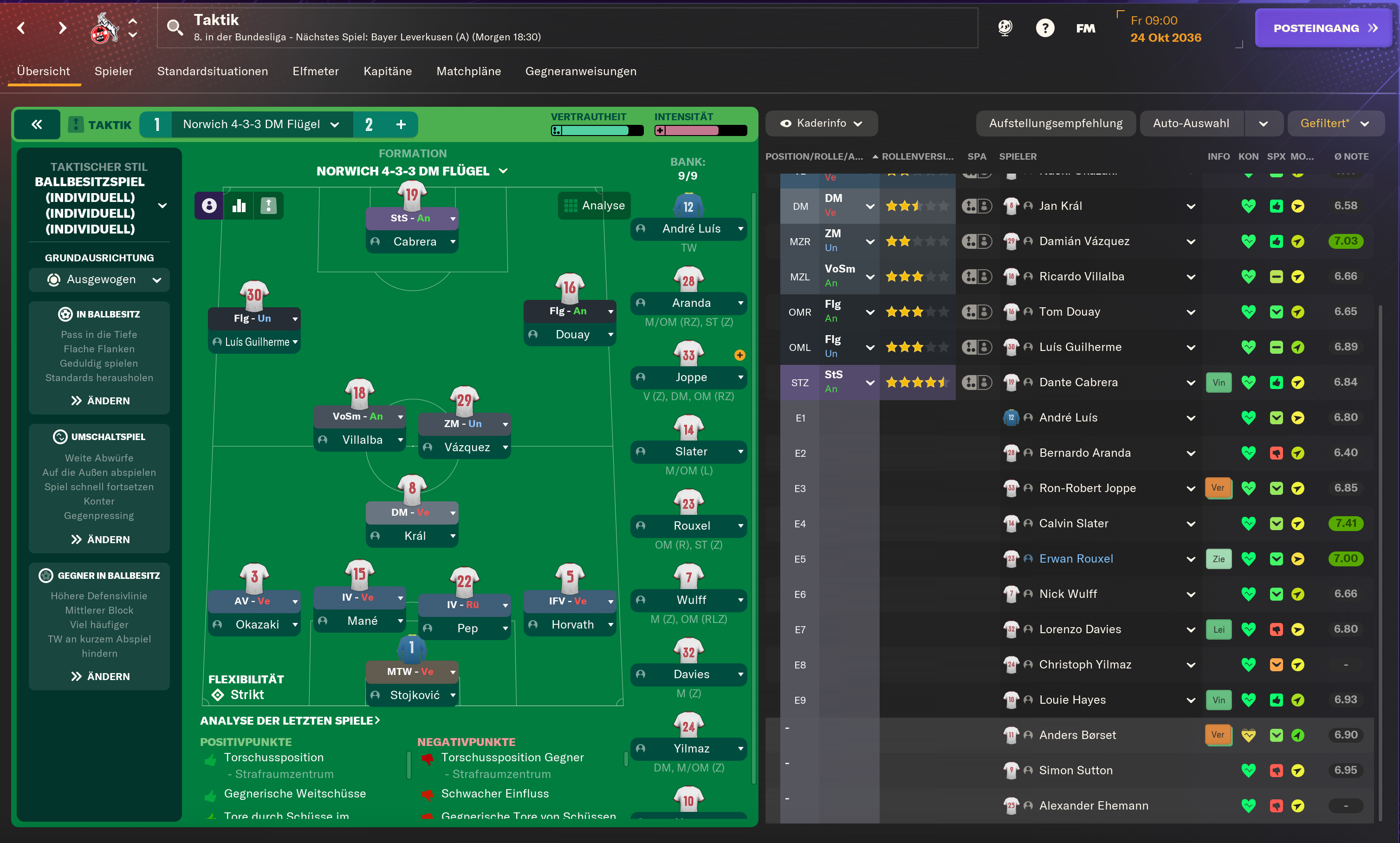
Loading tactical analysis...
Wing Play
Balanced
4-3-3 DM Wide
GK
Sweeper Keeper
Defend
DL
Full-Back
Defend
DC
Centre-Back
Defend
DC
Centre-Back
Defend
DR
Inverted Wing-Back
Defend
DM
Defensive Midfielder
Defend
MC
Central Midfielder
Support
MC
Central Midfielder
Support
AML
Winger
Support
AMR
Winger
Attack
ST
Advanced Forward
Attack
Pass Into Space
Work Ball Into Box
Counter
Counter-Press
Higher Defensive Line
Standard Line of Engagement
Wing Play style with two wingers gives clear width and a route to stretch the opposition.
W at [5,1] (Su) and W at [5,5] (At) provide width, with AF at [6,3] as the central target.
A holding DM and two supporting CMs give a stable midfield base to protect the back line.
DM at [3,3] (De) with CM Su at [4,2] and [4,4].
A higher defensive line needs pace and sharp coordination, but the back line is all defend duty, with a Sweeper Keeper as the only cover behind it.
CB at [2,2] and [2,4] with Higher Defensive Line, SK at [1,3].
Countering when winning the ball wants quick, direct play, which clashes with patient work into the box and the wing play focus.
in_transition counter, with AF at [6,3] and Pass Into Space alongside Work Ball Into Box.
Space in behind
Higher line with a standard line of engagement and no pressing settings can leave a gap between the lines for opponents to exploit.
Higher Defensive Line, DM at [3,3] and CB at [2,2]/[2,4]
high
Asymmetric full-back cover
An FB defending on one side and an IWB on the other leaves uneven width and exposes the flank behind the Attack winger.
FB at [2,1], IWB at [2,5], W (At) at [5,5]
medium
DM + IWB
The holding DM covers the space when the IWB tucks into midfield, keeping the structure compact.
DM at [3,3] and IWB at [2,5]
DM + IWB
W (At) + AF
The Attack winger runs beyond into the box while the AF pins the centre-backs, creating a clear target and space.
W at [5,5] (At) and AF at [6,3]
W (At) + AF
Do you have the pace in defence to play a higher line?
Do you prefer patient build-up play or fast counters?
Balanced wing play: the wingers stretch the pitch, the CMs support, and the AF leads the line with work into the box and passes into space.
Counter-press on losing the ball, and counter when winning it, which can leave the defence stretched against a higher line.
Using the wide forwards to deliver into the AF while the DM and CMs hold the middle.
4-1-4-1
The back four with the DM in front, CMs and wingers in a midfield four, and the AF alone up front.
DM at [3,3], CM at [4,2]/[4,4], W at [5,1]/[5,5], AF at [6,3]
3-1-4-2
The IWB moves into midfield and the FB stays back, with the DM screening, the wingers high and wide, and the AF up front.
IWB at [2,5], DM at [3,3], W at [5,1] and [5,5], AF at [6,3]
A sensible 4-3-3 DM Wide with Wing Play that has good width and a solid central base, but the instructions pull in different directions: a higher line with an all-defend back line, counter mixed with patient build-up, and no crossing or pressing settings. Lower the line or add pressing urgency, and set the transition and crossing to match the intended wing play to make it coherent.
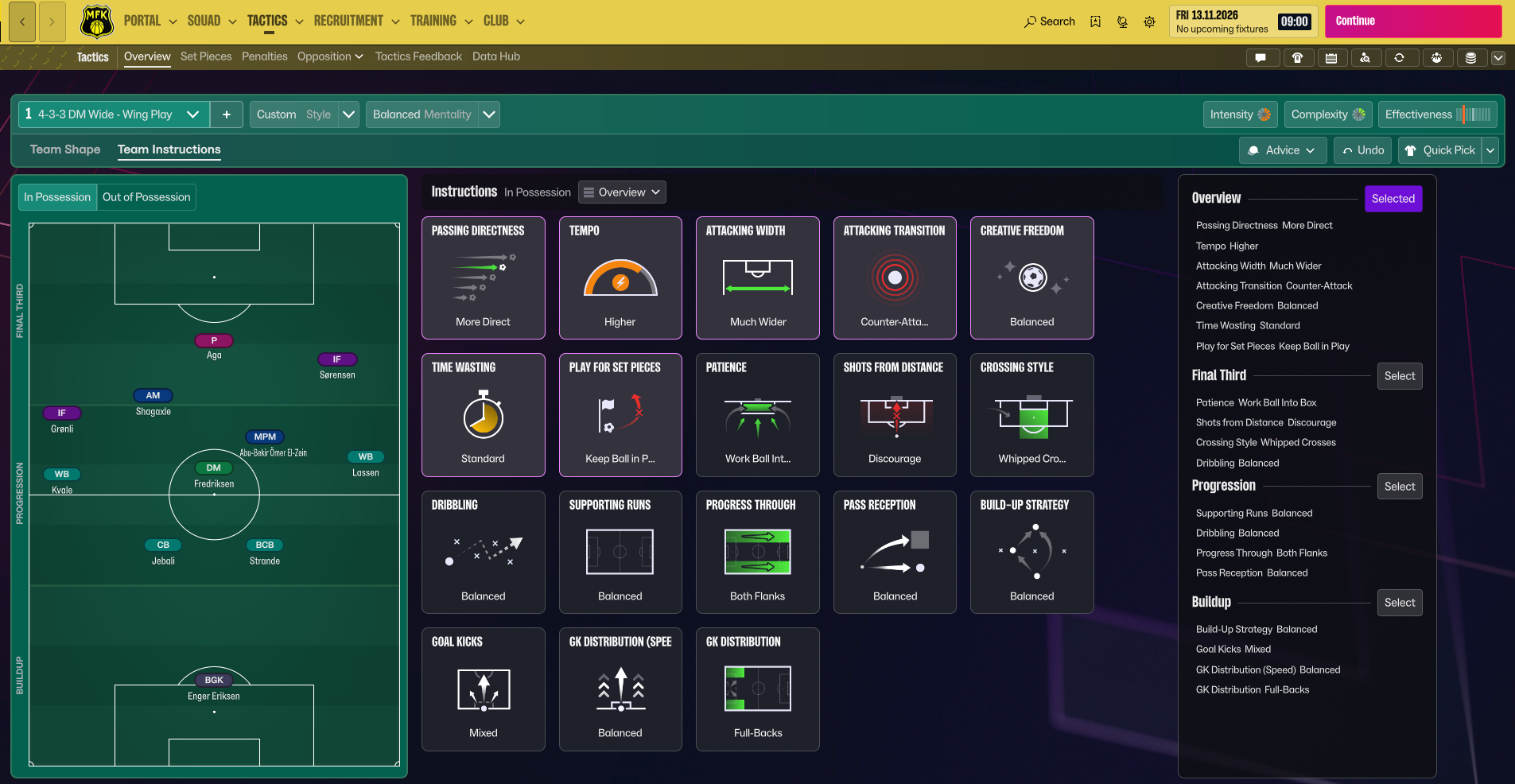
wing play
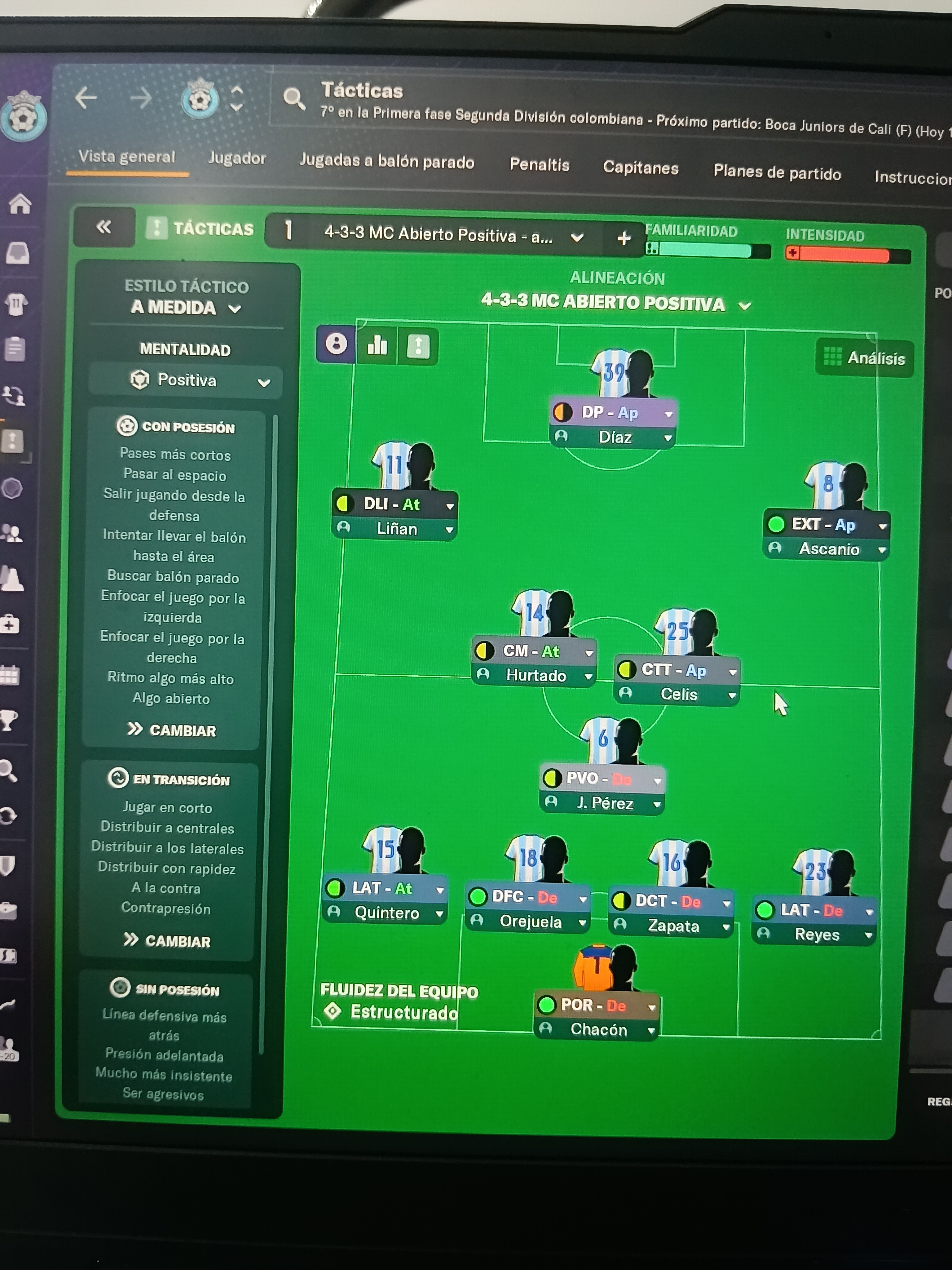
Gegenpress
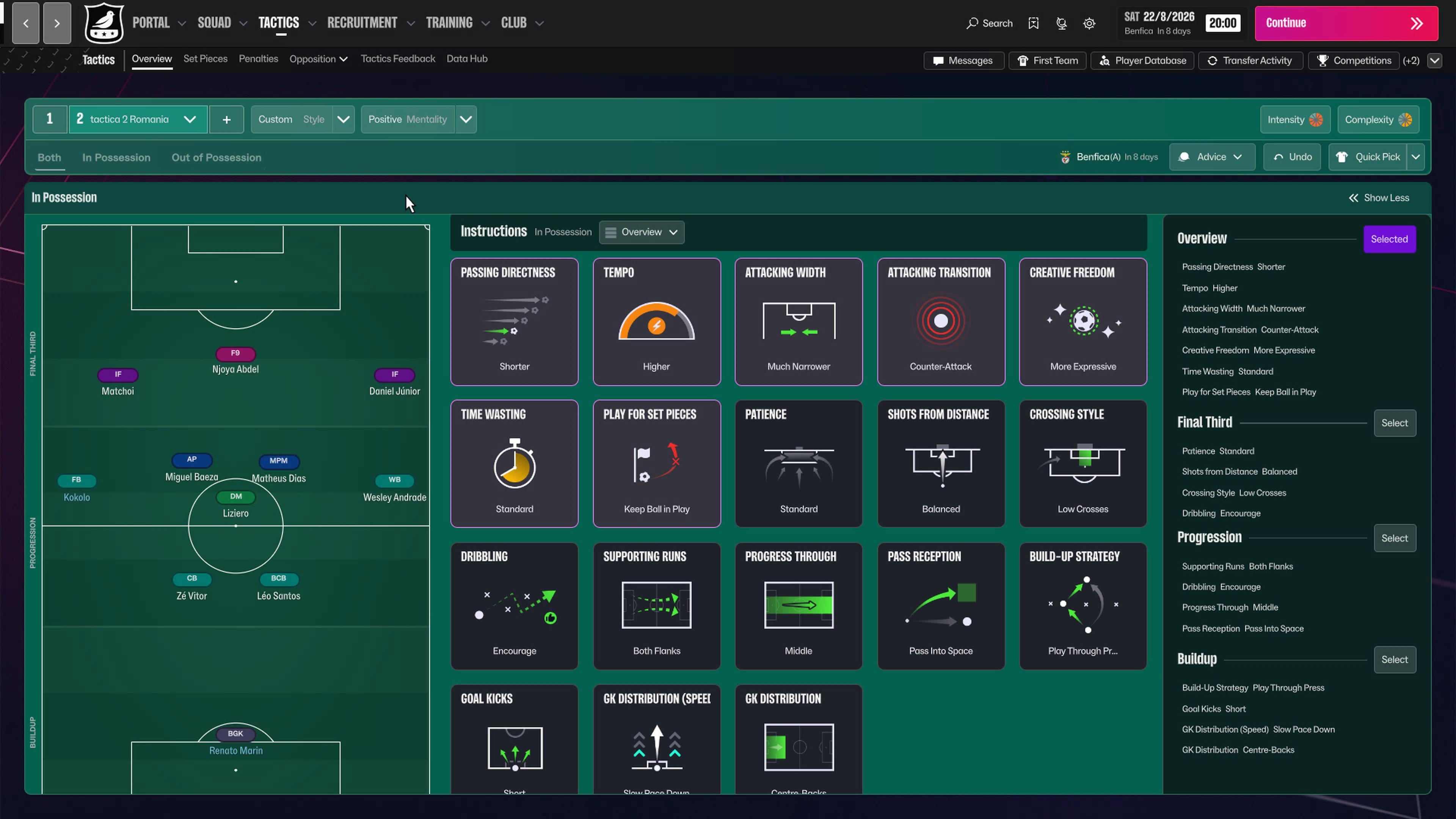
vertical tiki taka
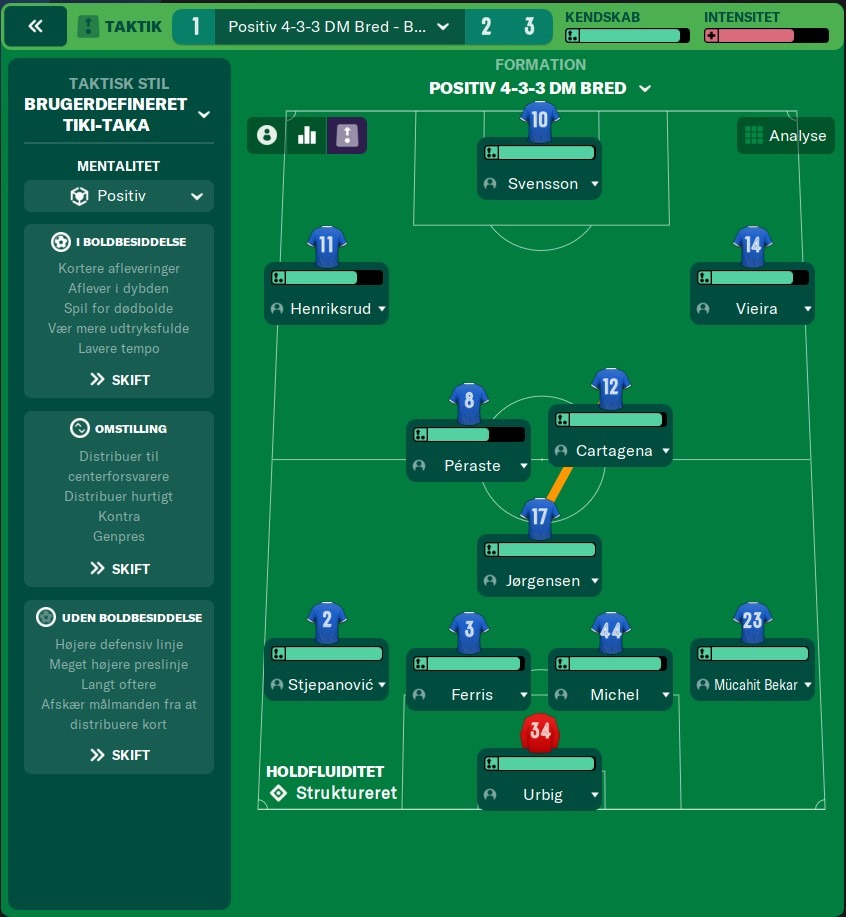
Tiki-Taka
Vertical Tiki-Taka
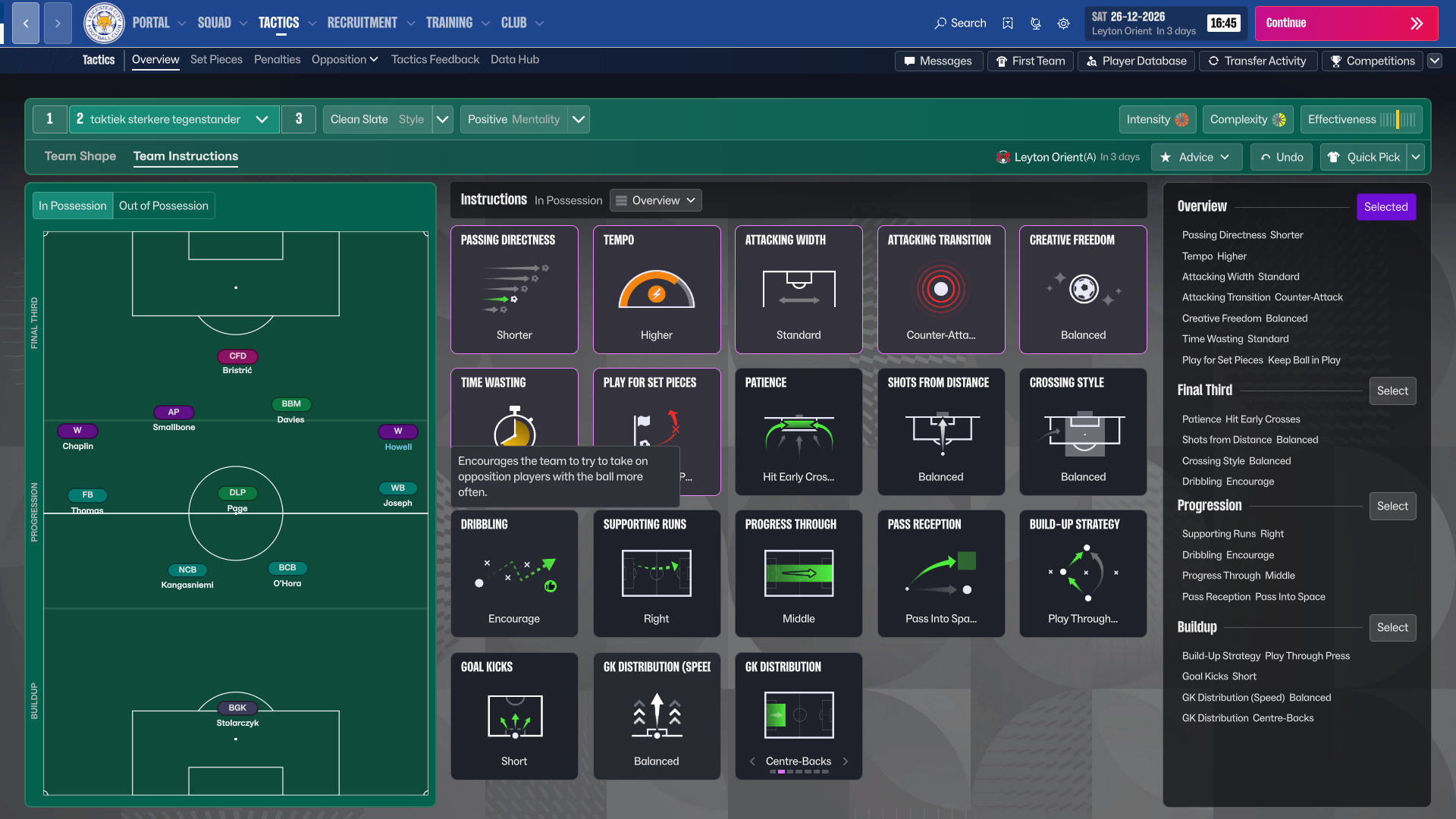
clean slate
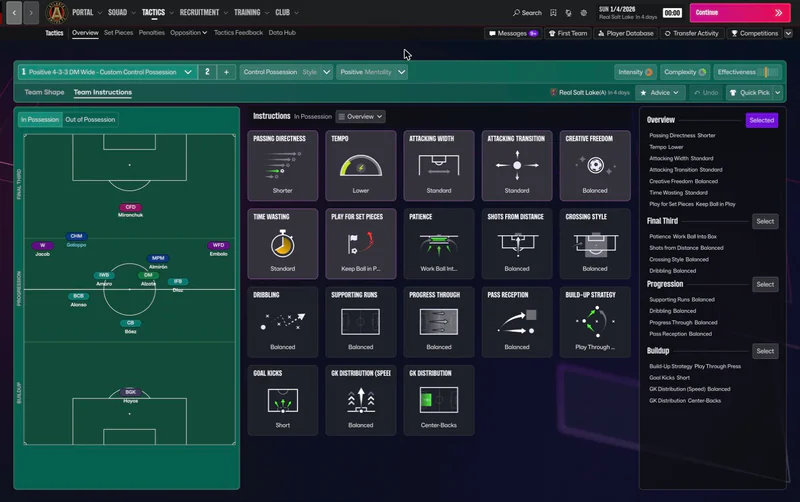
control possession
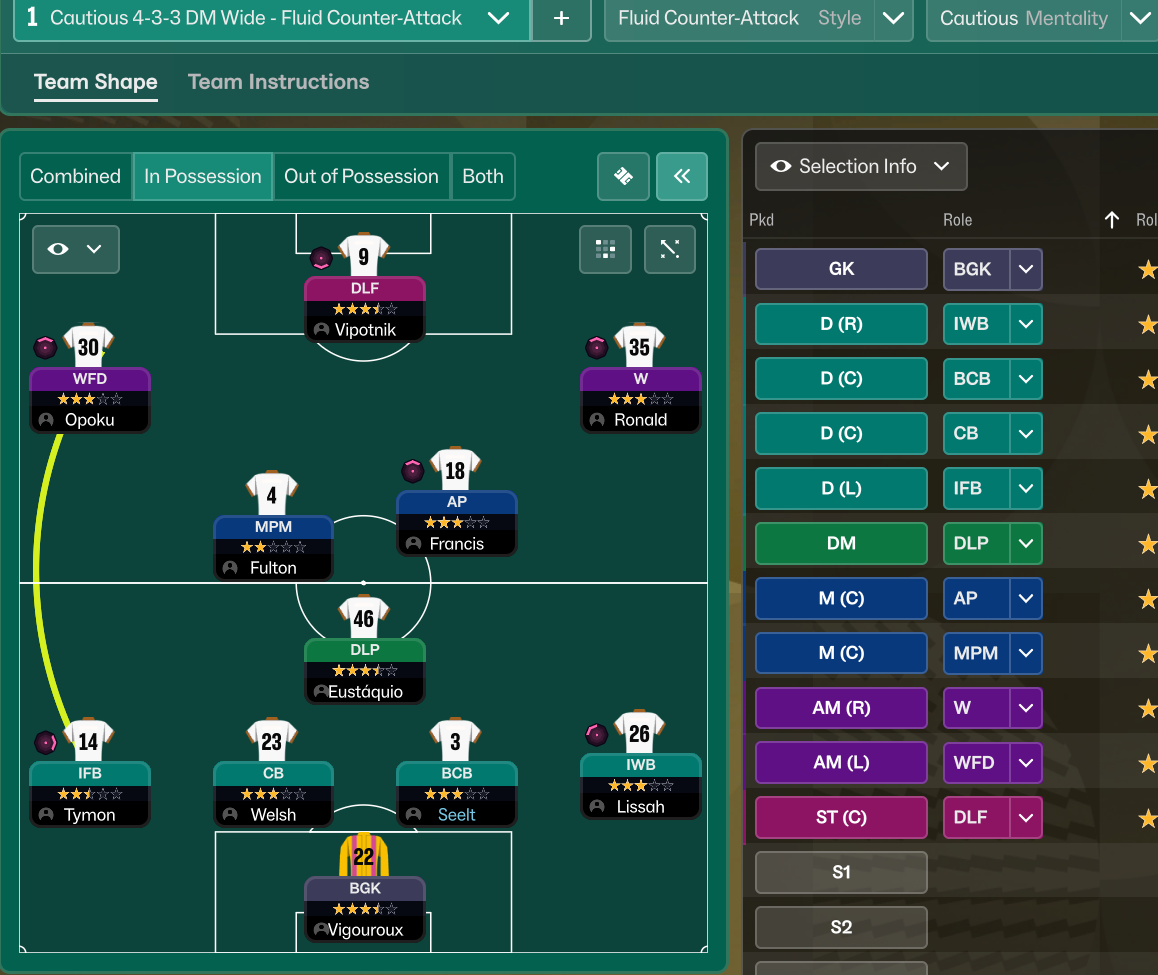
Fluid Counter-Attack
The tactical theory behind the 4-3-3 DM Wide: roles, instructions, and the trade-offs that decide whether the system holds up.
Master the classic 4-3-3: player roles, tactical variations, and the trade-offs that decide whether it sings or stalls.
Holder, runner, creator: the role distribution rule for three-man midfields, the AMC variants, and the antipatterns that break them.
Pass map, average position, xG, possession by zone: what each tablet panel tells you in FM and the tactical change it should trigger.