Uploaded Tactic
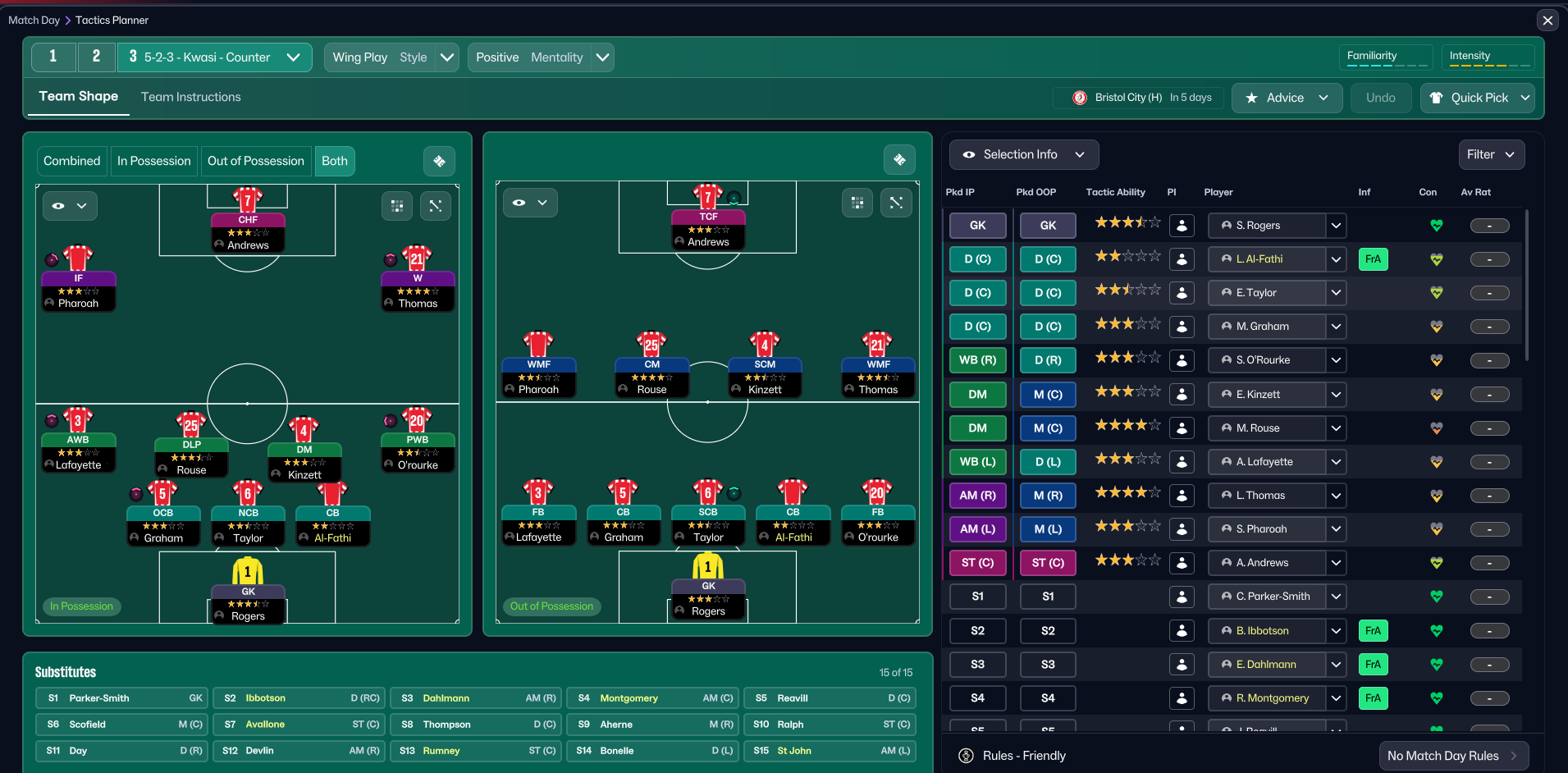
Formation & Style
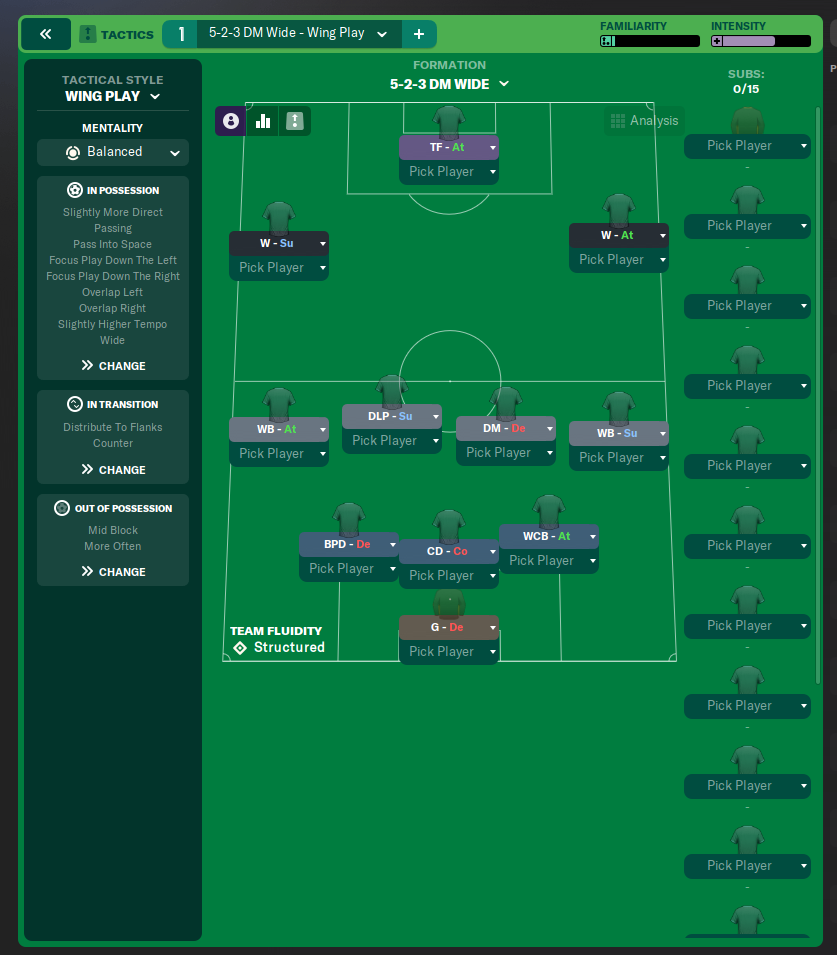
Tactical Style:Wing Play
Mentality:Positive
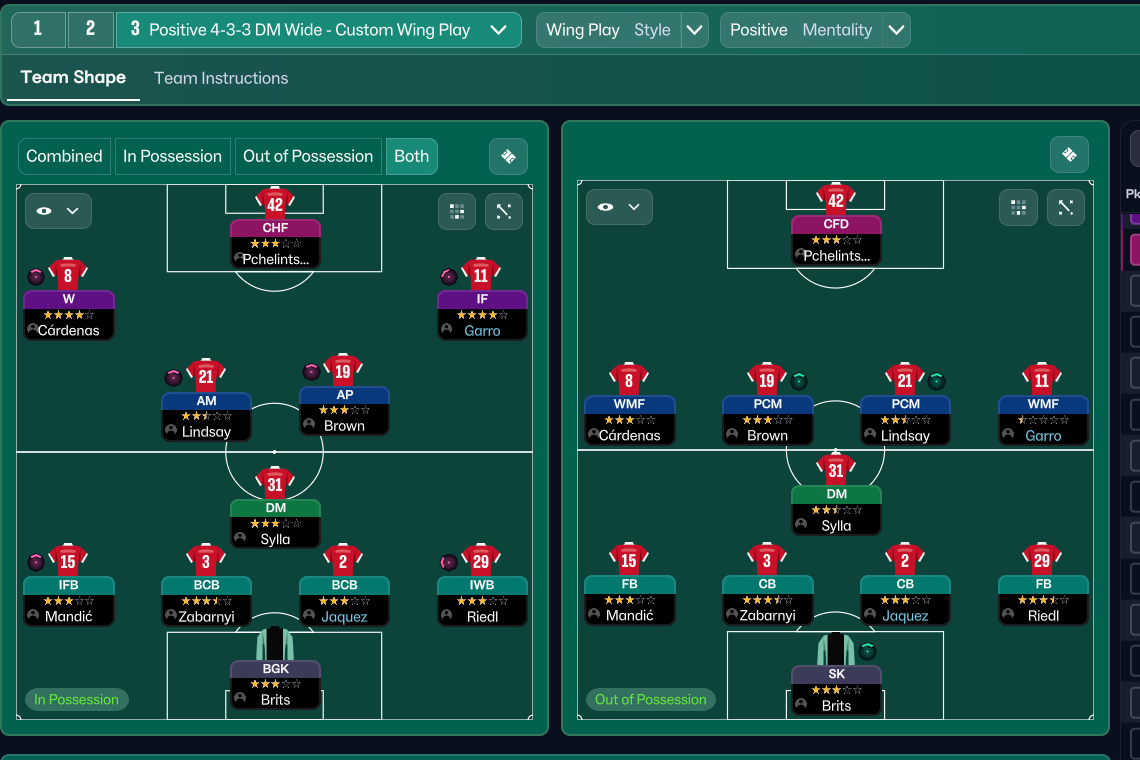
Formation:5-2-3
Team Fluidity:Structured
In Possession
Create Overlaps
Focus Play Down the Flanks
Play Out of Defence
Shorter Passing
In Transition
Counter
Counter-Press
Out of Possession
Higher Defensive Line
Higher Line of Engagement
Prevent Short GK Distribution
Trigger Press More Often
Team Shape Without Ball
Shape:5-4-1
Description:A strong defensive shape that floods the backline with five defenders, ensuring robust protection against attacks.
Evidence:NCB and OCB roles at [2,2], [2,3], and [2,4] establish a solid base.
Team Shape With Ball
Shape:3-2-3
Description:Employs three attacking players supported by two midfielders, capitalizing on wing play.
Evidence:Use of WMF and IF at [5,2] and [5,3] respectively, supported by PWB and AWB overlapping.
Phase Description
Attacking Play
Utilizes width through wing-backs to stretch the opposition while maintaining a compact central midfield.
Defensive Transition
Quickly transitions to a counter-press to regain possession and prevent quick opposition counter-attacks.
Main Focus
Exploiting the flanks while maintaining midfield control through deep-lying play.
Key Strengths
Defensive Solidity
A strong back five allows for covering defensive duties effectively.
Wing Play Efficiency
Wing-backs push high up to support wide attacks, offering width in the final third.
Midfield Control
The combination of a DM and a DLP ensures a balance of defense and creativity.
Conflicting Directions
Vulnerability to Central Overloads
With a compact midfield, the team may find it difficult against teams that focus play through the center.
Reliance on Wing-backs
Heavy reliance on wing-backs can lead to issues if they are marked closely.
Transition Speed
Slow transitions may lead to vulnerabilities against high-pressing teams.
Tactical Suggestions
Integrate a More Fluid Midfield
Consider using a roaming playmaker to increase creativity and fluidity in midfield.
Adjust Wing-back Roles
Consider changing the duty of PWB and AWB to support to offer more balanced attacking options.
Expand the Depth of the Front Line
Incorporating a second striker could provide more options when attacking.
Ask Questions About Your Lineup
Related Tactics
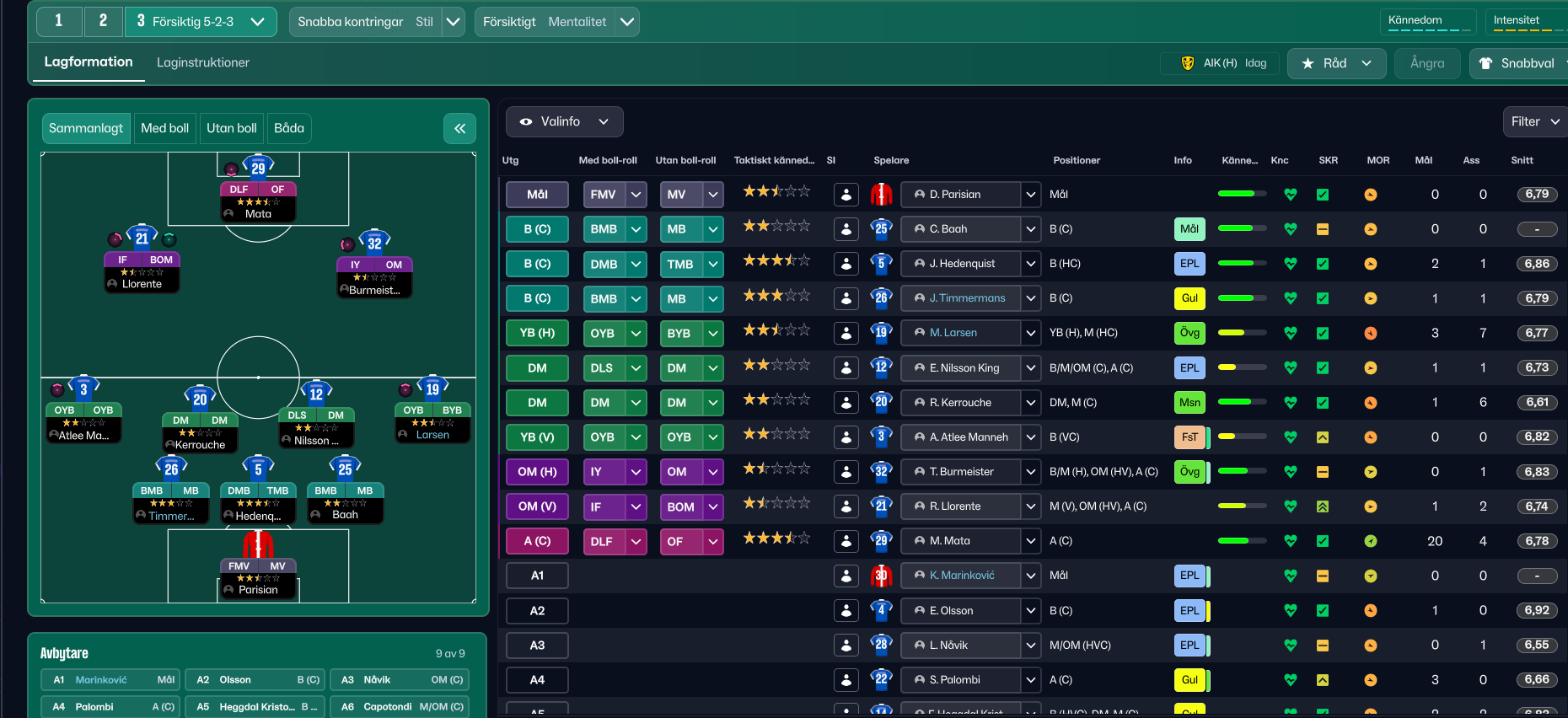
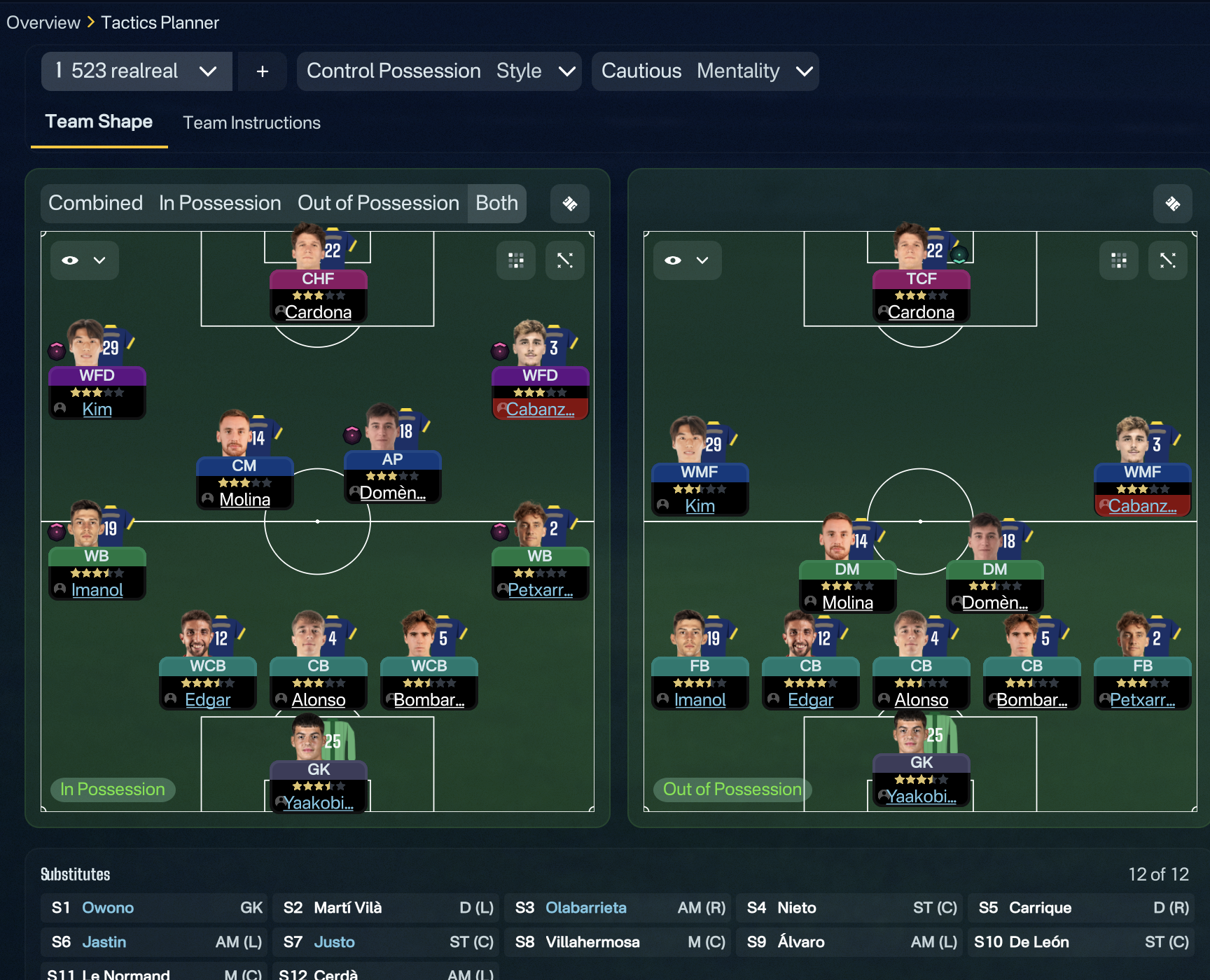
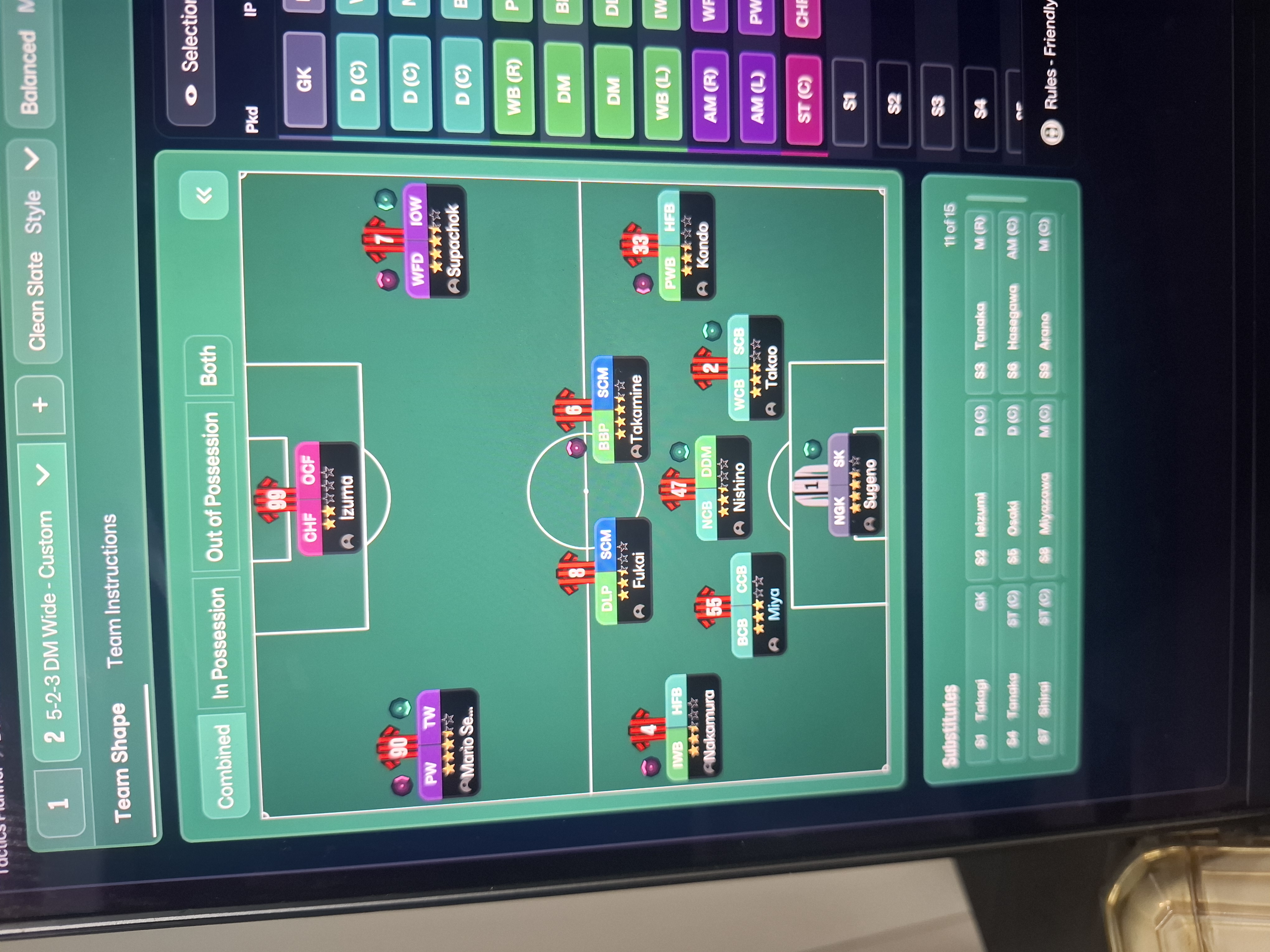
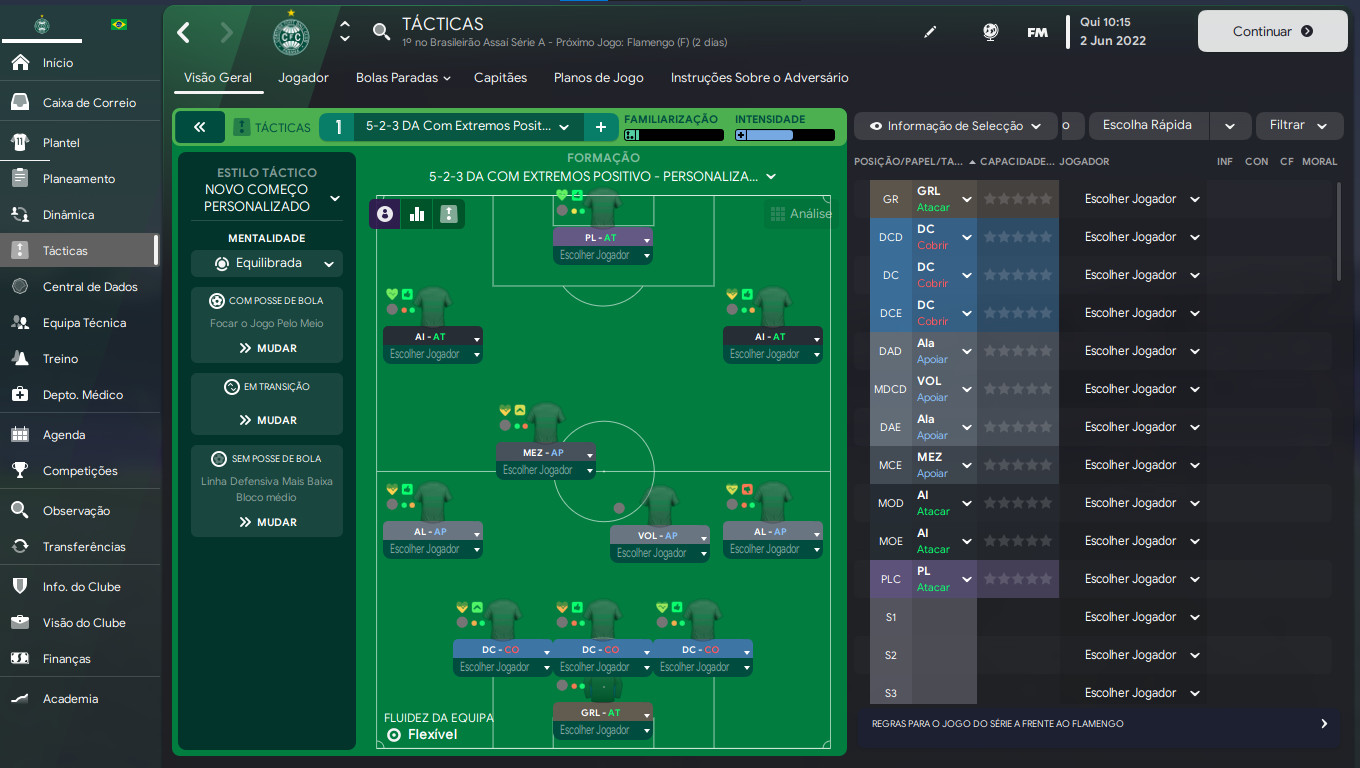
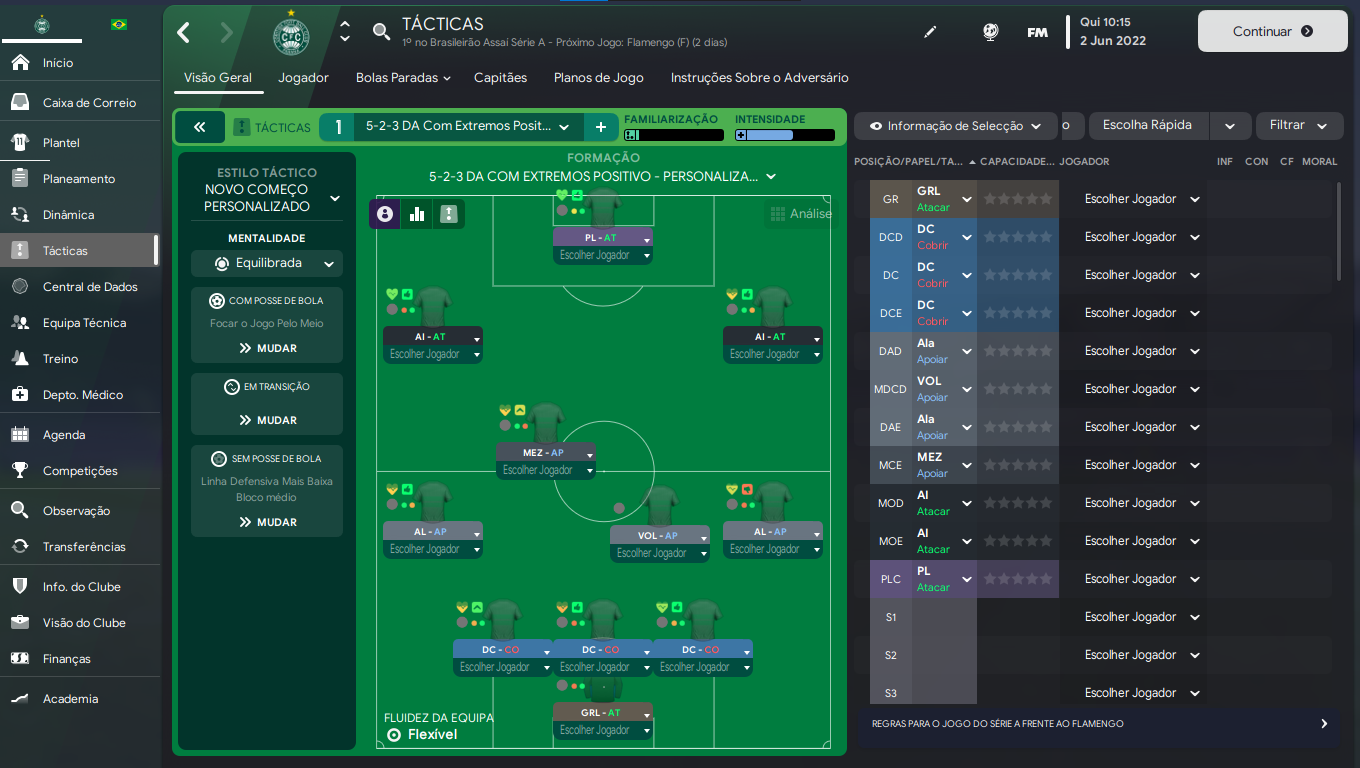
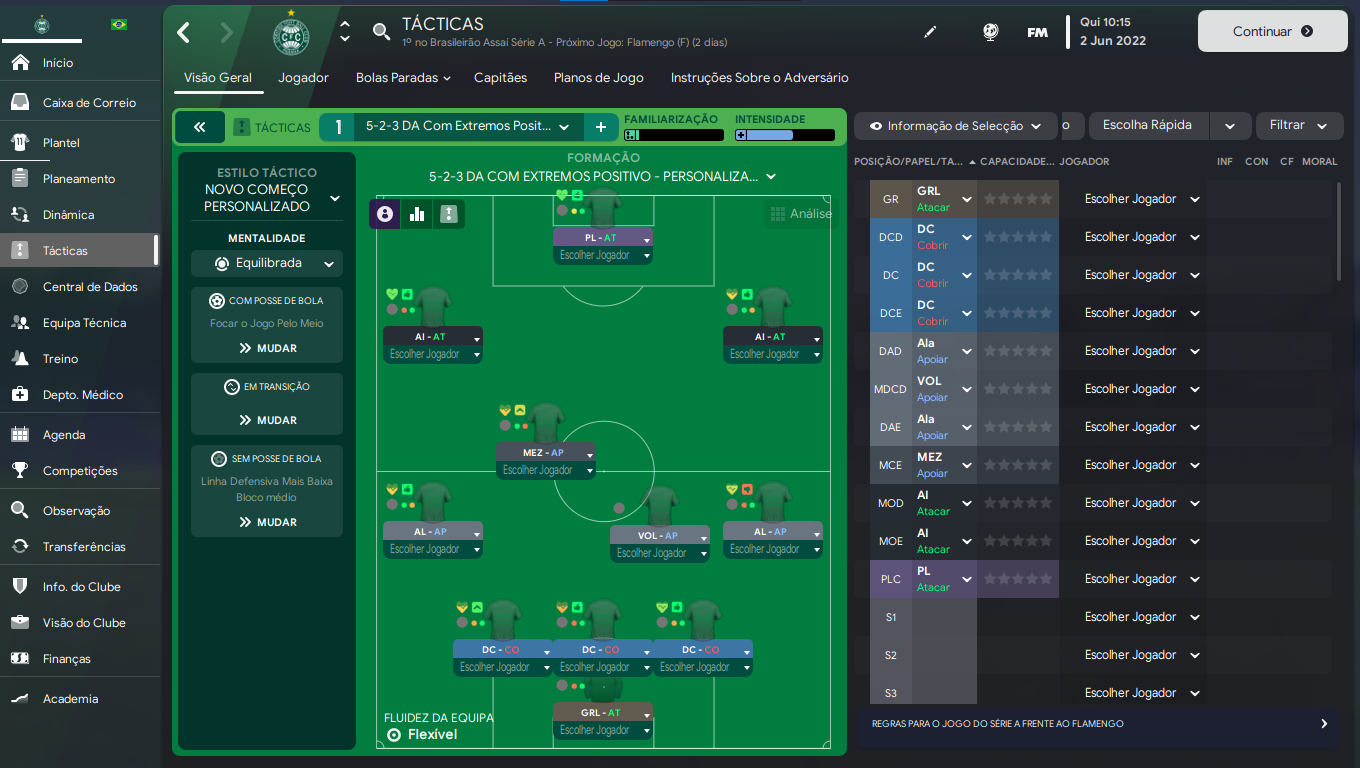
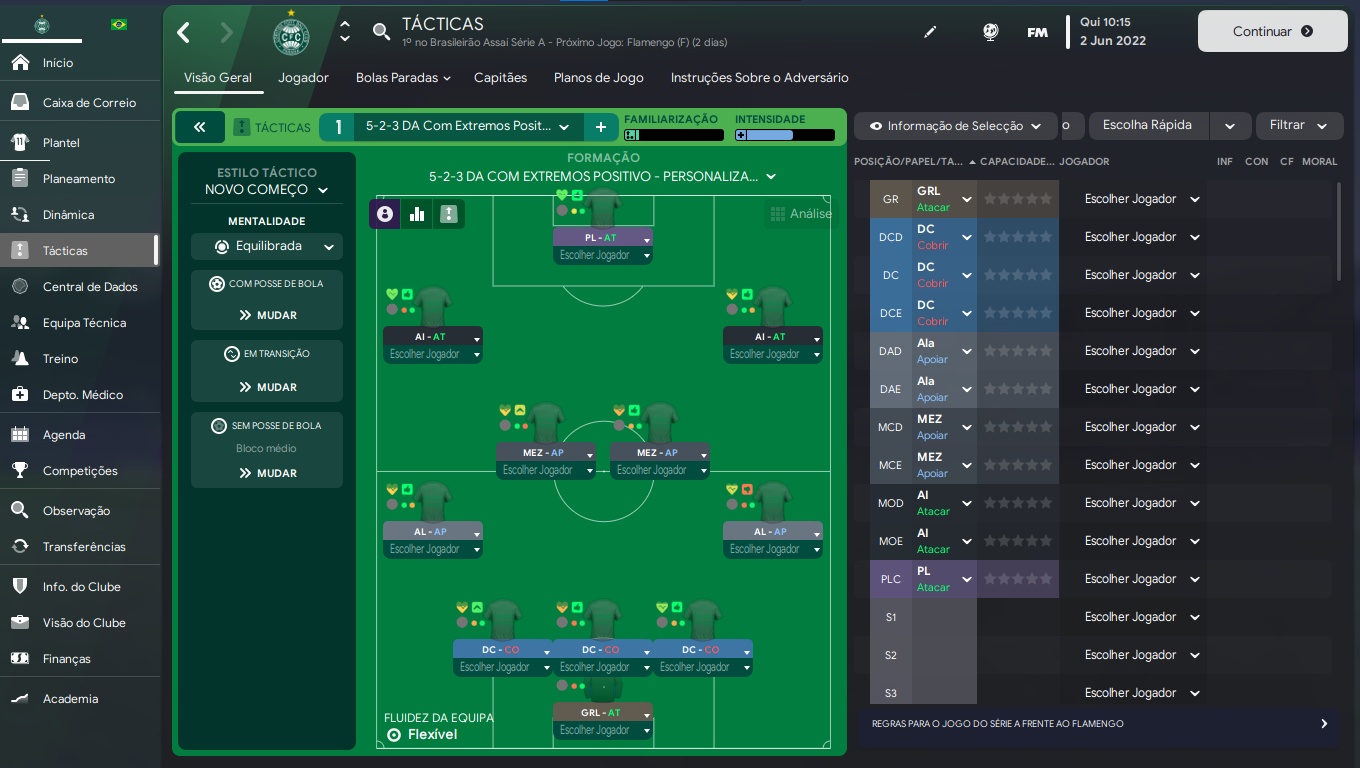
More Wing Play tactics
Guides for this formation
The tactical theory behind the 5-2-3: roles, instructions, and the trade-offs that decide whether the system holds up.