Uploaded Tactic
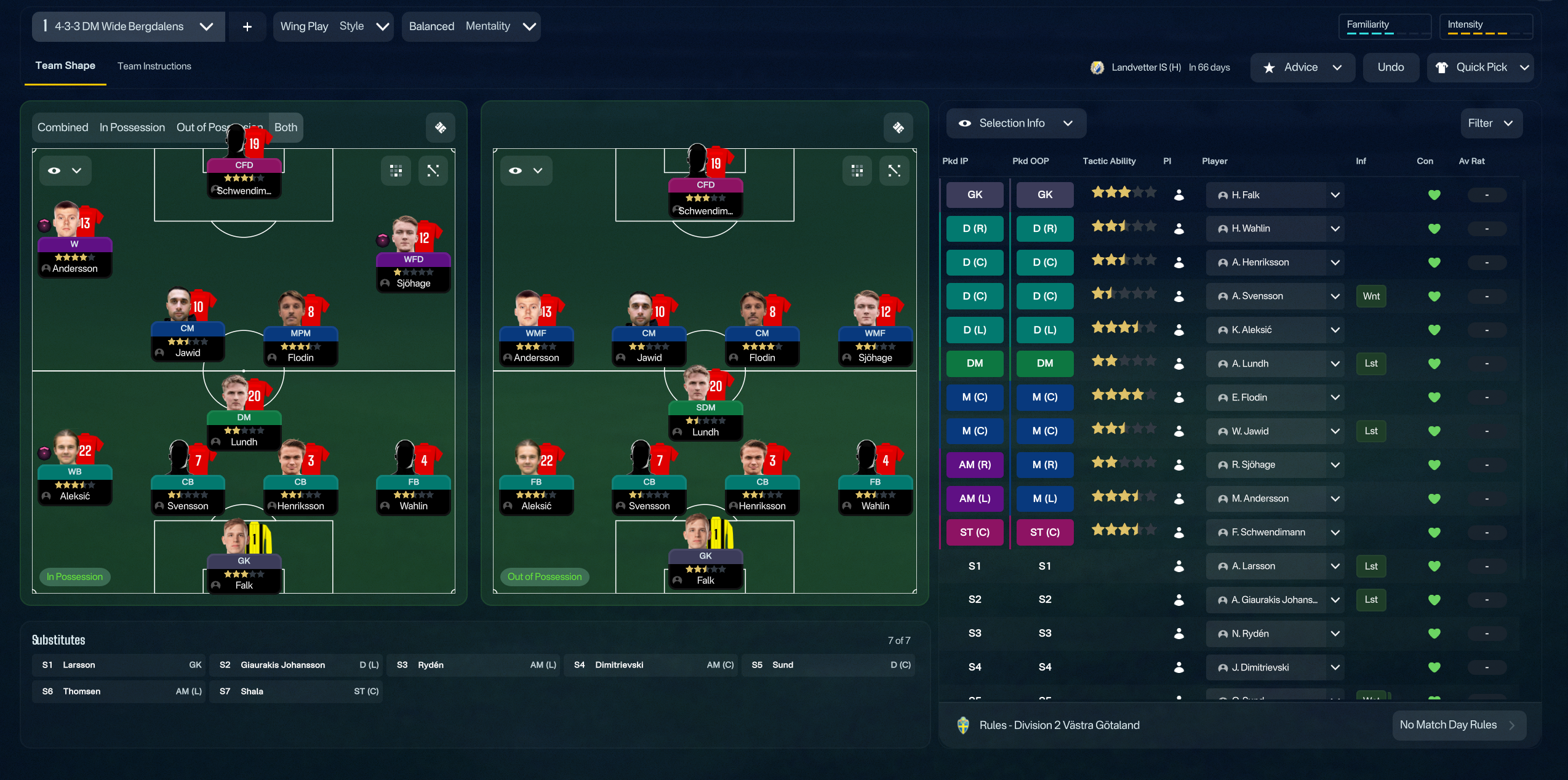
Formation & Style
Tactical Style:Wing Play
Mentality:Balanced
Formation:4-3-3
Team Fluidity:Structured
In Possession
Attack through the flanks
Focus play down the right
Be more expressive
In Transition
Counter-Press
Counter
Out of Possession
Higher Line of Engagement
Higher Defensive Line
Prevent Short GK Distribution
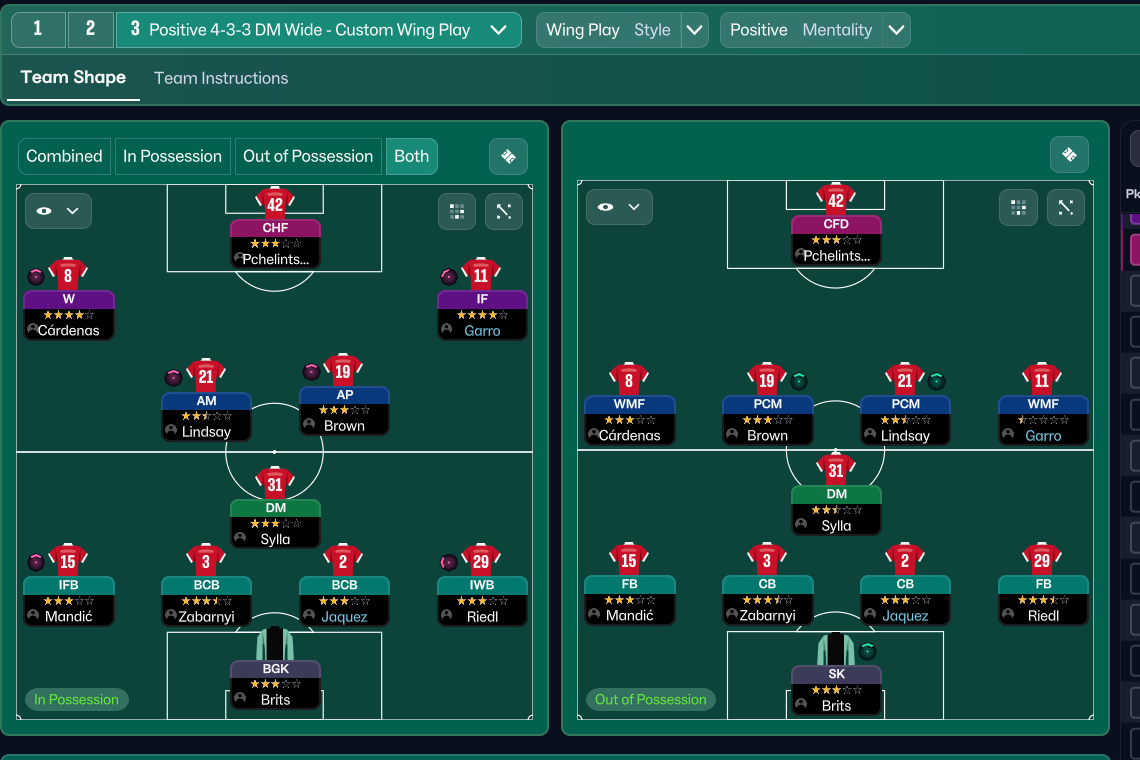
Team Shape Without Ball
Shape:4-3-3
Description:Solid defensive shape providing cover through the midfield area.
Evidence:DM at [3,3] stabilizing the center.
Team Shape With Ball
Shape:4-3-3
Description:Wide players stretch the opposition, creating space for central striker.
Evidence:WF at [6,2] and WMF at [6,1] combining with the CF.
Phase Description
Attacking Play
Prioritizing wing play with width and pace from wingers.
Defensive Transition
Quick recovery and pressing immediately after losing possession to regain ball.
Main Focus
Flank play leading to crossing opportunities.
Key Strengths
Wide Play Threat
Utilization of wide players creates consistent threat from flanks.
Solid Midfield Control
The presence of a DM allows better control in midfield.
High Pressing Strategy
Encourages a quick recovery of possession from any turnovers.
Conflicting Directions
High Deep Block
Could leave defensive gaps if the defensive line is too high against fast opponents.
Midfield Overload
Potential weakness if midfield is bypassed by direct play.
Slow Build-Up
Can be ineffective if wingers are not involved early enough.
Tactical Suggestions
Adjust Defensive Line
Consider lowering the defensive line against faster opponents to prevent being caught on the break.
Involve Wingers More
Encourage more overlapping runs from FBs to support the wingers.
Midfield Balance
Assess if more support is needed for the DM to mitigate direct central attacks.
Ask Questions About Your Lineup
Related Tactics
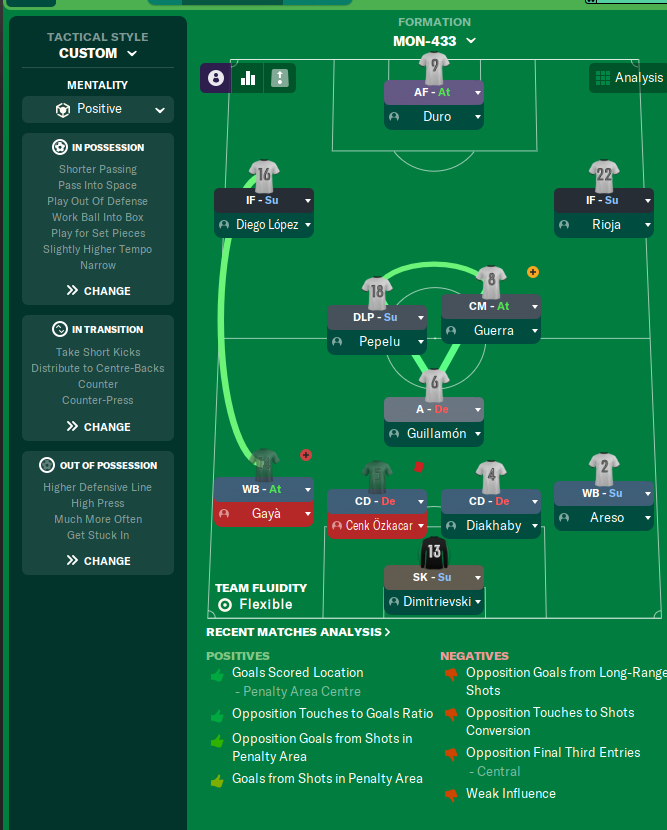
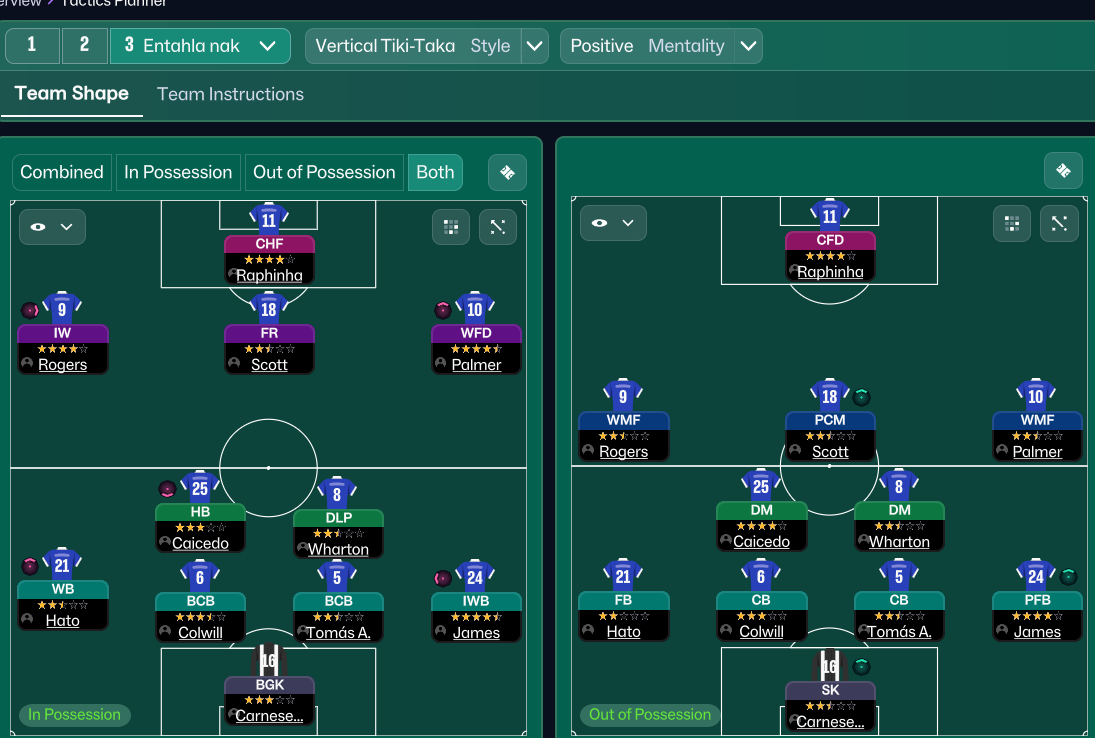
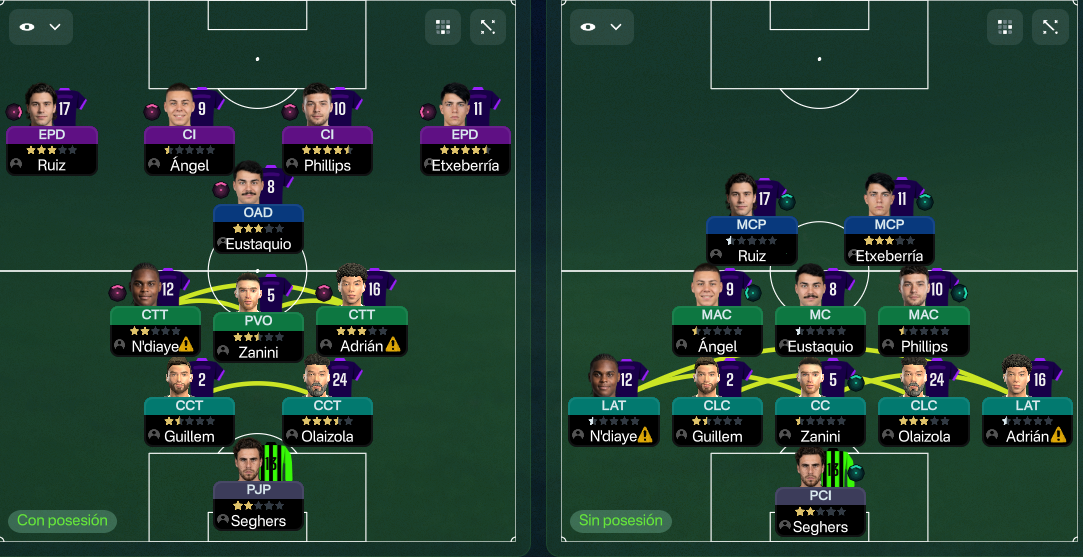
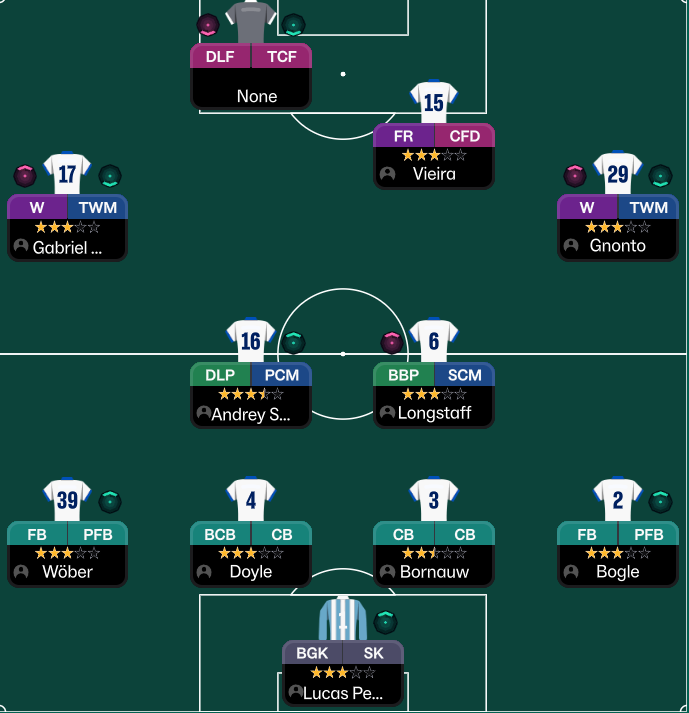
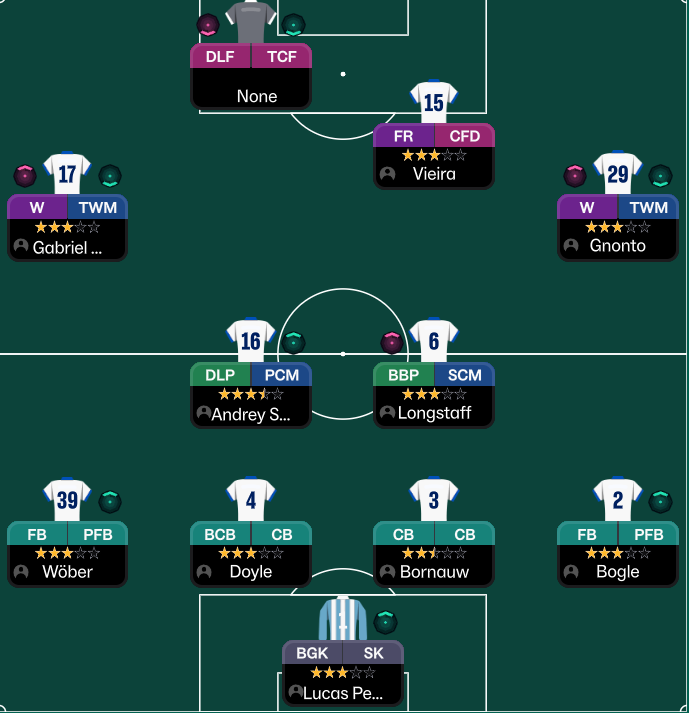
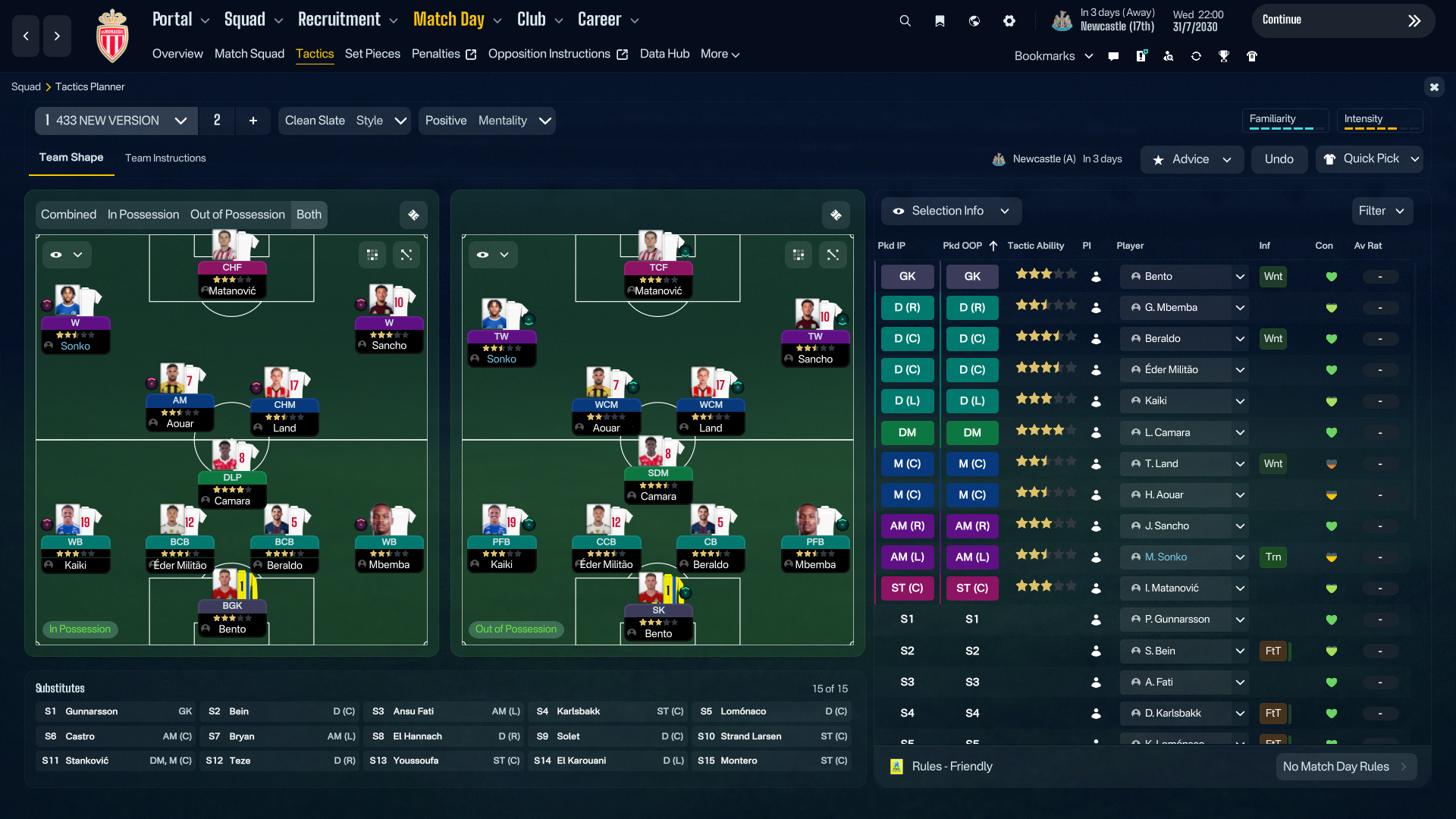
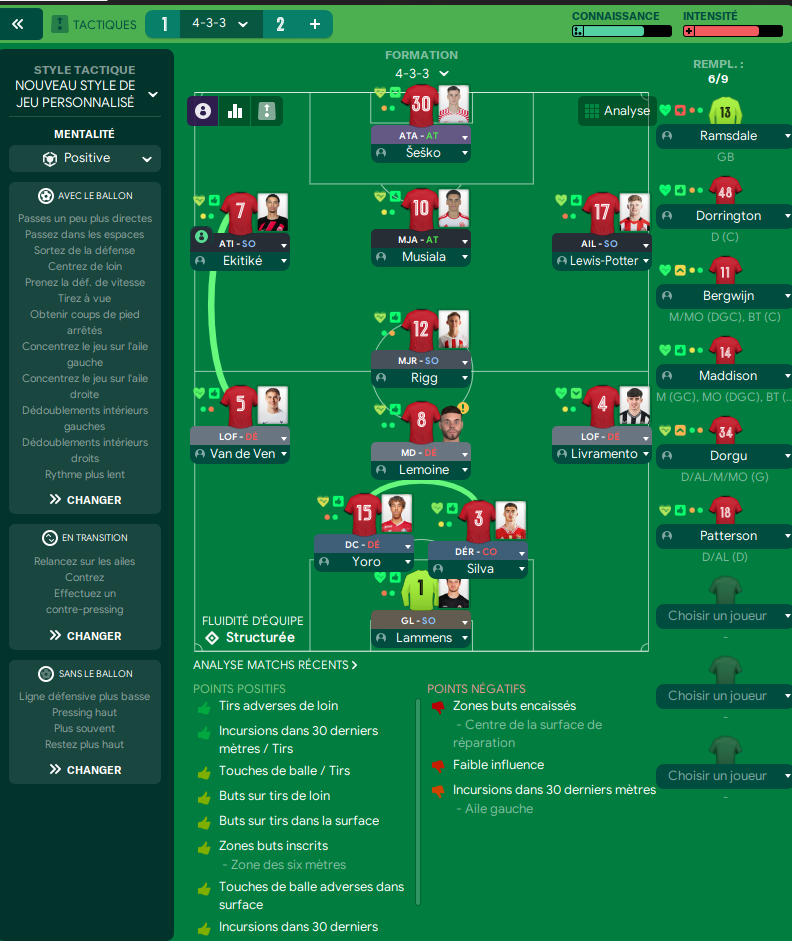
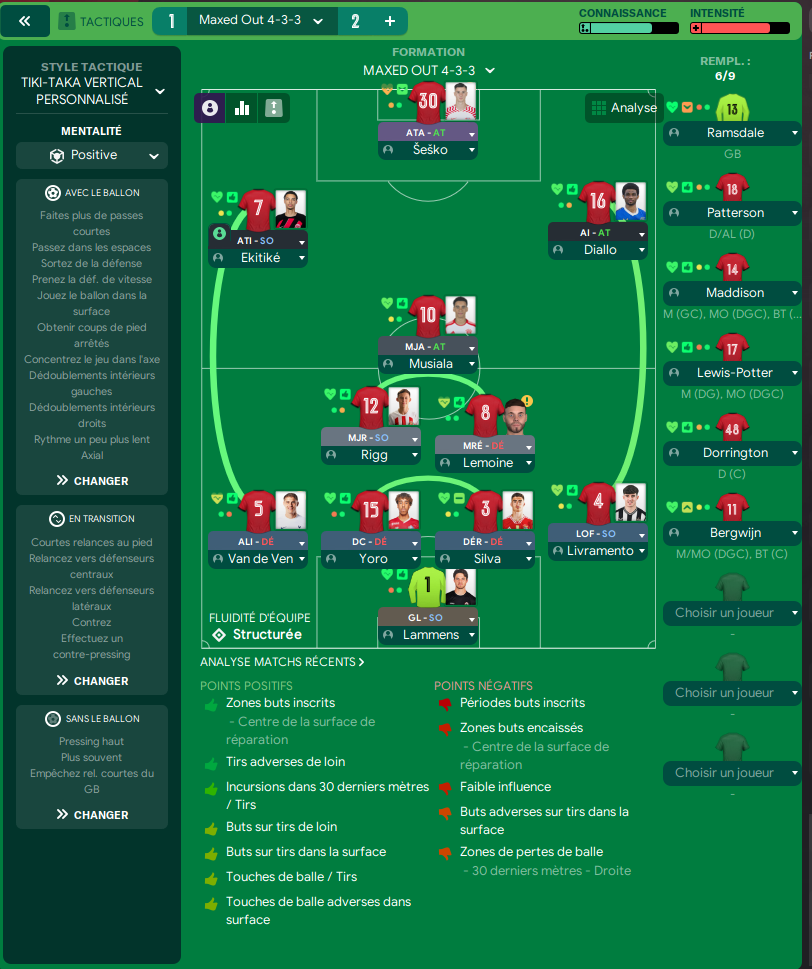
More Wing Play tactics
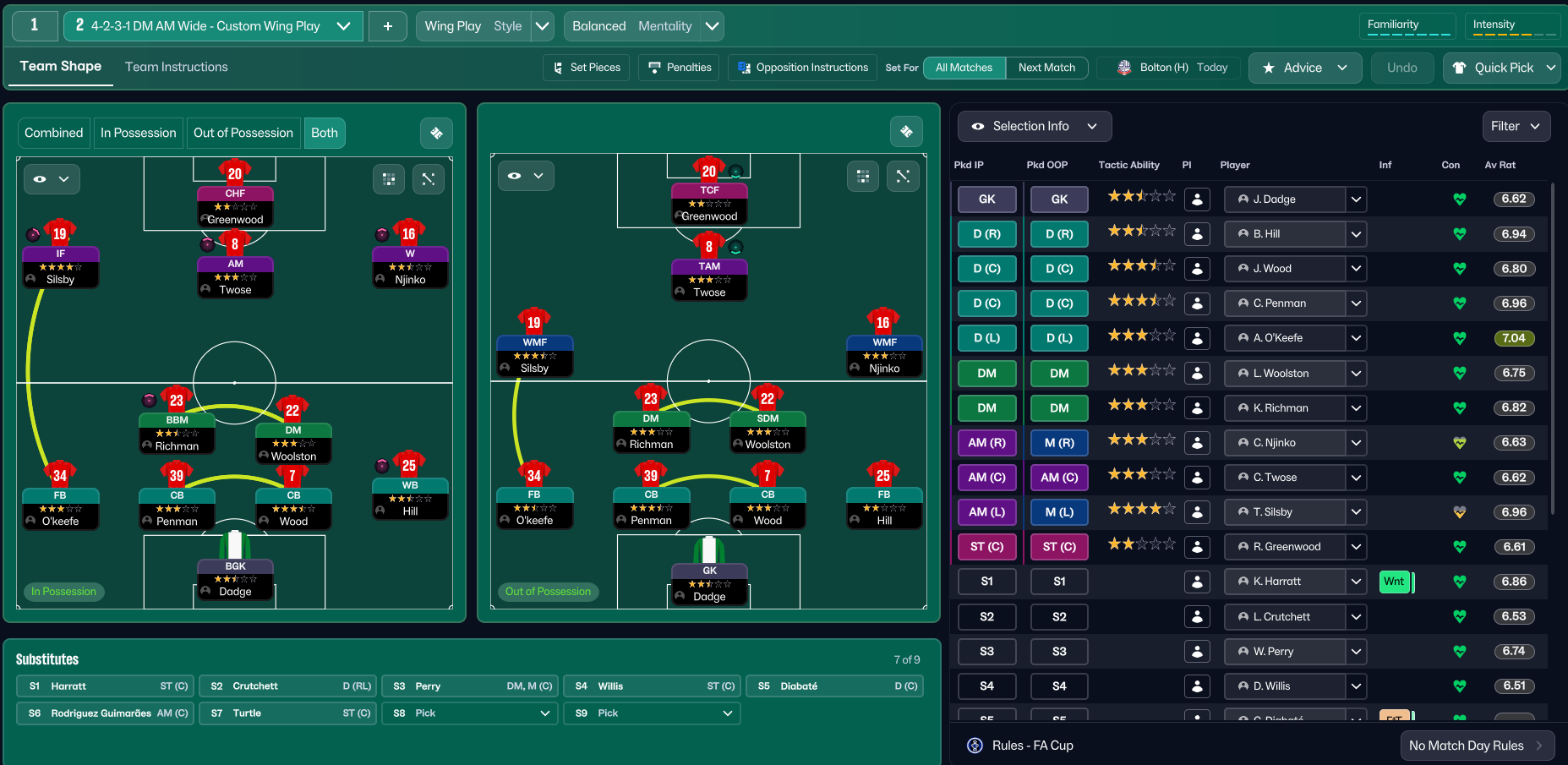
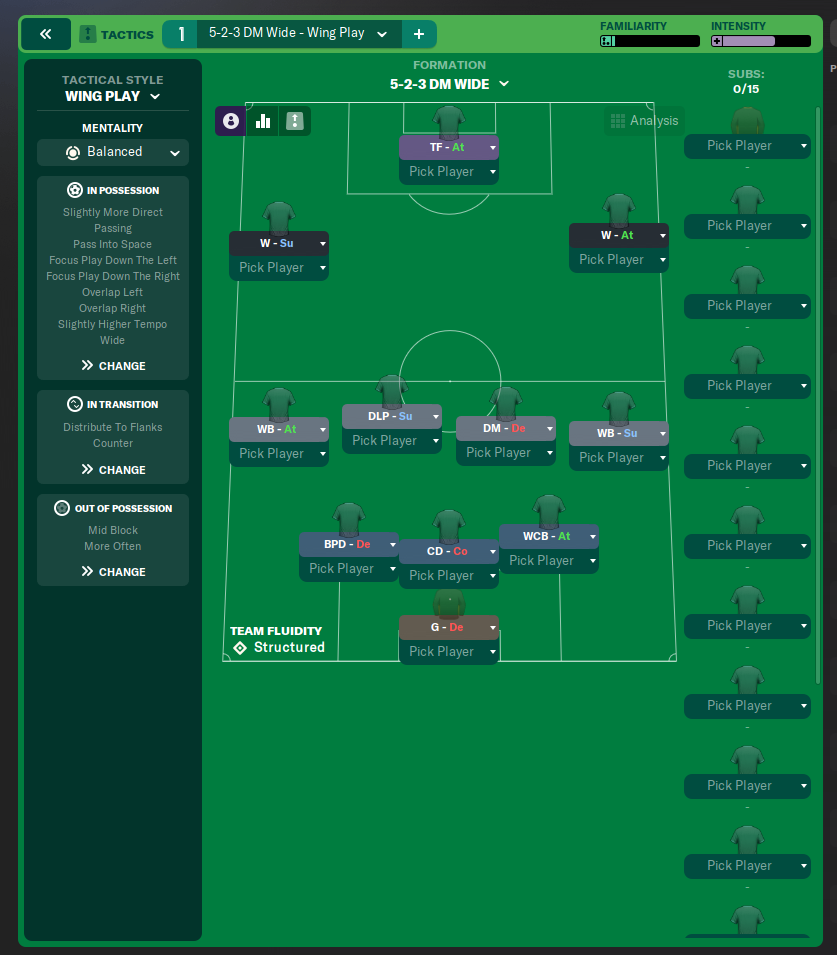
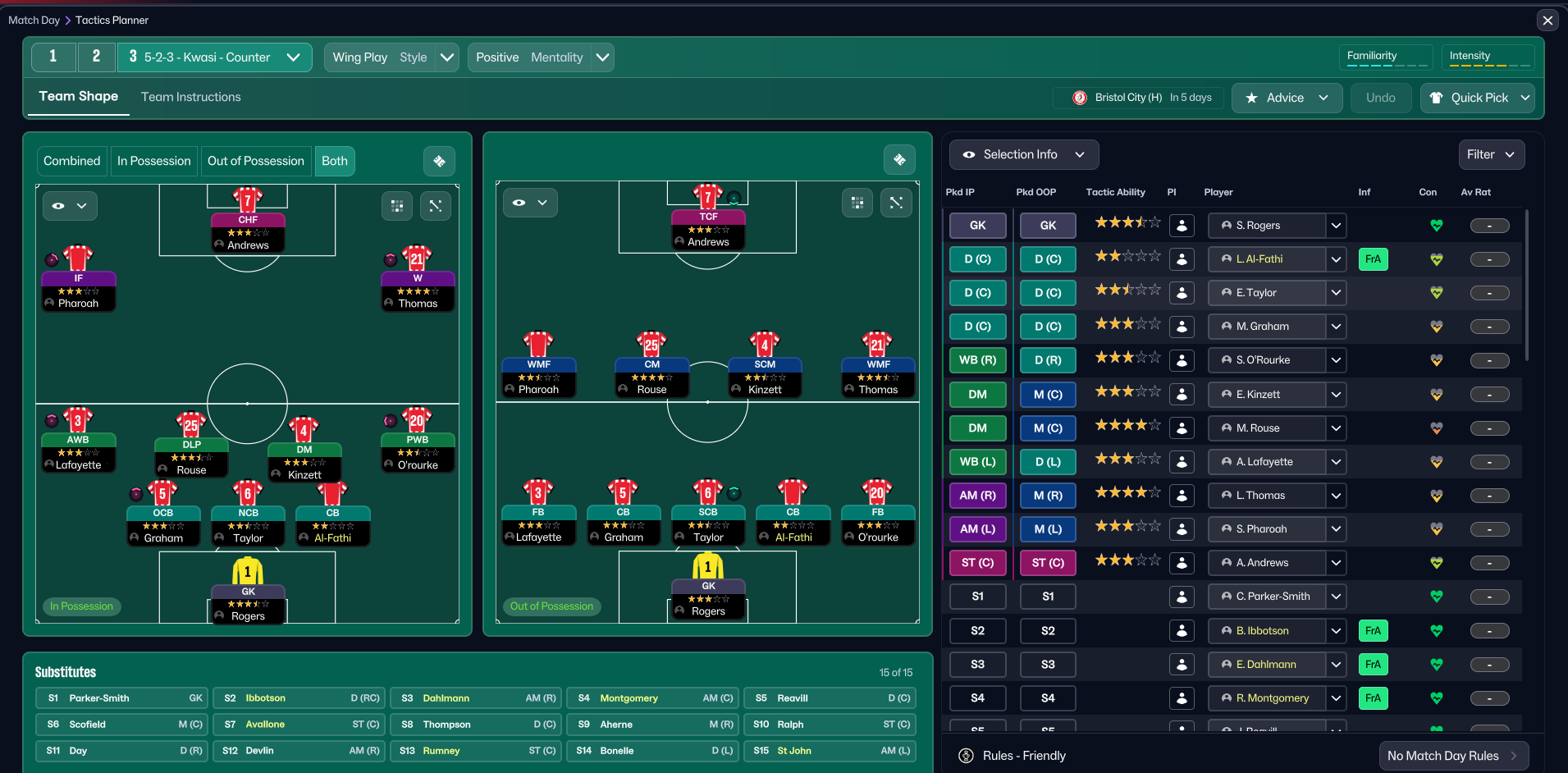
Guides for this formation
The tactical theory behind the 4-3-3: roles, instructions, and the trade-offs that decide whether the system holds up.
Foundations
Understanding the 4-3-3 Formation
Master the classic 4-3-3: player roles, tactical variations, and the trade-offs that decide whether it sings or stalls.
Read guide
Player pairings
Midfield Trios
Holder, runner, creator: the role distribution rule for three-man midfields, the AMC variants, and the antipatterns that break them.
Read guide
Playing styles
Gegenpressing: A Full Guide
Klopp-style gegenpressing in FM, including squad profile, line-and-press pairing, sustainable workload, and the antipatterns to avoid.
Read guide