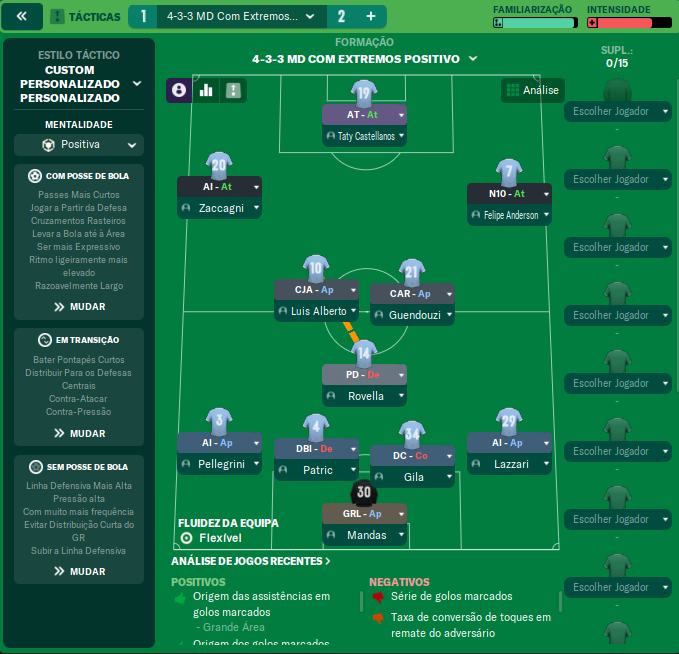
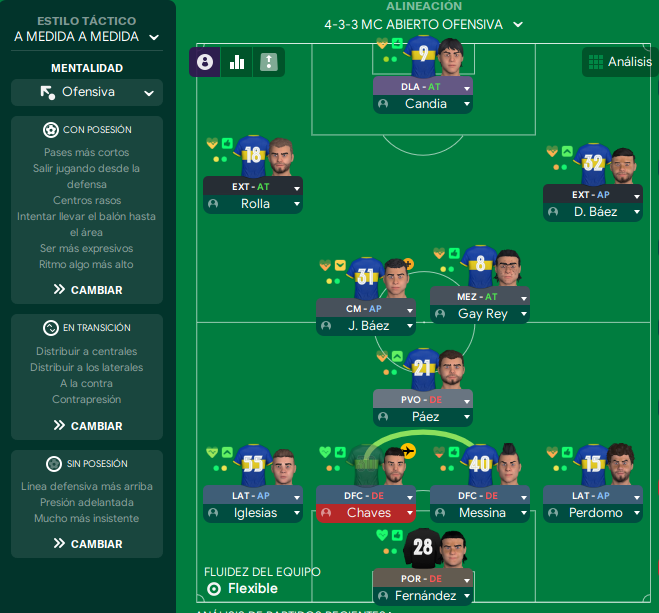
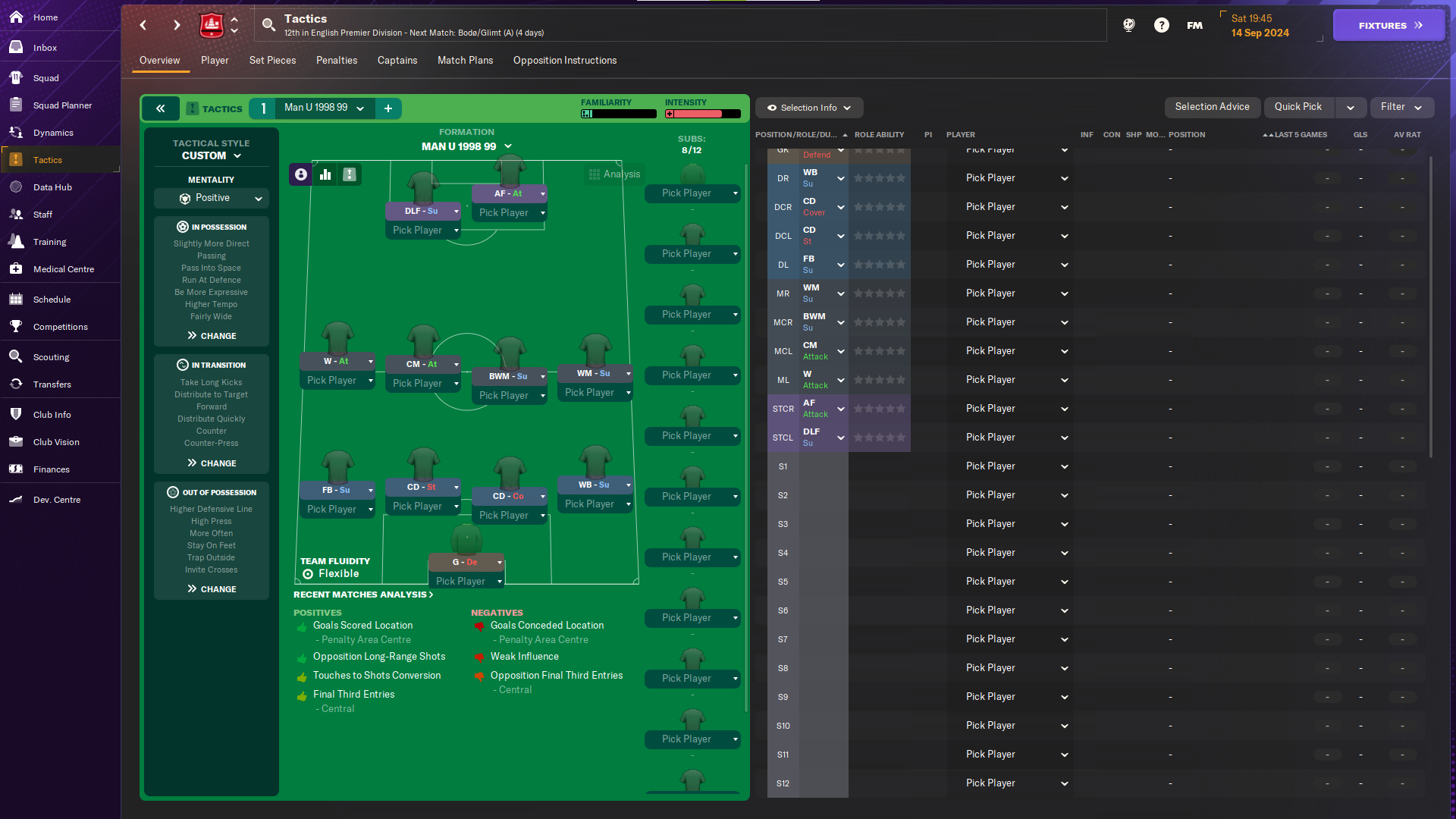
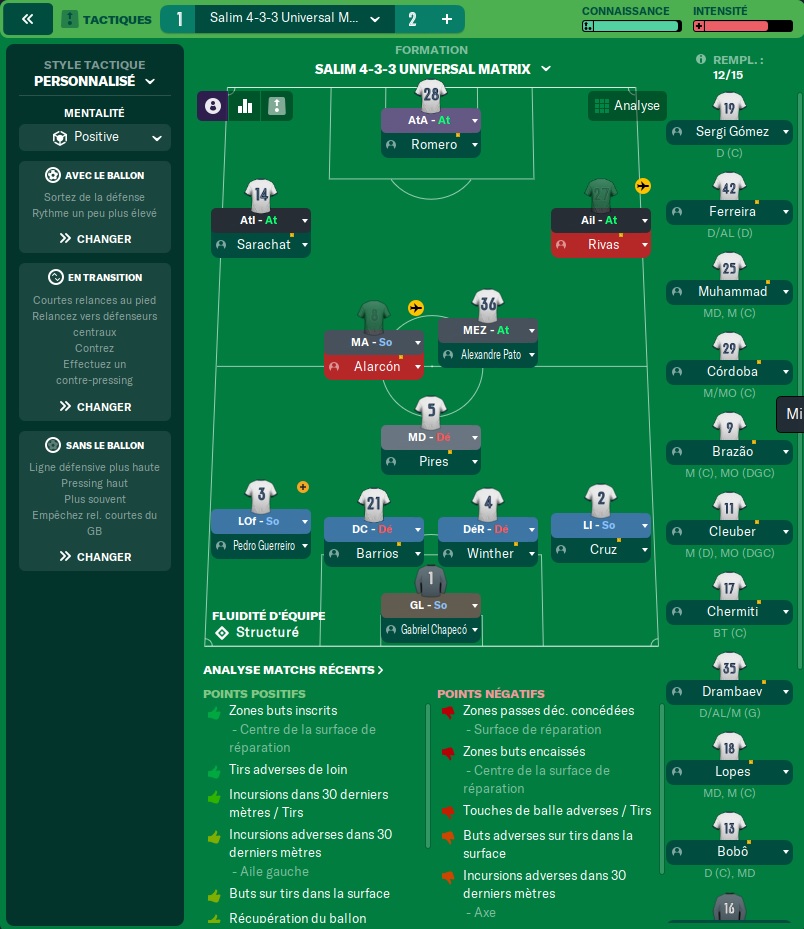
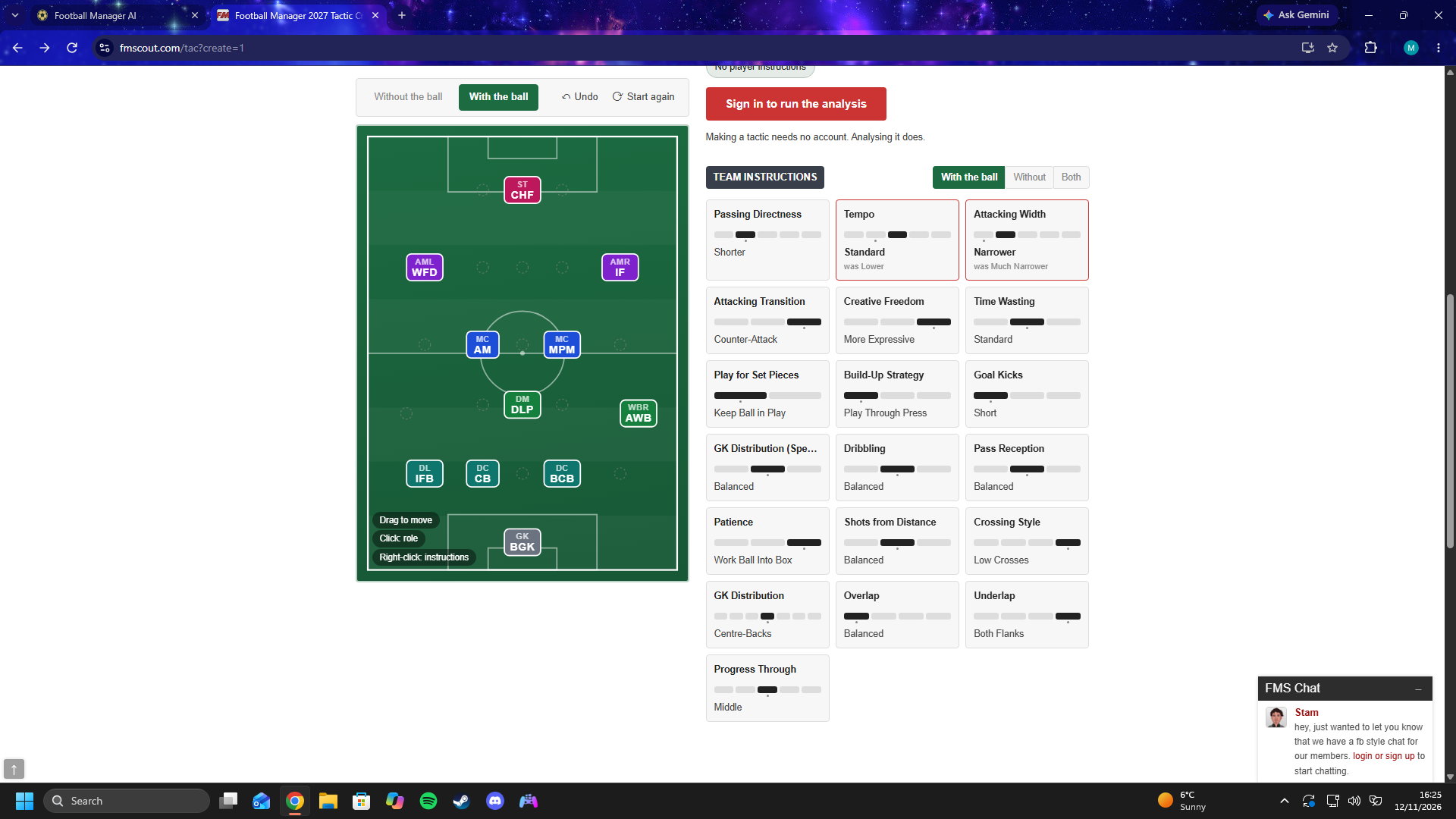
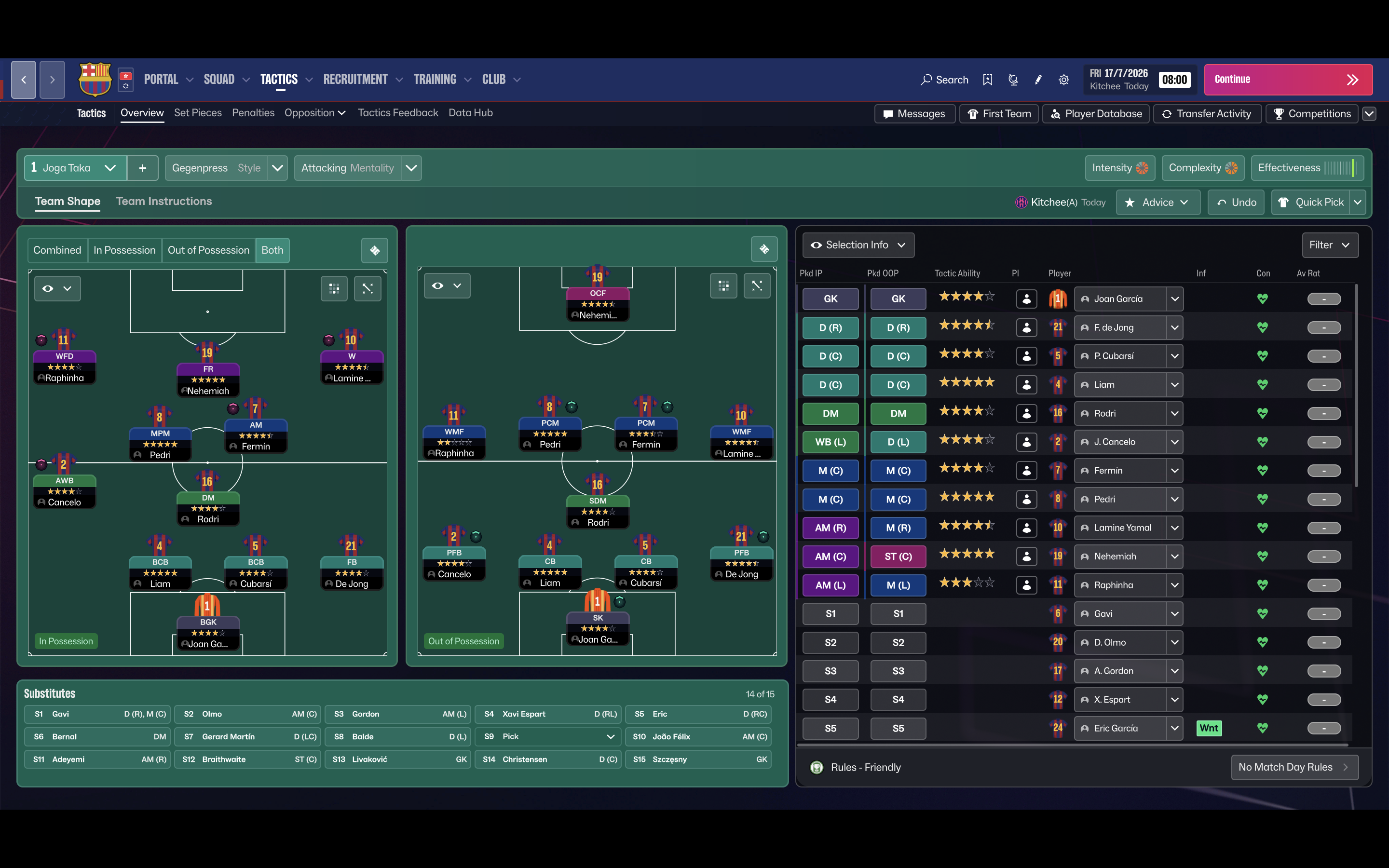
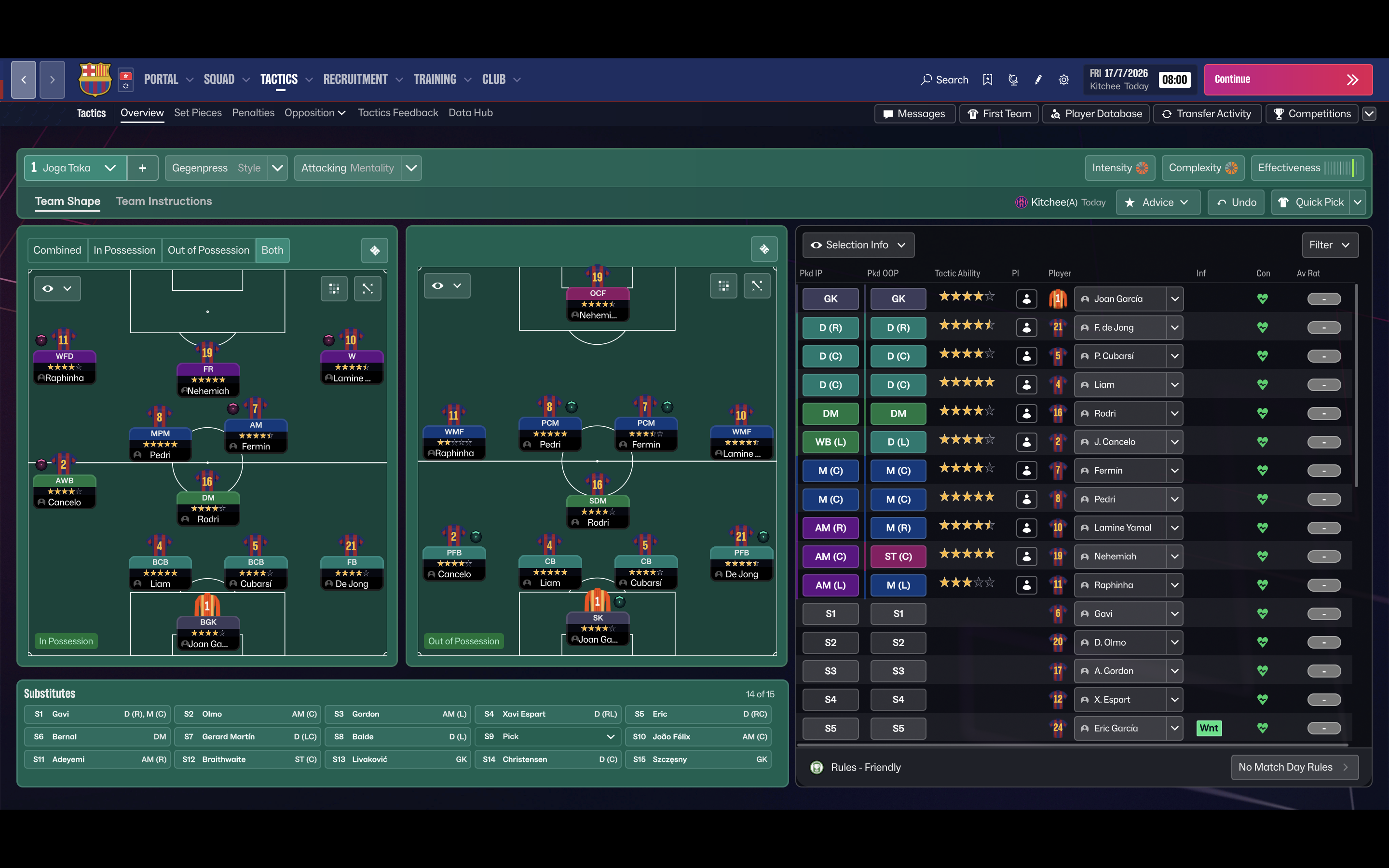
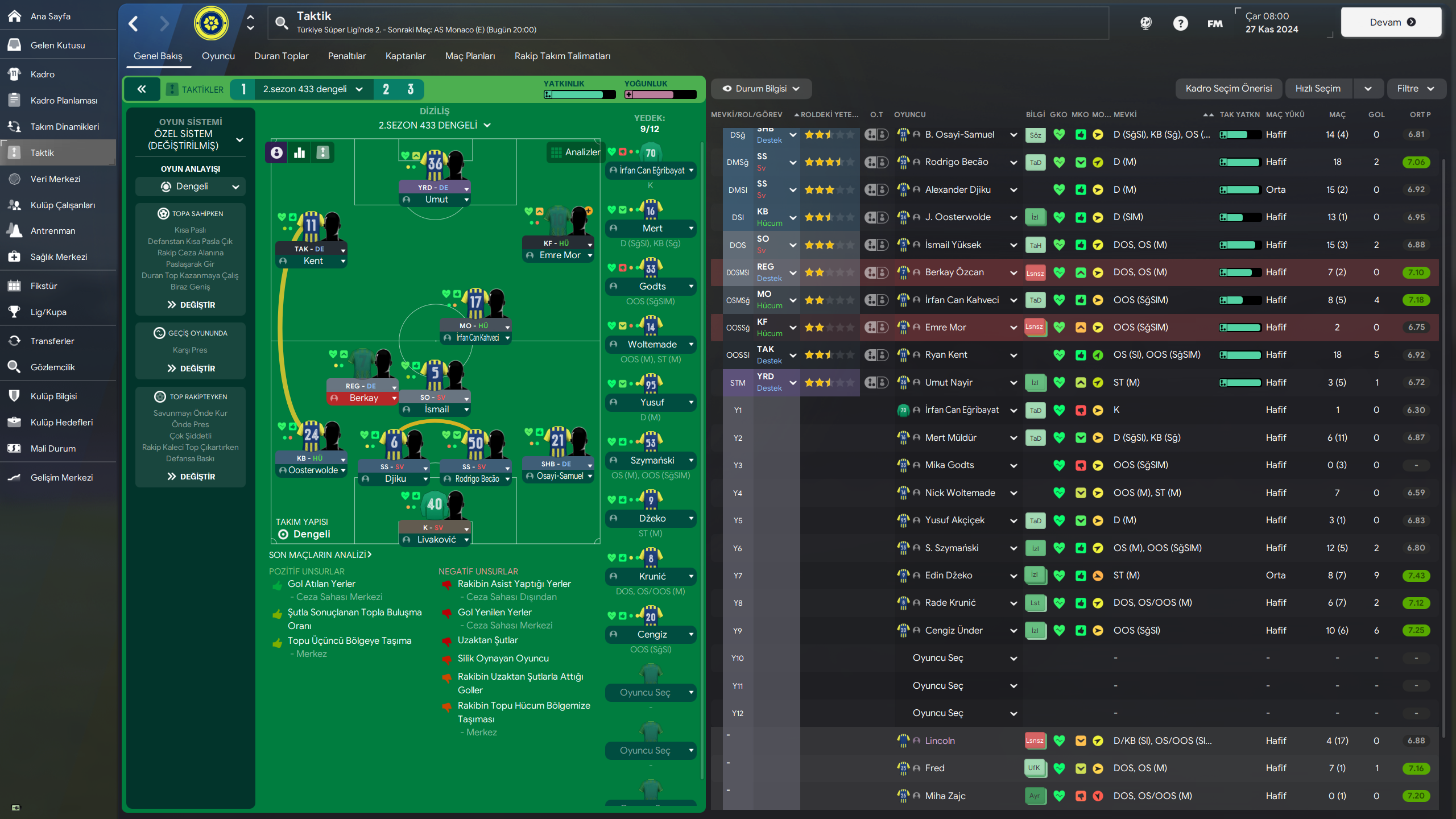
4-3-3
Creating chances through a mix of width from wing-backs and inside forward movement. Utilizes wing-backs and wide midfielders to stretch the opponent's…
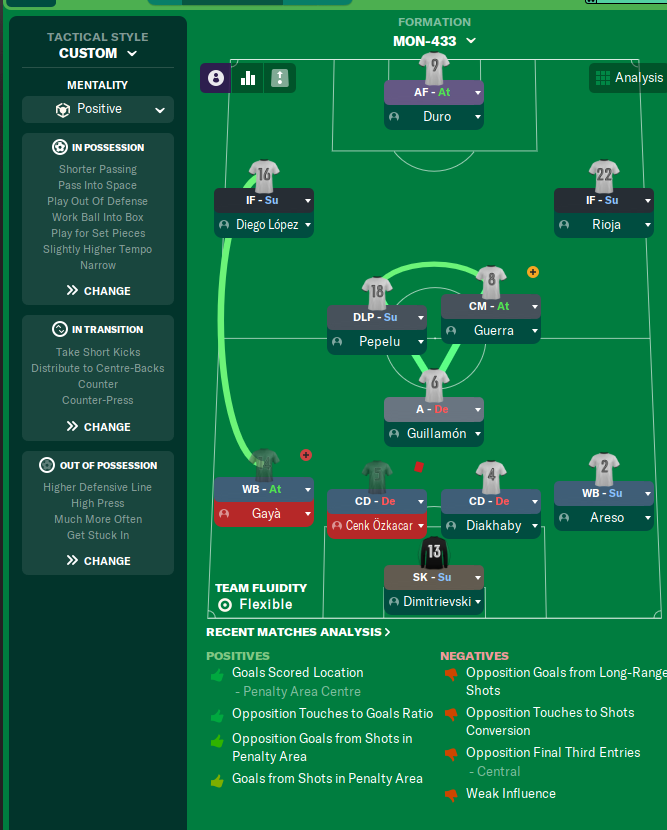
Loading tactical analysis...
Custom
Positive
4-3-3
Flexible
Shorter Passing
Pass Into Space
Play Out Of Defence
Work Ball Into Box
Play For Set Pieces
Slightly Higher Tempo
Narrow
Take Short Kicks
Distribute to Centre-Backs
Counter
Counter-Press
Higher Defensive Line
High Press
Much More Often
Get Stuck In
GK
Sweeper Keeper
Support
CD
Central Defender
Defend
CD
Central Defender
Defend
WB
Wing-Back
Attack
WM
Wide Midfielder
Attack
CM
Central Midfielder
Attack
DLP
Deep-Lying Playmaker
Support
IF
Inside Forward
Support
IF
Inside Forward
Attack
AF
Advanced Forward
Attack
The team focuses on maintaining possession through shorter passing and utilizing width via the wing-backs.
Quickly switches to a counter-press after losing the ball, trying to regain possession immediately.
Creating chances through a mix of width from wing-backs and inside forward movement.
Higher Defensive Line
The team employs a high defensive line to engage the opponent further up the pitch.
Defensive line is set to 'Higher' and utilizes a 'High Press'.
Fluid Front Three
Versatile attacking front with combinations between forwards and midfielders for penetrating movements.
Advanced Forward and Inside Forwards allow for dynamic attacking shapes.
Utilizes wing-backs and wide midfielders to stretch the opponent's defense.
WM-At at [4,1] and WB-A at [2,1] create space for inside forward combinations.
High tactical pressing that can unsettle opponent's build-up play.
High Press and Counter-Press tactics implemented.
High pressing may leave gaps if the ball is bypassed.
Higher Defensive Line may be exposed by quick counter-attacks.
Heavy emphasis on wing-backs may limit central penetration.
Narrow strategy may compromise central attacking players, especially in tight matches.
Defensive Transition
Potentially vulnerable to counter-attacks if possession is lost unexpectedly.
Counter-Press suggests aggressive recovery, but leaves spaces.
Central Defense Vulnerability
Central defenders may be outpaced in transitions.
CD-De roles at [2,3] and [2,4] could struggle against quick forwards.
DLP-S and CM-A
DLP provides deeper passes while CM can push forward to support attacks.
DLP-S at [3,3] helps in connecting defense to attack.
WB-A and IF-S
Wing-backs can create overlap while inside forwards cut inside.
WB-A at [2,1] and IF-S at [5,1] can create space for attacks.
How can the midfield balance be maintained in tougher matches?
What adjustments should be made against teams with fast wingers?
How can we enhance the effectiveness of counter-pressing?
The tactical theory behind the 4-3-3: roles, instructions, and the trade-offs that decide whether the system holds up.
Klopp-style gegenpressing in FM, including squad profile, line-and-press pairing, sustainable workload, and the antipatterns to avoid.
Why circulation density and zonal occupation aren't the same thing in FM, and the half-space occupation rule that decides build-up.
How Mentality, Duty, and Role interact in FM, why duty trumps mentality every time, and the role-on-top-of-duty composition rules.