Possession 4-3-3 (Attacking) Tactic
4-3-3
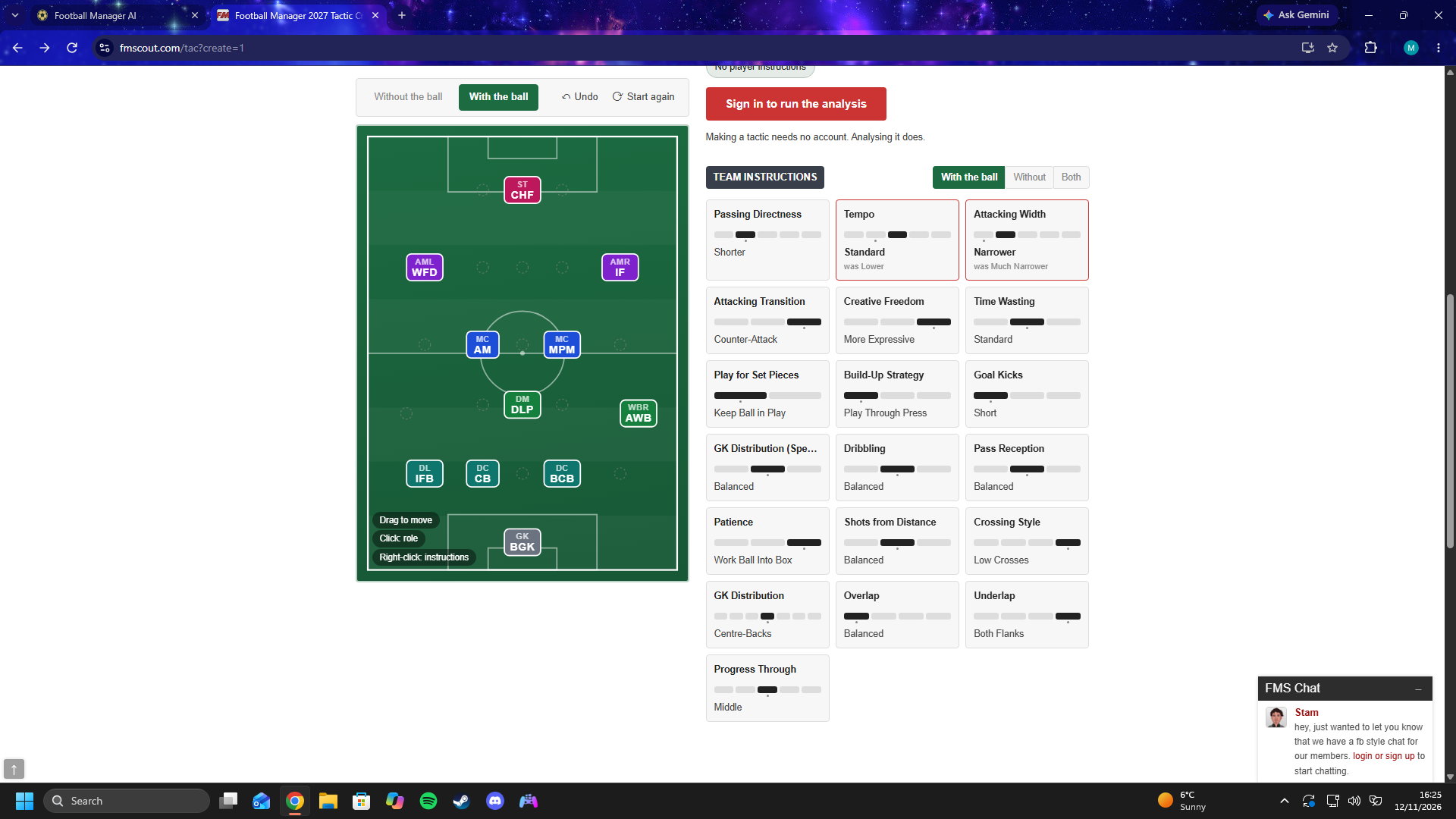
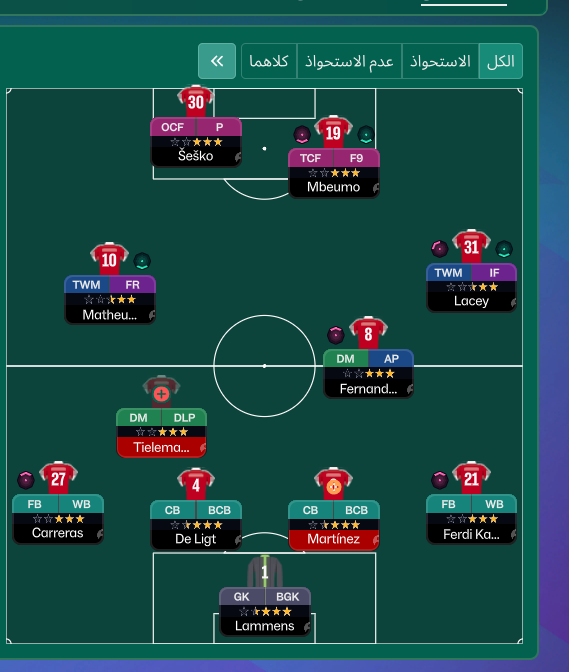
Build up play through the DM to create openings for advanced players. Using a DLP and two attacking midfielders allows for diverse passing options.
Loading tactical analysis...
Formation and style
Possession
Attacking
4-3-3
Fluid
In possession
Shorter Passing
Narrower Attacking Width
More Expressive Creative Freedom
Standard Tempo
Work Ball Into Box
In transition
Counter-Attack
Out of possession
Balanced Defensive Line
Balanced Line of Engagement
Press More Often
Player roles
GK
Goalkeeper
Defend
DL
Inverted Full-Back
Support
DC
Centre-Back
Defend
DC
Ball-Playing Defender
Defend
DM
Deep-Lying Playmaker
Support
MC
Advanced Playmaker
Support
MC
Mezzala
Attack
AML
Wide Forward
Attack
AMR
Inside Forward
Attack
ST
Complete Forward
Attack
Phase description
Focus on quick, short passes to maneuver through opposition while maintaining possession.
Quick recovery focus to regain shape after losing possession.
Build up play through the DM to create openings for advanced players.
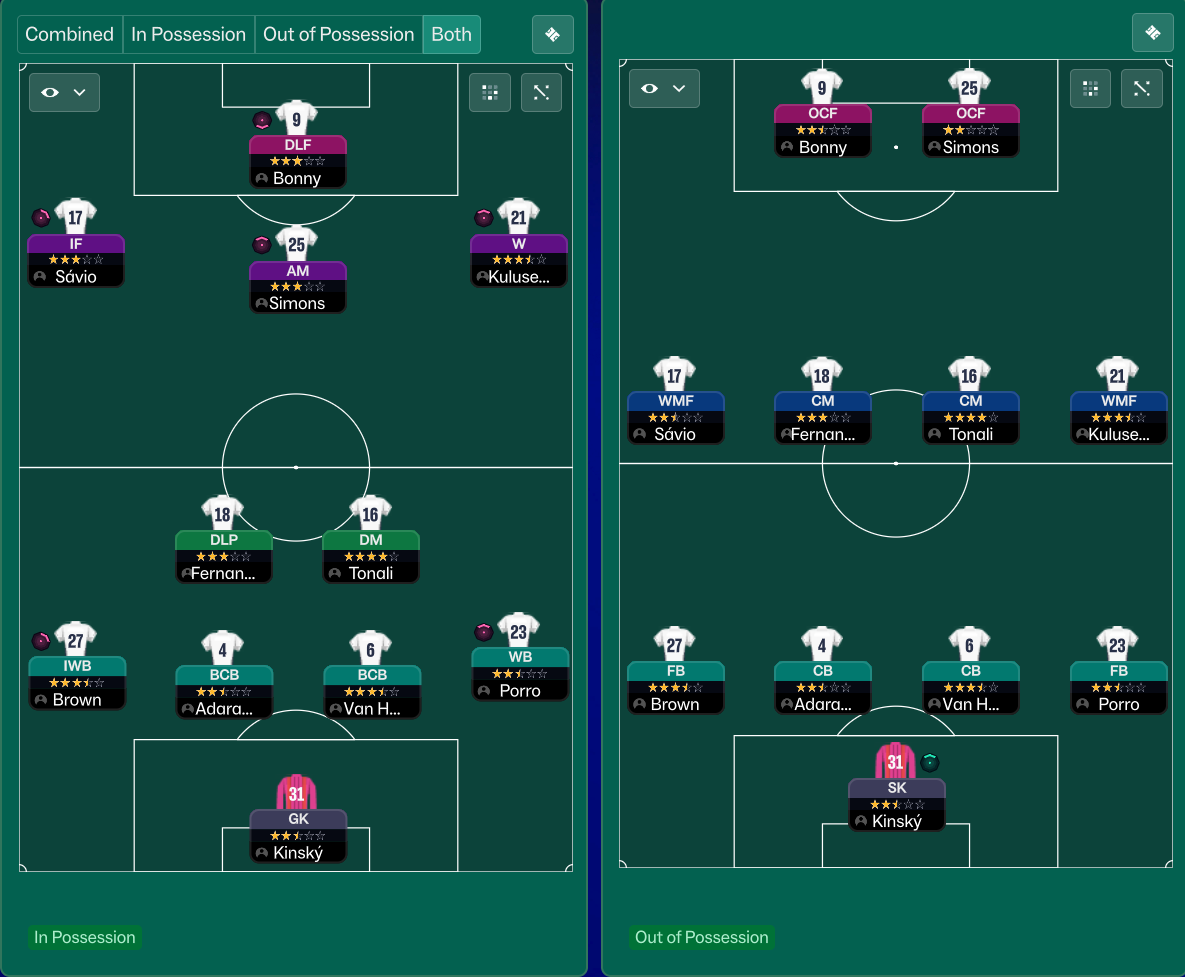
Team shape defence
4-1-4-1
A structured formation that ensures the defensive unit is solid and difficult to penetrate.
CBs and FBs provide width while DM shields the back line, central midfielders press and cover.
Team shape attack
4-3-3 Wide
Utilizes width through the wide forwards to stretch the opposition, ensuring central runners can exploit gaps.
WFD and IF pull defenders away, creating space for CF and AM.
Key strengths
Midfield Control
Using a DLP and two attacking midfielders allows for diverse passing options.
DLP at [3,3] supports build up while AM at [4,2] and MPM at [4,3] create attacking threats.
Attacking Versatility
Flexible attacking roles allow for unpredictability in the final third.
CHF at [6,3], IF at [6,4], WFD at [6,2] create triangular patterns to confuse defenses.
Conflicting tactics
Wide Play vs. Narrow Formation
Wide forwards may be ineffective in a narrower tactical approach.
Narrow attacking width can inhibit WFD and IF's natural play.
Counter-Attack Vulnerability
Pushing too high can leave gaps for counter-attacks.
Counter-attack mentality conflicts with a balanced defensive block.
Risk exposures
Risk Exposures
Items
Defensive Gaps
If midfielders push too far forward without support, gaps may appear.
The reliance on counter-attack may expose the defensive line.
Wide Defensive Exposures
Wide players may not track back effectively, leading to vulnerabilities.
Wide forwards in attack could neglect defensive duties.
Role synergies
Role Synergies
Items
DLP and AM
The DLP supports play while the AM can push into advanced positions.
DLP at [3,3] and AM at [4,2] create a fluid passing triangle.
IF and MPM
Inside forward and mezzala can create overloads.
IF at [6,4] and MPM at [4,3] combine effectively.
Suggested questions
How can I balance my attack and defense without compromising shape?
What adjustments can be made to exploit defensive weaknesses?
How are my player roles contributing to overall team performance?
Related Tactics
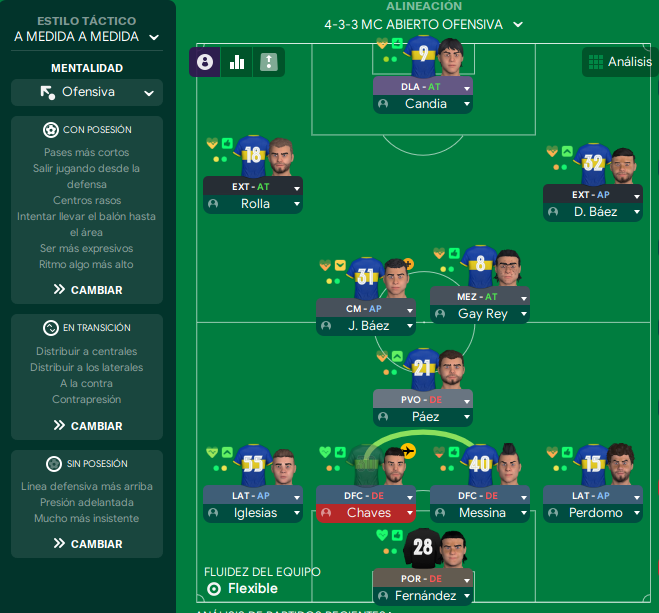
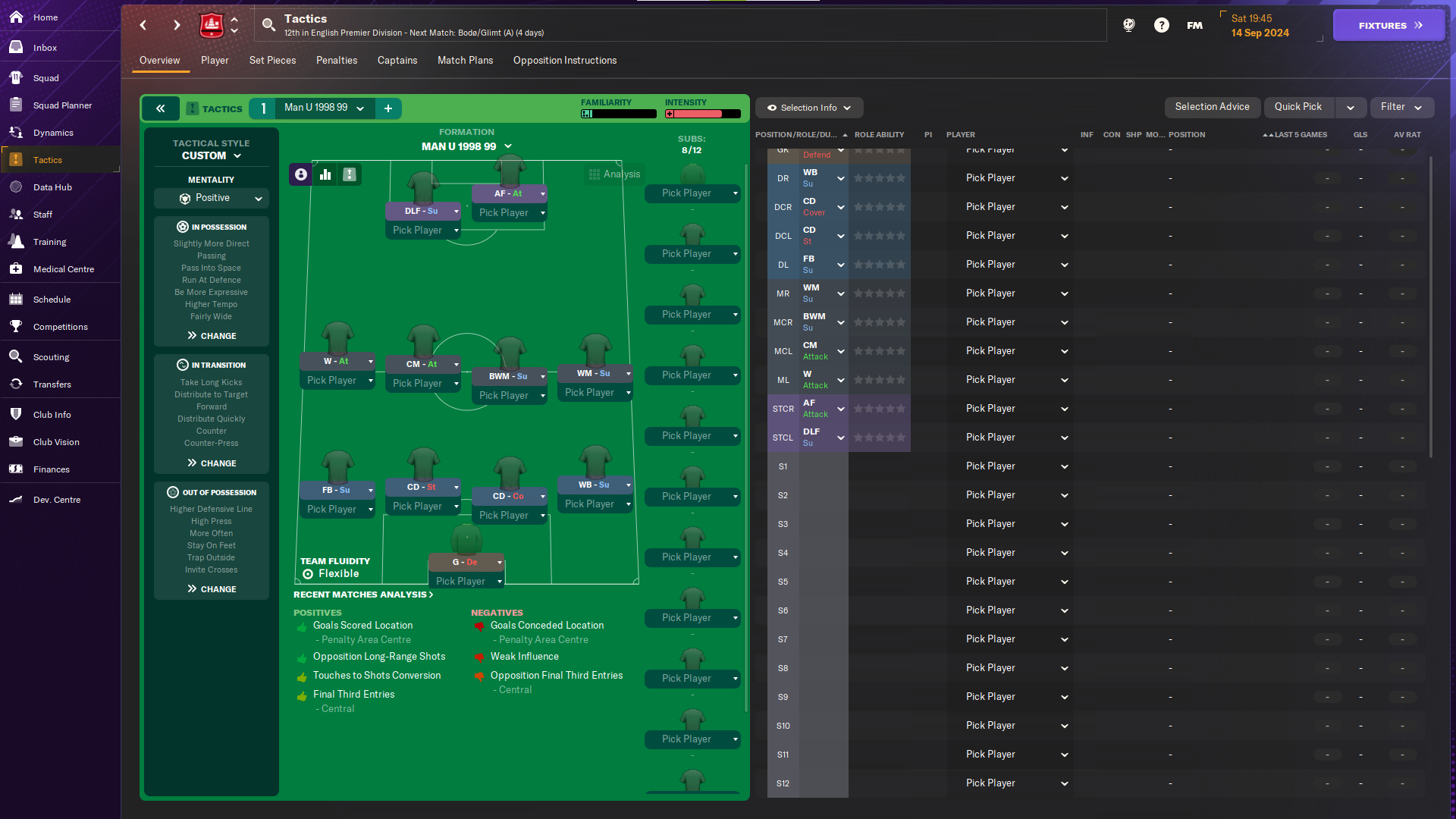
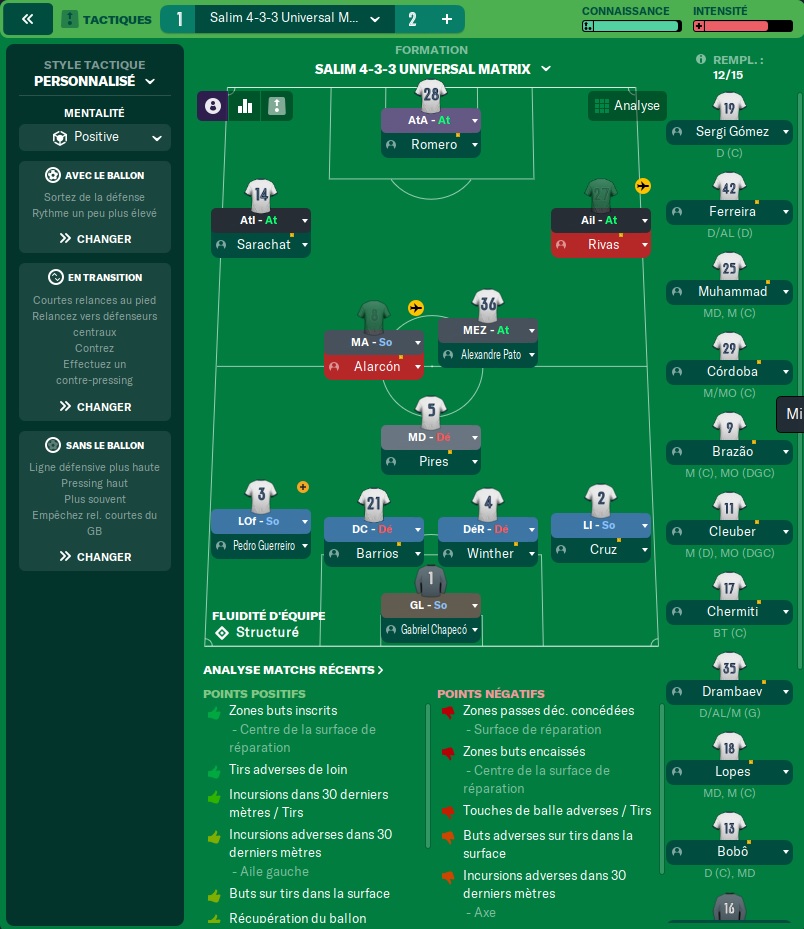
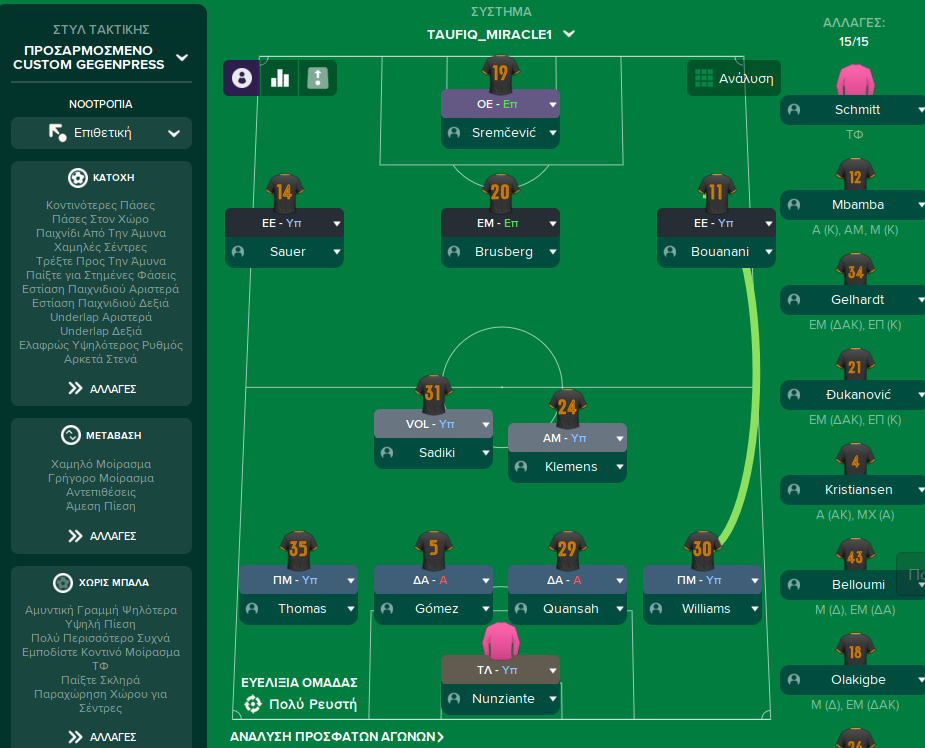
More Possession tactics
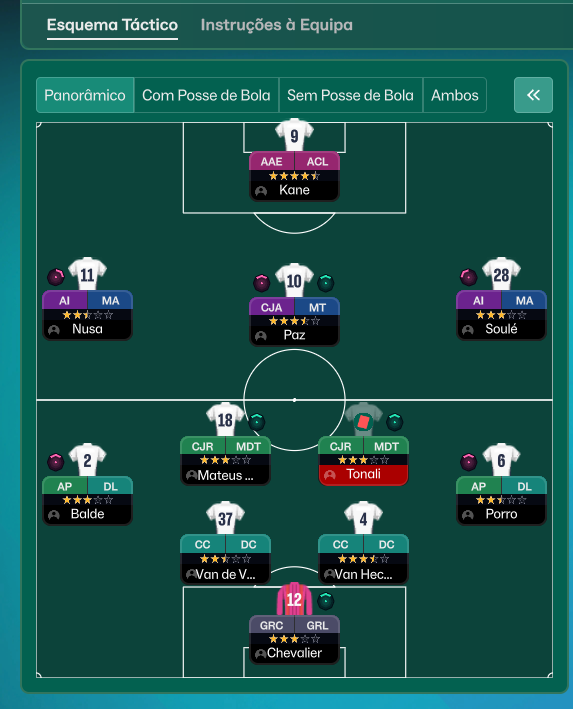
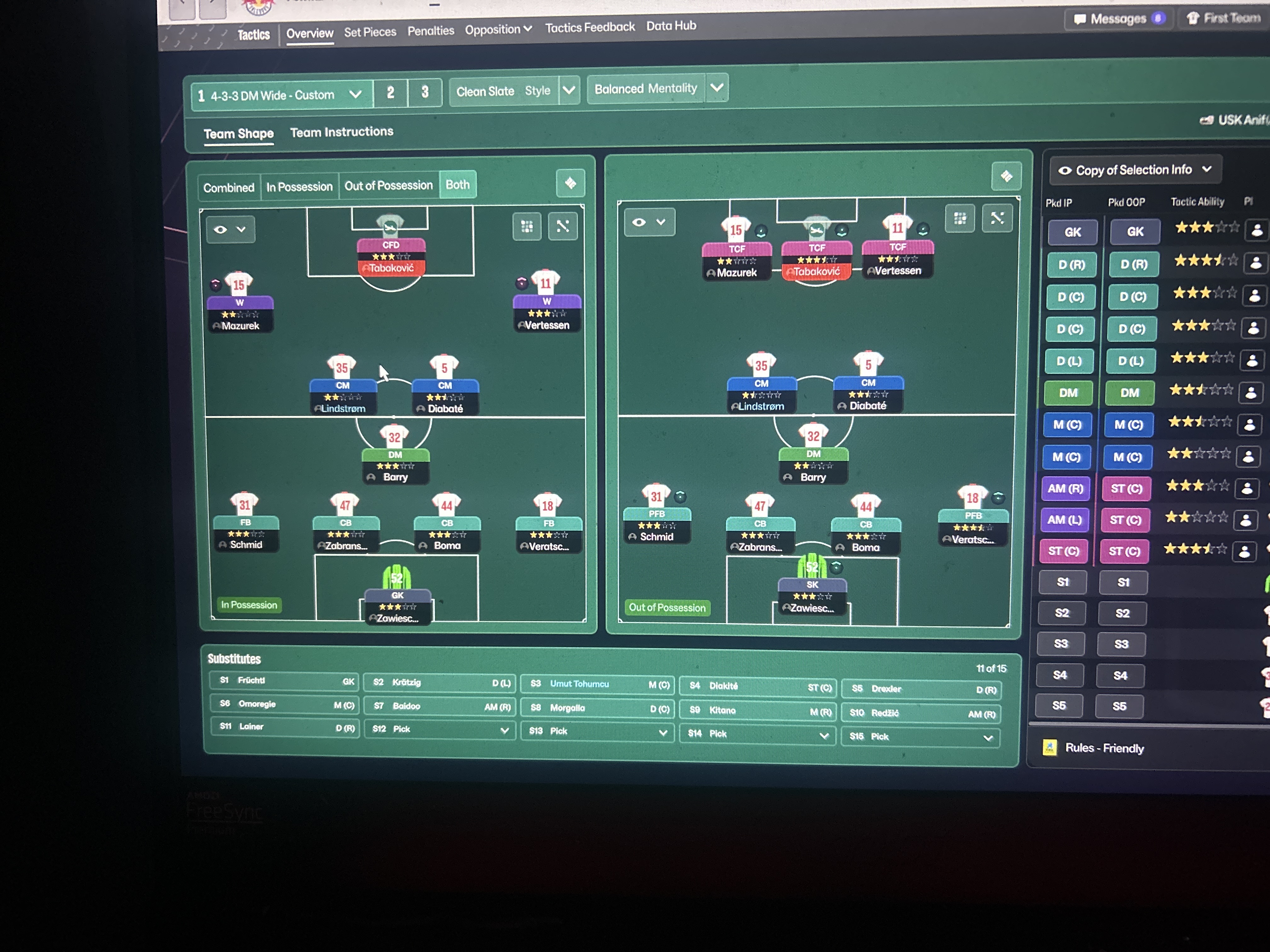
Guides for this tactic
The tactical theory behind the 4-3-3: roles, instructions, and the trade-offs that decide whether the system holds up.
Player pairings
Midfield Trios
Holder, runner, creator: the role distribution rule for three-man midfields, the AMC variants, and the antipatterns that break them.
Read guide
Playing styles
Gegenpressing: A Full Guide
Klopp-style gegenpressing in FM, including squad profile, line-and-press pairing, sustainable workload, and the antipatterns to avoid.
Read guide
Match preparation
In-Match Tactical Changes
Mentality, duty, role, instruction, sub. The change hierarchy from lightest to heaviest intervention, and 60th-minute patterns by game state.
Read guide