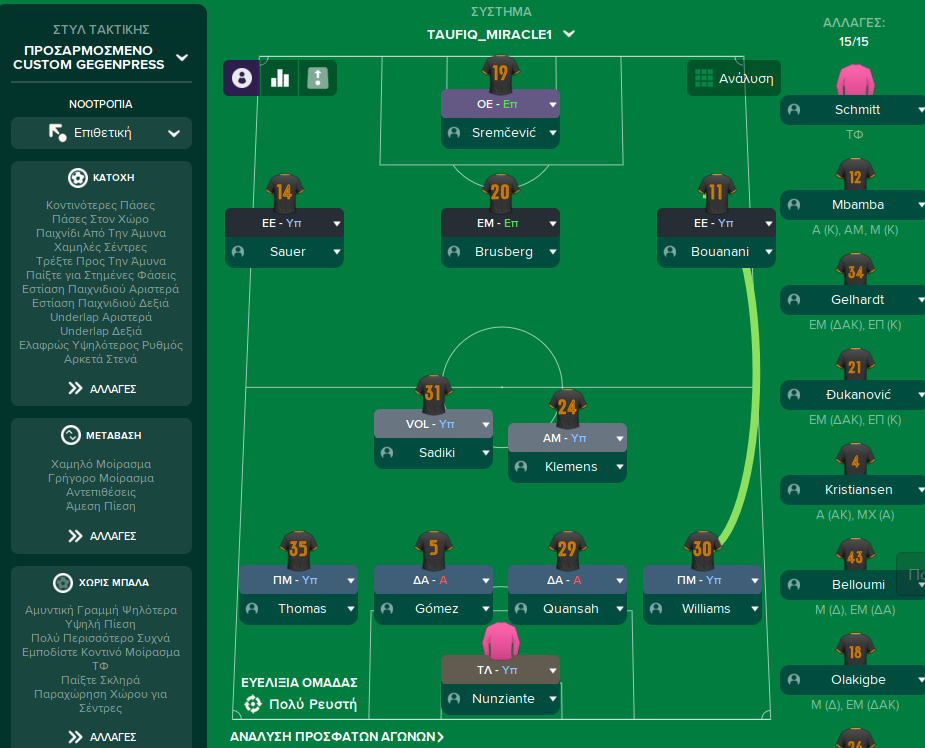
4-3-3 (Positive) Tactic
4-3-3
Maintain possession while transitioning into attacking phases. The combination of AF and DLF allows varied attacking movements.
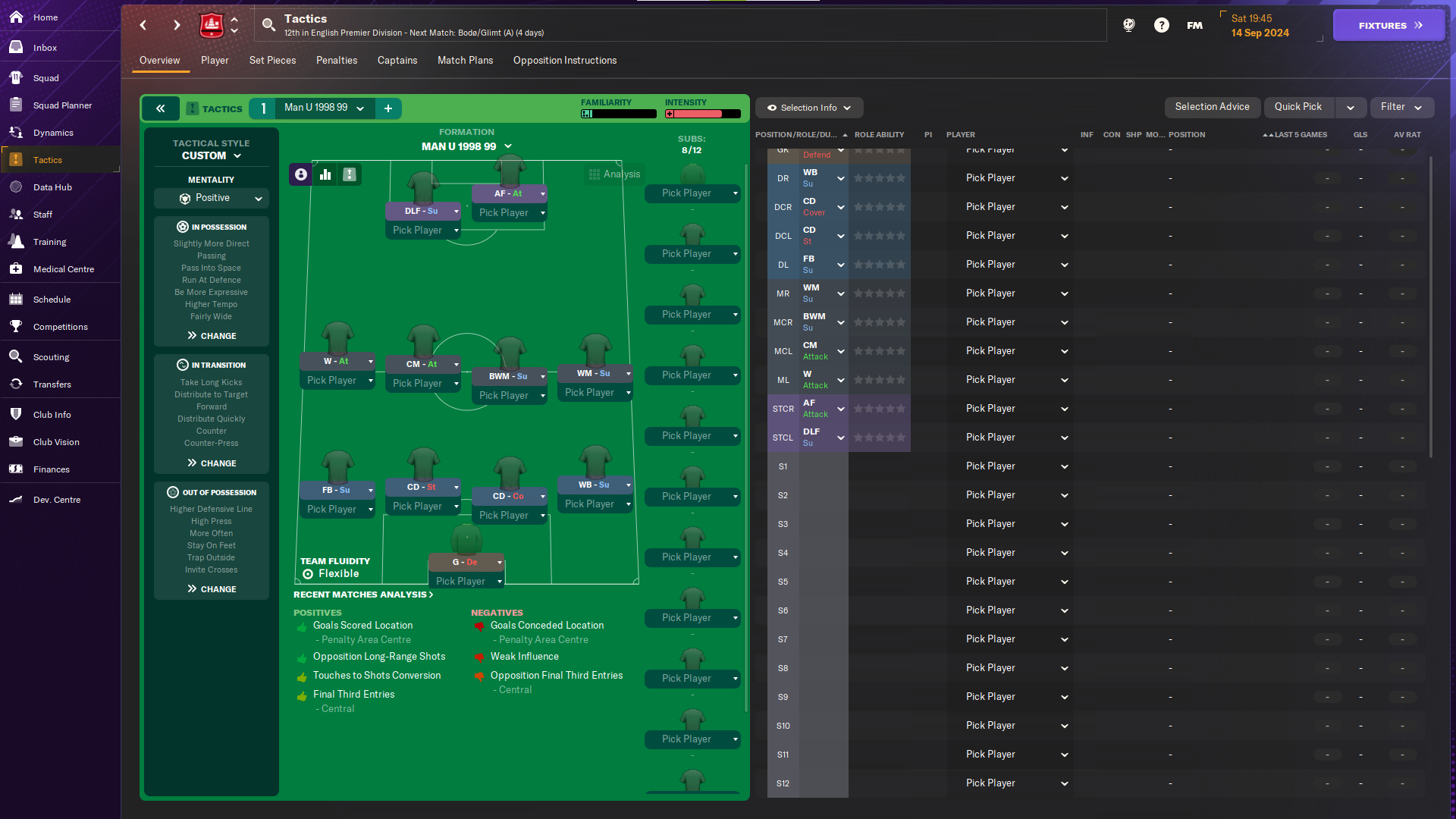
Loading tactical analysis...
Formation and style
Custom
Positive
4-3-3
Flexible
In possession
Slightly Shorter Passing
Pass Into Space
Run At Defence
Be More Expressive
Higher Tempo
Fairly Wide
In transition
Take Long Kicks
Distribute to Target Forward
Distribute Quickly
Counter
Counter-Press
Out of possession
Higher Defensive Line
High Press
Move On To Feet
Trap Outside
Player roles
GK
G
De
DR
WB
Su
DCR
CD
Co
DCL
CD
Co
DL
WB
Su
MCR
CM
At
MCL
BWM
Su
MR
WM
Su
ML
BWM
Su
AF
AF
At
STCL
DLF
Su
Phase description
Quick ball movement and width to stretch opposition.
Immediate pressing upon losing possession to regain quickly.
Maintain possession while transitioning into attacking phases.
Team shape defence
Structured
Maintains solid lines with a higher defensive line.
Higher Defensive Line at [1,3]
Team shape attack
Fluid
Incorporates width and fluid movement with forwards interchanging.
WM at [6,2] and WM at [6,4] providing width.
Key strengths
Dynamic Attack
The combination of AF and DLF allows varied attacking movements.
AF-A at [6,3] and DLF-Su at [6,2] allow for interplay in the final third.
Midfield Versatility
BWM provides defensive cover while allowing CM to push forward.
BWM-Su at [3,3] and CM-A at [4,3] create transitional support.
Conflicting tactics
High Defensive Line vs. Counter Attacks
A high defensive line could be vulnerable to quick counter-attacks.
Higher Defensive Line at [1,3] may expose space behind.
Pressing High vs. Fatigue
High pressing strategy may lead to fatigue in later stages.
High Press without proper rotation may lead to player exhaustion.
Risk exposures
Risk Exposures
Items
Counter Attacks
The high line creates possibilities for counters.
Higher Defensive Line at [1,3] allows forward space.
Fatigue Management
High pressing may lead to player fatigue over time.
Immediate pressing without substitutes can lead to exhaustion.
Role synergies
Role Synergies
Items
AF-A and DLF-Su
AF pulls defenders while DLF links play to midfield.
AF at [6,3] creates space for DLF at [6,2] to influence play.
BWM-Su and CM-A
BWM supports defensively whilst CM looks to advance.
BWM at [3,3] allows CM at [4,3] to stay central in attack.
Suggested questions
How does the team handle quick transitions from the opponent?
What adjustments are needed when facing teams with strong counter-attacks?
Is there a need for additional midfield depth in case of injuries?
Related Tactics
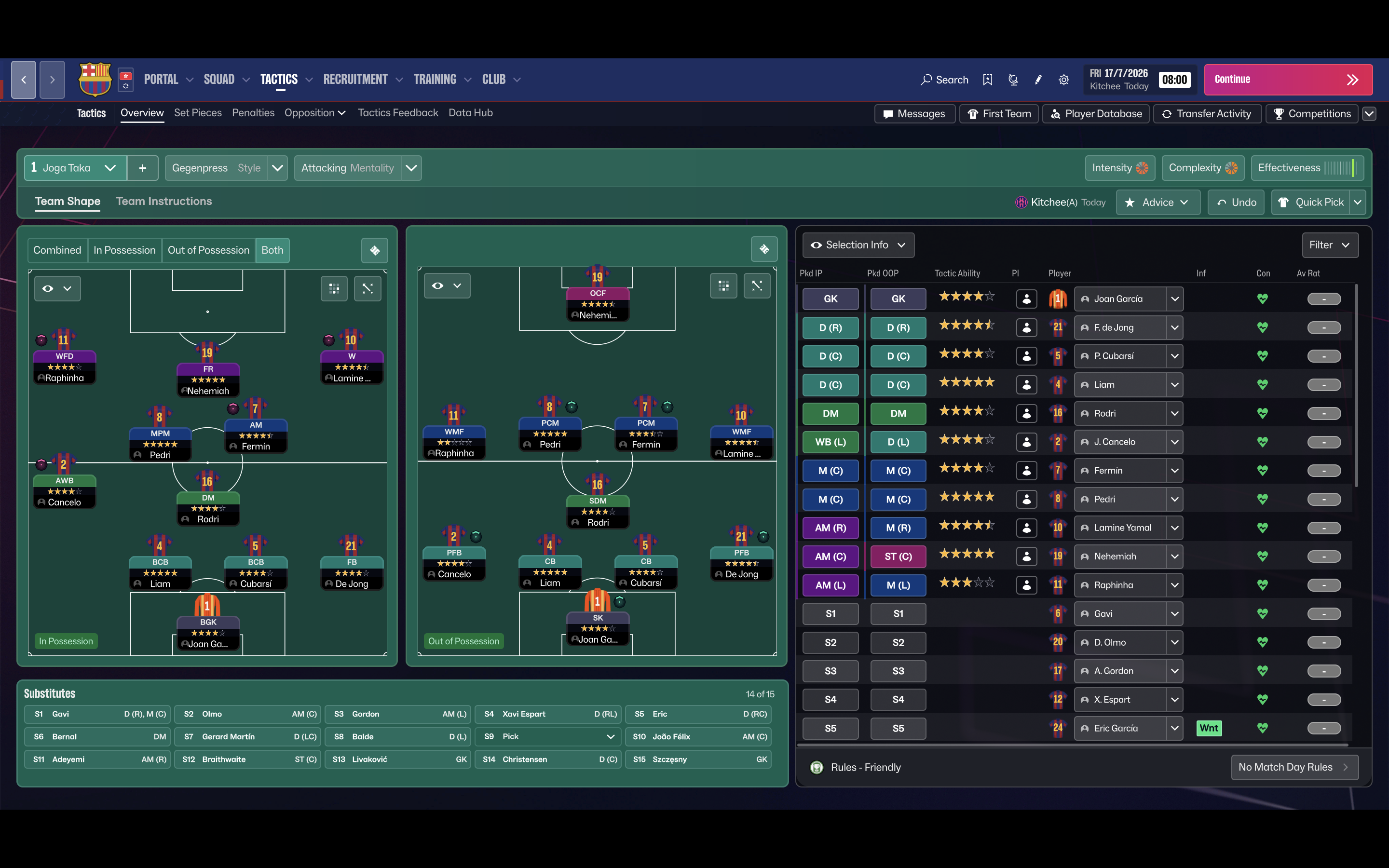
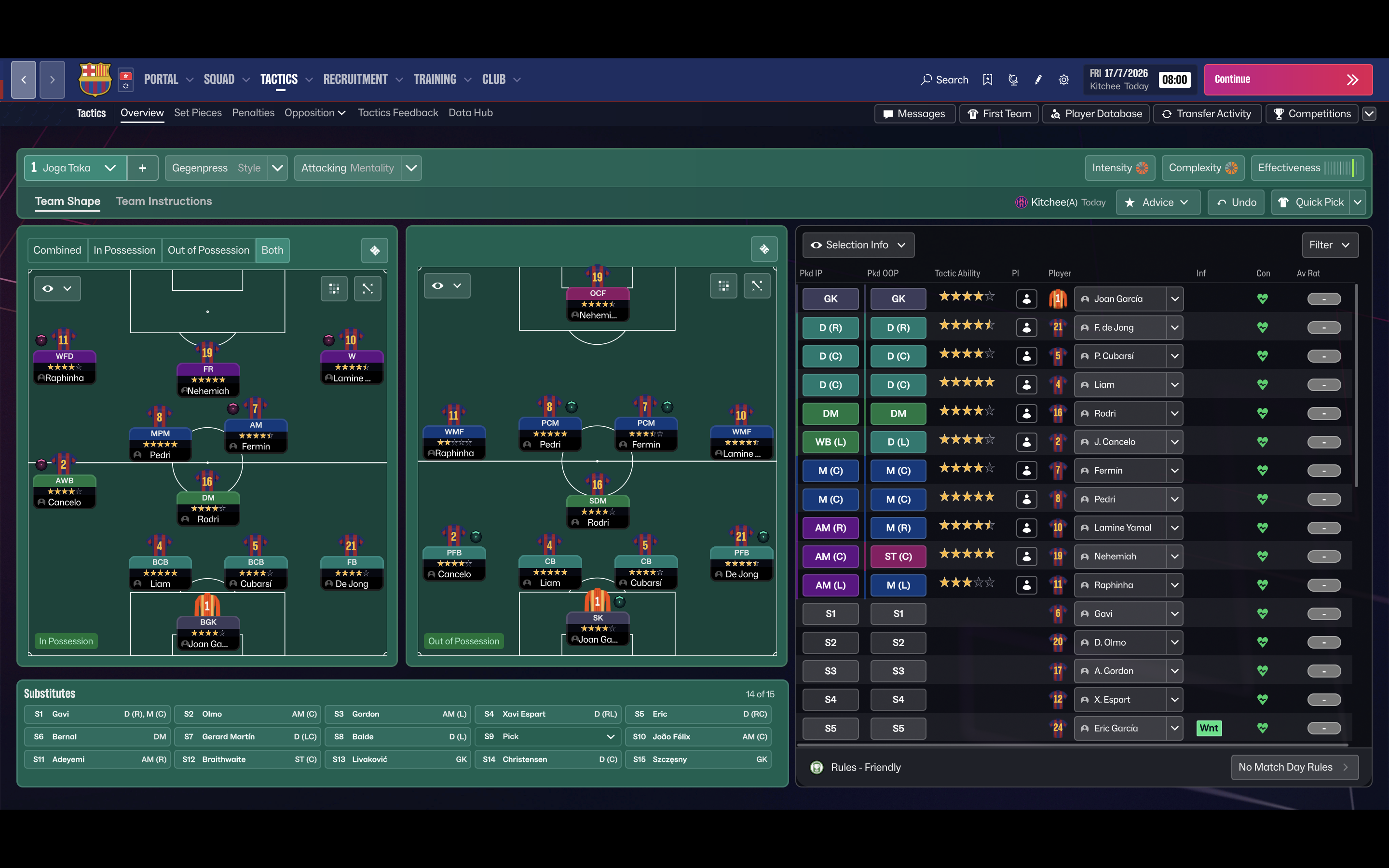
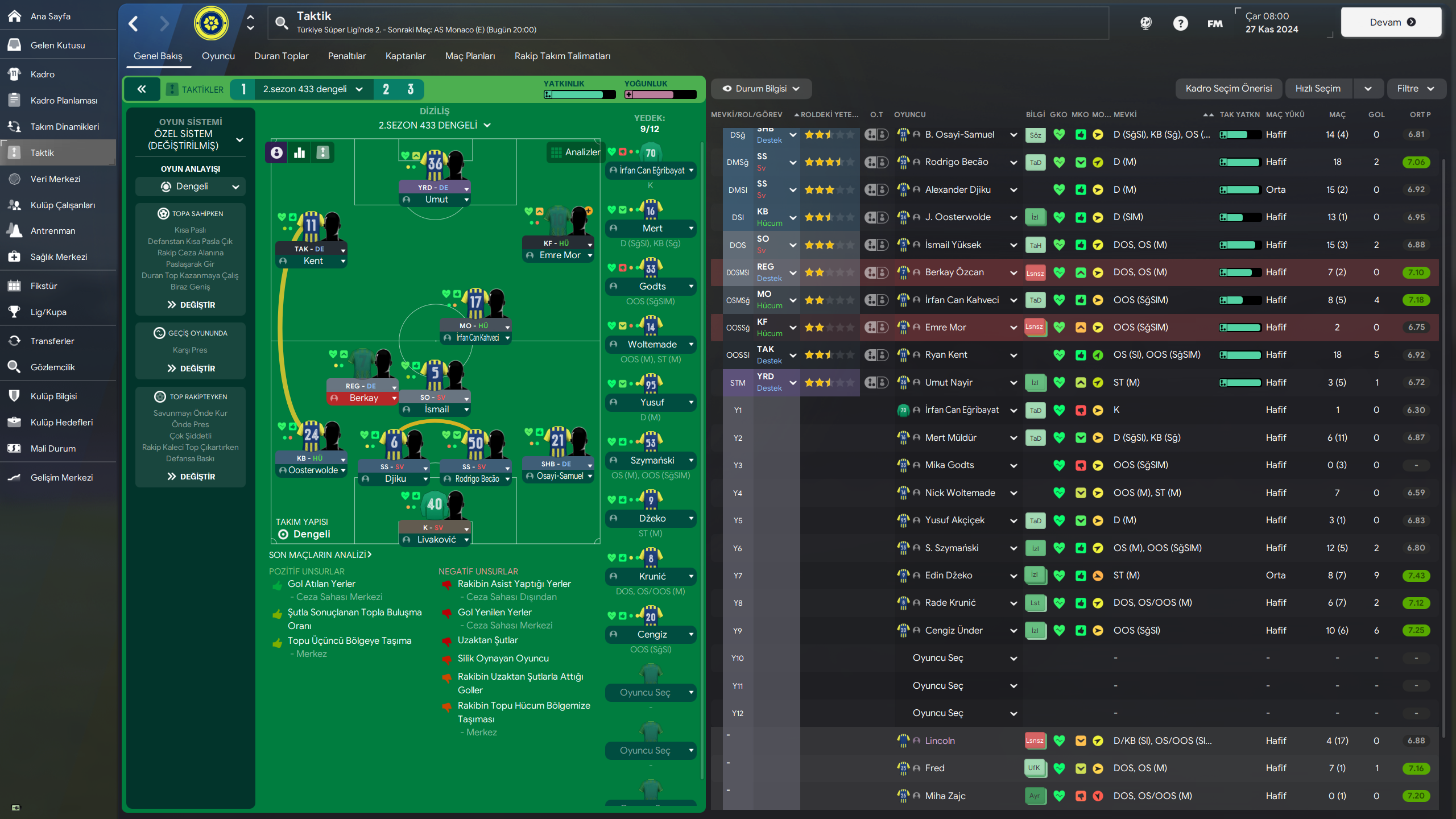
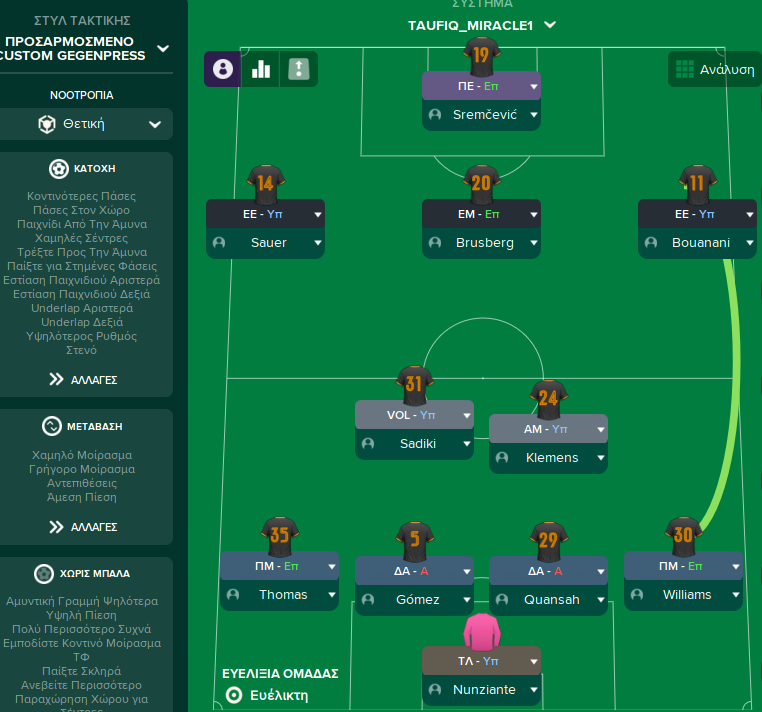
Guides for this tactic
The tactical theory behind the 4-3-3: roles, instructions, and the trade-offs that decide whether the system holds up.
Player pairings
Midfield Trios
Holder, runner, creator: the role distribution rule for three-man midfields, the AMC variants, and the antipatterns that break them.
Read guide
Playing styles
Gegenpressing: A Full Guide
Klopp-style gegenpressing in FM, including squad profile, line-and-press pairing, sustainable workload, and the antipatterns to avoid.
Read guide
Match preparation
Reading the Match Tablet
Pass map, average position, xG, possession by zone: what each tablet panel tells you in FM and the tactical change it should trigger.
Read guide