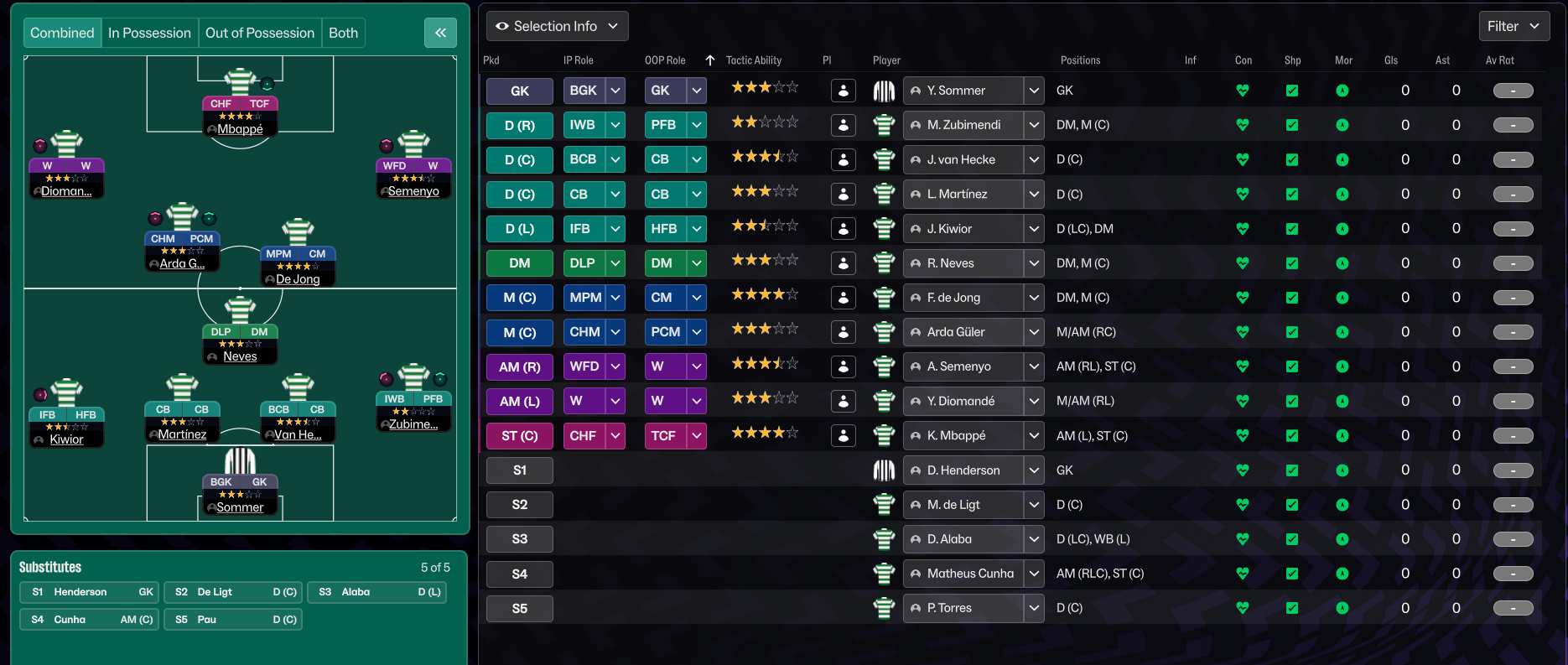
Possession 4-3-3 DM Wide (Balanced) Tactic
4-3-3 DM Wide
Build-up through the midfield with emphasis on short passing and maintaining player positions. The wing-backs and wingers create space in the opposition's…
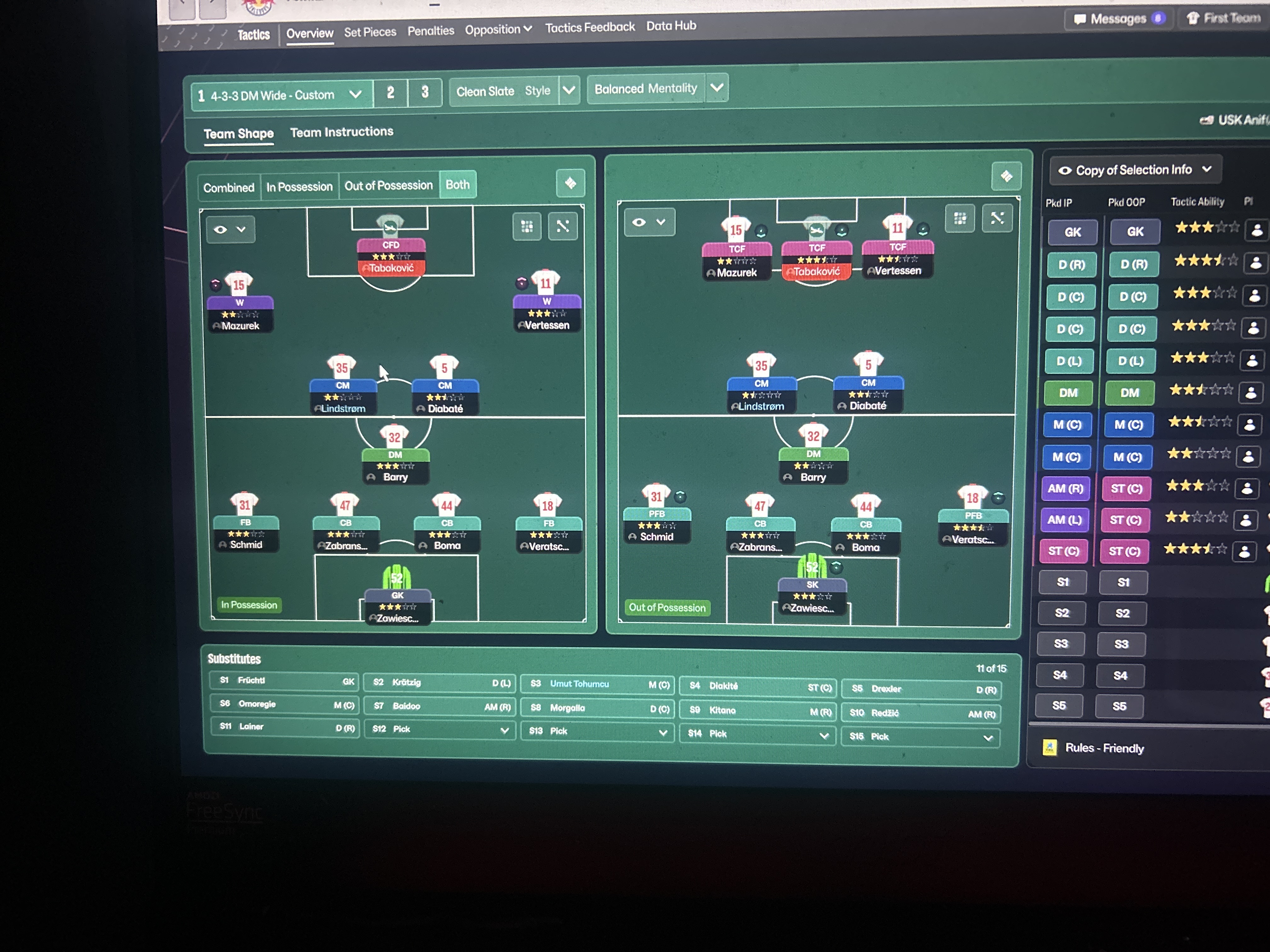
Loading tactical analysis...
Formation and style
Possession
Balanced
4-3-3 DM Wide
Structured
In possession
Play Out of Defence
Work Ball into Box
Higher Tempo
In transition
Counter
Distribute to Centre-Backs
Out of possession
Higher Defensive Line
Higher Line of Engagement
Prevent Short GK Distribution
Player roles
GK
Sweeper Keeper
Support
RB
Wing-Back
Attack
CB
Ball-Playing Defender
Defend
CB
Ball-Playing Defender
Defend
LB
Wing-Back
Attack
DM
Deep-Lying Playmaker
Support
CM
Central Midfielder
Support
CM
Central Midfielder
Support
RW
Winger
Attack
CF
Complete Forward
Attack
LW
Winger
Attack
Phase description
The team looks to maintain possession and work the ball into the box, utilizing the width provided by the wing-backs and wingers.
The team transitions into a counter-pressing shape, aiming to regain possession quickly after losing the ball.
Build-up through the midfield with emphasis on short passing and maintaining player positions.
Team shape defence
4-3-3
Compact set-up with a four-man defensive line and a defensive midfielder shielding the backline.
DM at [3,3] provides cover for CBs at [2,2] and [2,4].
Team shape attack
4-3-3
Wide shape in attack to stretch the opponent's defence, with wingers providing depth and crosses for the striker.
Wingers at [6,1] and [6,5] supported by attacking wing-backs at [2,1] and [2,5].
Key strengths
Utilization of Width
The wing-backs and wingers create space in the opposition's defense, facilitating attacks from the flanks.
Wingers at [6,1], [6,5] and attacking duties for wing-backs at [2,1] and [2,5].
Strong Midfield Control
Three central midfielders provide stability and control in the middle of the park.
Three central midfielders [3,2], [3,3], [3,4] with support duties displayed.
Conflicting tactics
Defensive Vulnerability
High defensive line could expose the team to quick counter-attacks.
Higher Defensive Line instruction combined with an attacking mentality.
Limited Defensive Midfield Cover
With a single DM, the team could struggle against opposing teams with strong attacking mids.
Only one DM, Barry, at [3,3] compared to two attacking mids from the opponent.
Risk exposures
Risk Exposures
Items
Defensive Transition
The team may struggle to regroup quickly when possession is lost.
Counter instruction indicates a desire to quickly transition, which could leave the team vulnerable during defensive transitions.
Flank Saturation
Overloading the flanks could leave the center vulnerable to penetrating attacks.
With wingers and attacking wing-backs, the middle of the park may lack coverage.
Role synergies
Role Synergies
Items
Central Midfielders and Deep-Lying Playmaker
Central mids can support both defense and attack while the DLP orchestrates the play.
CMs at [3,2] and [3,4] synergizing with DLP at [3,3].
Wing-Backs and Wingers
Wing-backs can overlap wingers, creating one-on-one situations against full-backs.
Wing-Backs at [2,1] and [2,5] complementing wingers at [6,1] and [6,5].
Suggested questions
How can I further increase midfield dominance?
What specific instructions can enhance our pressing game?
Should I consider varying my tactical approach based on the opponent?
Related Tactics
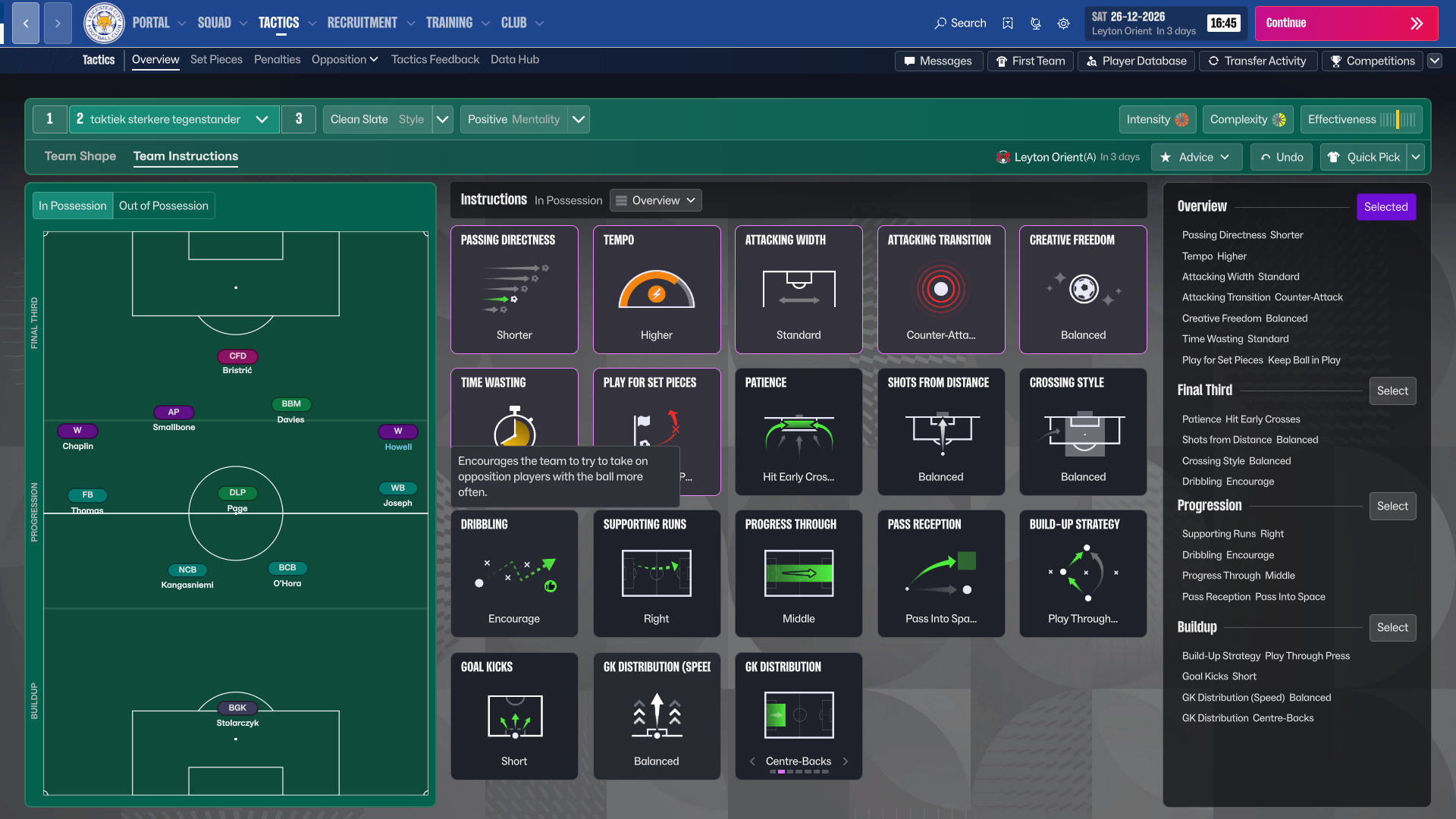
4-3-3 DM Wide Formation
clean slate
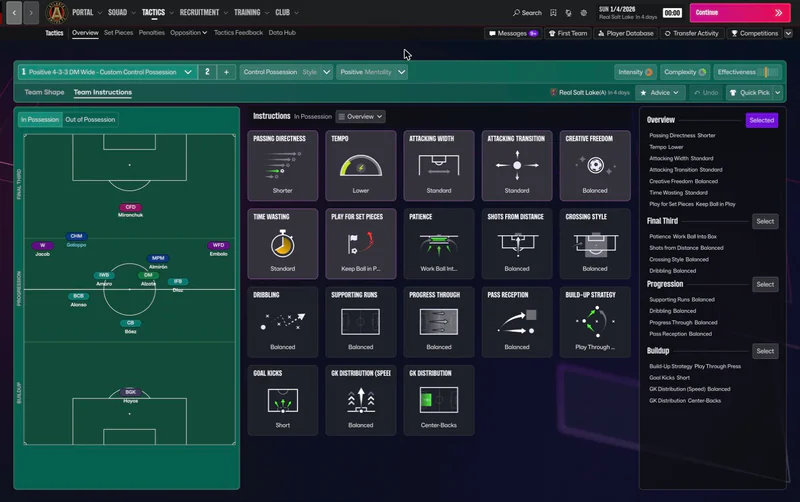
Control Possession 4-3-3 DM Wide
control possession
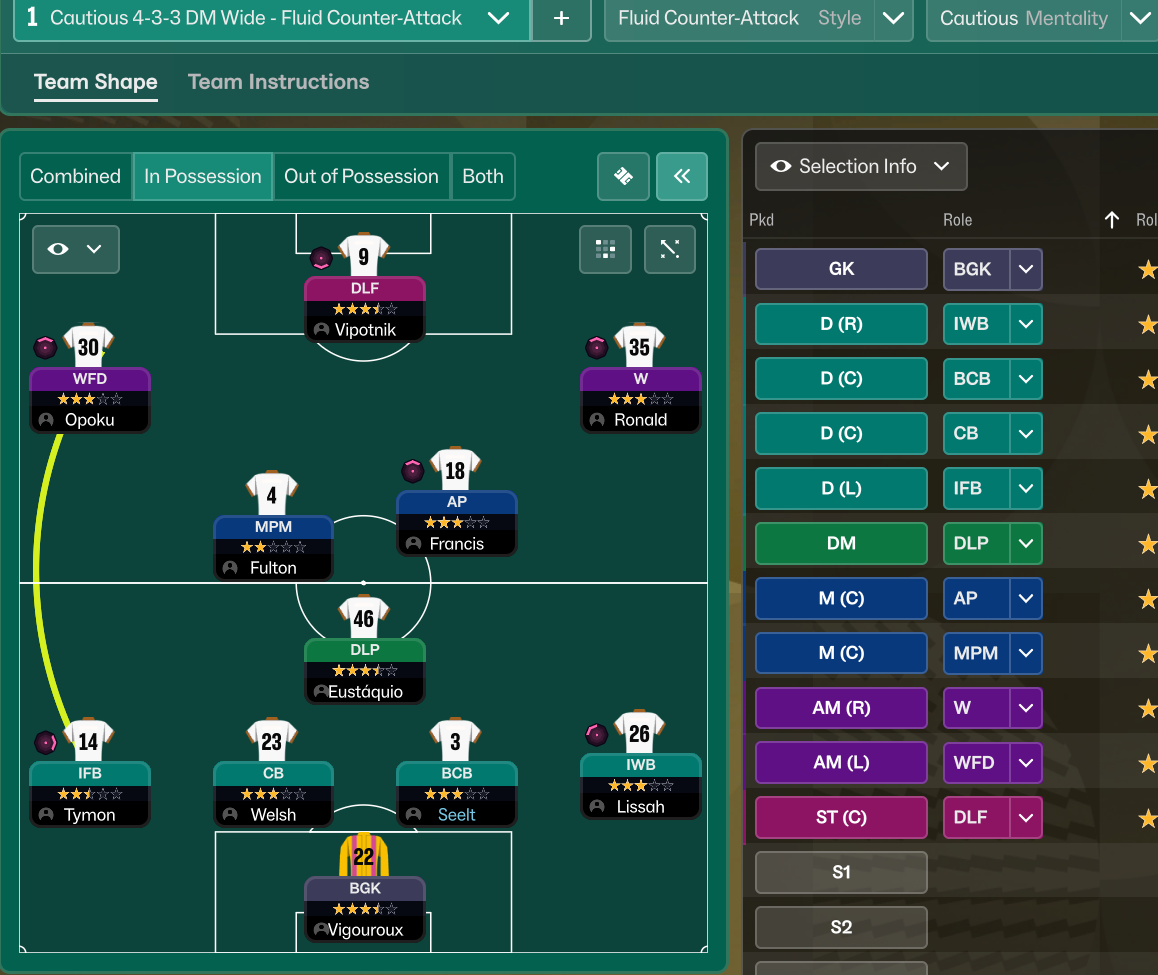
Fluid Counter-Attack 4-3-3 DM Wide
Fluid Counter-Attack
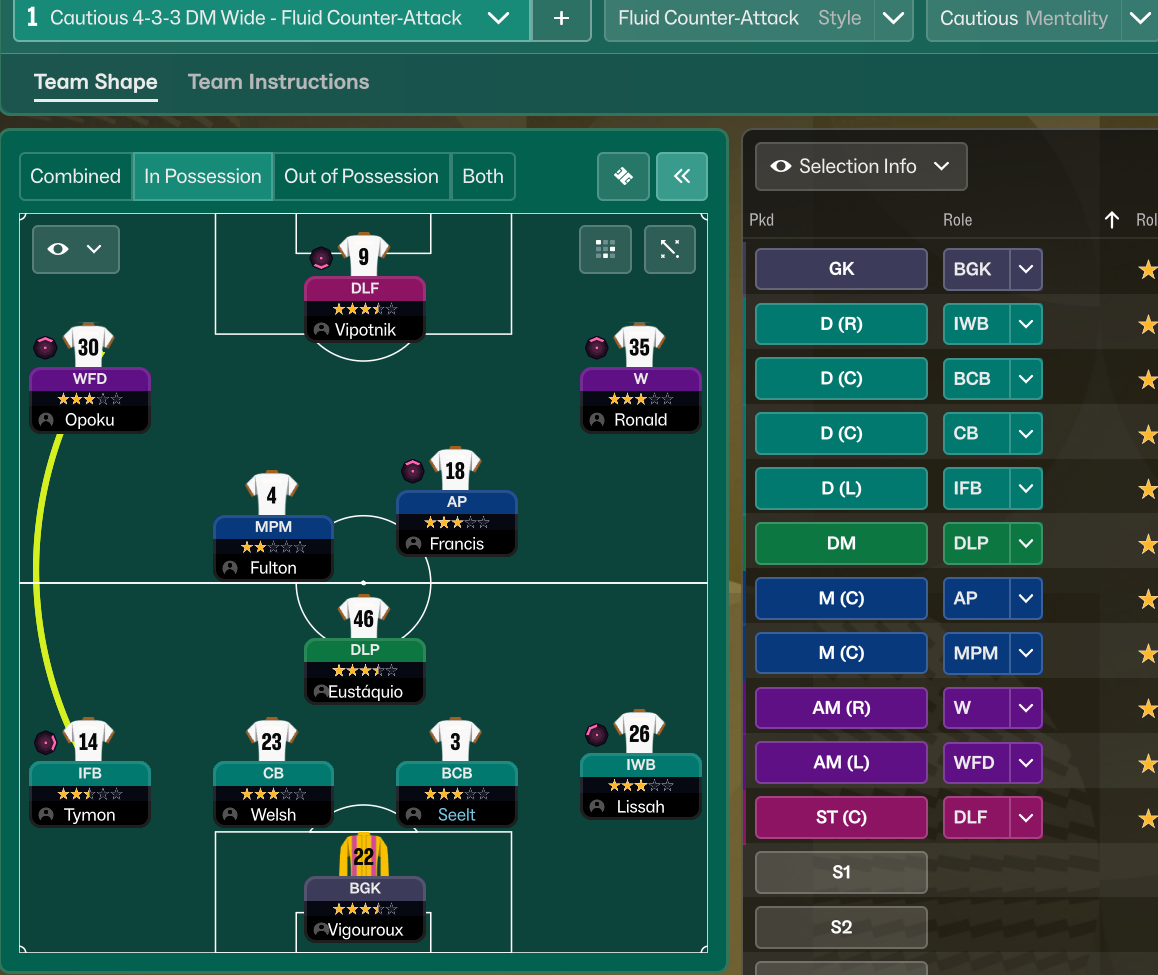
Fluid Counter-Attack 4-3-3 DM Wide
Fluid Counter-Attack
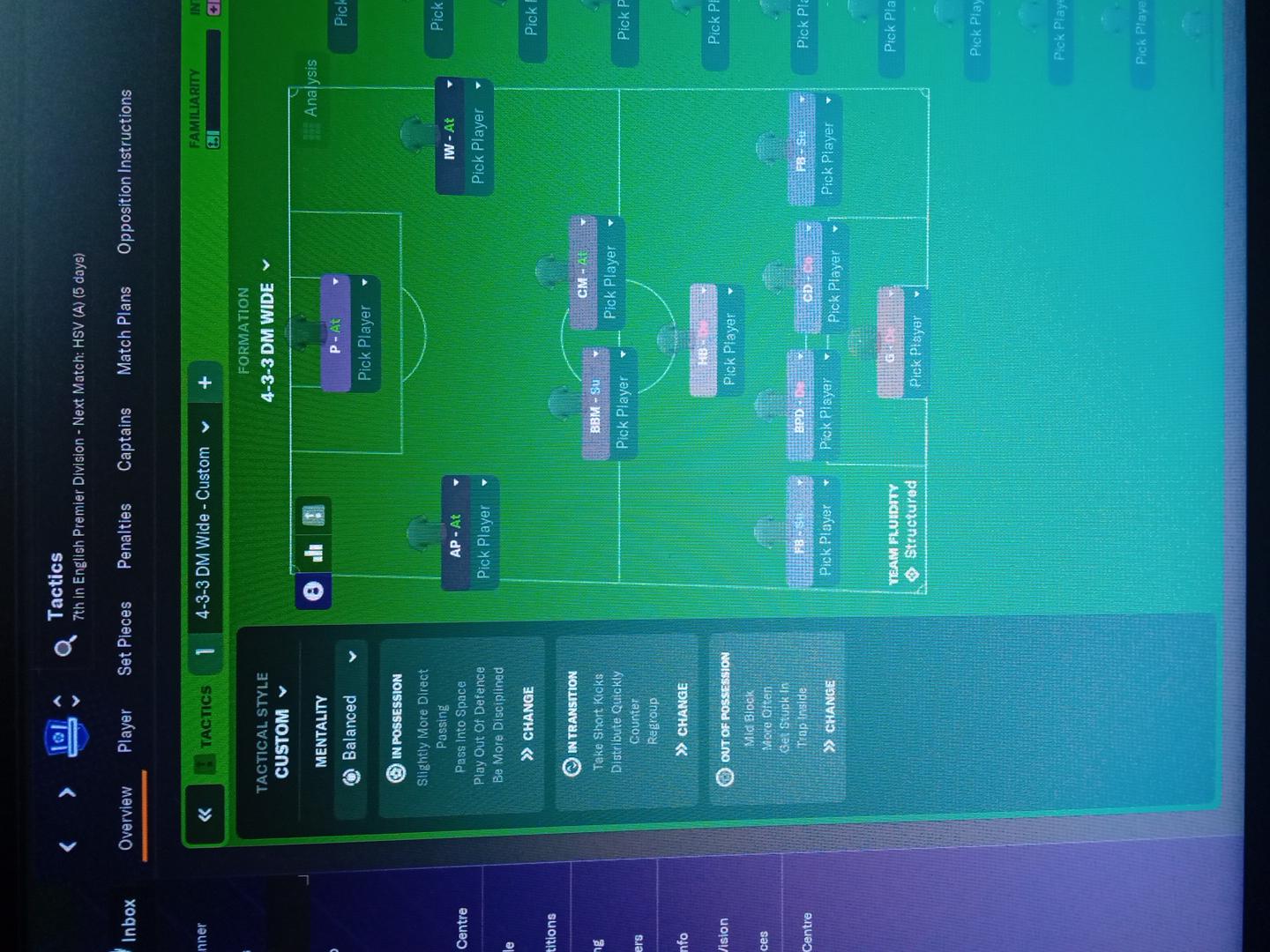
4-3-3 DM Wide Formation
Custom
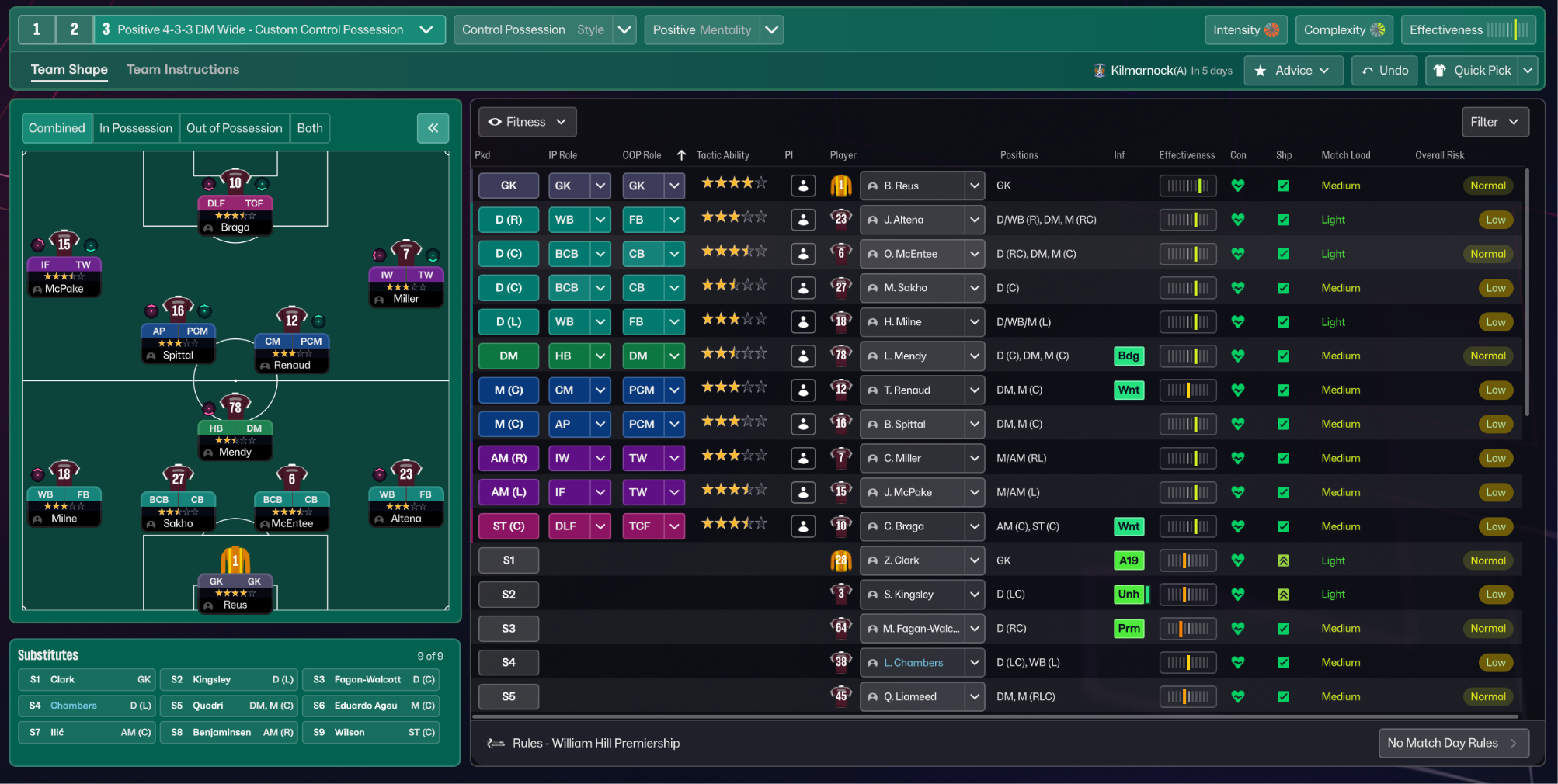
Control Possession 4-3-3 DM Wide
Control Possession
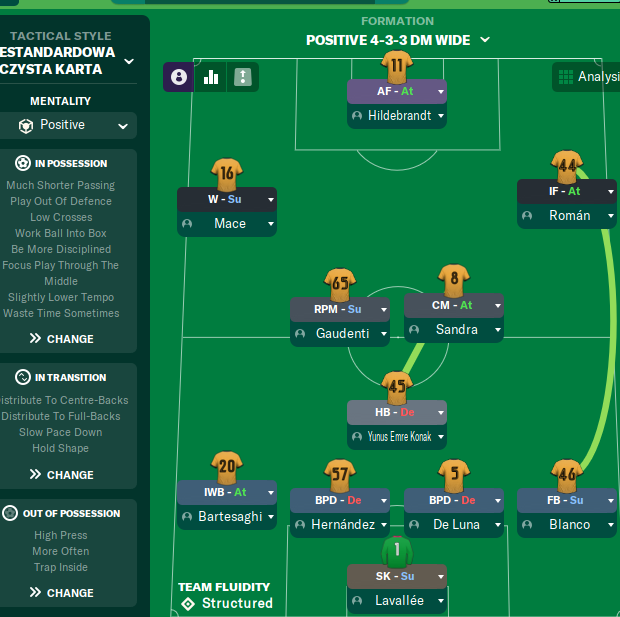
Positive 4-3-3 DM Wide
Positive
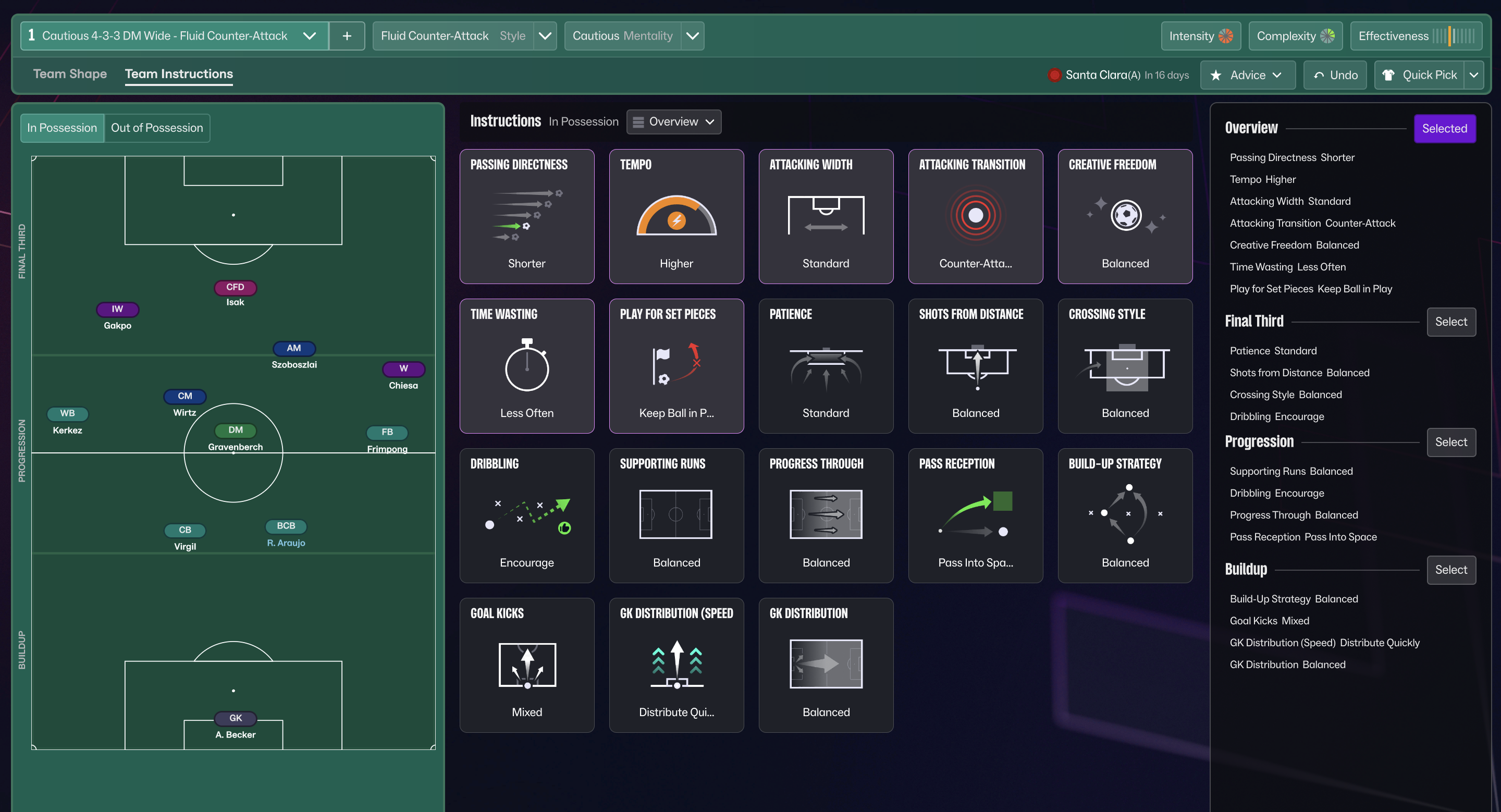
Fluid Counter-Attack 4-3-3 DM Wide
Fluid Counter-Attack
More Possession tactics
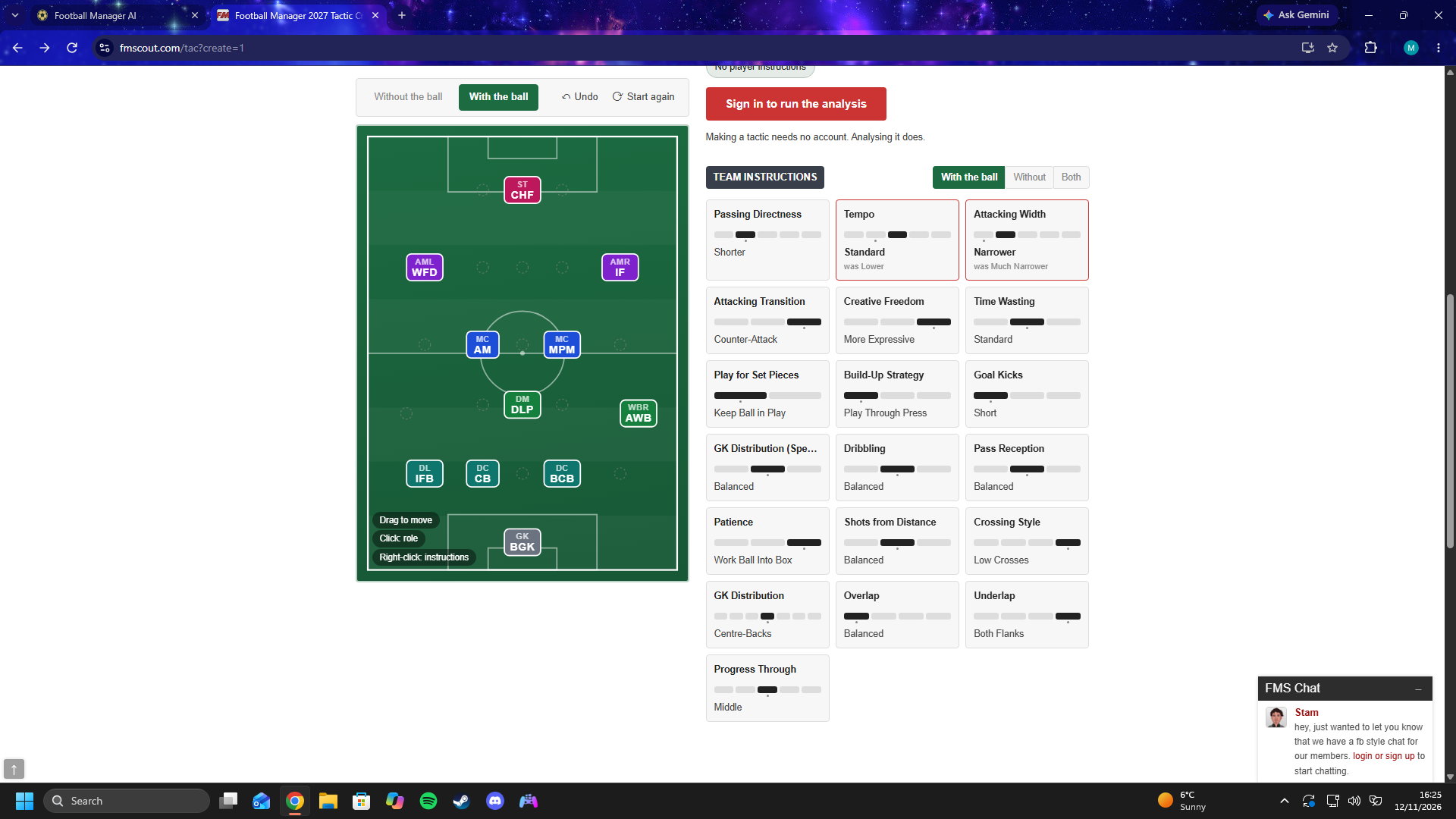
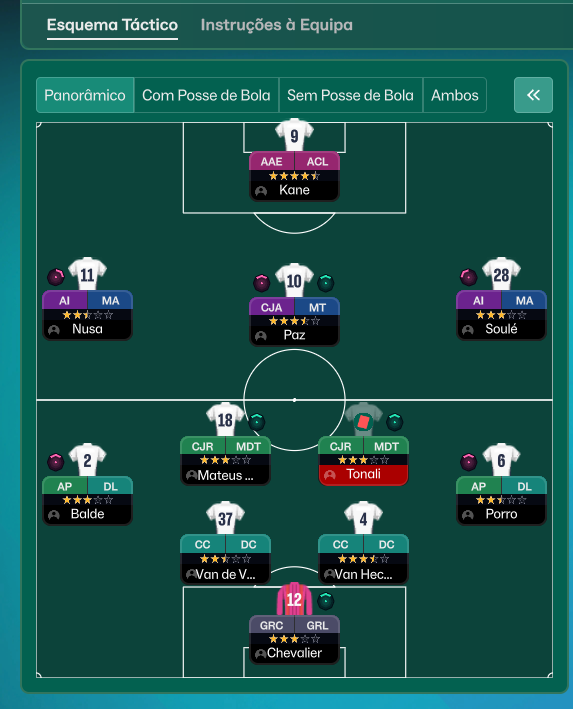
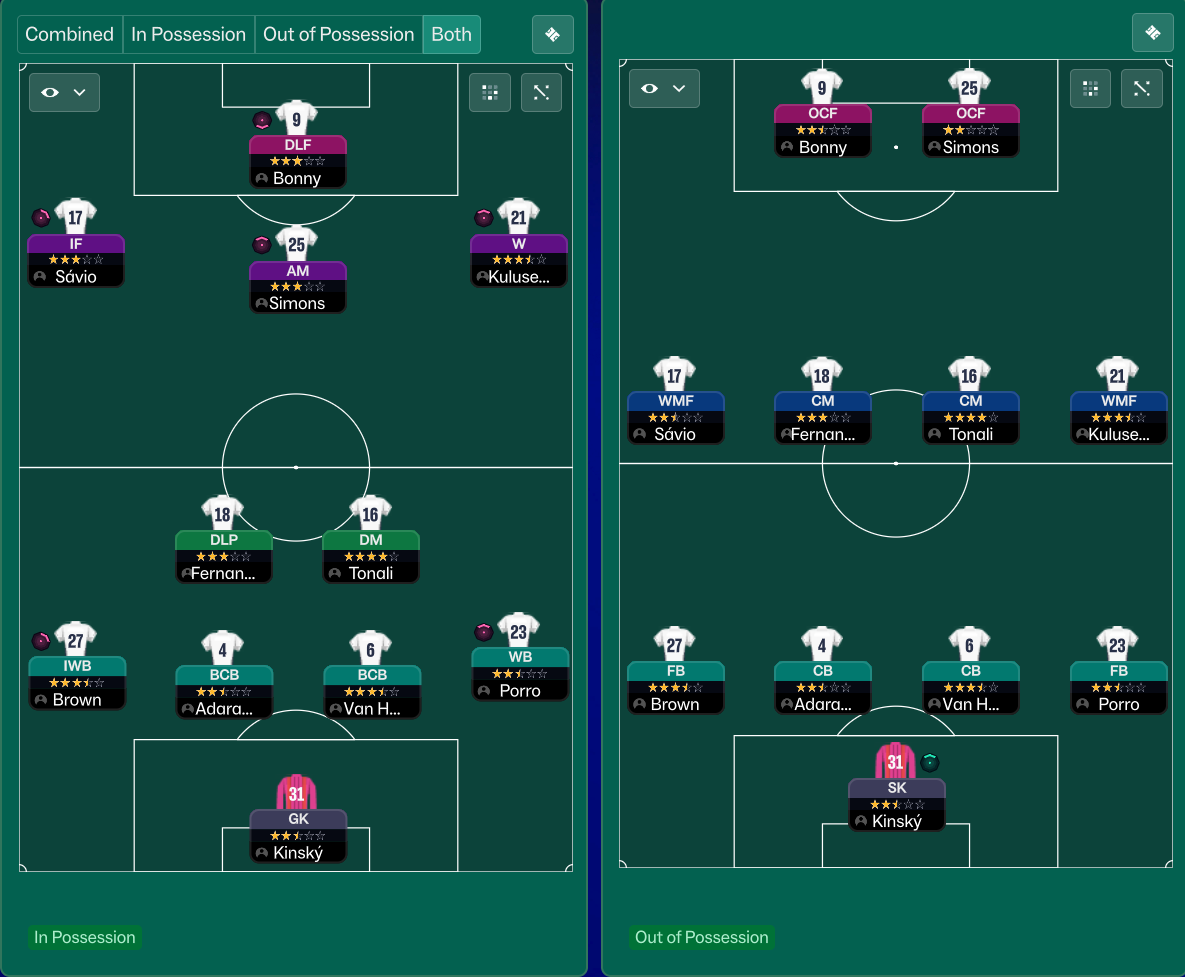
Guides for this tactic
The tactical theory behind the 4-3-3 DM Wide: roles, instructions, and the trade-offs that decide whether the system holds up.
Player pairings
Midfield Trios
Holder, runner, creator: the role distribution rule for three-man midfields, the AMC variants, and the antipatterns that break them.
Read guide
Playing styles
Gegenpressing: A Full Guide
Klopp-style gegenpressing in FM, including squad profile, line-and-press pairing, sustainable workload, and the antipatterns to avoid.
Read guide
Foundations
Defensive Line and Line of Engagement
The pairing rule for Defensive Line and Line of Engagement, all 9 combinations, and the gap that costs goals.
Read guide