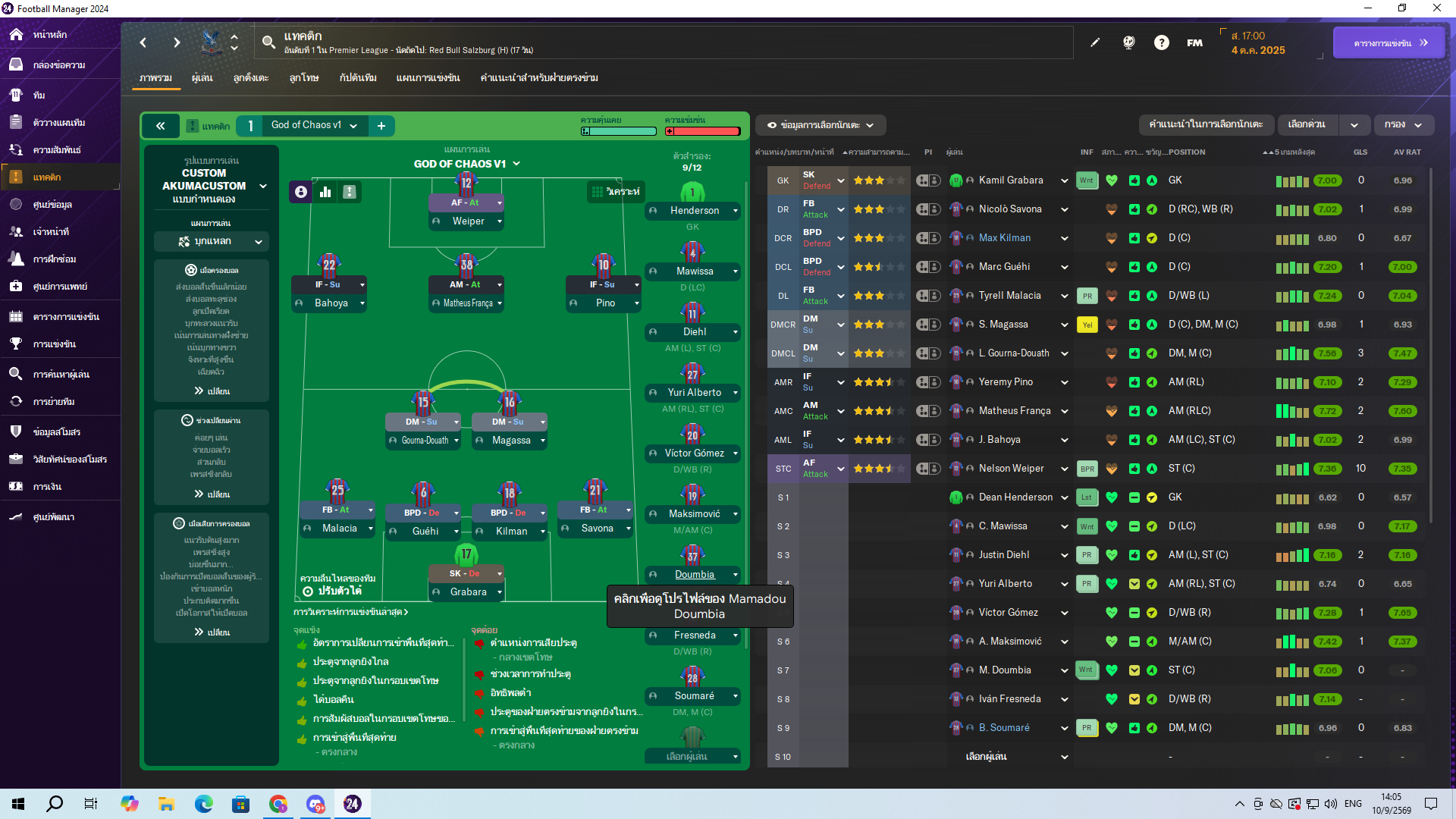
Uploaded Tactic
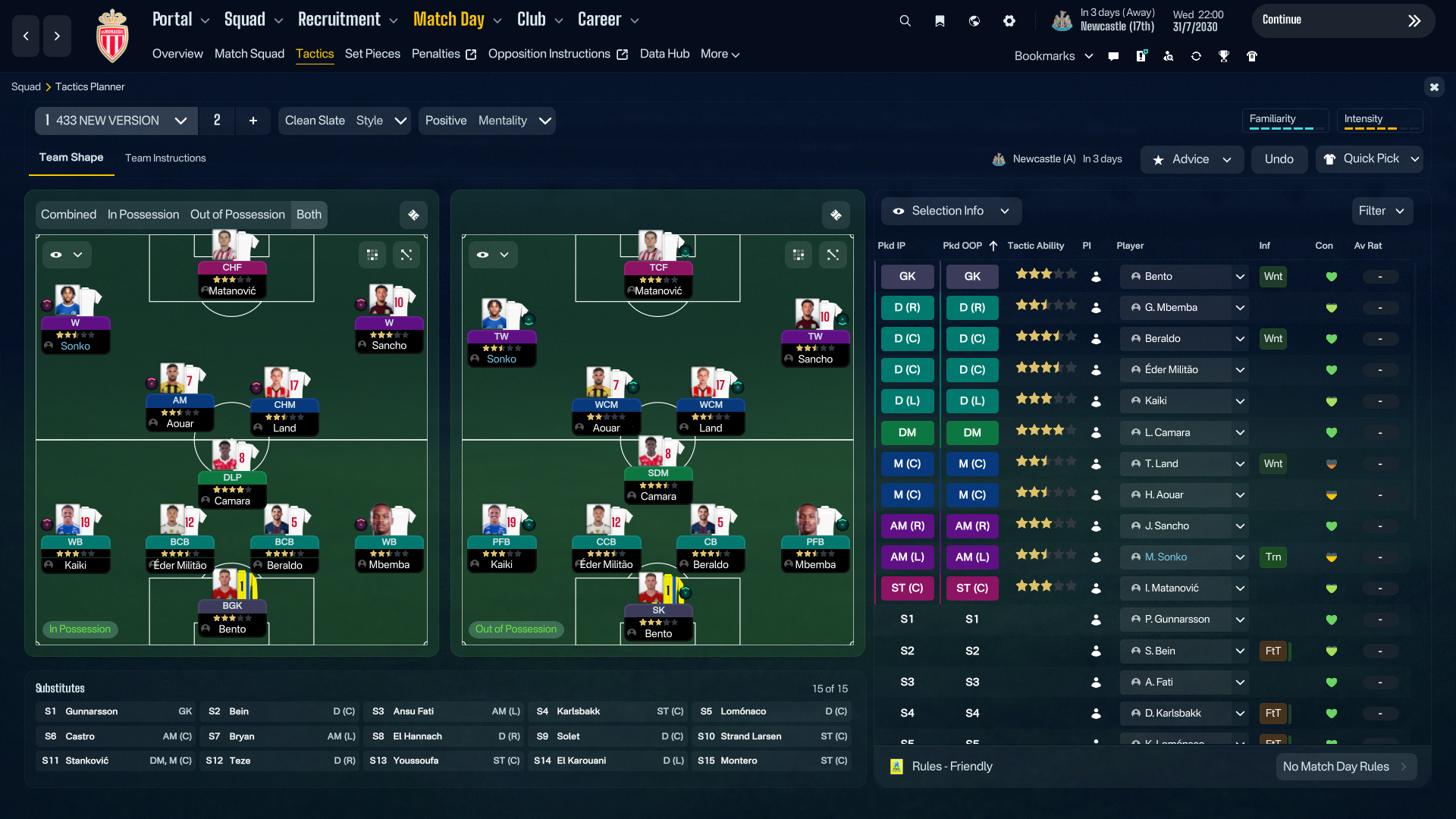
Formation & Style
Tactical Style:Possession
Mentality:Positive
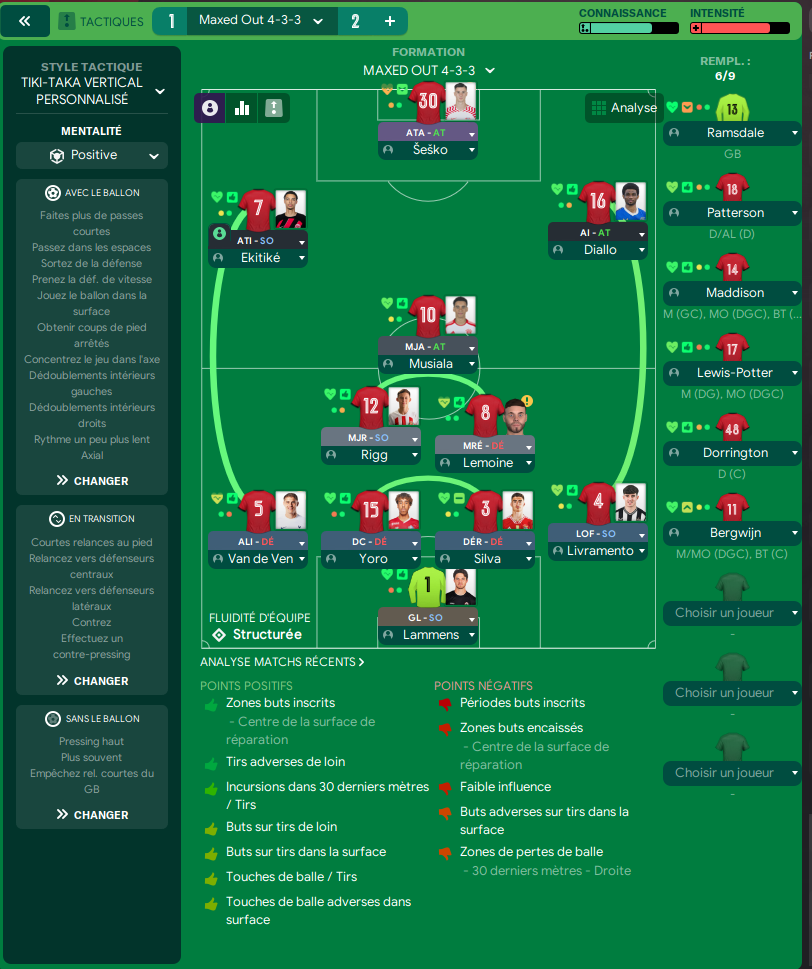
Formation:4-3-3
Team Fluidity:Fluid
In Possession
Work Ball Into Box
Lower Tempo
Play Out of Defence
In Transition
Counter
Counter Press
Out of Possession
Higher Defensive Line
Trigger Press More Often
Prevent Short GK Distribution
Team Shape Without Ball
Shape:Narrow/Compact
Description:The team remains compact with a solid defensive base, able to absorb pressure effectively.
Evidence:Higher Defensive Line and Trigger Press More Often aim to keep the opposition in their half.
Team Shape With Ball
Shape:Fluid Front Three
Description:The front three can interchange positions, with the inside forward and winger stretching the opposition.
Evidence:Winger and inside forward duties create space for the striker to exploit gaps.
Phase Description
Attacking Play
Utilizes width through the wing-backs and attempts to break down defenses via short, structured passes.
Defensive Transition
Focus shifts quickly to regain possession, utilizing a counter-press strategy after losing the ball.
Main Focus
Maintaining possession and probing for space before striking.
Key Strengths
Strong Midfield Control
The presence of a Deep-Lying Playmaker and a Box-to-Box Midfielder ensures control of the midfield.
Attacking Versatility
Different attacking roles allow fluid movement and adaptability in various situations.
Wing-Backs Provide Width
Complete Wing-Backs support both defensive solidity and attacking thrust from wide areas.
Conflicting Directions
Exposed Central Defence
With attacking wing-backs, occasional gaps may appear in central areas.
Risk of Overcommitment
With attacking focus, players may overcommit and leave themselves vulnerable on the break.
Dependence on Wing Play
Heavy reliance on wing play could lead to predictability and defensive stability from opponents.
Tactical Suggestions
Adjust Wing-Back Duties
Consider varying some wing-back duties to support midfield more during defensive phases.
Incorporate a Second Striker
Deploying a second striker may increase attacking threat and create overloads.
Experiment with Team Shape
Evaluating a more compact midfield or adjusting player roles may enhance control.
Ask Questions About Your Lineup
Related Tactics
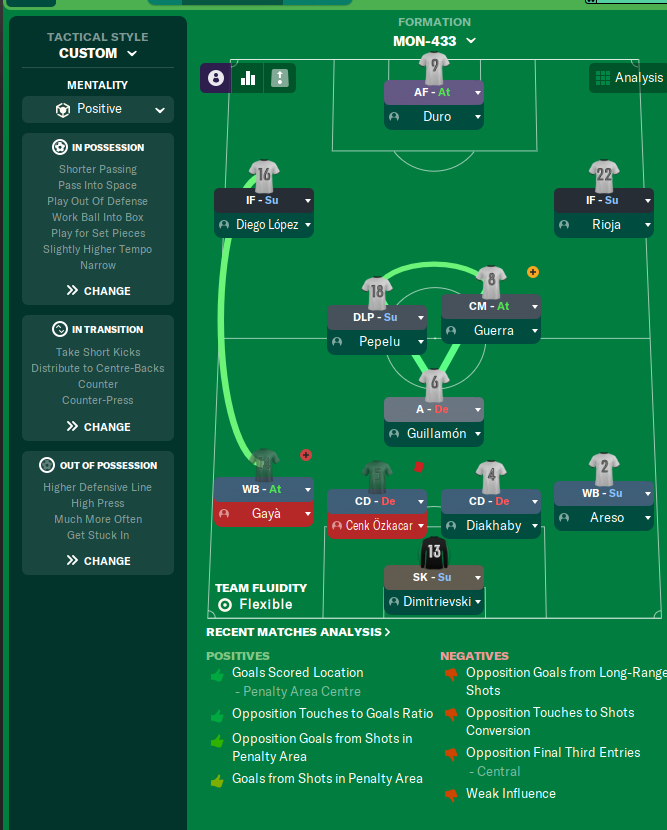
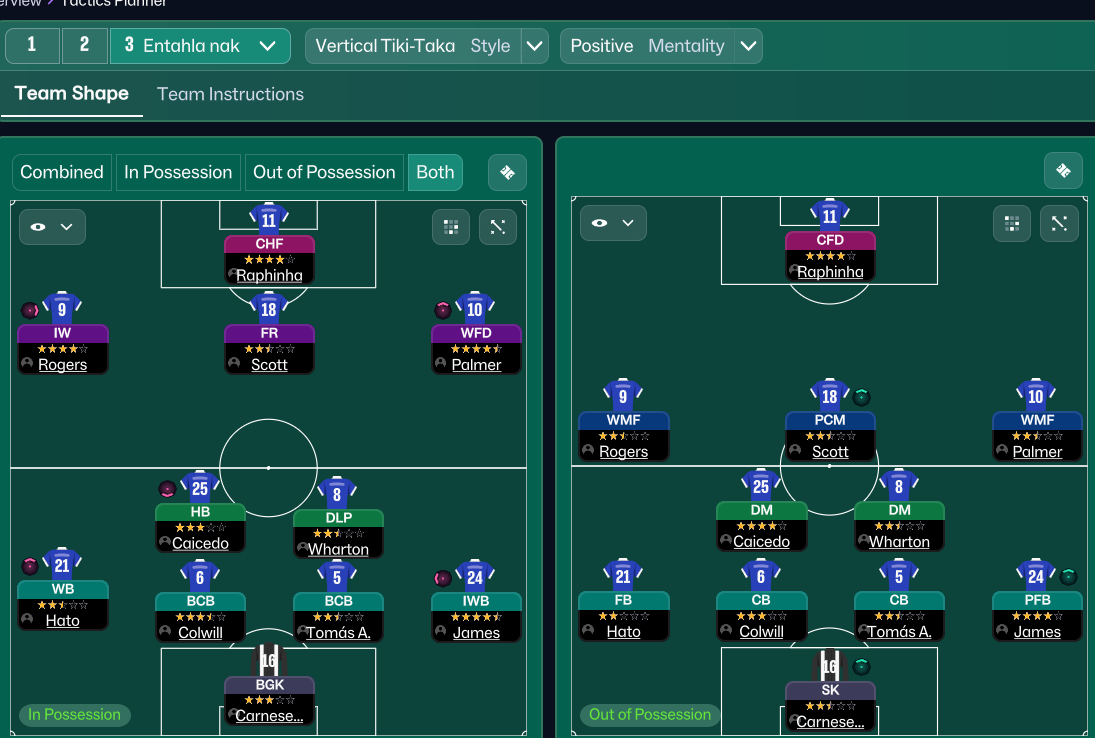
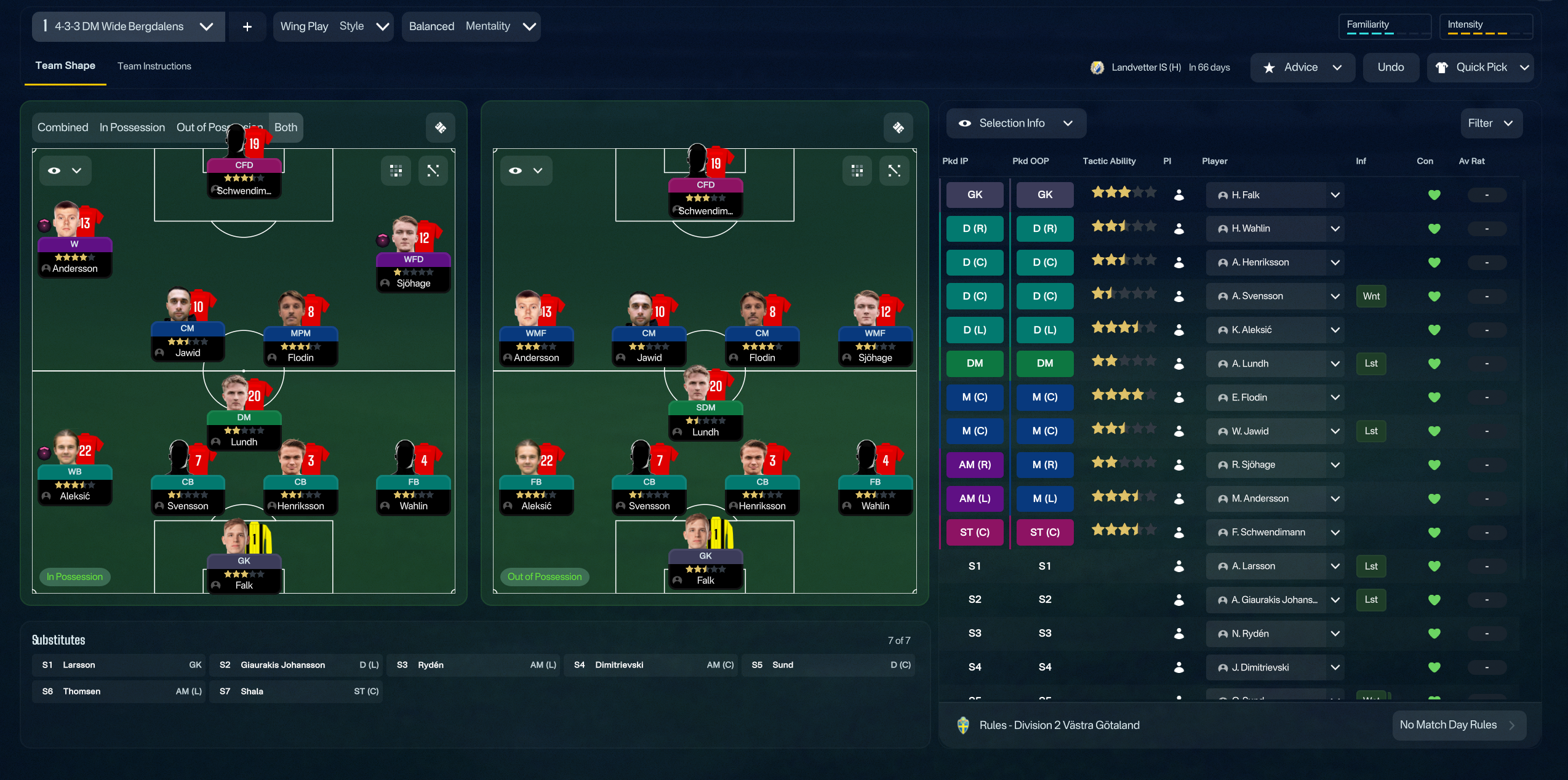
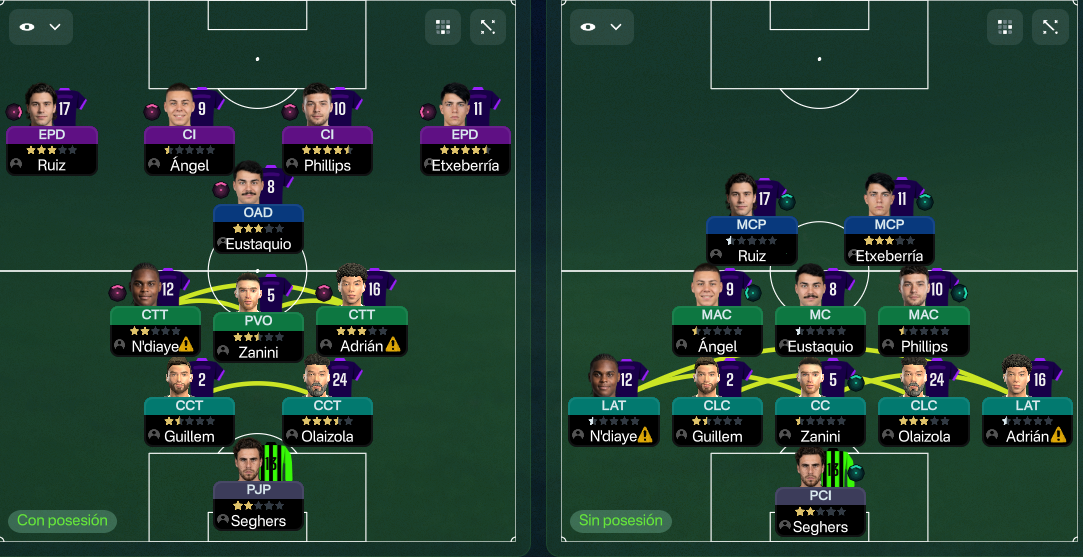
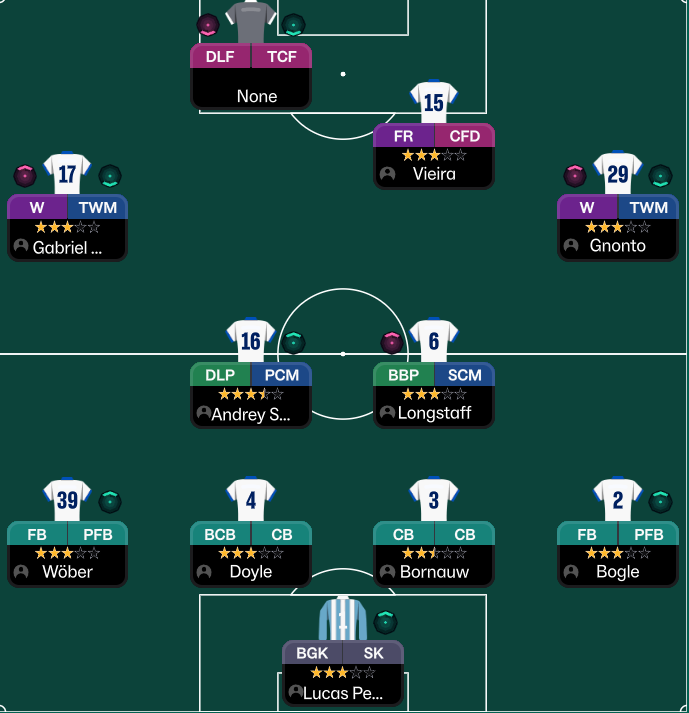
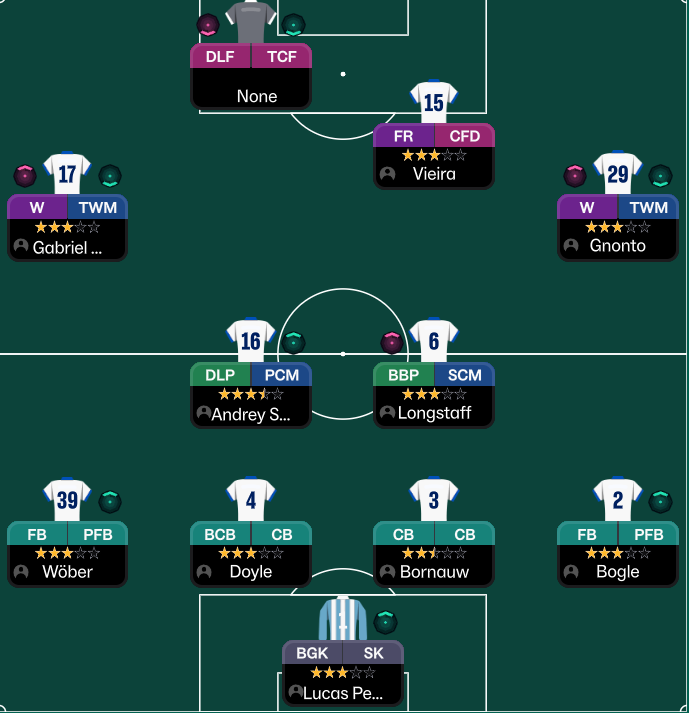
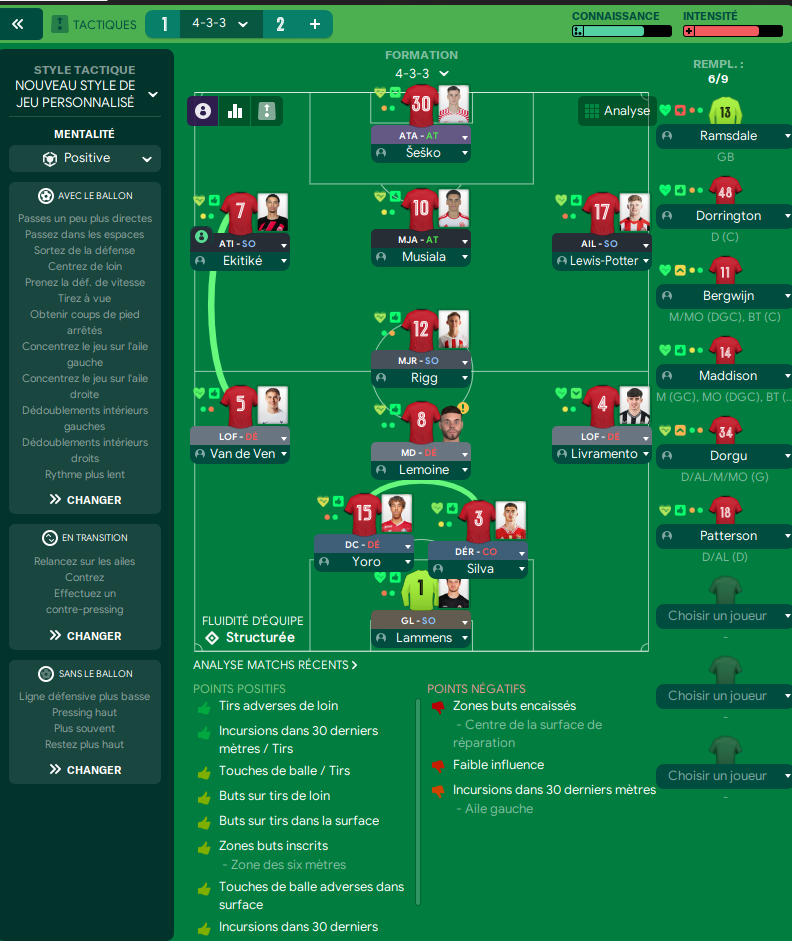
More Possession tactics
Guides for this formation
The tactical theory behind the 4-3-3: roles, instructions, and the trade-offs that decide whether the system holds up.
Foundations
Understanding the 4-3-3 Formation
Master the classic 4-3-3: player roles, tactical variations, and the trade-offs that decide whether it sings or stalls.
Read guide
Player pairings
Midfield Trios
Holder, runner, creator: the role distribution rule for three-man midfields, the AMC variants, and the antipatterns that break them.
Read guide
Playing styles
Gegenpressing: A Full Guide
Klopp-style gegenpressing in FM, including squad profile, line-and-press pairing, sustainable workload, and the antipatterns to avoid.
Read guide