4-3-3 Wide Tactic
4-3-3 Wide
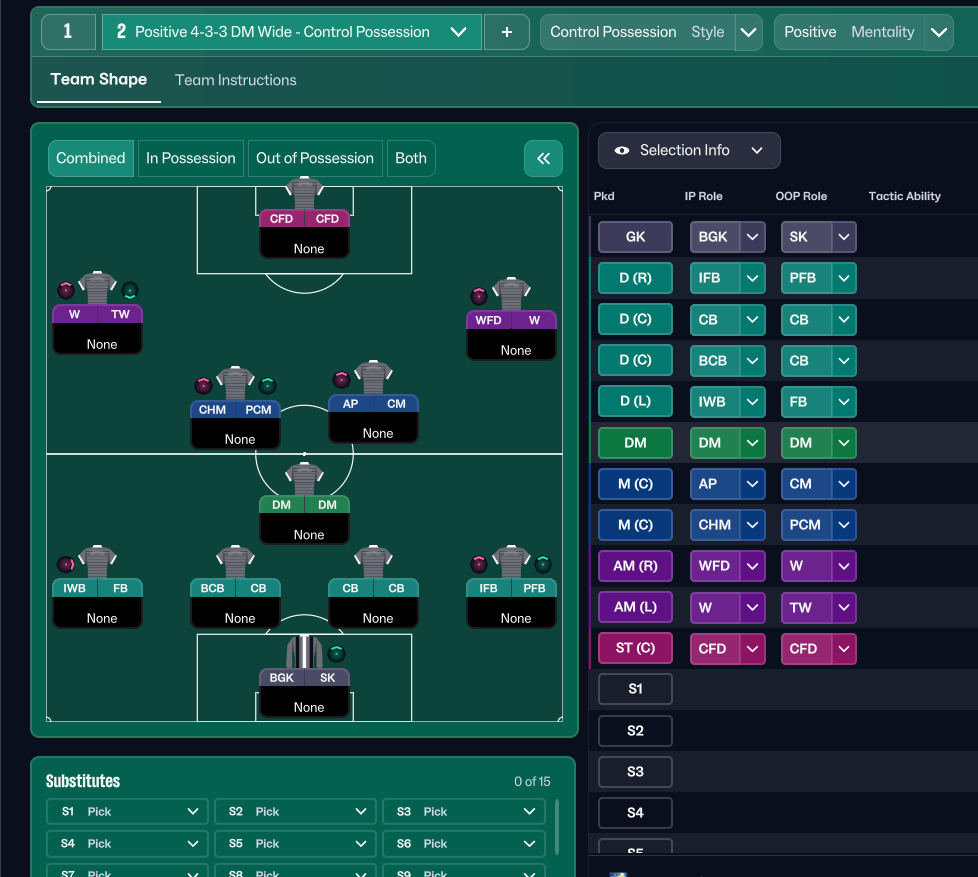
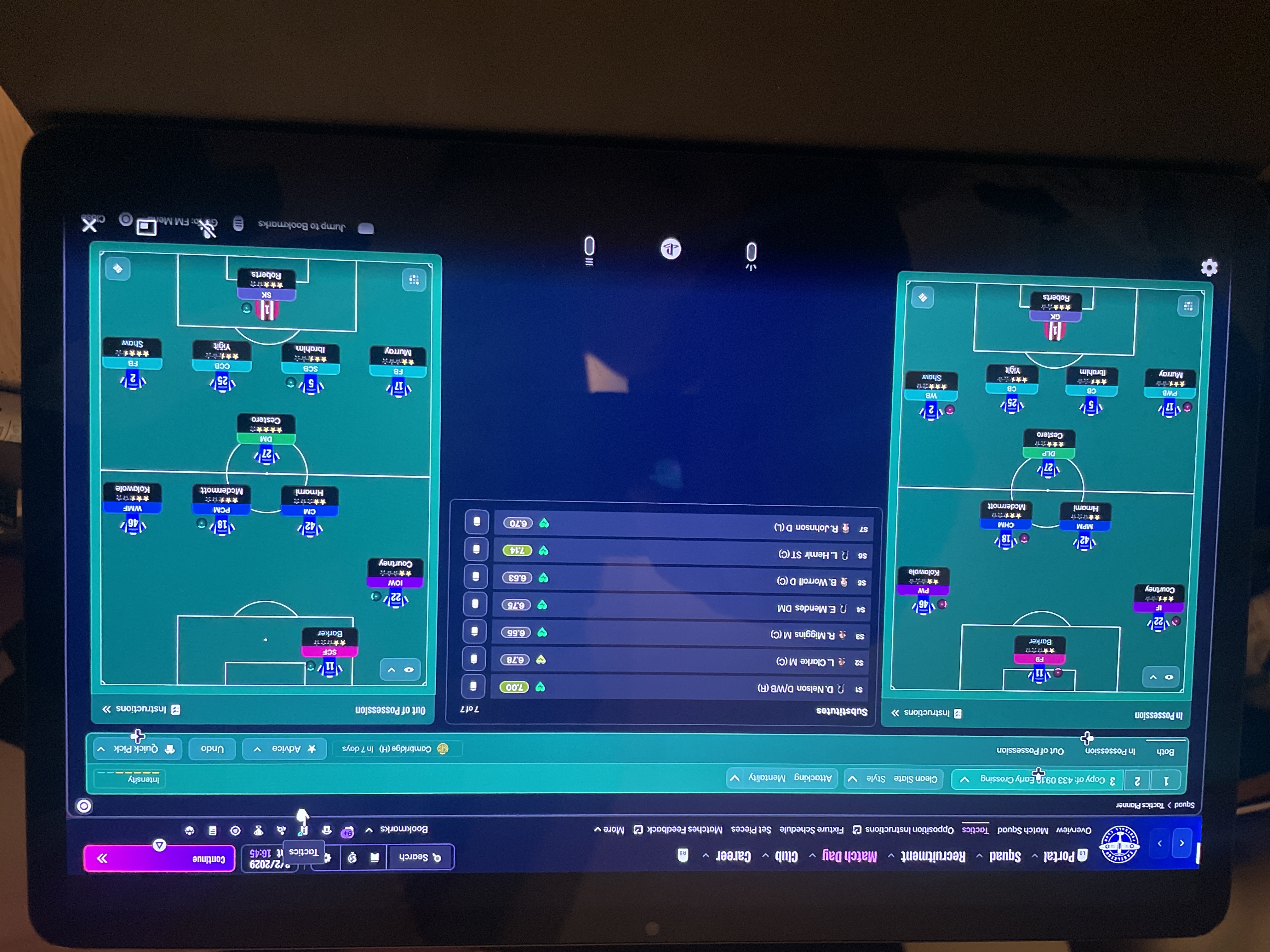
Utilizing the width provided by inverted wing-backs and inside forwards. Inverted Wing-Backs stretch the play and create space for Inside Forwards.
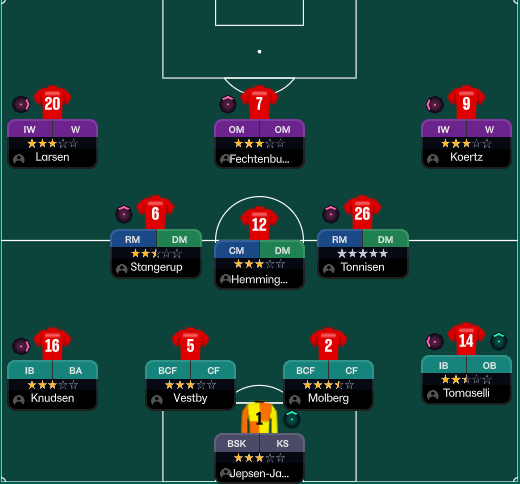
Loading tactical analysis...
Formation and style
4-3-3 Wide
In possession
Play Out of Defence
Pass Into Space
Work Ball Into Box
In transition
Counter
Counter-Press
Out of possession
Higher Line of Engagement
Higher Defensive Line
Prevent Short GK Distribution
Player roles
GK
Goalkeeper
Defend
DF
Ball-Playing Defender
Defend
DF
Ball-Playing Defender
Defend
DF
Inverted Wing-Back
Attack
DF
Inverted Wing-Back
Support
DM
Defensive Midfielder
Defend
CM
Central Midfielder
Support
DM
Defensive Midfielder
Defend
OM
Attacking Midfielder
Support
FW
Inside Forward
Attack
FW
Pressing Forward
Attack
Phase description
Quick passing through midfield with a focus on creating chances from width.
Immediate pressure applied to regain possession after losing the ball.
Utilizing the width provided by inverted wing-backs and inside forwards.
Team shape defence
4-3-3
Defensive structure remains solid, with a compact formation and two defensive midfielders offering protection to the backline.
Two DM roles at [3,2] and [3,4] providing stability.
Team shape attack
Dynamic 4-3-3
Attacking play utilizes width and quick movement into the final third, leveraging inverted wing-backs to create overloads.
Inverted Wing-Backs at [2,2] and [2,4], inside forwards at [6,1] and [6,3].
Key strengths
Attacking Width
Inverted Wing-Backs stretch the play and create space for Inside Forwards.
IWB at [2,2] and [2,4] interacting well with IF at [6,1] and [6,3].
Defensive Stability
Two defensive midfielders ensure a solid core and protect the backline.
DM at [3,2] and [3,4] maintain defensive cover.
Conflicting tactics
High Line Risks
Higher Defensive Line can expose centre-backs against fast attackers.
Higher Defensive Line increases vulnerability countering at width.
Inverted Wing-Back Balance
Risk of leaving flanks exposed if not adequately covered by midfielders.
IWB at [2,2] and [2,4] can both defend and attack, requiring balanced support.
Risk exposures
Risk Exposures
Items
Defensive Transition
Could struggle against quick transitions if caught out of position.
Higher Line of Engagement may leave defenders exposed.
Midfield Control
Potential for being outnumbered in midfield if not managed correctly.
Only 3 central midfielders versus potential 4 or 5 from opponent.
Role synergies
Role Synergies
Items
Inside Forward and Attacking Midfielder
Combines for effective goal-scoring opportunities in the box.
IF at [6,1] linking well with OM at [5,2].
Defensive Midfielders and Ball-Playing Defenders
Ball-Playing Defenders can distribute quickly to maintain possession.
BPD at [2,2] and [2,4] support DM at [3,3].
Suggested questions
How can we exploit our width against compact defenses?
What adjustments should be made if we're getting countered frequently?
Are the midfield roles contributing enough defensively and offensively?
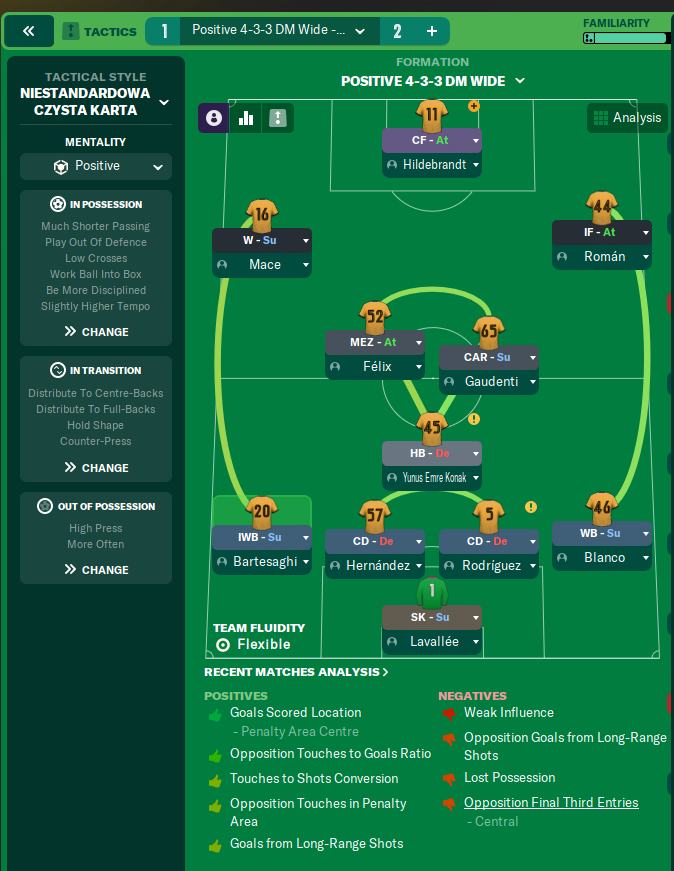
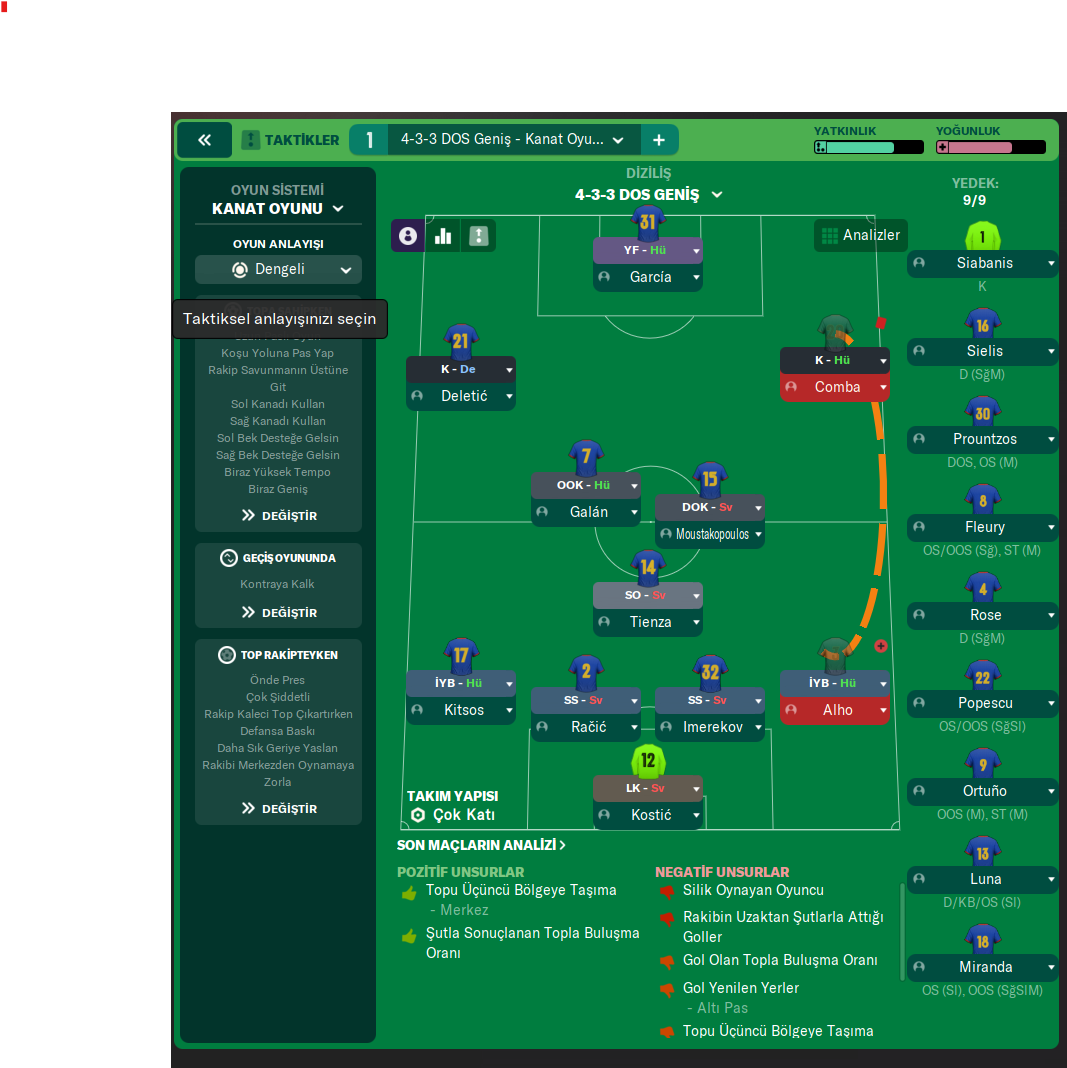
Related Tactics
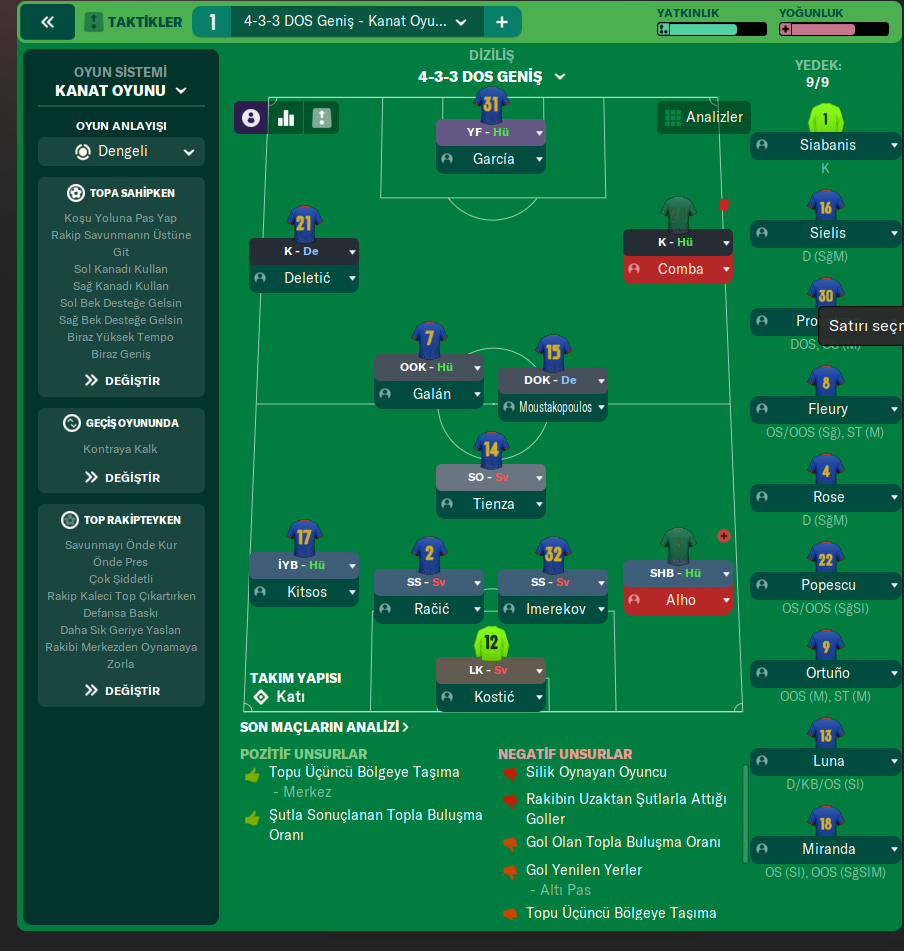
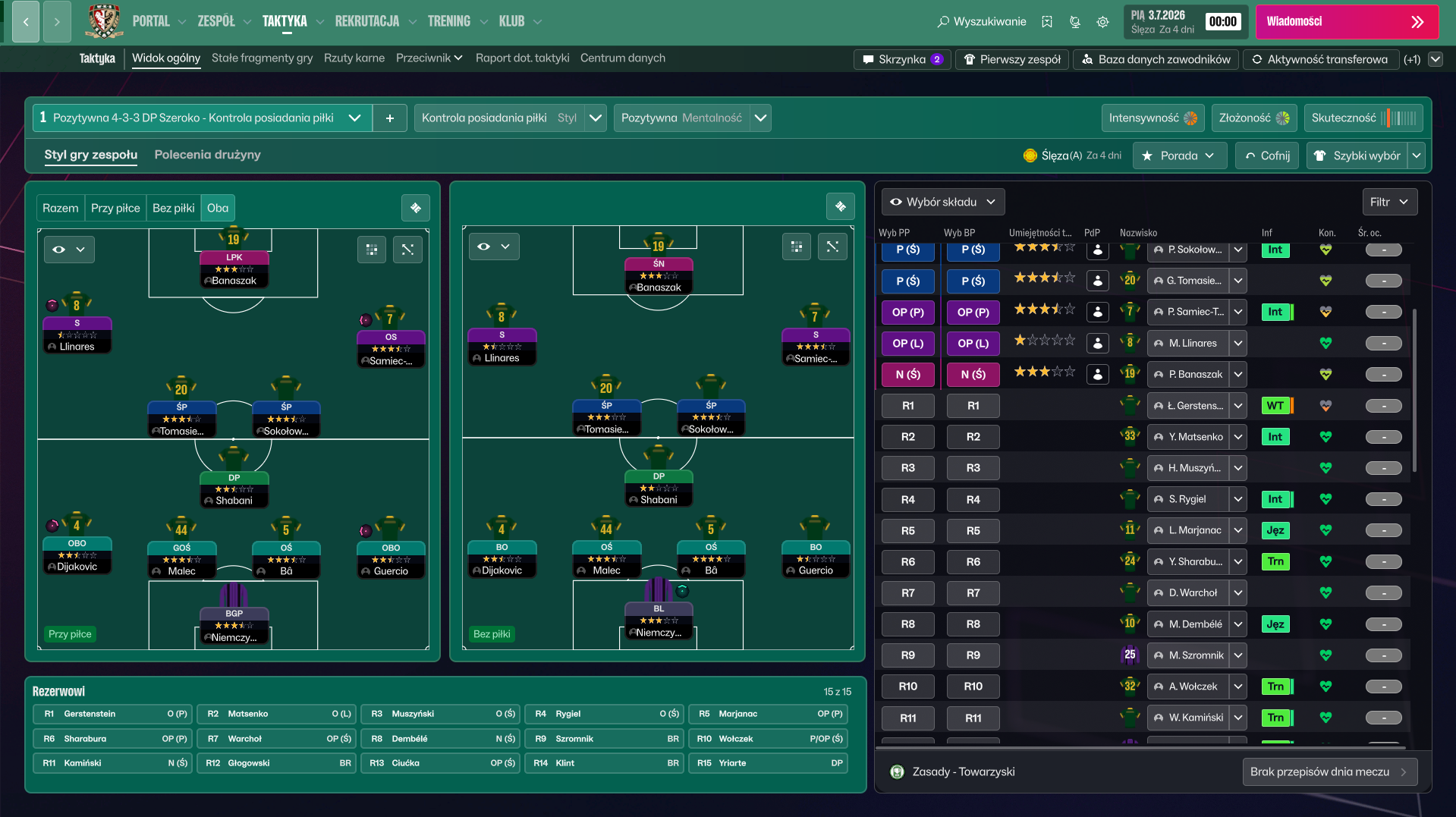
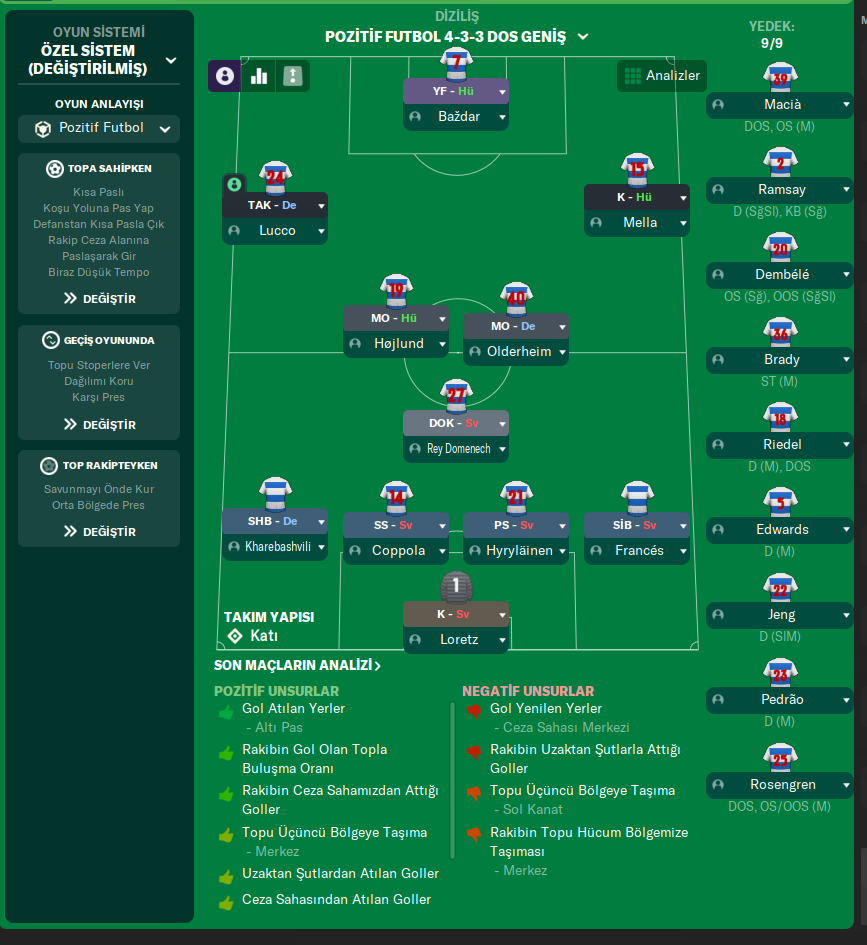
Guides for this tactic
The tactical theory behind the 4-3-3 Wide: roles, instructions, and the trade-offs that decide whether the system holds up.
Playing styles
Tiki-Taka vs Positional Play
Why circulation density and zonal occupation aren't the same thing in FM, and the half-space occupation rule that decides build-up.
Read guide
Playing styles
Possession-Based Tactics in Football Manager
Build the patient, control-the-tempo style without watching your opponents counter through the gaps you leave behind.
Read guide
Foundations
FM27 Tactics: What Changed from FM26
FM27 keeps FM26's tactic system. Here is what stays the same, the small changes that can catch you out, and what the new Tactical Effectiveness system asks of you.
Read guide