Wide Play 4-3-3 Wide (Balanced) Tactic
4-3-3 Wide
Utilizing width and speed in attacks while maintaining a solid defensive structure. Flexibility in midfield roles allows for effective ball retention and…
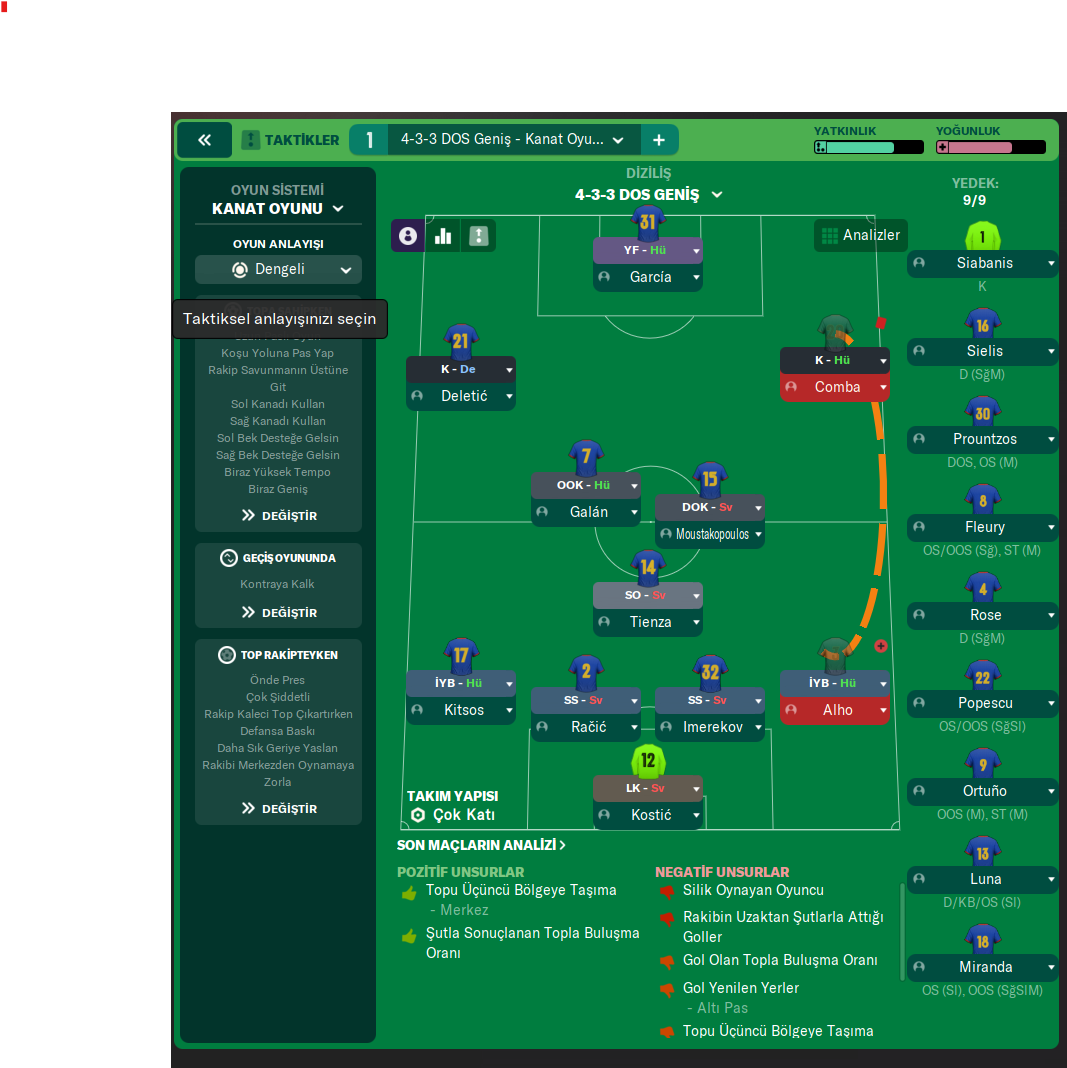
Loading tactical analysis...
Formation and style
Wide Play
Balanced
4-3-3 Wide
Very Fluid
In possession
Play Out of Defence
Focus Play Through the Middle
Higher Tempo
In transition
Counter-Press
Counter
Out of possession
Higher Line of Engagement
Higher Defensive Line
Prevent Short GK Distribution
Player roles
GK
Goalkeeper
Defend
DL
Inverted Full-Back
Support
DC
Ball-Playing Defender
Defend
DC
No-Nonsense Centre-Back
Defend
DR
Inverted Full-Back
Support
CM
Segundo Volante
Support
CM
Deep-Lying Playmaker
Support
CM
Roaming Playmaker
Support
LW
Inside Forward
Attack
RW
Inside Forward
Attack
ST
Advanced Forward
Attack
Phase description
The team looks to build attacks from the back, utilizing the technical ability of the midfield to control possession and create chances.
Upon losing the ball, immediate pressure is applied to regain possession quickly.
Utilizing width and speed in attacks while maintaining a solid defensive structure.
Team shape defence
4-3-3
Compact shape with midfield support to the defense.
The No-Nonsense CB at [2,3] and BPD at [2,2] provide a strong foundation.
Team shape attack
4-3-3
Dynamic with width from Inside Forwards and support from Inverted Full-Backs.
Inside Forwards at [6,2] and [6,4] create space for overlapping FBs.
Key strengths
Versatile Midfield
Flexibility in midfield roles allows for effective ball retention and transition.
Roaming Playmaker at [4,3] combined with DLP at [4,2].
Attacking Width
Wide players provide options for crosses and cut-ins.
Inside Forwards at [6,2] and [6,4] with overlapping Inverted FBs.
Conflicting tactics
High Pressing
May lead to gaps in defense if players are too aggressive.
Higher Line of Engagement could stretch the team too thin.
Slow Build-Up Play
Could hinder the team's ability to exploit counter-attacks.
Higher Tempo conflicts with slow approach.
Risk exposures
Risk Exposures
Items
Defensive Transition
Quick counters can exploit spaces left behind during pressing.
High Line of Engagement creates vulnerability.
Lack of Defensive Support
Over-reliance on forwards could lead to defensive gaps.
Only three CM roles mean potential for counter-attacks.
Role synergies
Role Synergies
Items
Roaming Playmaker + Secondo Volante
Provides both mobility and passing options in midfield.
Both at [4,3] and [4,2].
Inverted Full-Back + Inside Forward
Creates confusion for defenders, opening up space.
At [2,1] and [6,2]/[6,4].
Suggested questions
How often do we maintain defensive solidity while transitioning to attack?
Are the full-backs receiving enough support during offensive plays?
Is there a need to adjust pressing intensity based on opposition tactics?
Related Tactics
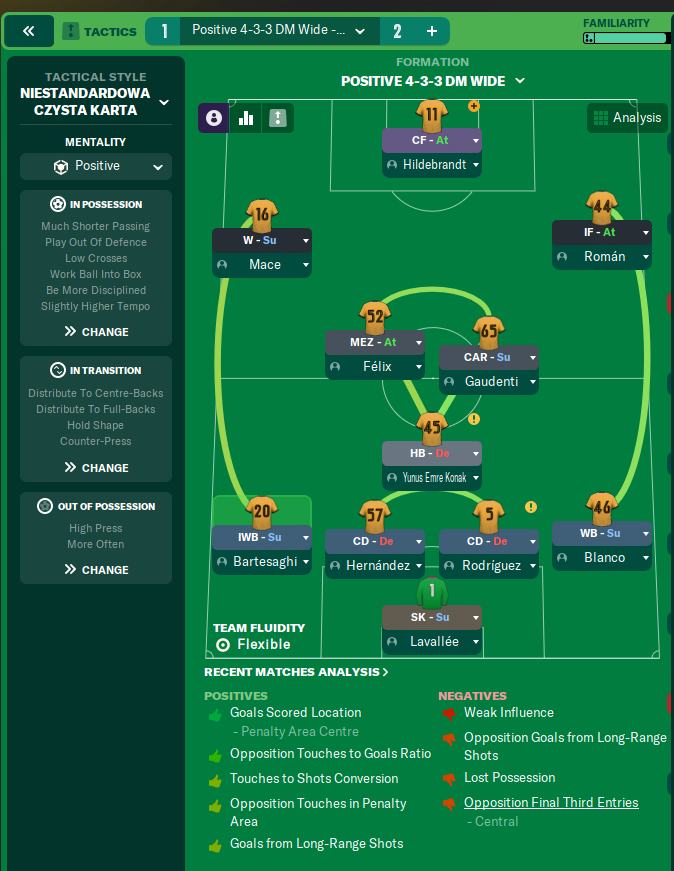
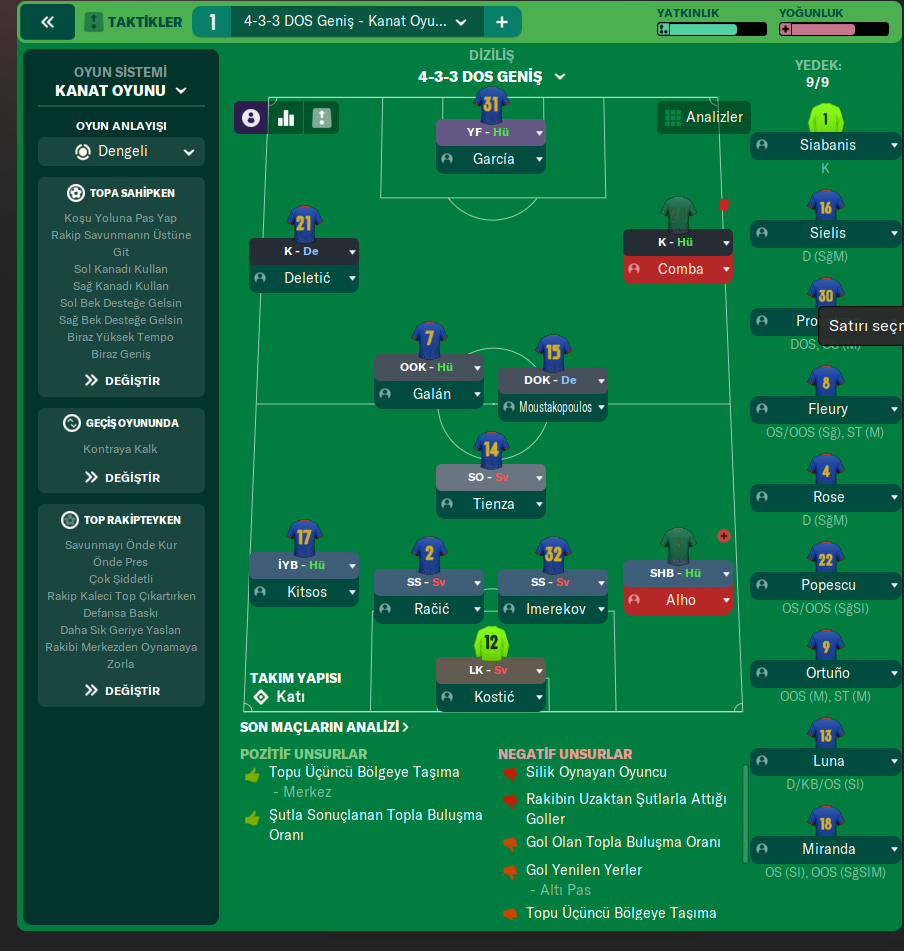
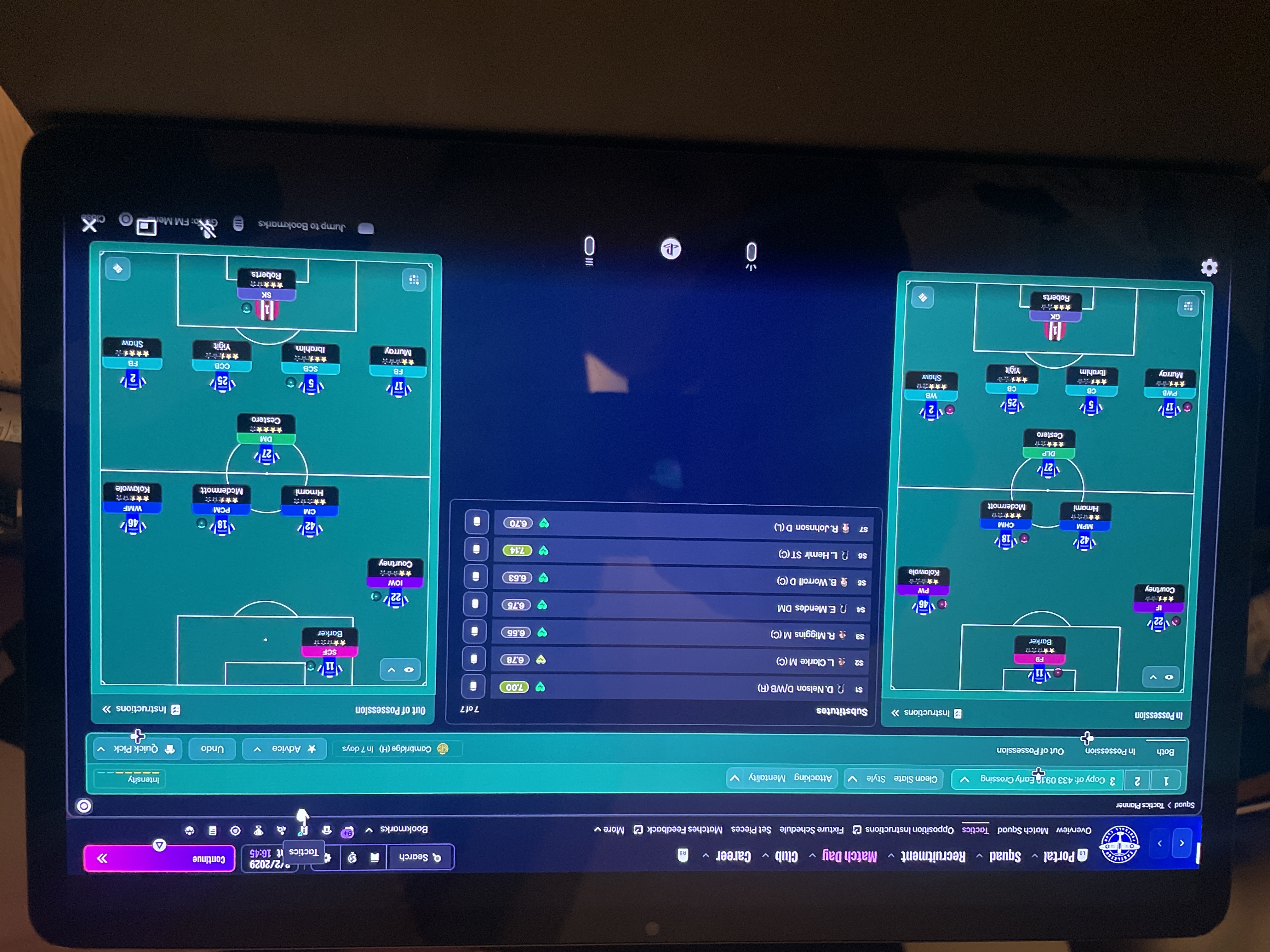
More Wide Play tactics
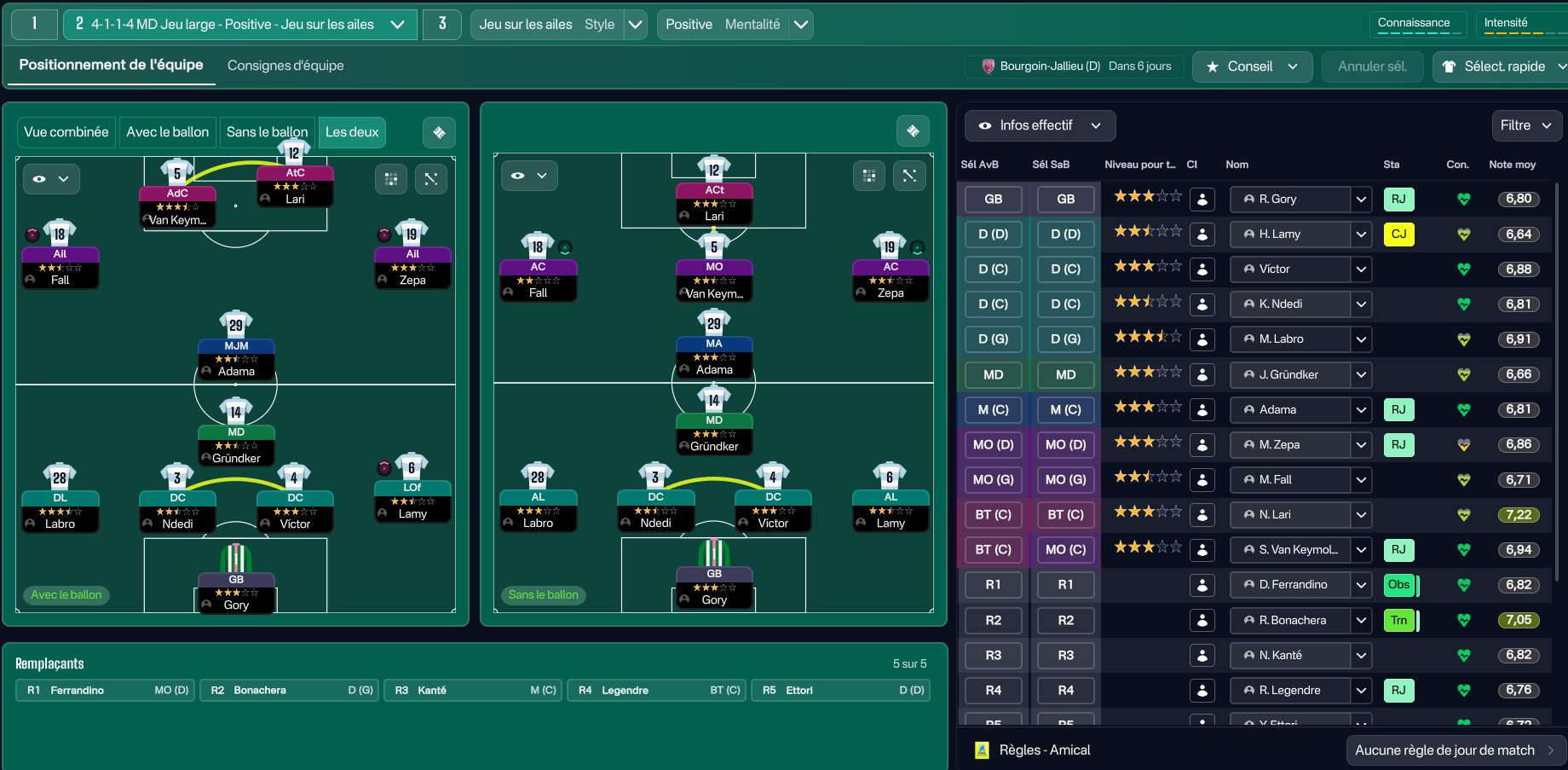
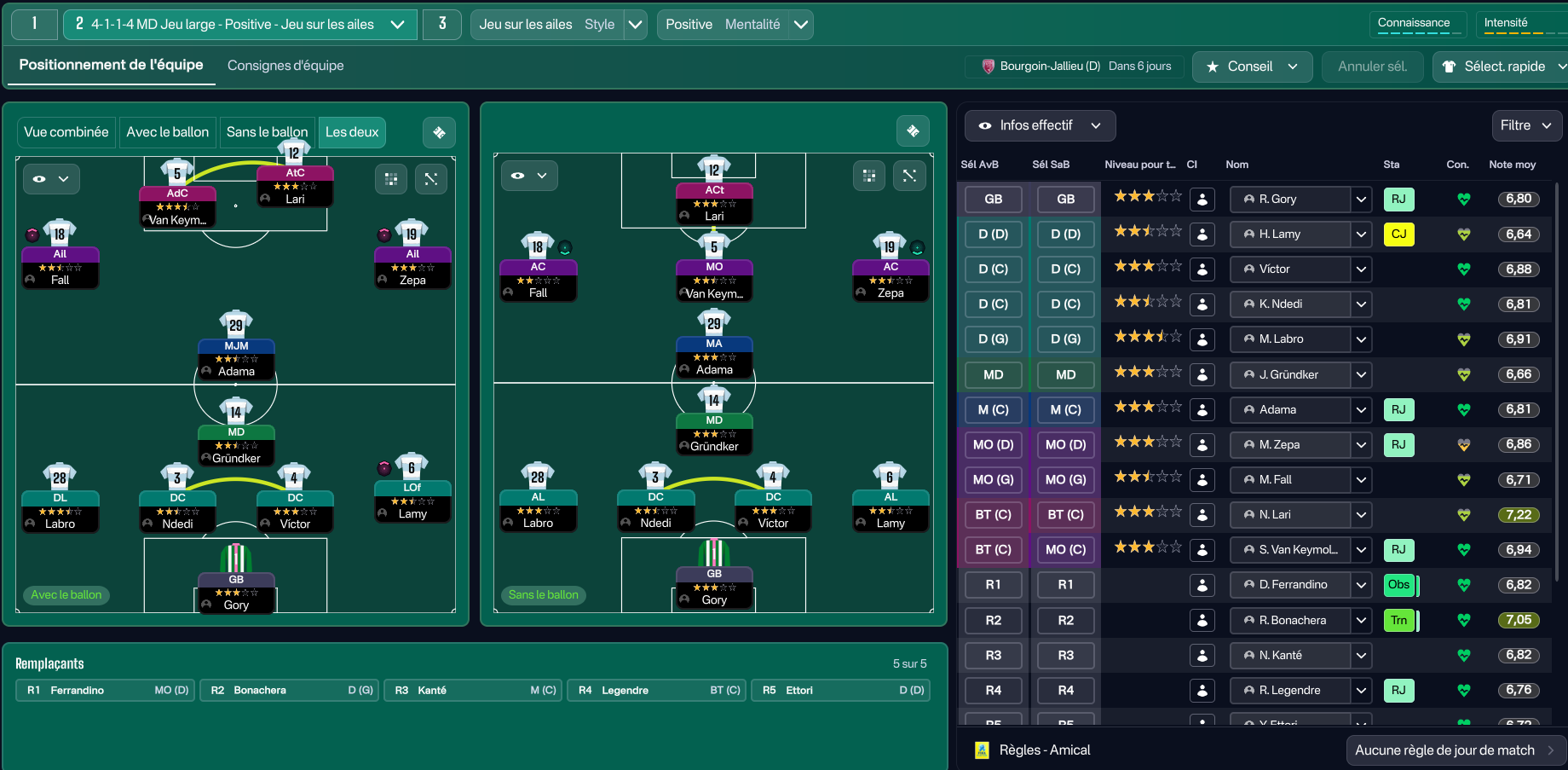
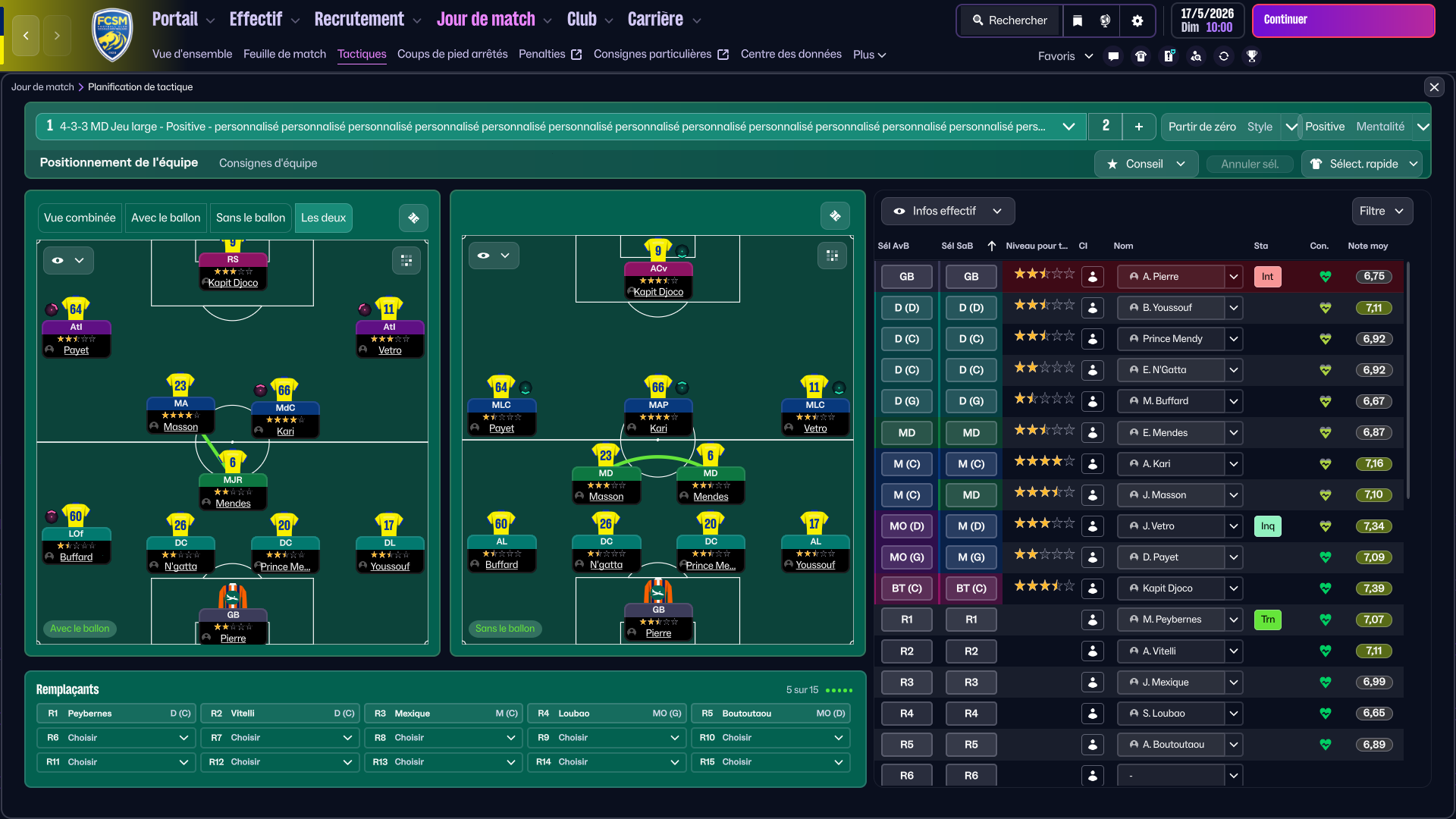
Guides for this tactic
The tactical theory behind the 4-3-3 Wide: roles, instructions, and the trade-offs that decide whether the system holds up.
Playing styles
Tiki-Taka vs Positional Play
Why circulation density and zonal occupation aren't the same thing in FM, and the half-space occupation rule that decides build-up.
Read guide
Playing styles
Possession-Based Tactics in Football Manager
Build the patient, control-the-tempo style without watching your opponents counter through the gaps you leave behind.
Read guide
Foundations
FM27 Tactics: What Changed from FM26
FM27 keeps FM26's tactic system. Here is what stays the same, the small changes that can catch you out, and what the new Tactical Effectiveness system asks of you.
Read guide