
4-2-3-1 DM Wide
High pressing with central possession play. High press, more often triggers and counter-press form a coherent aggressive out-of-possession plan that wins…
Loading tactical analysis...
4-2-3-1 DM Wide
4-4-1-1 2 DM
Balanced
Clean Slate
1
3
Ball-Playing Goalkeeper
Sweeper Keeper
2
2
Ball-Playing Center-Back
Centre-Back
2
4
Ball-Playing Center-Back
Centre-Back
3
1
Wing Back
Full Back
3
2
Defensive Midfielder
Defensive Midfielder
3
5
Wing Back
Full Back
5
1
Inside Forward
Wide Midfielder
4
3
Free Role
Attacking Midfielder
5
5
Inside Winger
Wide Midfielder
6
3
Center Forward
Center Forward
3
4
Deep-Lying Playmaker
Defensive Midfielder
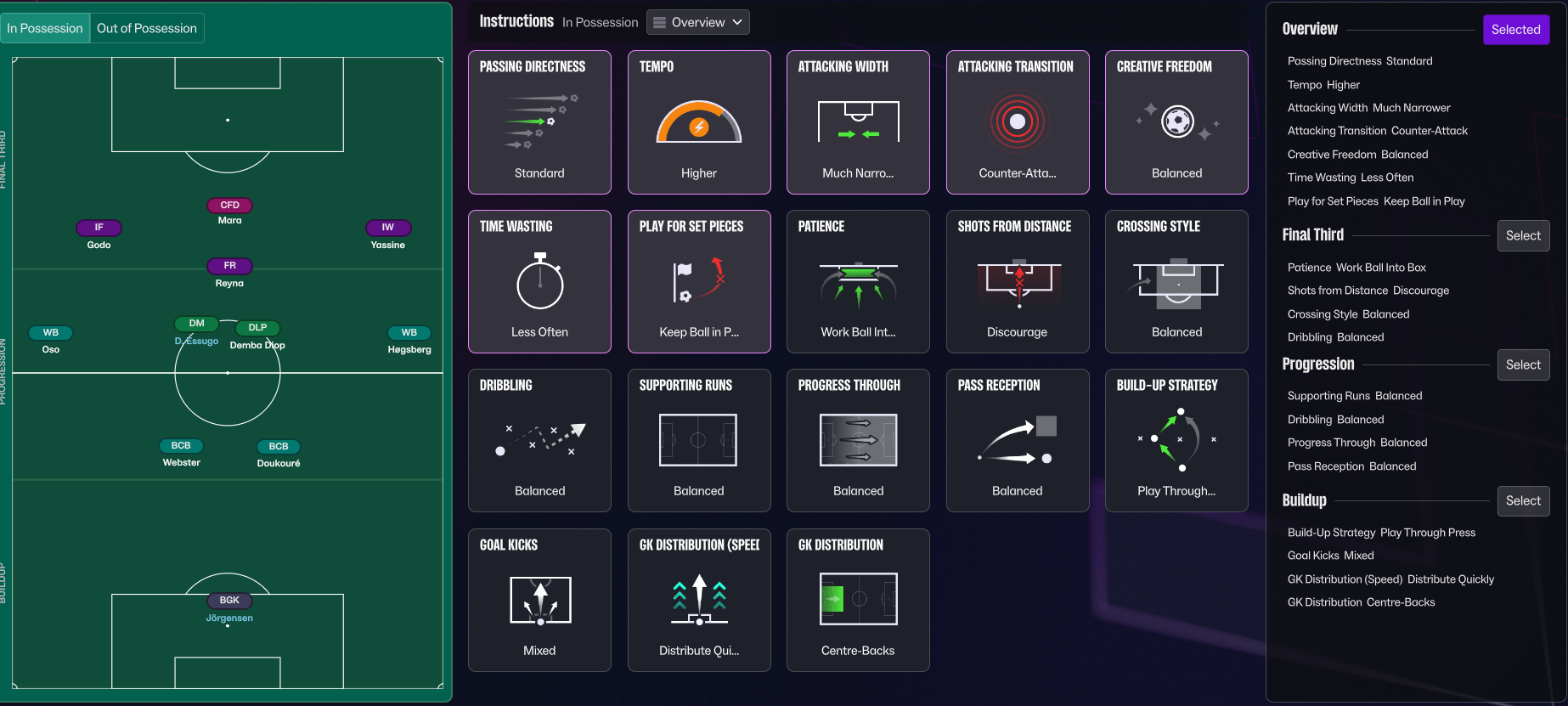
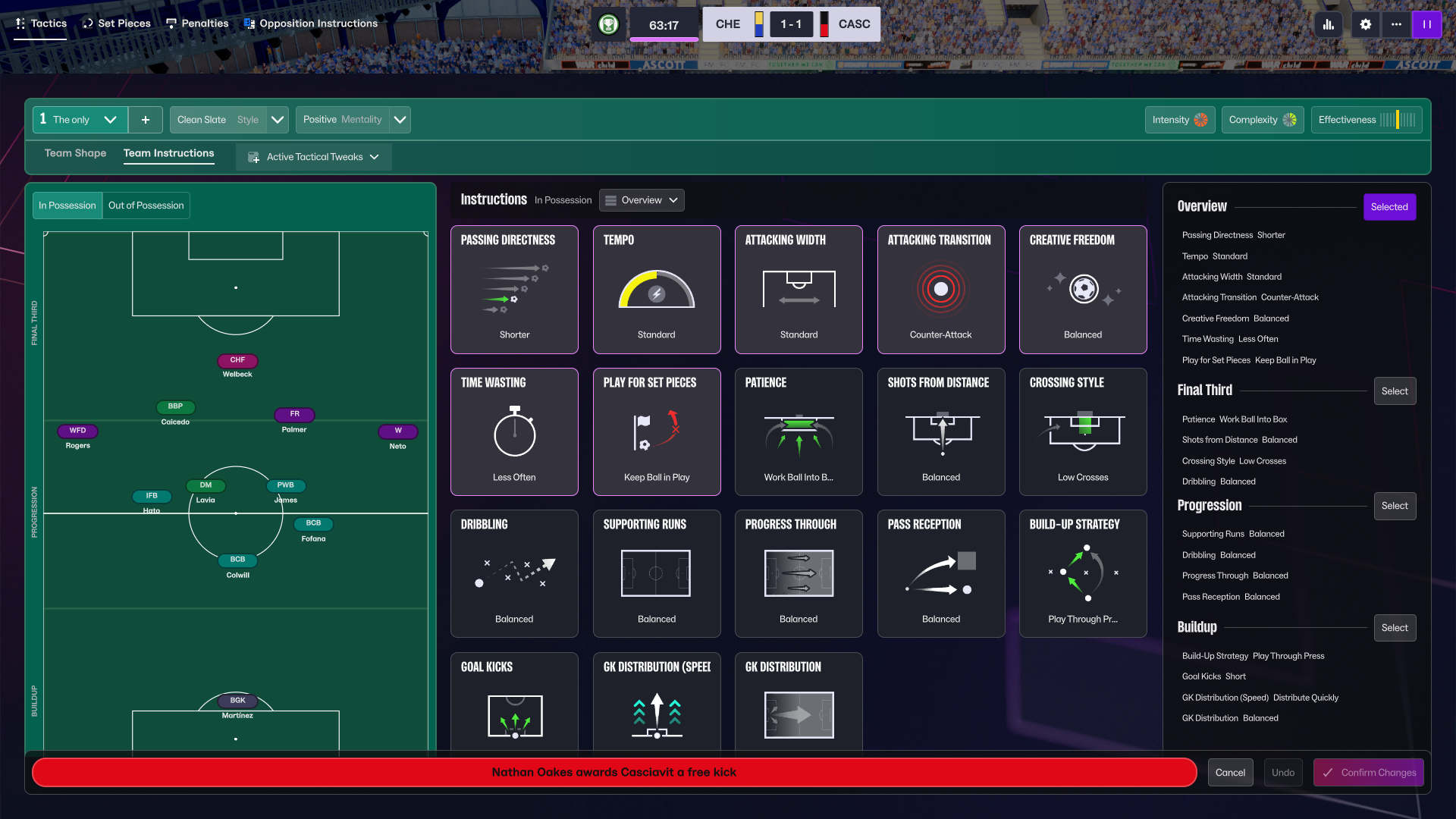
Standard
Higher
Much Narrower
Counter-Attack
Balanced
Less Often
Keep Ball in Play
Work Ball Into Box
Discourage
Balanced
Balanced
Balanced
Balanced
Balanced
Play Through Press
Mixed
Distribute Quickly
Center-Backs
Overlap Balanced
Underlap Balanced
High Press
Standard
Balanced
More Often
Counter-Press
Standard
Yes
Balanced
High press, more often triggers and counter-press form a coherent aggressive out-of-possession plan that wins the ball high.
[4,3] Attacking Midfielder and [6,3] Center Forward lead the press from the front.
Much narrower width with inside forward, inside winger and free role packs the middle for short combinations and counter-pressing.
Inside Forward at [5,1] and Inside Winger at [5,5] drift inside to support Free Role at [4,3].
Counter-Attack transition and higher tempo push quick direct attacks, while Work Ball Into Box asks for patience and technical quality.
Free Role at [4,3] and Center Forward at [6,3] get mixed signals.
Distribute Quickly gives teammates less time to get forward, while Play Through Press needs structured, secure short build-up.
Ball-Playing Goalkeeper at [1,3] distributes to centre-backs at [2,2] and [2,4] under pressure.
Wide areas
Much narrower width with wing-backs pushing up leaves flanks open on transitions against a high press that can be bypassed.
Wing Back at [3,1] and [3,5] with Full Back out of possession.
high
Space behind the press
High press with standard defensive line and counter-press leaves the centre-backs exposed if the press is beaten.
Centre-Back at [2,2] and [2,4] defend large space.
medium
Deep-lying playmaker + ball-playing centre-backs
Provide progressive passing from deep with a screen ahead.
Deep-Lying Playmaker [3,4], Ball-Playing Center-Back [2,4]
Free role + centre forward
Free role links play behind the striker, supporting a quick attack.
Free Role [4,3], Center Forward [6,3]
Do you want to counter quickly or build patiently?
Is your squad technical enough to play through the press?
How strong are the wing-backs defensively?
An aggressive pressing 4-2-3-1 with a compact, narrow attack that is coherent out of possession but sends mixed signals in possession: counter-attack and high tempo clash with patient final-third play and short build-up. Narrow width plus advanced wing-backs leaves the flanks exposed. Soften the transition and tempo to bring the attacking identity in line.
Short, narrow build-up through the centre-backs and deep playmaker, with inside forwards and a free role combining centrally before working the ball into the box.
Counter-press immediately and press high with more frequent triggers to win the ball back quickly.
High pressing with central possession play.
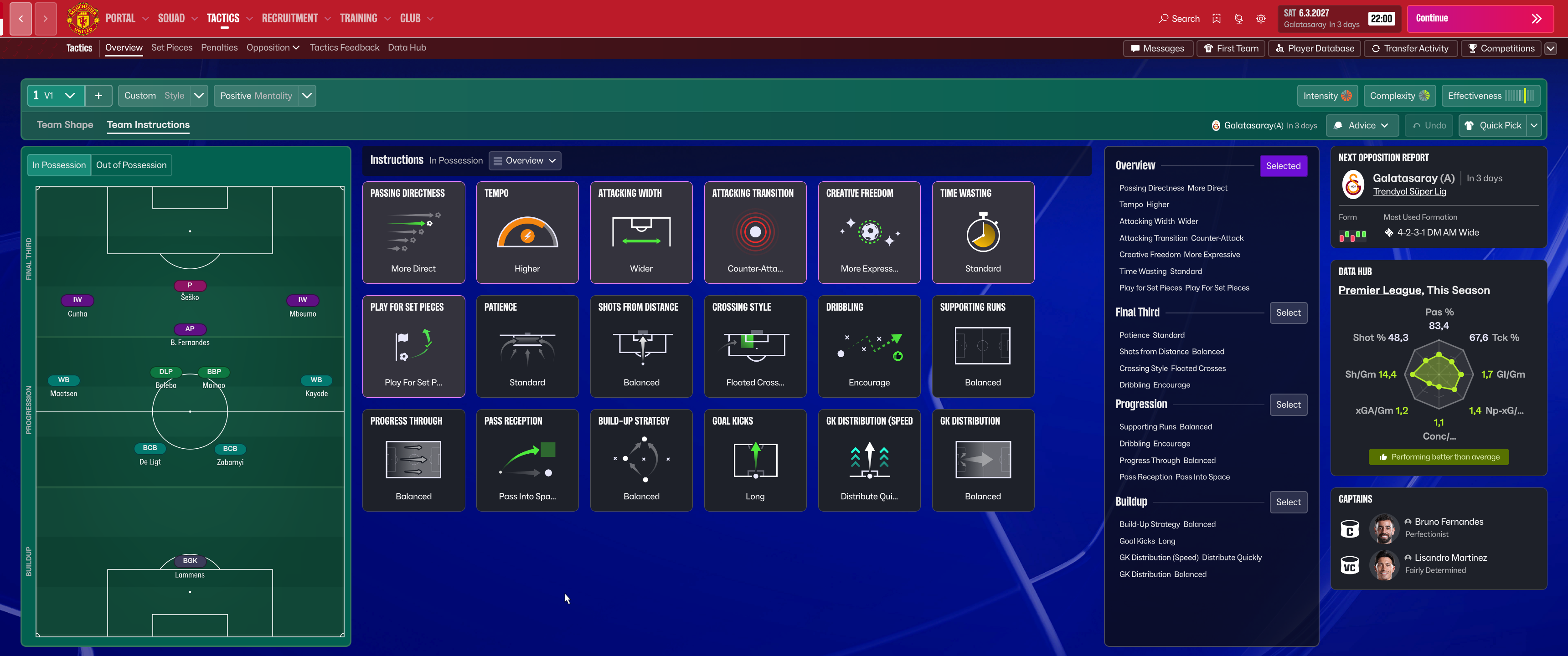
clean slate
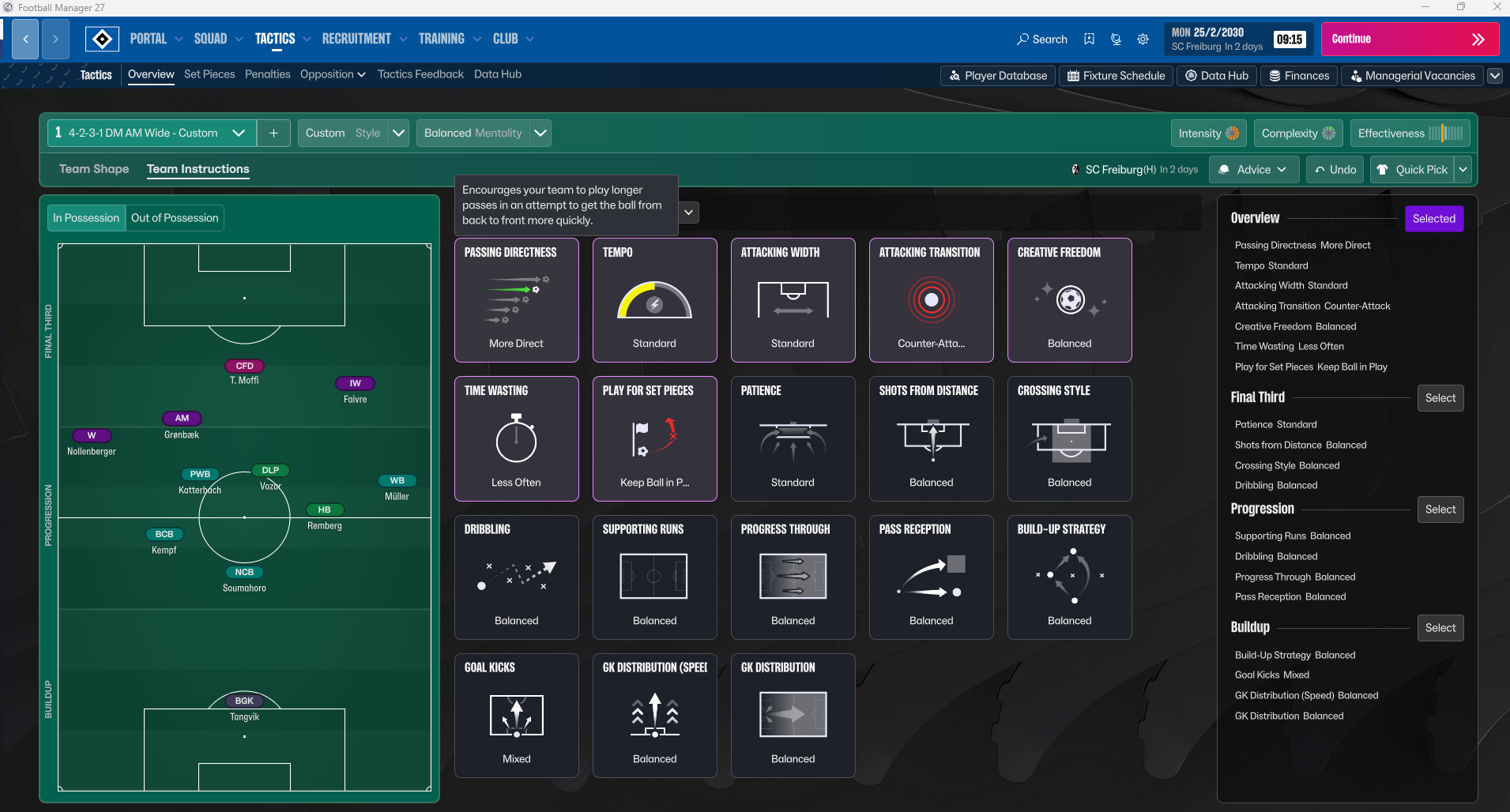
clean slate
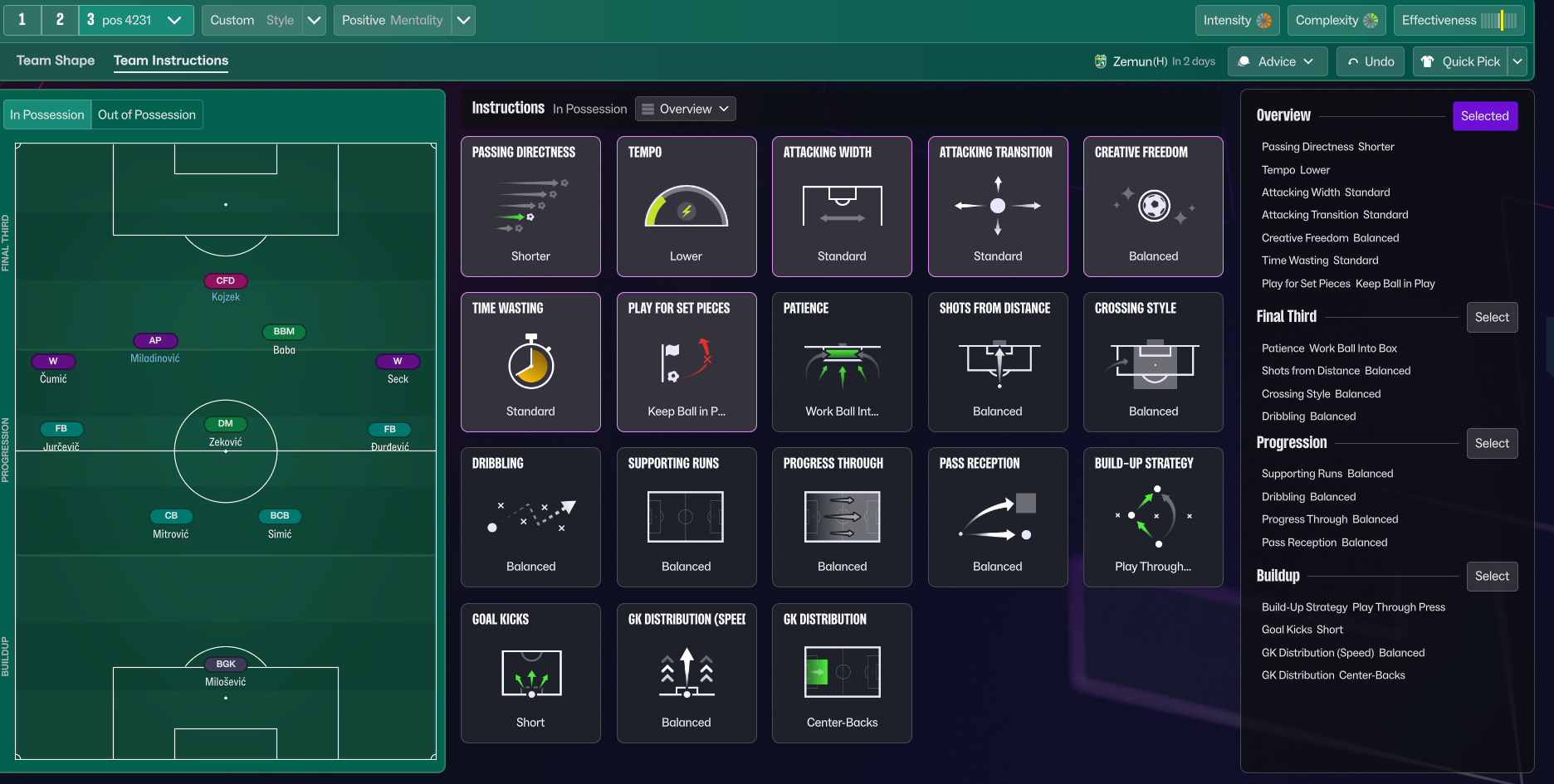
control possession
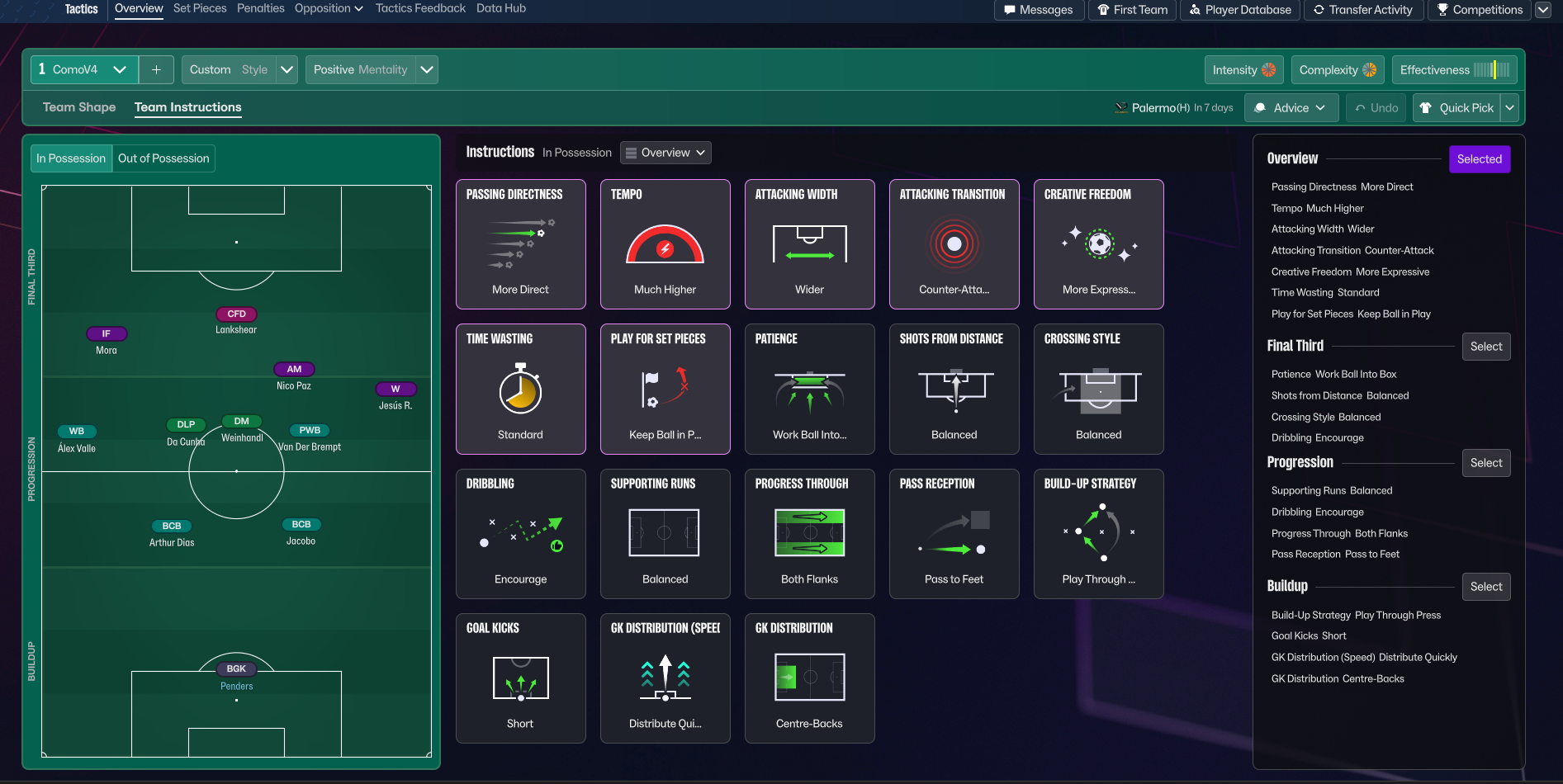
clean slate
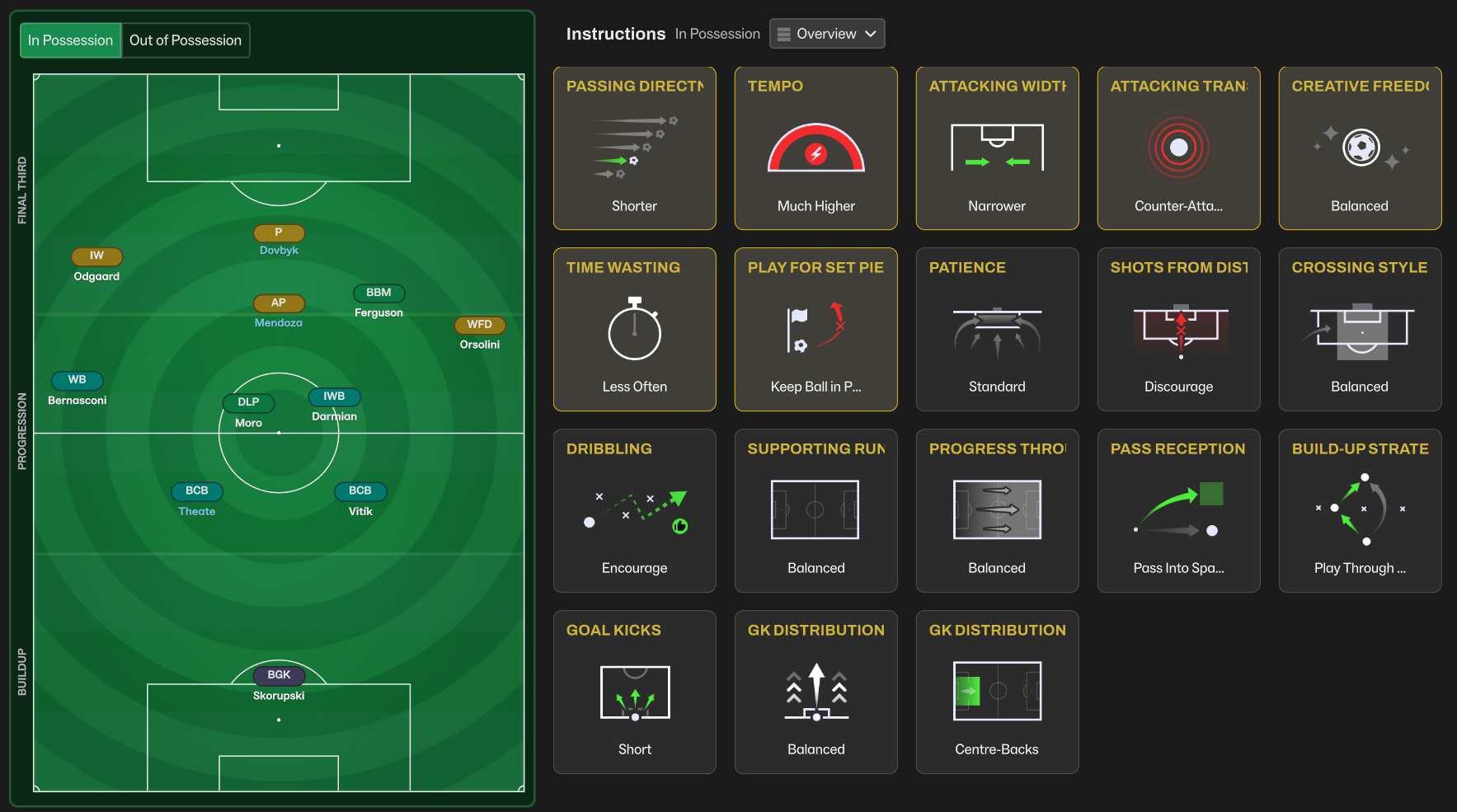
gegenpress
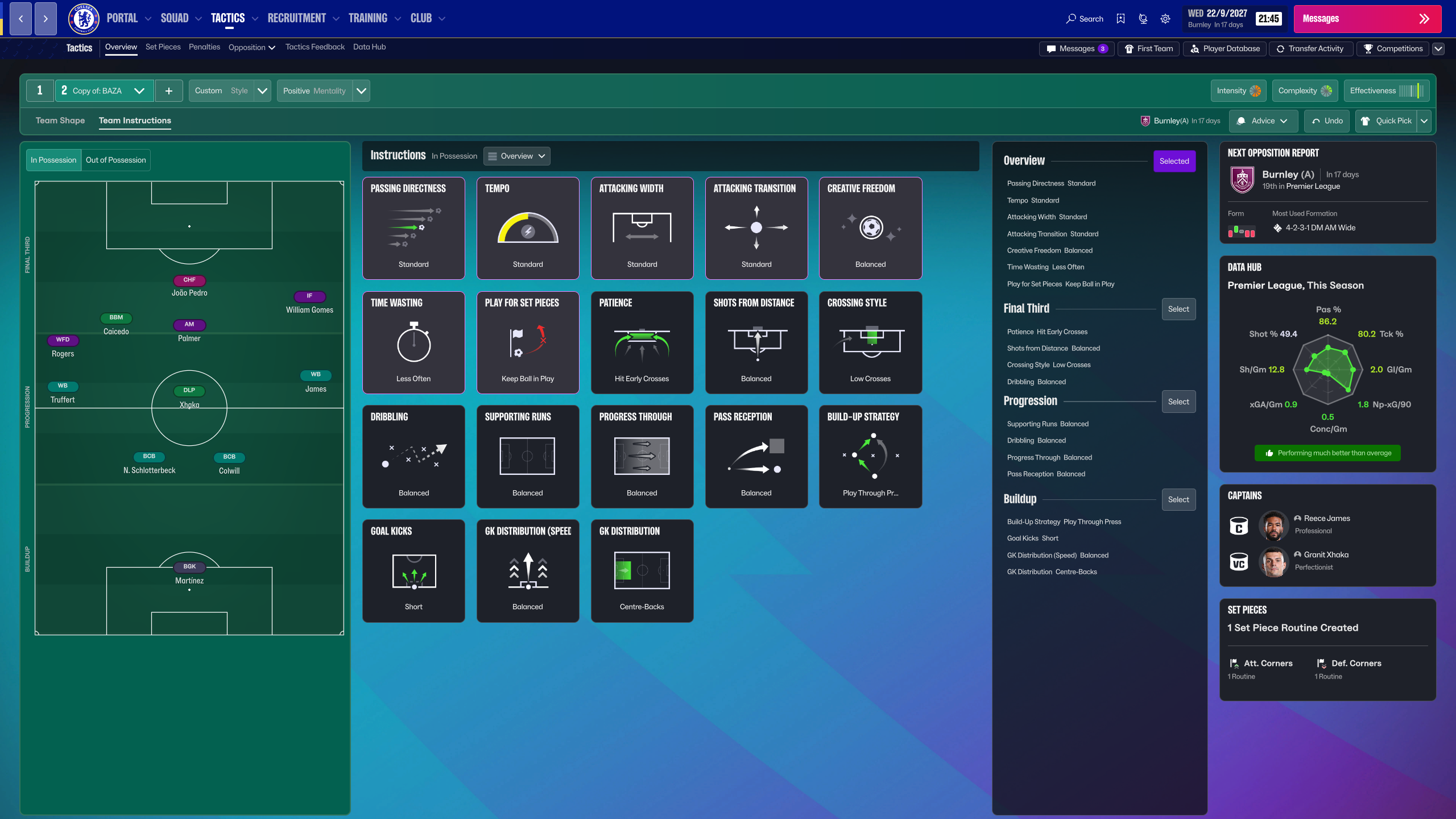
clean slate
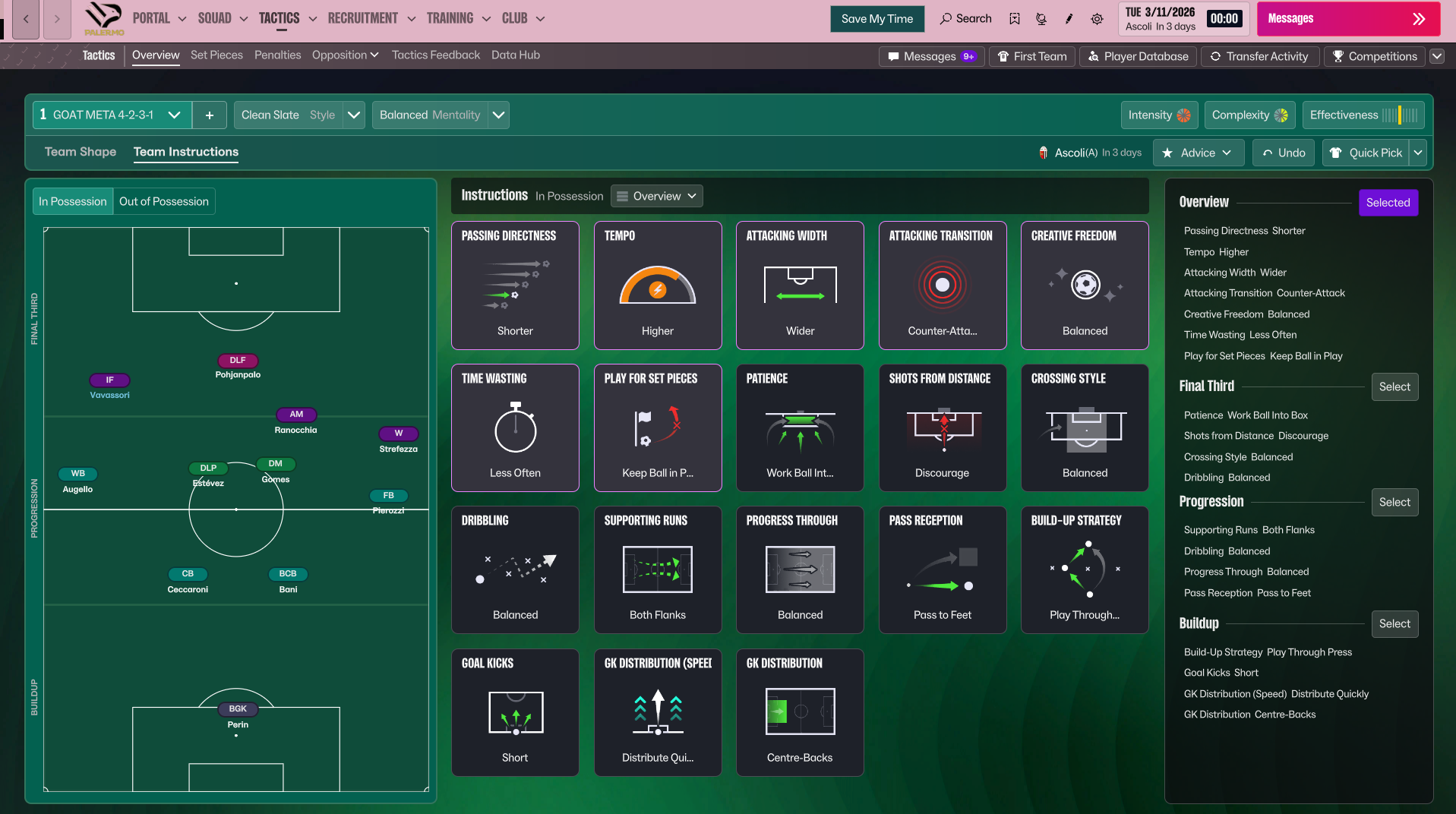
clean slate
clean slate
The tactical theory behind the 4-2-3-1 DM Wide: roles, instructions, and the trade-offs that decide whether the system holds up.
Double pivots and flat pairs in 4-2-3-1 and 4-4-2: when each pairing works, when it collapses, and the AMC unicorn that rescues both.
Klopp-style gegenpressing in FM, including squad profile, line-and-press pairing, sustainable workload, and the antipatterns to avoid.
Mentality, duty, role, instruction, sub. The change hierarchy from lightest to heaviest intervention, and 60th-minute patterns by game state.