
4-2-3-1 DM Wide
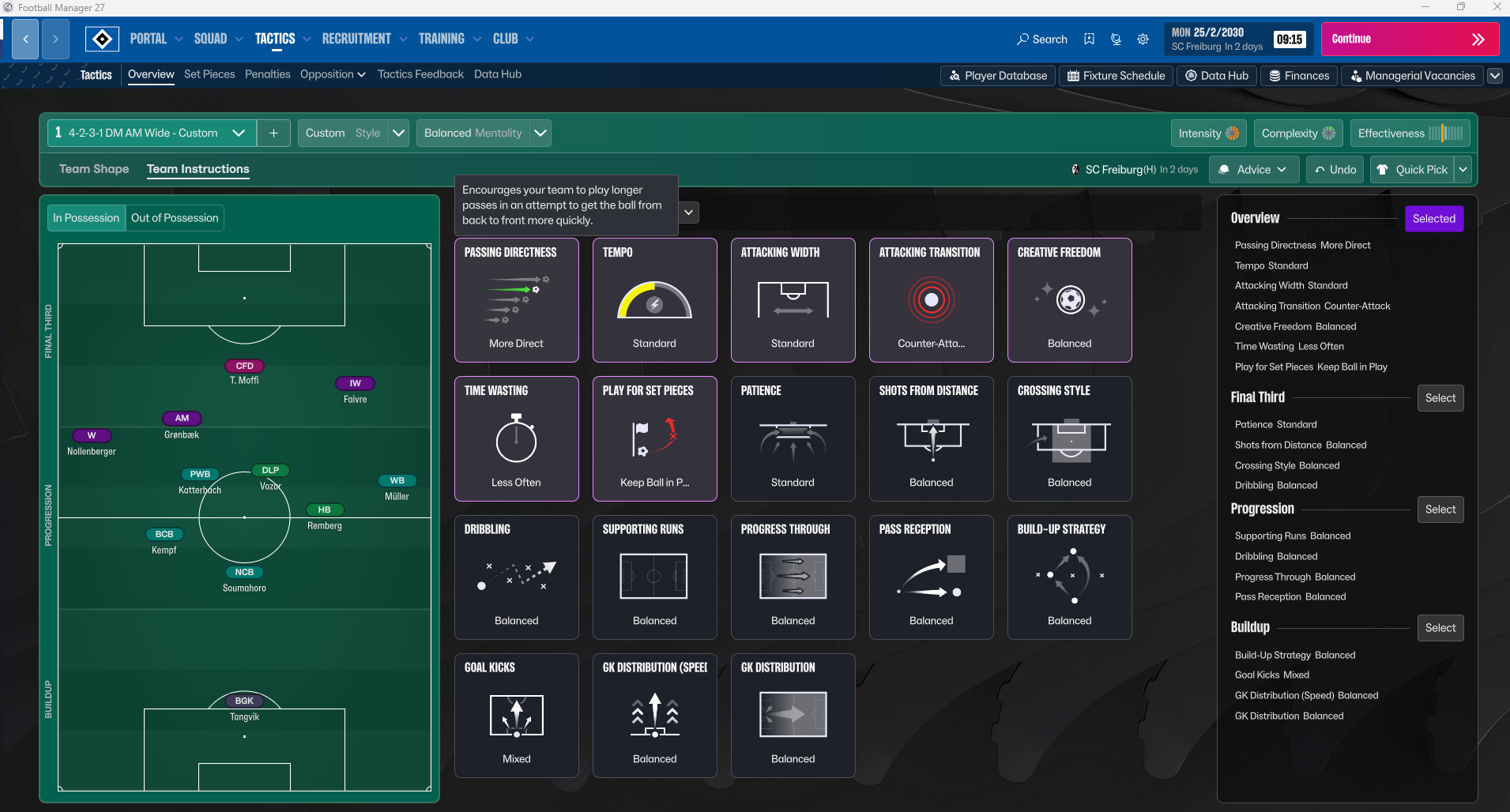
A flexible, moderately direct 4-2-3-1 that uses a central forward outlet and mixed flank roles, aiming to counter without committing to an extreme…
Loading tactical analysis...
4-2-3-1 DM Wide
4-4-1-1 2 DM
Balanced
Clean Slate
6
3
Center Forward
Central Outlet Centre Forward
5
5
Inside Winger
Wide Midfielder
5
2
Attacking Midfielder
Attacking Midfielder
5
1
Winger
Wide Midfielder
4
2
Playmaking Wing-Back
Holding Full-Back
4
5
Wing Back
Full Back
2
2
Ball-Playing Center-Back
Stopping Centre-Back
2
3
No-Nonsense Center-Back
Covering Centre-Back
1
3
Ball-Playing Goalkeeper
Goalkeeper
4
3
Deep-Lying Playmaker
Screening Defensive Midfielder
3
4
Half Back
Dropping Defensive Midfielder
More Direct
Standard
Standard
Counter-Attack
Balanced
Less Often
Keep Ball in Play
Standard
Balanced
Balanced
Balanced
Overlap Balanced
Underlap Balanced
Balanced
Balanced
Balanced
Balanced
Mixed
Balanced
Balanced
Mid Block
Standard
Balanced
Standard
Standard
Standard
No
Balanced
Balanced
Balanced
The 4-2-3-1 in possession places an Attacking Midfielder behind a Centre Forward, with a Deep Lying Playmaker and Half Back supporting the build-up. The 4-4-1-1 2 DM out-of-possession shape also retains a central screen.
[5,2] Attacking Midfielder and [6,3] Center Forward provide a central attacking connection, supported by [4,3] Deep-Lying Playmaker and [3,4] Half Back.
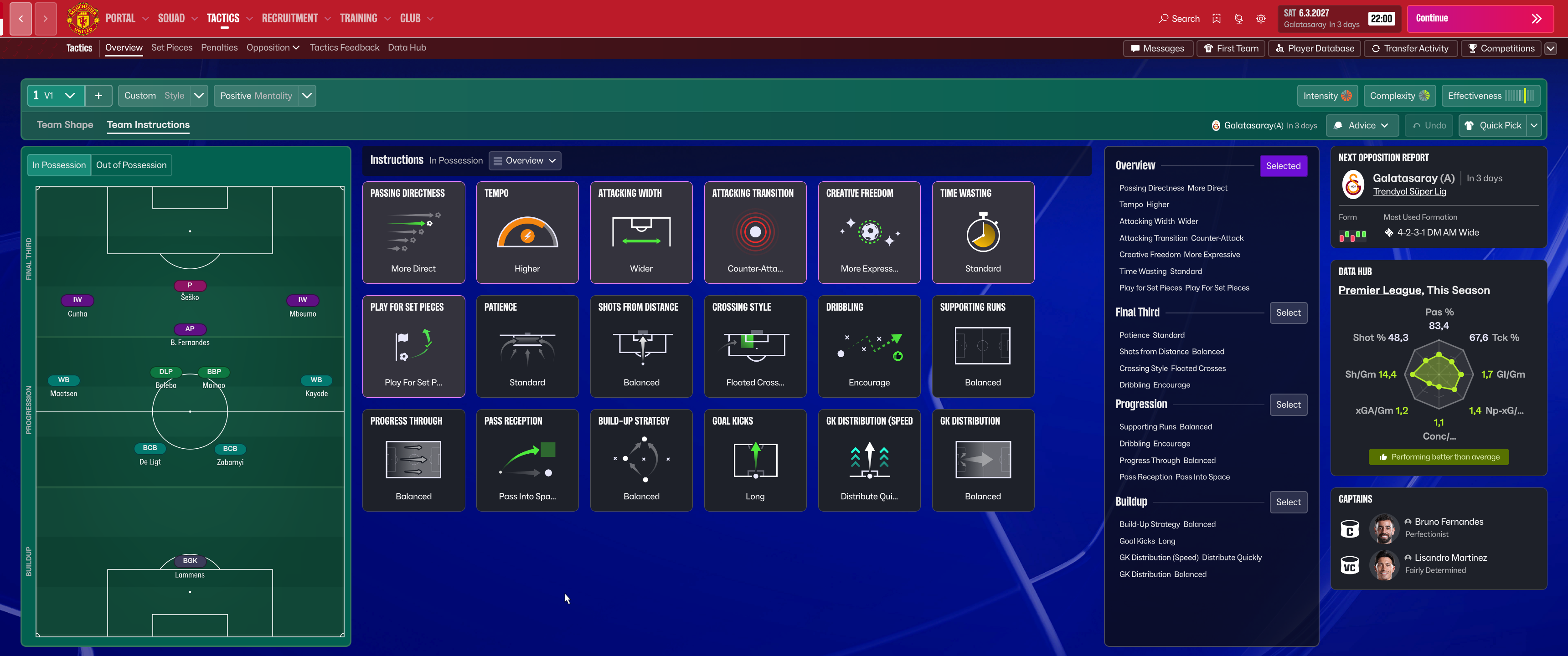
Counter-Attack is paired with a More Direct passing approach and a Centre Forward who becomes a Central Outlet Centre Forward out of possession, offering a direct route forward after regaining the ball.
[6,3] Center Forward / Central Outlet Centre Forward.
Counter-Attack and More Direct passing encourage fast progression, but the available attacking support is not strongly committed to overlaps or underlaps and the progression instructions remain balanced. This may leave the Centre Forward isolated during transitions.
[6,3] Center Forward, [4,2] Playmaking Wing-Back, and [4,5] Wing Back.
Counter-attacking support
The tactic asks for counter-attacks with More Direct passing, but has only one Centre Forward ahead of an Attacking Midfielder and balanced supporting-run instructions. Attacks can become dependent on the first forward outlet.
[6,3] Center Forward and [5,2] Attacking Midfielder.
medium
Wide defensive cover
The formation uses a Playmaking Wing Back and a Wing Back in possession, while the team defends in a 4-4-1-1 2 DM shape. If either wide player is caught advanced, the wide midfielders may have to cover substantial ground back toward the defensive line.
[4,2] Playmaking Wing-Back and [4,5] Wing Back, with [5,1] Wide Midfielder.
medium
Centre Forward with Attacking Midfielder
The Attacking Midfielder can connect the midfield to the lone Centre Forward, while the forward's Central Outlet role offers a focal point when possession is regained.
[5,2] Attacking Midfielder and [6,3] Center Forward / Central Outlet Centre Forward.
Deep Lying Playmaker with Half Back
The Deep Lying Playmaker supplies a passing option in midfield while the Half Back can drop into the defensive line during possession, helping create a stable platform for the wing-backs to advance.
[4,3] Deep-Lying Playmaker and [3,4] Half Back.
How can I give my Centre Forward more support during counter-attacks?
What should I look for in my wing-backs and wide midfielders to make this shape safer in transitions?
How does my Half Back support the build-up alongside my Deep Lying Playmaker?
This is a flexible 4-2-3-1 that combines a central attacking link, contrasting wide threats, and a two-player midfield platform, with a mid-block and a Central Outlet Centre Forward suited to launching counters. Its main weakness is that the counter-attacking/direct approach may move the ball forward faster than the supporting runs arrive, potentially isolating the lone forward. I would first test more structured transitions and stronger wide support, then assess whether the defensive wide players can recover quickly enough.
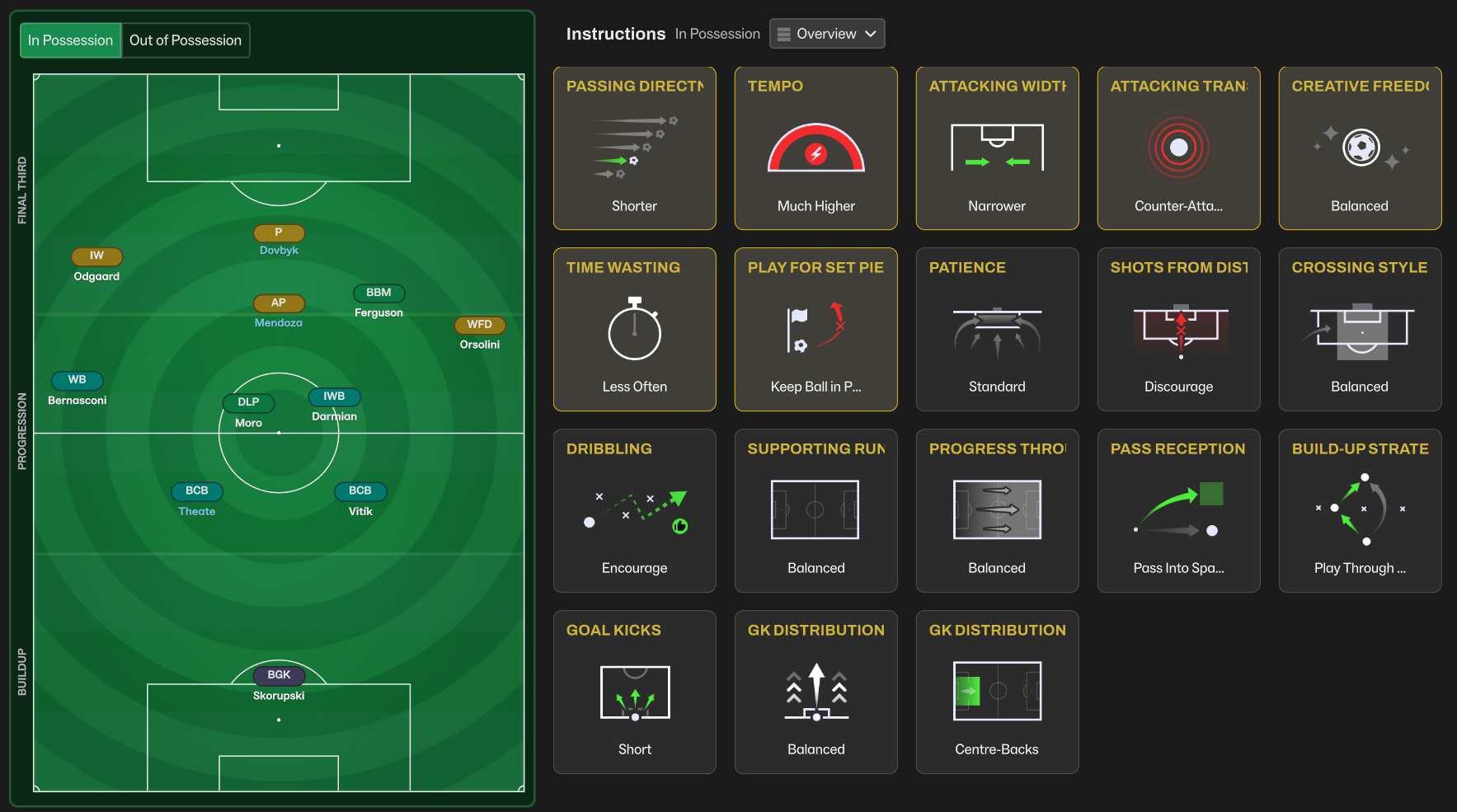
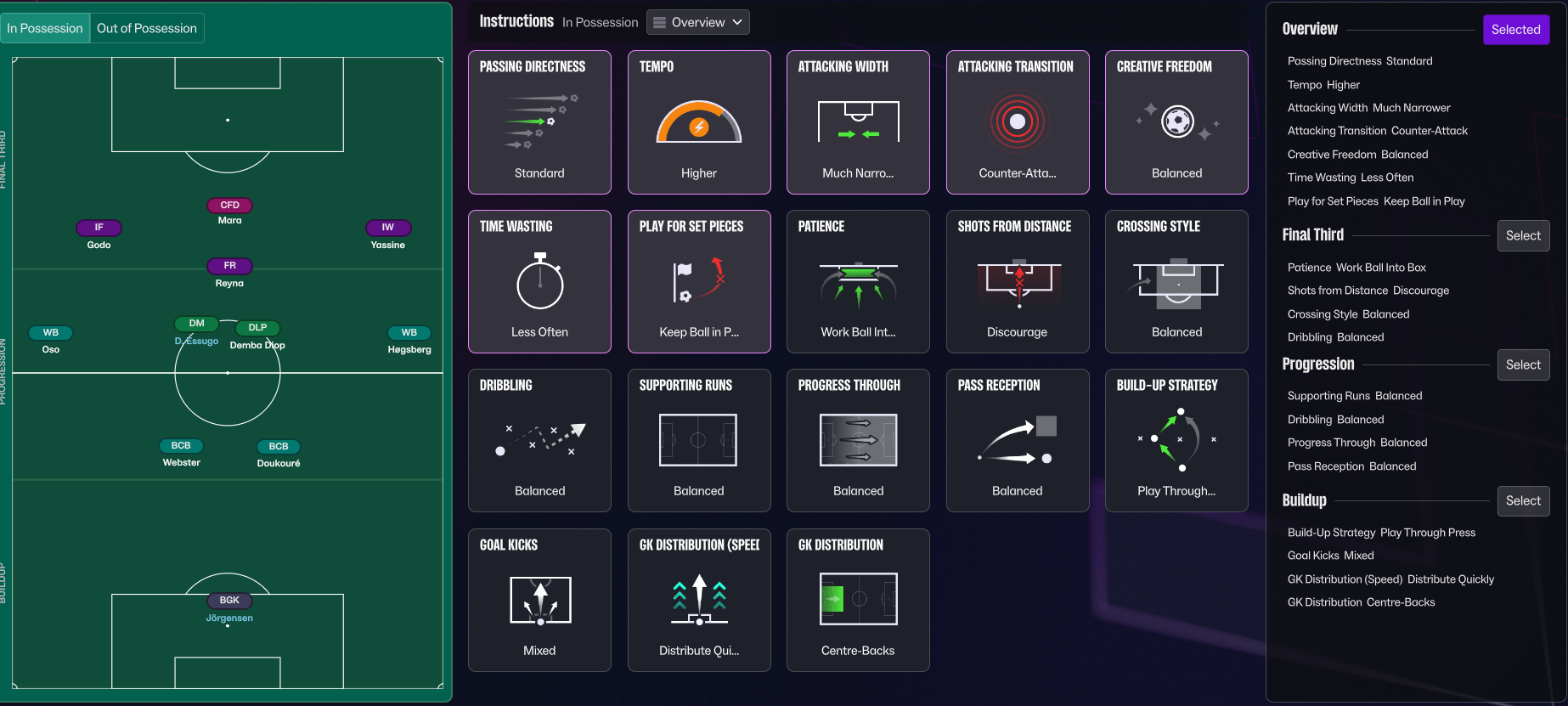
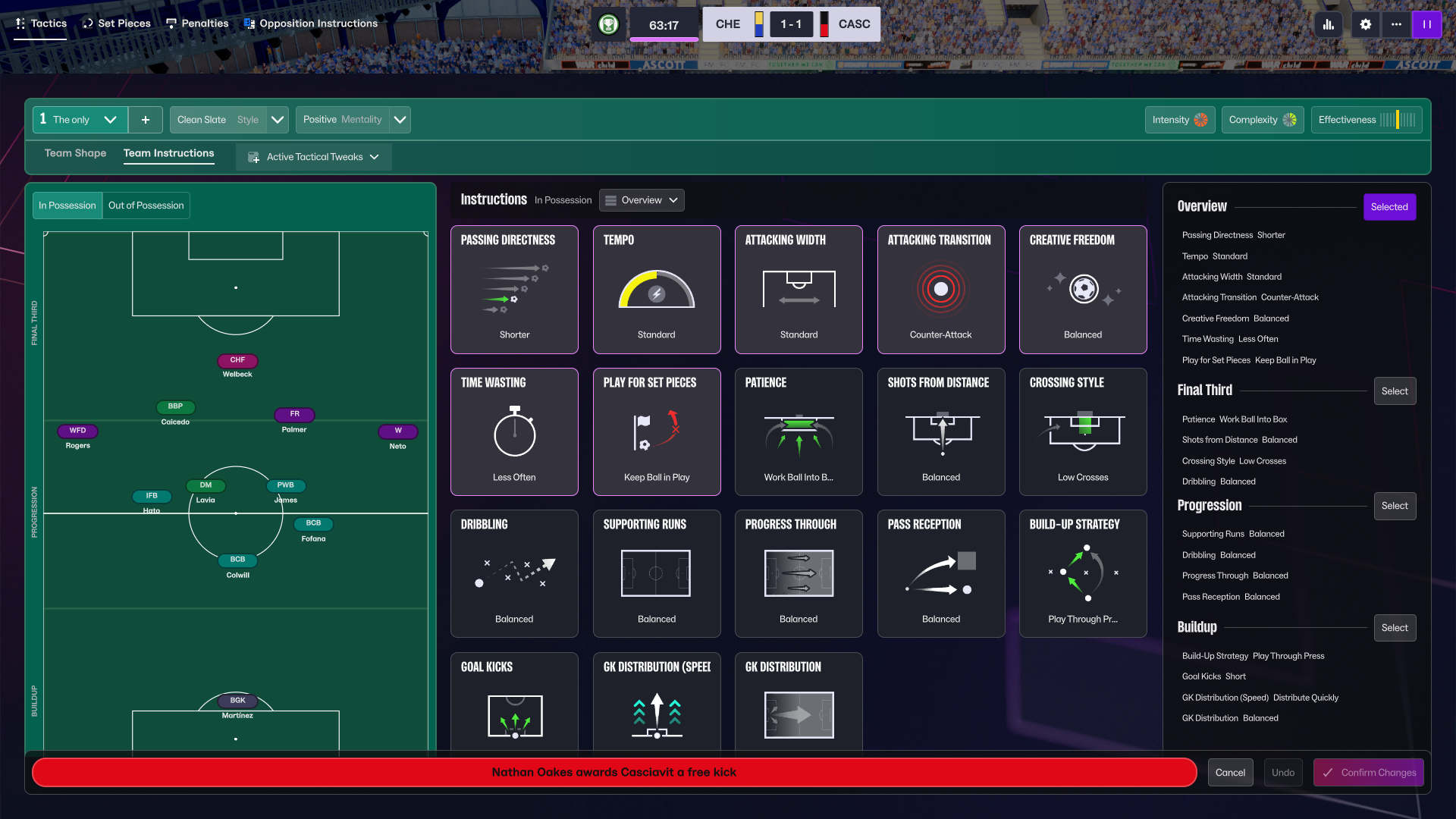
The team uses More Direct passing at a Standard tempo, with balanced width and progression choices. A Deep Lying Playmaker and Half Back support a 4-2-3-1 platform, while the Winger and Inside Winger offer different wide routes into the attack. Counter-Attack is selected for attacking transitions.
The defensive transition is Standard, so the tactic does not specialize in either immediately counter-pressing or regrouping. The team defends in a Mid Block with a Standard defensive line and Standard pressing.
A flexible, moderately direct 4-2-3-1 that uses a central forward outlet and mixed flank roles, aiming to counter without committing to an extreme pressing or possession style.
clean slate
control possession
clean slate
gegenpress
clean slate
clean slate
clean slate
clean slate
The tactical theory behind the 4-2-3-1 DM Wide: roles, instructions, and the trade-offs that decide whether the system holds up.
Double pivots and flat pairs in 4-2-3-1 and 4-4-2: when each pairing works, when it collapses, and the AMC unicorn that rescues both.
Klopp-style gegenpressing in FM, including squad profile, line-and-press pairing, sustainable workload, and the antipatterns to avoid.
Routines, takers, and target picks. How to turn corners and free-kicks into a reliable third of your goal output.