Uploaded Tactic
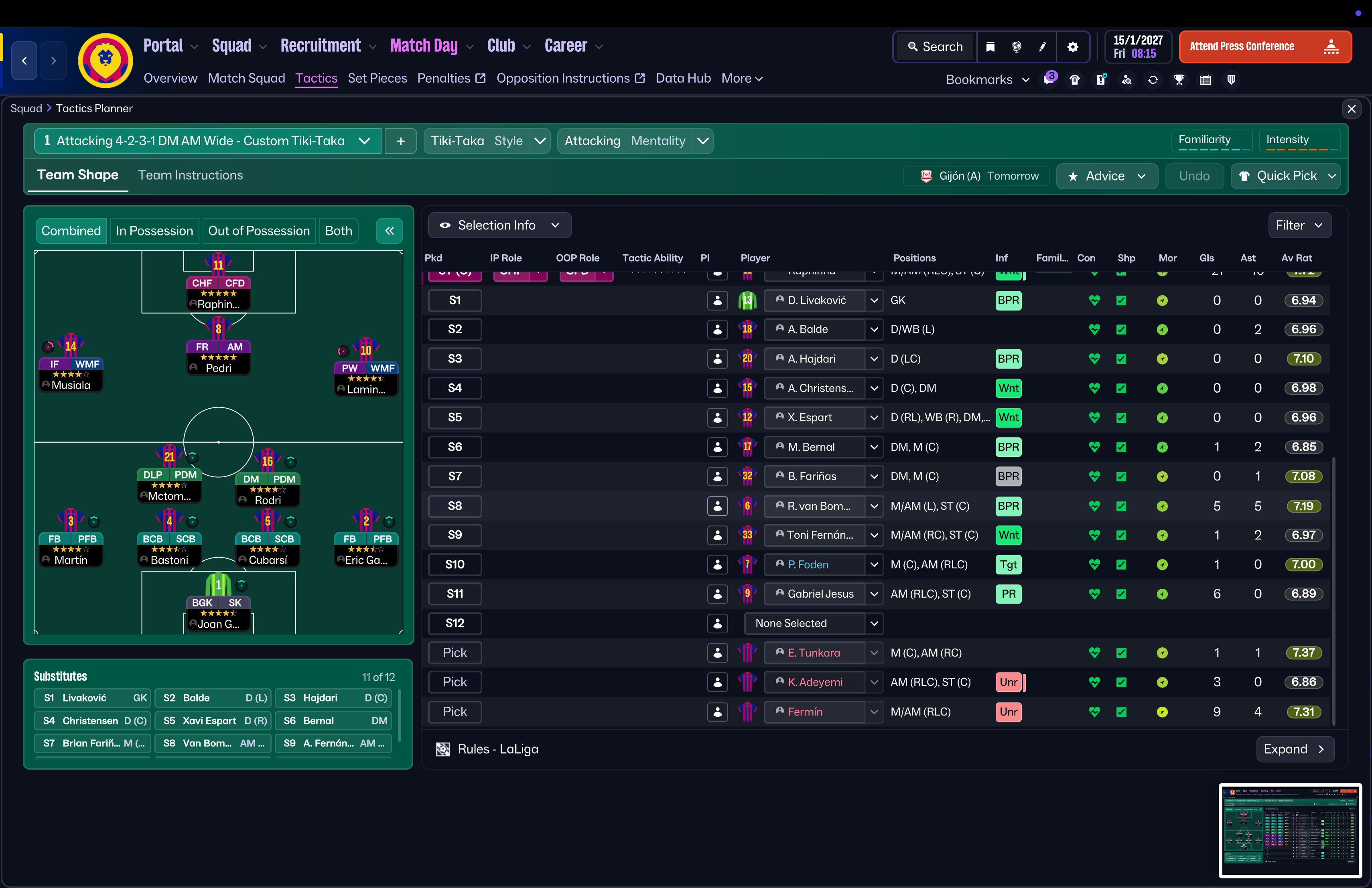
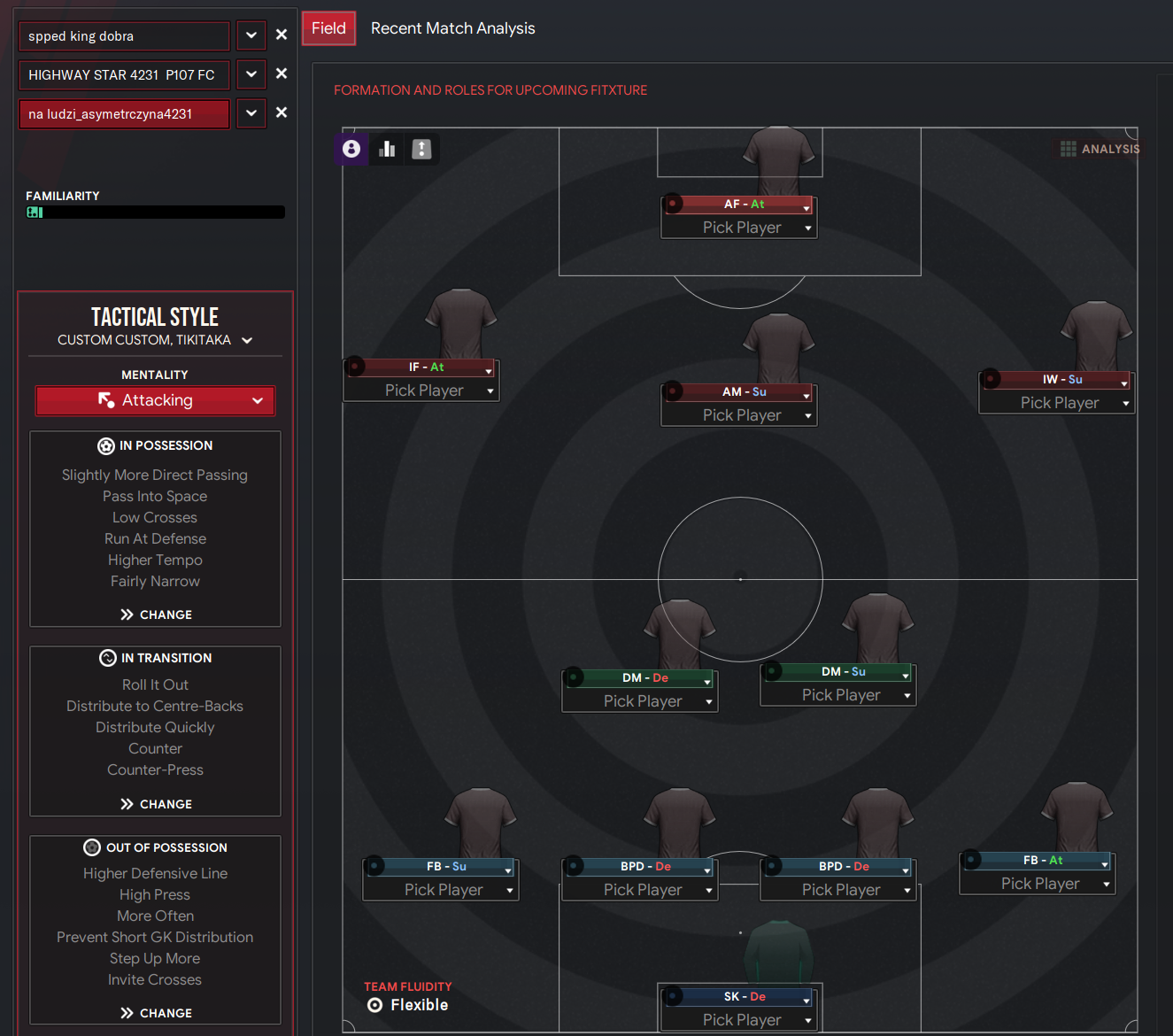
Formation & Style
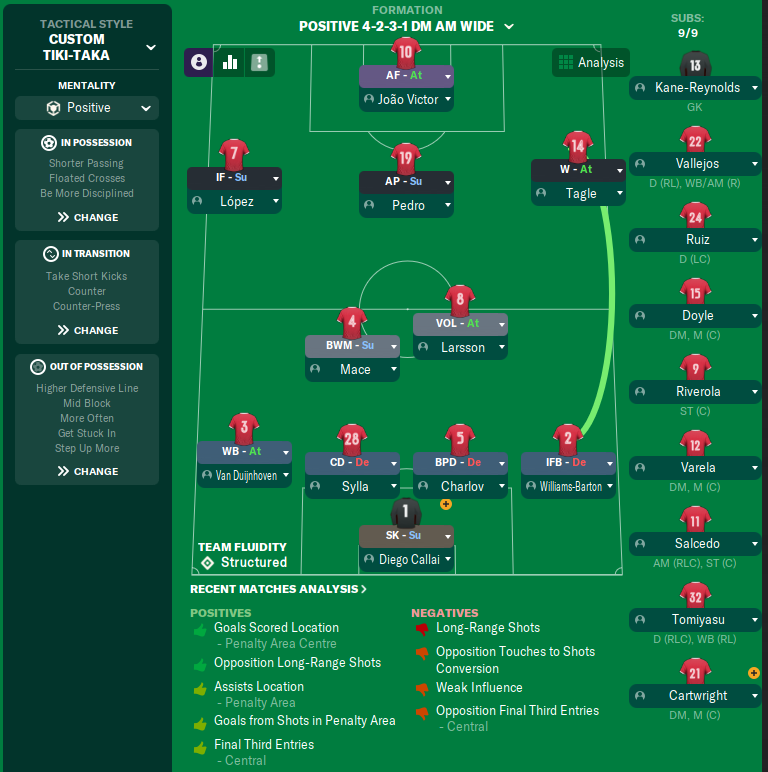
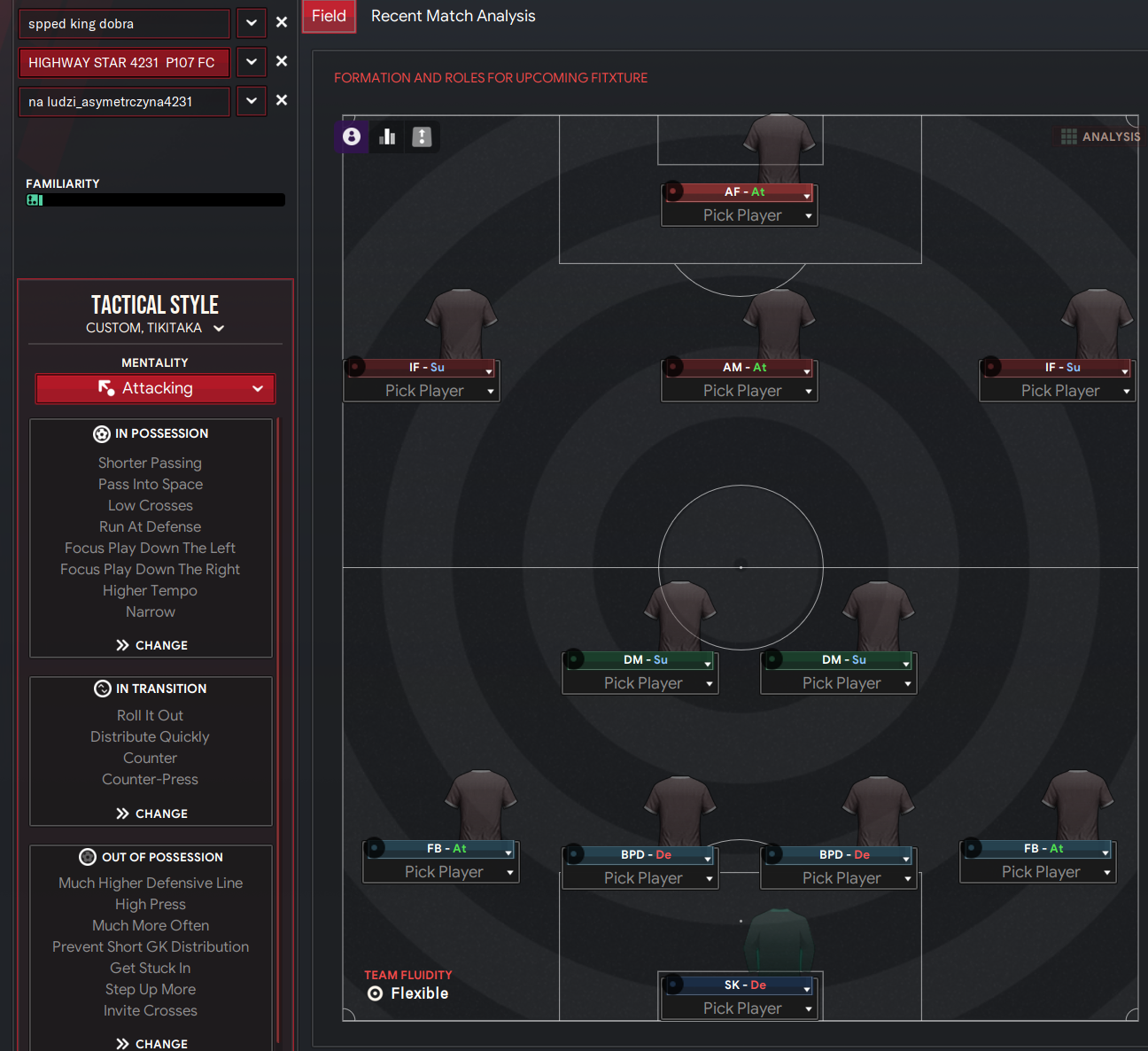
Tactical Style:Tiki-Taka
Mentality:Attacking
Formation:4-2-3-1 DM Wide
Team Fluidity:Custom Tiki-Taka
In Possession
Shorter Passing
Play Out of Defence
Work Ball Into Box
Run At Defence
In Transition
Counter-Press
Counter
Goalkeeper Distribution: Quick
Out of Possession
Higher Defensive Line
Higher Line of Engagement
Prevent Short GK Distribution
Trigger Press More Often
Team Shape Without Ball
Shape:Compact
Description:The team maintains a compact shape to minimize space for the opponent to penetrate.
Evidence:Higher Defensive Line and Higher Line of Engagement combined with a pressing identity.
Team Shape With Ball
Shape:Fluid
Description:Attackers interchange positions frequently, creating fluid movements to confuse defenders.
Evidence:Roles like Advanced Playmaker and Inside Forward work symbiotically to break lines.
Phase Description
Attacking Play
Utilizing quick, short passes in a structured manner to create goal-scoring opportunities.
Defensive Transition
Quickly regaining possession, committing players to press high up the pitch post-turnover.
Main Focus
Controlling the match through ball possession and creating chances via wide play.
Key Strengths
Wide Play and Width
The wing-backs provide width and can stretch the opponent's defense.
Midfield Control
With dual deep midfielders, the setup secures control in the midfield area.
Interchangeable Attacking Roles
The attacking midfielders are capable of fluid movement and creating space for the striker.
Conflicting Directions
Potential Vulnerability to Counter-Attacks
With high pressing, the team may be exposed to quick counters.
Exposure on Flanks
With wing-backs pushing high, opposing teams could exploit spaces left behind.
Risk of Over-Reliance on Width
Dependence on wing play could lead to predictability.
Tactical Suggestions
Increase Defensive Awareness
Encourage midfielders to track back and cover gaps left by advancing wing-backs.
Incorporate More Central Creativity
Introduce an additional playmaker in CM to enhance central attacking options.
Rotate Wings
Utilize players that can switch positions effectively to maintain attacking unpredictability.
Ask Questions About Your Lineup
Related Tactics
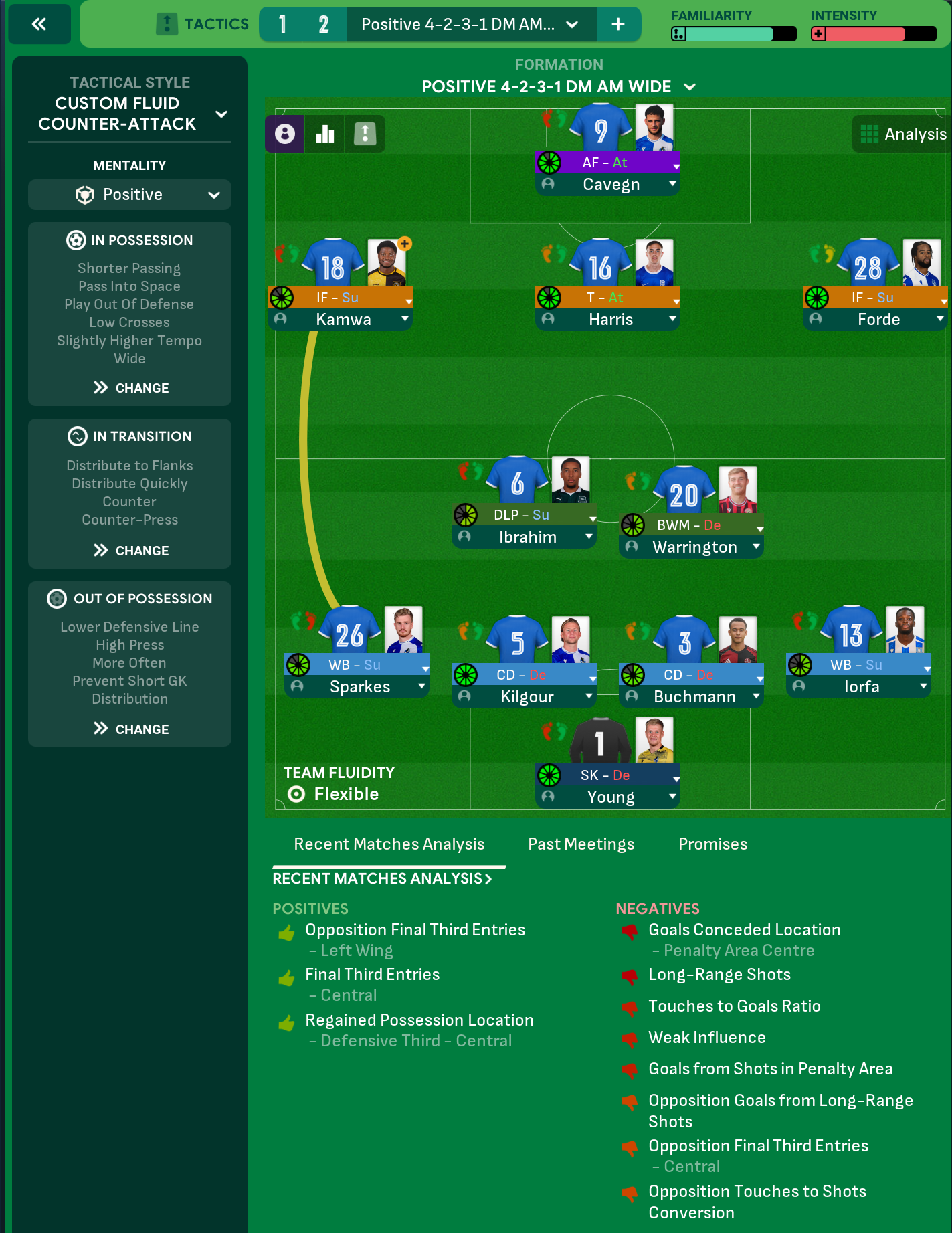
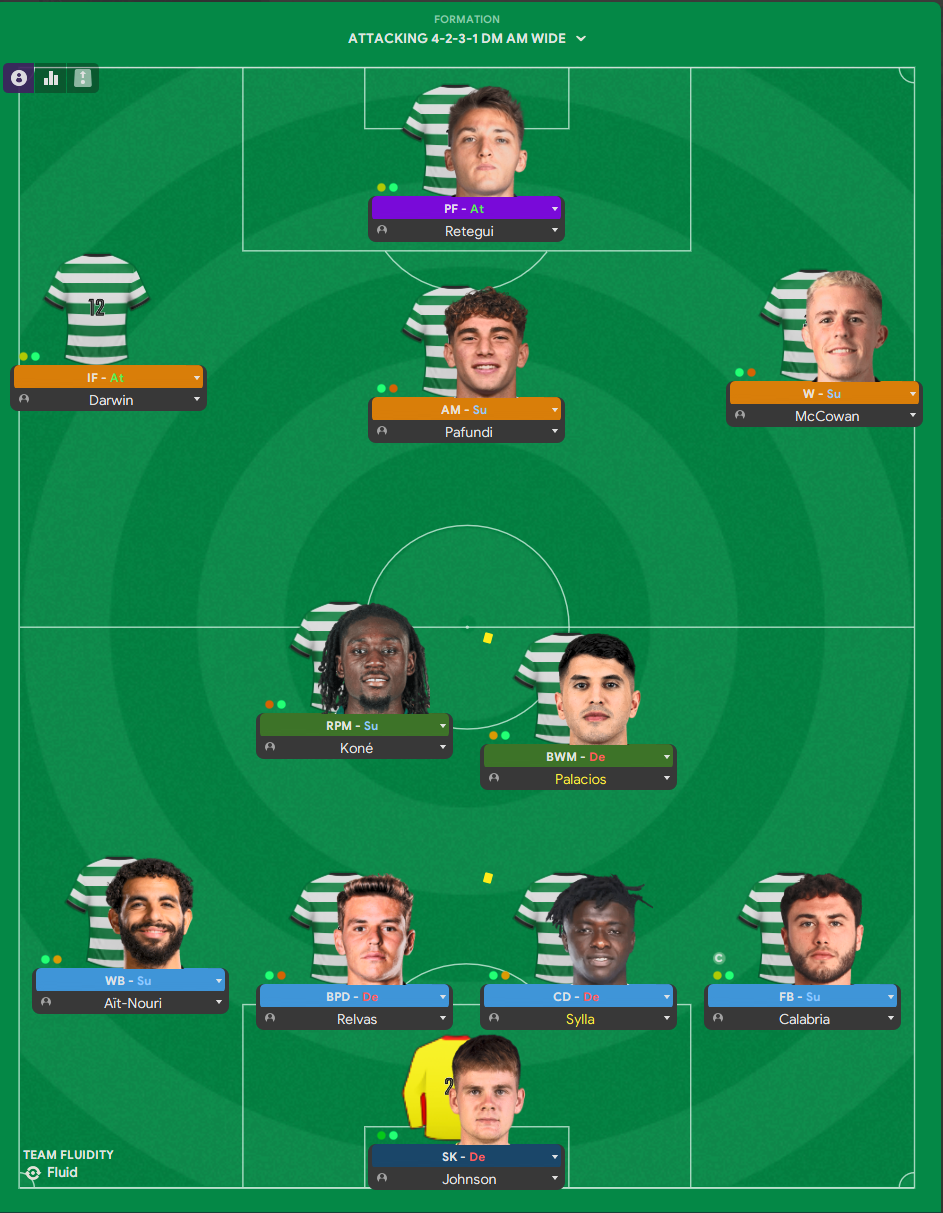
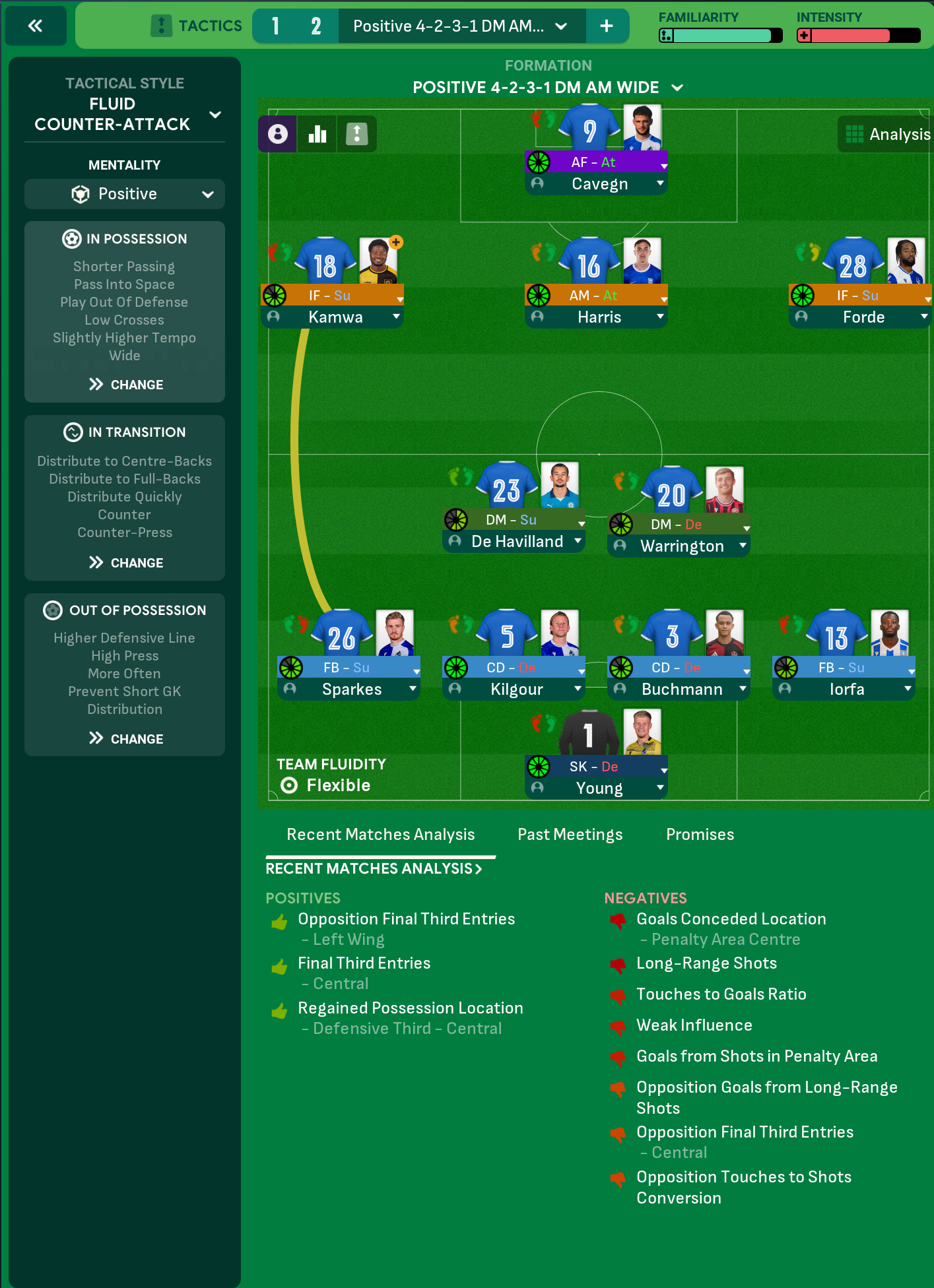
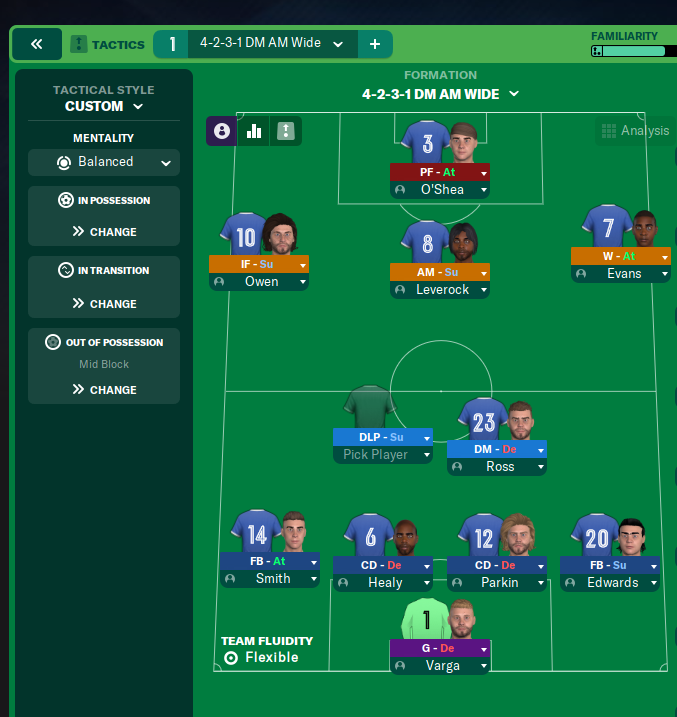
More Tiki-Taka tactics
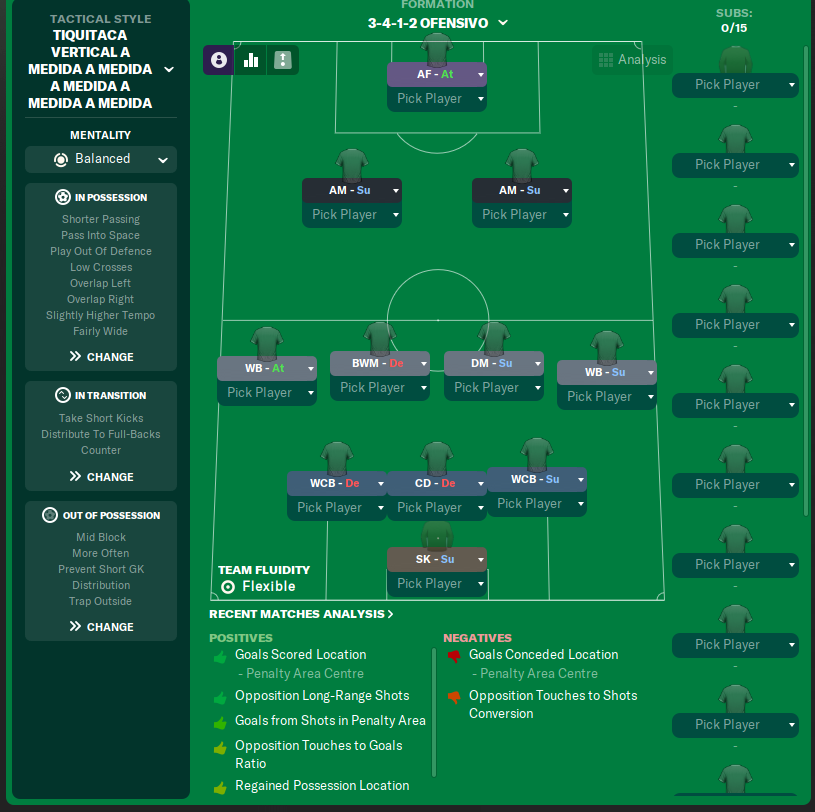
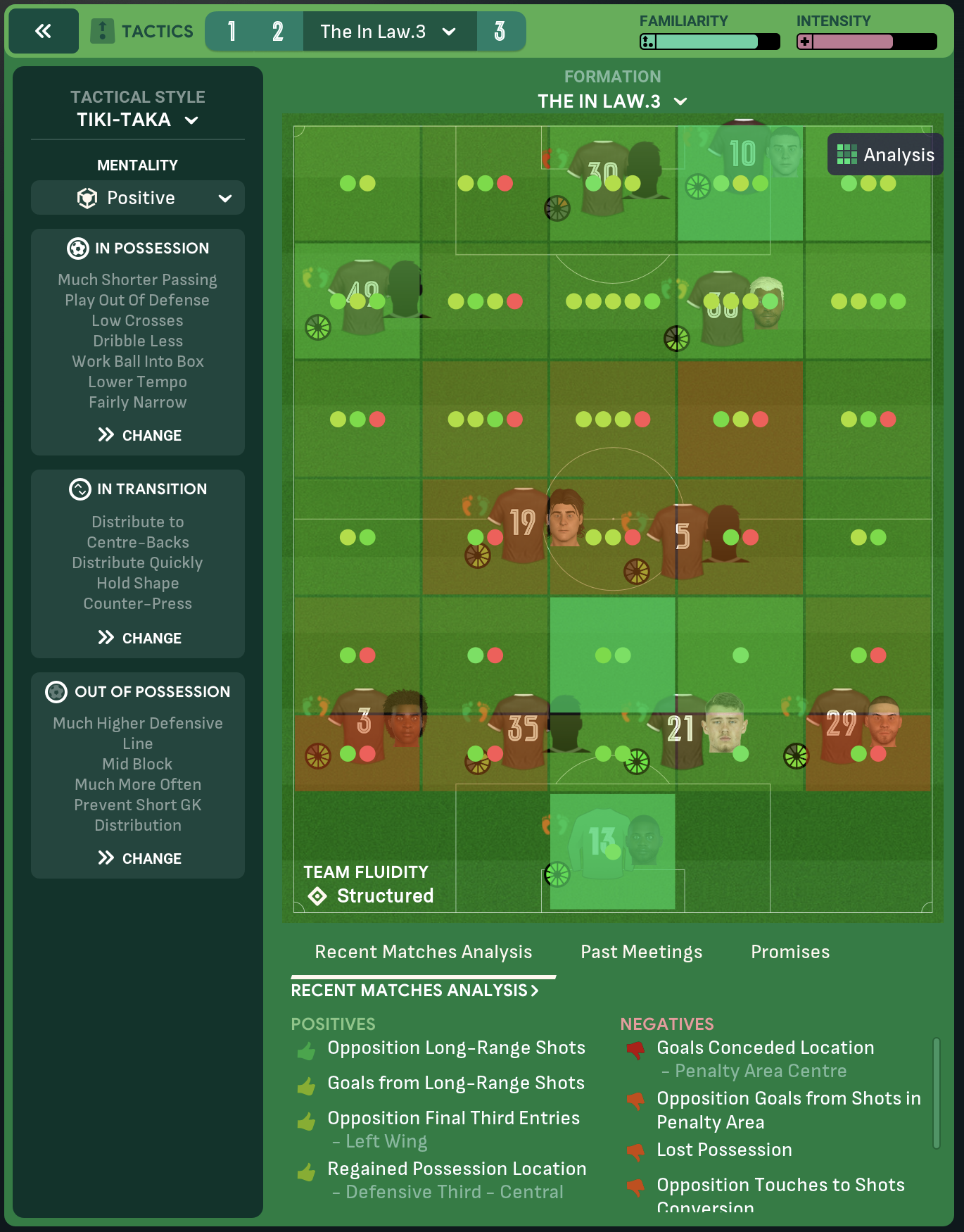
Guides for this formation
The tactical theory behind the 4-2-3-1 DM Wide: roles, instructions, and the trade-offs that decide whether the system holds up.
Player pairings
Midfield Pairs in 4-2-3-1 and 4-4-2
Double pivots and flat pairs in 4-2-3-1 and 4-4-2: when each pairing works, when it collapses, and the AMC unicorn that rescues both.
Read guide
Playing styles
Gegenpressing: A Full Guide
Klopp-style gegenpressing in FM, including squad profile, line-and-press pairing, sustainable workload, and the antipatterns to avoid.
Read guide