Uploaded Tactic
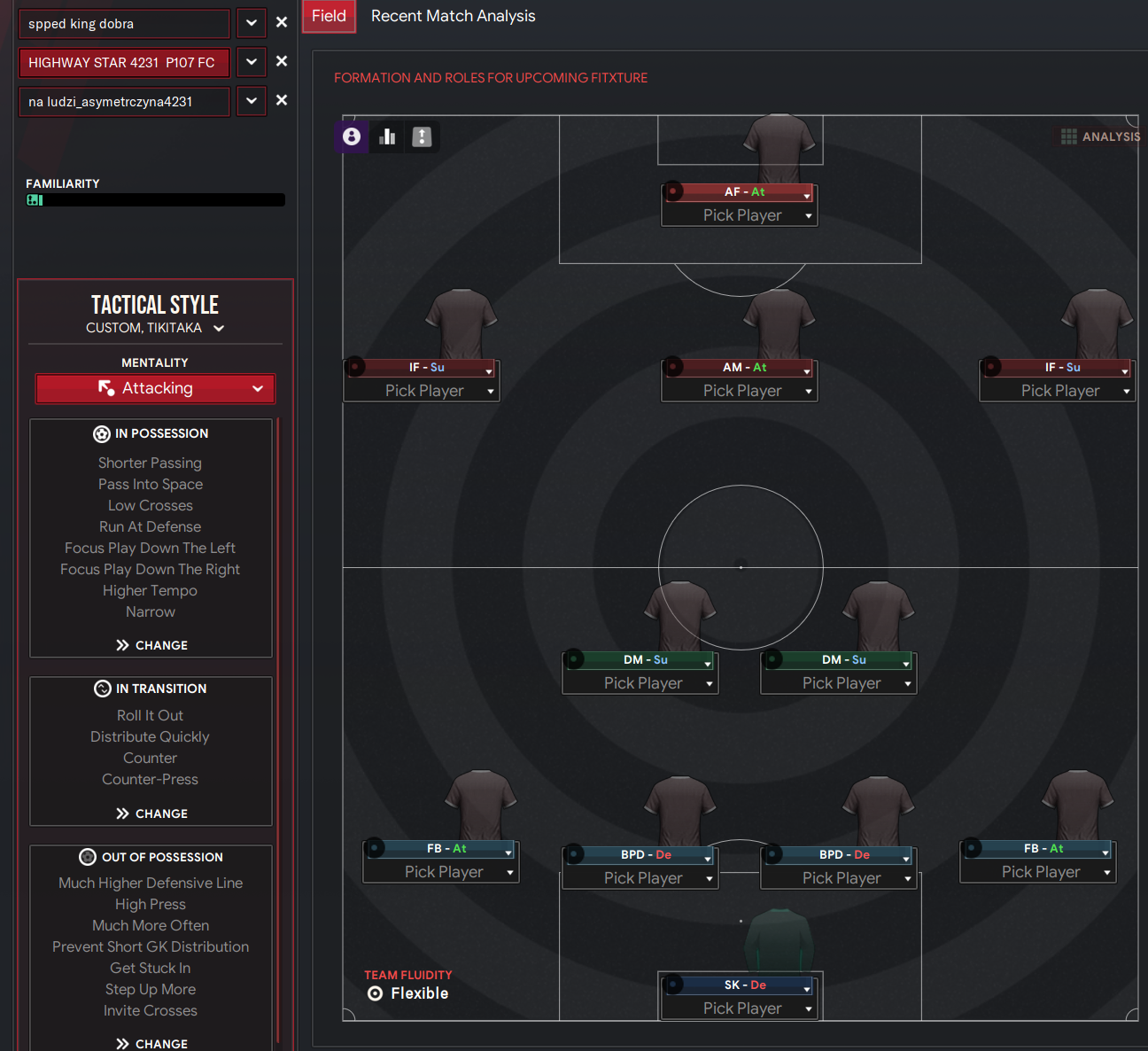
Formation & Style
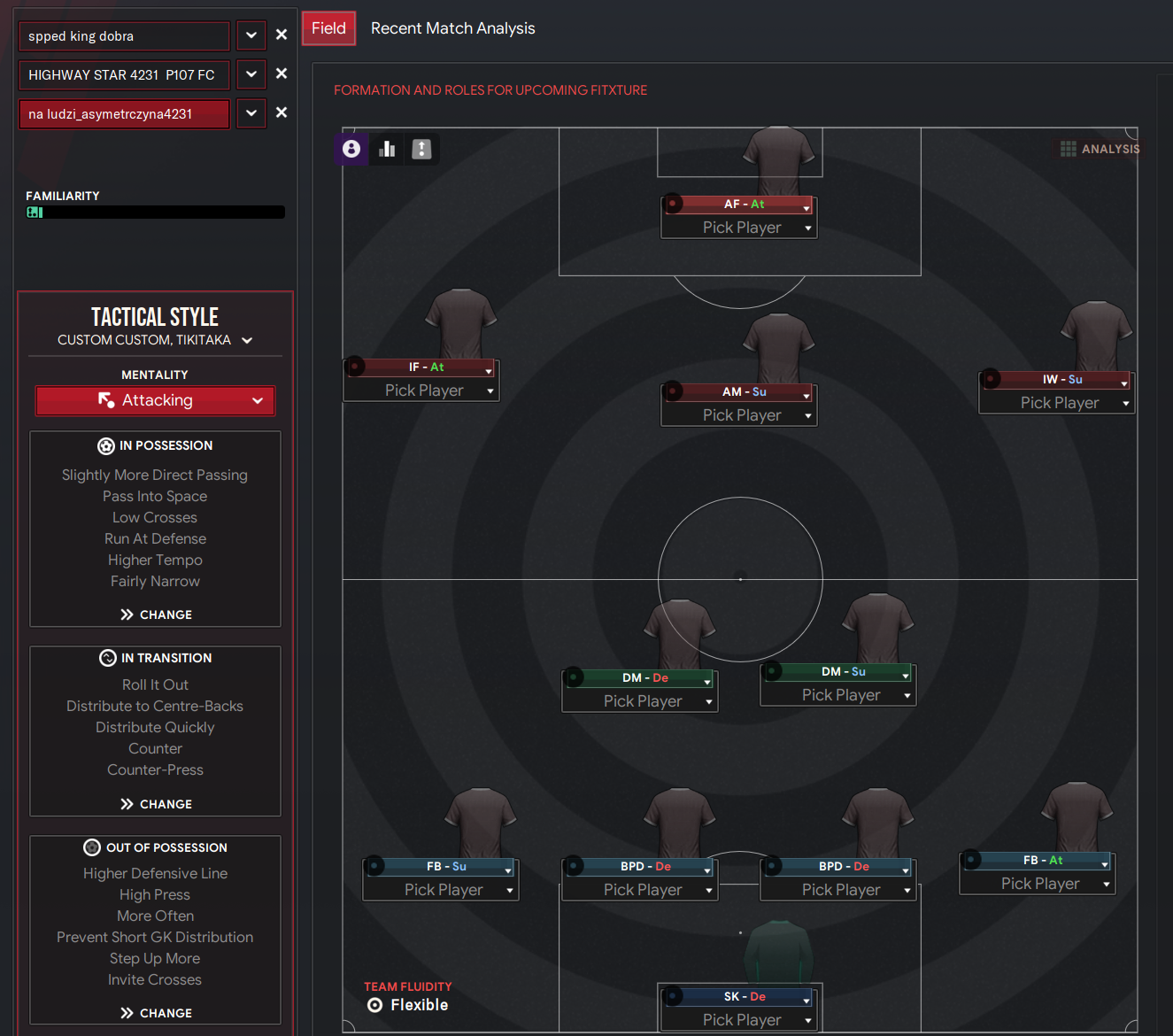
Tactical Style:Tiki-Taka
Mentality:Attacking
Formation:4-2-3-1 Wide
Team Fluidity:Flexible
In Possession
Slightly More Direct Passing
Pass Into Space
Low Crosses
Run At Defense
Higher Tempo
Fairly Narrow
In Transition
Roll It Out
Distribute to Centre-Backs
Distribute Quickly
Counter
Counter-Press
Out of Possession
Higher Defensive Line
High Press
More Often
Prevent Short GK Distribution
Step Up More
Invite Crosses
Team Shape Without Ball
Shape:4-2
Description:A disciplined back line with two deeper midfielders to provide additional cover.
Evidence:BPD-De at [2,2] and [2,3] alongside DM-De at [3,2] bolsters defensive stability.
Team Shape With Ball
Shape:4-3-3
Description:Wide attacking plays with creative interplay at the top three positions, supported by midfield.
Evidence:IF-At at [6,2], AM-Su at [5,3], and IW-Su at [6,4] enhance offensive dynamics.
Phase Description
Attacking Play
Focused on possession and fluid passing to break down defenses with a high tempo.
Defensive Transition
Quick recovery into a compact shape and immediate counter-press upon losing the ball.
Main Focus
Utilizing width through inside forward and inverted winger, with attacking midfield support.
Key Strengths
Dynamic Offense
Utilizes a fluid attacking line with inside forward and inverted winger to stretch defenses.
Ball Progression
Excellent movement and passing tactics designed to draw out defenses and create space.
Counter-Pressing
Quick recovery of possession following loss using high pressing tactics.
Conflicting Directions
Mixed Defensive Strategy
The relatively high defensive line could expose the team against quick counter-attacks.
Overreliance on Width
Dependence on wide players might make the team predictable in breaking down compact defenses.
Counter Vulnerability
High pressing might leave gaps for fast breaks from the opposition.
Tactical Suggestions
Consider a Holding Midfielder
Using a more defensive midfielder can balance between attacking and defending.
Maintain Central Options
Encourage central play alongside the width to create more dynamic opportunities.
Adjust Defensive Line
Lowering the defensive line may help reduce vulnerability to long balls over the top.
Ask Questions About Your Lineup
Related Tactics

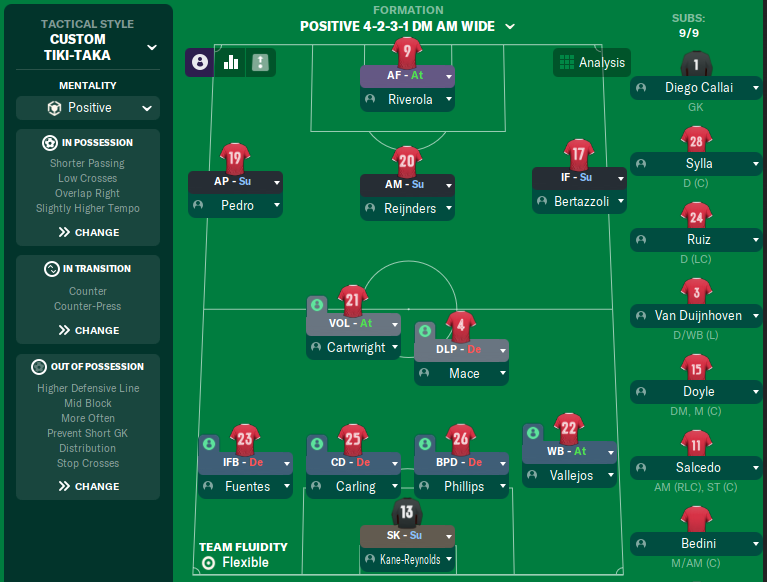
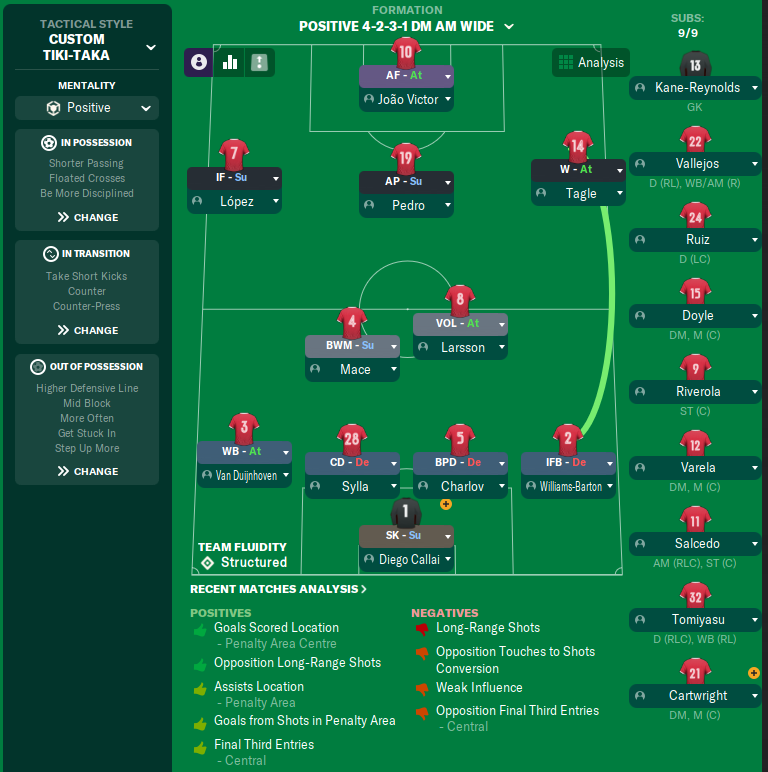
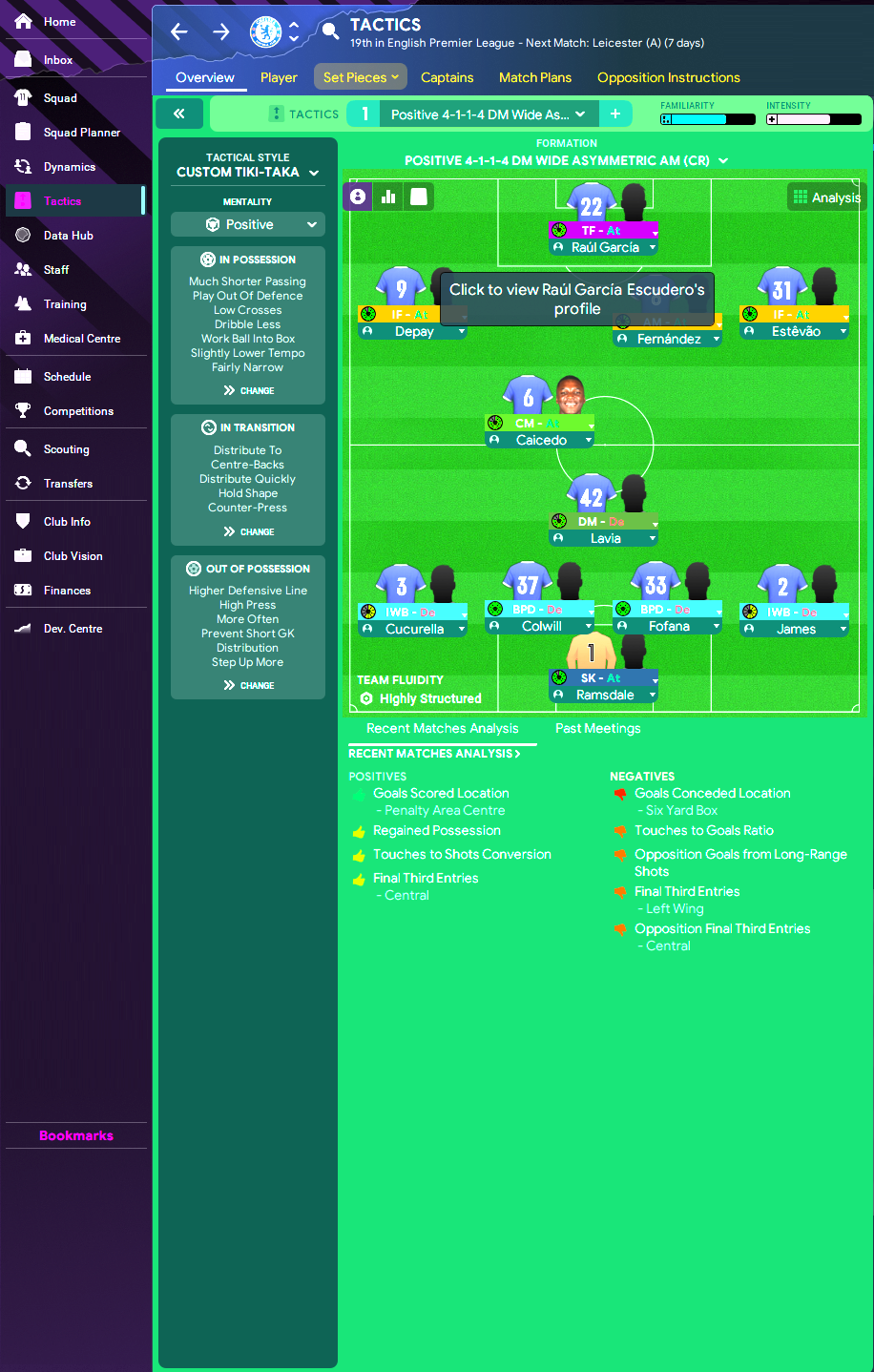
More Tiki-Taka tactics
Guides for this formation
The tactical theory behind the 4-2-3-1 Wide: roles, instructions, and the trade-offs that decide whether the system holds up.
Player pairings
Midfield Pairs in 4-2-3-1 and 4-4-2
Double pivots and flat pairs in 4-2-3-1 and 4-4-2: when each pairing works, when it collapses, and the AMC unicorn that rescues both.
Read guide
Playing styles
Gegenpressing: A Full Guide
Klopp-style gegenpressing in FM, including squad profile, line-and-press pairing, sustainable workload, and the antipatterns to avoid.
Read guide