Uploaded Tactic

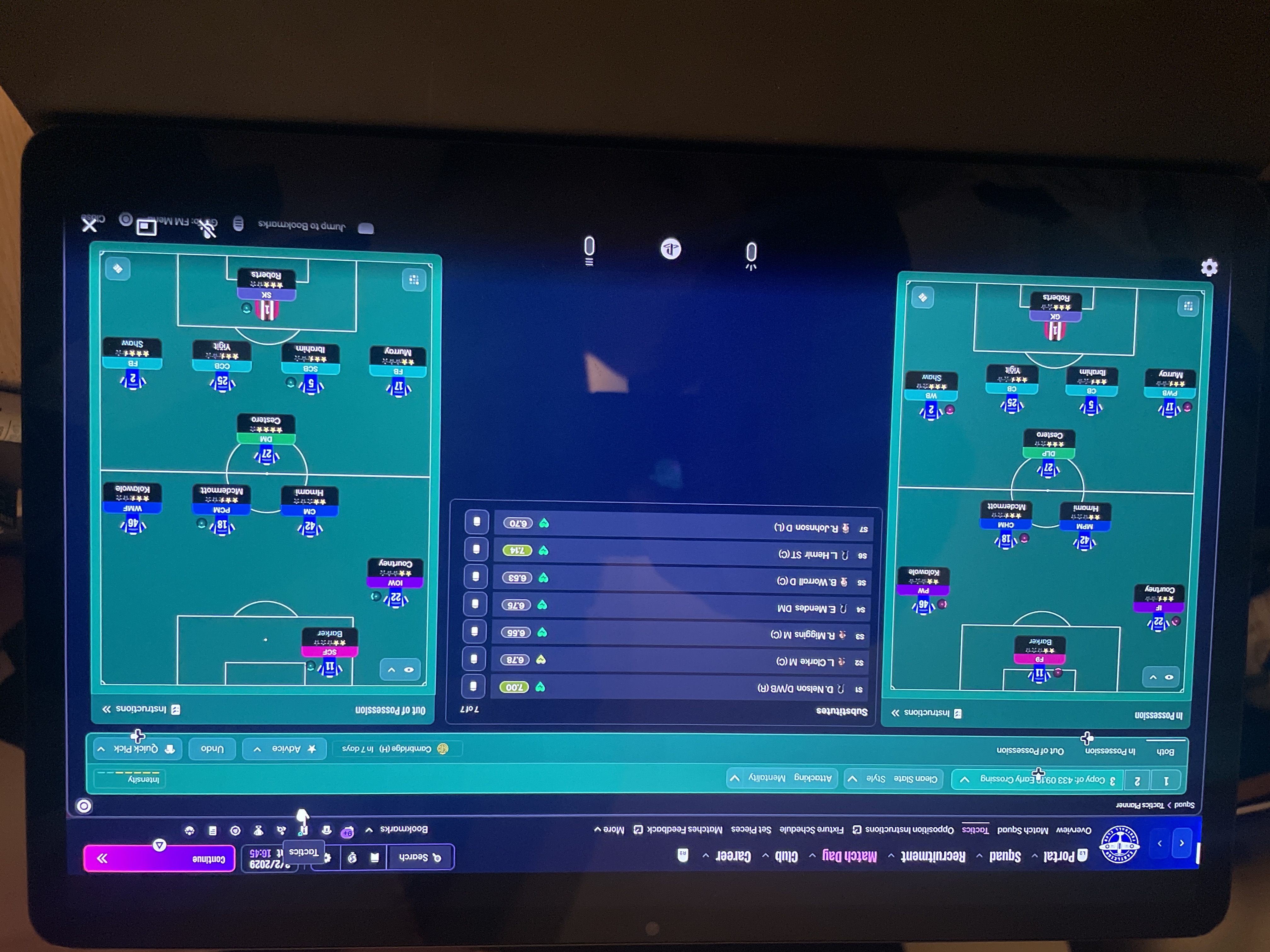
Formation & Style
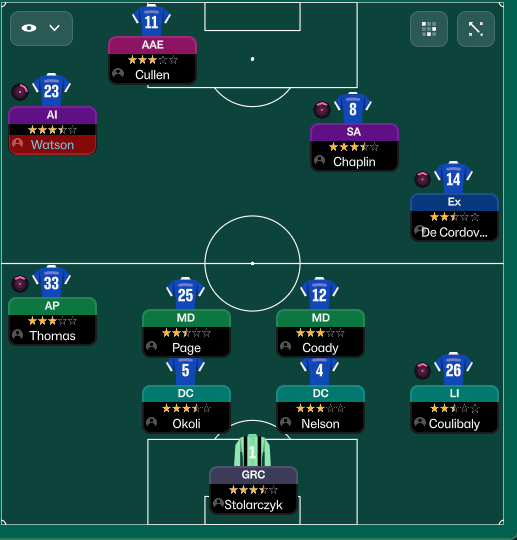
Tactical Style:Attacking
Mentality:Positive
Formation:4-2-3-1 Wide
Team Fluidity:Fluid
In Possession
Play Out of Defence
Focus Play Through the Middle
Hit Early Crosses
In Transition
Counter-Press
Counter
Out of Possession
Higher Defensive Line
Higher Line of Engagement
Trigger Press More Often
Team Shape Without Ball
Shape:Compact 4-2
Description:Defensive shape focuses on closing passing lanes and applying pressure on the ball.
Evidence:BWM-De at [3,3] and CD at [2,3] support defensive solidity.
Team Shape With Ball
Shape:Fluid 4-3
Description:Attacking structure encourages width with the wing-backs joining the attack.
Evidence:WM-Su at [2,1] and AM-Su at [5,3] create space for IF-A at [6,2].
Phase Description
Attacking Play
Quick transitions and utilizing the width with overlapping runs from the wing-backs.
Defensive Transition
Pressing opponents immediately after losing possession to regain control.
Main Focus
Maximizing space in the final third through wide play and quick passing.
Key Strengths
Dynamic Attacking Unit
The combination of Inside Forward and Pressing Forward creates unpredictable attacking patterns.
Defensive Resilience
The presence of strong defensive roles ensures stability against counter-attacks.
Width and Overlaps
Utilizing wing-backs enhances the attacking width, stretching the opposition.
Conflicting Directions
Pressing Vulnerabilities
High pressing may leave gaps against quick counters if not executed properly.
Defensive Gaps in Transition
The high defensive line may be exposed during rapid counter-attacks.
Midfield Overrun
Against strong opposition midfield, two central midfielders may struggle.
Tactical Suggestions
Consider Shape Adjustment
Switch to a 4-3-3 formation to better control the midfield.
Fluidity Adjustment
Modify team fluidity to accommodate a more structured approach if struggling.
Take Advantage of Set Pieces
Utilize set pieces to create scoring opportunities with higher aerial presence.
Ask Questions About Your Lineup
Related Tactics
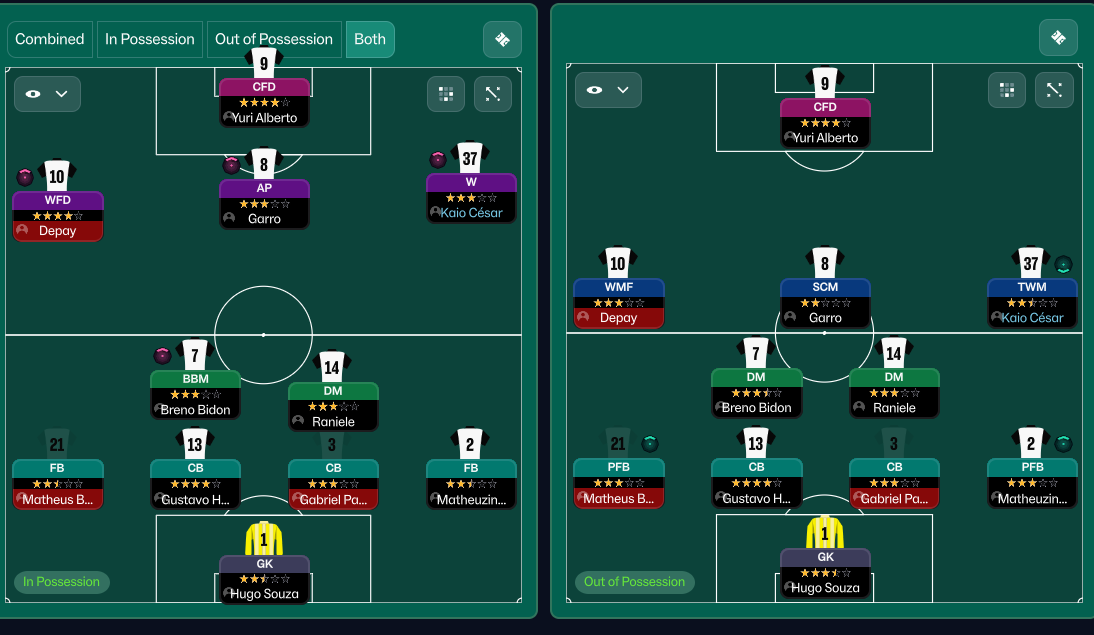
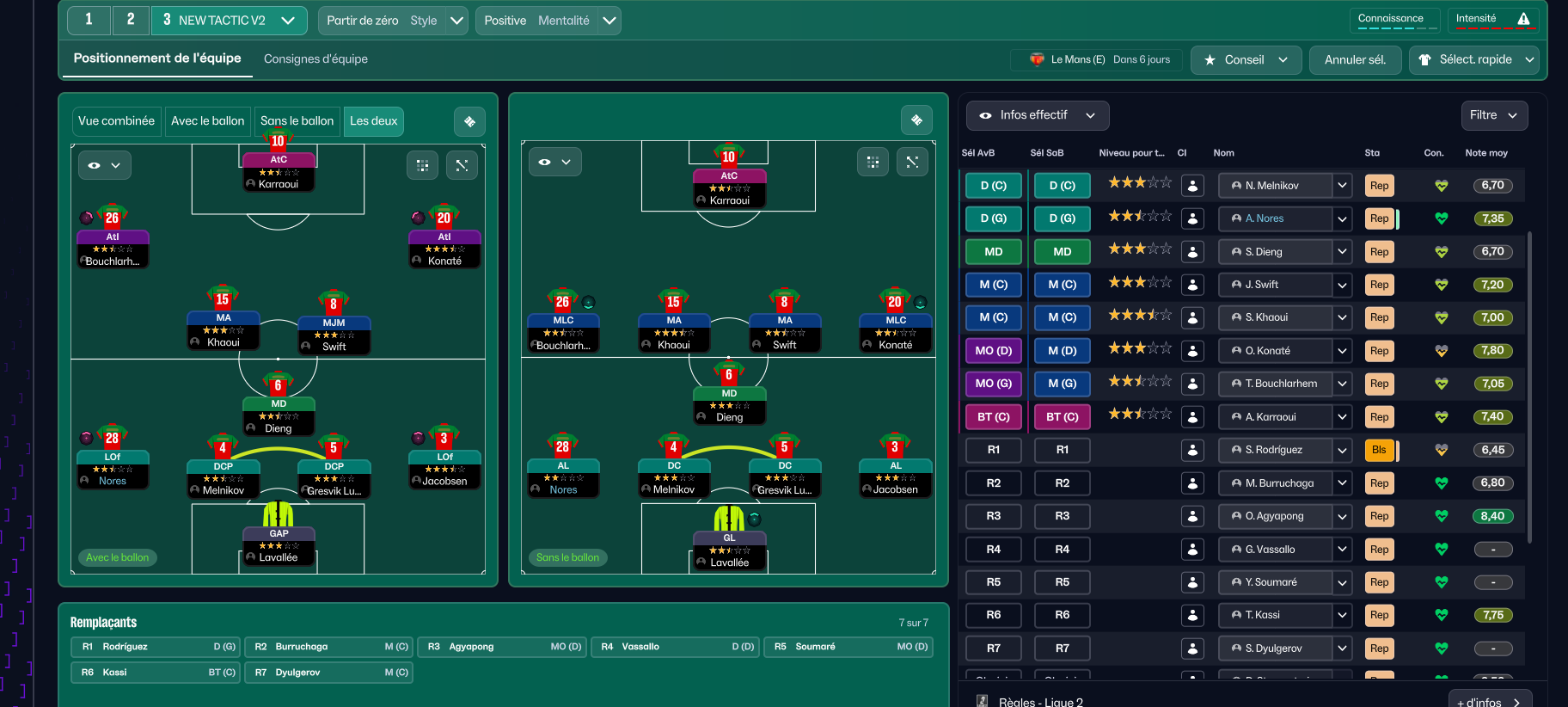
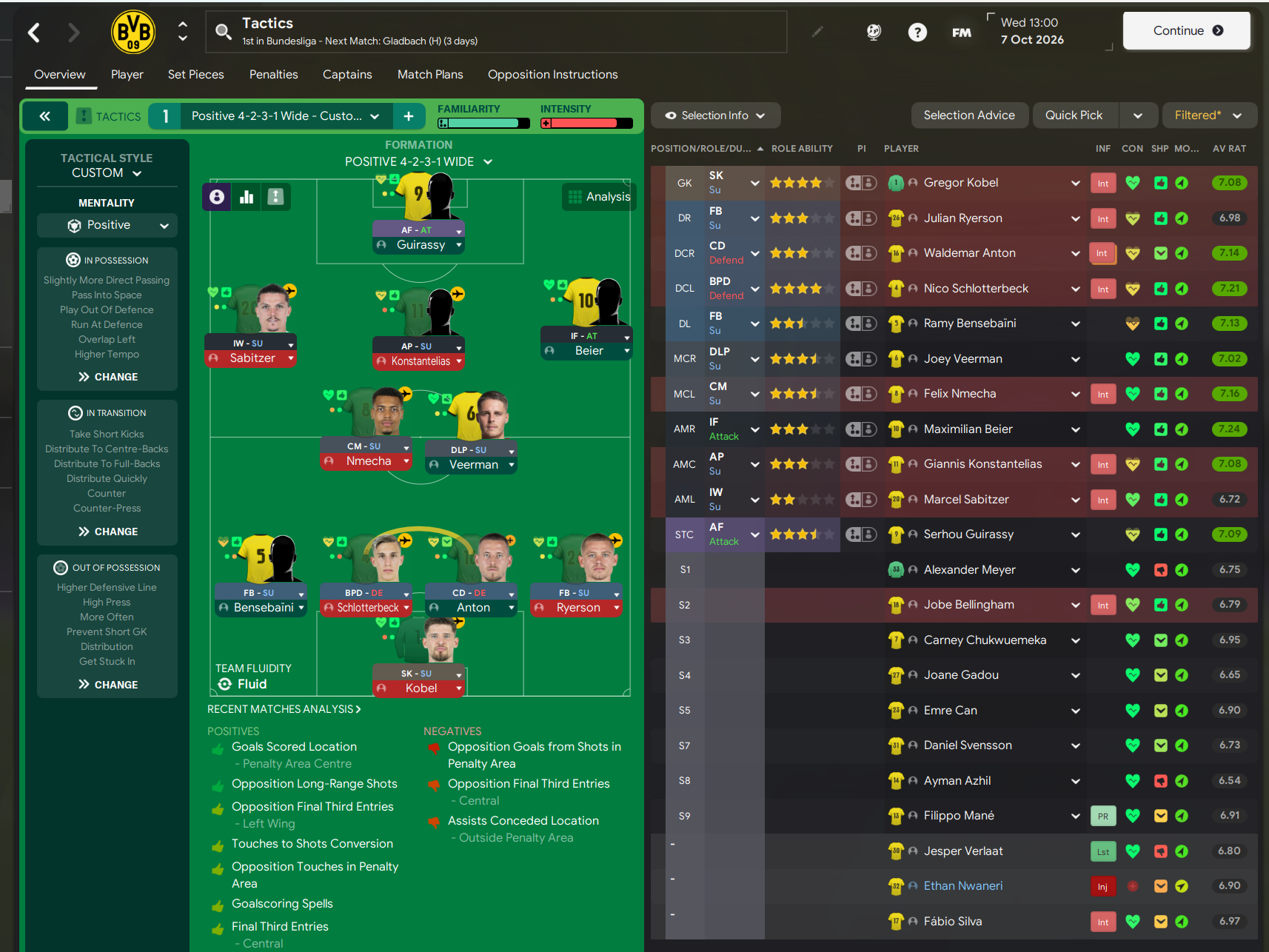
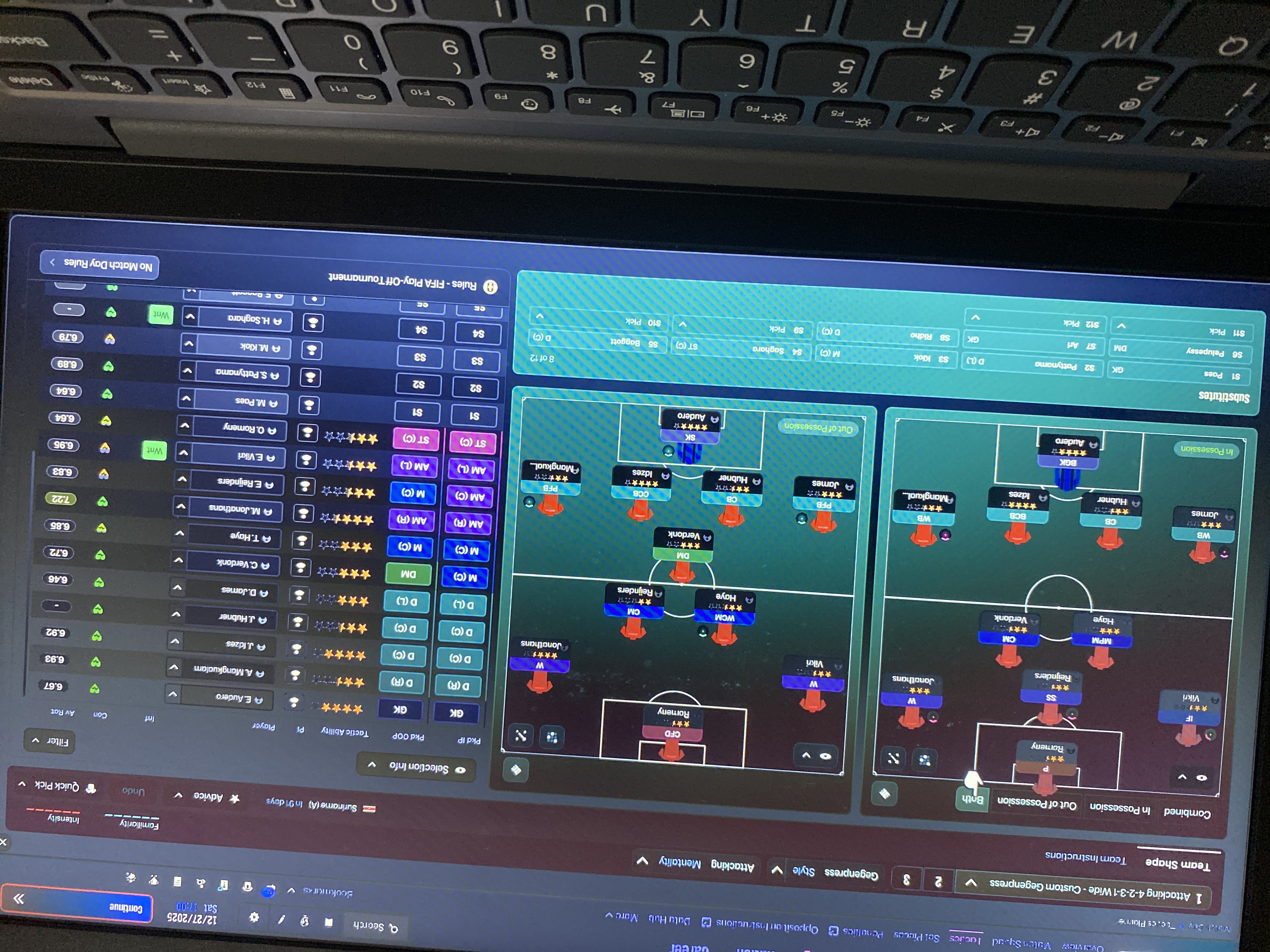
More Attacking tactics

Guides for this formation
The tactical theory behind the 4-2-3-1 Wide: roles, instructions, and the trade-offs that decide whether the system holds up.
Player pairings
Midfield Pairs in 4-2-3-1 and 4-4-2
Double pivots and flat pairs in 4-2-3-1 and 4-4-2: when each pairing works, when it collapses, and the AMC unicorn that rescues both.
Read guide
Playing styles
Gegenpressing: A Full Guide
Klopp-style gegenpressing in FM, including squad profile, line-and-press pairing, sustainable workload, and the antipatterns to avoid.
Read guide