Uploaded Tactic
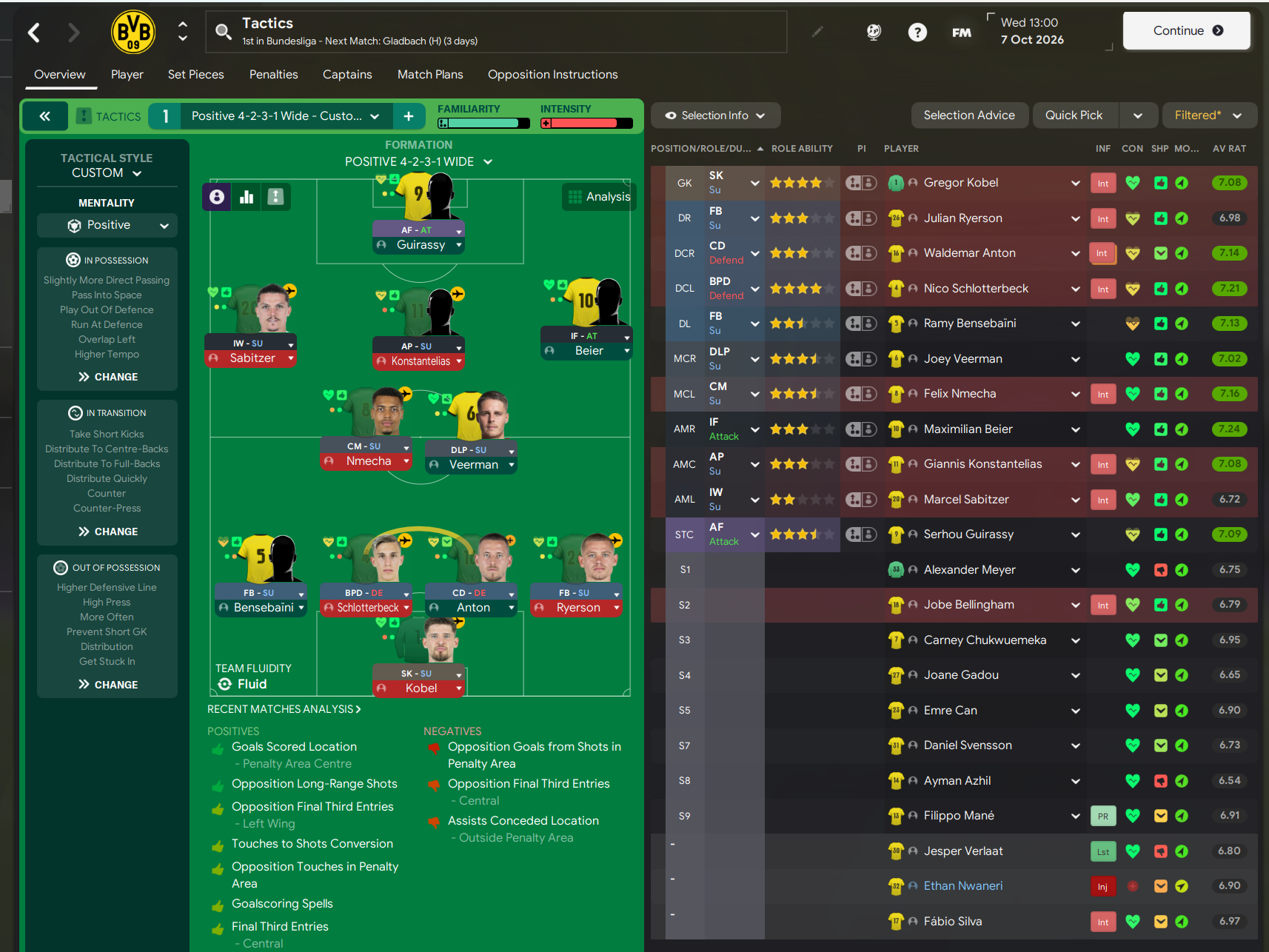
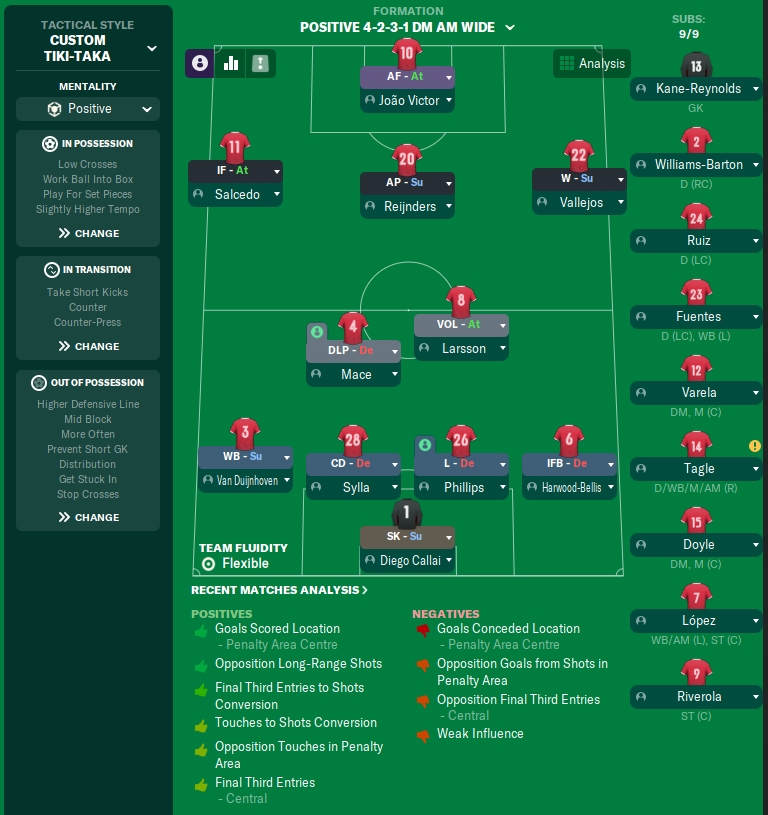
Formation & Style
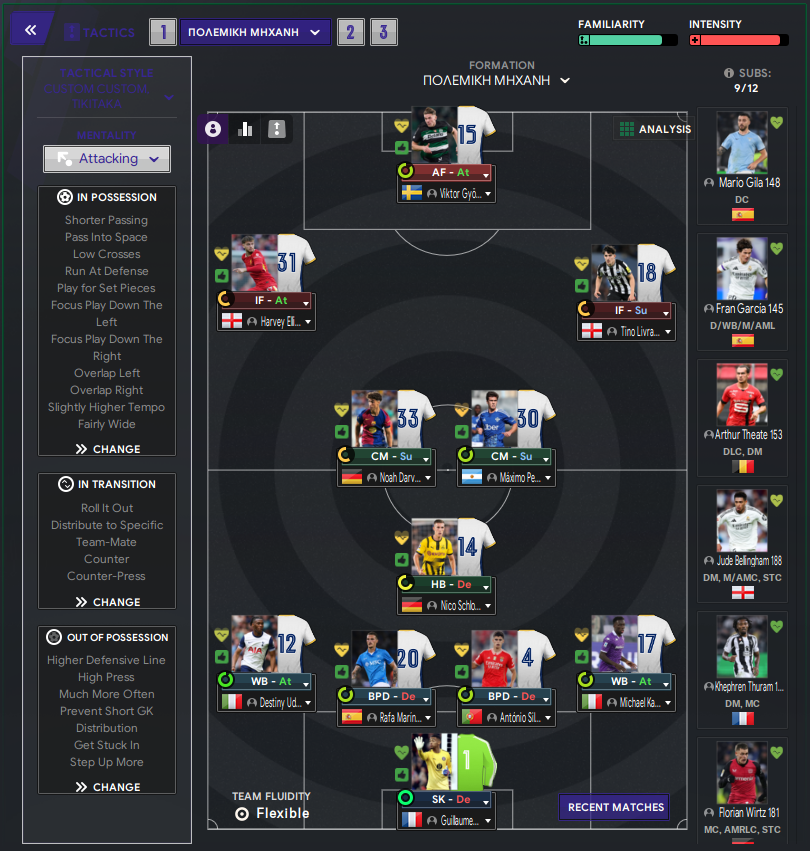
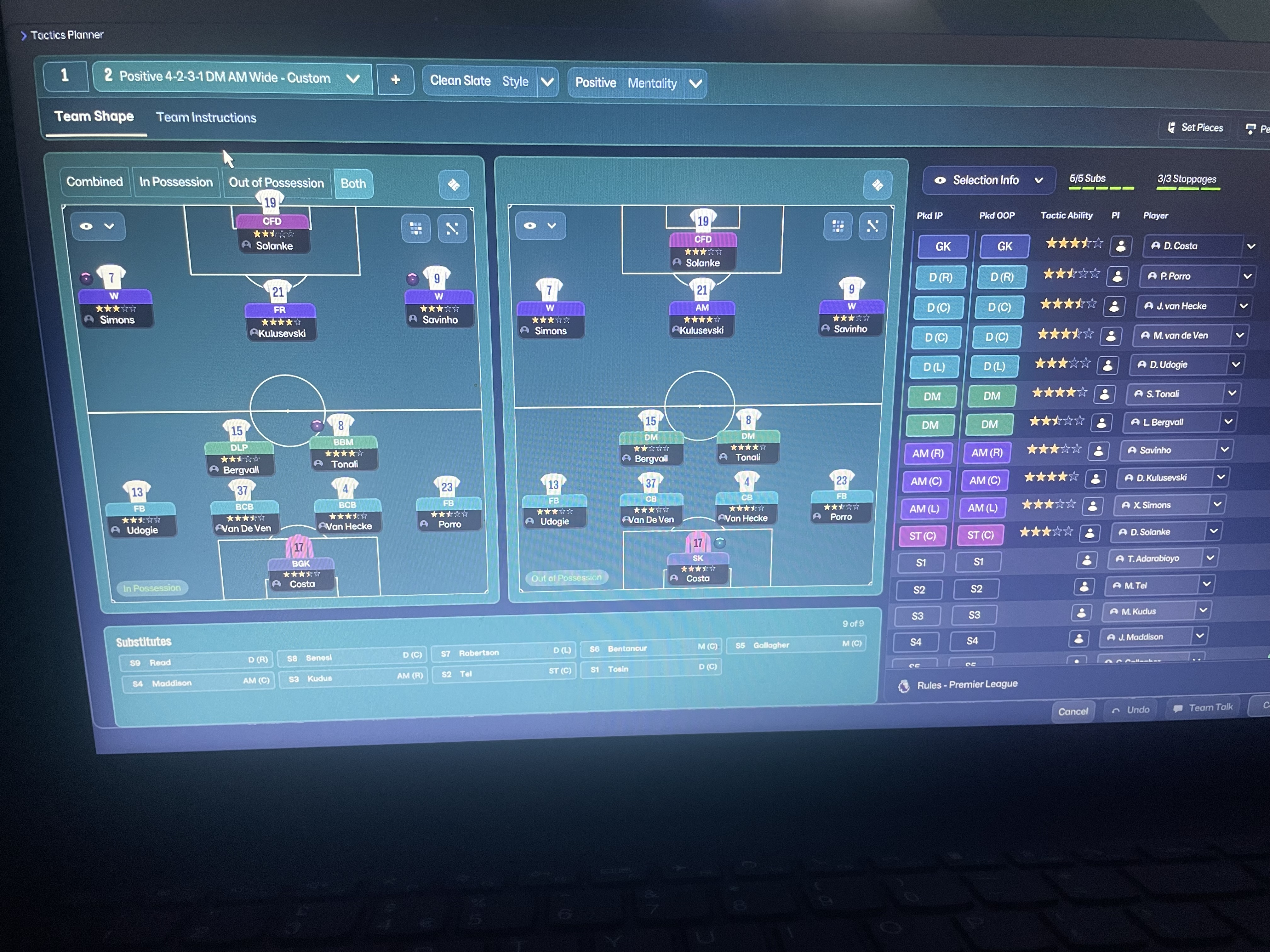
Tactical Style:Custom
Mentality:Positive
Formation:4-2-3-1 Wide
Team Fluidity:Fluid
In Possession
Slightly More Direct Passing
Run At Defence
Overlap Left
Higher Tempo
In Transition
Take Short Kicks
Distribute To Centre-Backs
Distribute To Full-Backs
Counter
Counter-Press
Out of Possession
Higher Defensive Line
High Press
Prevent Short GK Distribution
Get Stuck In
Team Shape Without Ball
Shape:4-2
Description:Compact shape with a strong central base and full-backs ready to engage wide threats.
Evidence:DC and DCL roles create a solid defensive line with FBs ready to support in wide areas.
Team Shape With Ball
Shape:4-1-1-2-1
Description:Wide and fluid attacking shape that utilizes both advance and inside runs.
Evidence:AMB and IW roles provide penetration while AF focuses on positioning in the box.
Phase Description
Attacking Play
Focus on creating space with overlapping full-backs and utilizing width from the wingers, combined with central support from the advanced playmaker.
Defensive Transition
Emphasis on quick recovery and utilizing a high press to regain possession, focusing on immediate pressures on the ball.
Main Focus
Dynamic attacking play by exploiting the wings and increasing goal-scoring opportunities through advanced positioning.
Key Strengths
Width and Flexibility
The combination of full-backs and inside wingers allows for flexible attacking dynamics.
Midfield Control
A strong midfield duo allows for effective ball distribution and playmaking.
High Press System
Utilizing a high press to disrupt the opponent's build-up plays aligns with the high defensive line.
Conflicting Directions
Vulnerability to Counter-Attacks
High defensive line may expose gaps behind if the press fails.
Dependency on Full-Backs
Heavy reliance on full-backs for width can leave the defense exposed if they've advanced.
Over-Crowded Central Areas
Having multiple players in central positions may lead to congested play and hinder passing options.
Tactical Suggestions
Adjust Pressing Intensity
To better manage counter-attacks, consider slightly reducing the pressing intensity.
Rotate Midfield Roles
A change in midfielder roles can create more versatility and unpredictability.
Consider Depth in Transition
Allowing more depth in defense could help in managing fast breaks and counter-attacks.
Ask Questions About Your Lineup
Related Tactics
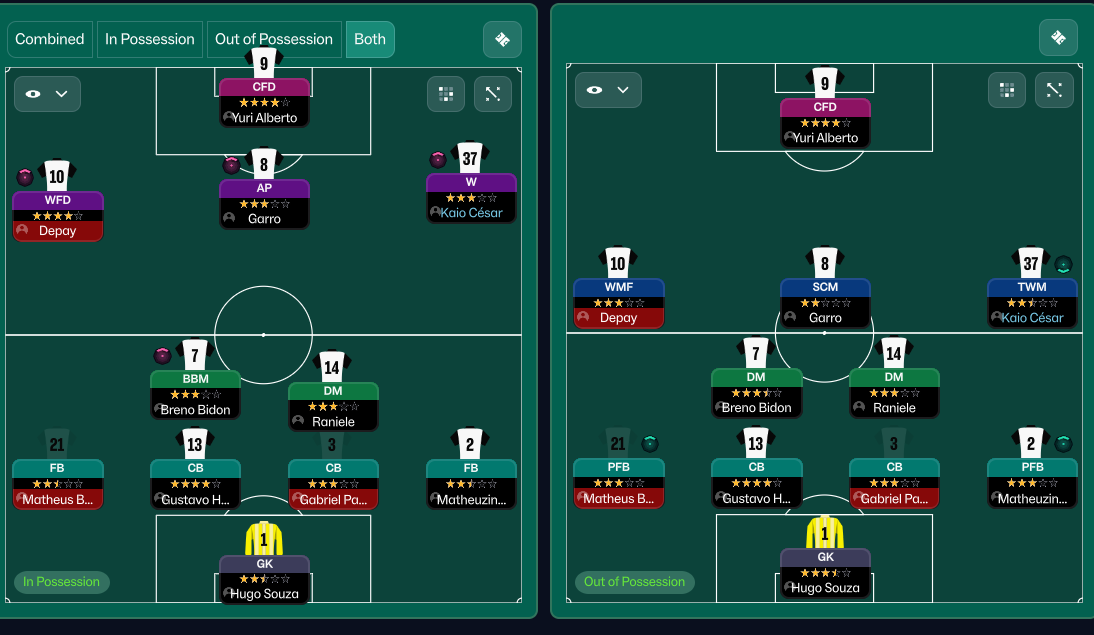
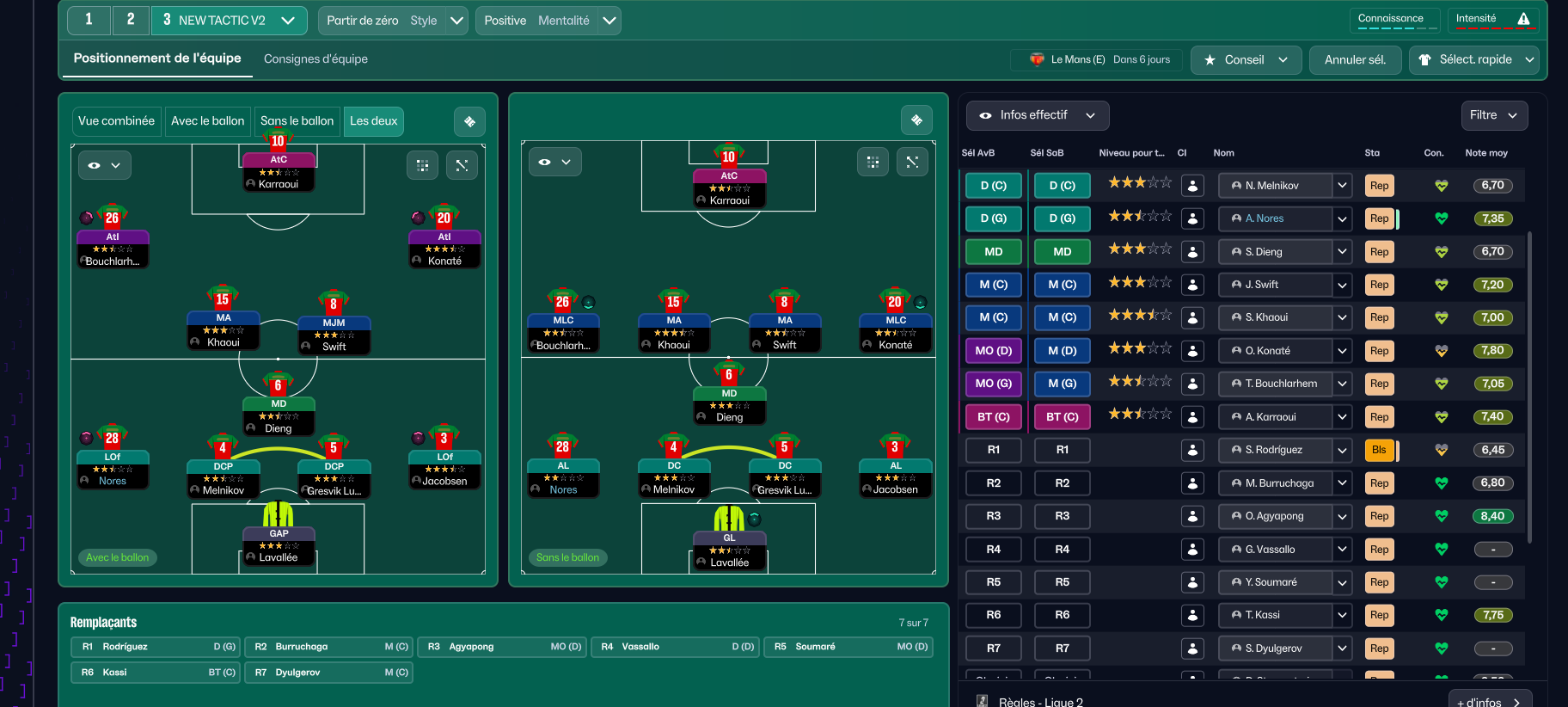
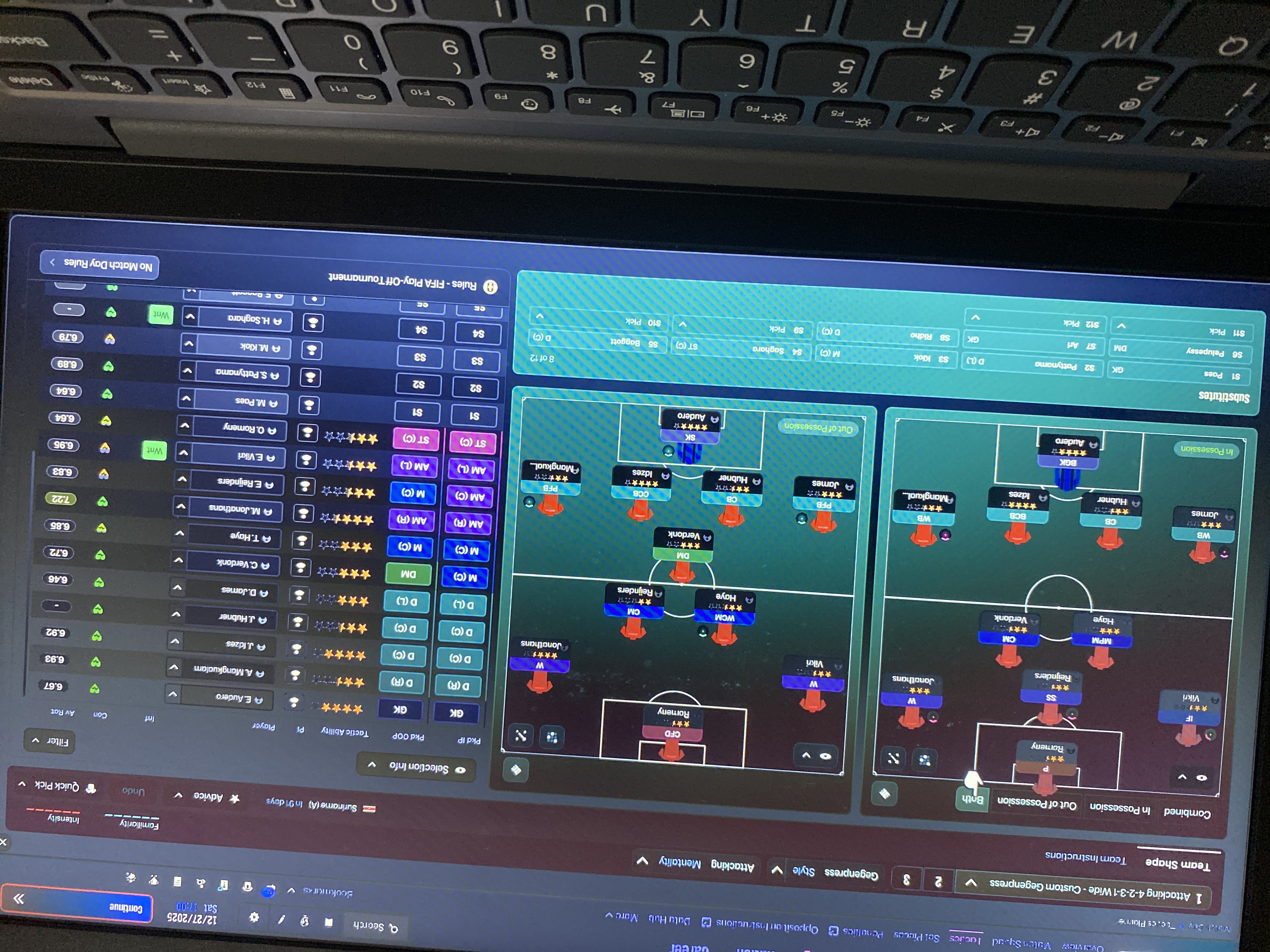
Guides for this formation
The tactical theory behind the 4-2-3-1 Wide: roles, instructions, and the trade-offs that decide whether the system holds up.
Player pairings
Midfield Pairs in 4-2-3-1 and 4-4-2
Double pivots and flat pairs in 4-2-3-1 and 4-4-2: when each pairing works, when it collapses, and the AMC unicorn that rescues both.
Read guide
Playing styles
Gegenpressing: A Full Guide
Klopp-style gegenpressing in FM, including squad profile, line-and-press pairing, sustainable workload, and the antipatterns to avoid.
Read guide