Uploaded Tactic
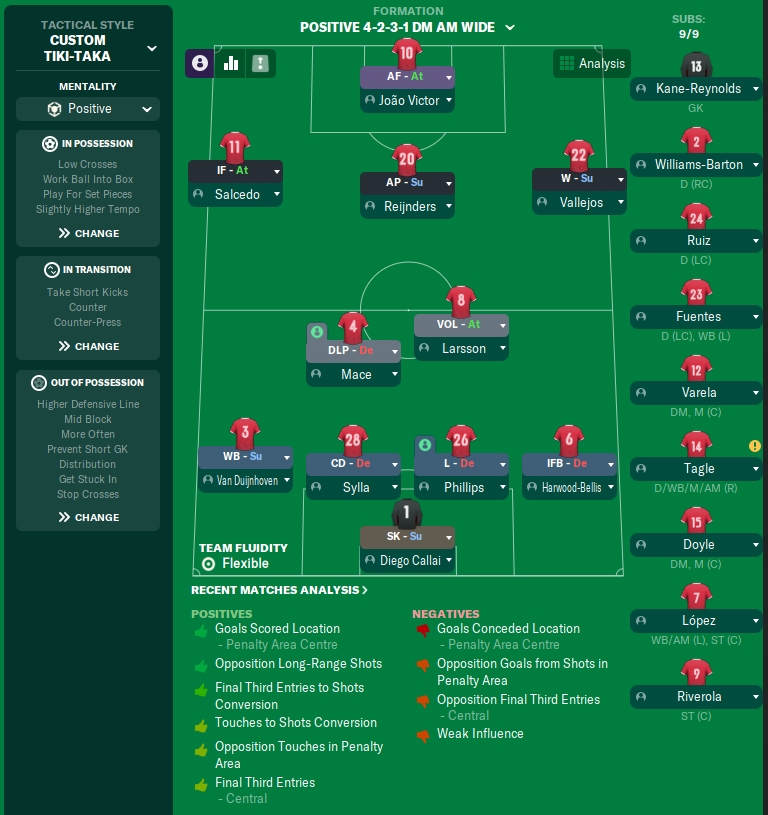
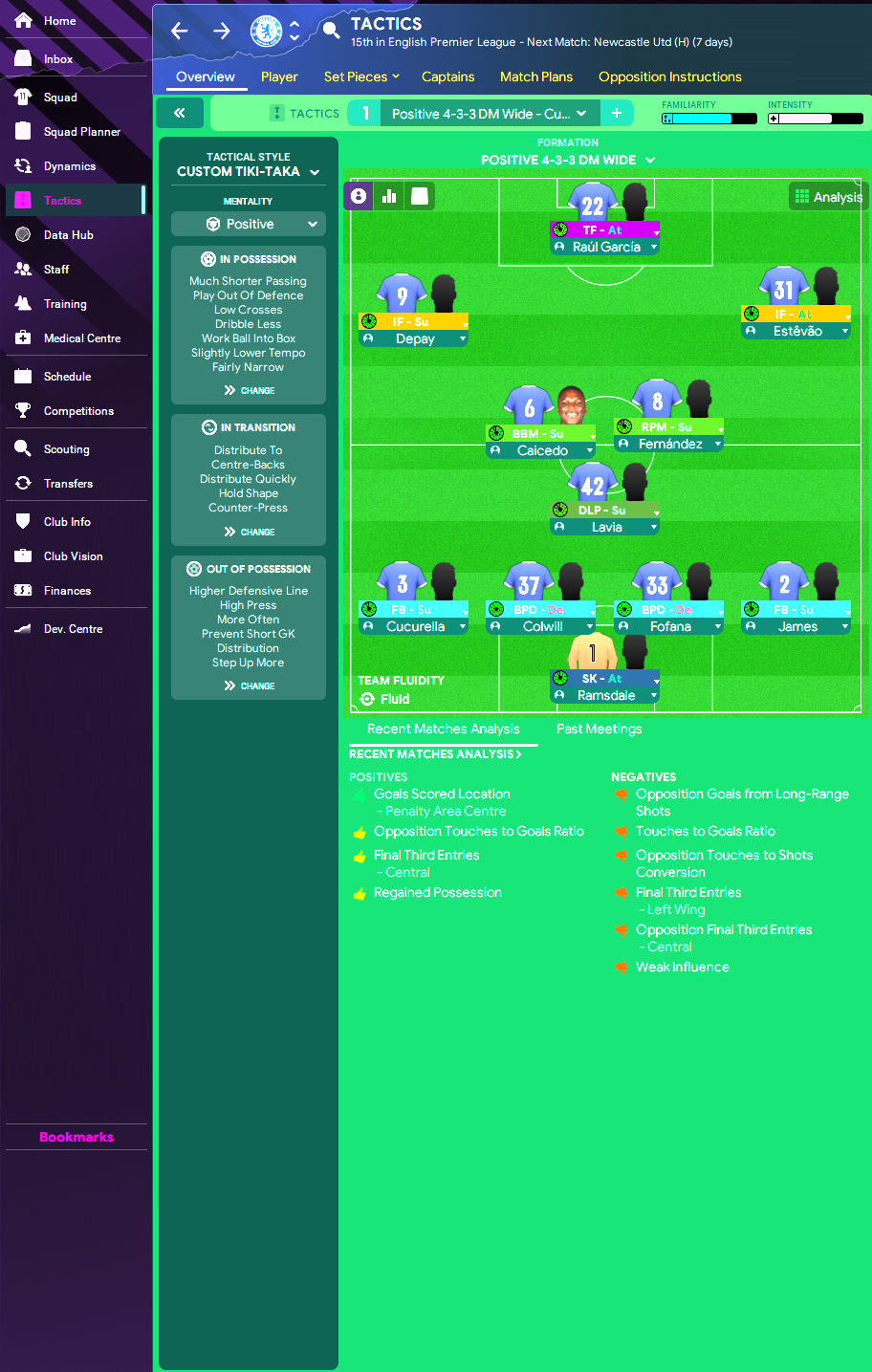
Formation & Style
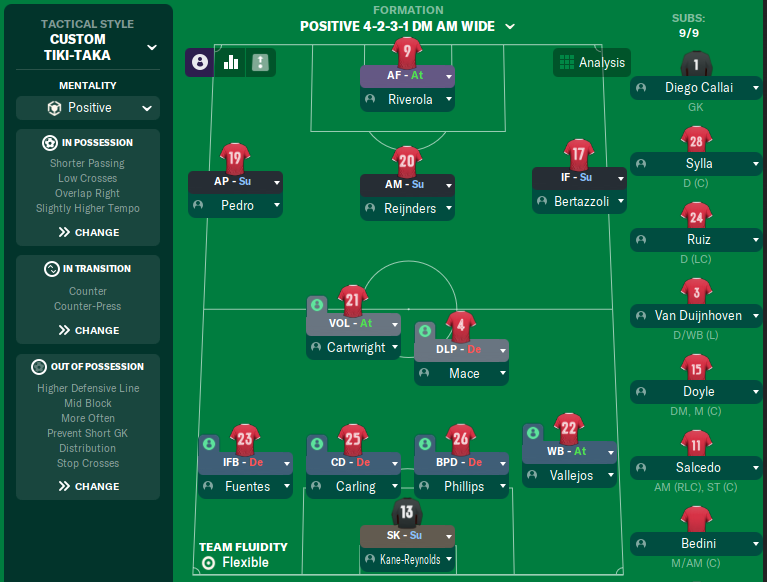
Tactical Style:Tiki-Taka
Mentality:Positive
Formation:4-2-3-1 Wide
Team Fluidity:Flexible
In Possession
Low Crosses
Work Ball Into Box
Play For Set Pieces
Slightly Higher Tempo
In Transition
Take Short Kicks
Counter-Press
Out of Possession
Higher Defensive Line
Mid Block
Prevent Short GK Distribution
Get Stuck In
Stop Crosses
Team Shape Without Ball
Shape:4-2
Description:Structured defense with a good balance between personal marking and zonal coverage.
Evidence:CD at [2,2], [2,3]; WB at [2,1] for width.
Team Shape With Ball
Shape:3-2-1
Description:Attacking players interchanging positions to stretch the defense.
Evidence:IF at [5,1], W at [5,5], AP at [5,3].
Phase Description
Attacking Play
Fluid ball movement through midfield; focus on teamwork to create goal-scoring opportunities.
Defensive Transition
Quickly reorganizing after losing possession, utilizing counter-press.
Main Focus
Play through the midfield to create wide overloads and penetrating through balls.
Key Strengths
Midfield Creativity
Strong combination of DLP-D and BBM-A provides passing options and ball progression.
Wide Threat
Utilization of wingers to provide width and create 1v1 situations.
Solid Defensive Framework
Two CBs provide aerial presence and stability.
Conflicting Directions
Vulnerability on the Flanks
Inverted Full-Back may lead to gaps on wide areas if caught out of position.
Overcommitment in Attack
High attacking roles might leave the defensive line exposed during counters.
Lack of Defensive Midfield Coverage
Over-reliance on DLP-D for defensive duties may leave gaps.
Tactical Suggestions
Consider a More Defensive Duty
Switch DLP to Support to provide better balance in midfield.
Provide Depth with Secondary Width
Incorporate a secondary line of width from central midfield.
Adjust Tactical Style to Exploit Defensive Weaknesses
Tactical tweaks may be required to adjust to opponents’ strengths.
Ask Questions About Your Lineup
Related Tactics
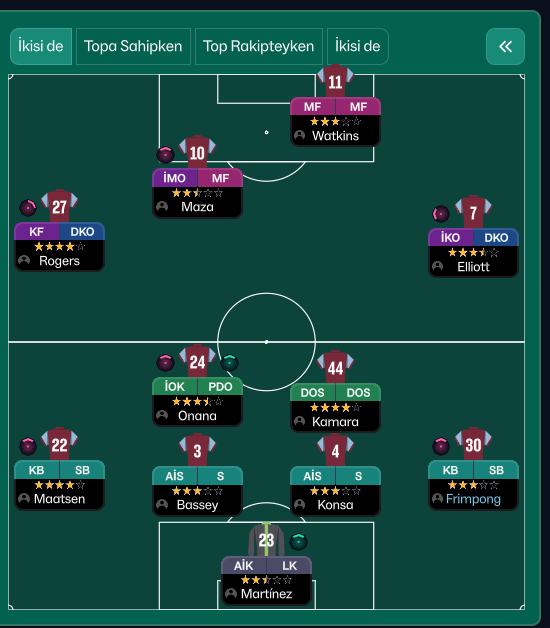
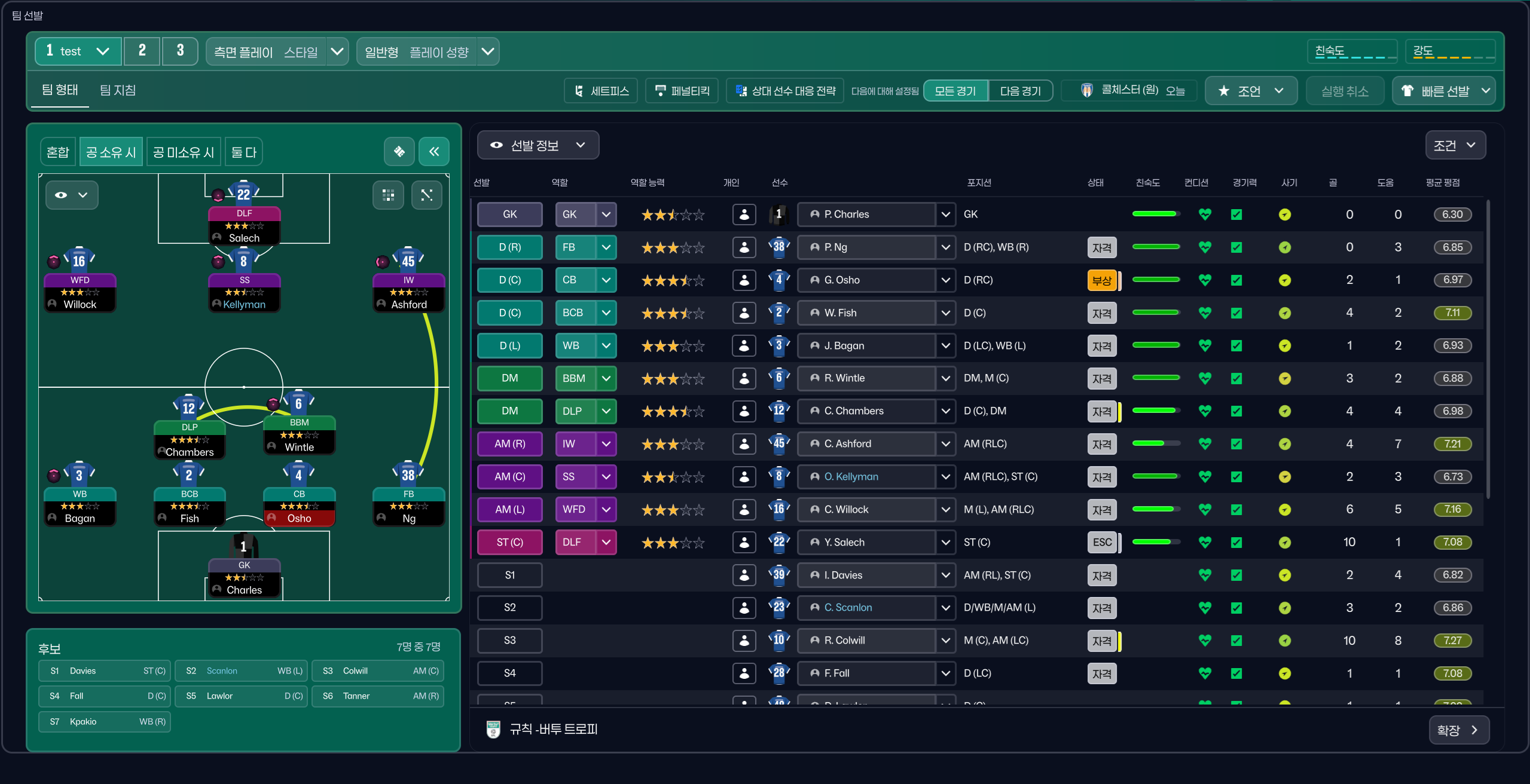
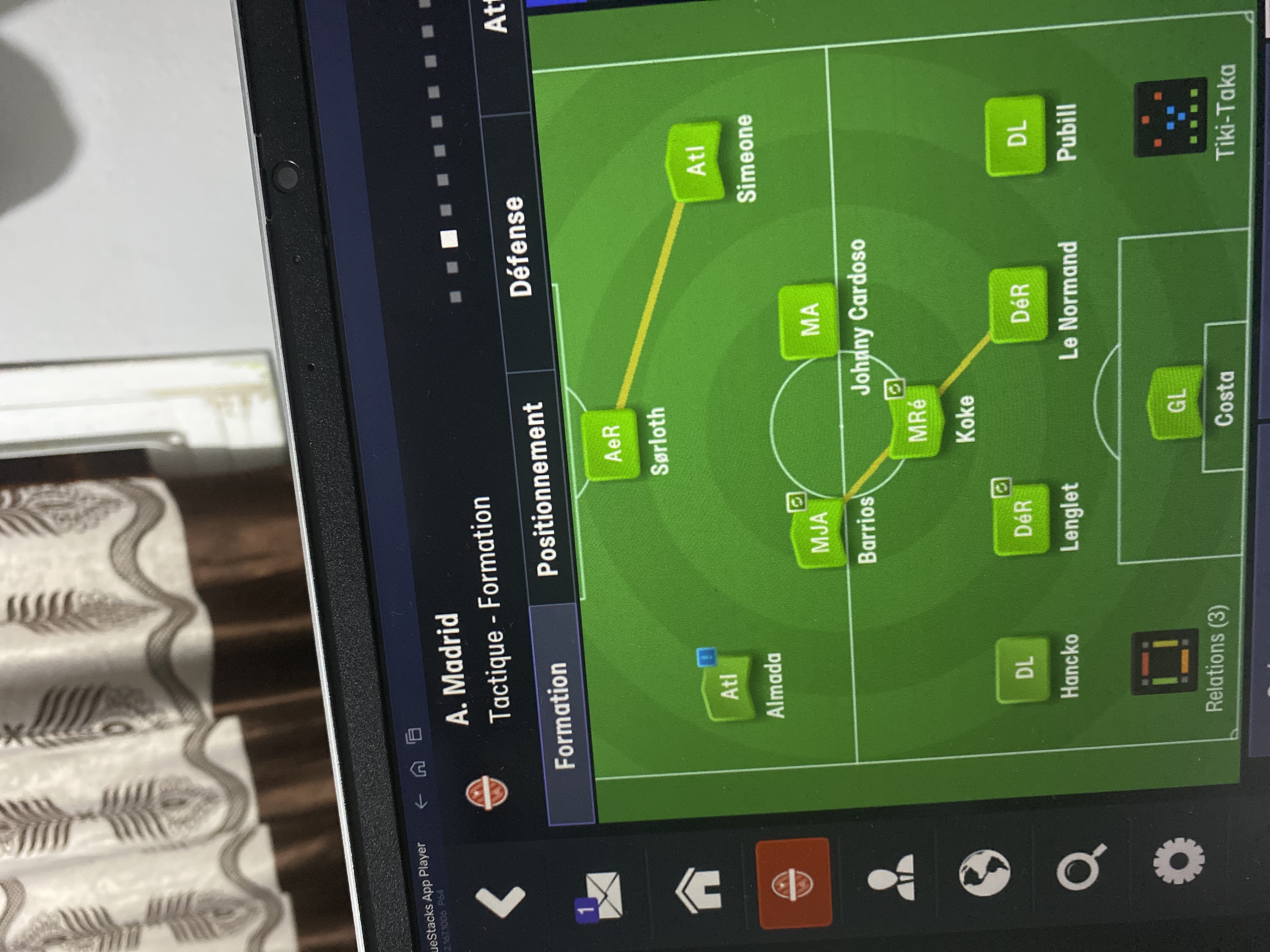
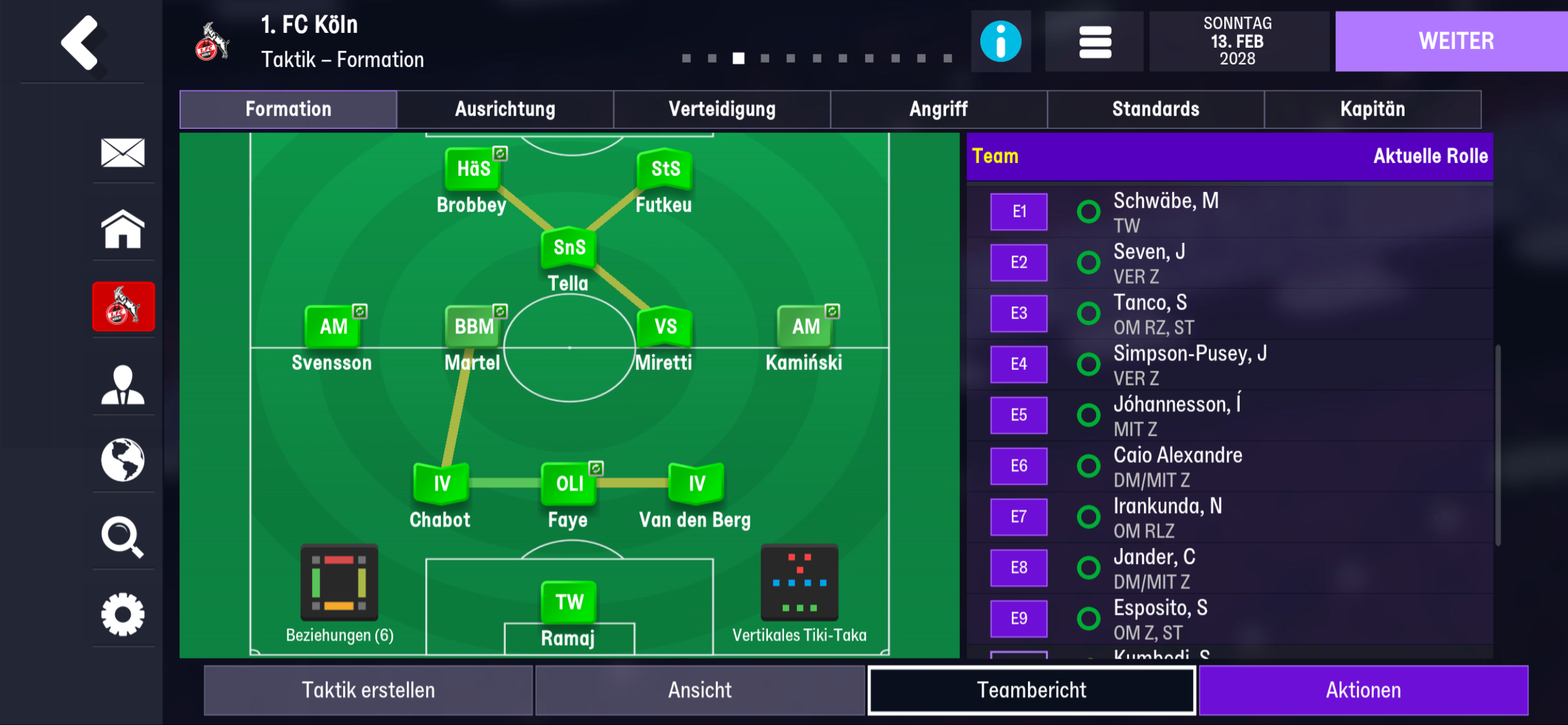
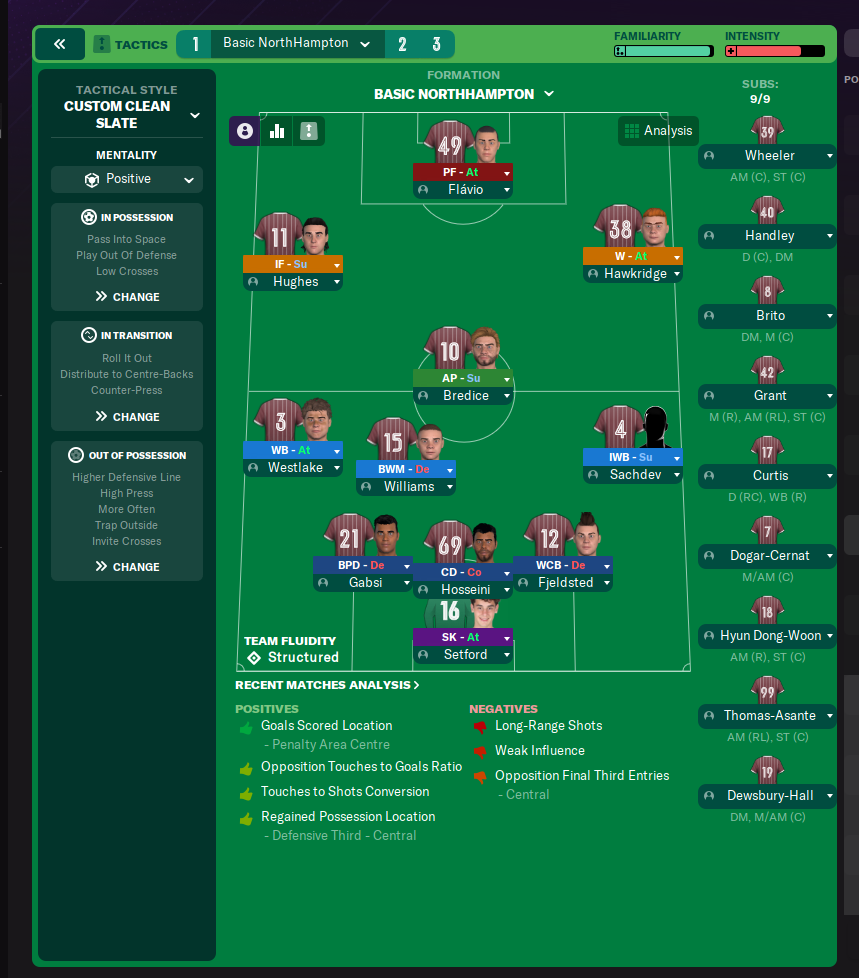
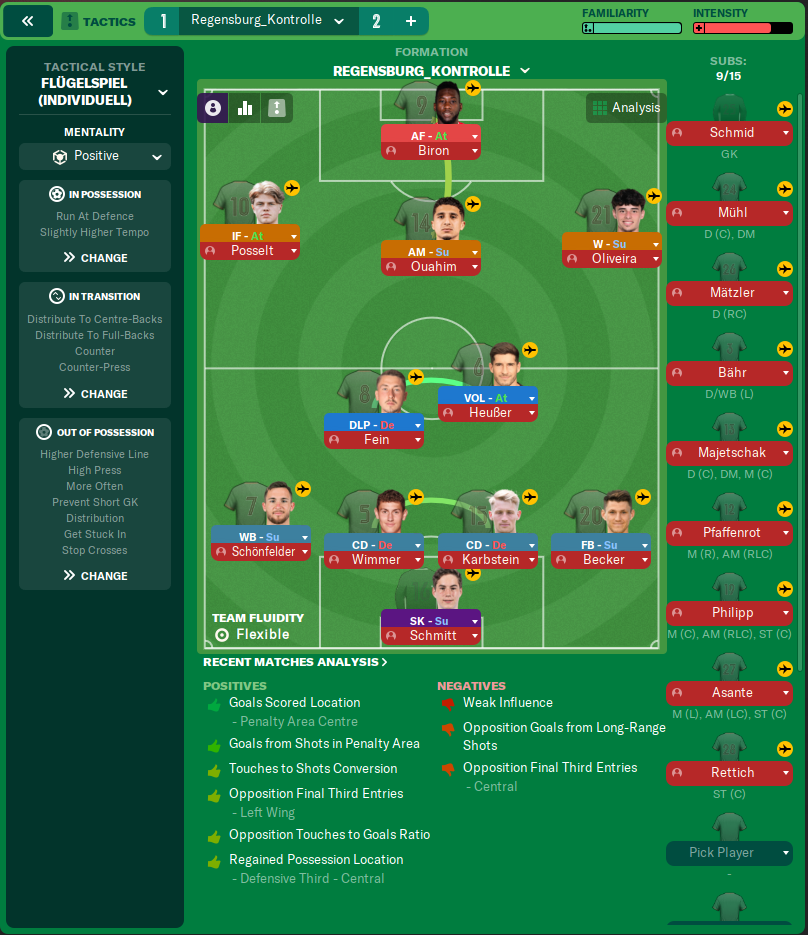
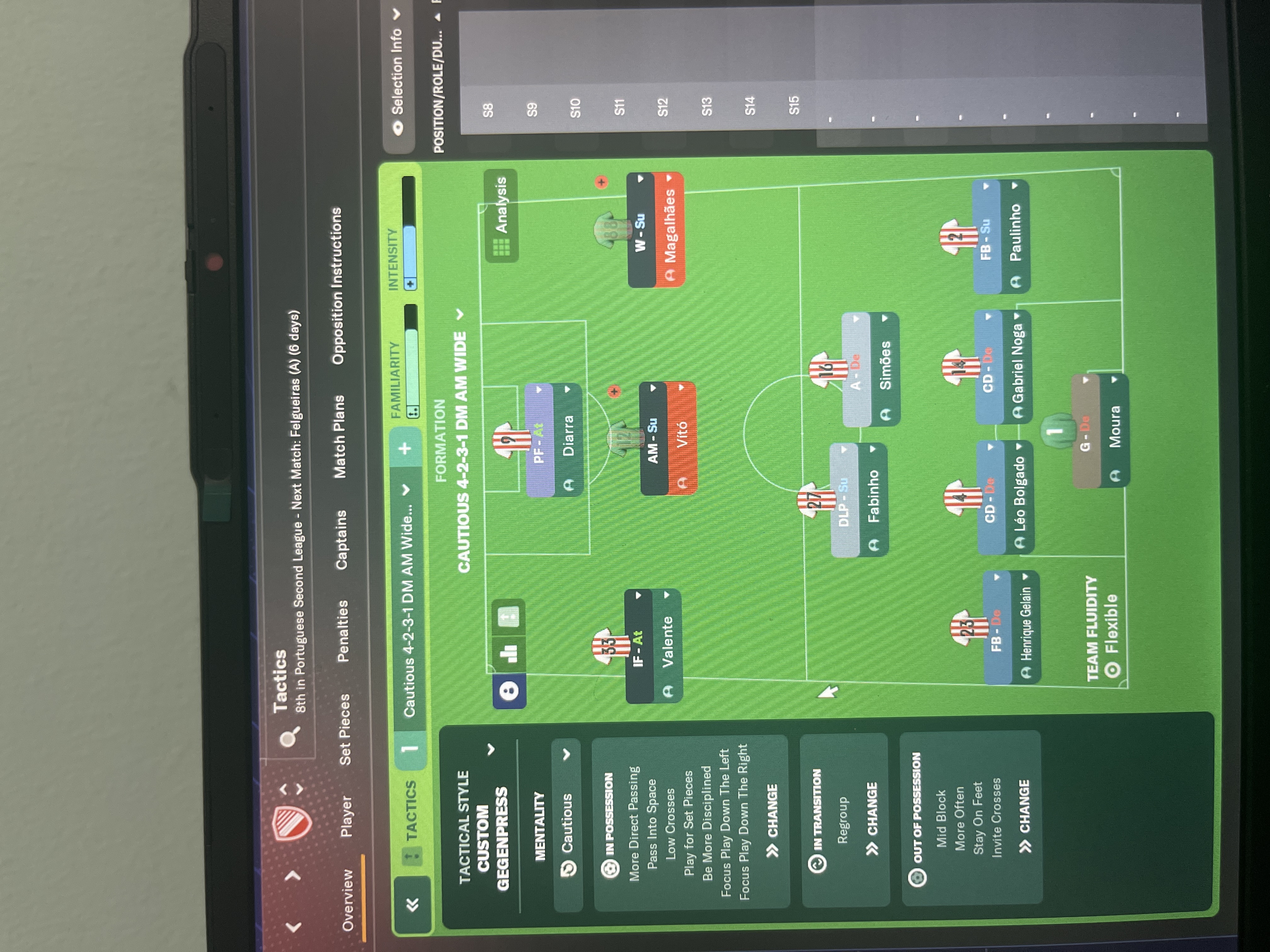
More Tiki-Taka tactics
Guides for this formation
The tactical theory behind the 4-2-3-1 Wide: roles, instructions, and the trade-offs that decide whether the system holds up.
Player pairings
Midfield Pairs in 4-2-3-1 and 4-4-2
Double pivots and flat pairs in 4-2-3-1 and 4-4-2: when each pairing works, when it collapses, and the AMC unicorn that rescues both.
Read guide
Playing styles
Gegenpressing: A Full Guide
Klopp-style gegenpressing in FM, including squad profile, line-and-press pairing, sustainable workload, and the antipatterns to avoid.
Read guide