Uploaded Tactic
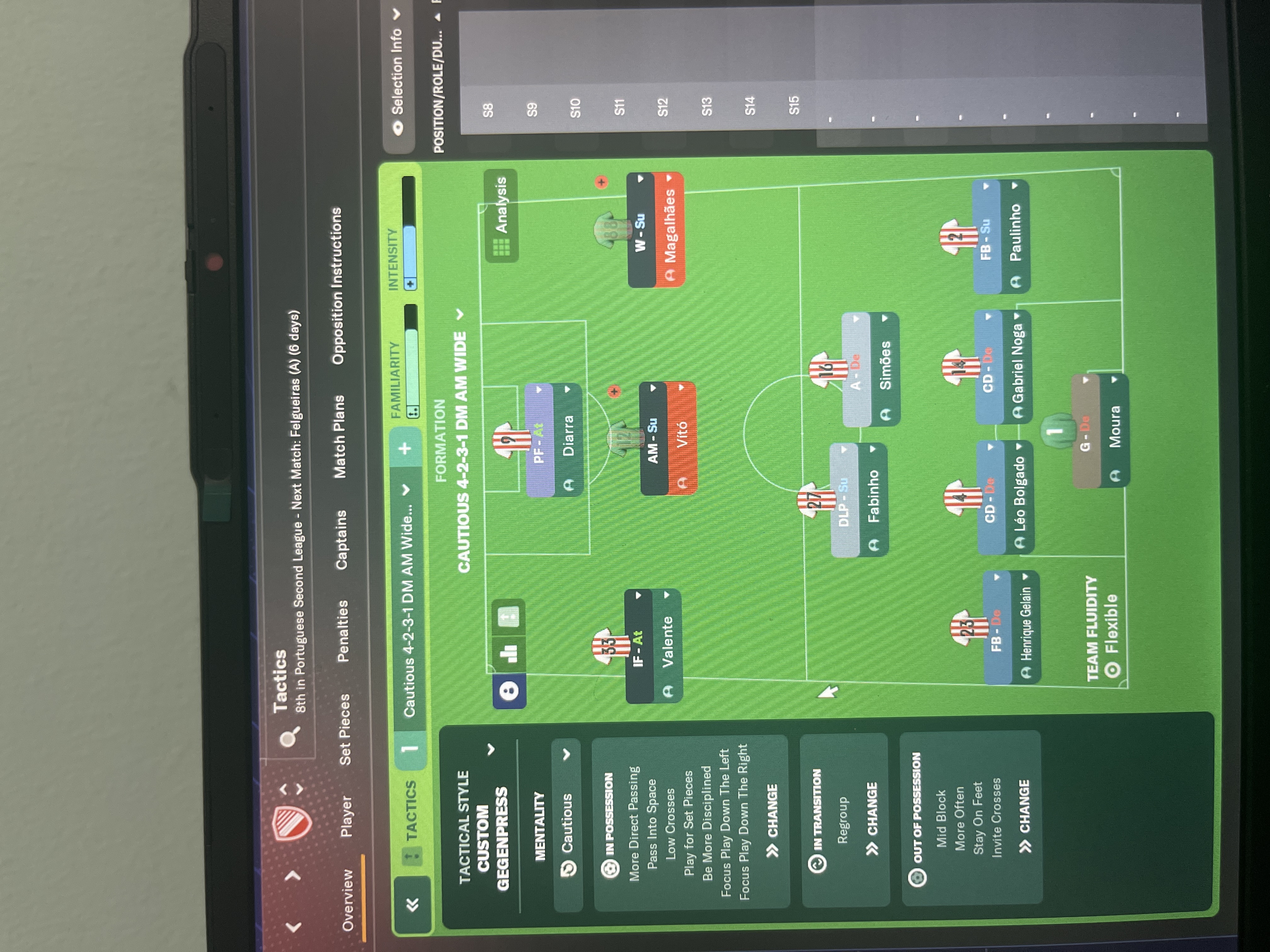
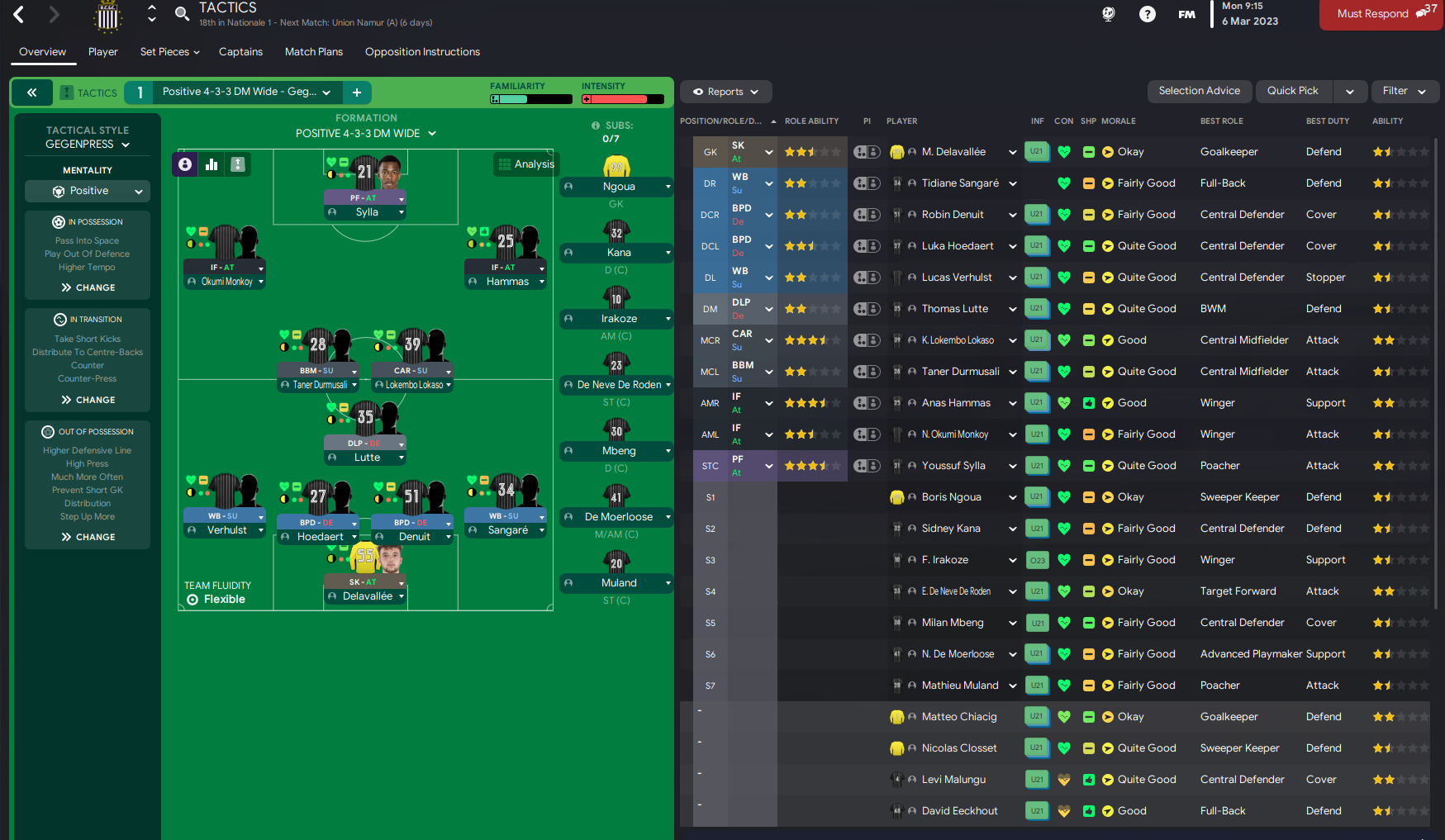
Formation & Style
Tactical Style:Gegenpress
Mentality:Cautious
Formation:4-2-3-1 Wide
Team Fluidity:Flexible
In Possession
More Direct Passing
Pass Into Space
Low Crosses
Be More Disciplined
Focus Play Down The Left
Focus Play Down The Right
In Transition
Regroup
Out of Possession
Mid Block
More Often
Stay On Feet
Invite Crosses
Team Shape Without Ball
Shape:4-2 Mid Block
Description:A compact four-man defense supported by a double pivot creates a stable foundation.
Evidence:FB-D at [2,1] and [2,5] support width; DM-S at [3,3] aids in breaking up play.
Team Shape With Ball
Shape:4-3-3 Shape
Description:Flexible forward line with inside forward and advanced playmaker providing goal-scoring threats.
Evidence:IF-A at [5,2], AM-S at [5,3], and PF-A at [6,3] create dynamic movement in final third.
Phase Description
Attacking Play
Focuses on wide play with inside forwards and wingers, while the deep-lying playmaker controls the tempo.
Defensive Transition
Transitions into a mid block, regrouping when possession is lost to retain structure.
Main Focus
Utilizing width through flanks while maintaining defensive solidity.
Key Strengths
Flexible Midfield Control
The deep-lying playmaker allows for control of the game's tempo while supporting transitions.
Diverse Attacking Options
Inside forward and wingers create width and opportunities for goal-scoring.
Pressing Forward Strategy
The pressing forward adds urgency in the final third, disrupting opposing play.
Conflicting Directions
High Line Vulnerabilities
Playing cautiously with a mid-block may be ineffective against teams exploiting high defensive lines.
Wide Focus Risks
Overreliance on flanks might reduce central penetration and create predictability in attacks.
Counter-Press Limitations
A cautious mentality may reduce effectiveness in counter-pressing situations when possession is regained.
Tactical Suggestions
Consider Balanced Mentality
Adopting a more balanced mentality could enhance offensive potential while maintaining defensive integrity.
Utilize a Central Playmaker
Incorporating a more attacking central midfielder can facilitate better link-up and dynamism.
Adjust Defensive Line
Experimenting with a higher defensive line might offer better pressing opportunities and compactness.
Ask Questions About Your Lineup
Related Tactics
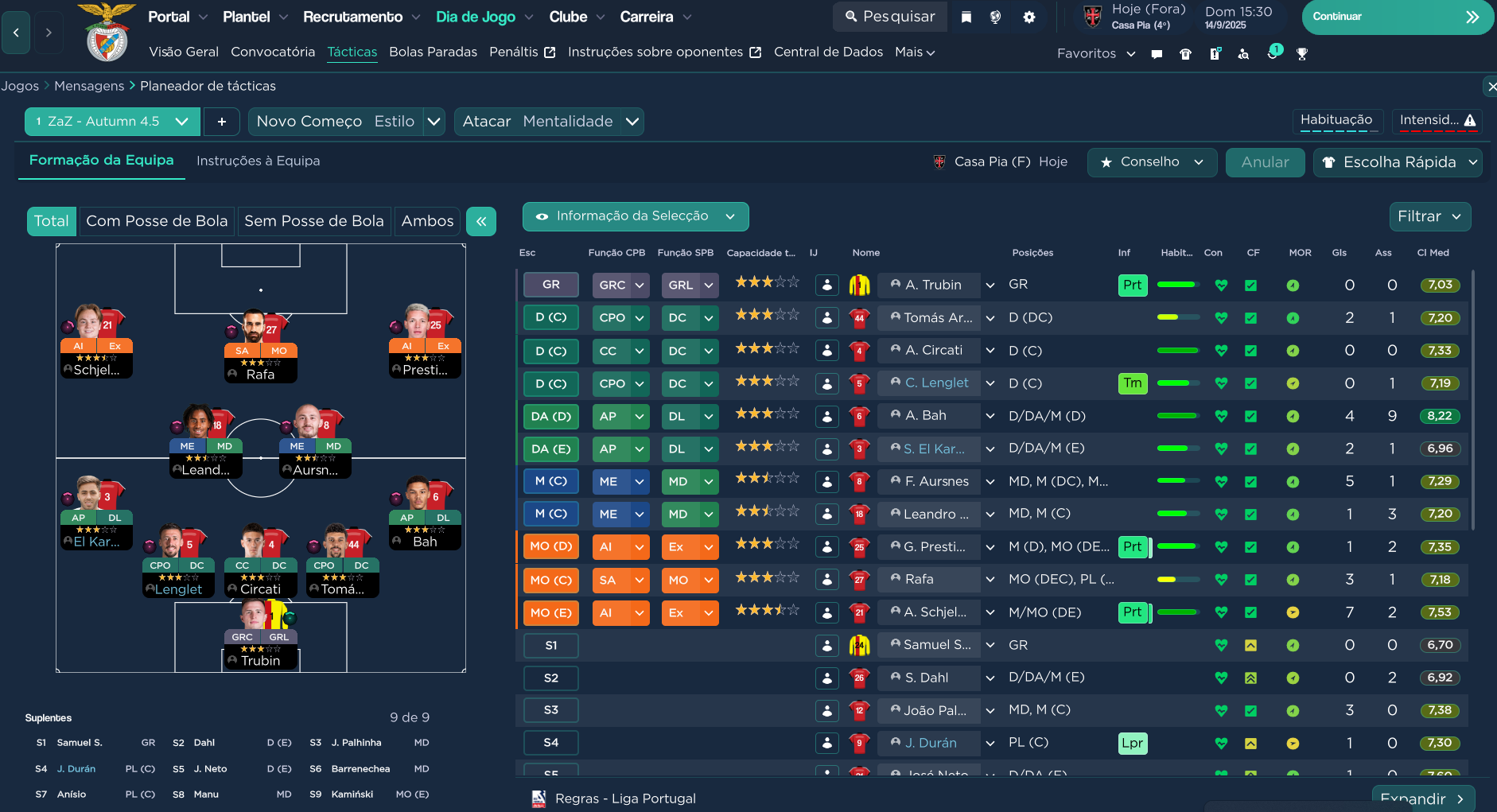
More Gegenpress tactics
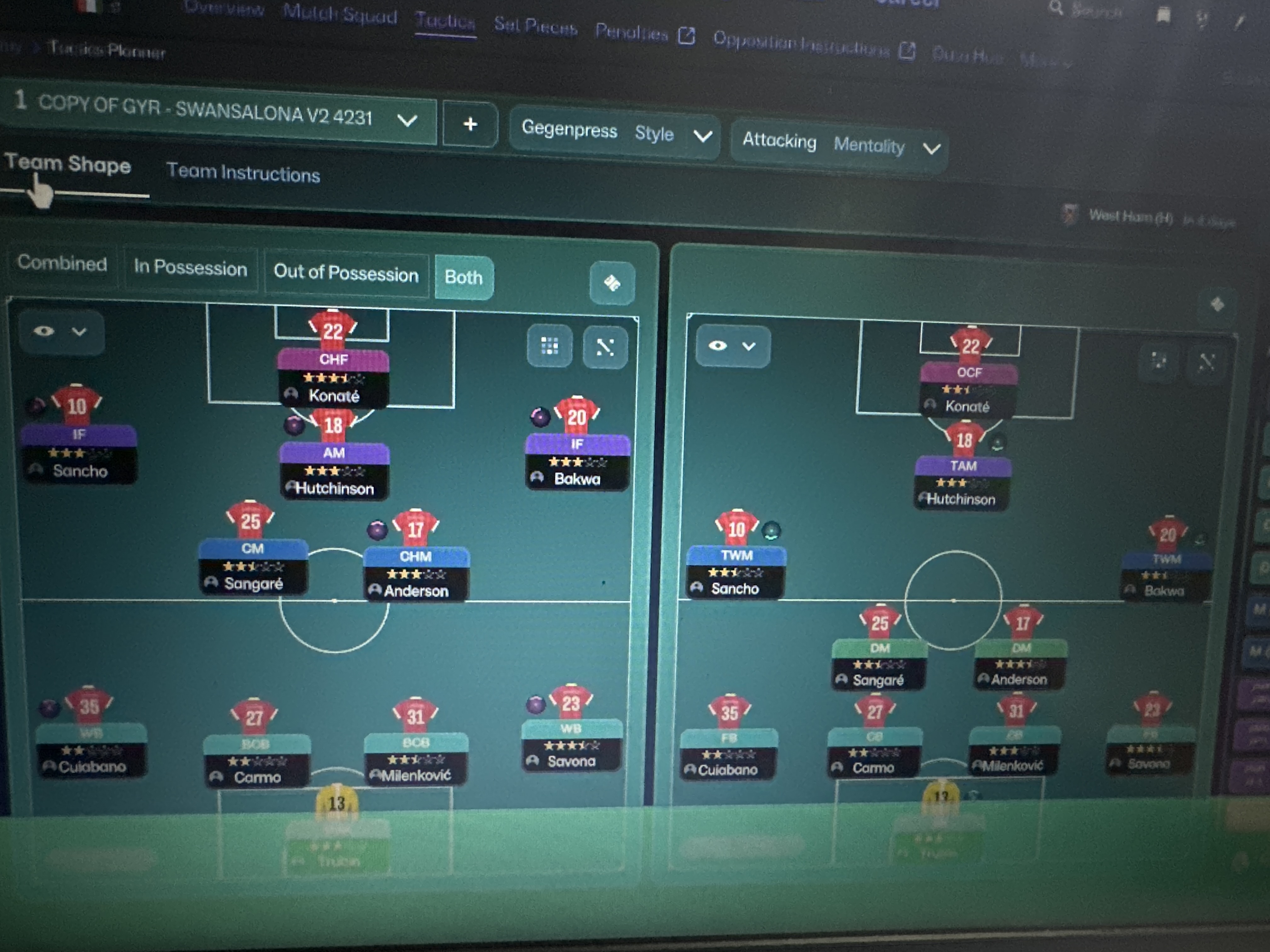
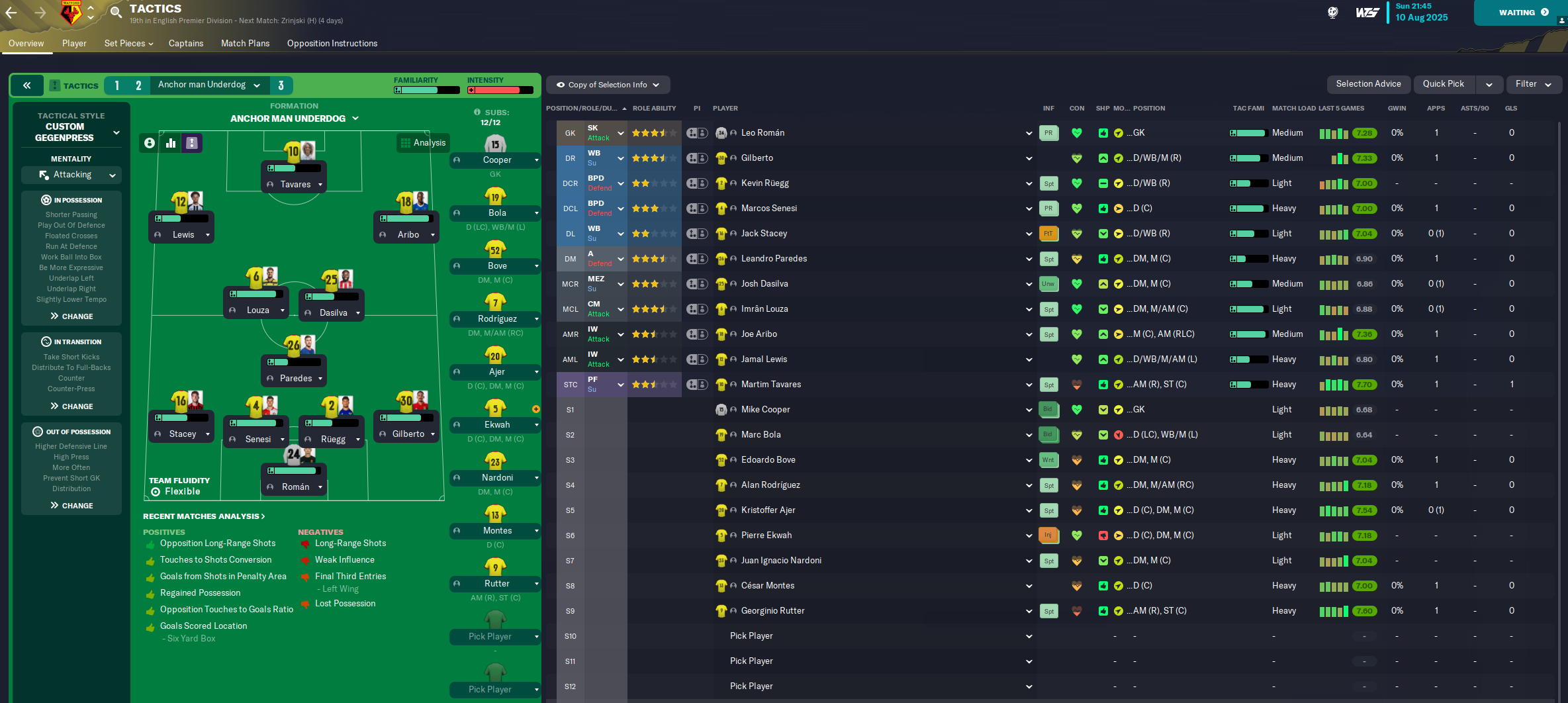
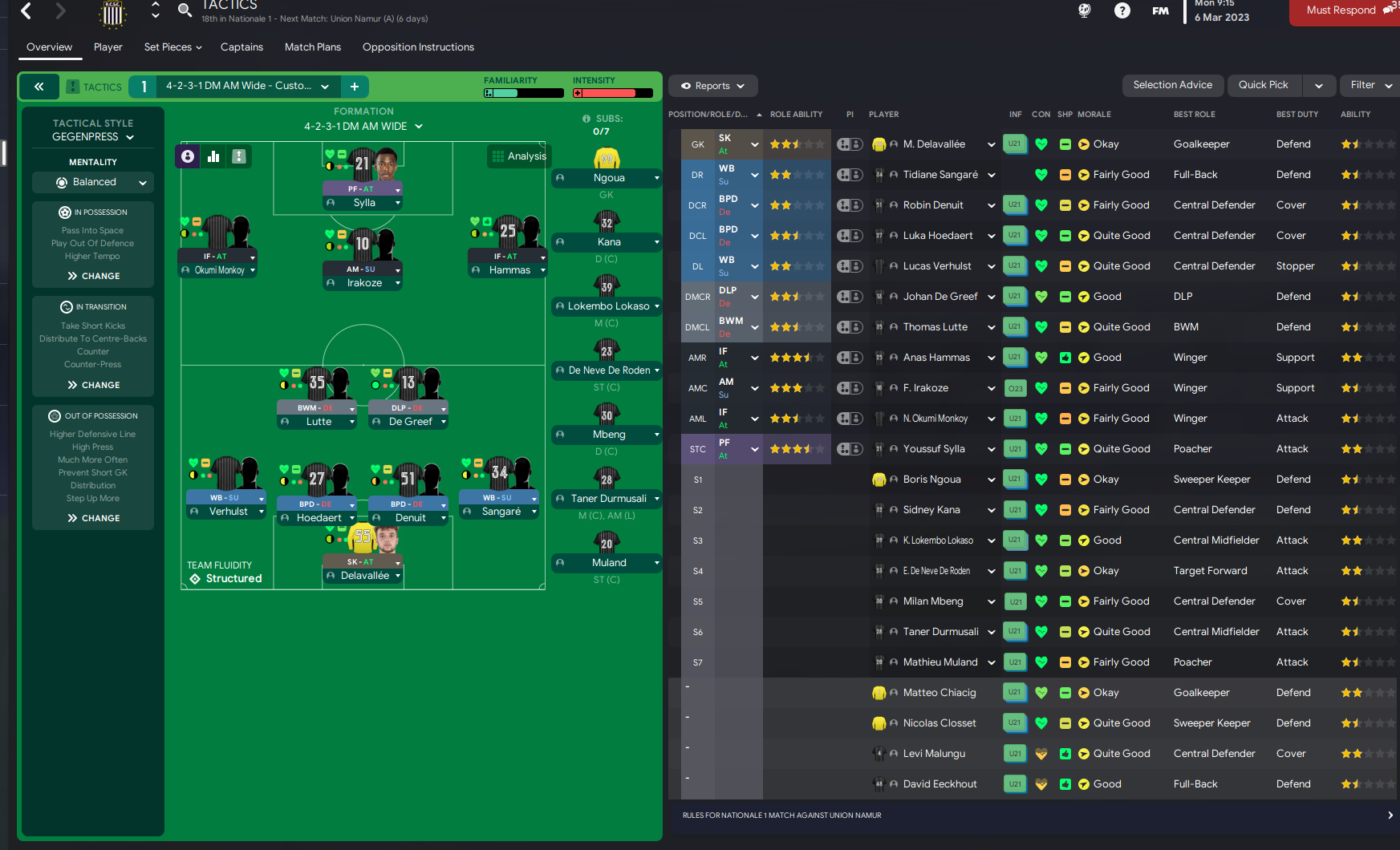
Guides for this formation
The tactical theory behind the 4-2-3-1 Wide: roles, instructions, and the trade-offs that decide whether the system holds up.
Player pairings
Midfield Pairs in 4-2-3-1 and 4-4-2
Double pivots and flat pairs in 4-2-3-1 and 4-4-2: when each pairing works, when it collapses, and the AMC unicorn that rescues both.
Read guide
Playing styles
Gegenpressing: A Full Guide
Klopp-style gegenpressing in FM, including squad profile, line-and-press pairing, sustainable workload, and the antipatterns to avoid.
Read guide