Uploaded Tactic
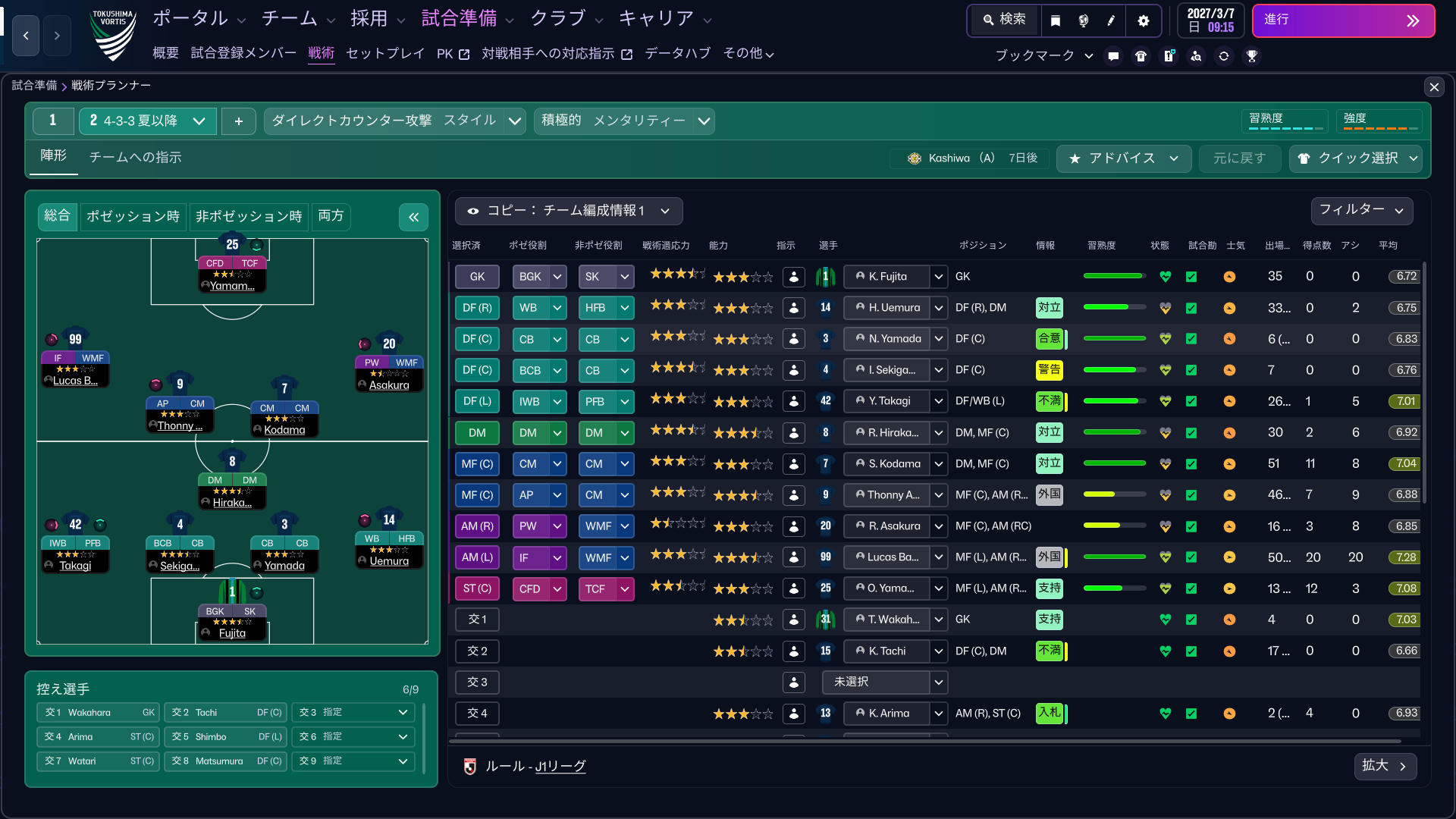
Formation & Style
Tactical Style:Direct Counter-Attack
Mentality:Positive
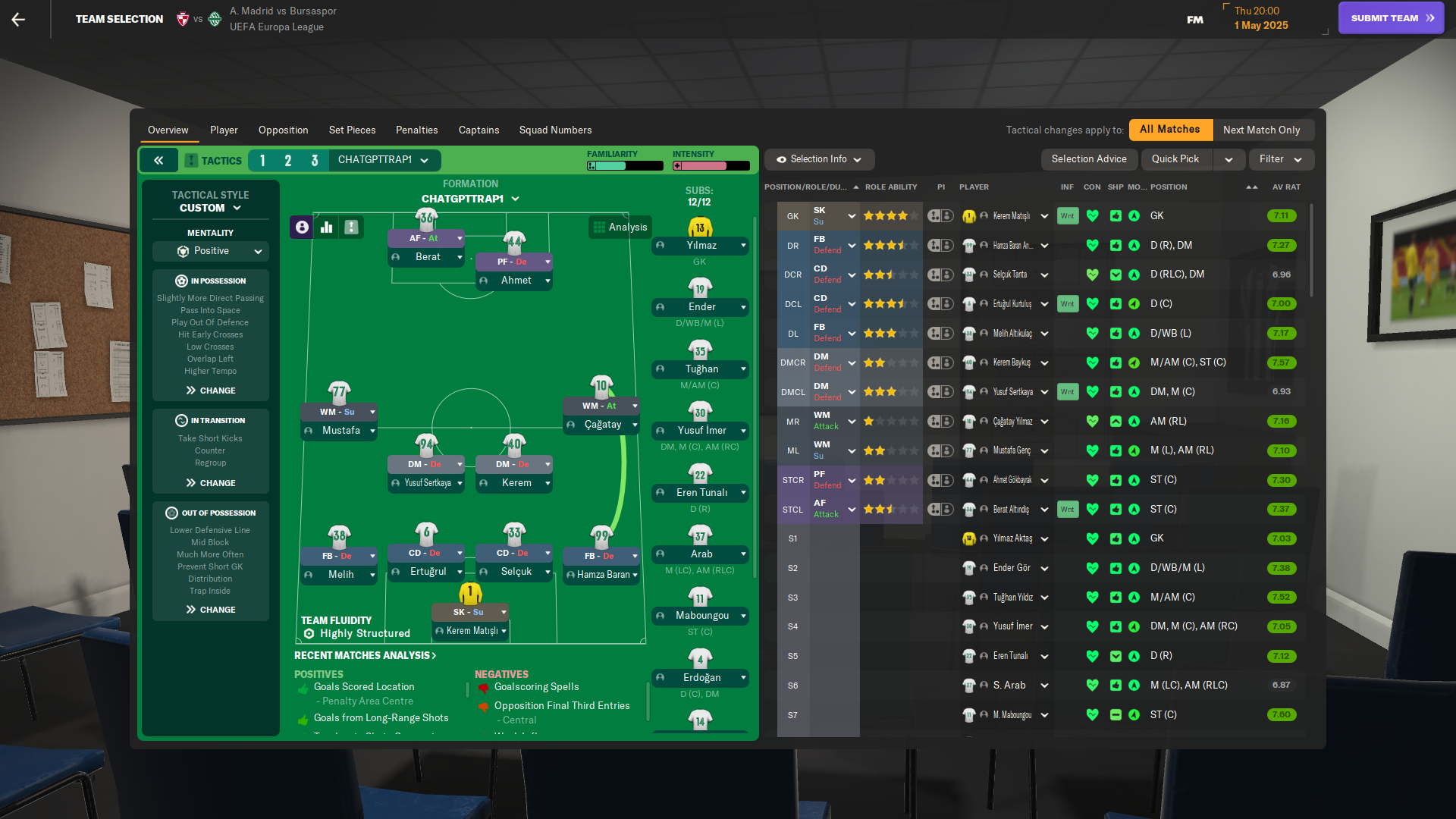
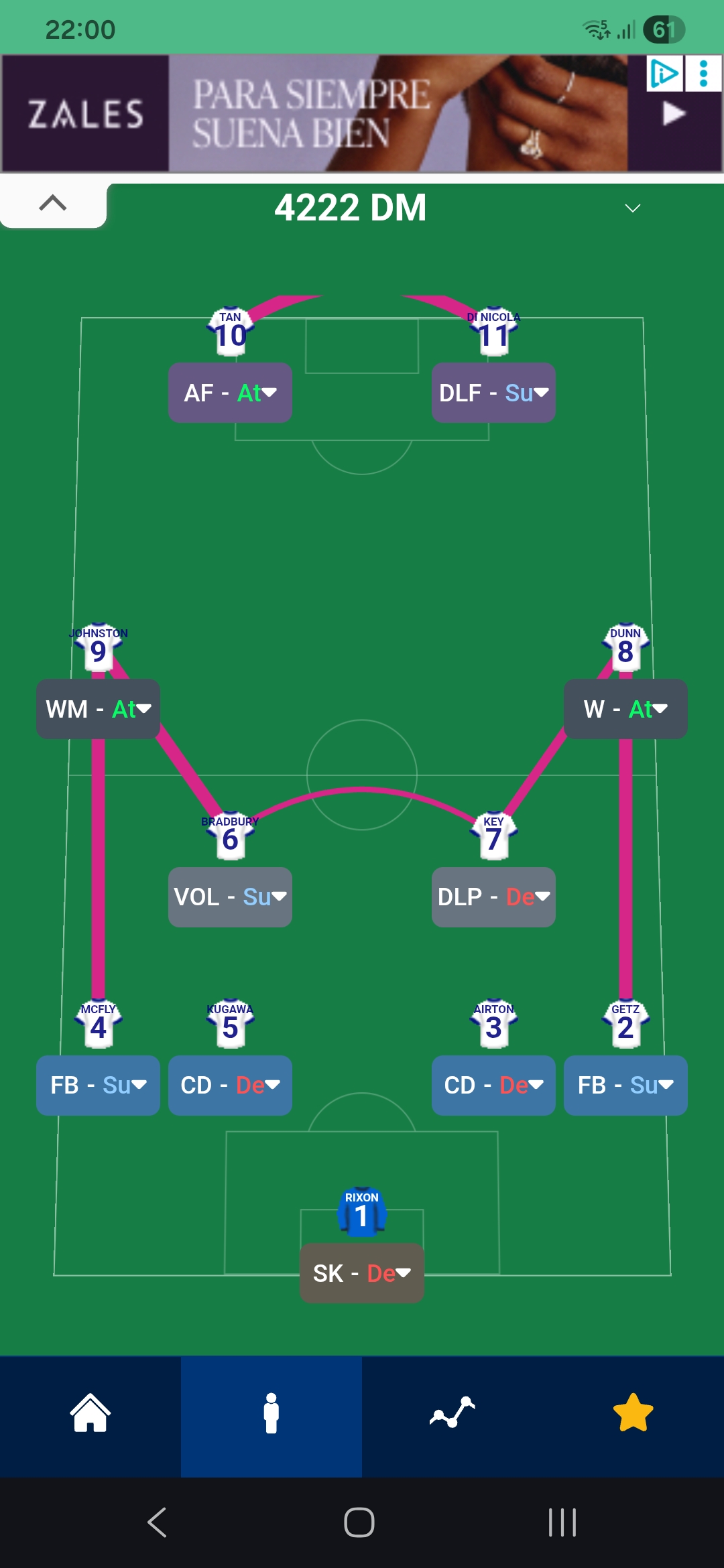
Formation:4-2-3-1 Wide
Team Fluidity:Structured
In Possession
Play Out from Defence
Be More Expressive
Focus Play Down the Wings
In Transition
Counter-Press
Counter
Out of Possession
Higher Line of Engagement
Higher Defensive Line
Prevent Short GK Distribution
Team Shape Without Ball
Shape:4-2
Description:Compact defensive shape with a solid double pivot in front of the back four.
Evidence:DM (Half Back) at [3,3] supports the defence while the back four remain organized.
Team Shape With Ball
Shape:4-3
Description:Wide attacking shape with emphasis on exploiting flanks and attacking through wide midfielders.
Evidence:Wide Midfielders (WM) at [6,1] and [6,5] provide width for the attacking trio.
Phase Description
Attacking Play
The team aims to build attacks through quick, vertical movements utilizing the width provided by the wing-backs.
Defensive Transition
Upon losing the ball, the team engages in a counter-press to regain possession quickly.
Main Focus
The priority is to quickly transition from defence to attack using the pace of the wing players.
Key Strengths
Utilization of Width
The wing-backs are set to attack, allowing for effective wing play.
Flexibility in Midfield
The combination of an advanced playmaker and supporting central midfielders provides creative options.
Strong Defensive Foundation
The presence of a Half Back and solid defensive roles offers good cover.
Conflicting Directions
High Counter Defensive Risk
The high line of engagement may leave gaps behind the defensive line during transitions.
Vulnerability to Central Attacks
With a focused wide play, central concedes may be exposed if midfielders don’t track back.
Inconsistent Player Roles
The use of different midfield roles may lead to confusion in pressure situations.
Tactical Suggestions
Consider Adjusting Defensive Lines
Lowering the defensive line may help mitigate risks associated with counter-attacks.
Increase Central Midfield Presence
A Ball-Winning Midfielder could add balance and cover central spaces effectively.
Enhance Pressing Strategy
Incorporating a more aggressive pressing philosophy could improve ball recovery.
Ask Questions About Your Lineup
Related Tactics
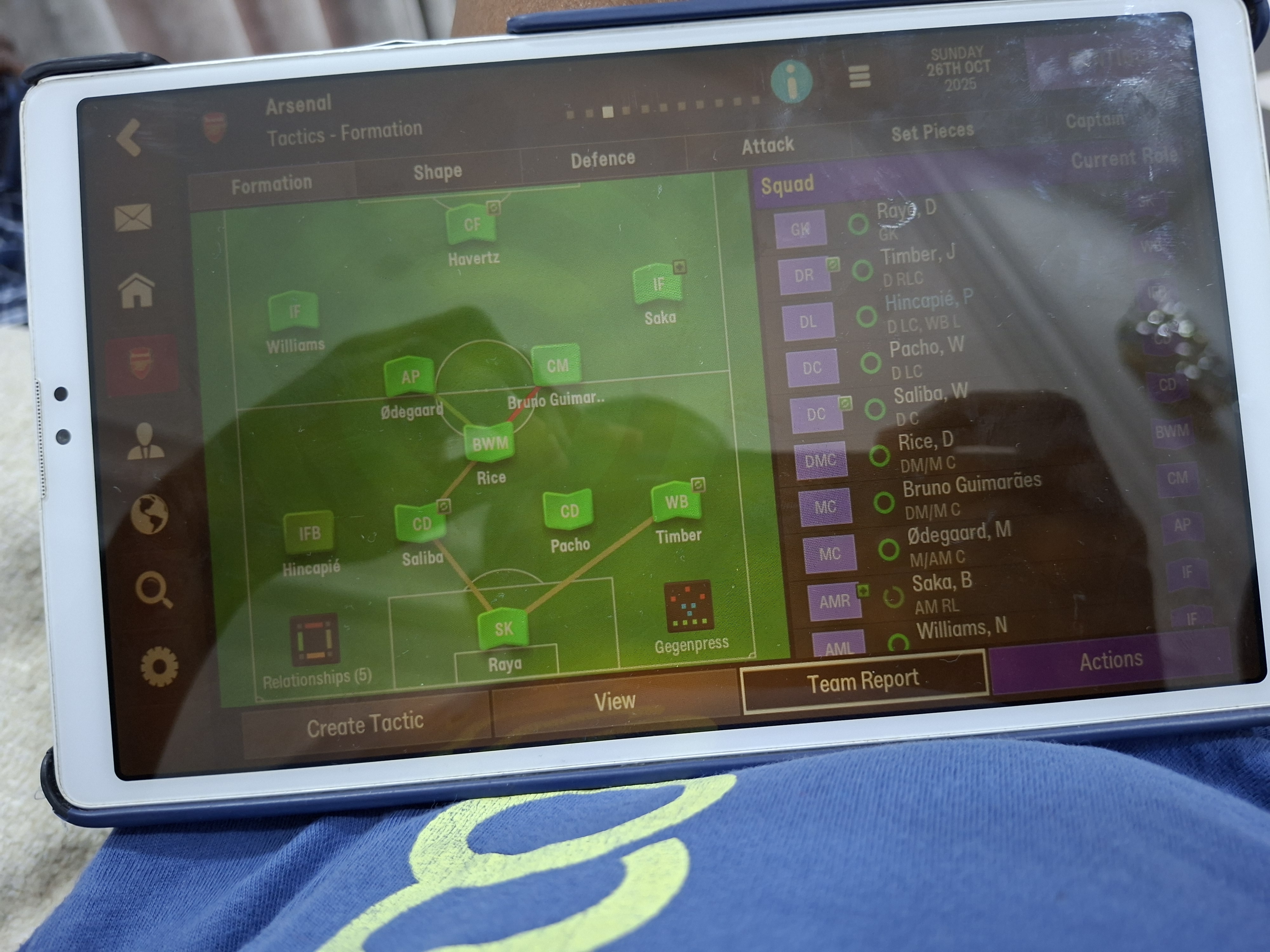
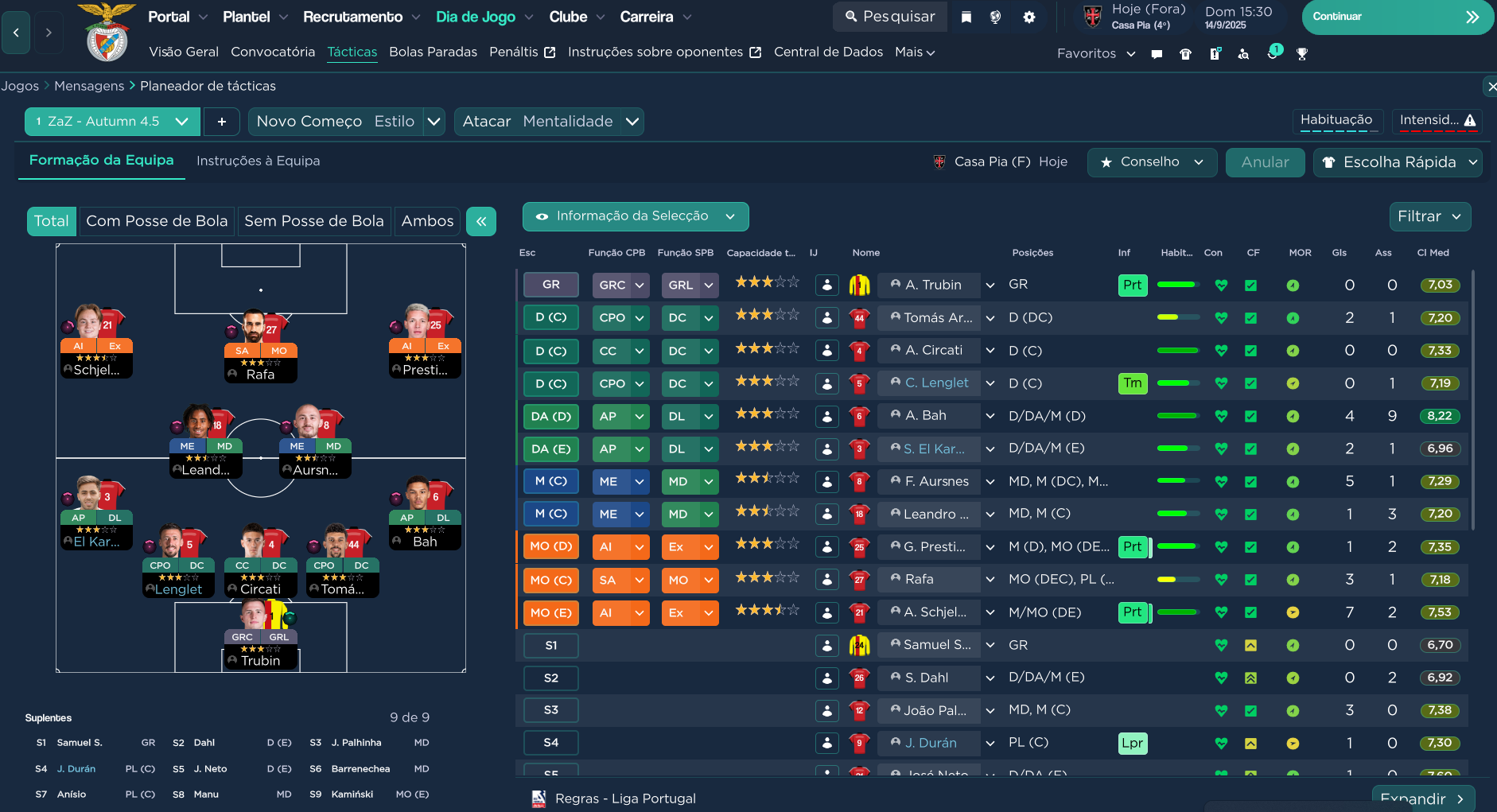
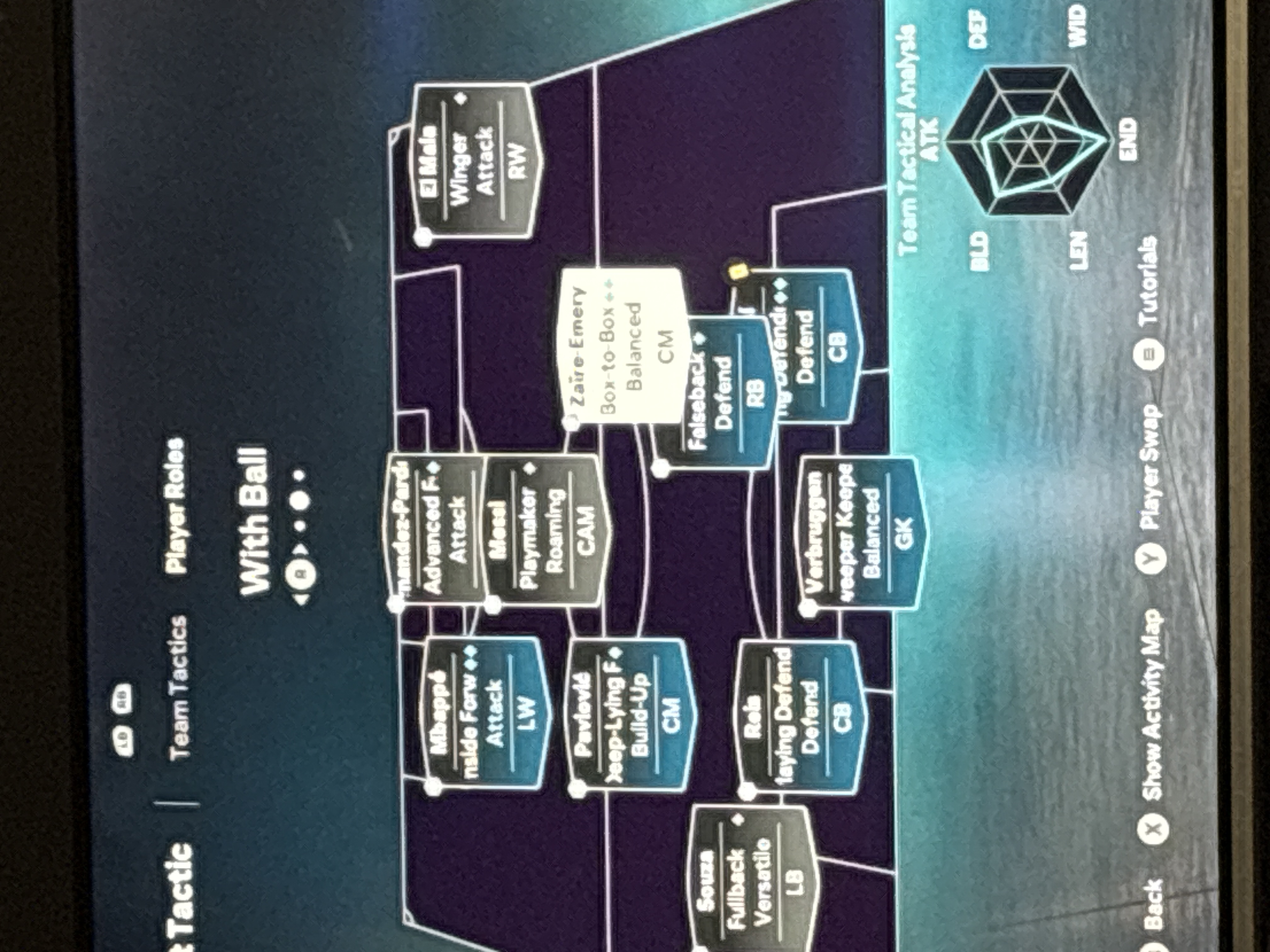
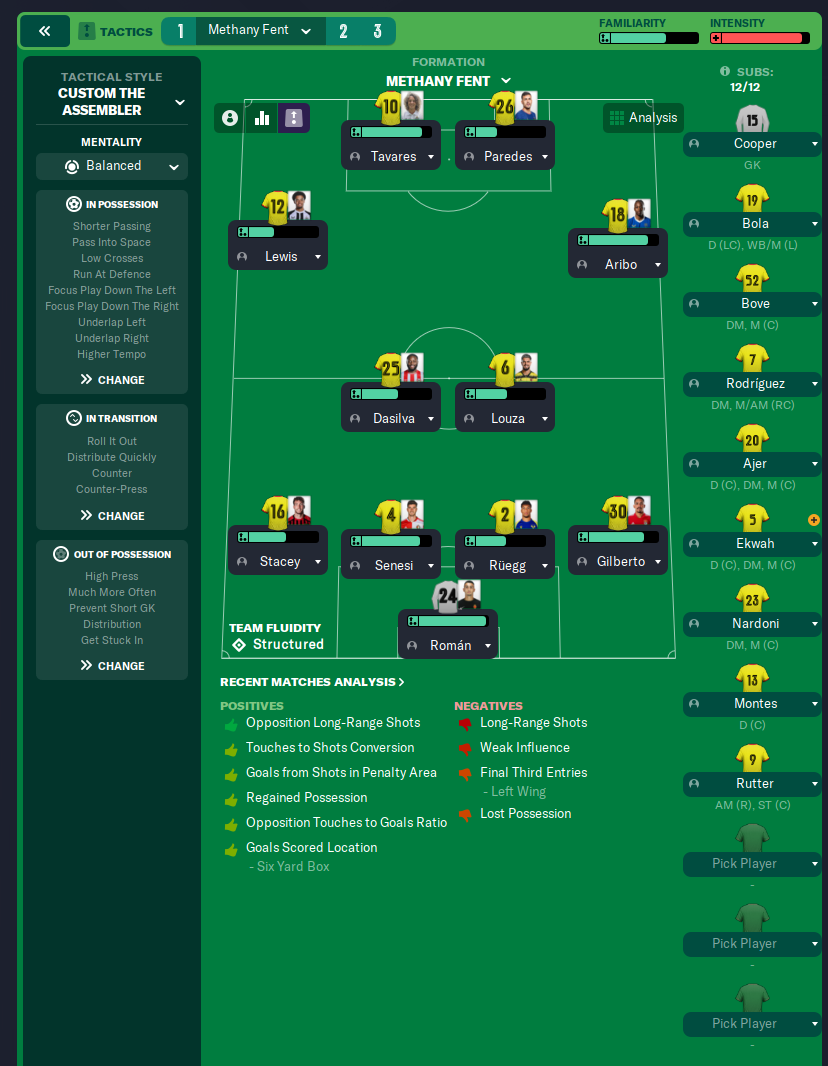
More Direct Counter-Attack tactics
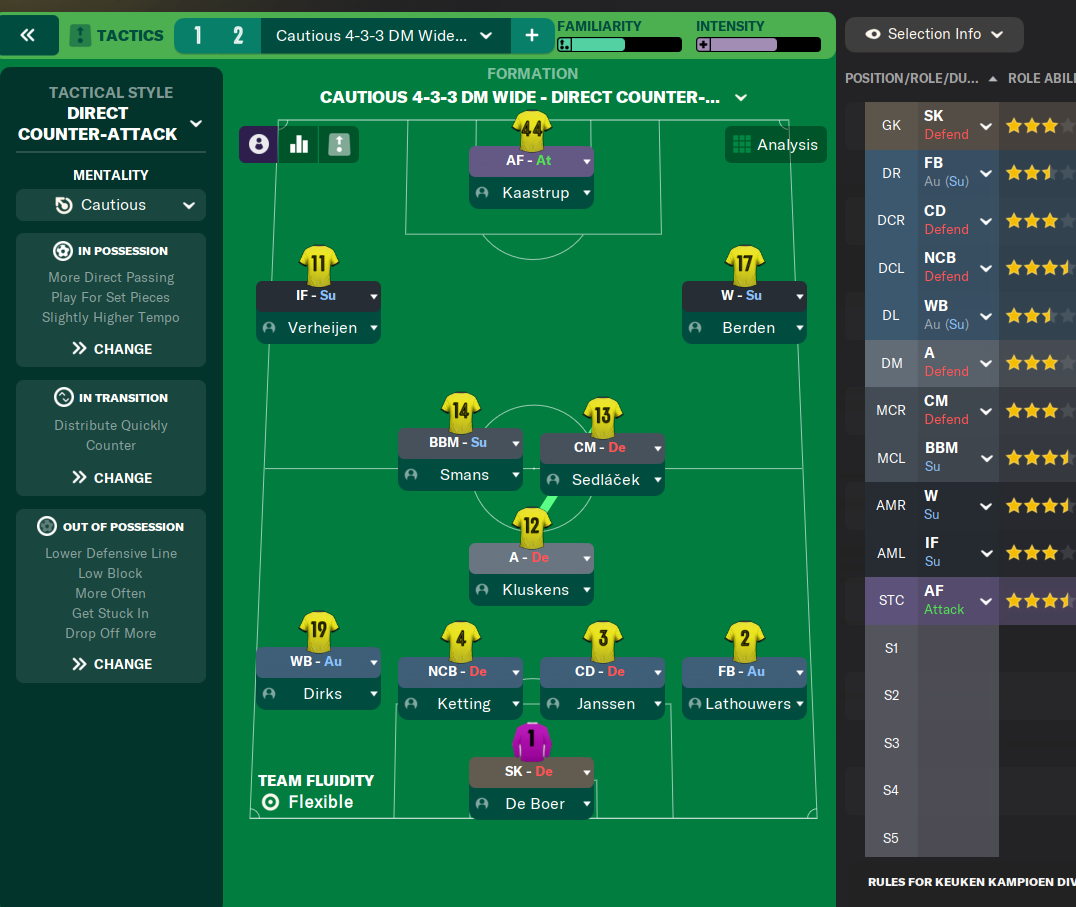
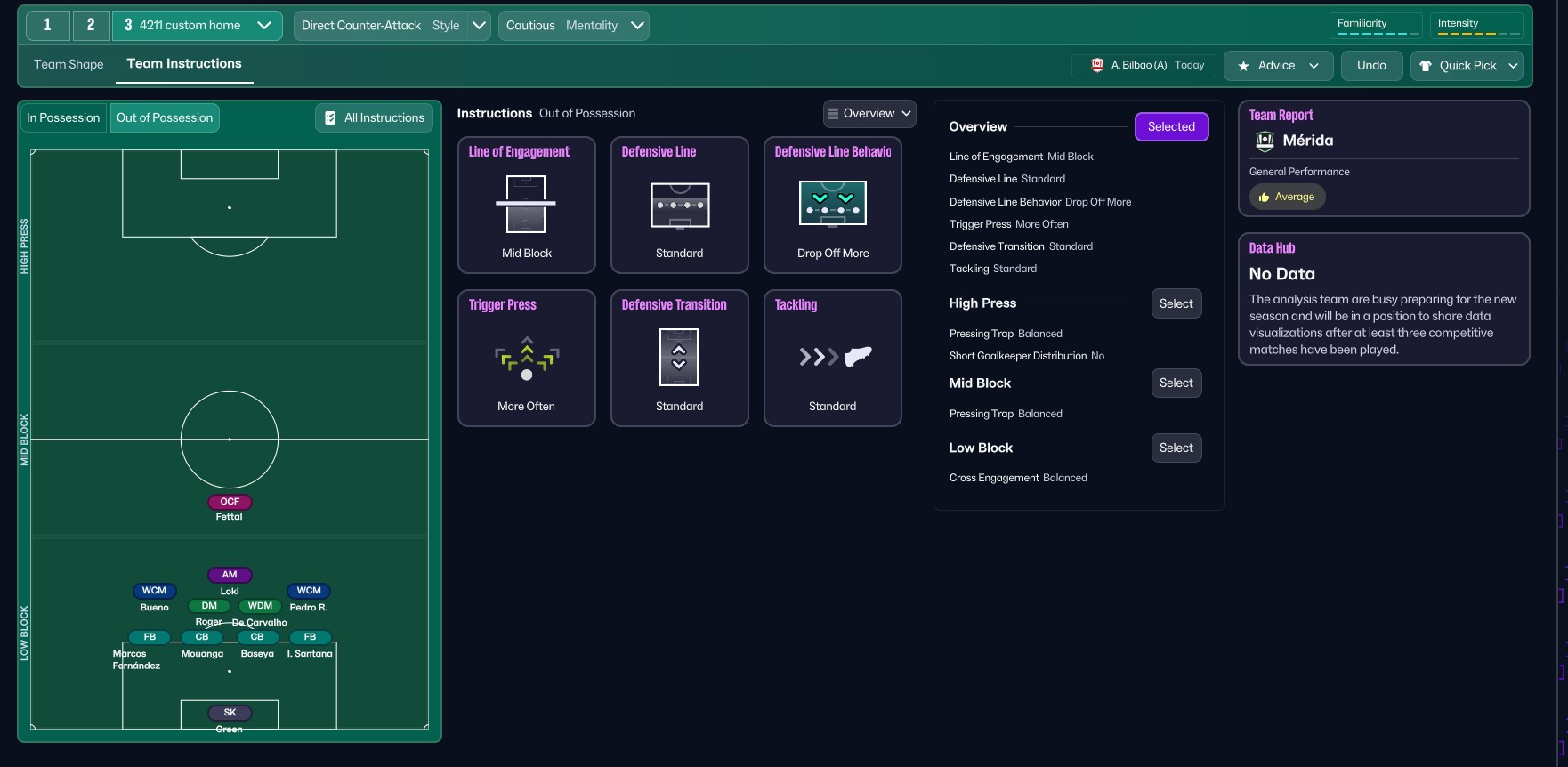
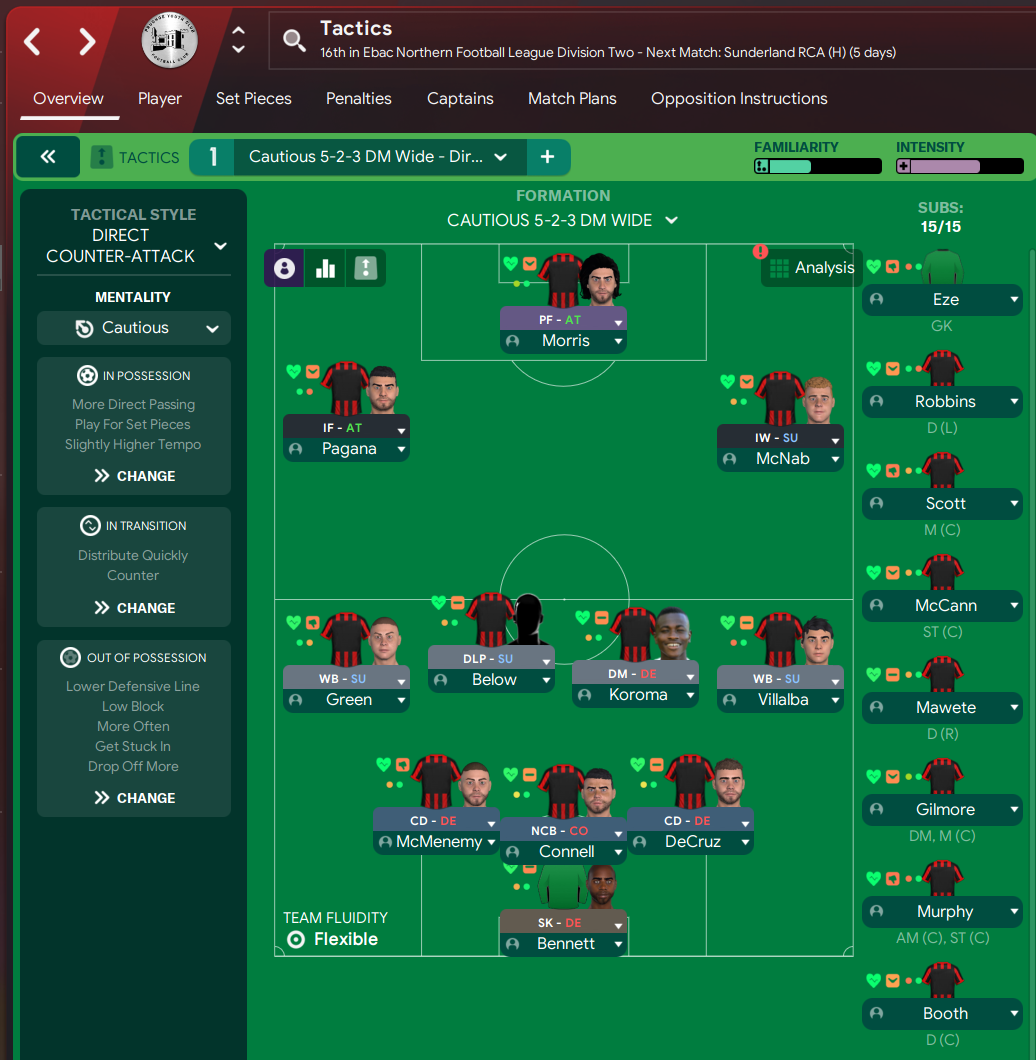
Guides for this formation
The tactical theory behind the 4-2-3-1 Wide: roles, instructions, and the trade-offs that decide whether the system holds up.
Player pairings
Midfield Pairs in 4-2-3-1 and 4-4-2
Double pivots and flat pairs in 4-2-3-1 and 4-4-2: when each pairing works, when it collapses, and the AMC unicorn that rescues both.
Read guide
Playing styles
Gegenpressing: A Full Guide
Klopp-style gegenpressing in FM, including squad profile, line-and-press pairing, sustainable workload, and the antipatterns to avoid.
Read guide