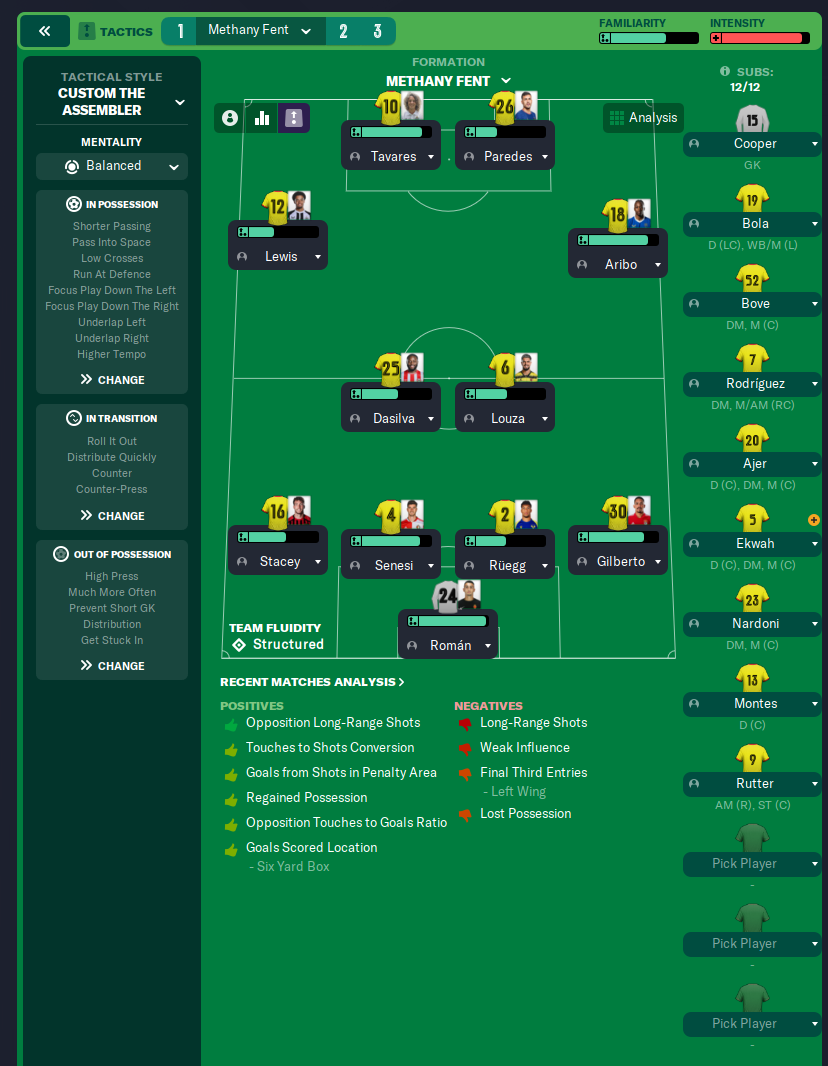
Uploaded Tactic
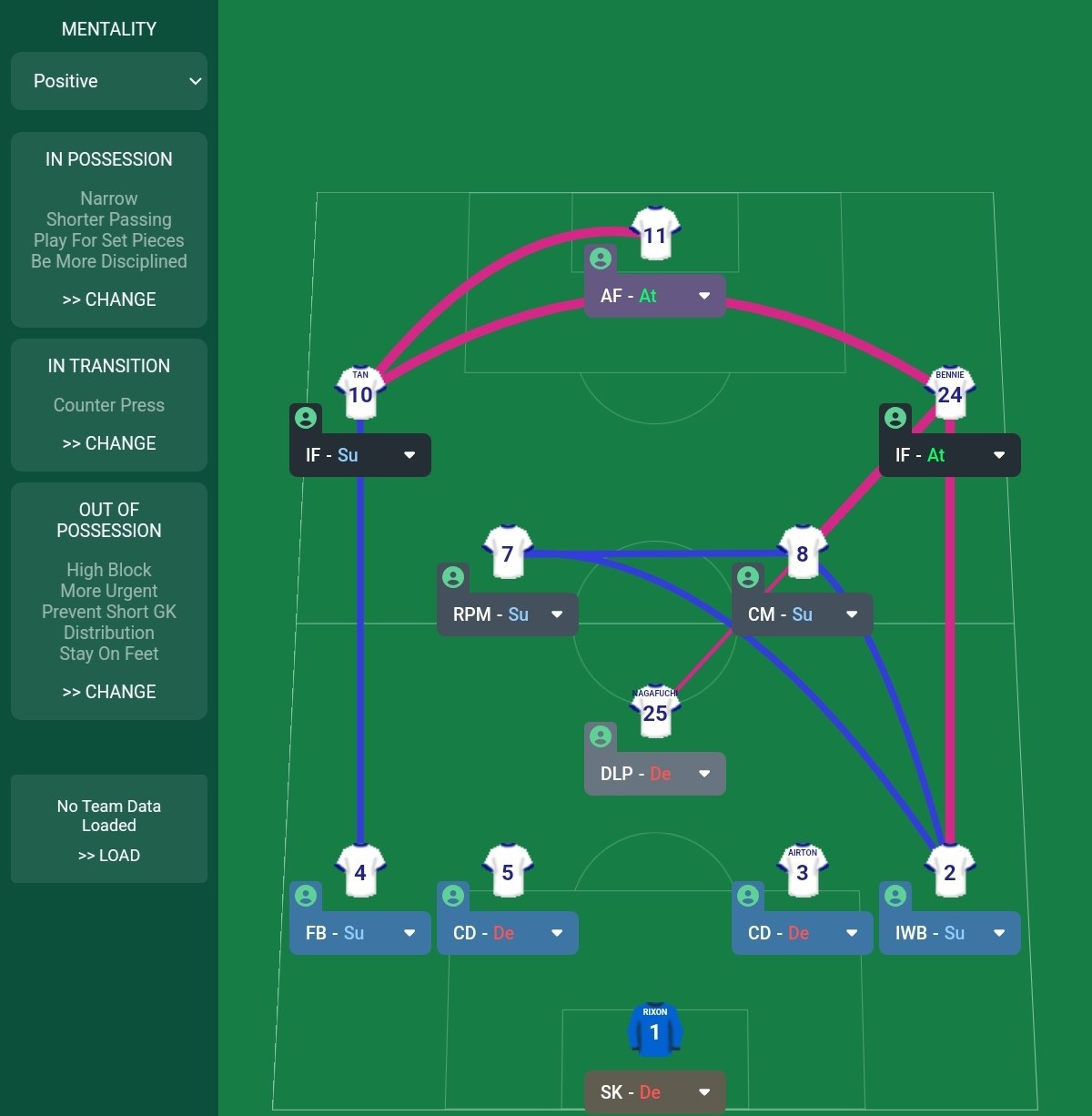
Formation & Style
Tactical Style:Balanced
Mentality:Positive
Formation:4-2-3-1 Wide
Team Fluidity:Structured
In Possession
Narrow
Shorter Passing
Play For Set Pieces
Be More Disciplined
In Transition
Counter Press
Out of Possession
High Block
More Urgent
Prevent Short GK Distribution
Stay On Feet
Team Shape Without Ball
Shape:High Block
Description:Shapes up to press opponents high up the pitch, restricting their passing options.
Evidence:Utilizes 'High Block' and 'More Urgent' in out of possession.
Team Shape With Ball
Shape:Narrow Width
Description:Focuses on central passing lanes with inside forwards cutting in from wide positions.
Evidence:Narrow philosophy in possession, with inside forwards positioned to exploit central areas.
Phase Description
Attacking Play
Utilizing a narrow shape to exploit central spaces with support from inside forwards and playmaker.
Defensive Transition
Immediate counter press on losing possession to regain the ball quickly.
Main Focus
Control of the midfield with dynamic movement from forward players.
Key Strengths
Dynamic Forward Movement
Two inside forwards and one advanced forward create multiple avenues for attack and stretch the opponent.
Midfield Control
The dual pivot system with a DLP provides stability and control, allowing for fluid transitions.
High Pressing Strategy
The emphasis on counter-pressing will disrupt the opponent’s build-up play.
Conflicting Directions
Narrow vs. Width
The tactical setup may struggle against teams utilizing width to exploit the narrow shape.
High Block Limitations
High pressing can leave gaps at the back if the opponent manages to bypass the press quickly.
Dependence on Full-Backs
The reliance on the full-backs to provide width may be limited if they are pinned back by opposing wingers.
Tactical Suggestions
Consider Wider Shape
Employing wingers could help stretch the play and exploit spaces left by opponents.
Adjust Pressing Intensity
Tuning down pressing intensity might help maintain defensive shape against counter-attacks.
Rotate Midfield Roles
Rotating the attacking roles among midfielders can confuse opposition markers and create better attacking patterns.
Ask Questions About Your Lineup
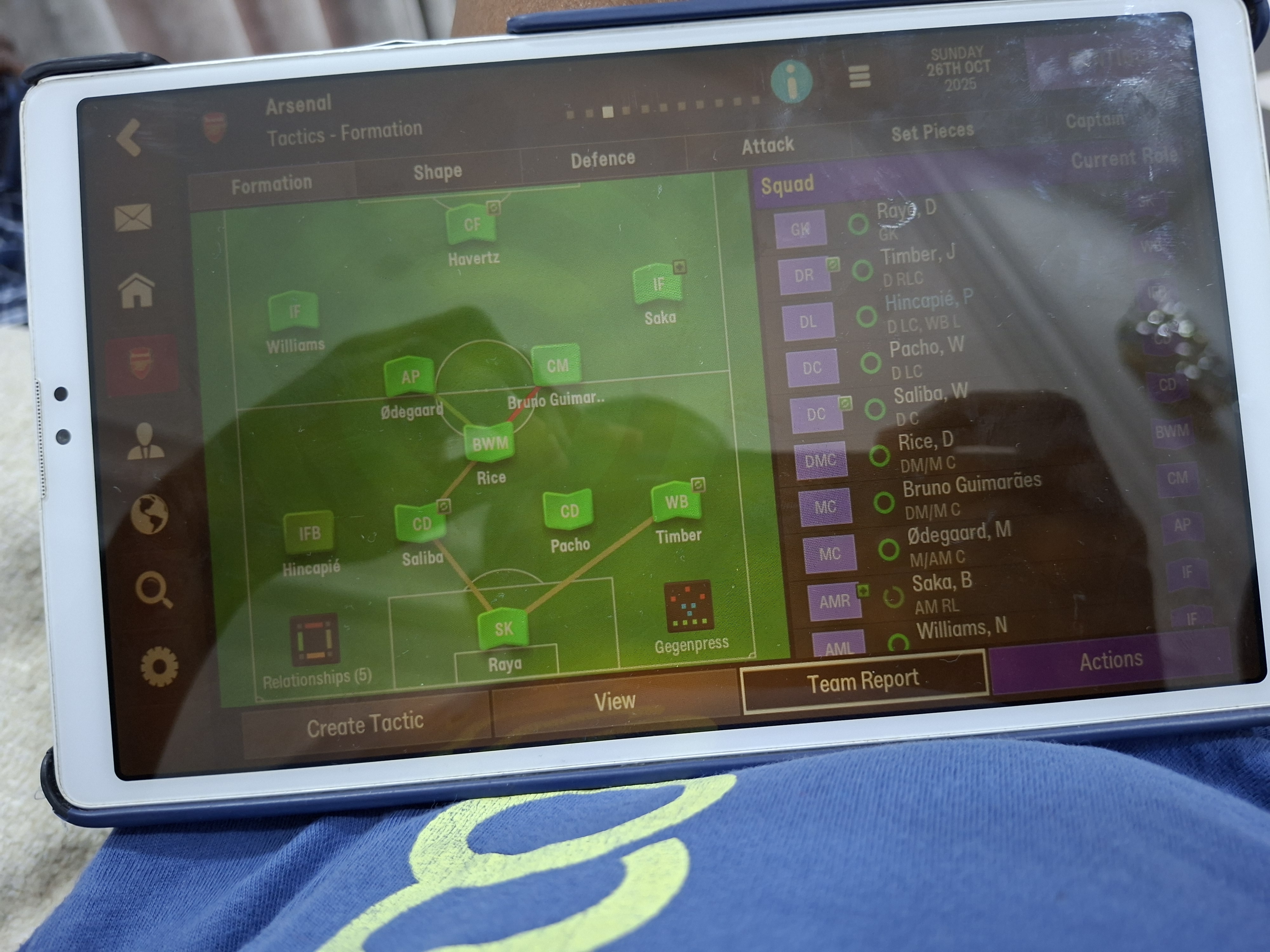
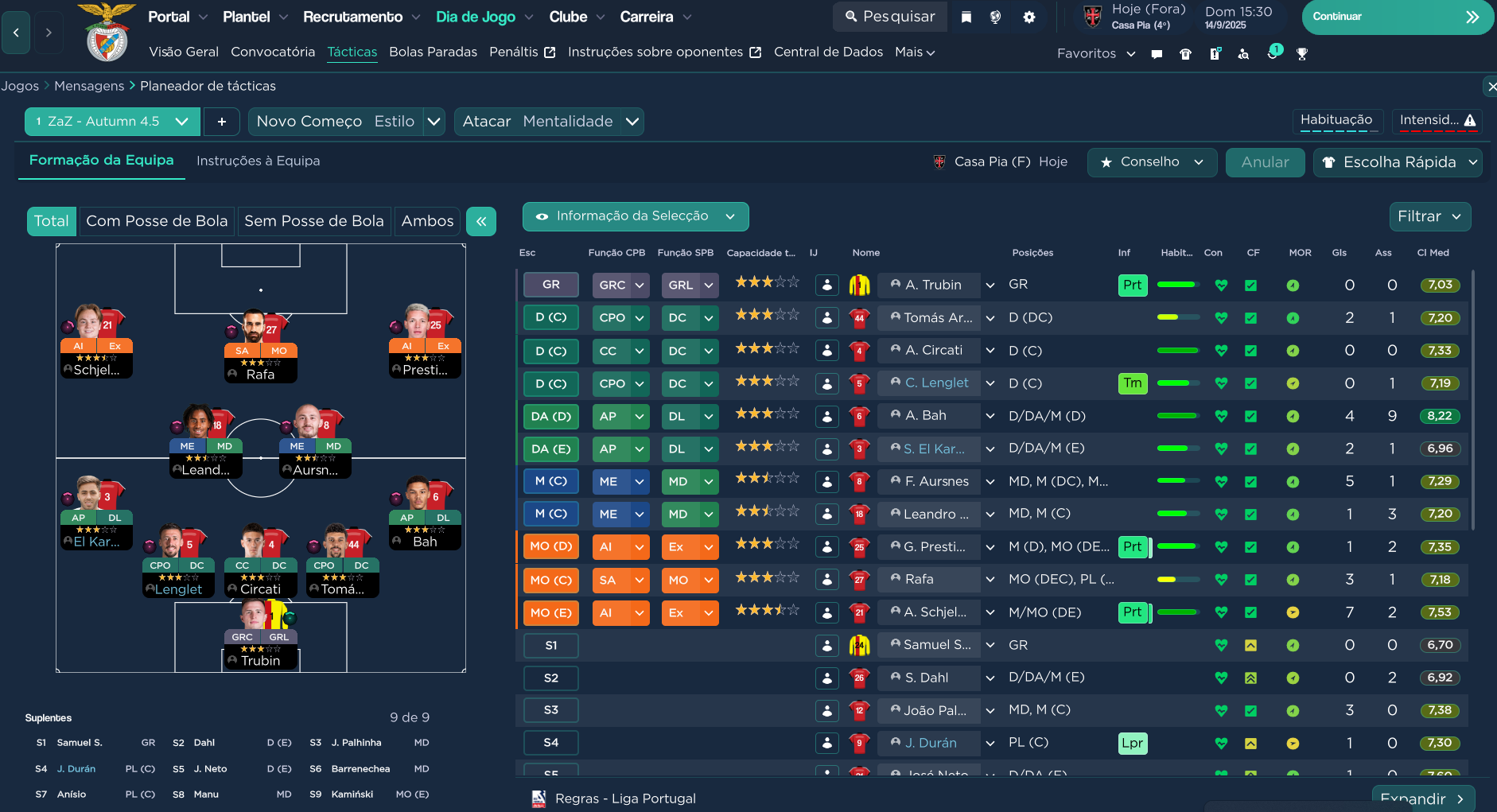
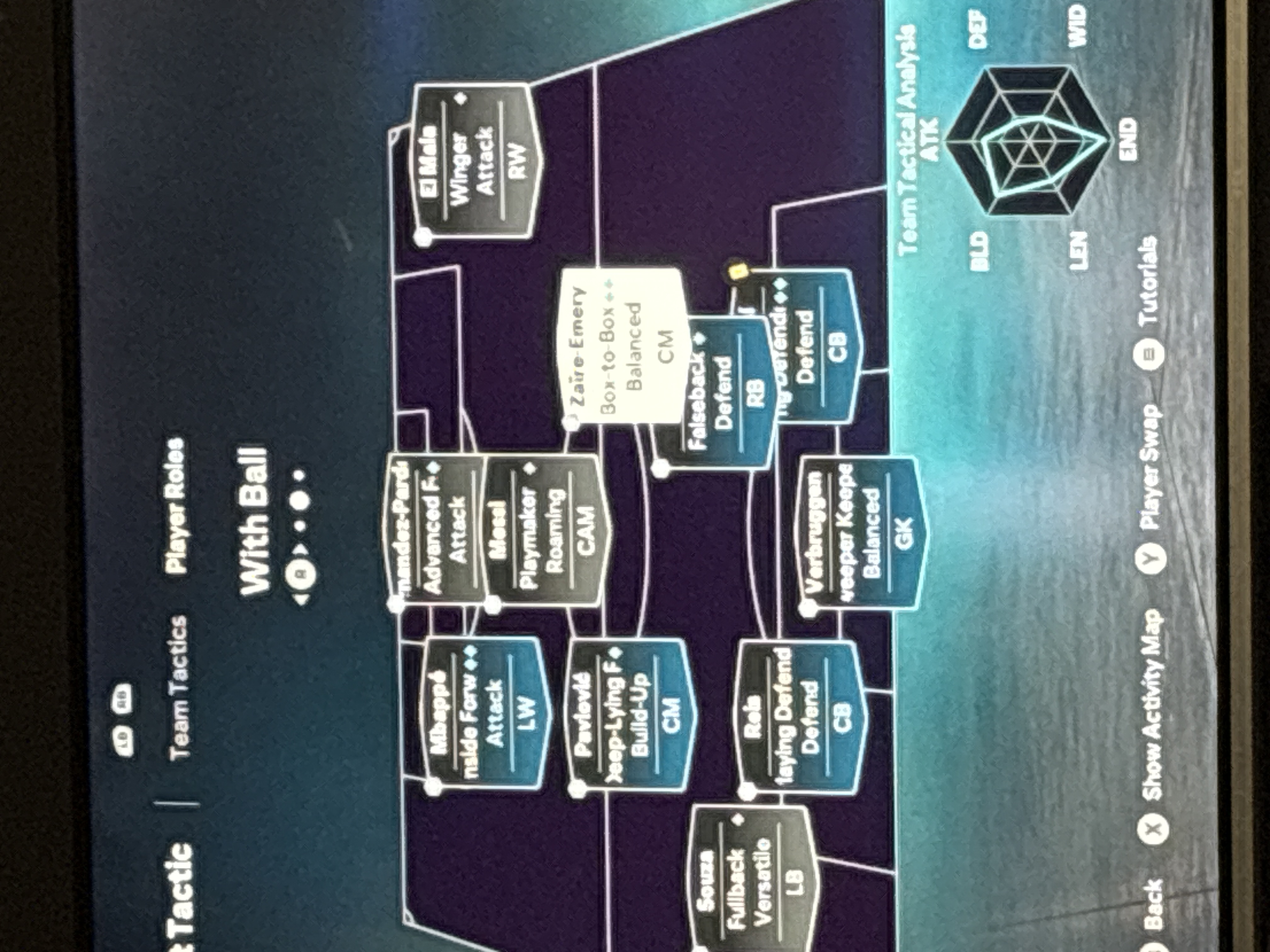
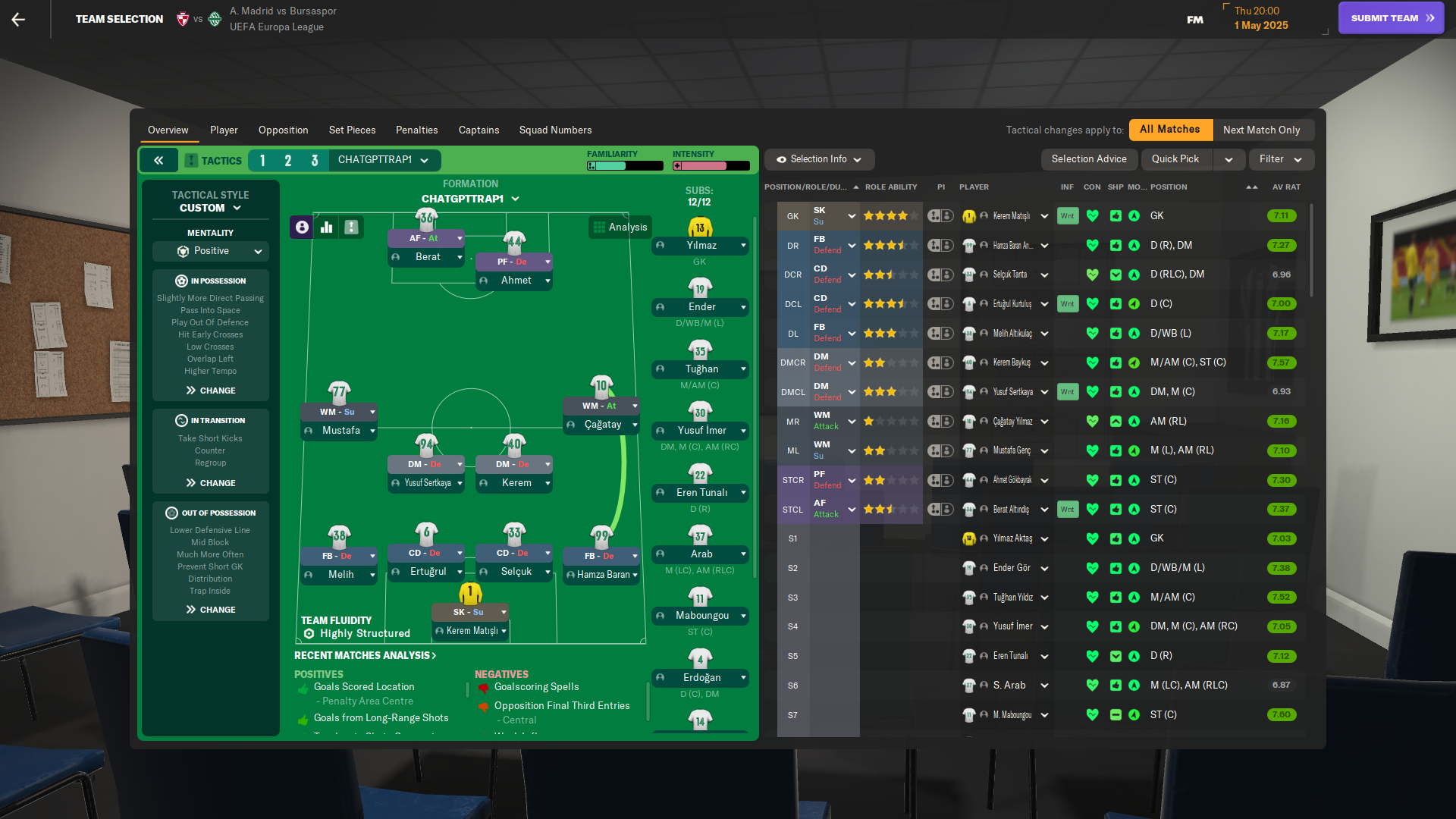
Related Tactics
Guides for this formation
The tactical theory behind the 4-2-3-1 Wide: roles, instructions, and the trade-offs that decide whether the system holds up.
Player pairings
Midfield Pairs in 4-2-3-1 and 4-4-2
Double pivots and flat pairs in 4-2-3-1 and 4-4-2: when each pairing works, when it collapses, and the AMC unicorn that rescues both.
Read guide
Playing styles
Gegenpressing: A Full Guide
Klopp-style gegenpressing in FM, including squad profile, line-and-press pairing, sustainable workload, and the antipatterns to avoid.
Read guide