Uploaded Tactic
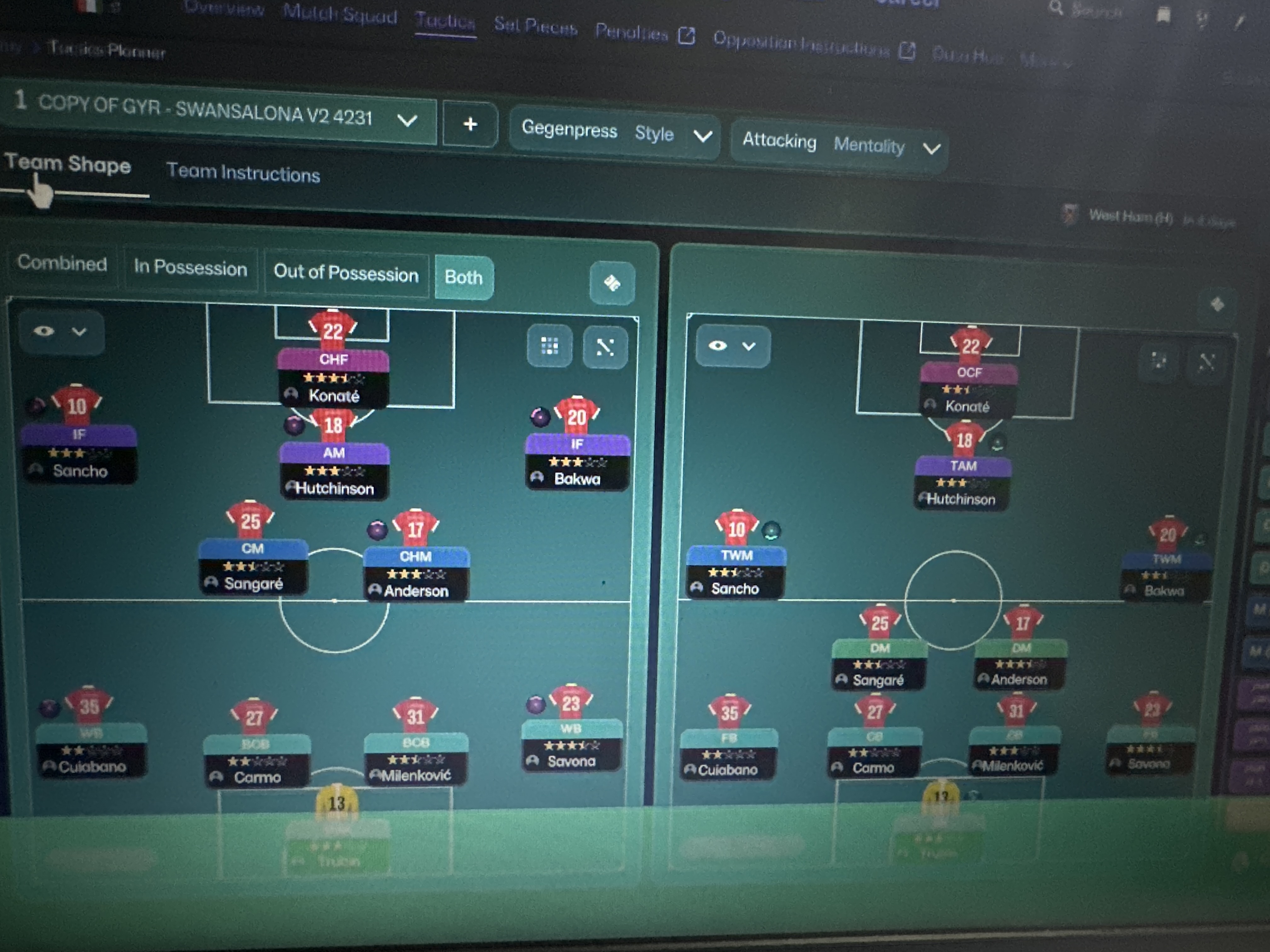
Formation & Style
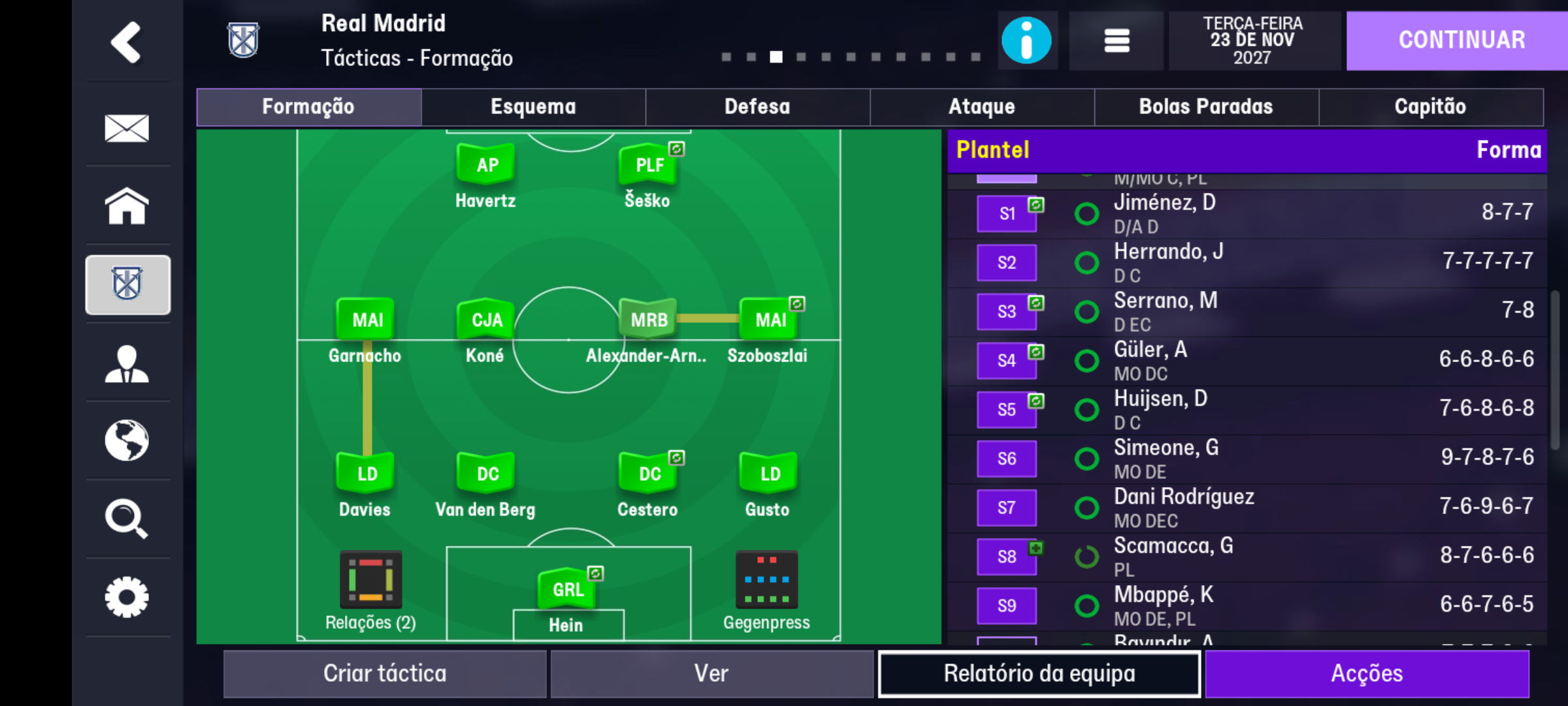
Tactical Style:Gegenpress
Mentality:Attacking
Formation:4-2-3-1
Team Fluidity:Structured
In Possession
Work Ball Into Box
Be More Expressive
Pass Into Space
In Transition
Counter-Press
Counter
Out of Possession
Higher Defensive Line
Higher Line of Engagement
Prevent Short GK Distribution
Team Shape Without Ball
Shape:Flat Four
Description:A consistent defensive alignment that can quickly transition to a pressing setup.
Evidence:BPDs at [2,2] and [2,3] provide a firm foundation.
Team Shape With Ball
Shape:Flexible 4-2-3-1
Description:The shape allows for variation in attack dependent on opponent's weaknesses.
Evidence:TAM at [4,3] supports inside forwards at [5,2] and [5,4].
Phase Description
Attacking Play
Quick transitions utilizing wide players and a central attacking midfielder to penetrate defenses.
Defensive Transition
Immediate pressure on opponents to regain possession through counter-pressing.
Main Focus
Creating overloads in wide areas and through central offensive movements.
Key Strengths
Dynamic Attack
Utilizes multiple attacking outlets (inside forwards and an advanced midfielder) to create a multifaceted threat.
Strong Midfield Control
Dual midfield pivot offers both defensive protection and playmaking abilities.
Effective Pressing
A structured pressing approach can cause opponent errors high up the field.
Conflicting Directions
Vulnerability to Counter Attacks
The high defensive line may expose the back four if the press fails.
Overreliance on Width
Tactic heavily focused on wide play may become predictable.
Midfield Overload
Against teams with a stronger midfield, the double pivot may struggle for control.
Tactical Suggestions
Consider Adjusting Defensive Line
Lowering the defensive line could mitigate vulnerabilities to quick counters.
Incorporate Alternative Attacking Options
Adding a striker with a physical presence could add depth to attacking strategy.
Explore Tactical Variations
Adapting against stronger sides by shifting to a 4-3-3 might improve midfield presence.
Ask Questions About Your Lineup
Related Tactics
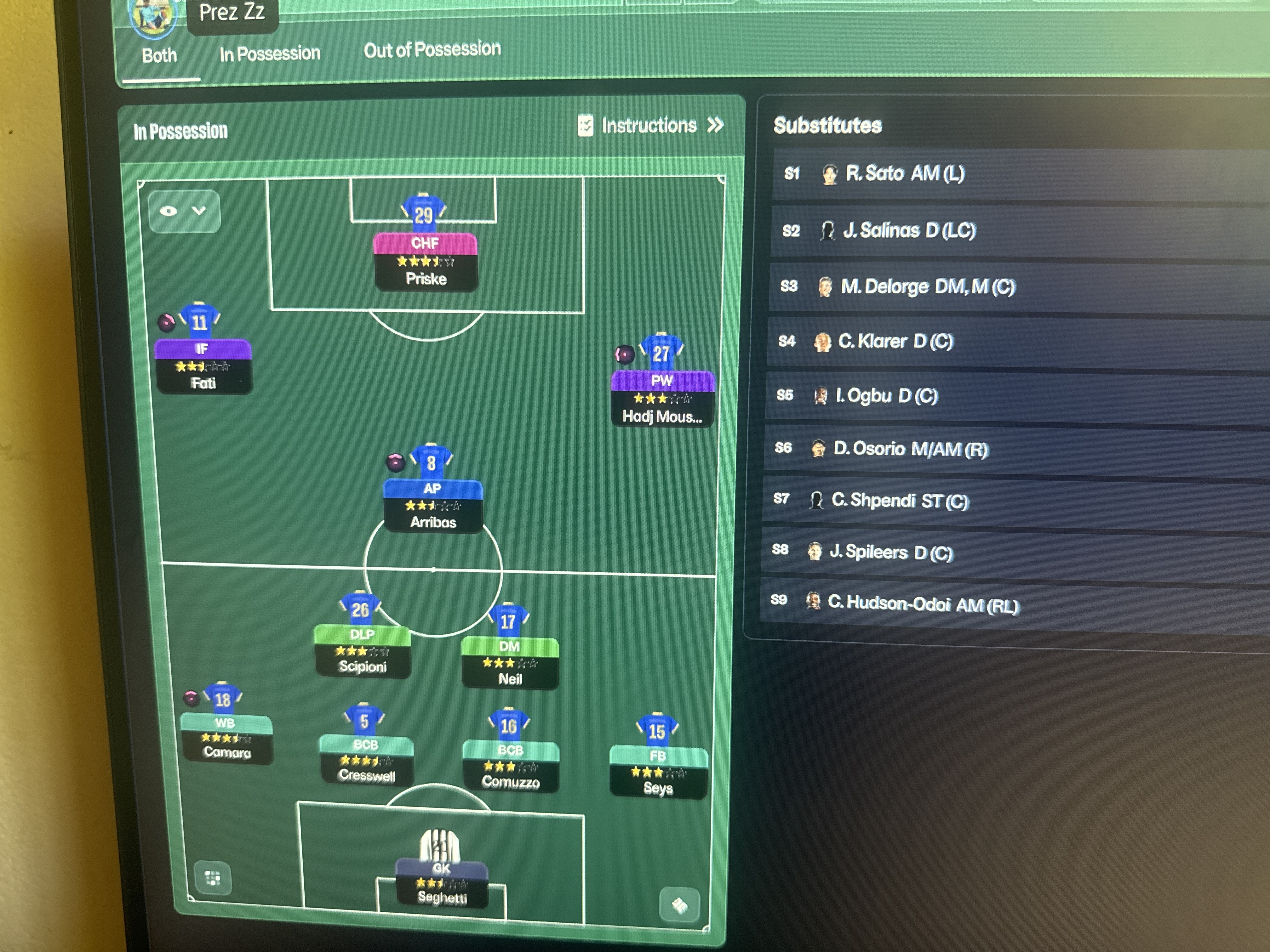
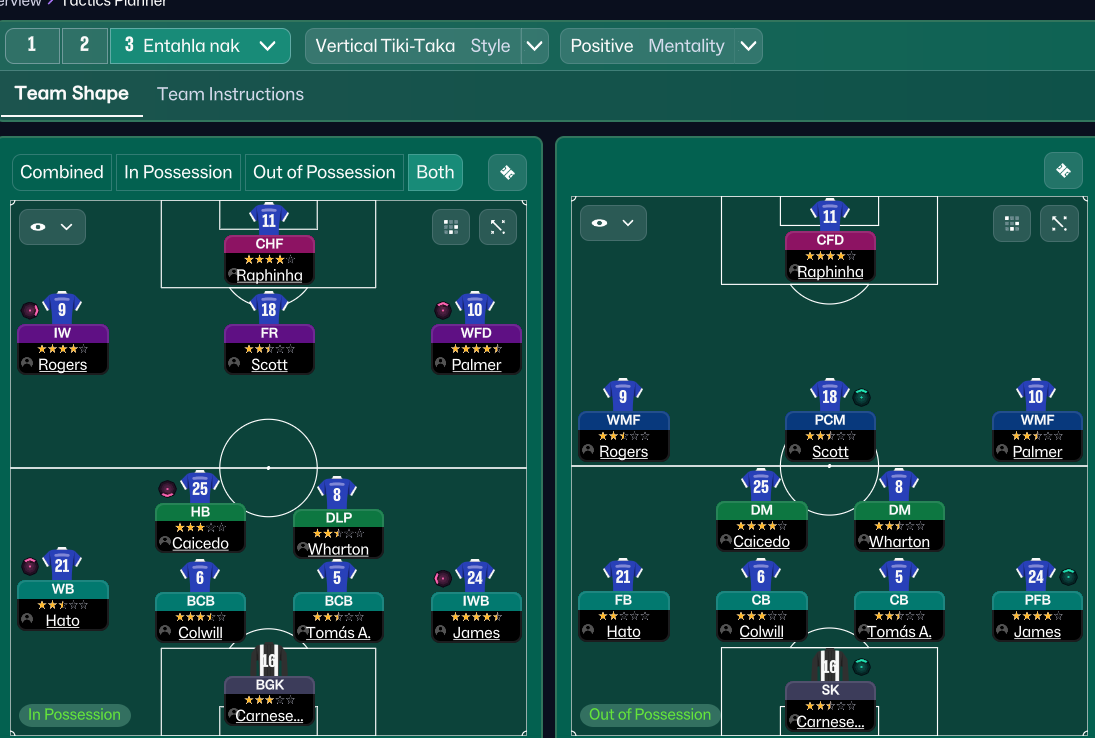
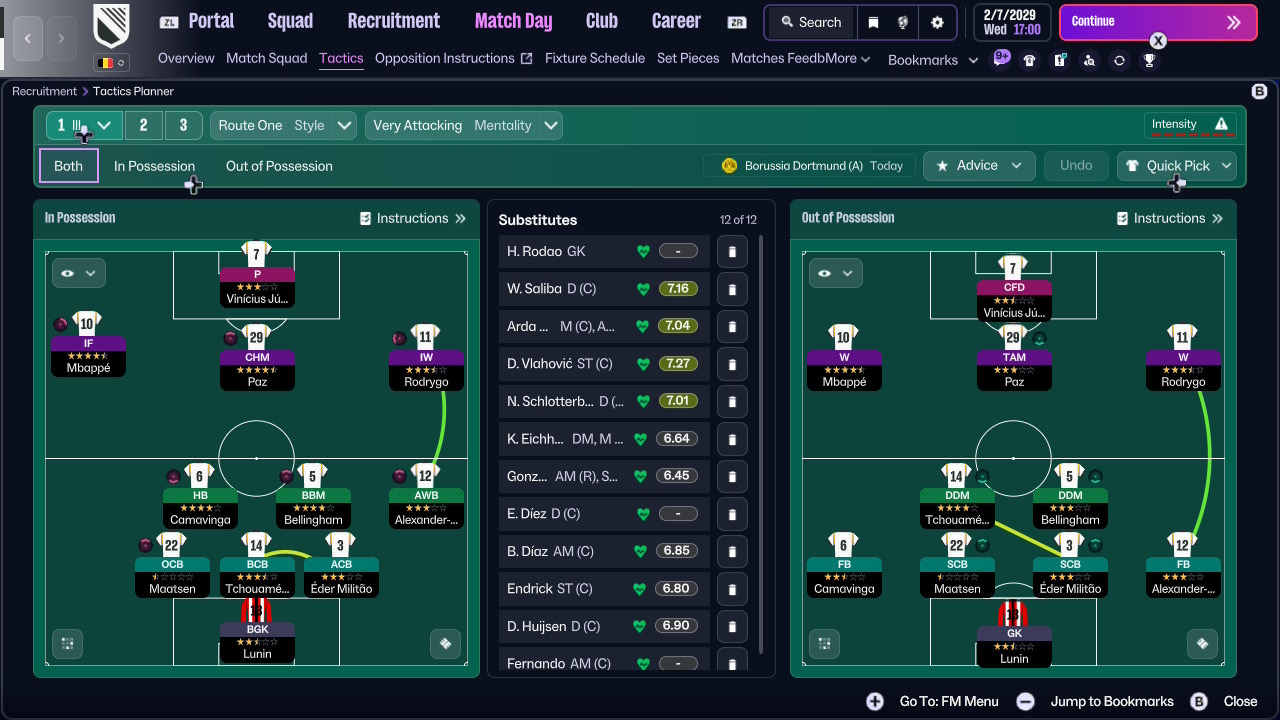
More Gegenpress tactics
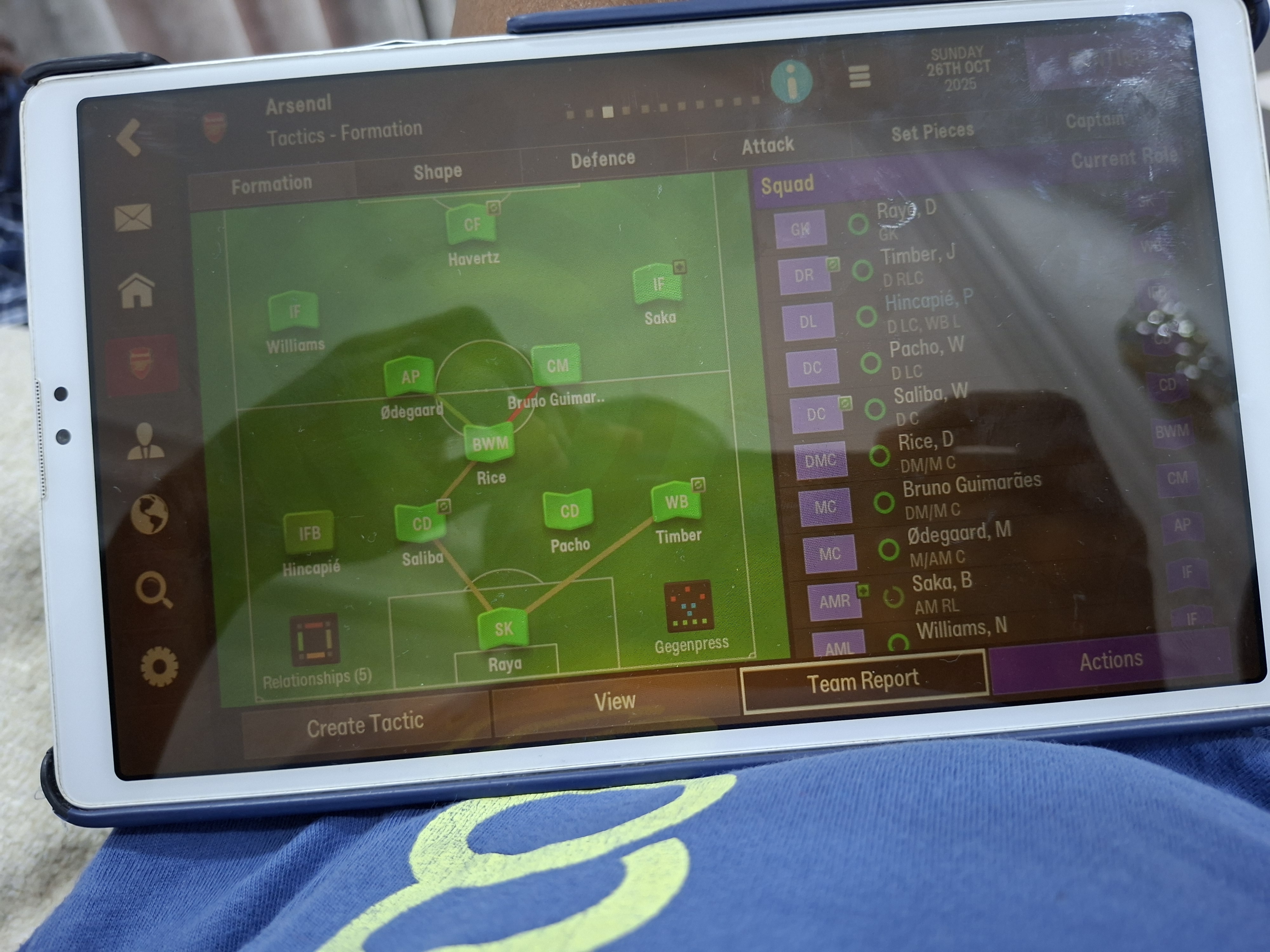
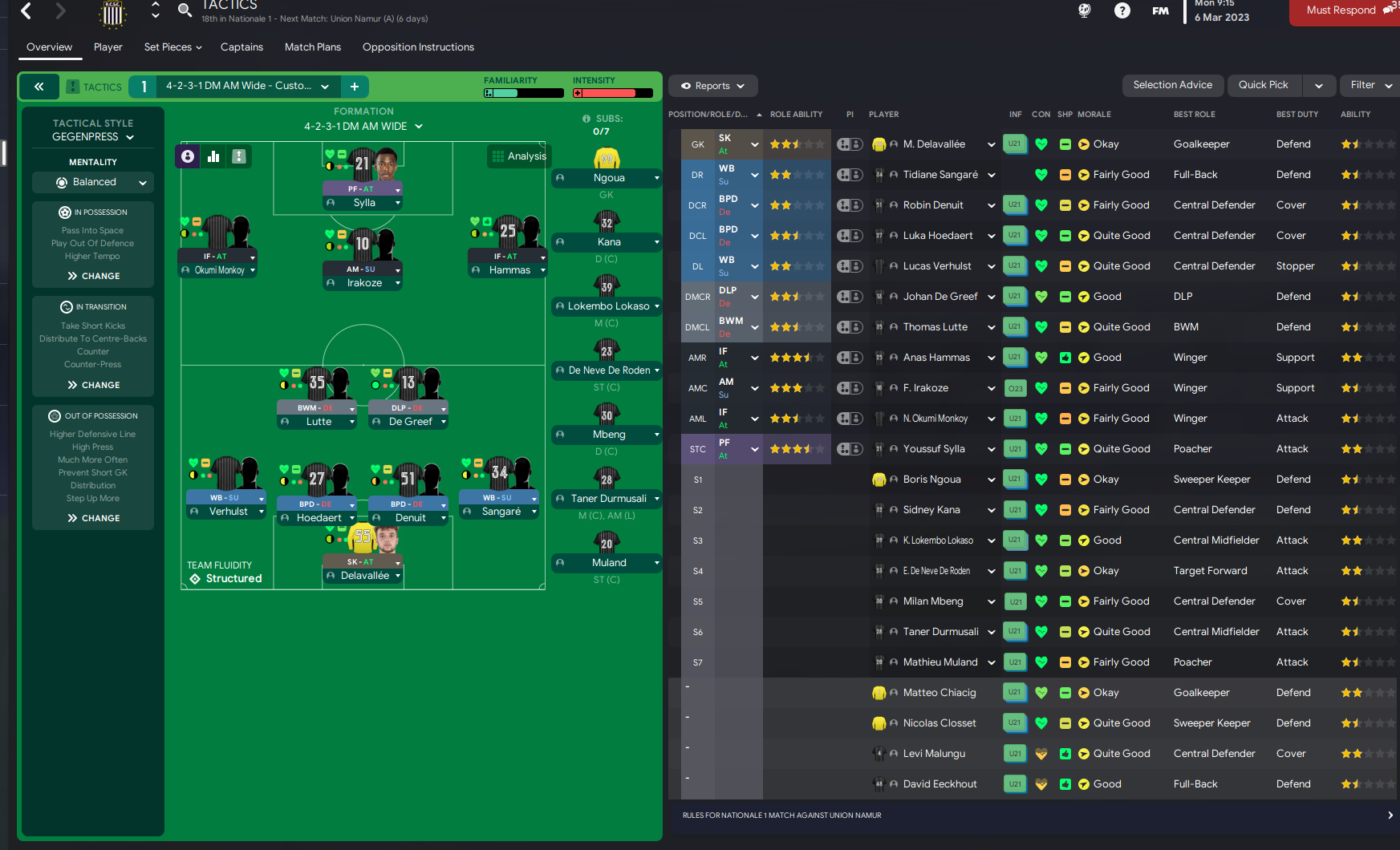
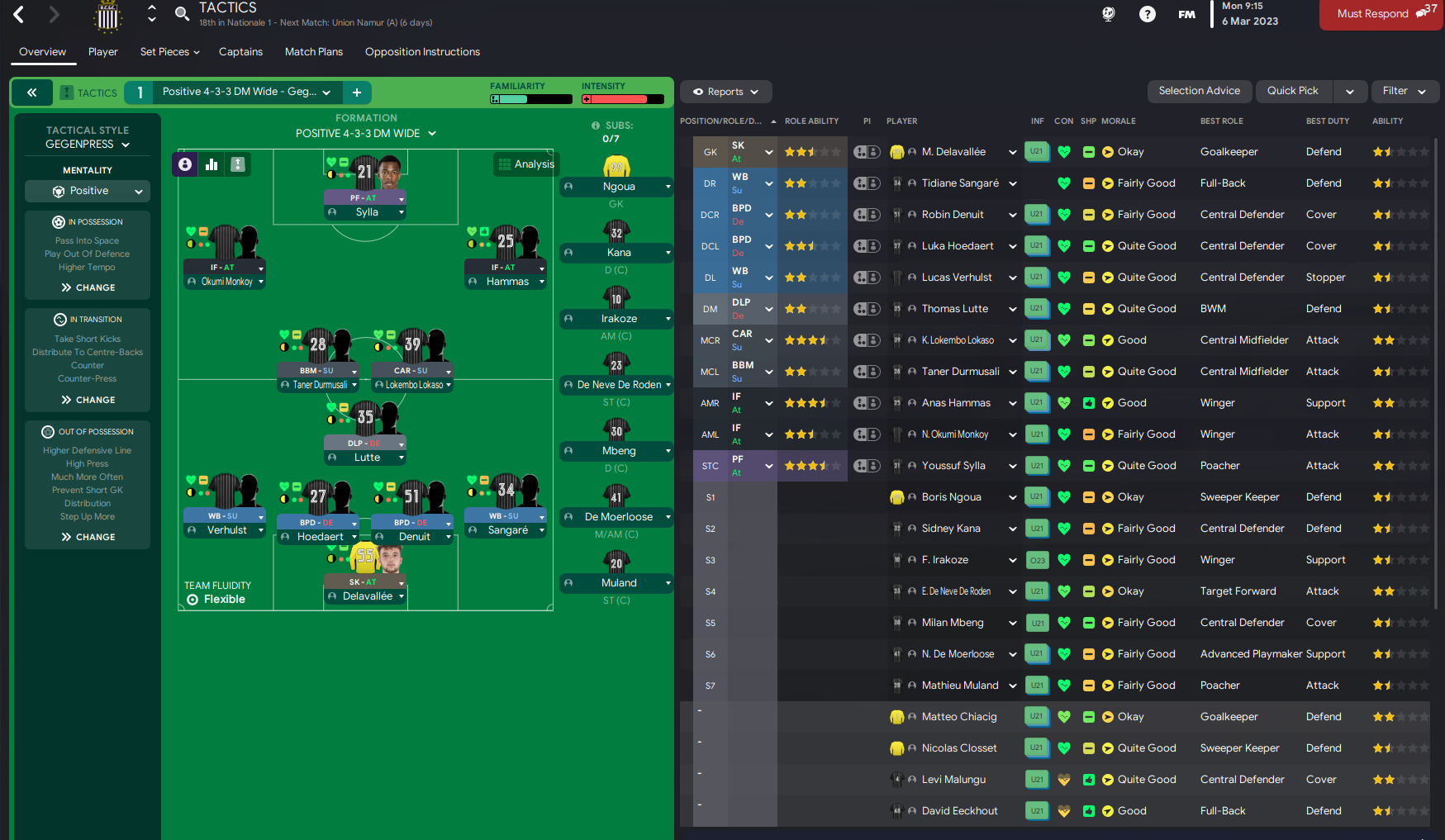
Guides for this formation
The tactical theory behind the 4-2-3-1: roles, instructions, and the trade-offs that decide whether the system holds up.
Player pairings
Midfield Pairs in 4-2-3-1 and 4-4-2
Double pivots and flat pairs in 4-2-3-1 and 4-4-2: when each pairing works, when it collapses, and the AMC unicorn that rescues both.
Read guide
Playing styles
Gegenpressing: A Full Guide
Klopp-style gegenpressing in FM, including squad profile, line-and-press pairing, sustainable workload, and the antipatterns to avoid.
Read guide