
4-3-3 DM Wide
Quick ball movement and support through overlapping runs from wing-backs. The inside forwards stretch the opposition and create space for overlapping runs.
Loading tactical analysis...
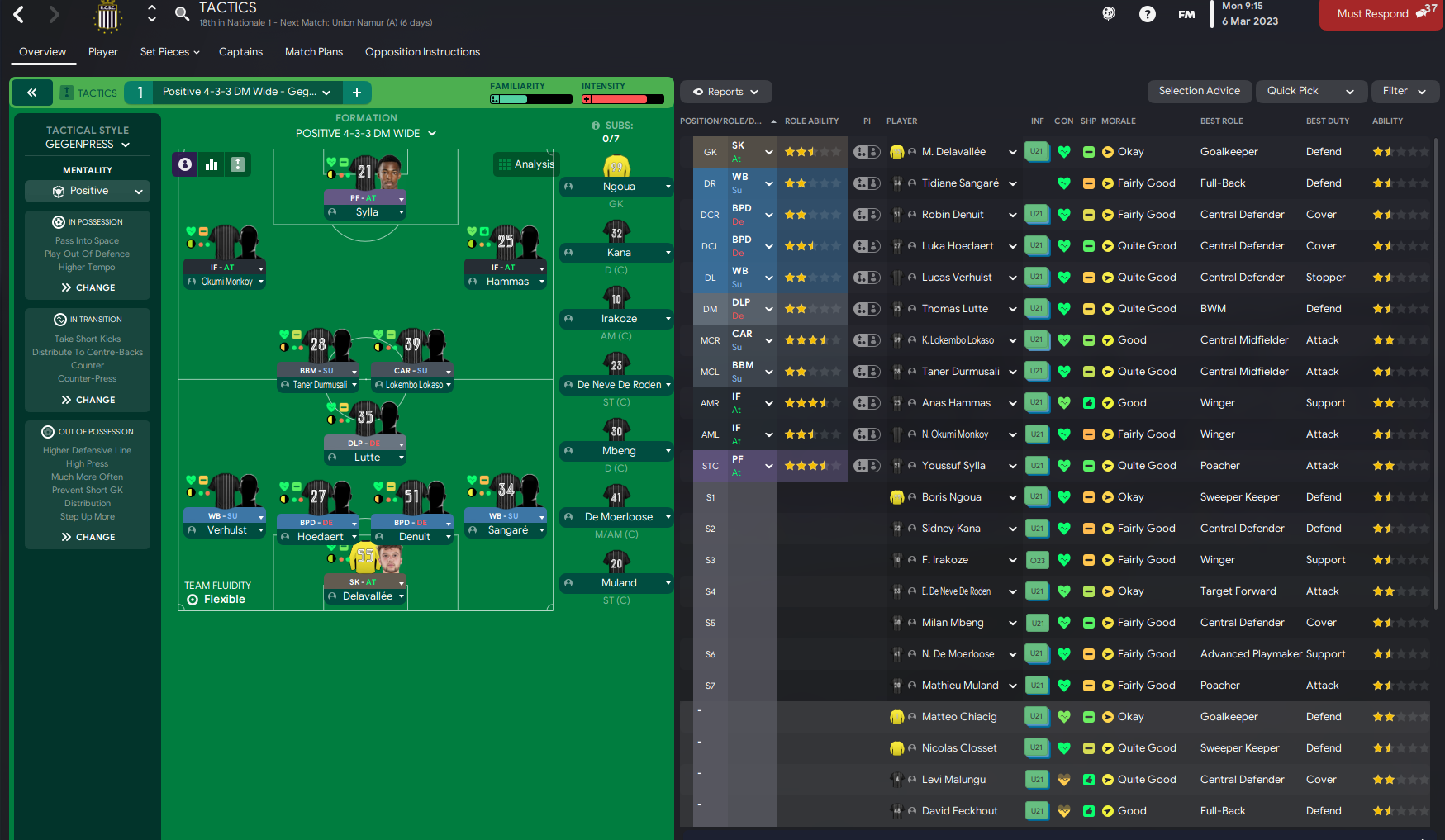
Gegenpress
Positive
4-3-3 DM Wide
Flexible
Pass Into Space
Higher Tempo
Play Out of Defence
Take Short Kicks
Distribute To Centre-Backs
Counter-Press
Counter
Higher Defensive Line
High Press
Much More Often
Prevent Short GK Distribution
Step Up More
GK
Sweeper Keeper
Defend
DR
Wing-Back
Support
DCR
Ball-Playing Defender
Defend
DCL
Centre-Back
Defend
DL
Centre-Back
Defend
DM
Deep-Lying Playmaker
Defend
MCR
Carrilero
Support
MCL
Box-to-Box Midfielder
Attack
AMR
Inside Forward
Attack
AML
Inside Forward
Attack
STC
Poacher
Attack
The team looks to transition quickly into attack, utilizing wide players to exploit space.
Players press high and immediately attempt to regain possession by counter-pressing after losing the ball.
Quick ball movement and support through overlapping runs from wing-backs.
4-1-4-1
A compact structure where the DM shields the back four with midfield support.
DLP-D at [3,3] providing necessary coverage for defenders.
4-3-3
Wide attacking play with inside forwards cutting in and a poacher central.
IF-At at [6,2] and [6,4] providing width and goal-scoring options.
The inside forwards stretch the opposition and create space for overlapping runs.
IF-At at [6,2] and [6,4] with WB-Su at [2,1] and [2,5] providing width.
The combination of roles ensures both support in attack and solidity in defence.
BBM-A at [4,3] and CAR-Su at [4,2] complementing DLP-D at [3,3].
Playing a high line may leave defenders exposed if possession is lost during slow play.
Higher Defensive Line combined with 'Take Short Kicks' may create vulnerabilities.
If players do not win the ball back quickly, they may be caught out of position.
Counter-Press combined with higher line may lead to quick transitions for opponents.
Defensive Transition
A high pressing style can be risky if the opposition bypasses the press.
Counter-Press combined with a Higher Line of Engagement can expose defenders.
Width Vulnerability
If wing-backs are caught upfield, the team may be vulnerable to counter-attacks.
WB-Su at [2,1] and [2,5] need to ensure defensive recovery.
BBM and CAR
The offensive runs from the BBM can create space for the CAR to exploit centrally.
BBM-A at [4,3] and CAR-Su at [4,2] supporting each other in midfield.
Inside Forwards and Wing-Backs
Inside forwards can cut inside to create space for advancing wing-backs.
IF-At at [6,2] and [6,4] allow WB-Su at [2,1] and [2,5] to overlap.
How can the team better manage transitions?
Is there a need for a more defensive approach in certain matches?
How can we maximize the impact of the wing-backs in attack?
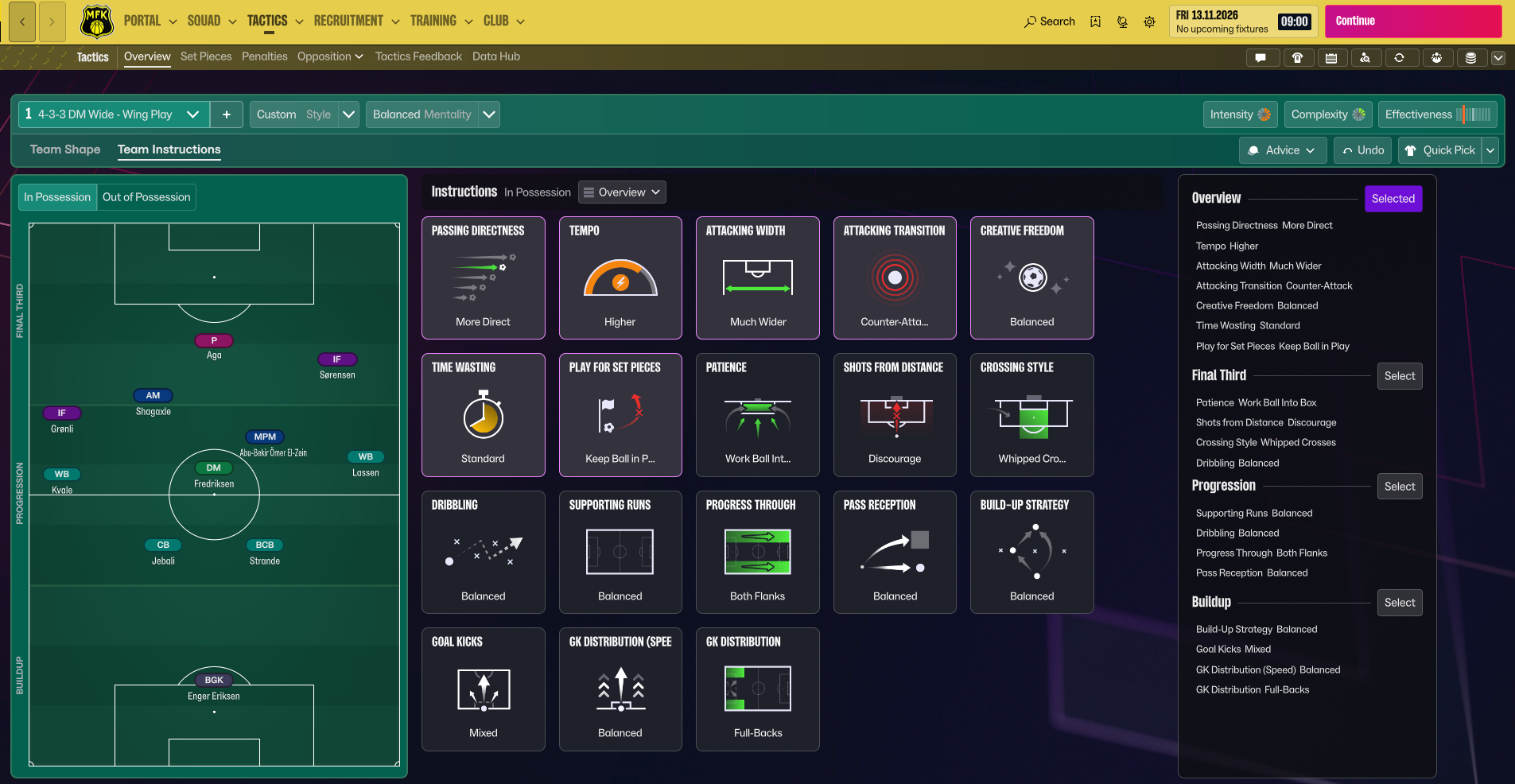
wing play
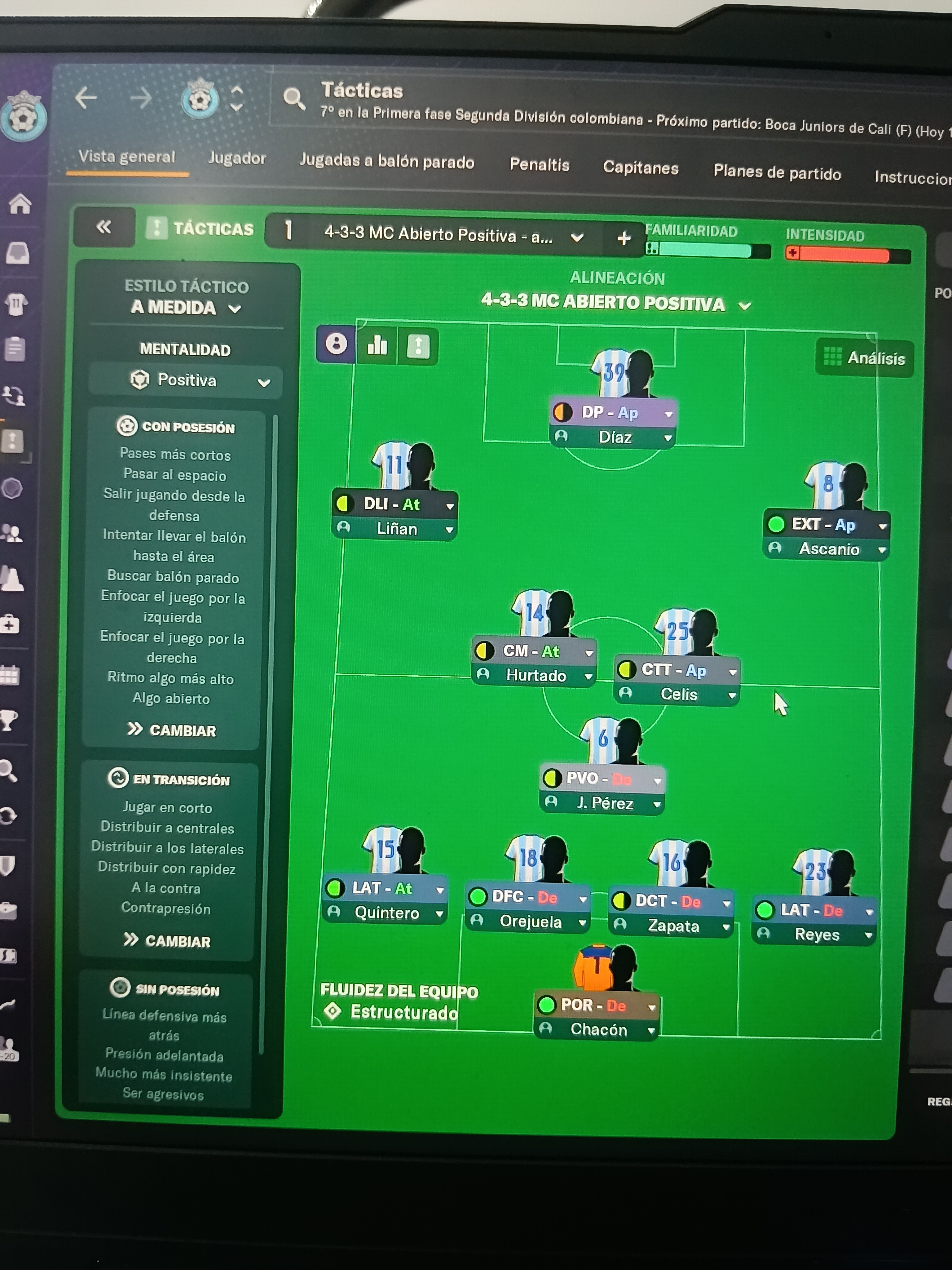
Gegenpress
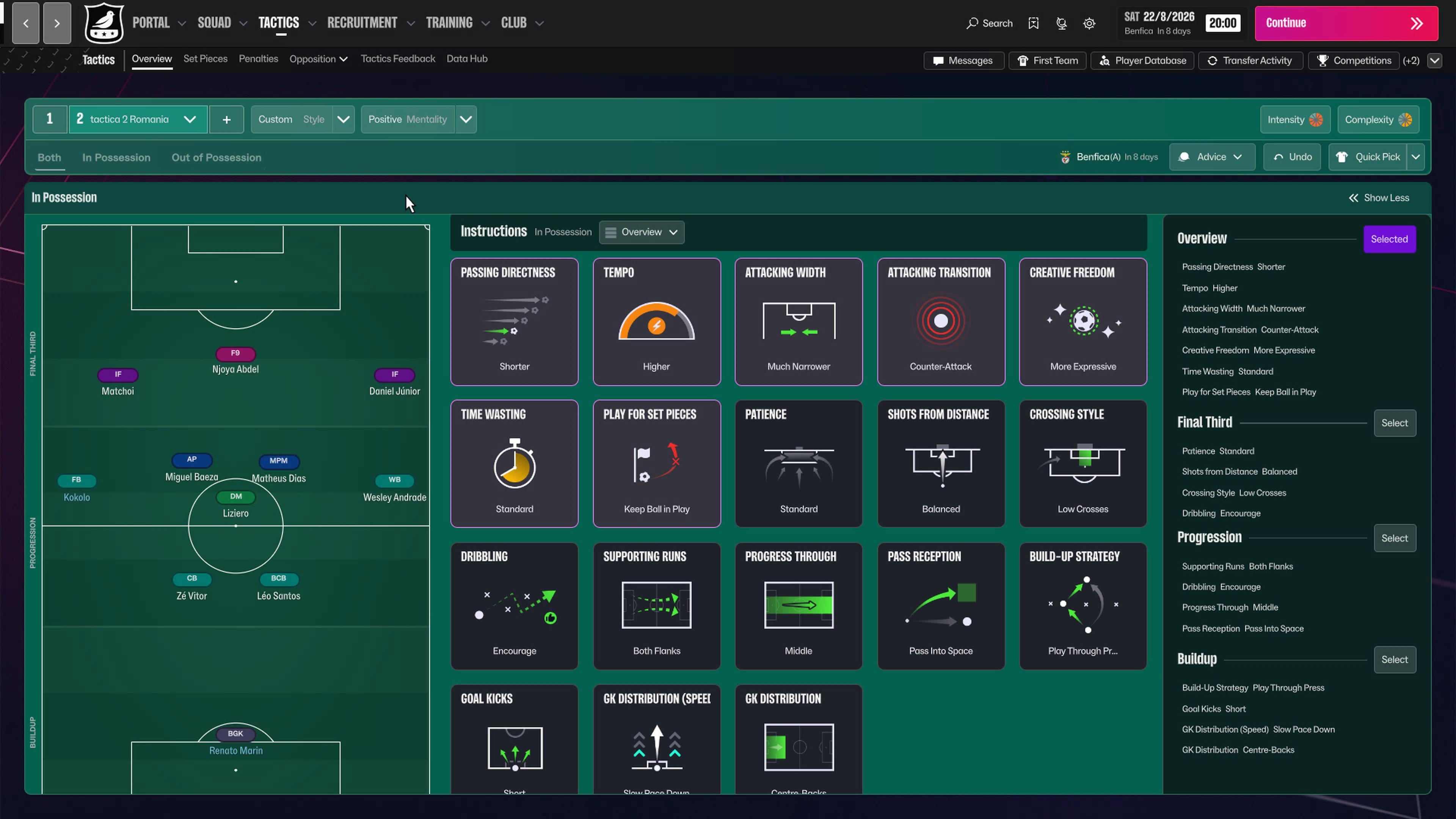
vertical tiki taka
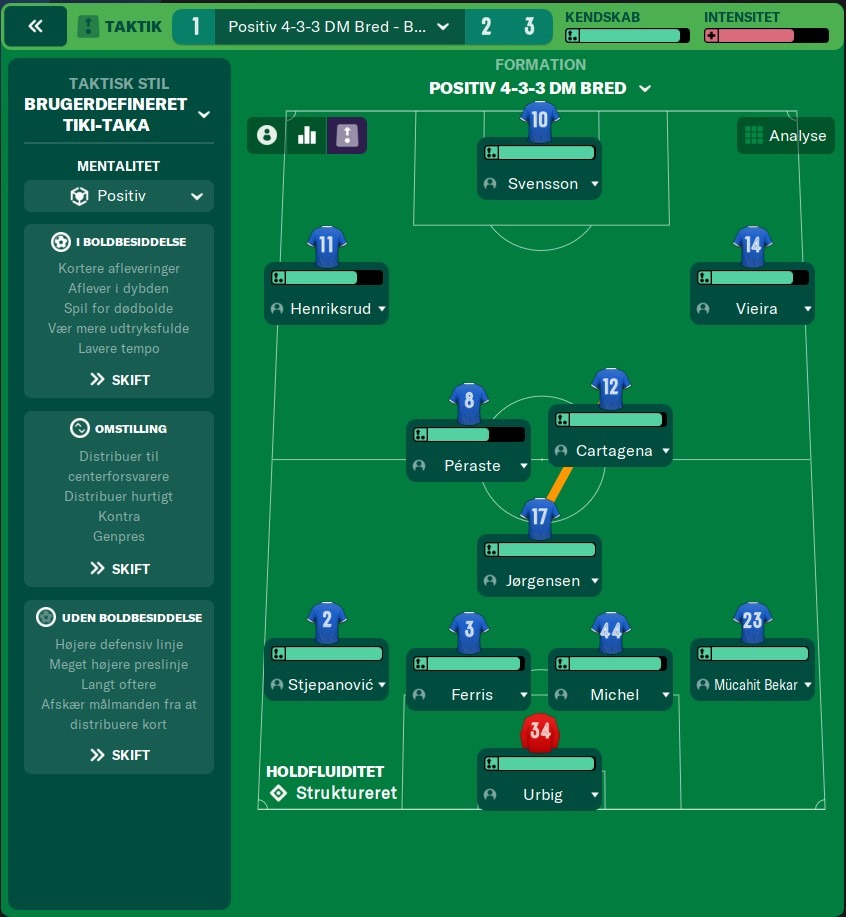
Tiki-Taka
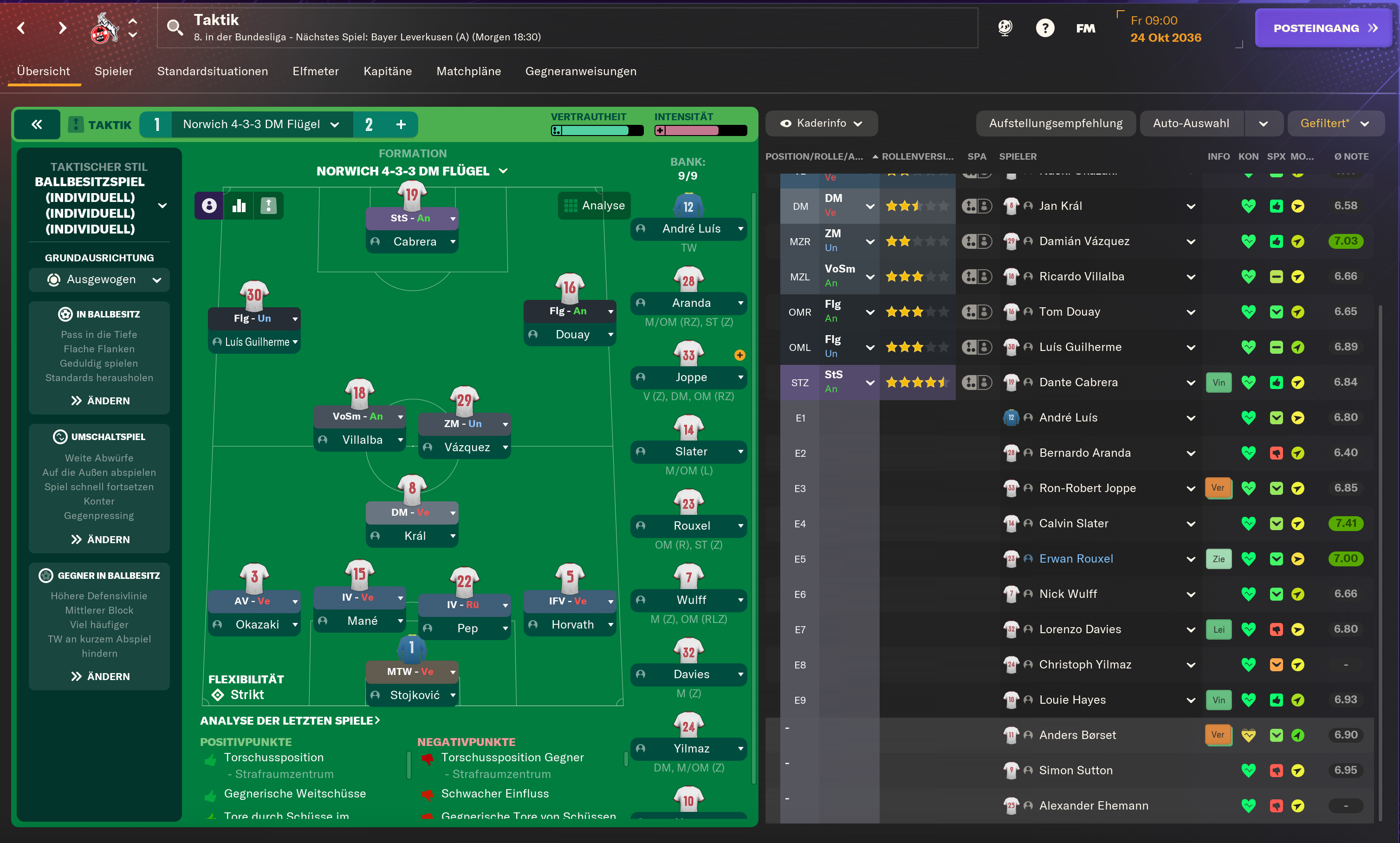
Wing Play
Vertical Tiki-Taka
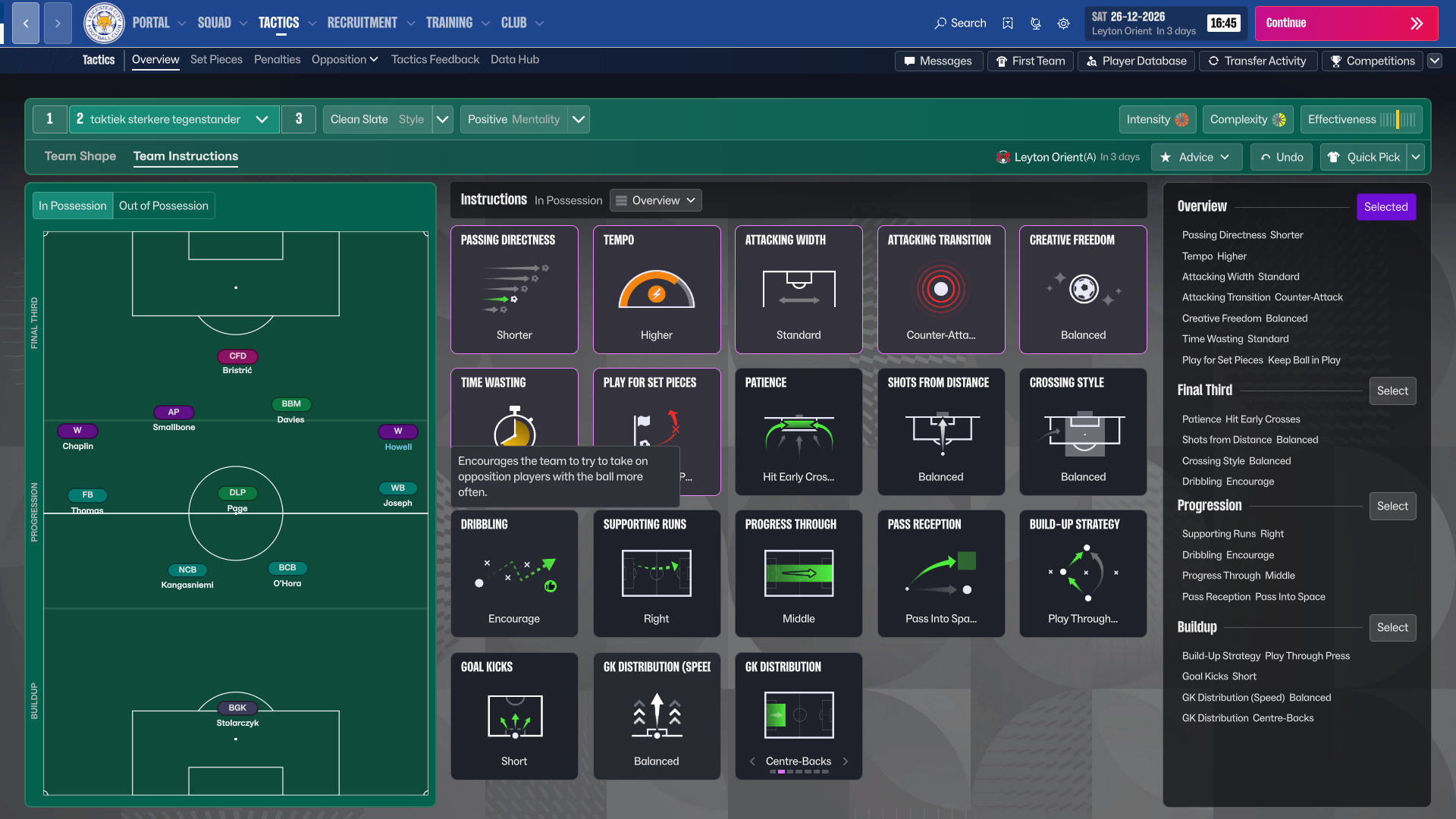
clean slate
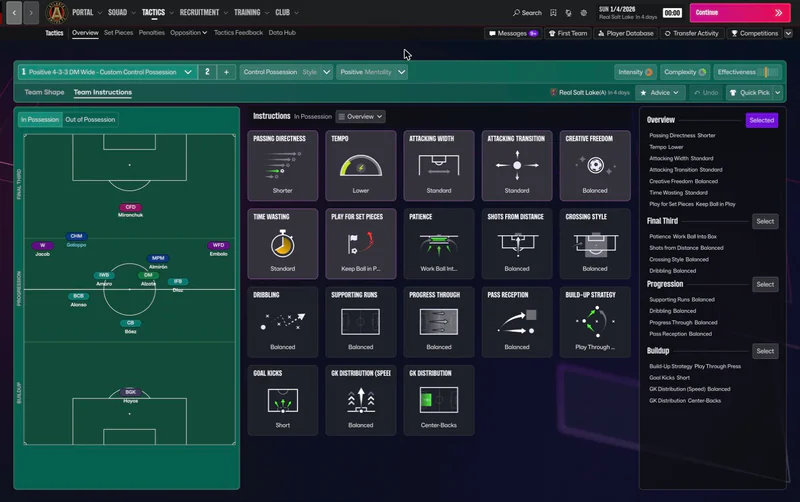
control possession
The tactical theory behind the 4-3-3 DM Wide: roles, instructions, and the trade-offs that decide whether the system holds up.
Holder, runner, creator: the role distribution rule for three-man midfields, the AMC variants, and the antipatterns that break them.
Klopp-style gegenpressing in FM, including squad profile, line-and-press pairing, sustainable workload, and the antipatterns to avoid.
How Mentality, Duty, and Role interact in FM, why duty trumps mentality every time, and the role-on-top-of-duty composition rules.



