Uploaded Tactic
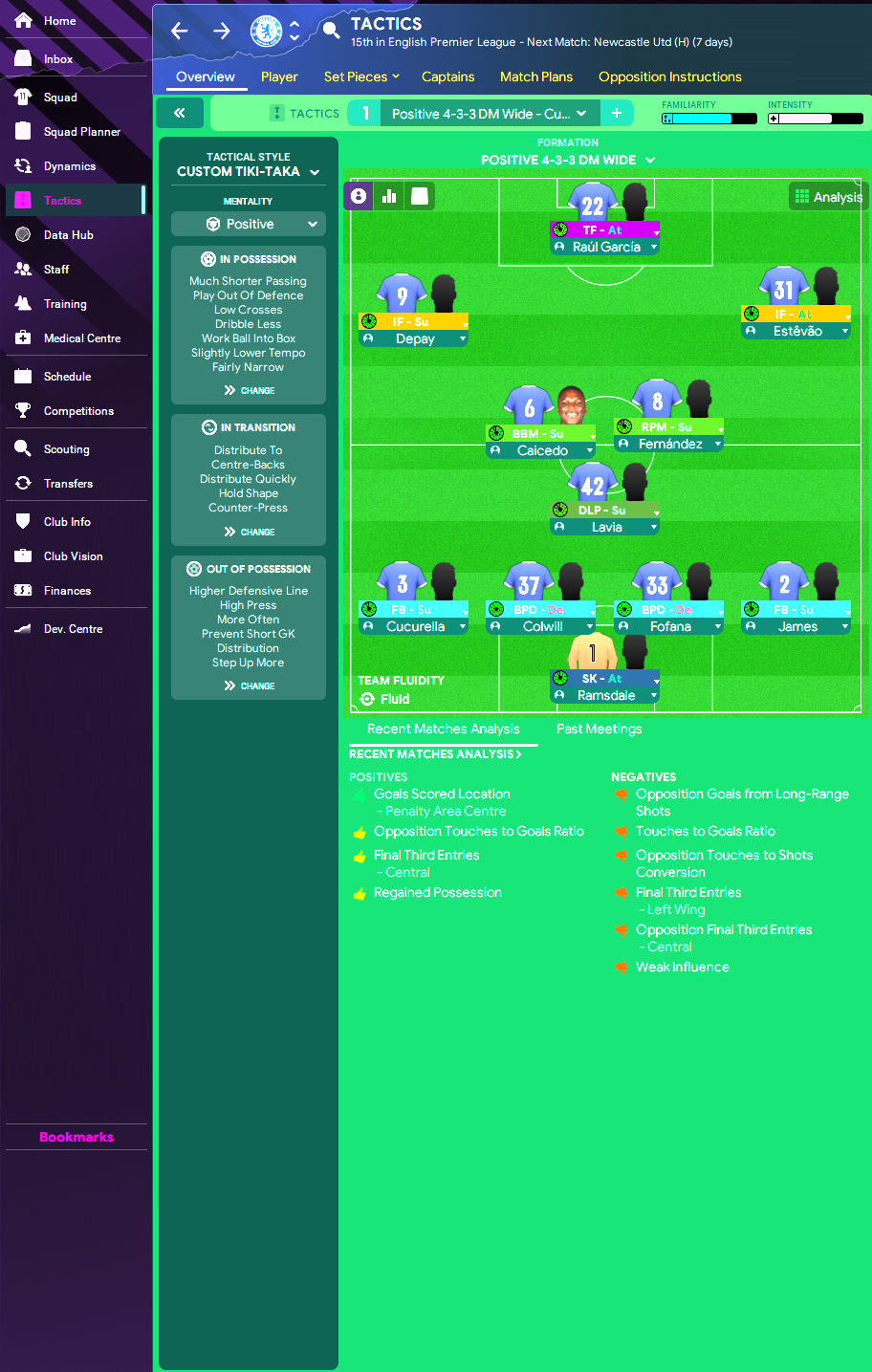
Formation & Style
Tactical Style:Tiki-Taka
Mentality:Attacking
Formation:4-2-3-1 Wide
Team Fluidity:Structured
In Possession
Work Ball Into Box
Play Out of Defence
In Transition
Counter-Press
Counter
Out of Possession
Higher Defensive Line
Higher Line of Engagement
Trigger Press More Often
Team Shape Without Ball
Shape:Compact Mid-block
Description:Defensive shape prioritizes staying compact while being ready to press.
Evidence:Higher Defensive Line with higher line of engagement allows for pressing and regaining possession quickly.
Team Shape With Ball
Shape:Fluid Structures
Description:Movements of the inside forward and winger create space for the advanced forward and midfielders.
Evidence:Mezzala and Roaming Playmaker provide central penetration alongside width from AML and AMR roles.
Phase Description
Attacking Play
Focus on maintaining possession through short passes and quick movement, creating space with overlaps.
Defensive Transition
Immediate pressing to regain possession with high intensity when possession is lost.
Main Focus
Exploit width to stretch defensive lines while maintaining central passing options.
Key Strengths
Quick Ball Movement
The use of Tiki-Taka ensures quick transitions between play and keeps the opposition guessing.
Defensive Solidity
The presence of Ball-Playing Defenders enables building from the back while maintaining defensive stability.
Attacking Versatility
The combination of attacking roles provides varied options in the final third.
Conflicting Directions
Defensive Gaps Against Counter-attacks
High pressing can leave gaps for swift counters, especially without a dedicated DM.
Dependence on Width
Heavy reliance on wide players can lead to predictability in attacking play.
Potential Pivot Vulnerabilities
If the Mezzala gets isolated, it may hinder central progression.
Tactical Suggestions
Consider a more centralized DM role
Adding an extra cover in midfield can help against counter-attacks.
Encourage varied attacking patterns
Utilizing overlapping runs from wing-backs can create confusion for defenders.
Reassess Pressing Trigger Frequency
Adjusting the frequency based on opponent style can provide better control.
Ask Questions About Your Lineup
Related Tactics
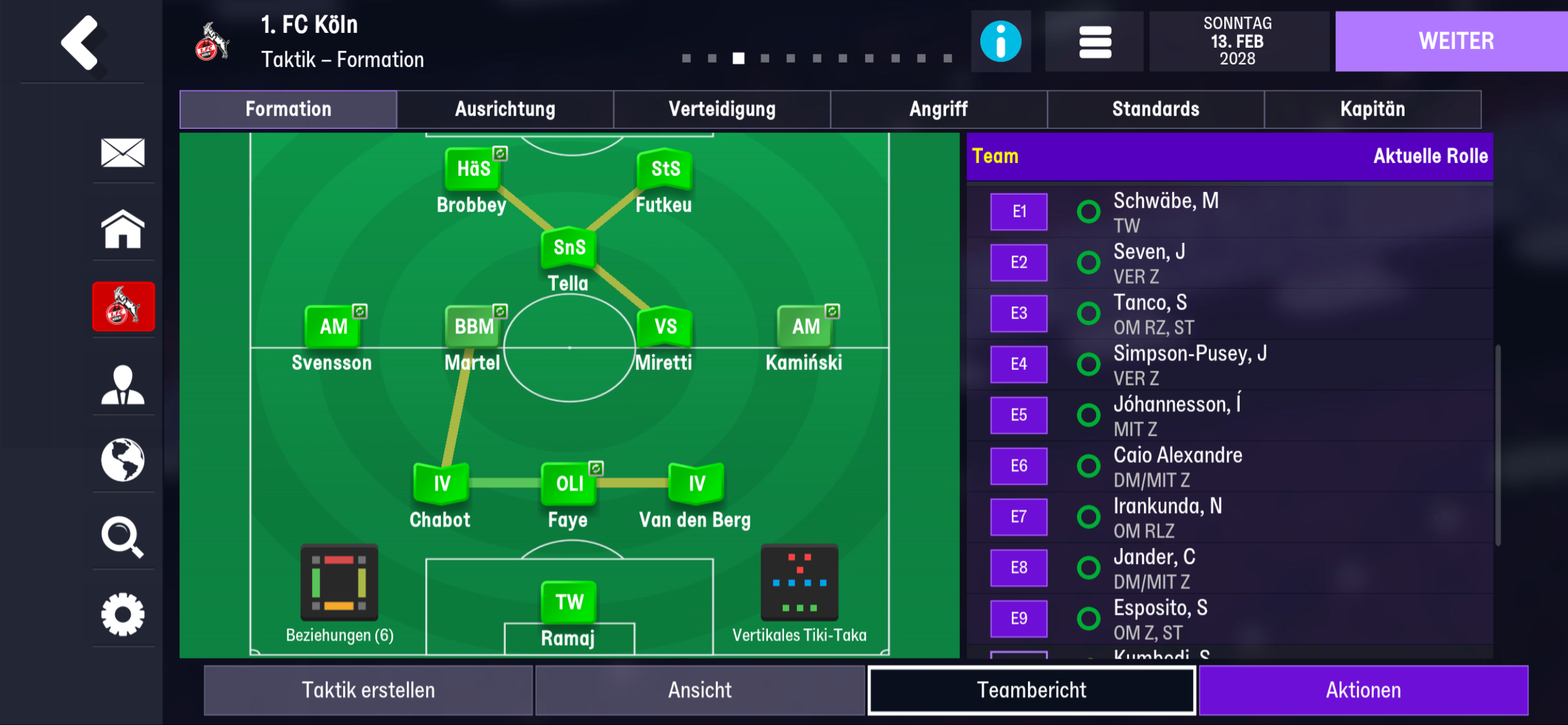
4-2-3-1 Wide Formation
Vertikales Tiki-Taka
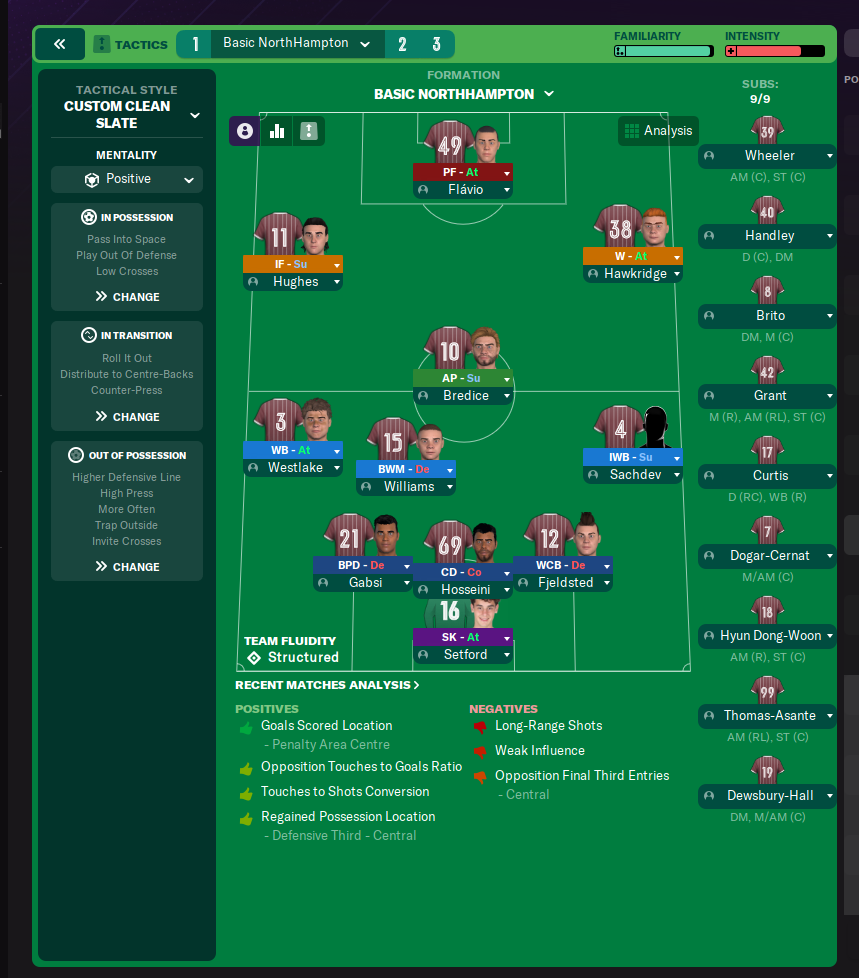
4-2-3-1 Wide Formation
Custom Clean Slate
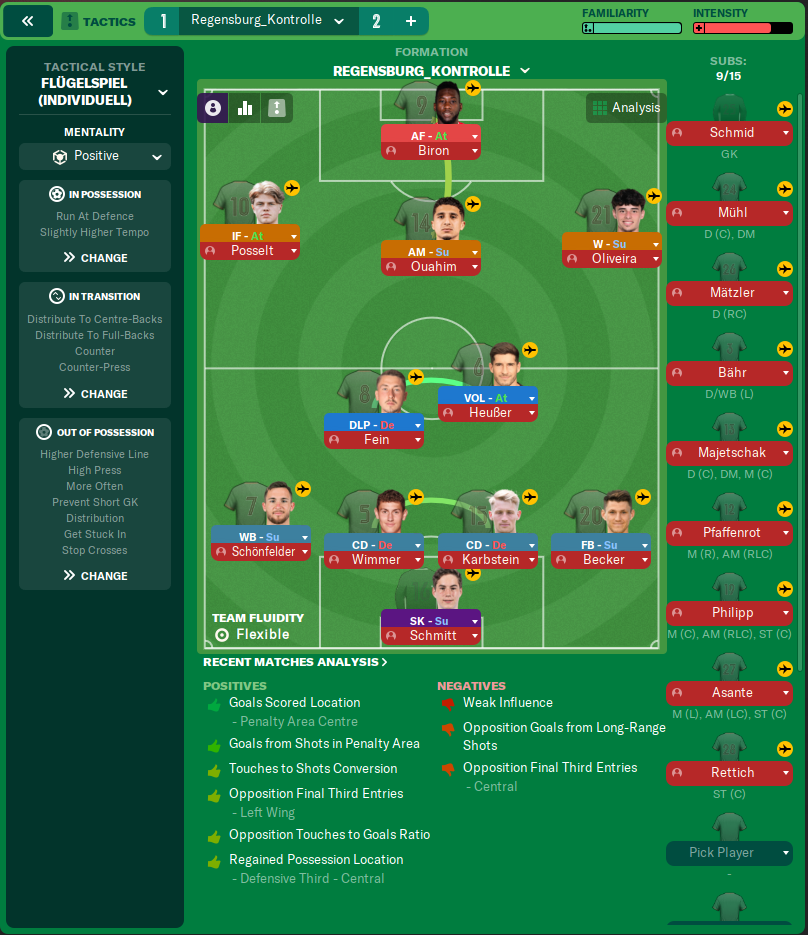
4-2-3-1 Wide Formation
Flügelspiel (Individual)
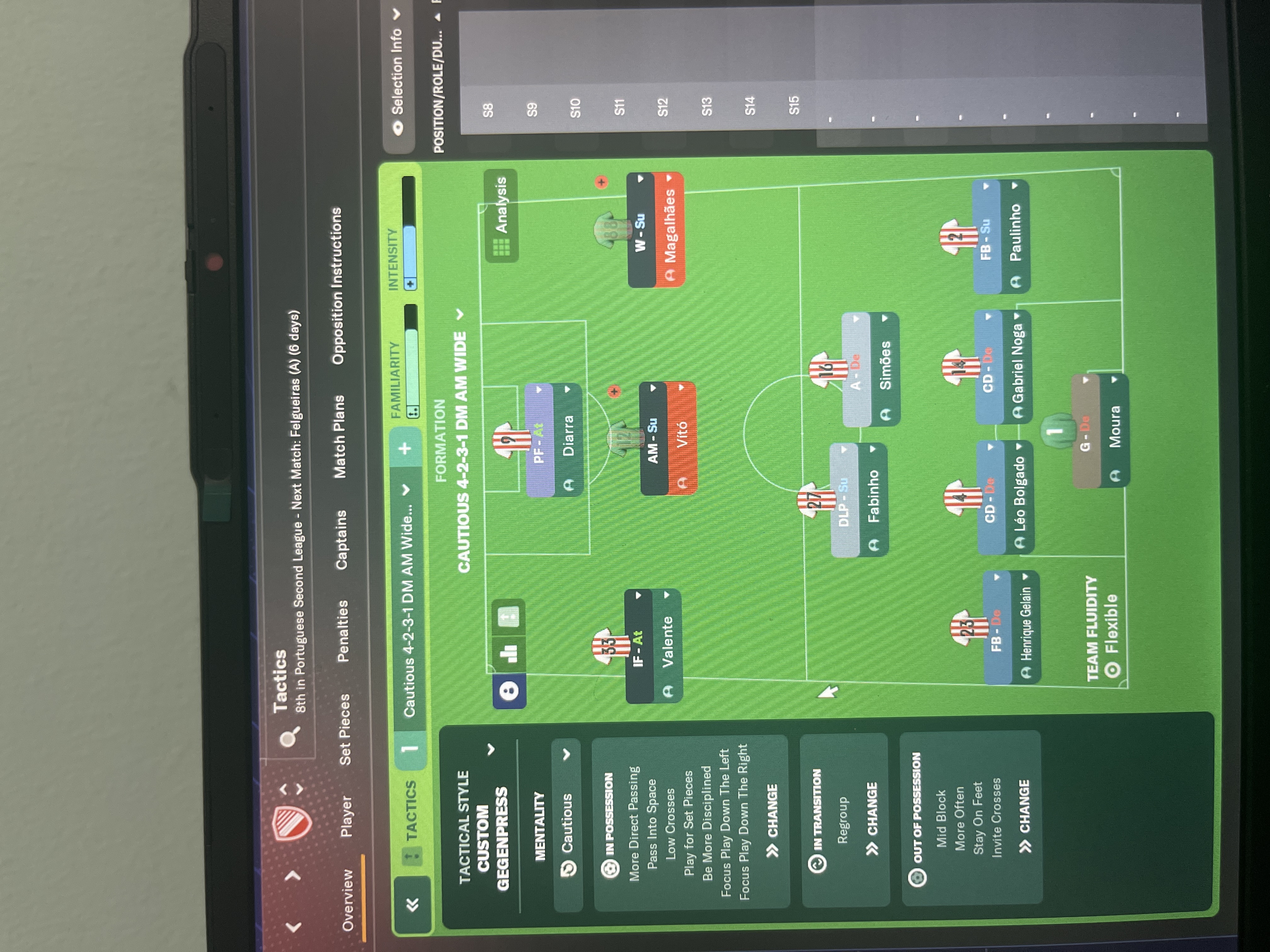
Gegenpress 4-2-3-1 Wide
Gegenpress
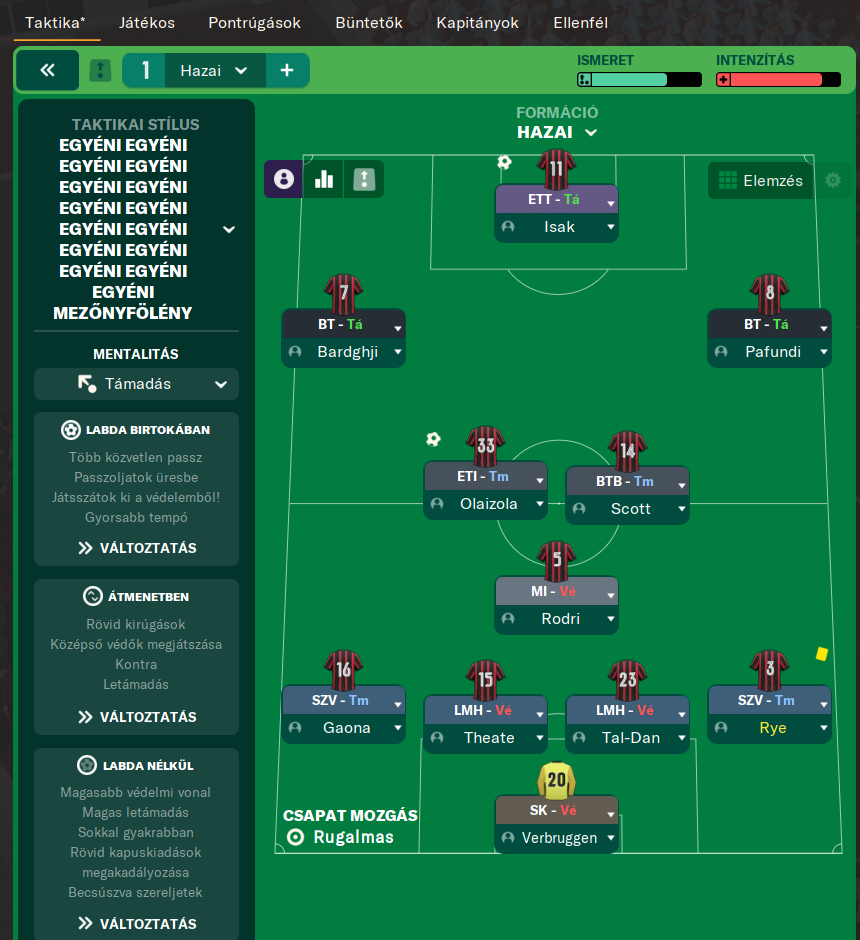
4-2-3-1 Wide Formation
Támadás
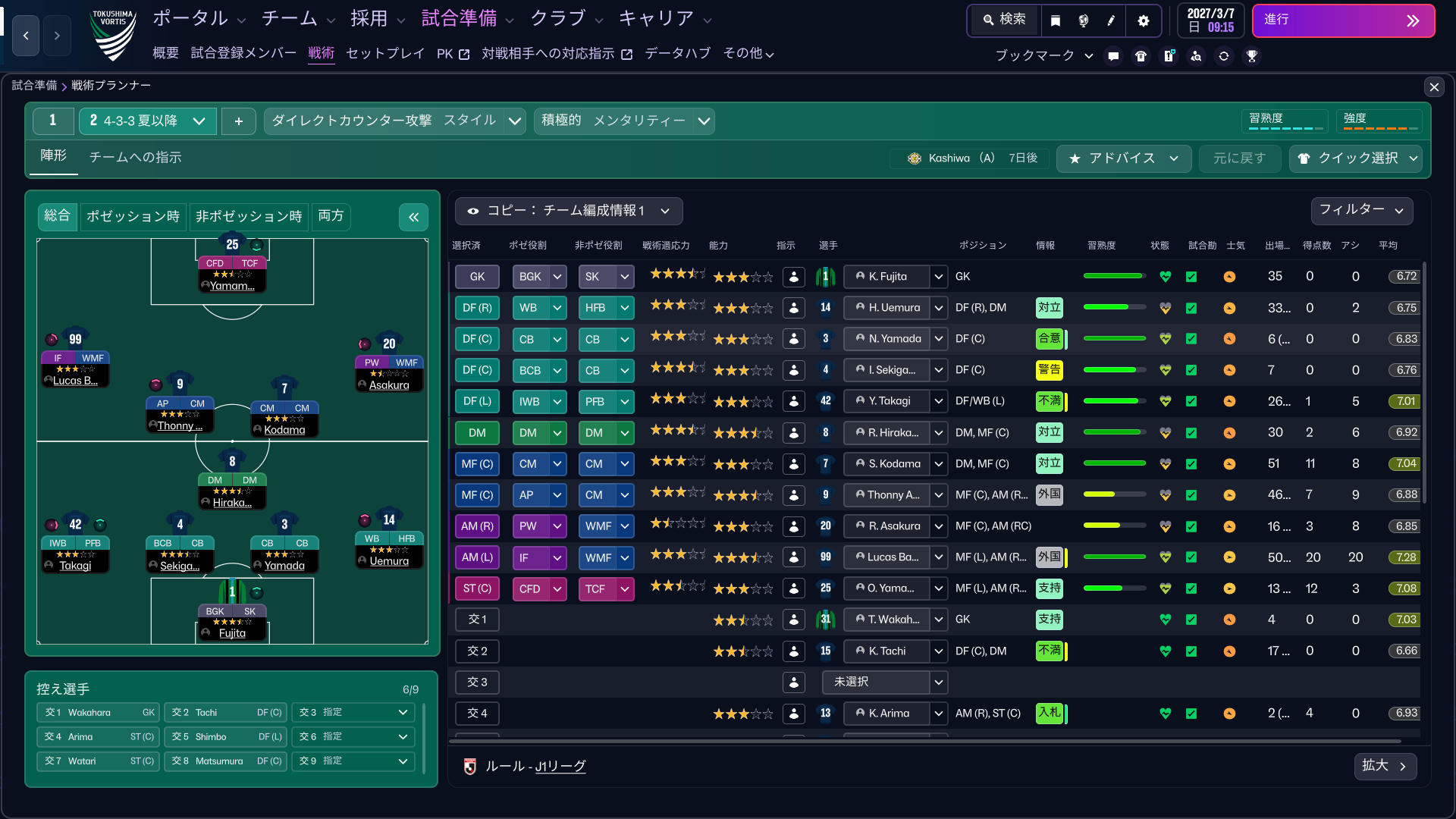
Direct Counter-Attack 4-2-3-1 Wide
Direct Counter-Attack
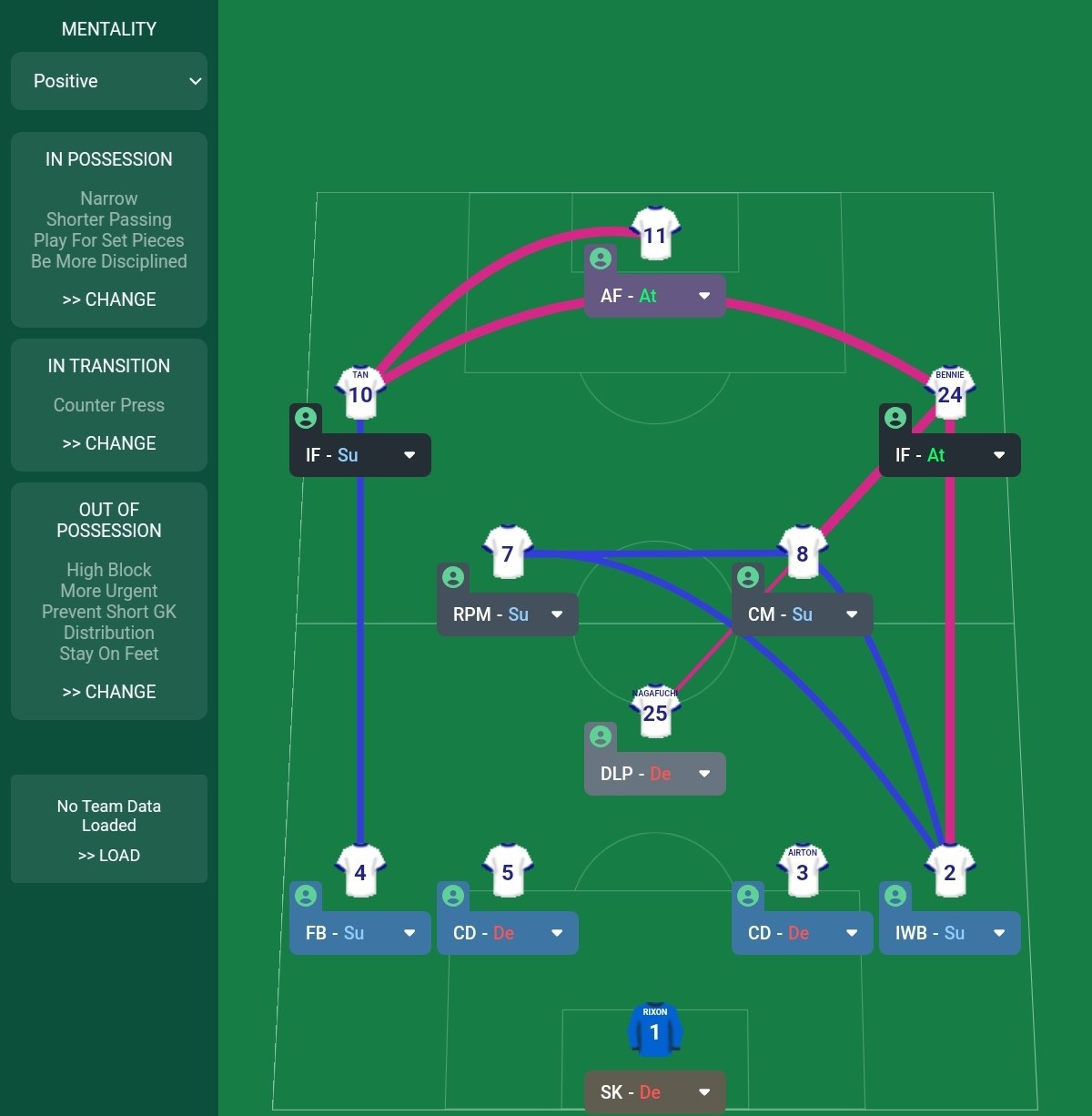
4-2-3-1 Wide Formation
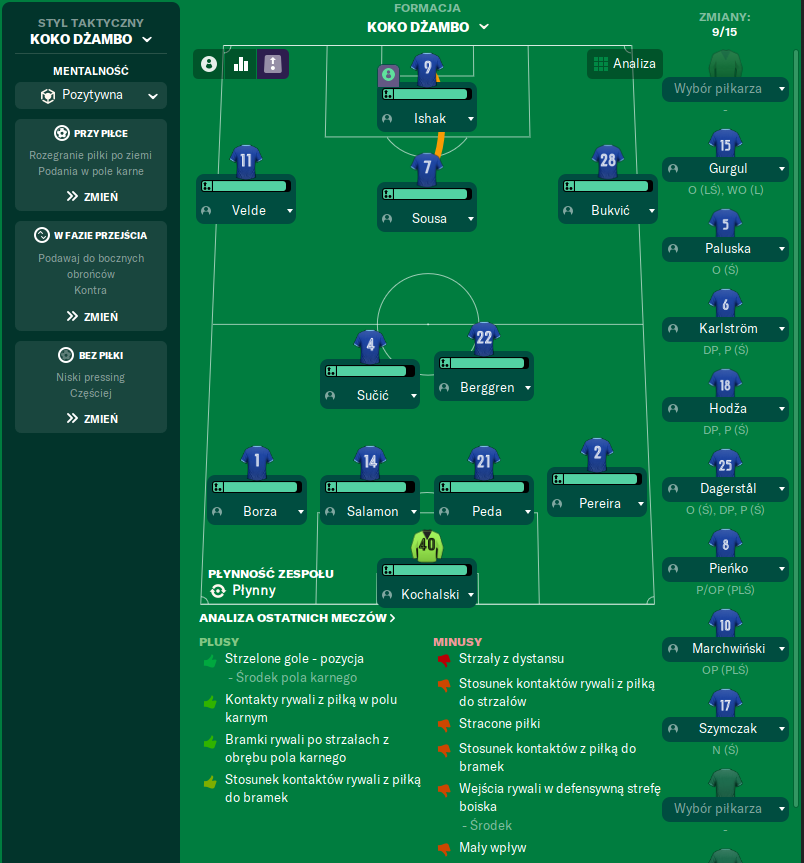
4-2-3-1 Wide Formation
KOKO DZAMBO
More Tiki-Taka tactics
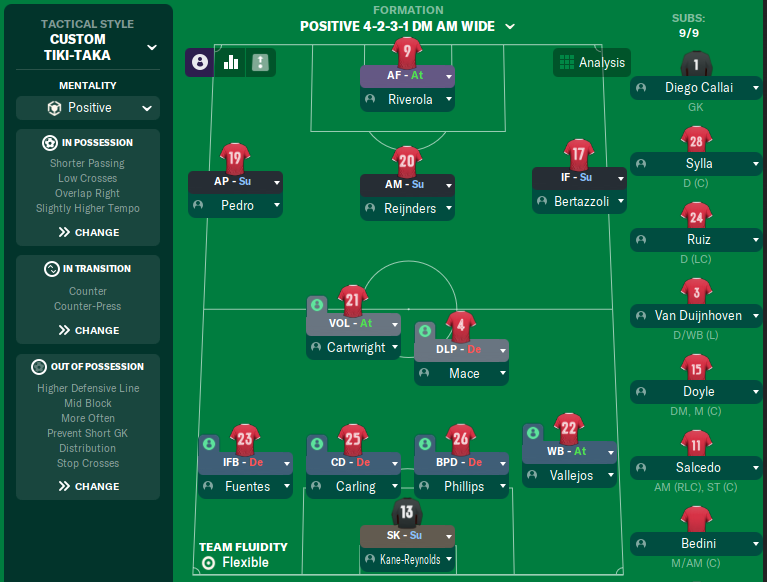
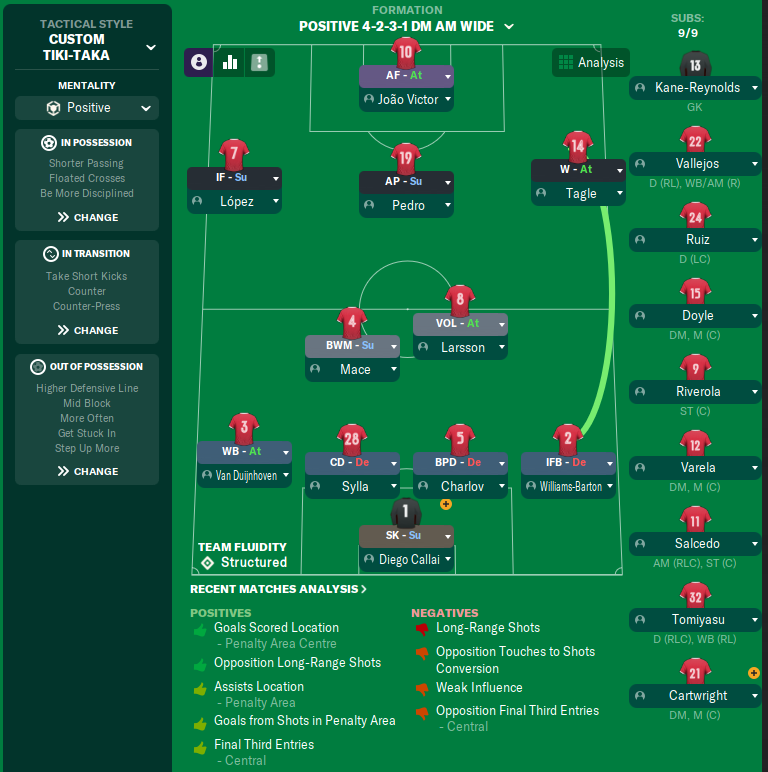
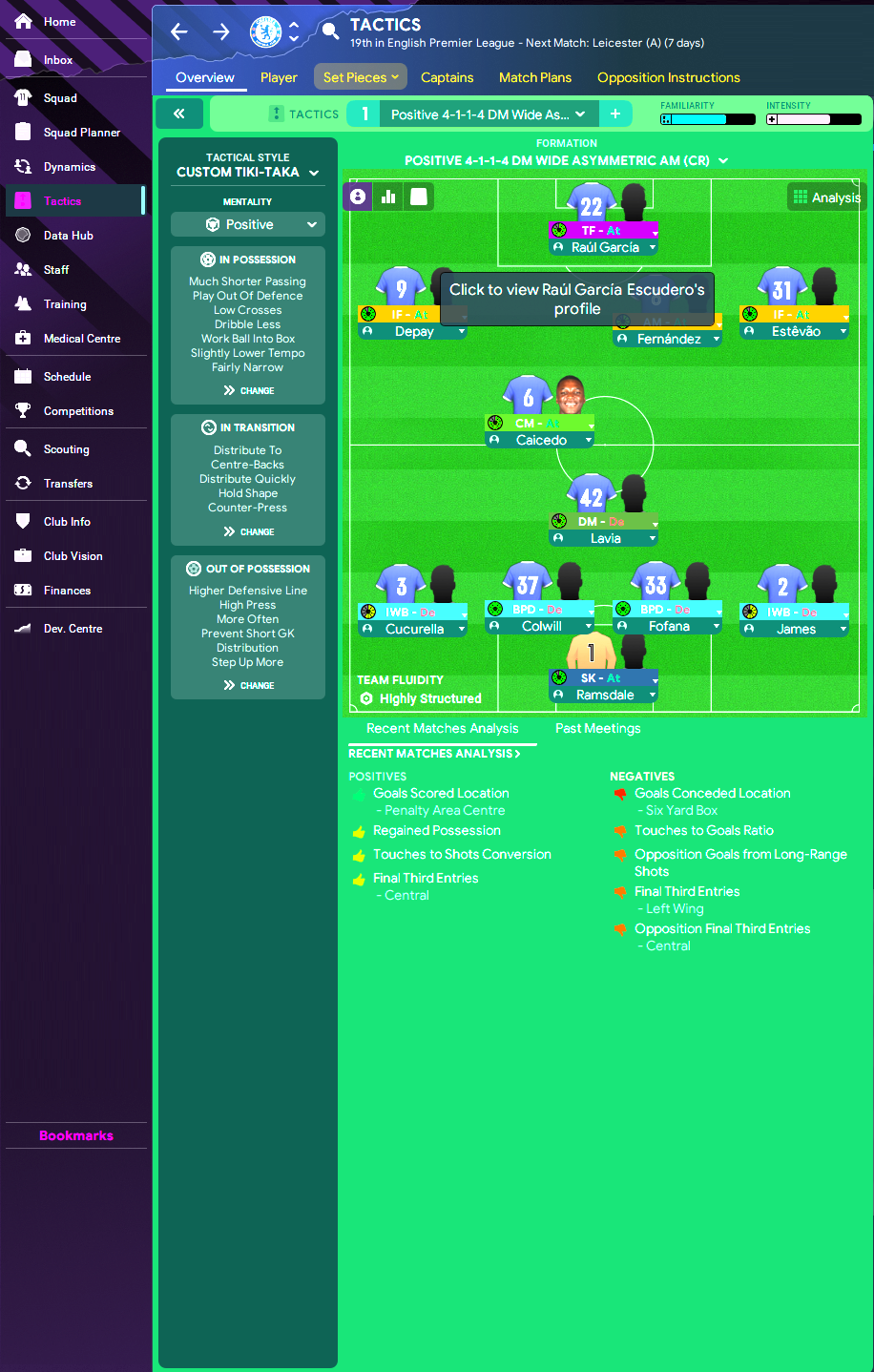
Guides for this formation
The tactical theory behind the 4-2-3-1 Wide: roles, instructions, and the trade-offs that decide whether the system holds up.
Player pairings
Midfield Pairs in 4-2-3-1 and 4-4-2
Double pivots and flat pairs in 4-2-3-1 and 4-4-2: when each pairing works, when it collapses, and the AMC unicorn that rescues both.
Read guide
Playing styles
Gegenpressing: A Full Guide
Klopp-style gegenpressing in FM, including squad profile, line-and-press pairing, sustainable workload, and the antipatterns to avoid.
Read guide